
Category: Memory
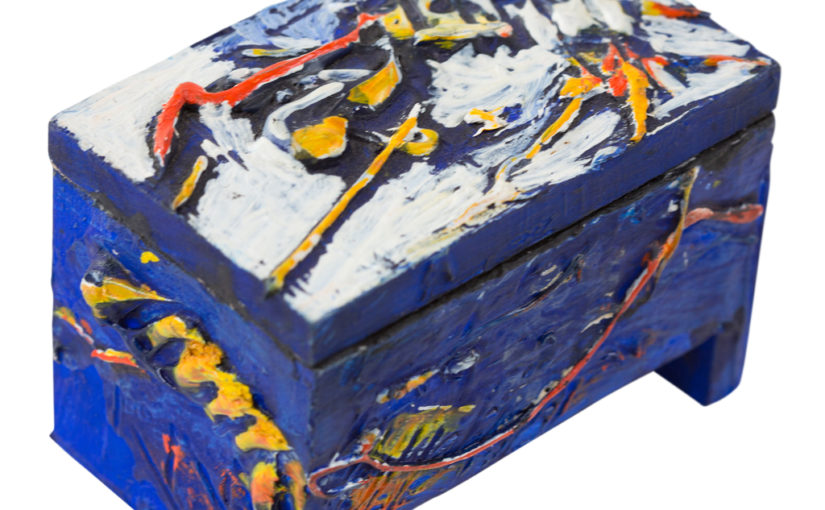
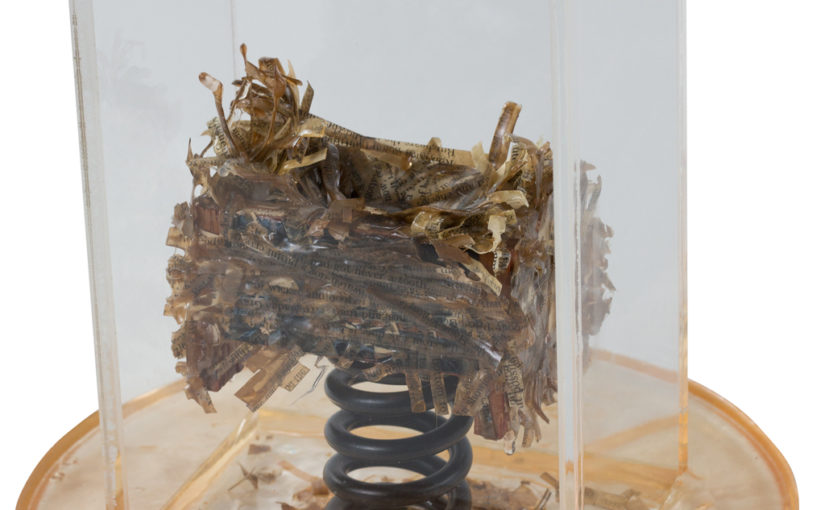
Nest
My grandmother gave me a necklace with a mustard seed enclosed in plastic when I was a young girl. She told me about faith. Having faith in God, in life, in myself, and if I had faith the size of a mustard seed I would be all right. I remember her often, especially during hard times, when it is so hard to have faith; but, maybe, faith only has to be the size of a mustard seed.
The mustard seed is enclosed in resin, in a nest of words, from an old sacred book of poems about love and life, sitting on a spring…waiting.
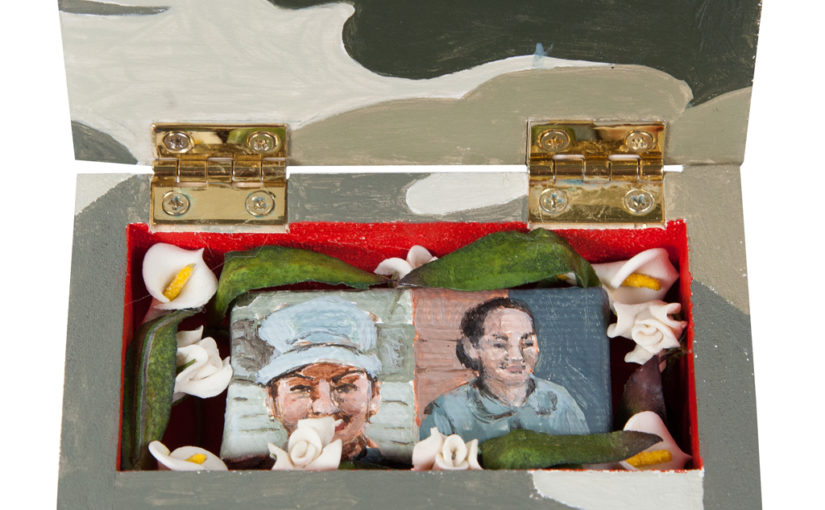
Kate’s World
Tajima Box Project. An artist and an extraordinary woman collaborate to create a box.
Kate McIsaac ,1ST LIEUTENANT, U.S. ARMY and Laura Klein, ARTIST
Kate McIsaac just celebrated her 30th birthday in Baqubah, Iraq. She is a 1st Lieutenant in the Army, serving in OIF IV – V at FOB Warhorse as a postal officer. Her unit is from Long Beach, California.
She is also a first-year law student at Whittier Law School in Costa Mesa and will either go into criminal law or First Amendment Libel law. Libel law is near and dear to her heart.
Kate also has a degree in Journalism and worked as a journalist for several years.
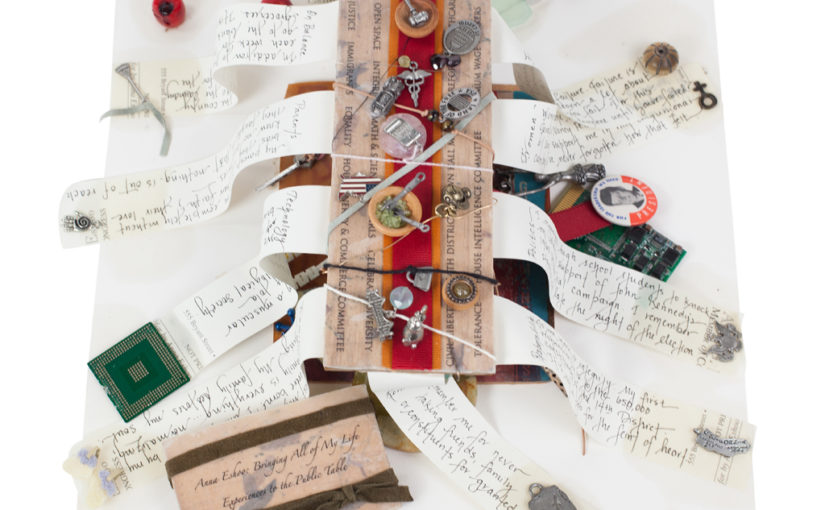
Bringing all of my Life Experiences to the Public Table
Tajima Box Project. An artist and an extraordinary woman collaborate to create a box.
Rep. Anna Eshoo, CONGRESSWOMAN FROM CALIFORNIA and Laura Deem, ARTIST
Anna Eshoo’s life experiences have helped to shape her into the person she is today and the way that she represents her constituents in Congress. Her role as a parent, daughter, wife, student, teacher, woman, caretaker and friend have all come into play.
The handwritten slips of paper contain Anna’s private thoughts, memories and experiences. These personal topics feed into a “public table”. This public table is a communal meeting place that houses issues, projects and policies with which Anna Eshoo is involved as a Congresswoman.
The objects represent both the private and public world. Combined they weave together an individual narrative of the many hats that we wear, the experiences that accompany them, and the ones we chose to share with the rest of the world.
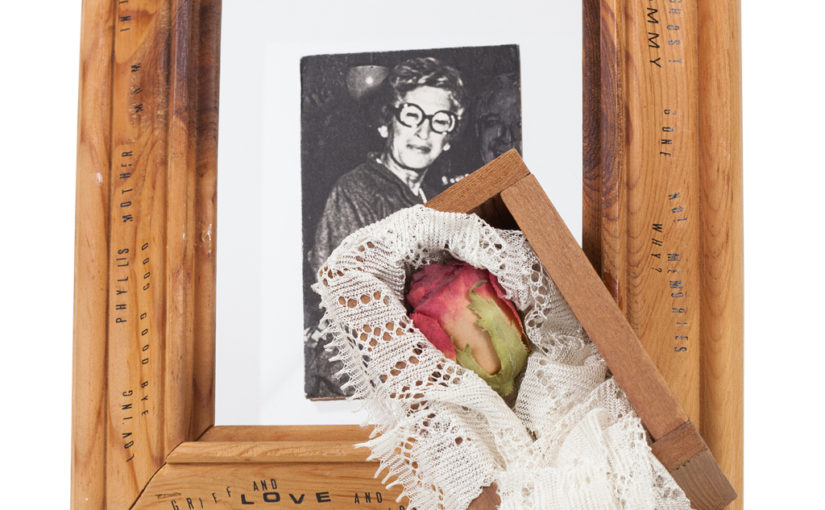
In Memoriam
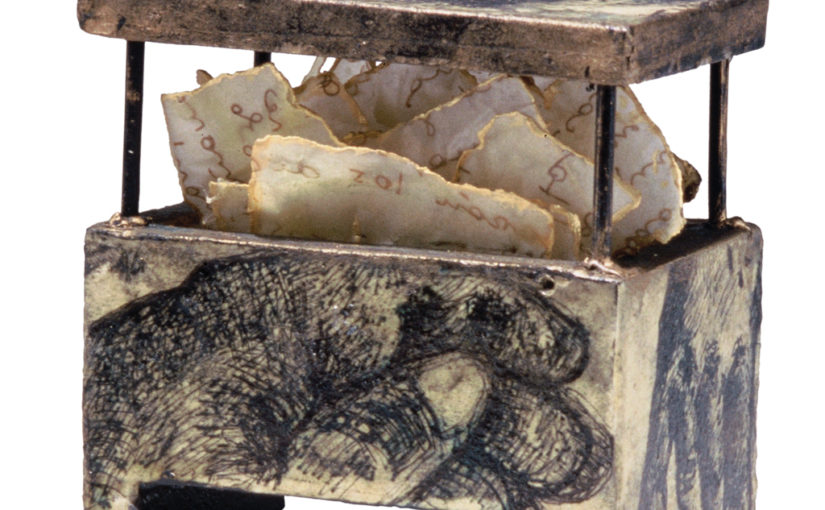
Nostalgia
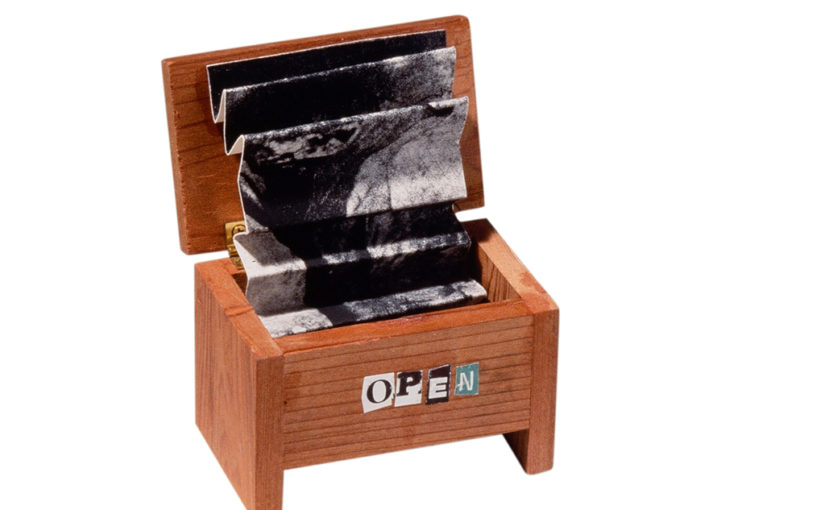
Untitled
I treated the box as an objet trouve, a modest thing with some forgotten purpose in its past. Upon being discovered, it brings to mind associations, and memories which unfold and spread out when the box is opened. Part object, part landscape, the image within the box does not recall a specific locus; rather, it reminds us of things that we know are memories. But these are stored in such distant lands that they cannot be conjured, they can only be gazed over.
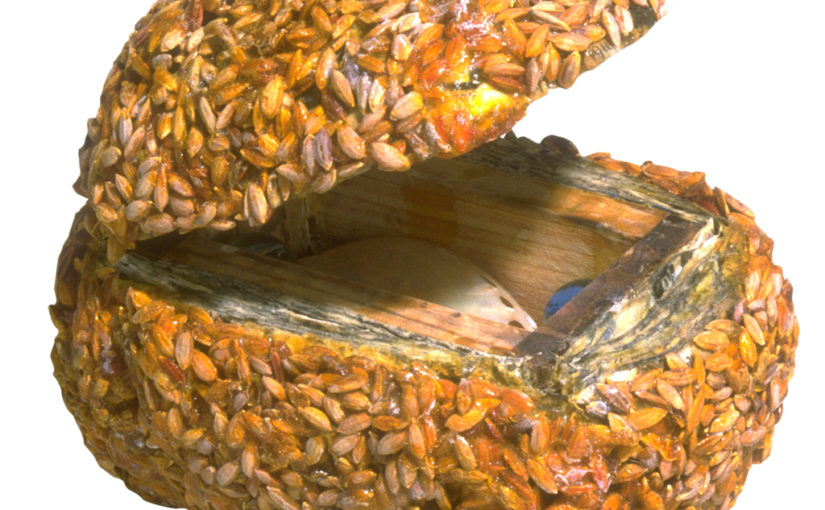
The Childhood
I spent my childhood hiding in yellow rice in the beautiful sun-filled countryside, cheerfully crying out for an egg in a straw mat or discovering shiny shells.
The memories are carefully retained since that distant time.
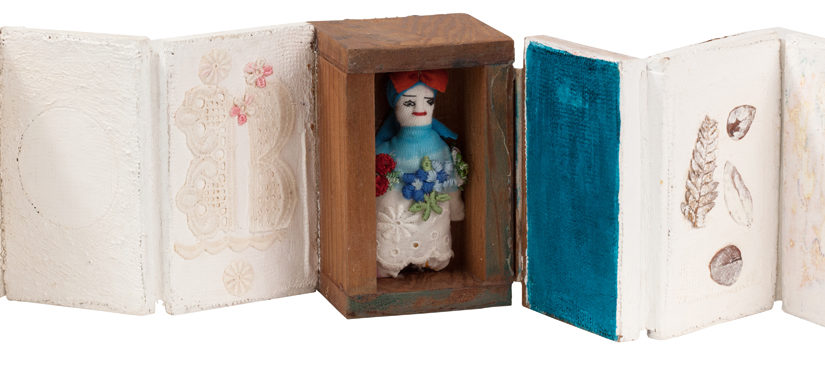
Viaje En La Memoria
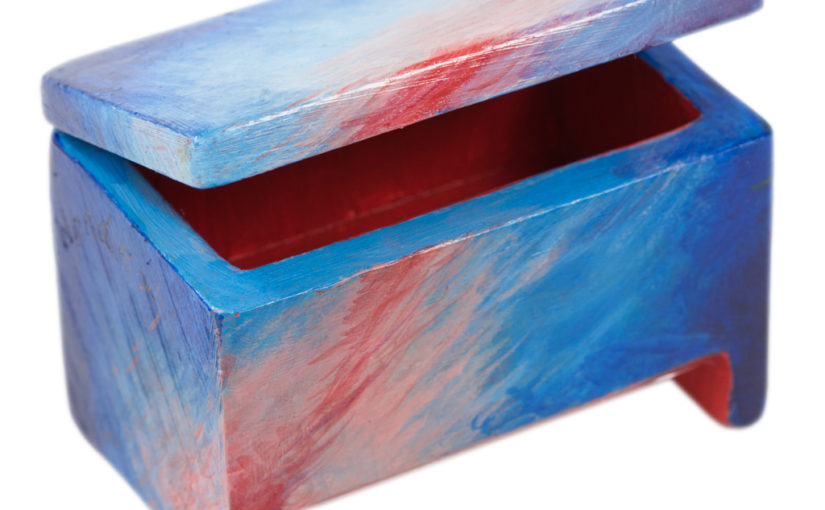
Memory
This box is about memory. The interior, the little empty scarlet sarcophagus, symbolizes that which is memorized, which can never be recaptured exactly; the red on the outside is only an echo, and is overlaid, confused, obscured, and changed by later colors. I mourn the loss of that intimate vermilion promise.
I am a painter and a writer, and for the past four years I have been writing a large biography, of a couple whose lives overlapped with mine, though I never met them. I have spent these years sifting other people’s memories, both written and spoken, in pursuit of the exact, impossible hue of my subjects’ lives. This, too, is represented here.
I have only one chance. My box sails out across the waters of the world. Bon voyage, box. I’ll remember you.
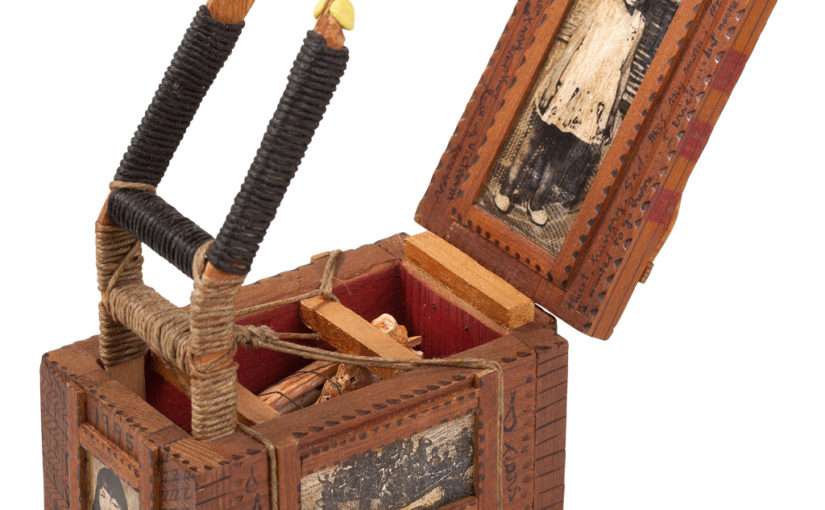
Separation
April 1975, Vietnam: Everyone knows the communists will over run Saigon, but no one expected it to happen so fast. Over the last month the sound of gunfire and explosions have slowly increased in frequency and force. We are so used to it that it has become a sort of background noise no one pays any attention to. Despite this I remember waking on April 30th, alarmed at how close the sound of gun-fire and explosions was to our neighborhood. The city was in chaos, dark smoke blanketed the horizon as people ran with whatever belonging they could carry. But as I watched it seemed that very few had any idea of where to go.
My family and I hurriedly packed some clothes and fled to a friends house in another part of the city called Cho-Lon which was safer. We could no longer stay in our home because it was near an army camp and therefore dangerous. My father was not with us because he and my mother had separated years earlier. Adding to our anxiety was a rumor that the communists have threatened to flatten Saigon if there is resistance. By noon the presidential palace had fallen and we knew it was all over. I was only 7 years old at the time and did not realize how bad the situation was, so I innocently told my mom that now Vietnam will be one country again so she can go back to North Vietnam to see grandmother. My mom was delighted with the thought.
Later that afternoon we drove to the harbor to see what was going on since the radio station had been captured by the communist and we no longer were getting any news. As we drove around the streets were now completely deserted and an strange silence had fallen on the city. The only people we saw were a few people left still burning records and documents in front of some government and military installations. More ominous was the fact that in the harbor most of the navy and merchant ships had already left. I asked my mom what was going on but she seemed lost in her thoughts, maybe she was thinking of the harsh choice she would soon have to make.
My uncle and his wife had been staying one step ahead of the communists since they fled the central highlands. Because of the speed of the communist advance, the roads were jammed with refugees fleeing south making progress impossible for vehicles. Even though they did not want to be separated, my uncle was forced to put his wife on one of the boats heading to Saigon because she was pregnant and would never be able to keep up on foot. When he finally made it to Saigon a few weeks later, he found out that his wife has not arrived and not knowing where she was or what else to do, decided to stay with us in hope that she would find him. Later we learned that the boat she was on had unexpectedly dropped everyone, including his wife, off at Cam Ranh Bay (another city in the central highlands) to go back north for more refugees. My poor aunt was unable to find a way to get to Saigon until after the fighting was over and escape was impossible.
Meanwhile for the rest of us, time was running out. We knew that if we were going to leave it had to be now. We waved down one of the few remaining navy boats which was headed out to sea but stopped to pick us up. At this time not everyone was willing to escape by boat so while it was crowded, there was none of the panic and fighting such as I saw in the photos taken at the American Embassy that day as the last helicopters were leaving. The gun-fire was getting closer and my uncle was torn between staying to look for his wife and escaping, he was worried that he and his wife would face retribution if he stayed because he had been in the army. My mother was hesitant to get on board because she had to choose between leaving with us or staying so that she could see her mother for the first time since 1954 when north and south Vietnam were separated. Finally she decided to stay and promised to find us after the war ended. As the boat pulled away I can still remember my mother standing on the dock, crying and waving to us. I was yelling : “Stop the boat, go back and get my mom”, but it was too late. In those few minutes my family was torn apart and for last time I saw Vietnam. As my mother watched the boat leaving with her children she was overcome with grief and changed her mind. Desperately she stood at the dock for five hours waiting for another boat to take her out to our ship, but none came.
On the way out of Saigon, we saw hundreds of returning boats and some of them warned us not to go on because troops were shooting at any boats trying to escape to the open sea. The people on our boat were very determined and decided to take their chances and leave.
Many of the boats we saw leaving were severely overloaded and one of the ships had run aground in shallow water. Our smaller boat pulled alongside the old, rust streaked ship and an agreement was reached that everyone who wanted to could transfer from our boat to the ship, and in return our boat would help pull the ship into deeper water. After struggling for three or four hours both vessels finally reached deep water and all passengers were transferred. The small boat turned back toward Saigon, taking a few people who had changed their minds and decided to go back. The ship, even more overcrowded than before slowly headed out to the open ocean for the long dangerous voyage ahead. Even though we had made it out of Saigon there was no celebrating, everyone was dwelling on what they had left behind and what the uncertain future would hold. That night was pitch black, there were no lights on our ship or on shore. We watched fireworks shooting up from the coastal villages into the dark sky. The communists were celebrating their victory and we could hear one of the generals broadcasting a new set of rules which he called ” the ten commandments “. These commandments were to govern life for those left behind in the new Vietnam. Our intended destination was Singapore and we slowly headed south. The weather was good and if it were not for the grim circumstances I might have been able to appreciate the beauty of the blue ocean and the small islands we passed. Once we saw some whales which terrified everyone because they were nearly as large as our ship and came very close. When I look back on the event, I think that everyone leaning over one side to watch the whales was more dangerous to the ship than the whales themselves.
Things started to go seriously wrong a couple of days into the journey when our engine broke down. I guess this was not very surprising considering how old and decrepit our ship was to start with. There were many more small boats from coastal villages followed us and dumping refugees onto our ship each day. The water started to coming in from an existing hole on the side of the hull of our ship which is now below the waterline because of the refugees’ weight. After drifting a few days, our food and water were running out, making an already bad situation very desperate. People started to fight over food and water. Everyone was being very careful to ration their water and food except for this popular singer from Saigon who would use a great deal of her small supply of water to wash her face each day. Obviously some people are more afraid of being unattractive than dying.
Everyone thought that we were going to die slowly and horribly, despair settled over the ship like a numbing fog. A man near me decided not to wait and shot himself in the head. I remember screaming when his blood and brain tissue splattering on me. On the crowded deck there was no where to store the body so there was no choice but to toss his body overboard and within minutes the sharks were fighting over it. As days passed, so great was my fear and loss that I felt neither hunger or thirst. My mind had cut off my ability to feel or comprehend what was happening around me, which was maybe a good thing considering what life was like onboard. Even though the ship was extremely overcrowded there was very little talking, everyone seemed wrapped up in their own misery. My brother and sister sat nearby crying and hugging each other. The crowding was so great that one night when I stood up to stretch, I found that I could no longer find a space to sit back down so I ended up standing the entire night until I collapsed. Having learned my lesson I did not get up again until we were rescued.
Despite our SOS signals and desperate attempts to get their attention, many ships passed us by without stopping but finally after floating what seemed like forever we were picked up by a Danish freighter out of Thailand on their way to Hong Kong. After being left by so many other ships, everyone was afraid that if we did not get onboard the freighter fast enough they would leave without us. Most of the people started to panic and there was a lot of pushing and shoving to get on board. Some fights even broke out and many passengers left their personal belongings behind in the mad rush. One man’s leg got crushed between the two ships when they collided into each other. Many others fell into the water and drowned during the rescued. By the time we were rescued, I could not move my legs because of sitting in one spot for so long; I had to be carried up to the freighter by one of the ship’s crew. That night as I was resting from my ordeal someone stole all the cash and jewelry that my mother had given me.
So when it was over all I had left of Vietnam were memories of people and places that had been left behind. For many years afterward, I would get angry when I thought about what had happened and what I lost. I was not angry at anyone in particular, rather I was angry how events and ideologies which I did not understand could take me from everything I knew and loved. After my mother and other members of my family have moved here recently, I finally have the chance once again to know the family I lost twenty years ago.
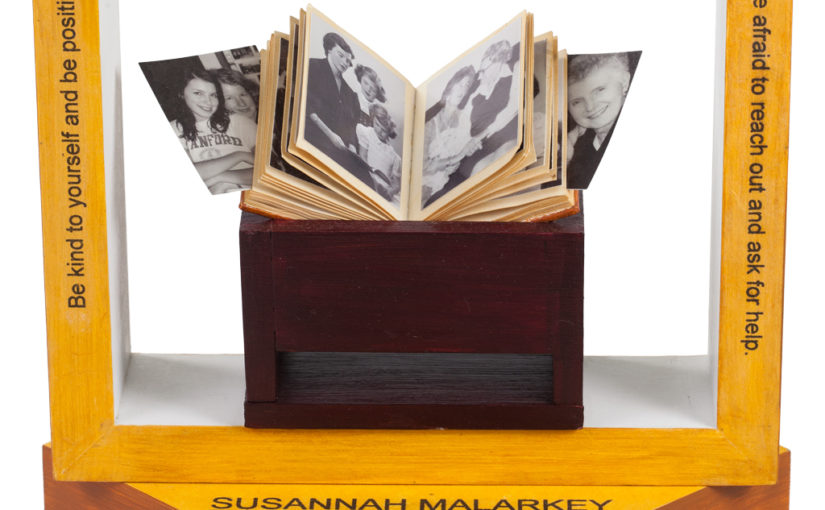
Framing Life, Memories, and Wisdom
Tajima. An artist and an extraordinary woman collaborate to create a box.
Susannah Malarkey, EXECUTIVE DIRECTOR OF THE TECHNOLOGY ALLIANCE OF WASHINGTON and MalPina Chan, ARTIST.
The form of the square frame suggests strength and solidity making it an appropriate metaphor for Susannah. From the first few moments of our initial conversation, we felt a connection as we shared memories about our mothers and daughters. Susannah’s feelings on “wise women who came before passing on and sharing their life’s lessons” and the notion of “tribal memories” serves as the inspiration for this piece.
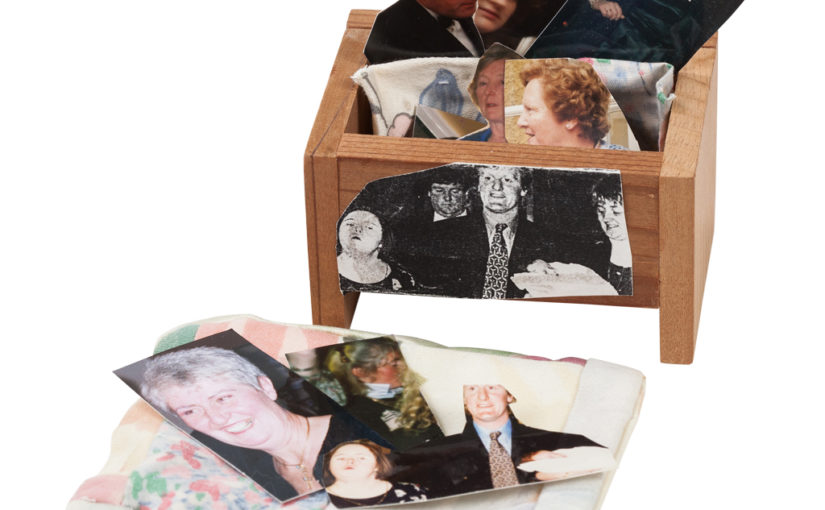
The Family Box
Croash Patrick
Time to talk to learn memories from the past
Pick up after the loss of some of my family
Hope in peace beneath the wings and carry me away from strife
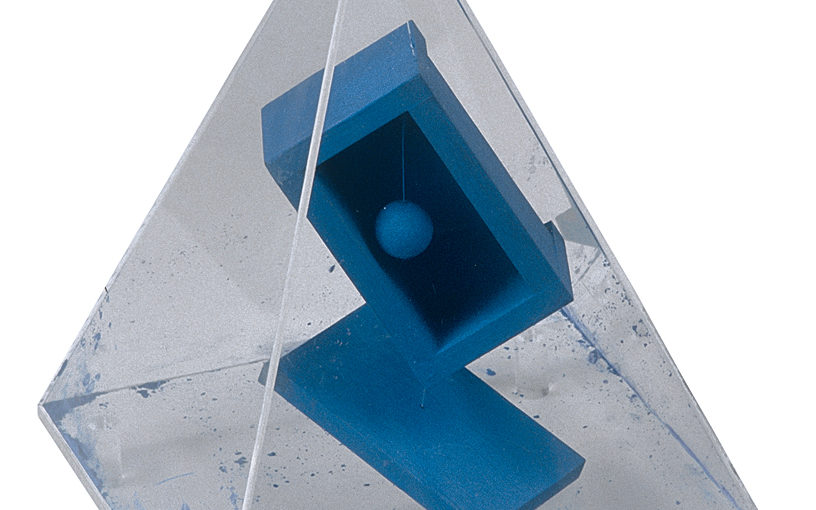
Floating in My Void
I look at the space around and expand to the infinite
All my senses curve in delight as I grow in the vacuum of non-event
Non-happening, non-existence.
I occupy the blue vastness of my dreams and become
Fatherless, motherless, a virtual Non-Being.
A hole in the lining of man’s memory.
A mere flight of particles liberated from density.
A definite escape.
And in the pulsating silence, I finally lift Isis’ veil…
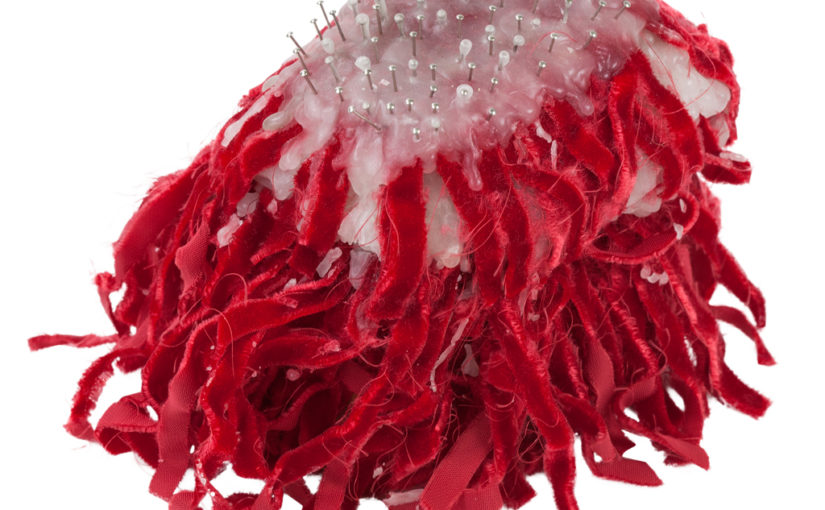
One Thousand Years of Sewing into the Night
My grandmother’s sewing box, a gift from her mother, handed down to me by my mother, is my inspiration for Women beyond borders. I have made a tiny sarcophagus of pins, cotton and frayed red velvet – to symbolize thousands of droplets of blood from pin-pricked fingers – all embedded in the wax of candles burned into the night, lighting women’s often unappreciated work of skill, toil and pleasure.
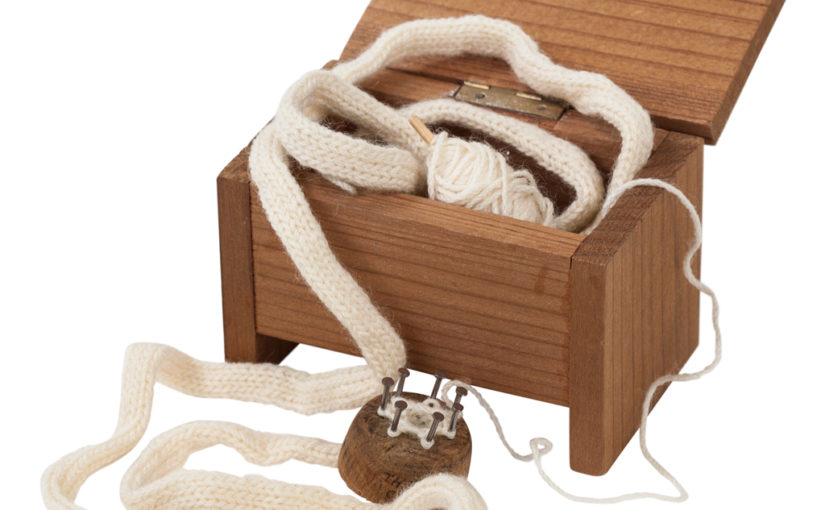
Knitting Machine for a Woolen Cord
My work is full of allusions to the ‘female’ element, mythology and cordicraft. Wool thread is the main material in my ‘knitted sculptures.’ The box contains a small knitting machine and a small bobbin of wool thread. This is a traditional way of making a cord, and anyone can continue the process of knitting. It is like a trip, a memory, but the tip of the thread must remain in the box.
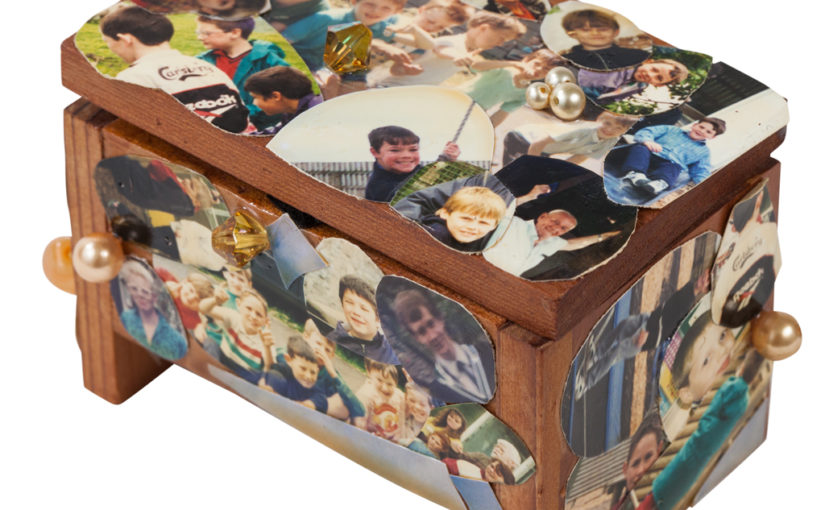
Jewels In My Crown
This collage was inspired by the fact that much of my working life has been spent with children. I also included my own children and other members of my family and friends who have been supportive of my efforts. It encapsulates lots of memories for me.
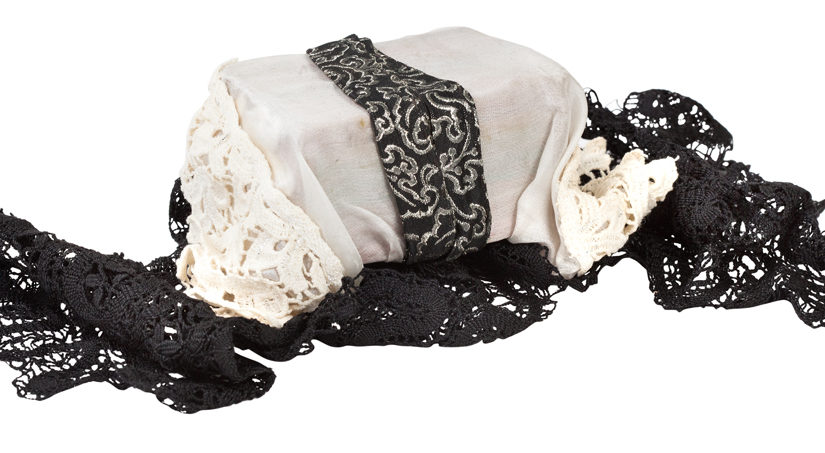
Memory
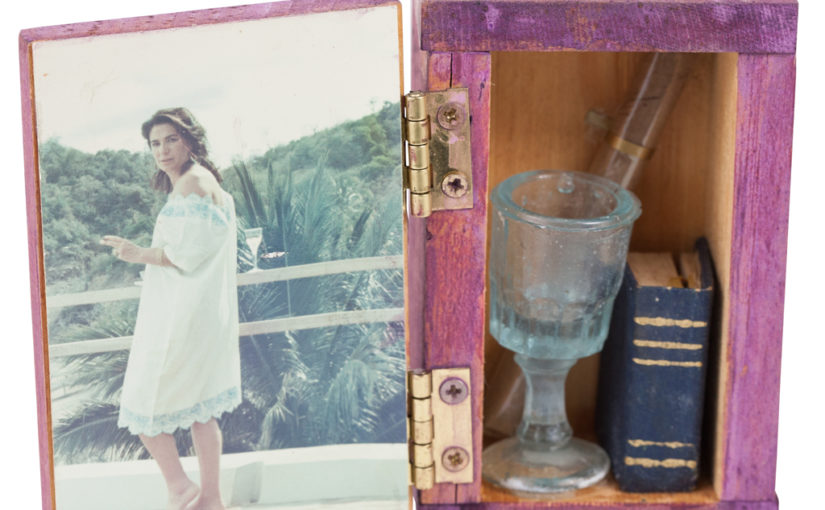
Para Olvidante a Ti
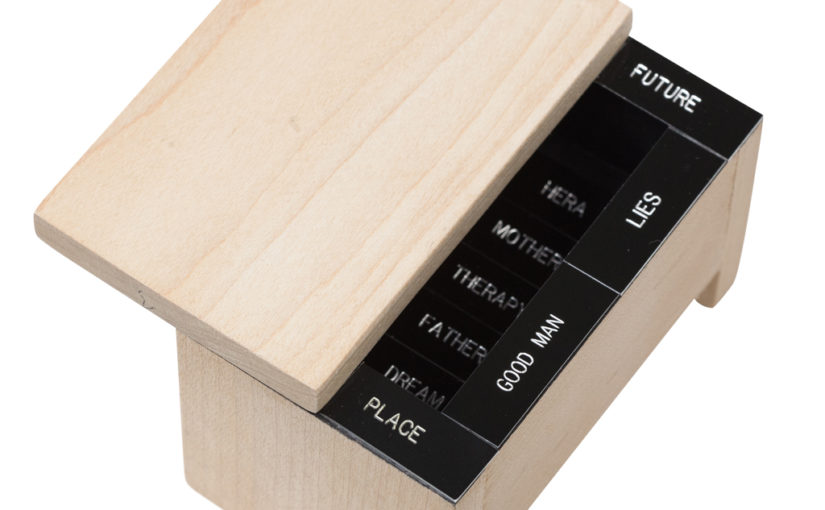
In Memory of My Father
This box turned out to be about the death of my father (1925-1986). In thinking about the exhibition and before I actually had the box in my hands I thought of “hope chests” and “Pandora’s box,” both representing women’s issues and lives. But behind these thoughts was always the image of coffins and bone boxes (the boxes that the bones of the dead in Greece are transferred into after their initial burial).
After receiving the box and playing around with it for awhile, I had to go with the more direct, personal association of my father’s death. So it became a shrine, a memento mori, a symbolic object. The words on top are FUTURE, PLACE, GOOD MAN, LIES. The words inside of the half-open box are HERA, MOTHER, THERAPY, FATHER, DREAM, STRANGER. We will all go to this future place. Here, a good man, lies. Hera, Greek goddess, wife of Zeus, mother/father/therapy, dream, father stranger.
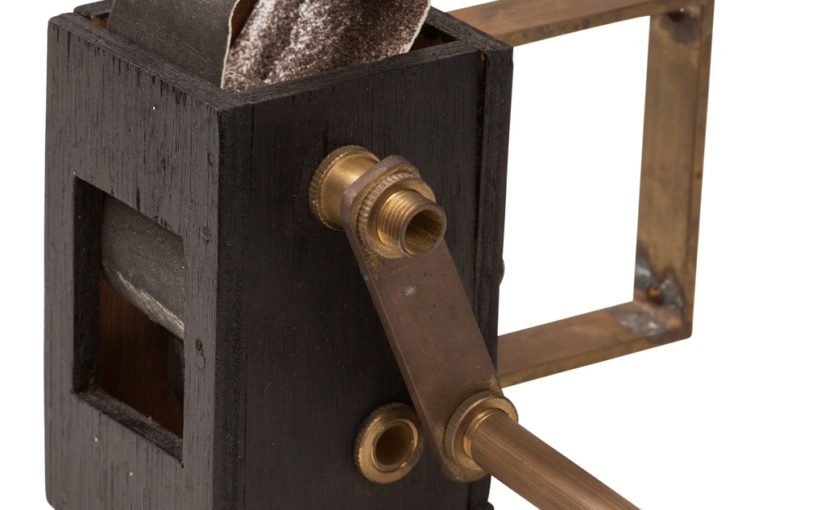
Untitled
I treated the box as an objet trouve, a modest thing with some forgotten purpose in its past. Upon being discovered, it brings to mind associations, and memories which unfold and spread out when the box is opened. Part object, part landscape, the image within the box does not recall a specific locus; rather, it reminds us of things that we know are memories. But these are stored in such distant lands that they cannot be conjured, they can only be gazed over.
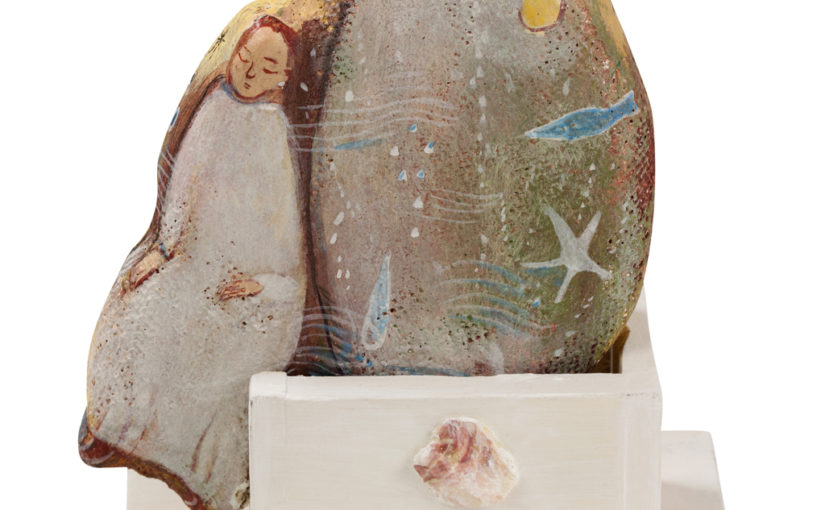
Sea Dream
When I set out to create something I try to draw in the season and the place I find myself.
Spring, Summer, Fall, Winter – I like things that evoke the seasons. I have packed a little box with memories – marine blue skies, turquoise seas, white corals, green jungles, so that the fragrance of summer can tickle your nostrils too!
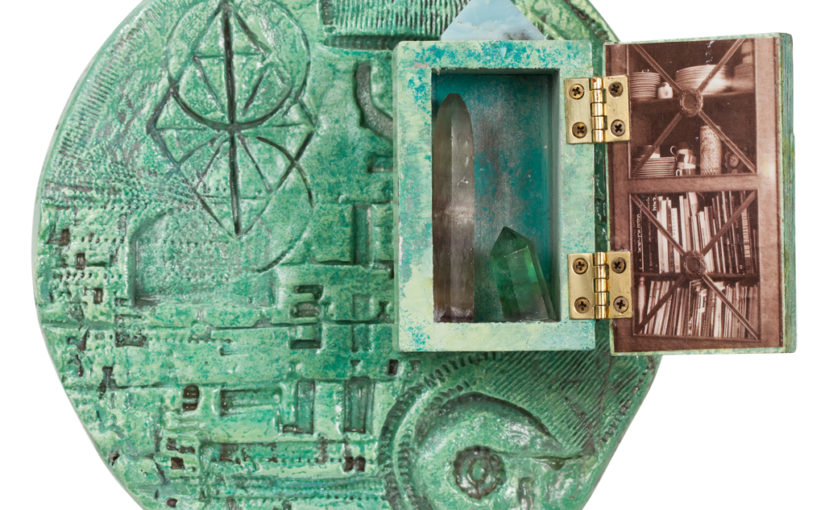
The Private Cosmic Library
The “Private-Cosmic Library” probes three possibilities for encoding conscious and public databases along a time axis.
The disk is made of painted cast aluminum, actualizing modern types of codes, encoding information on computerized disks, accumulating familiar signs from the language of electronics within and metaphysical signs in personal-code rhythm language.
The libraries appearing in the brown photographs characterize hundreds of years of book printing, a whole web of cultures and memories open to intimate browsing and learning from generation to generation. The “Private-Cosmic Library” is expressed by the simple fact that these are photographs of the libraries in my home with a portrait assimilated therein and many books in the field of art and metaphysics.
The sculpture-object itself opens as a book closet and alternatively, appears to be a small shrine by virtue of the crystal pyramid and three quartz columns.
In mineral terminology, these types of crystals are used for energy acceleration. According to mythology in the culture of pre-historic Atlantis, all information encoding was carried out energetically upon crystals. In light of the reawakening of the effectiveness of natural crystals, advanced technological achievements are brought closer to the furthest past.
In the cloak of time, past, present and future take place upon a circular axis, and the internal memory is the collective memory. With the hope that despite the physical miniature dimension of the work, the work will expand itself towards the open space.
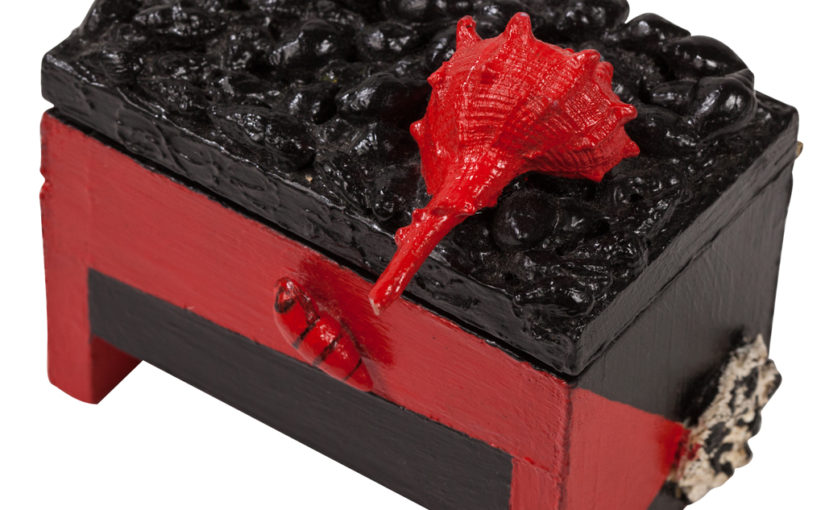
Untitled
Psalms to Ellul
My work comes from a very far and deep past including the meaning of personal memories and a hard political situation which is part of me. I try to express my existence, tough and sensitive sensations, by different elements used in this work.
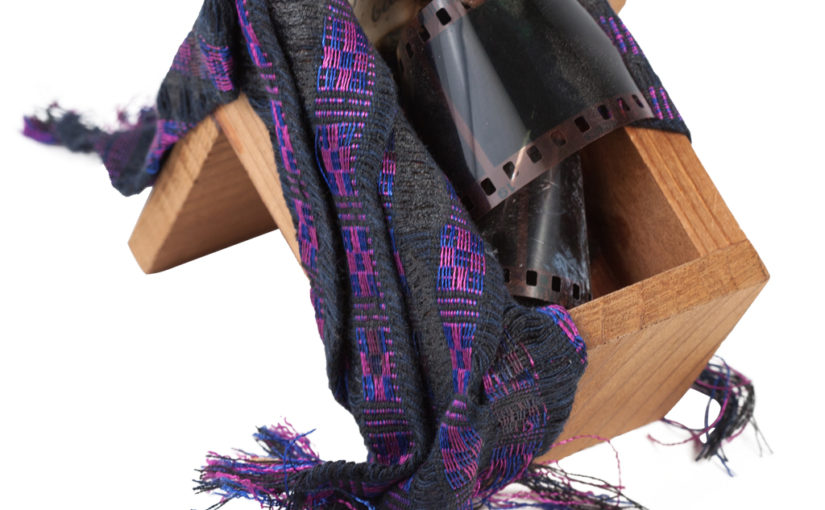
The Flow of Time
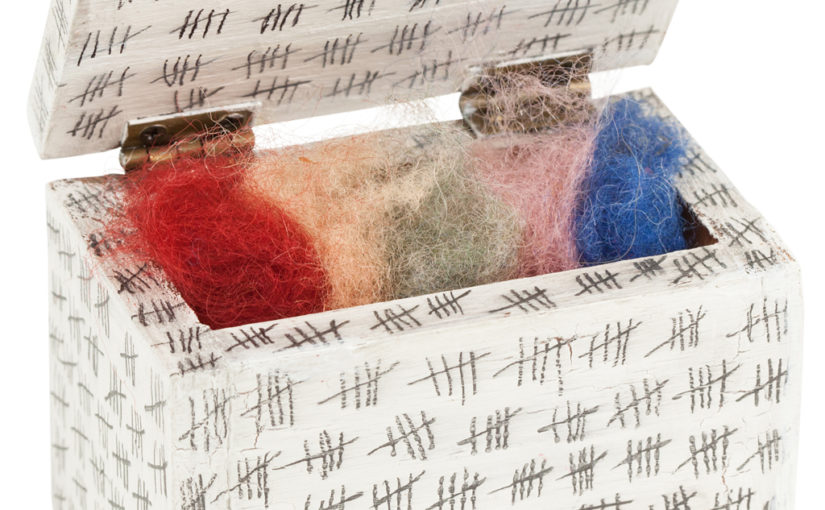
The Past Never Returns
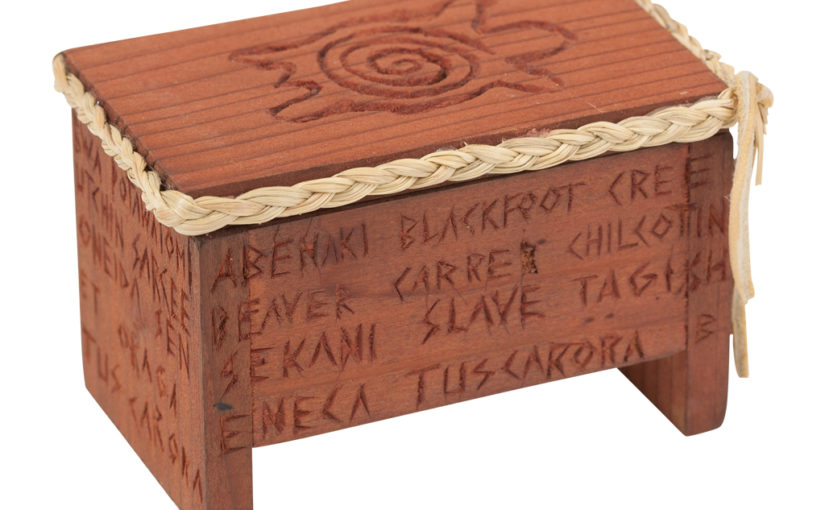
Untitled
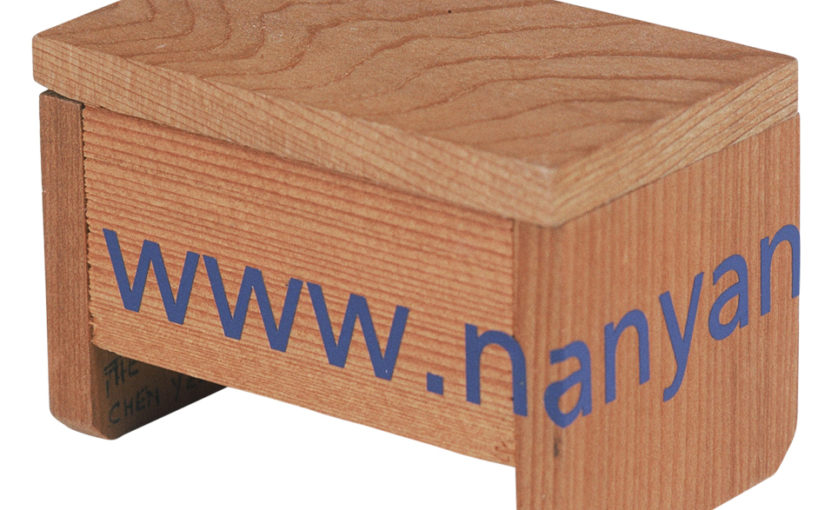
The Story of Late Chen Yuen Mei (Ma Che)
The work focuses on the life story of late Chen, a ma che or domestic servant, who came to Singapore from China in the early twentieth century. Despite having a hard life, she persevered for a brighter future. With her meager earnings, she supported her entire family in China, and contributed towards the purchase of 51 Neil Road. The premises housed the former Yuek Ann Tang which was a temple as well as an association that served as a refuge for ma ches; these women like Chen, were alone and poor. In her old age, Chen suffered from Alzheimer’s disease. Chen gains my utmost respect, not only for her contributions to the association, but also for her outstanding character. She demonstrated strength and perseverance throughout her life. The work aims to develop an invisible space beyond the box, and includes a web site that walks one through the places where she lived. To fulfill Chen’s dream of a grand funeral and send-off on her last journey, the box serves as her coffin.
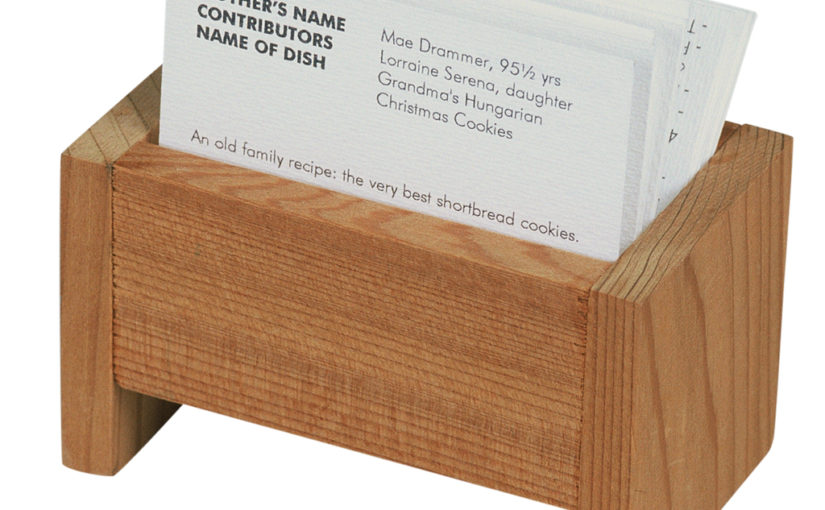
Project Recipe Box
This is a collaborative effort by mail/email, having started in December 2000 and will conclude December 2002. It asks participants to contribute a recipe from their mothers. The word recipe is open to interpretations: memories/ remedies/ conversations that occur in the kitchen/ contents of a pre-packed lunch/ etc. This is a simple project, based on a chain of words – women/ mothers/ cooking/ kitchen – used within a simplistic context of a stereotype, there are many distinct and different identities. In a kitchen, each woman develops multiple and complex ways to deal with the role of mother cooking. This role (one associated with sugar-coated sentiments) is also the same role that allows a woman (who may have been defaulted into the kitchen) some measures of control over her family. The kitchen can be a very powerful or oppressive place depending on the woman occupying it. I would like to think that every mother occupied it differently. I hope that this project (a small and incomplete record of their many facets) may serve as a humble but deserving tribute to all our mothers. And if it fails to do that, it is at least, a collection of recipes to some very delicious and precious dishes.
The Women's Voices: Ye Shu Fang from WOMEN BEYOND BORDERS on Vimeo.
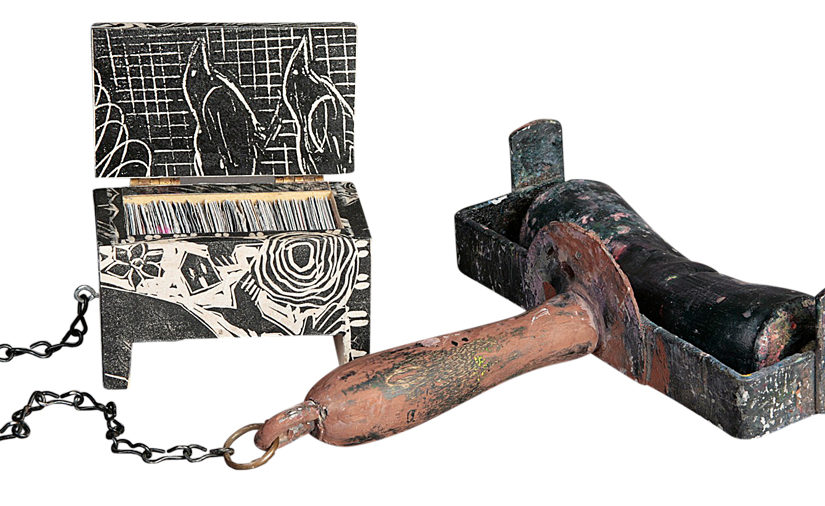
Remnants
Remnants references my many, may years as a working artist, particularly as a printmaker. I selected remnants from 30 years of art-making into the contained box, making my own sort of small “retrospective”. Working on this piece brought up a wide spectrum of memories, thoughts and emotions – and the toil and labor that go into a work of art. I consider myself a very fortunate person.
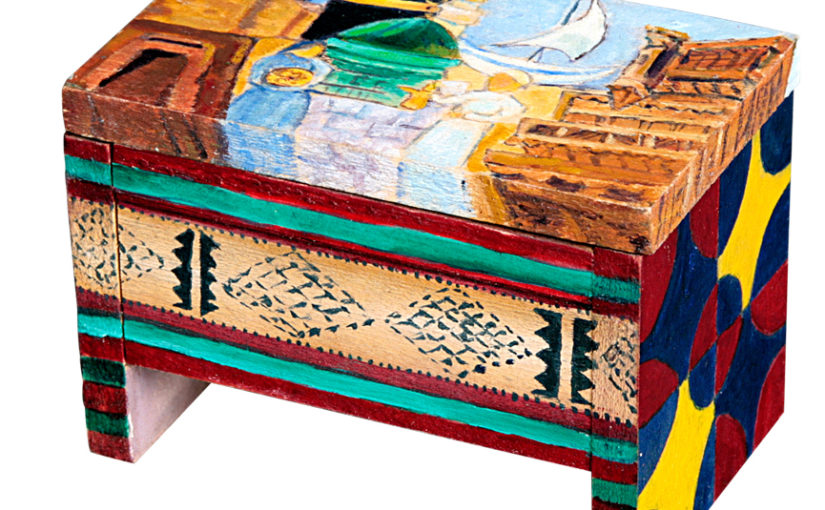
Chest of Heritage
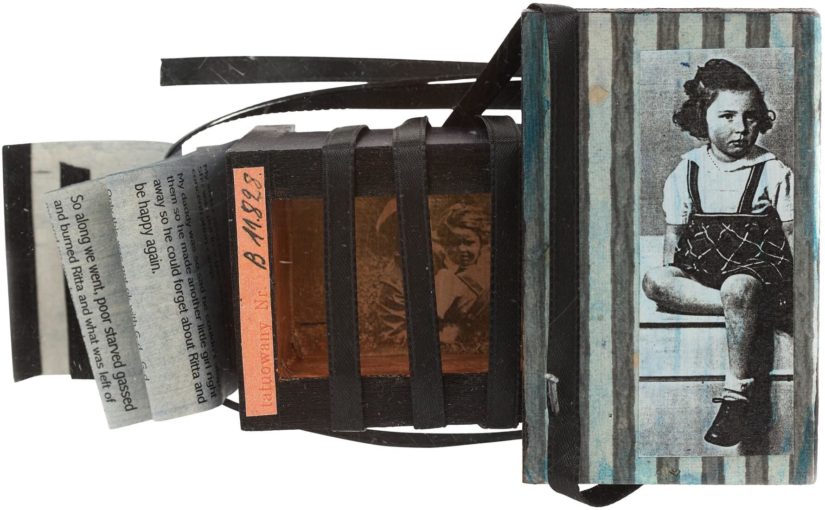
For Ritta
USA/Czech Republic
My sister died before I was a little girl.
She was put in a gas chamber in a
concentration camp.
My daddy was so sad he couldn’t stop
them so he made another little girl right
away so he could forget about Ritta and
be happy again
Only this was not ok with G-d. G-d
thought that this was too fast so he
played a trick on Daddy. He took
Ritta’s soul, which was still very upset
from being starved and gassed and
burned and sent it back to Earth.
Normally a soul would be allowed to
float around out there for a couple
hundred years or more to calm down
after doing Life. So it was shocking for
Ritta’s soul to come back too quickly
and-this was the mean part-to be
stuck in Janicka’s body.
This was very hard for me. I thought I
was supposed to smile. Everyone
wanted me to be a happy pretty little girl
so they could be happy and forget. But,
too bad looked like a bullfrog and I
could tell they thought that and were
ashamed. So no smiles. They didn’t
know about Ritta’s soul and that it took
up so much space may own little heart
didn’t have room to beat.
So along we went, poor starved gassed
and burned Ritta and what was left of
me and no one knew so I was very sad
and lonely. And poor Daddy couldn’t
forget Ritta because she was inside the
little bullfrog.
Grief Repair
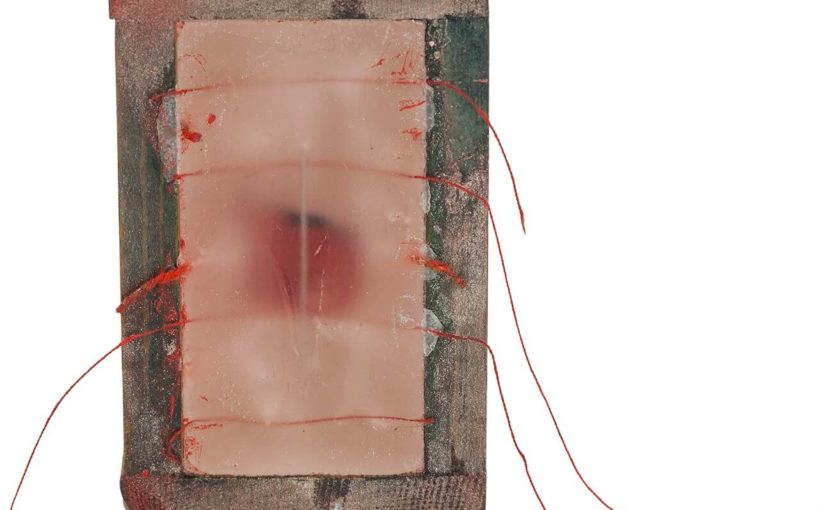
All is metaphor, even that which we may take as fact. Human logic is fragile. The box may represent a construct of human logic. Boxes do not occur in nature. It contains wax with the translucency of human skin, threads, a needle and blood. The needle under the “skin” is a metaphor for the grief of women all over the world in their efforts to keep love and the grace of human relationships and community whole, despite a world which seems eternally based on war and conflict. The needle is used for healing. The box is a prayer for continued courage and creativity.
Arrivederci Roma
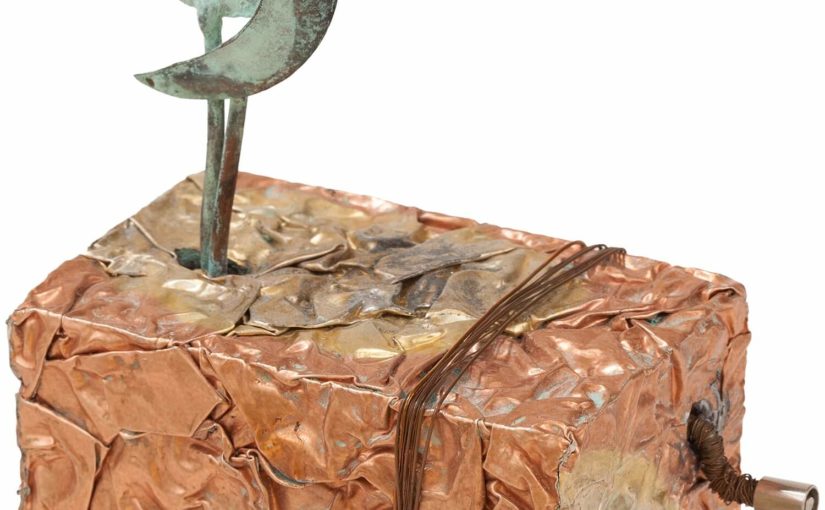
In a world of many and endless wars, this music box of memories represents moments of happiness from the past that offer us hope for a better future.
Invitation reverberates within the box’s walls. Notes hang from the ceiling, filling the shallow emptiness, filling us with the joy of a new moment, a new life, a sharing, a memory.
A Letter to My Mother
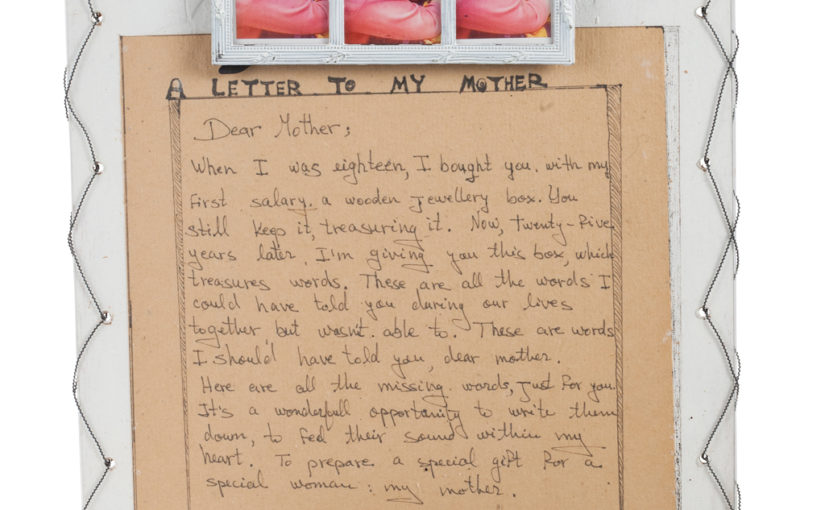
The box contains notes with words which were never said to her mother.
Dear Mother,
When I was eighteen, I bought you, with my first salary, a wooden jewelry box. You still keep it, treasuring it. Now, twenty-five years later, I’m giving you this box which treasures words. These are all the words I could have told you during our lives together, but wasn’t able to. These are words I should have told you, dear mother.
Here are all the missing words, just for you. It’s a wonderful opportunity to write them down, to feel their sound within my heart. To prepare a special gift for a special woman: my mother.
Your loving daughter,
Shuli Nachshon
The Women's Voices: Shuli Nachshon, Israel from WOMEN BEYOND BORDERS on Vimeo.
Untitled
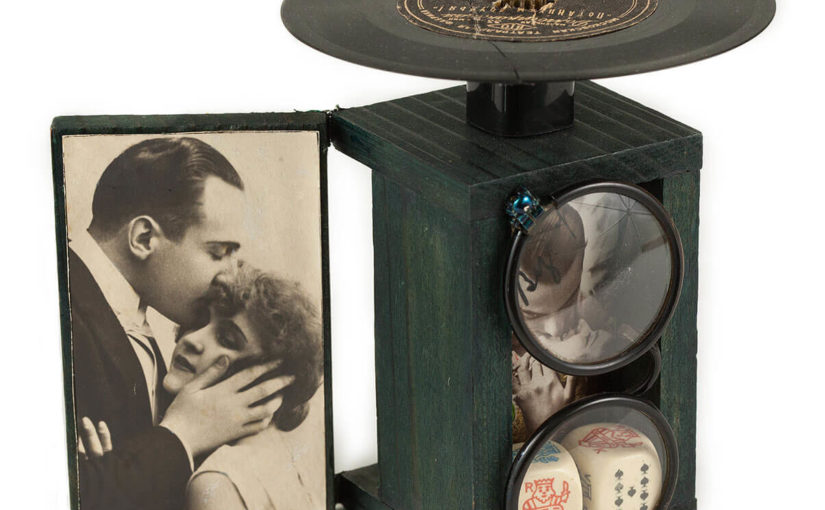
Polina Fedorova worked with her 96 year-old grandmother to create this box.
Until Death Do Us Part
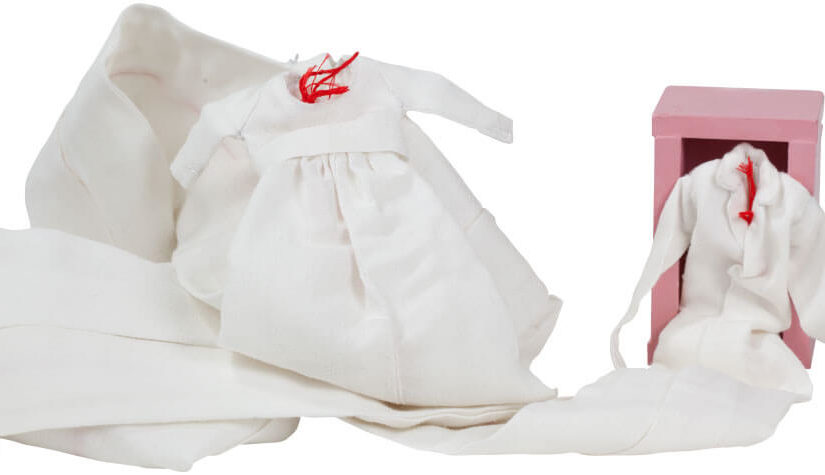
In my home country, Japan, there is a legend for girls that says that their prospective husbands have their little toes tied up to them with an invisible red thread. I used to believe in this legend as well. In my opinion it is wonderful to be able to believe in such a thing.
Since we’re infants, we are educated to play a role either as a woman or as man. I still remember when I used to play house-dolls with my friends and how much we enjoyed playing the mother’s role, like all the mothers of every mother. It is a simple but very pleasing memory that all women have inside. However, nowadays I often feel a victim of the male order and often wonder what can I do about it.
I was thinking of this as I was making my box and I felt like I was playing with dolls again because I was doing typical housework tasks such as sewing, washing, and ironing.
I hope you will tender my piece during the traveling exhibition as if it were our collective memory, which men will never be able to understand. And please, wash it and iron it when needed.
P.S. Do you know what? In Japanese, when we say “to get married” we use the word “to be tied up.” In the end, every princess will be tied up to their blue prince.