womens beyond border logo

JOURNAL beyond borders

ISRAEL: OUR FIRST INTERNATIONAL EXHIBITION

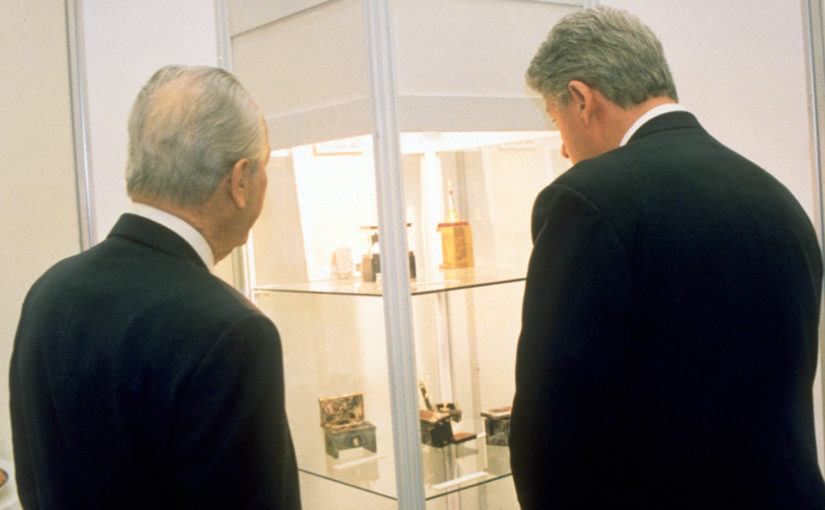
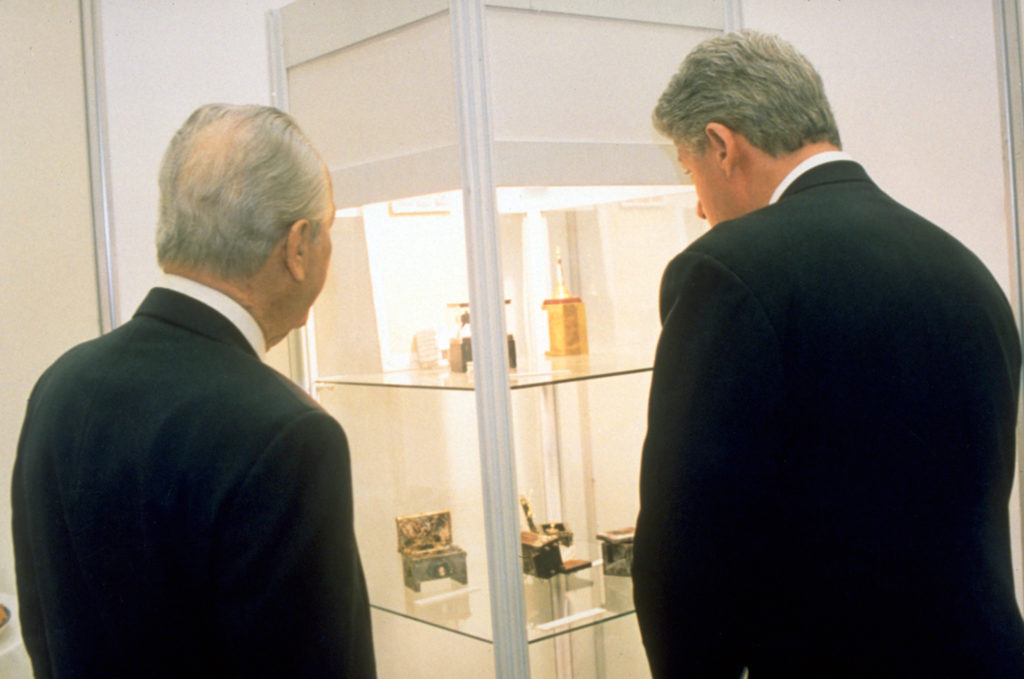
United States President Bill Clinton and then-Prime Minister Shimon Peres of Israel at the Exhibition in Israel


ICC Contemporary Gallery Binyaney Ha’ooma

Jerusalem, Israel
March 13 – April 27, 1996

Edna Ramot, Director
Daphna Naor, Curator and Coordinator
Ravel Pittman and Elena Siff, Contacts


A DEDICATION

 
The WBB Exhibition in Israel was dedicated to the memory of Ruth Baram, a passionate patron of the arts and a driving force behind reshaping the ICC Jerusalem International Convention Center. Ruth successfully pushed for the open display of art throughout the public building, with the inclusion of local as well as international works. Blessed with the spirit of inquisitiveness, Ruth was constantly in search of the meaning of life through art.


ARTIST NETWORK BEGINS

Daphna Naor


Women Beyond Borders is an expression of the desire to establish a network of female artists who maintain an international dialogue and engage in mutual visits and joint exhibitions and publications. Worldwide parameters of communication have been made possible with the opening of a WBB Internet site.
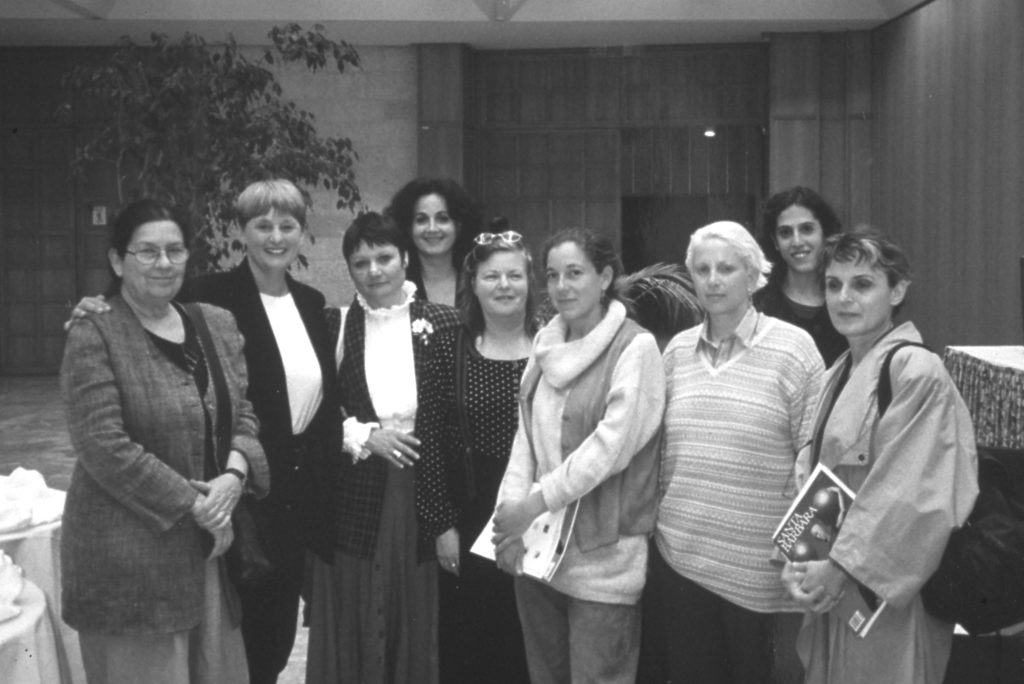
 

Reviva Regev, Lorraine Serena, Daphna Naor, Edna Ramot, Curator ICC Gallery, Gaby Salzberger, Dorit Feldman, Deganit Schocken, ICC Gallery assistant - artists and organizers of WBB Israel
Reviva Regev, Lorraine Serena, Daphna Naor, Edna Ramot, Gaby Salzberger, Dorit Feldman, Deganit Schocken and others

For the dozens of artists who took up the challenge, the boxes serve as an impetus for a journey into their own inner enchanted worlds to distant temples, longings for a different reality, or expressions of secret hopes. Some artists found in their boxes a means of expressing pain, missed opportunities and despair. Others saw the small boxes as cells of communication through which they shot arrows of humor, optimism and power. Others rebelled against the box, challenging their physical boundaries and went beyond.
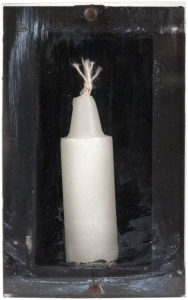


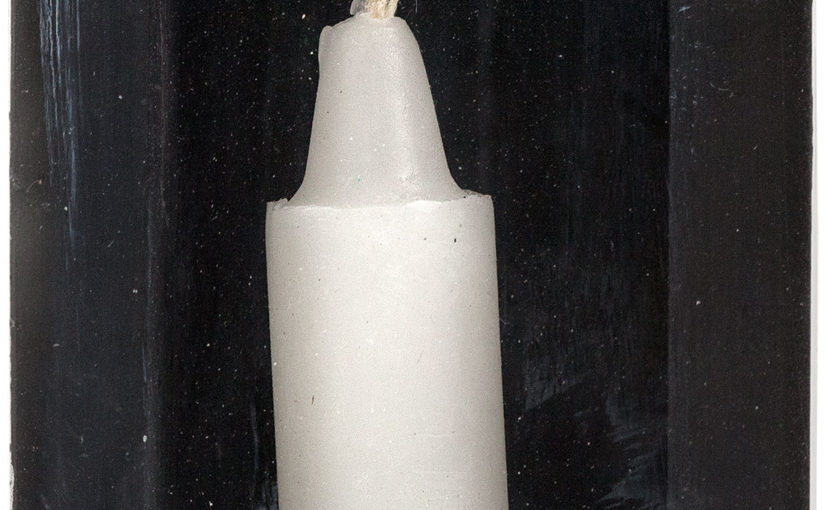
Jenifer Bar Lev - Fire, Israel

Jennifer Bar Lev – Fire – Israel
Fire is an important symbol in the Jewish culture. There are many passages in the Bible condemning pagan ritual sacrifices at altars in the forest, and extolling proper burnt sacrifices to the One God:


“…then shalt Thou be pleased with the sacrifices of righteousness with burnt offering…” (Psalm LI: 21)


There are many holidays in which fire plays an important part: Lag BaOmer, when bonfires are made as an echo of the signal fires lit against the Romans during the Bar Kochba rebellion; Hannuka, when the miracle of a lamp containing oil enough for a day burned for eight; the tradition of “soul candles,” which burn for 24 hours on the anniversary of the death of a close family member.


But perhaps the most constant and important fire in Judaism is the Sabbath candles, to be lit on Friday eve by every daughter of Israel. I see the Sabbath candles as a symbol of home and the woman’s duty and privilege to protect and care for her family, physically and spiritually.


My piece contains an unlit Sabbath candle to remind myself that no matter how much women expand our potential as human beings, the role of homemaker is a very profound commitment. It provides the foundation of faith upon which miracles can grow.
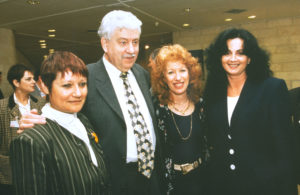
 

Daphna Naor, two guests, and Edna Ramot


Historically, a box is a chest for treasures, a memory of a holy place, a womb or a tomb and linked with gift. These connotations are linked with intimate secret objects that create a space for personal meaning, a diary for sharing ideas with oneself, a place for the safekeeping of memories, for preserving culture, a place to hide from others. It can be viewed as a ‘box of secrets’ which brings a woman closer to her soul and, like a mirror, helps to recognize herself and to define her identity.

– Dr. Talya Birkhahn, Israeli Philosopher of Education


Santa Barbara, California artists Lorraine Serena and Elena Siff have initiated an international exhibition of women. They wished to express the recent revolution in women’s art that has taken place in recent decades, at the end of the century, in which women broke through socioeconomic boundaries women’s contribution to art is no longer that of someone sitting on the sidelines, but rather, that of a securely situated, confident individuals whose critique can contribute and enrich the central discussion and execution.

 
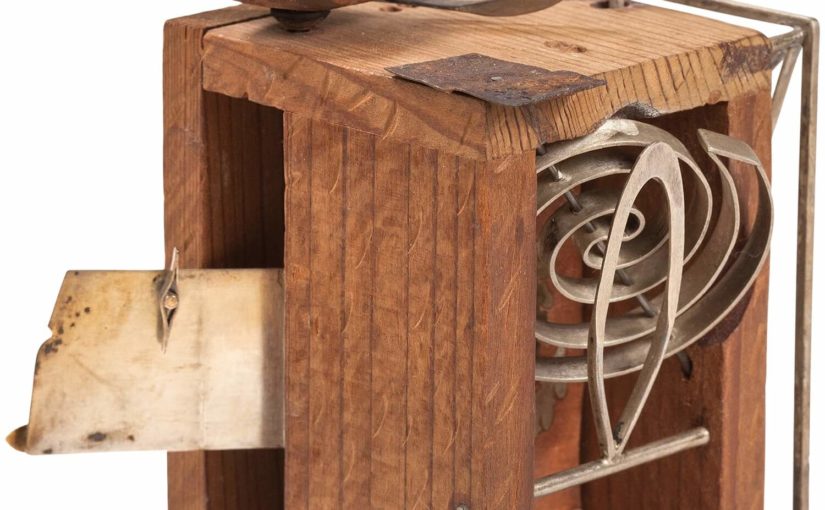
They sent miniature wooden boxes to female artists throughout the world. The boxes were originally intended to serve as channels of inter-cultural communication: it seemed that their uniformity would highlight the differences and diversity.

 
Among an international spectrum of artists. The dozens of artists who took up the challenge, the boxes served as an impetus for a journey into their own inner enchanted worlds to distant temples, a longing for a different reality, or an expression of secret hopes. Some of the artists found in their boxes a means of expressing pain, as they are “withdrawn” or embody missed opportunities and dispair. Others, however, saw the small boxes as cells of communication through which to shoot arrows of humor, optimism, and power. Some of them rebelled against the box, challenged their physical boundaries, and went beyond them.

– Daphna Naor


SEE BOXES FROM ISRAEL
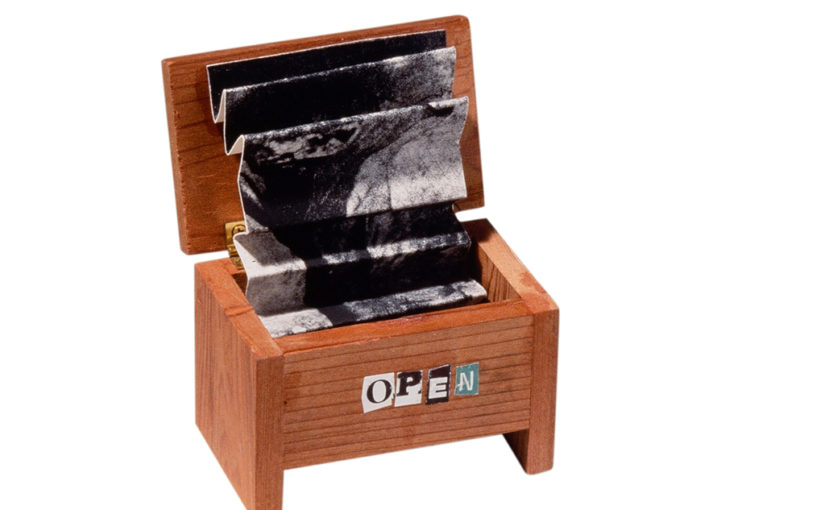
 

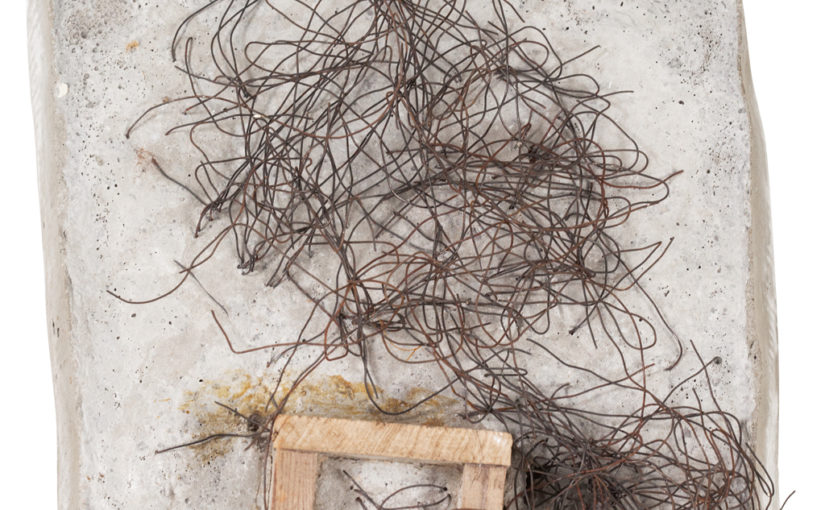
Untitled

I treated the box as an objet trouve, a modest thing with some forgotten purpose in its past. Upon being discovered, it brings to mind associations, and memories which unfold and spread out when the box is opened. Part object, part landscape, the image within the box does not recall a specific locus; rather, it reminds us of things that we know are memories. But these are stored in such distant lands that they cannot be conjured, they can only be gazed over.

Untitled

I treated the box as an objet trouve, a modest thing with some forgotten purpose in its past. Upon being discovered, it brings to mind associations, and memories which unfold and spread out when the box is opened. Part object, part landscape, the image within the box does not recall a specific locus; rather, it reminds us of things that we know are memories. But these are stored in such distant lands that they cannot be conjured, they can only be gazed over.

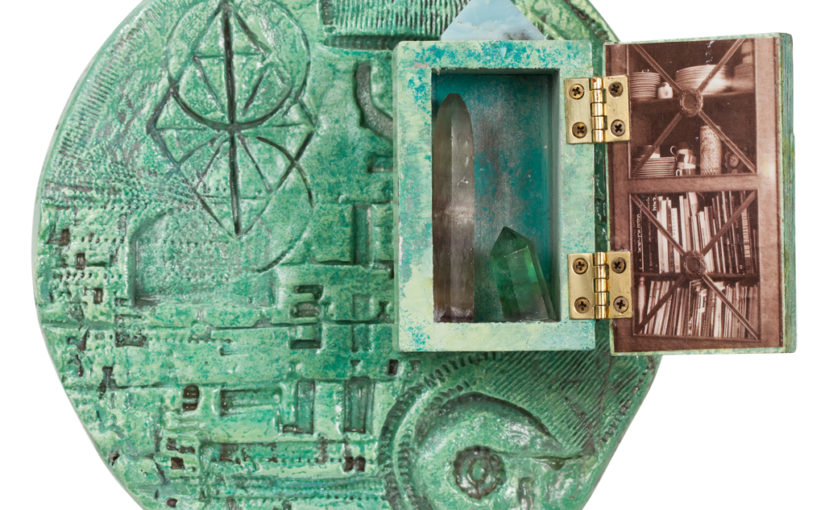
The Private Cosmic Library

The “Private-Cosmic Library” probes three possibilities for encoding conscious and public databases along a time axis.

The disk is made of painted cast aluminum, actualizing modern types of codes, encoding information on computerized disks, accumulating familiar signs from the language of electronics within and metaphysical signs in personal-code rhythm language.

The libraries appearing in the brown photographs characterize hundreds of years of book printing, a whole web of cultures and memories open to intimate browsing and learning from generation to generation. The “Private-Cosmic Library” is expressed by the simple fact that these are photographs of the libraries in my home with a portrait assimilated therein and many books in the field of art and metaphysics.

The sculpture-object itself opens as a book closet and alternatively, appears to be a small shrine by virtue of the crystal pyramid and three quartz columns.

In mineral terminology, these types of crystals are used for energy acceleration. According to mythology in the culture of pre-historic Atlantis, all information encoding was carried out energetically upon crystals. In light of the reawakening of the effectiveness of natural crystals, advanced technological achievements are brought closer to the furthest past.

In the cloak of time, past, present and future take place upon a circular axis, and the internal memory is the collective memory. With the hope that despite the physical miniature dimension of the work, the work will expand itself towards the open space.

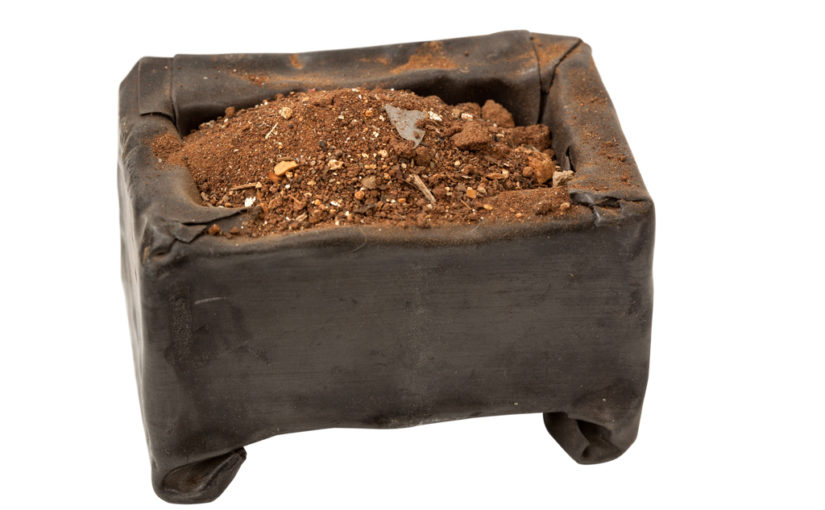
Coffer Nephesh

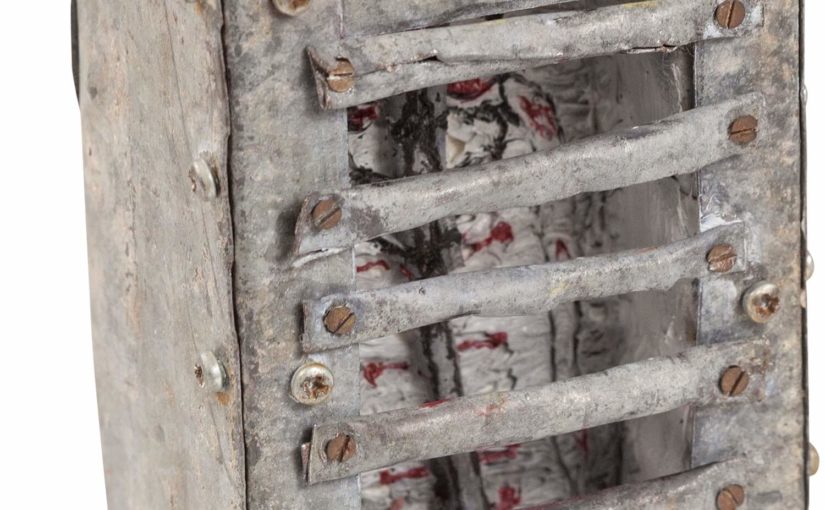
The box, covered with lead, contains the soil of Israel. The phrase coffer nephesh in Hebrew, refers to ransom. Literally the word coffer means ransom and the word nephesh means soul.

COFFER: Like all objects whose essential quality is that of containing, it sometimes acquires the symbolic character of a heart, the brain or the maternal womb. The heart, the first of these meanings, is a figure characteristic of the symbolism of Romanesque art.

In a broader sense, receptacles which can be closed up have, from the earliest times, represented all things that may hold secrets, such as the Ark of the Covenant of the Hebrews, or Pandora’s box.

(J. E. Cirlot, A Dictionary of Symbols, New York)

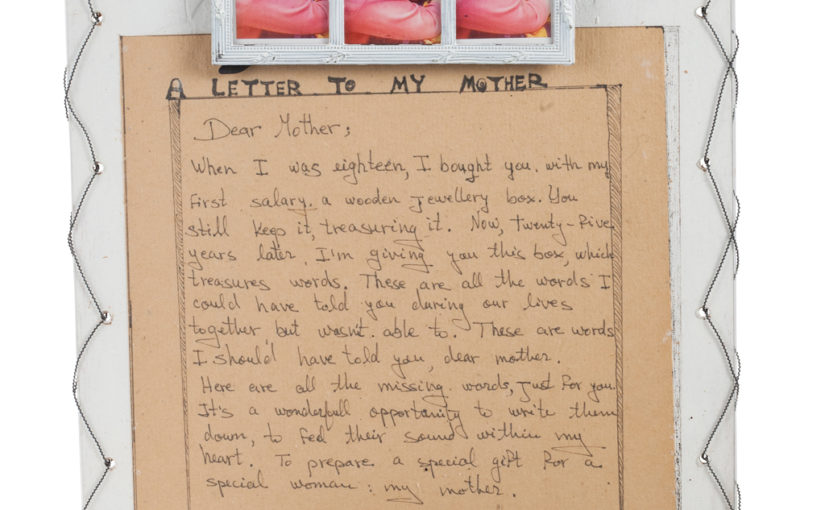
A Letter to My Mother

The box contains notes with words which were never said to her mother.

Dear Mother,

When I was eighteen, I bought you, with my first salary, a wooden jewelry box. You still keep it, treasuring it. Now, twenty-five years later, I’m giving you this box which treasures words. These are all the words I could have told you during our lives together, but wasn’t able to. These are words I should have told you, dear mother.

Here are all the missing words, just for you. It’s a wonderful opportunity to write them down, to feel their sound within my heart. To prepare a special gift for a special woman: my mother.

Your loving daughter,
Shuli Nachshon

The Women's Voices: Shuli Nachshon, Israel from WOMEN BEYOND BORDERS on Vimeo.

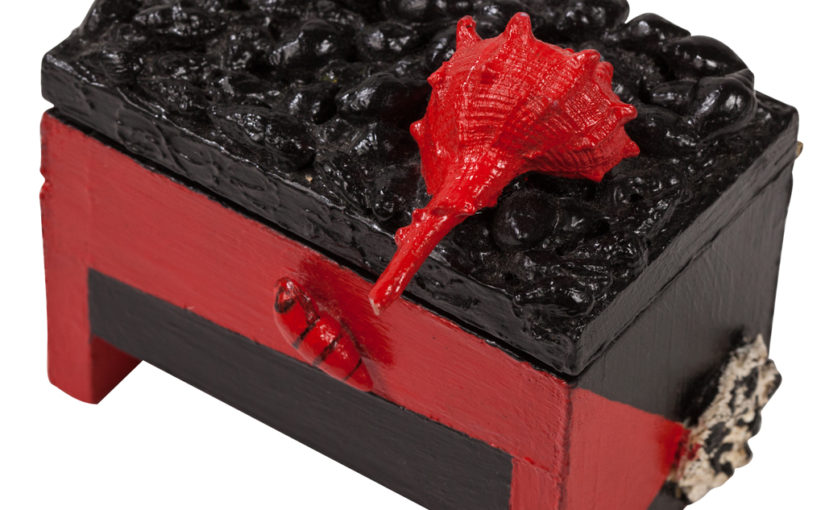
Fire

Fire is an important symbol in the Jewish culture. There are many passages in the Bible condemning pagan ritual sacrifices at altars in the forest, and extolling proper burnt sacrifices to the One God:

“…then shalt Thou be pleased with the sacrifices of righteousness with burnt offering…” (Psalm LI: 21)

There are many holidays in which fire plays an important part: Lag BaOmer, when bonfires are made as an echo of the signal fires lit against the Romans during the Bar Kochba rebellion; Hannuka, when the miracle of a lamp containing oil enough for a day burned for eight; the tradition of “soul candles,” which burn for 24 hours on the anniversary of the death of a close family member.

But perhaps the most constant and important fire in Judaism is the Sabbath candles, to be lit on Friday eve by every daughter of Israel. I see the Sabbath candles as a symbol of home and the woman’s duty and privilege to protect and care for her family, physically and spiritually.

My piece contains an unlit Sabbath candle to remind myself that no matter how much women expand our potential as human beings, the role of homemaker is a very profound commitment. It provides the foundation of faith upon which miracles can grow.