womens beyond border logo

JOURNAL beyond borders

Formosa Tales Exhibition


Taipei

Taiwan
March 7 – March 30, 2021

Christine Wu, Initiated WBB in Taiwan
Rose Huang, Collaborator
La Benida Hui, Collaborator
Roma Mehta, Collaborator


A New Exhibition


A staff wears a face mask with a Taiwanese flag design, as protection due to the coronavirus disease (COVID-19) outbreak, at a factory for non woven filter fabric used to make surgical face masks, in Taoyuan, Taiwan, March 30, 2020. REUTERS/Ann Wang

 
Women Beyond Borders are proud to announce that we have opened a new exhibition in Taiwan in conjunction with Red Room, a community-driven creative arts platform fostering inter-generational, cross-cultural expression. The Exhibition is entitled Formosa Tales and hosts the works of well over 70 artists. The exhibition was opened to the public at the Cloud Forest Gallery 27M in Taipei for International Women’s Day on Monday, March 8th, 2021 and will travel all across the island in the future!


The Following Was Provided by –

Kaya Lemaire
 

A Poster from the Taiwan Exhibition


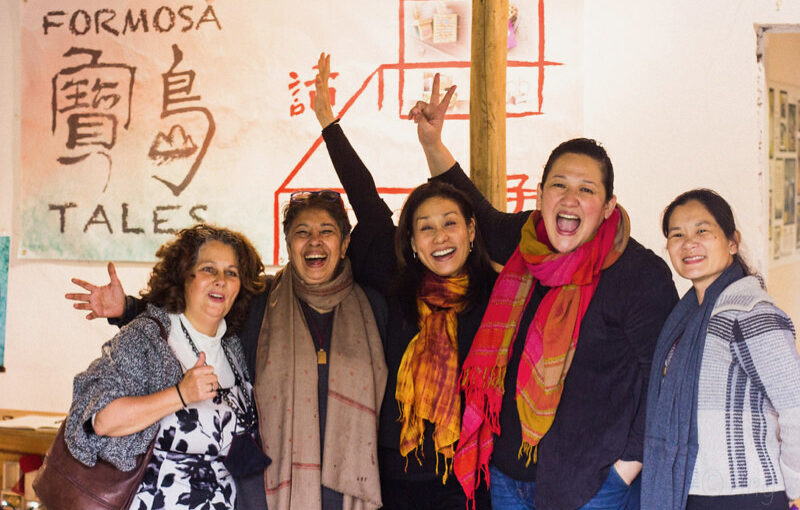
Roma Mehta – Formosa Tales 寶島話匣子 at the Cloud Forest – March 27, 2021, Taiwan


Yes. It was as dreamy as it sounds.


It was cloudy, it was verdant, there were many women (and men!), and artists, amazing food, environmentally-conscious people & practices, and some snazzy latin music.


Let it be known that Red Room knows how to put on a fantastic cultural event.


Nestled in the hills under Yangmingshan, the Cloud Forest Collective has set up a shared art space/gallery next to their pottery studio. It’s a beautiful location, far away from the smelly scooters and honking Hondas.


It’s a space to find peace among artsy individuals and mindful friends. And perhaps make a bowl or two, if it suits you.


The event that took place on March 7th was the opening exhibition of Women Beyond Borders (WBB) Taiwan Chapter, titled Formosa Tales 寶島話匣子. Red Room collaborated with WBB to feature the personal stories of women from a variety of cultural backgrounds, through the physical medium of a box.


WBB is a non-profit, cross-cultural exhibition of women connecting women from all walks of life within and beyond their communities across the globe via a small, wooden box. Women from internationally known artists to women with no prior artistic experience, everywhere from Argentina to Zambia, have transformed these wooden boxes into a repository that contains a story from the artist.


Lorraine Serena is the brains behind WBB, holding the belief that,


“In light of the world situation, we move forward with even greater conviction that women’s voices and visions are a healing force in the world. The arts are a universal and essential language allowing us to look beyond ourselves in order to create a new model of relatedness.”


The women who participated could really do whatever they liked with the box…


… Changing its shape, orientation, color, or texture just to start. What emerged from the boxes were incredible stories of growth, change, heartbreak, tragedy, evolution, power, and more. It was amazing to see how the boundaries of a box could be pushed and stretched.


This is La Benida Hui’s box, broken into balance pieces to create “Her Story, Her Life and Her Lesson”


La Benida Hui
 

As with all the Red Room events, I have some sense of “coming home”. Growing up in a hippie household in Vancouver primed me for the things that maybe some others would find surprising about this community in Taiwan.


The sharing circles, jam sessions, and long hugs are indicative of the open-heartedness that is fostered between each person. It’s welcoming to people of any shape, size, color, identity, or other definers we humans can come up with. It’s a community that has grown around the arts.


When I walked into the courtyard entryway of Cloud Forest my ears were greeted by the hand pan and laughter echoing through the open gallery space. I was immediately in love with the setup.


The gallery is set in an old heritage building with a bright, open layout with boxes dotting all the surfaces.
 

A low-lying stone building to the right was where we found the live music, by the band Ambiente Latino, and an AMAZING spread of vegetarian food, drinks, and dessert. I’ve never been so impressed by the catering at a free event. The food was served on Rose’s plant-based plates and bowls (check out her brand Conscious Good Eats on Facebook).


In the beginning, there was a brief talk about the project and some reflections on the planning and execution of such an event. It ain’t easy to pull off this level of awesome.


The women behind the project were Christine Wu, Rose Huang, La Benida Hui, and Roma Mehta, who spent months planning the opening and collecting art projects, setting up and organizing every last detail. And it doesn’t end there.


Formosa Tales 寶島話匣子 is a traveling exhibition that will be moving around the island and showcasing the boxes and stories. Taipei was the first stop on its tour. If you’re interested, keep an eye on Red Room’s page to find out when/where the next exhibition will pop up.


People milled about chatting, laughing and enjoying the space. It was a chill and easy-going atmosphere, which is standard for a Red Room event. My friend Christiaan and I were admiring all the interesting people that passed through, with their feathers and frills and colorful braids.


One thing I love about trying new things is discovering all the different kinds of people that exist outside of your bubble.


Often it feels as though we live inside an echo chamber – hanging out with people who dress like us, think similar things, and hold relatively similar opinions. It’s rare that we go outside and talk to someone who is completely different from ourselves.


I want to make this point because it comes up around the topic of gender and other sensitivities, like race, class, sexual orientation, and so on.


Around the time of women’s day, I attended a few other events and the discussion around gender seemed very “othering”. And by that I mean men were often alienated from the conversation or alternative ideas were shut down.


I think there’s a lack of skill in our society when it comes to having conversations with people you disagree with. It’s incredibly difficult not to get emotions tangled into the narrative, which usually ends up with someone feeling hurt or maybe even an argument.


WBB at Cloud Forest was by far the most relaxing women’s day event I attended this year.


… And maybe we can chalk it up to the lack of a contentious topic being debated. Or maybe there wasn’t any trigger for it.


Or maybe it’s something else. The medium of art and self-expression didn’t overtly start pointing any fingers at anyone about this topic. Rather it was an opportunity for everyone to read and understand some personal struggles or stories.


The boxes didn’t confront anyone with statistics or blame or “call for reform now”. They just sat there wide open for anyone to take a look and take in what they said.


It was an invitation to empathize and relate.


Maybe an invitation is what is needed to initiate change. An invitation to listen. To comfort. To stand in someone else’s shoes for a moment.


There are many people out here pushing the borders towards uncharted territory, and they’re doing it without creating more hurt, harm, or suffering in the world. We sure as heck don’t need any more of that.


Out of the Box Twice Over


The Red Room celebrated International Women’s Day by organizing the 2nd Formosa Tales Box Project with the Namaxia aboriginal tribe in Kaohsiung, a region in southern Taiwan. March 12th to the 13th of 2022 was spent with the Namaxia matriarch and her community along with visits to matriarchs from other tribes in Taiwan. The Namaxia tribe connected with the project, leading to it becoming the impetus to help them revitalize their community. Inspired by the impact of the project, matriarchs from the other tribes are now interested in bringing the project to their own communities. Formosa Tales is alive and well and has taken a life of its own in Taiwan.


SEE BOXES FROM TAIWAN
 

SWITZERLAND

basel-installation

Antikenmuseum Basel

Basel, Switzerland
April 28 – June 23, 1996

Prof. Dr. Peter Blome, Director
Prof. Dr. Margot Schmidt, Assistant Director
Dr. Barbara Begelsbacher, President Museum Commission
Anne-Kathi Wildberger, Head of Museum Education
Heide Hildebrand, WBB Austrian Curator and Coordinator
Ella Van der Meijden, WBB Swiss Curator and Coordinator
Dr. Sania Papa, WBB Greek Curator and Coordinator
Vera Giesel, Annerose Bekuhrs, WBB German Curators and Coordinators


Pandora, just to set things straight, was the Athenian name for the earth goddess Rhea. The nasty little tale told by Hesiod, the Greek historian, blaming all the world’s follies and ills on a woman who opened up a box of Spites, is “not a genuine myth but an anti-feminist fable, probably of his own invention,” according to mythographer Robert Graves. Pandora’s jar originally contained winged souls.


Well, than the real Pandora is back in action. Because of an idea hatched in Santa Barbara, 200 plus women artists from more than a dozen countries are sending their “winged souls” out into the world in tiny wooden boxes.

– Mary Heebner, Santa Barbara Magazine 1995


Lydia Dambassina – The Last Child, Greece, 1996

Lydia Dambassina – The Last Child – Greece
My work is a continuous relation with movement and time. The spiral is a symbol of life and fertility: the permanence of being under its mobility.


Ellen Wessinhage, Lorraine Serena, Sania Pappa, WBB Greece Curator, Vana Xenou (WBB Artist) at Opening of WBB Basel.
Ellen Wessinhage, Lorraine Serena, Sania Pappa,WBB Greece Curator, Vana Xenou, WBB Artist at Opening of WBB Basel


THE NEED FOR SOLIDARITY

Women Beyond Borders Catalog

Annemarie Monteil, Art Historian


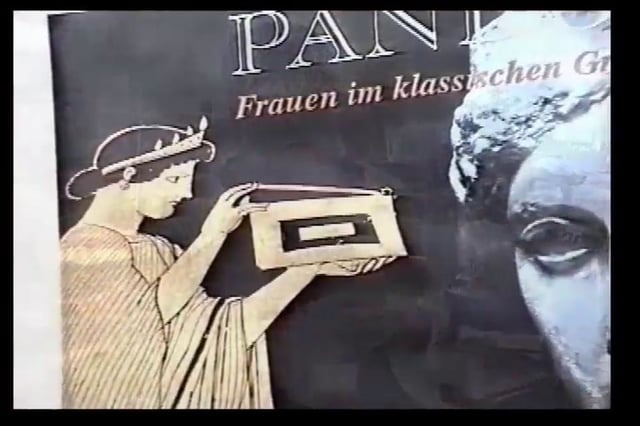
Anne-Kathi Wildberger, Educational Curator and Heide Bilderbrand, WBB Austrian participant had the inspiration of including a segment of WBB along with Pandora, Women in Classical Greece, an exhibition of vessels and objects from 5th Century Greece, organized by Dr. Ellen Reeder of the Walters Art Gallery in Baltimore, Maryland. Dr. Margot Schmidt, assistant director of the Antiken Museum, also wrote of this possibility, “I am looking forward to the realization of this project. If we can join WBB with Pandora in Basel, it would mean that we would link not only women of our time, but we would also link with the ancient Greek women who, at their time, had a strong need for solidarity. Pandora is the first ancient art exhibition in the world to center around women, and provides a groundbreaking perspective into their lives, customs, rituals and myths in an unprecedented gathering works of art from Greece.”


Dr. Sania Papa (Greece), Lorraine Serena, Dr. Margot Schmidt (Switzerland). Ella Van der Meijden (Switzerland), Frank Serena, Vana Xenou (Greece) at opening of WBB Basel.
Dr. Sania Papa (Greece), Lorraine Serena, Dr. Margot Schmidt (Switzerland). Ella Van der Meijden (Switzerland), Frank Serena, Vana Xenou (Greece) at opening of WBB Basel


As these ensembles stream in toward us from so many different places on earth, it is as if they brought to us the essence and spiritual climate of the land and its inhabitants. The voice of the Swiss artists is cooler, more intimate. In Greece one feels in the familiar company of myth. And the Americans radiate self-assurance. Cradle and coffin, boat and garden, altar and shrine expressed by what are at first only anonymous little boxes.


Anne Sauser Hall, Untitled (Pandora), 1996, Switzerland


These happenings out of the lives of women, transformed through pictorial images, have nothing to do with feminine art but rather with the life wisdom of women – birth, death, transformation. With that wisdom, even within the smallest thing can lie the embryo of the great. Whoever finds her own vision as truly as possible has the power to grasp the world in the hollow of her hand.


Read Essay By Sania Papa about Greek Artists participating in this exhibition:

Truthful and Authentic Communication By Sania Papa


BOXES FROM SWITZERLAND


ISRAEL: OUR FIRST INTERNATIONAL EXHIBITION

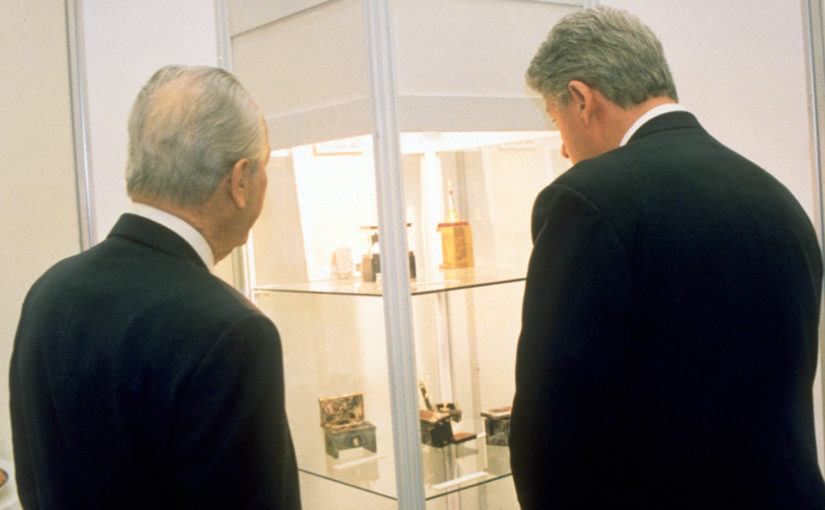
United States President Bill Clinton and then-Prime Minister Shimon Peres of Israel at the Exhibition in Israel


ICC Contemporary Gallery Binyaney Ha’ooma

Jerusalem, Israel
March 13 – April 27, 1996

Edna Ramot, Director
Daphna Naor, Curator and Coordinator
Ravel Pittman and Elena Siff, Contacts


A DEDICATION

 
The WBB Exhibition in Israel was dedicated to the memory of Ruth Baram, a passionate patron of the arts and a driving force behind reshaping the ICC Jerusalem International Convention Center. Ruth successfully pushed for the open display of art throughout the public building, with the inclusion of local as well as international works. Blessed with the spirit of inquisitiveness, Ruth was constantly in search of the meaning of life through art.


ARTIST NETWORK BEGINS

Daphna Naor


Women Beyond Borders is an expression of the desire to establish a network of female artists who maintain an international dialogue and engage in mutual visits and joint exhibitions and publications. Worldwide parameters of communication have been made possible with the opening of a WBB Internet site.


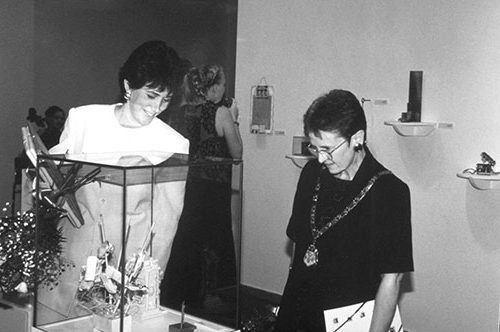
Reviva Regev, Lorraine Serena, Daphna Naor, Edna Ramot, Curator ICC Gallery, Gaby Salzberger, Dorit Feldman, Deganit Schocken, ICC Gallery assistant - artists and organizers of WBB Israel
Reviva Regev, Lorraine Serena, Daphna Naor, Edna Ramot, Gaby Salzberger, Dorit Feldman, Deganit Schocken and others

For the dozens of artists who took up the challenge, the boxes serve as an impetus for a journey into their own inner enchanted worlds to distant temples, longings for a different reality, or expressions of secret hopes. Some artists found in their boxes a means of expressing pain, missed opportunities and despair. Others saw the small boxes as cells of communication through which they shot arrows of humor, optimism and power. Others rebelled against the box, challenging their physical boundaries and went beyond.


Jenifer Bar Lev - Fire, Israel

Jennifer Bar Lev – Fire – Israel
Fire is an important symbol in the Jewish culture. There are many passages in the Bible condemning pagan ritual sacrifices at altars in the forest, and extolling proper burnt sacrifices to the One God:


“…then shalt Thou be pleased with the sacrifices of righteousness with burnt offering…” (Psalm LI: 21)


There are many holidays in which fire plays an important part: Lag BaOmer, when bonfires are made as an echo of the signal fires lit against the Romans during the Bar Kochba rebellion; Hannuka, when the miracle of a lamp containing oil enough for a day burned for eight; the tradition of “soul candles,” which burn for 24 hours on the anniversary of the death of a close family member.


But perhaps the most constant and important fire in Judaism is the Sabbath candles, to be lit on Friday eve by every daughter of Israel. I see the Sabbath candles as a symbol of home and the woman’s duty and privilege to protect and care for her family, physically and spiritually.


My piece contains an unlit Sabbath candle to remind myself that no matter how much women expand our potential as human beings, the role of homemaker is a very profound commitment. It provides the foundation of faith upon which miracles can grow.


Daphna Naor, two guests, and Edna Ramot


Historically, a box is a chest for treasures, a memory of a holy place, a womb or a tomb and linked with gift. These connotations are linked with intimate secret objects that create a space for personal meaning, a diary for sharing ideas with oneself, a place for the safekeeping of memories, for preserving culture, a place to hide from others. It can be viewed as a ‘box of secrets’ which brings a woman closer to her soul and, like a mirror, helps to recognize herself and to define her identity.

– Dr. Talya Birkhahn, Israeli Philosopher of Education


Santa Barbara, California artists Lorraine Serena and Elena Siff have initiated an international exhibition of women. They wished to express the recent revolution in women’s art that has taken place in recent decades, at the end of the century, in which women broke through socioeconomic boundaries women’s contribution to art is no longer that of someone sitting on the sidelines, but rather, that of a securely situated, confident individuals whose critique can contribute and enrich the central discussion and execution.

 
They sent miniature wooden boxes to female artists throughout the world. The boxes were originally intended to serve as channels of inter-cultural communication: it seemed that their uniformity would highlight the differences and diversity.

 
Among an international spectrum of artists. The dozens of artists who took up the challenge, the boxes served as an impetus for a journey into their own inner enchanted worlds to distant temples, a longing for a different reality, or an expression of secret hopes. Some of the artists found in their boxes a means of expressing pain, as they are “withdrawn” or embody missed opportunities and dispair. Others, however, saw the small boxes as cells of communication through which to shoot arrows of humor, optimism, and power. Some of them rebelled against the box, challenged their physical boundaries, and went beyond them.

– Daphna Naor


SEE BOXES FROM ISRAEL


NEPAL

nepaltemple_webjpg


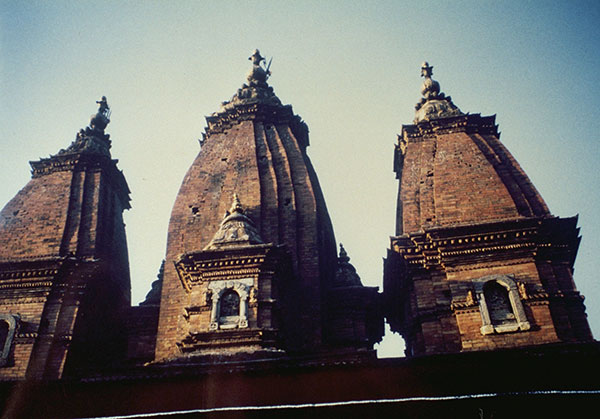
Teen Deval Mandir Temple

Pachali, Kathmandu
March 2 – 20, 1998

Michèle Andina, Anthropologist Ph.D., WBB Coordinator


BOXES TAKE A TREK TO NEPAL

Michèle Andina


A selection of WBB boxes was in an exhibition in Kathmandu and also on on a trek, which traveled through native villages in Nepal. The boxes acted as a catalyst to open discussion on reproductive rights and other women’s issues.


Fifty boxes from the Women Beyond Borders exhibit were used as part of an international women’s trek to Nepal in March of 1998. The purpose of the trek was to facilitate communication and understanding between an international group of women and Nepali women by using the boxes as a universal, non-verbal tool for sharing the common visions, hopes and experiences of women throughout the world.


In my work as a nurse-anthropologist I have had many opportunities to meet and work with women and women’s groups throughout the world.  Over the years I have attempted to share these profound experiences with my friends.  But, I have realized that mere words cannot possibly convey the emotions of meeting with women in their villages and seeing the struggles and joys that they face in their daily lives.


My recent work has focused on the impact that being a member of a women’s group has on women’s lives.  As a result of this work we at the Pacific Institute for Women’s Health are advocating women’s organizations as a vehicle for women’s empowerment, in addition to the conventional strategies of primary education and access to economic resources. We feel that women’s organizations should be supported by the international development and donor community as a strategy for empowerment and to enhance the status of women.

Mithileshwar & Sita Kama - Untitled #1, 1998, NEPAL
Mithileshwar & Sita Kama – Untitled #1, 1998, NEPAL

I invited a select group of my friends (approximately 15 from Europe and America, representing six nationalities) to join me on a trek to Nepal in March 1998. We met with local Nepali women’s organizations, both in Kathmandu and during a five day trek.  Each day we visited another village and met with local women’s groups. How can we (in spite of our multiple language capacities) communicate with these women?  Although we had two educated Nepali women with us, communication, especially personal communication, was not easy.  Therefore, my desire to use the exhibit, Women Beyond Borders, as a tool to facilitate communication. The universal language of art and the themes so vividly depicted by the boxes unite women across and beyond borders.  The capacity of these boxes to “share the visions, dreams and hopes of women around the world” will enabled us to establish immediate rapport with our hosts.


NEPAL BOXES


SINGAPORE

Sister Catherine Paul, WBB Artist Faye Shen, Lorraine Serena, Singapore Organizer Pat Chen and Daughter.
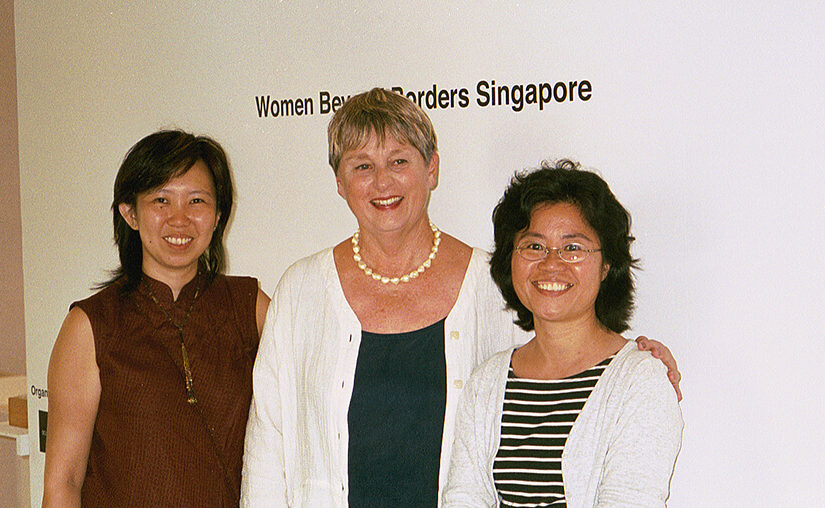
Sister Catherine Paul of KK Hospital, WBB Artist Faye Shen, WBB Founder Lorraine Serena, General Manager of Sculpture Square Patricia Chen-Law, and her daughter, Regina Law.


Sculpture Square

Singapore
March 8 – May 13, 2001

Edmund Cheng, Founder and Director
Patricia Chen, Founding General Manager
Joyce Fan, Assistant Curator
Susie Wong, Assistant Curator, Singapore Art Museum
Michèle Andina, Anthropologist Ph.D., Contact and WBB Coordinator


The women participants in Singapore created boxes in relation to a community, i.e. a collaboration with family, friends, a group of people, etc. The objective was to discover who women are and what women want in our particular society and context. Women first examined their personal identity and space, and second, related to their experience with the community, be it male or female. The community was engaged in the art-making process, thus extending the collaborative nature of WBB. This process gave rise to a more comprehensive reflection of societal values, needs, wants and identity as a whole.


ko-prisca-constraints-faced-by-contemporary-women-2001-singapore-silo
Prisca Ko – Constraints Faced by Contemporary Women, Singapore, 2001

Prisca Ko – Constraints Faced by Contemporary Women – 2001, Singapore


This work seeks to explore and express the constraints faced by contemporary women who live in public housing apartments, also known as Housing Development Board (HDB) flats in Singapore. About 86% of Singaporeans are housed in these HDB flats. Like the vast majority, I, too live in a HDB flat and one of the personal constraints that I face is the lack of physical space. This inspires me to conceptualize the given wooden box as a block of HDB flats with many dwellers within. Each of the niches in the box represents a female dweller.


The different constraints faced, ranging from physical, emotional, mental, and social to religious realms, are reflected in the interior decoration of the units and the contents of the vials. Women from different phases in life; teenagers, singles, married with and without children, and retirees, were invited to participate in a survey, and their views are expressed collaboratively in this box.


Regina Law – Family Bed – 2001, Singapore

Regina Law – Family Bed – 2001, Singapore
 

I’m three years old. I made a five-decker bed because I want my family to be together. My papa works in Jakarta four days a week and I miss him. I also love double-decker beds but papa said it is too dangerous for children my age. A five-decker bed will be nice–everybody can sleep together and Babybathtub (my doll) can have her own bed. I wanted to have a five-decker bed and mama helped me saw the box. Papa is very old, his bed has many beads–my hands get tired and Nadene che che helped me with the sticking. My bed has three beads because I am three years old and Babybathtub is only two.


WOMEN BEYOND BORDERS: SINGAPORE STYLE


Curator Joyce Fan, Lorraine Serena, and Curator Suzi Wong


When Women Beyond Borders was shown in Singapore in 2001, the curators Joyce Fan and Susie Wong invited local artists to submit boxes that would interrogate individual identity in relation to a specific community – from as small as the family unit to as wide as the world. In response, several artists explored their experiences as a member of one of the many expatriate or minority sub-communities living in Singapore. Others reflected on the identity of women in contemporary society at large. One box by Prisca Ko was a collaborative box with 40 women,  which reveals the constraints faced by women living in Block Housing. Another box depicted the mending of a mother and daughter relationship using a crochet needle and gold thread. The objective was to discover who women are and what women want in our particular society. We directed women artists into first, self-examining their identity and space, and second, in the course of this journey, relating that to their experience with the community.


A blind woman examining one of the boxes from the collection


The WBB Exhibition in Singapore was held at Sculpture Square with an overflow of 125 new boxes. The Singapore exhibition consisted of three sections: a Curated Section featuring invited women artists, a Women’s Communities Section with participation from KK Women’s and Children’s Hospital, Association of Women for Action and Research (AWARE), the University Women’s Association of Singapore (UWAS) and the Singapore Council of Women Organization (SCWO) and an Open Section which feature creations by women from all walks of life. These boxes were shown alongside the WBB collection of international boxes. The first lady of Singapore, Madame Goh Chok Tong, was Guest-of-Honor.


Susie Wong, Curator, Elena Lui, UWAS, Patricia Chen-Law, General Manager of Sculpture Square, Lorraine Serena, WBB Founder, and Mrs. Goh Chok Tong, First Lady of Singapore


It’s utterly prosaic, this box, until it falls into the hands of the artists… at which point the box is transformed, exploded, expanded, shattered, sculpted, pasted, painted, and reborn into an expression of a woman’s identity.               

– Shanti Menon, East Magazine, Singapore


Suzanne Victor – Untitled, Singapore, 2001


Suzanne Victor – Untitled – 2001, Singapore


I find this concept very challenging although of course initially, I found the concept of Women Beyond Borders and the form (BOX) contradictory, as boxes inherently are about discreet entities/objects with their own definite boundaries, surfaces and edges etc. And these boundaries are walls in themselves, not just an imaginary line or flat paths on the soil dividing countries nor printed lines on the map. In other words, the whole notion of borders and liberating women from it contradicts the very form of the box given to every participant that say so disturbingly otherwise. My intention for the approach to producing a work for this project is to deal with this collision of concept and form. I have gathered a few women and men from the community I am with, to witness a cremation of this box, after which the ashes would be placed in a custom made replica of the box but it will be in cut glass. Death to borders–of course the glass box and its glass walls is practically a vitrine – to enshrine the diminishing of all borders that divide us.


SEE SINGAPORE ESSAYS


SEE BOXES FROM SINGAPORE

AUSTRALIA

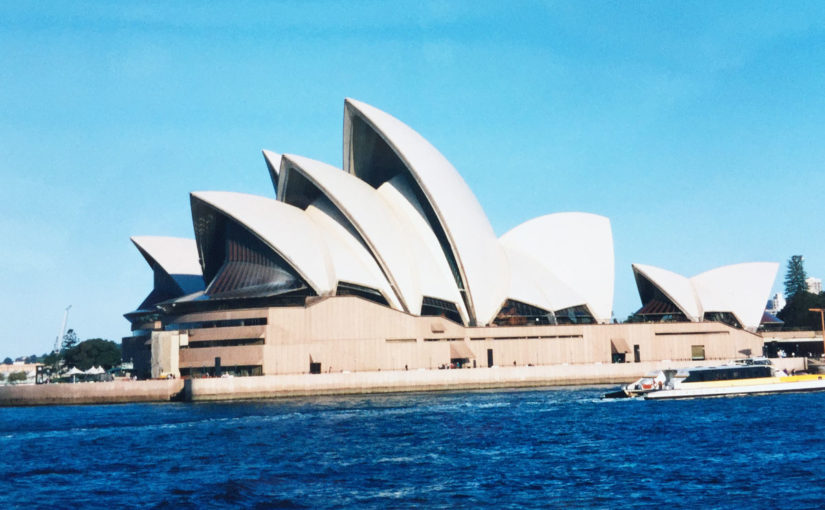
 Sydney opera house


TIN SHEDS GALLERY, UNIVERSITY OF SYDNEY

August 27 – September 19, 1999
Sydney, Australia

Jan Fieldsend, Director and Curator
Nazanin Marashian, Wbb PROJECT Coordinator


MANLY ART GALLERY & MUSEUM

September 22 – October 17, 1999
Manly, Australia

Therese Kenyon, Director and Curator
Samantha Tunbridge, Assistant


BROKEN HILL ART GALLERY

September 30 – October 17, 1999
Broken Hill, Australia

Diana Robson, Director and Curator


IN THE OUTBACK


In a town as isolated as Broken Hill, the idea of ‘community’ takes on added meaning. With the isolation comes a feeling of ‘us’ and ‘them,’ there are those who are from here, everyone else is ‘from away.’


Is it possible to feel a sense of community with a group of women, most of whom I will never speak to, nor even meet?


It is four years since about two hundred other women and myself were each given a small wooden box and instructions to transform the box in any way we so desired. I have never been to Finland, Cuba or Japan. I do not know what these people look like, I know nothing of their history, however in the creation of their boxes something personal has been revealed, something intimate has been shared.


To others this may seem a very tenuous connection on which to base a sense of community, however to me it is powerfully real.

– Diana Robson


Diana Robson – We are This and That and Everything in Between, 1995, AUSTRALIA


Ironically, rather than dealing with ‘the individual’, Western society tends to place us in particular categories (little boxes) and more specifically opposing polarities in order to deal with us more easily, more quickly, less personally. This easy stereotyping is even more prevalent in regard to the position of women: Madonna/Whore, Mother/Worker, Young/Old, Beautiful/Ugly, Nature/Culture. This box contains references to the stereotyping that we as women experience and the title, We are This and That and Everything in Between, refers to the true individual nature of the female sex.

– Diana Robson


Diana Robson, Director of the Broken Hill Art Gallery


Therese Kenyon, Director of the Manly Art Gallery


Jan Fieldsend, Director of the Tin Sheds Gallery


Student Boxes from Stella Maris College in Manly, Australia


STUDENTS BEYOND BORDERS: ADJUNCT PROJECT


Nazanin Marashian


Nazanin Marashian from the University of Sydney invited a group of university women to participate in the WBB exhibition and assist in the preparations of the WBB exhibition at the Tin Sheds Gallery, University of Sydney in 1999.


ADJUNCT exhibition in Sydney, Australia, from GRRRLS BEYOND BORDERS


As part of the expansive opportunities that WBB ignites, the 12 University of Sydney artists have joined to form the Wbb PROJECT. The Wbb PROJECT is an exciting supplement to the Australian tour of Women Beyond Borders, with the generous support of the Tin Sheds Gallery, the University of Sydney Union Cultural Grant Scheme and FASOC, they have been able to develop a working relationship with WBB and become part of an international women’s art event. The aims of the Wbb PROJECT are to recreate the sense of community and dialogue that WBB has illuminated since its first exhibition, this time on a local level.


The Wbb PROJECT is structured as a mini-curatorial endeavor, an exhibition within an exhibition, running for approximately six weeks. An artist’s space at the Tin Sheds studios was established with weekly meetings of creative production and dialogue.


During its run, the Wbb PROJECT produced an art catalog, a series of t-shirts, and a website, all in service of expanding the voices of women in their community. The ambitions, talents, and support of everyone involved have been a true inspiration, giving all who come in contact with this extraordinary exhibition the motivation to keep extending the borders until they finally disappear.


Nazanin Marashian (Right) and her friend Lucy Wayland (Left) were instrumental in the success of the WBB PROJECT


GESTURING A PLACE

Nazanin Marashian, Student, University of Sydney – AUSTRALIA


On my 7th birthday my mother gave me a box. A magical, mystical box. The kind that captures a child’s imagination. Inside, was a ballerina wearing a red tutu. She danced to an indiscriminate song and as she twirled, dreams, blanketing consciousness, soothed the child to sleep.


I filled the box over the years with my most precious possessions. A blue and white beaded necklace, sent from Iran by my Grandmother. A pebble, which, once held in my hand made me invincible. My first watch. A gold ring. A rose. It became for me a private house– a secret site of childhood fantasy and pleasure. Since then I’ve collected numerous other “boxes”: a tool box, a letter box, an artist’s box….all carrying something of the past and the present. Containers of memories which fuse together to define who I am, or who I attempt to be.


Twelve years later, on my sister’s 7th birthday I gave her my magic box, enchanted with secret dreams of yesteryear, to share with her not only my object fetish but also, to inspire her own imagination. The box became a sacred rite, a passage of symbolic connection between two sisters– two women.


We all create or are given “boxes”, real or metaphorical. These boxes are endowed with an alluring mystery– a whispered game of desires, ambitions, fears. Yet, they are at the same time, an ambivalent object which define boundaries. A closed space, a private space, a space which can expand your mind, or suffocate your soul.


Investigating the “boundary” is at the heart of Women Beyond Borders.


The box can be understood in all languages and points of reference. It is a thing which stands as a representative of a common link– that we as women, as living beings need to speak of the whole of our experience: the hostility, the sadness as well as the joys and triumphs.


The WBB exhibition brings that reality to fruition both in its boxes and through its travels.


The opportunities this exhibition has offered throughout its five year existence, whilst acting as an agent for the ideas and feelings of women, has encouraged and inspired creativity and above all communication. Communication both cross-culturally and trans-globally. In Russia the boxes traveled on a train from Graz to St. Petersburg, a moving sculpture, which literally crossed eight borders. The event was filmed and aired live via the Internet at the Austrian and American WBB exhibition venues. In Kenya, WBB acted as catalyst for further women’s art exhibitions. In Nepal a doctor carried the boxes into remote villages where they were shown to local women, as a means of raising awareness of health issues. There have been numerous workshops, and supplementary web sites, designed to showcase artists who utilize digital media and to promote education in digital arts for women.


Change develops out of knowledge. Making visible the spectrum of experiences, both on a personal and global scale is the power and appeal of WBB. Whatever the individual boxes speak of, whether it be personal stories, political issues, or formal concepts, it is in the space of the exhibition that the communication and debate comes alive; and via this spark moves beyond the walls and into the world. Private spaces made public.


Like my magical, mystical box, the Women Beyond Borders project gestures a place for the imagination. As a meeting of strangers and friends across seas, cultures, and languages, the exhibition becomes a universal sign of community; the passing on of ourselves through the gift of a box.


SEE BOXES FROM AUSTRALIA


JAPAN

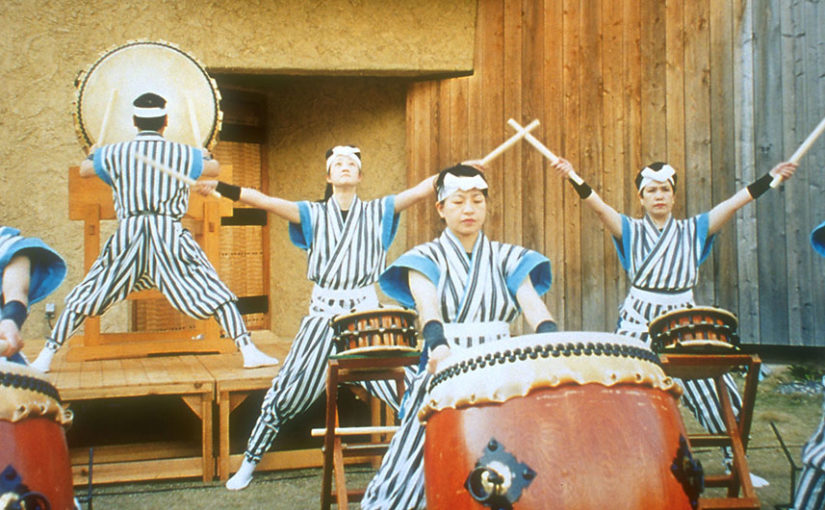
Women Taiko Drummers at the Akino Fuku Ceremonial Opening
Women Taiko drummers at the Akino Fuku ceremonial opening


Akino Fuku Museum

Tenyru, Japan
April 17 – May 30, 1999

Tamotsu Asano, Director of the Akino Fuku Museum
Yoshihiro Ikka, Curator of the Akino Fuku Museum
Shoko Toma, Independant Curator, Coordinator
Lesley Tannahill and Toshiyasu Ohi, Contacts


Gallery One, Park Tower

Tokyo, Japan
June 4 – 27, 1999

Nobuhiro Sato, Artistic Director
Shoko Toma, Independent Curator and Coordinator


THE FORTRESS MUSEUM


The Women Beyond Borders exhibition at the Akino Fuku Museum opened in Tenryu on April 16th with a fanfare of women Taiko drummers resounding an ancient and powerful cadence amidst cedar forests and blue skies above the Tenryu river. The fortress-like museum offered a powerful backdrop for the boxes from around the world. In addition to the permanent exhibition of works by the master artist Akino Fuku, several special and planned exhibitions are held at the museum throughout the year. For more information about the Akino Fuku Museum, click here.


Shoko Toma, Lorraine Serena, and Yoshihiro Ikka


At the opening, we met Japanese participants and Yony Waite, WBB artist, and curator from Kenya. The Mayor of Tenryu, the Director of Education, Director of the Akino Fuku Museum, and many other dignitaries gave formal speeches, which embraced a depth of understanding and appreciation of WBB and beyond to the power of the mythical significance of the box in a land which comprehends and reveres such things in daily life.


Artists, officials, men and women from the nearby towns gathered after the opening at a lakeside Ryokan for a traditional banquet of delicacies, joyful conversation, more speeches, rituals and singing into the night led by Yoni Waite. Yoni surprisingly spent many years in Japan and spoke the language fluently!


A PIECE OF A SMALL WOODEN BOX

Women Beyond Borders Japan Catalog

Yoshihiro Ikka, Curator of the Akino Fuku Museum – JAPAN


On this occasion of the opening of the Women Beyond Borders Exhibition, I would like to share some of my thoughts with you. First, I heard that the women of the world had joined hands and created artistic works using small wooden boxes and that an exhibition of these works was on tour throughout the world. Tenryu is a sylvan city and has declared itself a city of trees. This city has a museum of the arts which has a permanent exhibition of the works of a famous Japanese woman artist, Akino Fuku. Thus, the city was ideally suited to hold such an exhibition. The museum has become known to a certain degree as a museum specializing in Japanese style art. However, I feel it is the work of the museum to help develop an appreciation of all kinds of art, widely defined. Therefore, I would like to see the museum hold exhibitions of Japanese art, oil paintings, contemporary art and other styles of art as well. However, I wondered whether a small art museum in a regional area could successfully generate a wide acceptance and understanding of contemporary art such as the WBB exhibition.


The opening ceremony of the Akino Fuku WBB Exhibition


As the opening of the exhibit approached, my worries on this point grew. I wondered why it had to be an exhibition involving only the works of women artists. Why couldn’t it be an exhibition of the works of both male and female artists, I wondered. At that point, I decided that it was time to study the situation more closely. Thus, early this year, I went to the United States with Ms. Shoko Toma (the Japanese Representative for the Women Beyond Borders Exhibition) to visit Lorraine Serena in Santa Barbara, California.


During our visit, her atelier was filled with women who supported WBB. It was as if a great female power was focused on that peaceful town and I was stunned by the way they collaborated to support the project and make it a success. Behind the scenes, their friends and family members were supporting them, in spirit and effort, a scene which moved me.


As the exhibition went around from country to country, there was a very strong response. For example, in countries such as Russia, Kenya, and Mexico, the status of women is still very limited thus, the exhibition provided an opportunity for voices to be raised for increasing the sensitivities of all regarding these problems which, when I hear about them, have a powerful emotional effect.


Supporting such an extensive exhibition of female artists’ creations is a way of expressing hope that we will have a peaceful world in the years to come. These were the thoughts that I brought back with me.


PARK TOWER TOKYO


Park Tower, Tokyo


The Women Beyond Borders Exhibition was created by Lorraine Serena, an American artist from California, and her associates. The project has in turn, caused more and more women artists to contribute their work to the exhibition. The exhibition here in Japan consists of 200 of these works. I think you will agree with the others who have seen the exhibition and were thrilled by the wonderful individuality of the various works and their artistic expression. I believe that these unique works will speak to you about the hopes of all, both men and women, the young and old, and all races for not only a 21st century without war, but continued peace in the coming millenniums. I am sure that this is the hope of all women everywhere. Let us also hope that this exhibition will lead to additional opportunities throughout Japan, and all the countries of the world, to communicate and express our humanity.

– Shoko Toma, Independant Curator


Shoko Toma, Independent Curator and Coordinator (second from right), with the Tokyo Urban Gas and Development sponsors of the Park Tower exhibition


Park Tower, Gallery One, Tokyo


SEE BOXES FROM JAPAN

CROATIA

presentation-in-zagreb-croatia
 

Melong Space

Zagreb, Croatia
April, 1998

Nada Beros, Zagreb Museum of Contemporary Art, Curator and Coordinator
Nancy Doll, Contact


DIALOGUE AMONG DIVIDED WOMEN

Nada Beros – CROATIA
 

nada-beros-curaterAn indoor and outdoor installation of boxes from Croatia, Bosnia-Herzegovina, and Slovenia was arranged by Nada Beros, curator of the Zagreb Museum of Contemporary Art. In addition, a virtual exhibition of boxes from around the world was projected on the walls. Women participants from Sarajevo were in Zagreb for three days for the event.


The six women artists whose works we are presenting as part of the international art exhibition Women Beyond Borders is a small but characteristic sampling of contemporary art in Croatia. We have endeavored to show the work of three generations of artists whose works came into play in the 1970s, 1980s, and 1990s, and who either directly or indirectly interpret women’s issues. We believe that the heterogeneity of their art and approaches, ranging from post conceptualism and post minimalism to ambient and interactive approaches, plus the strength and relevance of artistic discourse confirms the liveliness and high level of achievement in the contemporary art scene in Croatia.


Sanja Ivekovic - Ex-tension, 1998, CROATIA
Sanja Ivekovic – Ex-tension, 1998, CROATIA

Sanja Ivekovic, whose work is based on conceptualism and feminist thought, is one of the most vital representatives of contemporary Croatian art. In her work entitled Ex/tension for the WBB project, the artist combines a post-conceptual approach with feminist criticism. On her assigned box, which she treats as ready-made, the artist draws out the essential nature of the elastic band, which has a very practical use in this work. The elastic band holds together the guidelines for participation in the WBB project, which are printed on a piece of paper and serve as a formula for the artist. The word extension, which refers to the size of the work, is interpreted by the artist as having a double meaning: that of past tension and of extension. She covers the box with multi-colored elastic bands– the kind homemakers regularly use to prepare preserves, leaving only the label of the product visible. The box thus becomes an object of soft, rounded edges, with an unrecognizable function, just as the role of the elastic bands is altered. (Statement from artist: “Please, put one rubber band over the box-let’s keep our spirit growing!!!”)


Vlasta Delimar, Why?, Croatia

Vlasta Delimar is one of the most radical Croatian women artists. Her trademark, regardless of the medium, is her own face, which is most often a photographic self-portrait, sometimes interpolated in fixed surroundings of ambiguous meaning. We find a similar ambiguous message in her work entitled WHY? The artist perceives the box as a mother’s body, which she places on lace. a characteristic material that is frequently used in her work. With this lace she emphasizes lightness and fragility, just as the open box allows the body freedom and flotation. The artist’s photographic self-portrait is covered by a condom, quite possibly the most widespread and most advertised device in today’s world. It is no wonder then that this equally powerful and undesirable aid, blocked on the path between love and responsibility, the body’s desire and fear, is at the same time protecting the face while making it more open and vulnerable.


Jelena Peric – Untitled, 1998, Croatia

Jelena Peric is an artist who consistently continues the tradition of minimalism and post-painterly abstraction in her work. Her series regularly transforms two-dimensional models into structurally complex spatial entities. She aspires to relativize the artistic act and its uniqueness and particularity by using geometric forms, the square and rectangle, monochromatic and dichromatic color schemes, and an impersonal way of painting. In her work Untitled, she transforms the box into a post-minimalist sculpture with a simple gesture. By moving the box’s lid to its bottom, filling the newly formed hollow with pieces of red paper (the characteristic color in her work) and then setting the box upright, the artist’s “sculpture” simultaneously plays with the effect of confinement and openness as with the concept of handmade and ready-made.


Ksenija Turcic is an artist who committed herself to spatial work at the beginning of her art career. Her first works are still comprised of object-pictures, but they deny their painterly nature, testing above all spatial relationships, perspective, gravitation, flotation. In her most recent works, the material that is most often found in her installations and settings is the mirror. Simultaneously cold and sensitive to gusts of air and heat, hard and susceptible to breakage, light and dark, reflective and absorbent, this material shows itself to be ideal for the artist’s current considerations of space and our place in it. By covering the sides of the box with mirror surfaces–resting precisely one against another and constructing an inner box that looks into itself, into its own womb, into its own darkness–the artist creates an inverted situation. Instead of “expanding,” dilating the space, she destines it to disillusion and tautology. The title Open Me, however, explicitly guides one to its different life, to the game of light and reflection, change and transience, strength and fluidity.


Ivana Kesser, Personal Newspapers, 1998, Croatia

In 1994 Ivana Keser began her project titled “Exhibition of Local Newspapers”, which was envisioned as a work-in-progress. For this project, she published only one copy of her Personal Newspapers project, dated February 25, 1998. Investigating the relation between the private and public domains, the artist wittily toys with the stereotype of uniqueness, which in itself ties in with some difficulty in reference to newspapers. “Personal discourse,” small dimensions, and the publication of only one copy is her way of paradoxically increasing the value of these newspapers, transforming this otherwise inflationary product that quickly dates itself into a work of art of universal meaning.


Magdalena Pederin is among the rare Croatian women artists of the younger generation who has methodically pursued new media and interactive projects. The miniature wooden box from the WBB project serves as an old-fashioned container in which she places LED diodes–indicators of the loudness of recorded sound. Contrasting two different types of material and two different technologies, the artist suggests the need for a new sensitivity.


The simple electronic mechanism is still while the box is closed. When the lid is opened, the battery turns on and the red and green bulbs begin to light up in unison with the increase in sound, entering from the outside including that produced by talking, clapping hands, and similar movements. By tying in the various sensors and materials in this interactive entity, the artist strives to revive the idea of modern synthesis prevalent everywhere, although we are frequently unaware of it.
 

SEE BOXES FROM CROATIA

SEE BOXES FROM SLOVENIA

SEE BOXES FROM BOSNIA & HERZEGOVINA


YUGOSLAVIA

1576ac3192684257
Peggy Orchowski, Jasna Janicijevic and Lorraine Serena


Gallery Zvono

Belgrade, Yugoslavia
November 11 – 19, 1997

Jasna Janicijevic Ph.D., Professor of the University of Belgrade, WBB Coordinator
Peggy Orchowski, Contact


SECRETS & INTIMACIES

Jasna Janicijevic Ph.D. – YUGOSLAVIA


In 1997 WBB gathered several of the most prominent Yugoslav sculptors and painters, as well as a few emerging artists. The opening exhibition of their work in Belgrade showed an unusual variety of expressions and, in a way, reflected the core of the very individual, poetic approach of each participant.


Symbolically, the idea of the box-object was voiced by WBB artist, Gordana Kaljalovic Odanovic, who wrote, “When we say a box we think of an inner room, a secret, intimacy, a safe place, opening, closing, but first of all, of female forms.” These are some conceivable associations. As a gathering point of life energies and the last breath, it can be a cradle as well as a sarcophagus. The life cycle (from birth to death) is closely connected with this multi-evocative object.


Gordna Kaljslovic Odanovic- Model of Intimacy

A box exists by its void which keeps it safe. The inside of the box corresponds to the outside as a positive form to the negative one. Whether small or large, deep or low, long or narrow, it evokes the feeling of intimacy, safety, but also of bodily sensations: touching, holding, feeling. A mechanism of the will to possess, opens its numerous drawers.


Some of the Yugoslav artists present themselves through their own thoughts:


An essay by Milica Stevanovic appears in her new book, titled Perspective in Gravitational Fields and Other Themes. Paintings, drawings, and objects deal with the exploration of perspective in a space where things are permanently contorted, if we understand the contortion as mutual influence among the things themselves as well as between us and them. The lines of these influences or actions form a certain “contorted space,” which we can treat as a contorted space of our own consciousness from which emerge the images of the objects we observe or imagine.


One of the imagined objects appears in her box Unknown Thing. The lid of the box has opened and something “I do not know what” gushed out of it. Something I do not want or maybe do not have to know (to name), since it was not supposed to be named. Perhaps that was what moved the lid. Looking from outside, a box is almost always a shelter– of a secret, of some unpredictable power, of different unexpected things. (Even something that we ourselves put away in some box, could become, after a time, a surprise).


One can never tell if something, or what, will come out of the box, opened or even demolished. Looking from the outside, there is something Unpredictable and Infinite in the box. Looking from inside, a box means something quite opposite: closeness between the walls of the predictable, the entropy of certainty. However, the very event of opening/destroying the box does not allow taking an easy watching distance. Or, does not give a chance for choosing and changing the point of view (on the relation outside-inside). “The opening of the box” as an action or event confronts us directly with a unique, raw, naked reality, with the need to define ourselves critically toward it and to involve ourselves in the events with our own activity. The titles for this event (“opening of the box”) therefore, could be different, although they all say (almost) the same thing: power of change, life, protest, play, etc. and of all that seems to be inevitable, though we do not know what it will be like.


Nevena Hadji-Jovancic sculptures are fragments of reminiscence, but they are also literal physical fragments. It is important that each sculpture, each piece has enough space and therefore reminds us of still life. They are loud forms because of the versatile material: acrylic on velvet and painted plaster. Also, her sculptures are noisy, since the color with its smoothness, its uniformity, connects scattered parts into one plane. But the color is unusual, as in her tiger colored box, with little figures of animals, the memories of childhood: Yes, I Remember.


Borislava Nedeljkovic-Prodanovic is a sculptor, painter, and craftsman, working with clay and metal, which helps her to seek through the transparency of the world for the new non-descriptive forms, always strong and vigorous but at the same time light and small. Just like her box Atlas, which establishes not only a dialogue between the material and space but also between different materials: aluminum and wood. Her sculptures stick to the space, adapt to it without confrontation, but they also fight for survival and oppose the limits of spatial and spiritual existence.


Gordana Kaljalovic-Odanovic tries to expand traditional artistic expression as well as the associative dimension of the work of art. The chosen medium– wood– the ways of treating the planes, the leveling of the rhythms, cuts and carvings, suggest some subtle variations of the objects. Attached to the pure plastic form, the ways of building by constructing and composing, reduction and cleanliness, typical of modernist practice, are visible in her sensitively planned and carefully built sculptures. The visual impact and the power of attraction of these integral forms full of intimate geometry, suggest an open and subtle emotional experience.


Darja Kacic‘s main concept, which defines the context of her work, deals with permanent movements, assimilation, and colonization of new territories. Her Vivarium for Snowflakes and Stardust, refers to the little box as an object for a woman, containing all the exquisiteness, wealth and mystery, safety and dreams she possesses, as well as her disorders. It is her tiny pet-toy, which she never abandons throughout her whole life. Fluently changing so many of her daily roles, she tugs her little vivarium along, and in it her snowflakes and glitters, snakes and puppies, babies and tears.


SEE BOXES FROM YUGOSLAVIA

UNITED KINGDOM, IRELAND & AIRPORTS

Mayor of Milton Keynes and Penny Paine, Coordinator
Valerie Squires, Mayor of Milton Keynes and Penny Paine, Coordinator


Milton Keynes Gallery

Milton Keynes, UK
July 12 – August 16, 1997

Francesca Alden, Gallery Officer

Soraya Billimoria, Assistant Gallery Officer

Emma Gregory, Learning and Development

Marian Wallace, Coordinator

Penny Paine, Contact, Coordinator and WBB Artist


Newport Community Center

Newport, Ireland
July 25 – August 30, 1999

Maureen McGee, Coordinator

Penny Paine, Contact, Coordinator and WBB Artist


Rivington Gallery

London, UK
July 4 – 12, 2000

Harold Werner Rubin, Director, Rivington Gallery

Barbara Grundy, Chair, Foundation for Women’s Art

Belinda Harding, Co-Chair, Foundation for Women’s Art

Penny Paine, Contact, Coordinator and WBB Artist


International Airports

Heathrow and Stansted Airports, UK
March – June, 2000

Barbara Grundy, Chair, Foundation for Women’s Art

Belinda Harding, Co-Chair, Foundation for Women’s Art


Two pieces were even handed over to me under the clock at Waterloo Station along with hugs and tears followed by cups of tea

– Penny Paine, Santa Barbara 1997


THE BEST OF BRITISH…


I was hooked from the moment I heard about Women Beyond Borders. With a fine arts degree from the University of London and twenty-five years of professional work in gender equality in the United States, this project somehow brought it all together… a way I could nourish my roots. Noticing that there were no participants from Great Britain. I proposed to founder Lorraine Serena that I would like to sponsor and gather some British women artists. I felt sure I could find some and I was equally sure there would be a venue eager to participate in this amazing and inspiring effort.


So where other participating nations started with a curator, Great Britain started with artists. It was a bit like the A. A. Milne poem, the King asked the Queen who asked the dairymaid who asked the cow… and so on. One contact led to another, which luckily led to a gallery. The artists were not quite sure what this was all about but they agreed to work quickly and coordinated with my own visit to see my parents. As requested boxes arrived at my parents’ house through the mail or were delivered in person. Two pieces were even handed over to me under the clock at Waterloo Station along with hugs and tears followed by cups of tea.


Finding a venue proved much harder than anticipated. I got responses like “ We have done women this year.” or ” We are scheduled for the next five years.” There were many transatlantic phone calls in the early hours of the morning, along with faxes and email. Eventually, with the help of Marian Wallis, a participant artist along with the persistence of Francesca Alden, curator for the Milton Keynes Public Library, the Milton Keynes venue was scheduled for July 12th – August 16, 1997.


Boxes from the USA, Great Britain and the original traveling exhibit were brought together and totaled 200 boxes (the remaining 88 boxes in the collection joined the exhibit for Greece). The boxes made an impressive statement and were wonderfully displayed by Curator Soraya Billimoria and assistant Emma Greggory. Along with the museum staff they worked diligently to set up the venue assisted by Alexa Allen, intern from Scripps College, Pomona, CA and myself.


The exhibit was officially opened by Milton Keynes Mayor Valerie Squires and guests viewed the exhibit while being serenaded by a string quartet and refreshed with very English Pimms #1 and cucumber sandwiches.


With new additions there was now a total of twelve British boxes. Support and interest from Belinda Harding and Barbara Grundy, Board Members with the Museum of Women’s Art, London was encouraging and it is hoped that another venue in London to benefit their cause to obtain a building and to celebrate the millennium can be arranged.


Penny Paine introducing Women Beyond Borders in Ireland


PLENTY TO DECLARE

The Guardian National Newspaper

John Henshaw, Journalist – ENGLAND


That doyen of box art, Joseph Cornell, would no doubt approve.

– Barbara Grundy, Chair of The Foundation for Women’s Art, London


Plenty to declare If you want to understand woman’s place in the 21st century, try looking in a box at Stansted airport. John Henshall reports International Women’s Day: special report Wednesday March 8, 2000. Travellers who pass through Stansted airport in Essex over the next four months will be able to view a radically original touring exhibition of the work of women artists from around the globe.


One hundred boxes, featuring a huge range of art forms, go on display from today, International Women’s Day. They will remain at the airport, accessible to all visitors, until the end of June, when the curators hope to show them in London for at least a week before they travel to Athens on the next leg of their journey. The show is called Women Beyond Borders (WBB) and its British visit constitutes the millennial exhibition by the London-based Foundation for Women’s Art, which was launched in 1992 as the Museum of Women’s Art. The FWA persuaded the airline KLM and BAA to co-sponsor the Stansted display, and most of the boxes, which are made from pine and are about the size of a large chocolate box, are in KLM’s departure lounge.


It seems fitting that these exquisitely decorated artifacts, from which explode displays of painting, sculpture or found objects (with the box as part of the artwork) should be displayed in an airport, since they have been circling the earth since their creation. The WBB “mail art” project was started by two American artists, Lorraine Serena and Elena Siff, at Santa Barbara, California, in 1992. Their idea was to devise a traveling show “to honor and connect women on a global, grass-roots, collaborative basis”. They sent self-assembly kits to curators in 15 countries, who each invited 12 women artists to transform a box into a work of art.


The pieces were first shown in Santa Barbara in 1995; now there are 400 boxes, and WBB shows have been staged in 26 countries. The Stansted show is the first in the UK. The participating artists have agreed to give up ownership of their works for the permanent collection that Serena and Siff intend to establish in California next year. While the WBB exhibition is in this country, a number of British women artists and women in public life will construct their own boxes, to add to an already diverse collection. The chair of the FWA, Barbara Grundy, used to run a commercial gallery in London, and took on the job of organizing the MWA/FWA at the end of last year. Since then the FWA has identified a suitable exhibition space in central London, one that is not currently used for showing art. The FWA has not yet secured funding for a permanent space, though Grundy will oversee the preparation of a new application to the heritage lottery fund. So far, a lack of funds has restricted the FWA to mounting about one show a year, at other people’s galleries.


Previous exhibitions have included the work of the tragic and neglected Cynthia Fell, who died in a psychiatric hospital in 1977 aged 44. An earlier show highlighted the work of Charlotte Salomon, a Jewish artist working in wartime Europe who entrusted her “visual autobiography” of 1,300 gouaches to a French friend before she was killed by the Nazis at Auschwitz in 1943, aged 26. Grundy describes the WBB project as “an example of women at the end of a century of intense change, showing solidarity with one another and looking at where we’ve got to in relation to our role and place after decades of struggle”. The result is an exhibition of masterly creativity and admirable resourcefulness. That doyen of box art, Joseph Cornell, would no doubt approve.


An unexpected, anonymous offering from Ireland


IRELAND


A LETTER FROM IRELAND


IRELAND loves the boxes

I can now be at the next lunch as we Mr. Paine and myself are not going away. I am glad and sad I really was looking forward to sleeping a little. Oh well. I have had two calls from Ireland. They put a notice in a National paper and had some response from women and they have a center in Dublin involved. Maureen said this project could easily get out of hand! the interest is great! I said it already was out of hand! Can Ireland have ten boxes they already have four so that would make 14 and we are set for the mini Irish venue and she will get me details for the Dublin connection. I will get stuff to send after you are back and if you ok this. Also I noted that a Girls Inc. got 100,000 from the UPS Foundation for computers. UPS is boxes and I think they should give money we need to review. See you soon. Enjoy the children and I agree about the temperature it can’t be healthy. We did not have central heating until I was about 15! Just a boiler for the water and a fire in the front room! – Love from Penny


– email from Penny Paine to Lorraine Serena


A FAX FROM IRELAND


October, 1998

Dear Mairin,


A quick hello from Santa Barbara everyone is very excited about visiting Newport next year for the handball tournament and the proposed exhibit. It is a go and the only thing that Women Beyond Borders asks is that perhaps a couple of women artists from Northern Ireland could be found and asked to participate. Let me know about that…(I did explain that they really belong to the UK!) but give me your thoughts as we will need to send over more boxes and forms. Have you talked to Sinaed because if nothing else she and her colleagues can help identify possible Irish national and local artists.


I will bring over about 25 boxes from other places and with the Irish submissions we hope to have about 40 for the exhibit. You can certainly do one to honor Graine Uhaille…definitely a great idea.


Maureen McGovern is interested in helping and she would be happy to pin down the gallery space, etc. As it stands we could open on the Saturday or Sunday for the handball players and local dignitaries with a special preview and perhaps midweek for the public. I am faxing this but I need your address to send forms and photos. Talk soon.


Love Penny


PS We drove through Omagh just an hour before the bombing. Shocking.


– Fax from Penny Paine to Mairin McGee, Artist and Curator at the Galway Art Center, Ireland


Vera Kealy - Simply Confused, Ireland, 1999
Vera Kealy – Simply Confused, Ireland, 1999


Vera Kealy – Simply Confused – Ireland, 1999
I robbed my little box of a purpose, but I gave it yours.


Caroline Coon – One Thousand Years Of Sewing Into The Night, UK, 2000


Caroline Coon – One Thousand Years Of Sewing Into The Night – UK, 2000
My grandmother’s sewing box, a gift from her mother, handed down to me by my mother, is my inspiration for Women beyond borders. I have made a tiny sarcophagus of pins, cotton and frayed red velvet – to symbolize thousands of droplets of blood from pin-pricked fingers – all embedded in the wax of candles burned into the night, lighting women’s often unappreciated work of skill, toil and pleasure.


Penny Paine – Dispelling the Cinderella Myth, USA, 1995


Penny Paine – Dispelling the Cinderella Myth – USA, 1995
For all the girls growing up today:
A Pumpkin, Six White Mice,
and a Pair of Glass Slippers Just Won’t Do.

Dedicated to Mindy Bingham and Sandy Stryker.


SEE BOXES FROM UK 

SEE BOXES FROM IRELAND


ITALY

Galleria Extra Moenia – Arte Moderna

Todi, Italy
May 4 – June 14, 1997

Giuliana Dorazio, Director
Ken Noland, Contact


OBJECTS OF MAGIC AND ENCHANTMENT

Women Beyond Borders narrates in a succession of expressions, the most interesting aspects of female art produced today in Europe and beyond.  

                                                                             – Martina Corgnati, Art historian


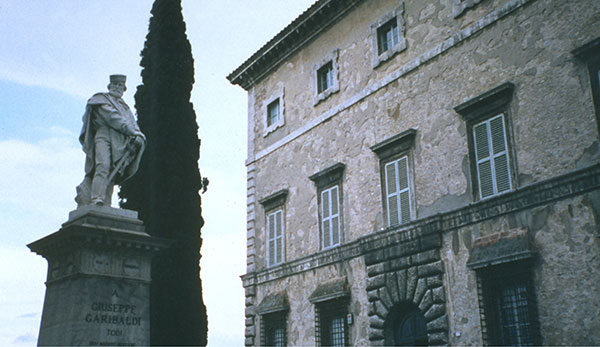
todi-italyGallery Extra Moenia – Arte Moderna, located in a 15th C villa overlooking the hills of Umbria, was the site of the WBB exhibition in Italy. The exhibition brought together WBB participants from Rome, Perugia, and Florence. Anthropologist Dr. Cecilia Gatto Trocchi spoke in the gallery on her impressions of the exhibition. In Dr. Trocchi’s words, “A simple and extraordinary point of departure, fascinating and complex: give a little box to an artist in order to free her fantasy, creativity, the impulse to meet and talk.”


WBB is an initiative of planetary dimensions, involving many varied cultures, bringing forth discussions over a cube of unfinished wood of reduced dimensions. The creations are dressed in images, desires, expectations, dreams, and illusions. The omens and symbolic content of the creations are revealed by each artist in an unambiguous way. The boxes encompass conceptual concerns, crafted objects, nostalgic thoughts, including jewel cases or safety boxes containing treasures or secrets which every woman jealously keeps. These powerful objects represent the spectrum of human experience, love, birth, relationship, courage, violence, power, and death– objects of magic and enchantment.”


Lorraine Serena, Claudine Lapique and her family


Martina Corgnati, art historian from Milan, explains, “
WBB narrates, in a succession of expressions, the most interesting aspects of feminine art produced today in different countries, Europe and beyond. Perhaps, to this day, only Cesare Zavattini has conceived of building an exhaustive and exacting collection in “small format,” obliging all the artists, therein, to remain within the measurements of 10×10 cm.”


In reality the challenge of WBB is full of psychological and poetic interest, pertaining to women, such as refinement, intimacy, care for detail, sensibility. It is not surprising to notice these qualities in all the participants selected for this show. The fact that each succeeded in achieving a personal, unmistakable stylistic imprint, even though working within a limited format, is surely remarkable. For example, Carla Accardi, has created a tiny chamber symphony in blues and reds for the exterior and interior surfaces of the support including marks and traces over all that are typically, undeniably Accardian, filling the space that, although minute, seems to open up to an unexpected and unpredictable vastness.


Lorraine Serena, Founder of WBB and Giuliana Dorazio, Director of Galleria Extra Moenia- Arte Moderna


In antithesis to this is the work of another Italian artist who, must be mentioned immediately because of historical precedence. For Dadamaino, actually, the box is not an indifferent support. It is not simply a way like any other to scrawl marks on a concave and a convex surface. On the contrary, it is literally a container in which to place, at least nominally as the title reveals, The Ashes of the Occident, reflecting a strong ideological tinge, yet one that is not without poetry. That there then should be an actual meaning is not so important; what counts is the naming and defining of meaning, and in this Dadamaino recalls the procedure conceived by her friend Piero Manzoni. The container, however, the symbolic urn, is closed. Is there really someone who would touch the ashes?


Claudine Lapique - The Gossip Box, Italy, 1995
Claudine Lapique – The Gossip Box, Italy, 1995

The Gossip Box by Claudine Lapique and Al Cuore del Cuor by Lise Apatoff are realistic miniaturizations of imaginable full-scale stages- A theater in the real sense of the word, which brings to mind the intimate and glittering choreography of Fausto Melotti. Rich with narrative values, magical boxes from which a story might issue, resulting from the meaningful contrast between internal and external: the sober decoration or almost subdued banality outside; and the extremely detached, colorful, even glittering descriptive treatment inside.


With playful curiosity, a taste for discovery, and the preciousness of fragments, Angela Dorazio (Num Num), Ilse Girona (Fancy), and Maril Eustachio (L’occhio) were chosen to represent our country on this long journey. An unbearable pleasure in painting appears, especially in the works by Dorazio and Girona. A sensitivity to images, overlapping and entwining in multicolored knots, transforms the container in to an unexpected visual carillon. In general, a certain discrete and intelligent concern for painting emerges in the work of the Italian artists. A brief and very general look at this exhibition, which is truly beyond borders, offers an overall view of the creativity of women artists, and of their expressions of imagination and freedom.


SEE BOXES FROM ITALY 


KENYA

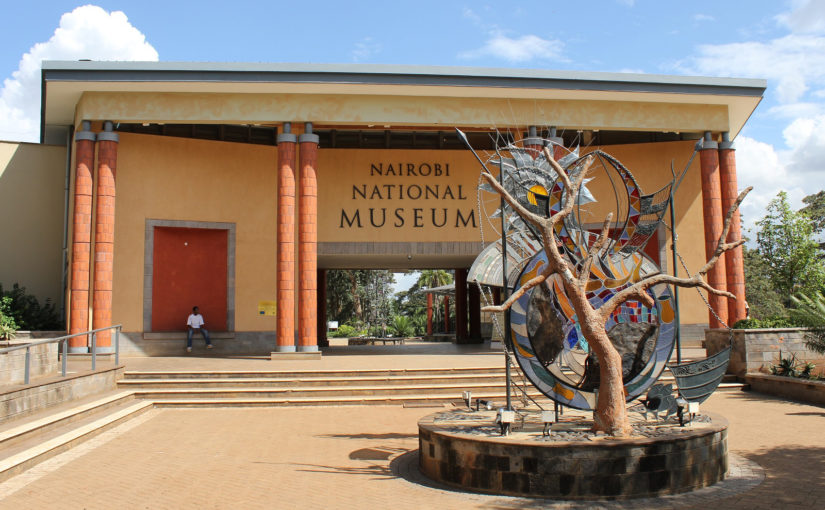
Nairobi National Museum

Nairobi, Kenya
January 21 – February 28, 1997

Yony Waite, Curator, Coordinator and WBB Artist
Wendy Karmali, Director
Ruth Schaffner, Art Dealer, Art Collector
Gail Berkus, Art Collector


HONORING WOMEN IN AFRICA


This aptly titled exhibition defies borders bringing together women artists from all continents into one space in an unprecedented event in the Kenyan art world.

– Peter Kimani, Daily Nation, Nairobi, Kenya


Yony Waite, WBB Kenyan Artist and Curator

In February 1995 Yony Waite, a WBB Kenyan Artist and Curator, hand-delivered the first completed boxes for the Women Beyond Borders exhibition to California. She arrived via Greyhound bus just down the street from Lorraine Serena’s studio to personally deliver the works. Yony began to unwrap them, revealing the impact of time, energy, and creativity invested by each individual artist. Themes encompassed the emptiness of prostitution, pride and reverence for culture, imprisonment of body and soul, respect for nature, mystery and magic. Yony told us that “African women have a strong desire to interact with women from other countries. Women Beyond Borders is an enormous step in enriching and connecting us. In Kenya, women have been subjugated for years as chattel, but recently many have begun finding their voices and power. We are delighted to work with Women Beyond Borders and look forward to networking with creative groups worldwide.”


Yony Waite – Untitled Ambiguity, Kenya, 1999


Before Yony left to continue her journey, she expressed her gratitude for the growing recognition of women artists in Kenya and Uganda. The National Museum of Kenya would go on to honor the African participants of WBB with an unprecedented women’s exhibition at the museum.


It’s wonderful being part of the worldwide web of women artists and particularly of this first global tour. Experiencing each box, as we dismantled the show at the National Museum, gave me an incredible range of sensations, from awe and wonder through shock and distaste. Judging from the remarks heard from the thousands of school children, tourists, and locals who visited the Women Beyond Borders exhibition in Nairobi, most reactions were curiosity and delight, although quite a few viewers were actually frightened!

– Yony Waite, Artist


Margarat Matanda – The Facade of Glamour, Kenya, 1995


The glamour we see in women is not always representative of her inner self. It is just a facade. This box has all that goes with glamour on its outside, but on the inside it has all the turmoil and agony resulting from her daily chores.

– Margarat Matanda, Artist


G. Kabura Simpiri – My Culture My Pride, Kenya, 1995


The Maasai are a pastoral people who live in Kenya and Tanzania in the Great Rift Valley of East Africa. The Maasai believe all the cattle on earth were given to them by God. The Maasai way of life is spent in moving from one place to another in search of grass and water for their herds.


Today, the unique customs and traditions of the Maasai still exist and are treasured by them. Great effort must be made by all to see that this treasured culture is preserved for the future.


By revealing this beauty of the Maasai people, I hope my contribution in some way helps in the preservation of this priceless culture.


The small portrait is of a Maasai woman painted on a fragment of a special and very useful “Oleleishwa” tree. The tree is used by the Maasai to clean calabashes for milk, as perfume, for making clubs and thatching beds.

– G. Kabura Simpiri, Artist


SEE BOXES FROM KENYA


RUSSIA

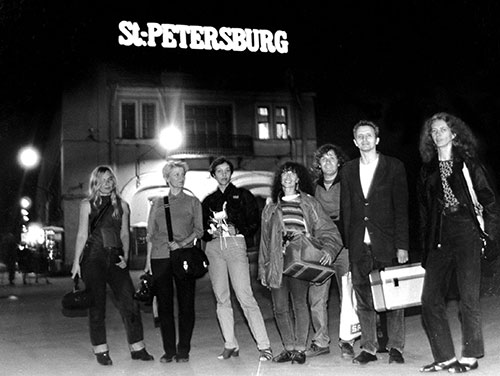
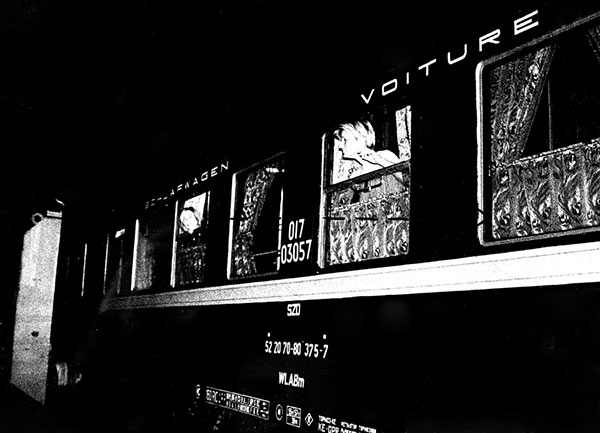
The boxes arrive in St. Petersburg on a train at midnight


Ethnographic Museum – Russian Museum Complex

St. Petersburg, Russia
December 9 – 30, 1996

Polina Fedorova, Curator and Coordinator
Tatiana Stepanova Ivanova, St. Petersburg A/YA Society
Katya Galitzine, Coordinator
Lynn Scarlett, Coordinator,
Nina Vozobieva, Chief of Art Department of the Ethnographic Museum


ST. PETERSBURG IN WINTER


Saint Petersburg, Russia


Due to the inspiration of Lynn Scarlett in California, the WBB exhibition was introduced to Princess Katya Galitzine, an artist and writer. Katya was visiting Santa Barbara to promote The Romanov Legacy, a book for which she wrote the introduction. Through Katya’s efforts, Polina Fedorova, who was working with the St. Petersburg A/YA Society became the coordinator of the WBB Exhibition in Russia.


After seeing boxes from Vietnamese, Cuban and Israeli women, I felt such a big pain in my heart. I understand the cries, tears, and sorrows of the persecuted nations.


I want to tell more and more feelings which I had while looking at every box in this exhibition. I really enjoyed visiting such an original exhibition. I think we should have more exhibitions like this which give us the hope of being understood, of being able to break the chains our society has put upon us.


I want to thank you for idea of creating such boxes which open up the worlds, souls and hearts of women for others and helps us to find strength in our future fight with our destiny.

– Helen, 16 years old


Pink marble room at the Russian Ethnographic Museum
Pink marble room at the Russian Ethnographic Museum, St. Petersburg

When the “Boxes on the Train” exhibition from Austria arrived in St. Petersburg, it was unprecedented news. Through Polina’s efforts, the arrival and exhibition of WBB in Russia was televised throughout the entire Russian Federation. Her experiences regarding the exhibition became increasingly complex because the official documents for the exhibition were confiscated during a customs check on the train trip. Despite this, WBB exhibition was installed by Polina and friends with the help of the A/YA Society, in the magnificent Russian Ethnographic Museum.


The details of the departure of the trip from St. Petersburg to Nairobi, Kenya, are too numerous and complex to mention here. In the end, after thirty letters were sent to Russia Customs from US Senators, Russian dignitaries, US Cultural Organizations, Consul Generals etc, the only way to transport the exhibition out of Russia was for a Russian, in this case Polina Federova, to personally accompany the exhibition to the National Museum of Kenya. Funds were raised in St. Petersburg and by WBB in California, in order to sponsor her trip to Kenya. Polina left Russia in below zero weather to arrive in the heat of Kenya in time to assist with the installation and opening of WBB. For this major effort, WBB is grateful to Polina for her determination and perseverance.


record
Polina Fedorova – Untitled 1996 RUSSIA

Everything started when the boxes were stopped by Russian customs on the train trip from Austria. The customs officials said that there were no documents and Russian laws do not allow anything unofficial to pass the border.


It took me and my friends two nights to replace all the labels on the boxes. Beside that, I had to argue with several customs officers to get a stamp on the documents: “No cultural value”. Only then I was able to cross the Russian border.


At Nairobi airport I was met by the curator of National Museum of Kenya, Contemporary Gallery. She was was very surprised to meet me carrying just a couple of bags (but the bags were pretty heavy). The exhibition when first shipped from Santa Barbara to Israel weighed almost 300 lbs., now I had the exhibition in suitcases.

– Polina Fedorova, WBB Curator


Elisabeth Haitto Connah, WBB Sweden/Finland curator, Lorraine Serena, WBB artists, Polina Fedorova WBB Russia curator
Elisabeth Haitto Connah, WBB Sweden/Finland curator, Lorraine Serena, A pair of WBB artists, Polina Fedorova, WBB Russia curator


In Russia, women of all ages were deeply moved by the personal expressions viewed from around the world. Visitors expected images similar to the traditional painted boxes found in Russia, depicting fairy tales and troika rides. As viewers examined the boxes, they felt terror and awe at the intense and direct universal expressions, which ran the gamut from birth to death. Response to the exhibition is best described by young women viewers themselves from the All Girls Gymnasium N. 628 in St. Petersburg who visited the exhibition.


When I was told about this exhibition, I thought that these boxes would be painted as simple boxes for jewelry, so when I saw the exhibition, I was surprised. Everything was strange and unusual to me. We tried to understand the inner world of some women artists according to their boxes. I felt pain, sorrow, tears, yet hope. I cannot remember all the works of all the women, but I want to tell them that they are very courageous.


When our teachers suggested us to think about our own boxes, I understood that it is very hard to show my own inner world. First, it is hard to get the better of fear. Next, I don’t know how to transfer my idea in life. If I could create my own box, it would be only for me. I’m afraid to share my own world with other people, because it may not be interesting or understood by the majority of them.


Maybe I’ll do my own box in order to show you my love of the earth and of the world. I want to show people that they are loved and that they are needed. Maybe it is one of the themes of the boxes.

– Maria Molchanova, 16 years old, St. Petersburg, Russia


Russian School Girls
Russian School Girls visiting the Women Beyond Borders exhibition in St. Petersburg


I am very impressed of this exhibition. I’ve never seen anything of that kind! I didn’t expect to find in a small hall that very colorful, vivid and unlimited collection of little boxes. Each of those boxes is enriched by the mood and inner world, the way of thinking of those women The boxes contain individuality and soul.


At first sight the boxes may seem pleasant, like unusual things that are very carefully and sincerely made. But a lot of work, imagination and women’s truth is put in them.Frankly speaking, those boxes which were close to my soul and my vision of the world. I wished to have at home on my table. I think that the arguments and commentaries on the meaning of any of those boxes will never end.


Women doesn’t limit herself and doesn’t want her box to be evaluated strictly, I believe. I was mostly impressed by works of Cuba and Vietnamese women. I knew and understood a lot while viewing this exhibition in Russia, in a famous museum which I visited nearly everyday in my childhood and liked very much, and which I like now even more.

– Claire, 16 years old, St. Petersburg – Russia


SEE BOXES ON A TRAIN PAGE


SEE BOXES FROM RUSSIA

BOXES ON THE TRAIN

Eva Ursprung, WBB Austria Curator and Artist; Doris Jauk-Hinz, WBB Artist and Coordinator; Veronica Drier, WBB Coordinator speaking to reporter in Lviv, Ukraine
Eva Ursprung,  Doris Jauk-Hinz, and Veronica Drier speaking to reporter in Lviv, Ukraine


Austria to Russia

Graz, Austria
Vienna, Austria
Budapest, Hungary
Lviv, Ukraine
St.Petersburg, Russia
August 29 – September 1, 1996

Project Team: Eva Ursprung, Gina Ballinger,
Ingeborg Pock, Doris Jauk-Hinz and Veronika Dreier
Contact: Elena Siff
 

SCHEDULE

8/29/96 Opening and Bon Voyage Buffet – 6 pm Graz Houptbahnhof
8/30/96 Presentation and Champagne Breakfast 9 am – 10:07 am Vienna Westbahnhof
8/30/96 Presentation – 1:18 pm – 4:14 pm Budapest Train Station
9/1/96 Arrival and Transfer of Boxes to WBB St. Petersburg


BOXES ON THE TRAIN

Boxes on the Train Catalog

Eva Ursprung, WBB Artist and Curator
 

Our WBB exhibition crossing eight borders was quite an experience! In addition to openings in train stations, we went through the entire train from time to time, inviting people to come to our rented car to view the “Boxes On the Train” exhibition. Some passengers stayed with us for hours into the night discussing the project. Everybody told us that this trip would be impossible. I like to do impossible things.
 

Exhibition on the Train

In August 1996, the WBB exhibition was due in Graz, Austria. With St. Petersburg, Russia next on the schedule, conceived of an original idea. They installed the boxes in a rented train car, creating a moveable sculpture in a newly defined open space moving from Graz, Austria past Vienna, Budapest and Lviv, Ukraine and on to St. Petersburg. Passengers viewed the exhibition en route with presentations and receptions held in train stations along the way.


Train station reception


The installation was presented in a nostalgic sleeper compartment, beset with golden drapery, a silver tea service, three women artists, a writer, a photographer, two EDP experts, two Russian sleeper attendants, a laptop with an Internet connection, a video camera and 178 boxes from women artists all around the world. The exhibition crossed eight borders on the way to St. Petersburg.


boxes-on-the-train-image
Leaving the train station


This sculptural installation, which took its form from the transport process itself was open to all the passengers on the train. Passersby became guests, tours were conducted throughout the WBB wagon.


Both the purpose and the itinerary of the trip were published and recorded. Apart from the press-conferences, publication of the event was mainly concentrated on the internet. The wagon functioned as an ‘analogous’ gallery and a mobile interface between its journey in real space and its virtual correspondence to a “digital gallery.” An online event was planned between those on the train and the artists left behind in Austria and in USA for the exhibition’s arrival in St. Petersburg.


TRAVELING FEVER


Doris Jauk-Hinz
Doris Jauk-Hinz placing the boxes in the train

Before we set out we were repeatedly told, it would be impossible to travel through all these countries with 178 artworks and arrive in St. Petersburg unscathed. We were also told that there were no general customs forms and no consistent laws between the new countries, and that we would probably be attacked and robbed by organized bands of thugs and thieves. Just an hour before we were due to depart, we received a call from the Austrian Ministry of Foreign Affairs, suggesting we should postpone the trip for an indefinite amount of time. Then, the Austrian Cultural Attaché in Budapest tried to stop us from setting out, saying it was all far too dangerous.


BETWEEN HERE AND NOWHERE


Eva Ursprung admiring the exhibition on the train


The idea of border-crossing exhibition with the sole purpose of establishing a world-wide communications network for women artists, overcome separations and find common ground to build upon,  free of nationalism, began to appear more and more absurd the further we traveled away from our “Western civilization”. In Hungary, the customs officials let us pass, not without considerable interest, but the project came to a complete halt on the border of the Ukraine in a whirl of total misunderstanding. Everything became different here – not even the width of the train track remains the same: huge cranes heaved the wagon two meters up in the air onto a new substructure conforming to the Russian norm.


The further east our journey took us, the more adventurous it became in an increasingly foreign world. The values and attitudes changed with the kilometers which went ticking by and our undertaking started to appear more and more questionable. The concept of “woman”, “art”, and “nation” here changed at breakneck speed. There was an irate question from a journalist in Lviv; “Why aren’t there national flags by the artists’ names?”


Eva Ursprung with Train Officials


The tone of the customs officials also changed dramatically – in the middle of nowhere, in the middle of the night,  there was a heavy pounding on the compartment door, the sound of  military boots, and harsh voices yelling “Control!”, with a hasty “No Camera!” following hot on his heels. After checking our passports and a wide-eyed inspection of the boxes, the officials stood there looking totally lost. Our sleeper carriage escorts, themselves not entirely clear on our objective, tried to explain. Our three-language (German, Hungarian and Russian) brochure was avidly studied with great shaking of heads. More officials were called, and, later on, the friends and relatives,  wives and children filed through the exhibition far into the night.


Our letter of recommendation from the Austrian Consulate in Moscow (written in Russian) was also thoroughly examined, drawing a few smiles and timid friendliness. Our initial fear was replaced with a sort of fatalistic relaxation. These villages were not even marked on the map and we were surrounded by foreigners as far as the eye could see. Just what exactly were they supposed to do with us? It was obvious they thought we were somewhat crazy but, nevertheless, harmless. The one stark certainty was that they did not want to keep us in their country under any circumstances. A considerable relief was clear all around when some reason could be found to help us continue on our journey. This, however, did not  occur without some hiccups. The customs document we had allowing us to take the boxes out of Austria disappeared after one customs check. Then, when we arrived in Russia, we were informed our visa was only partially complete, the part allowing us to leave the country again was missing. It had probably been retained when we had left Belarus.


WOMEN OUT OF CONTROL


Gina Ballinger, WBB Artist and Coordinator

Our arrival in St. Petersburg finally took place after a 64-hour, 40 minute trip, including a twelve-hour delay. In the event, the WBB Internet-Exchange between Graz and Santa Barbara had taken place without us 12 hours before we arrived, and the invited journalists were long tucked up in their beds. The porters wanted to charge thirty dollars for moving the boxes one hundred meters, and Polina Fedorova, responsible for the WBB exhibition in St. Petersburg, had no idea where to store them.


All the next day was spent in the Austrian Consulate and the Russian Ministry. We were in the country illegally, the whole situation was totally impossible, and we weren’t even supposed to be there. After a long period of arguments batted back and forth, we were given a new visa (again in exchange for more dollars), and a resting place was found for the boxes. When Polina had finished reading our letter of recommendation, she turned us with a laugh: In Russian there is no term for borders, only district control. As a result, given this translation, Women Beyond Borders means ‘Women out of Control’.


SEE RUSSIA PAGE


SEE BOXES FROM AUSTRIA