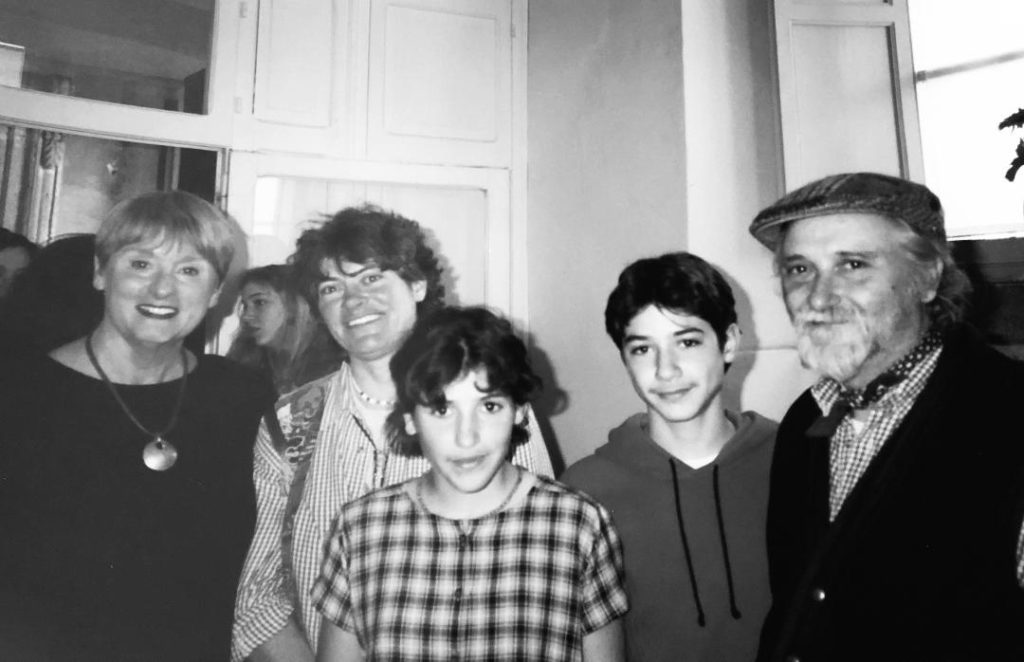
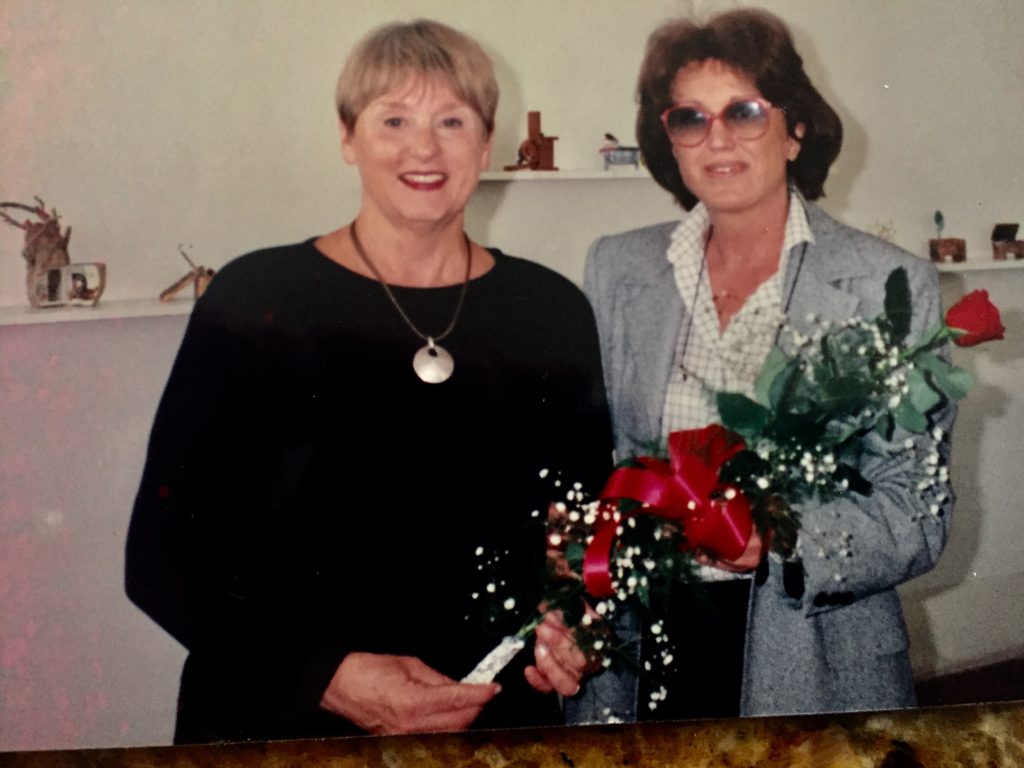
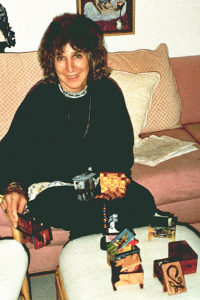
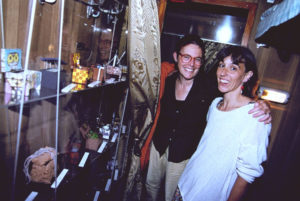
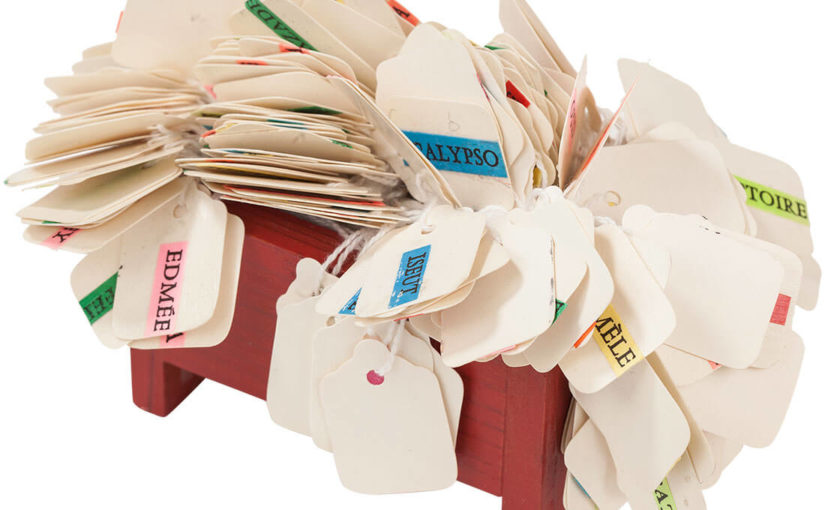
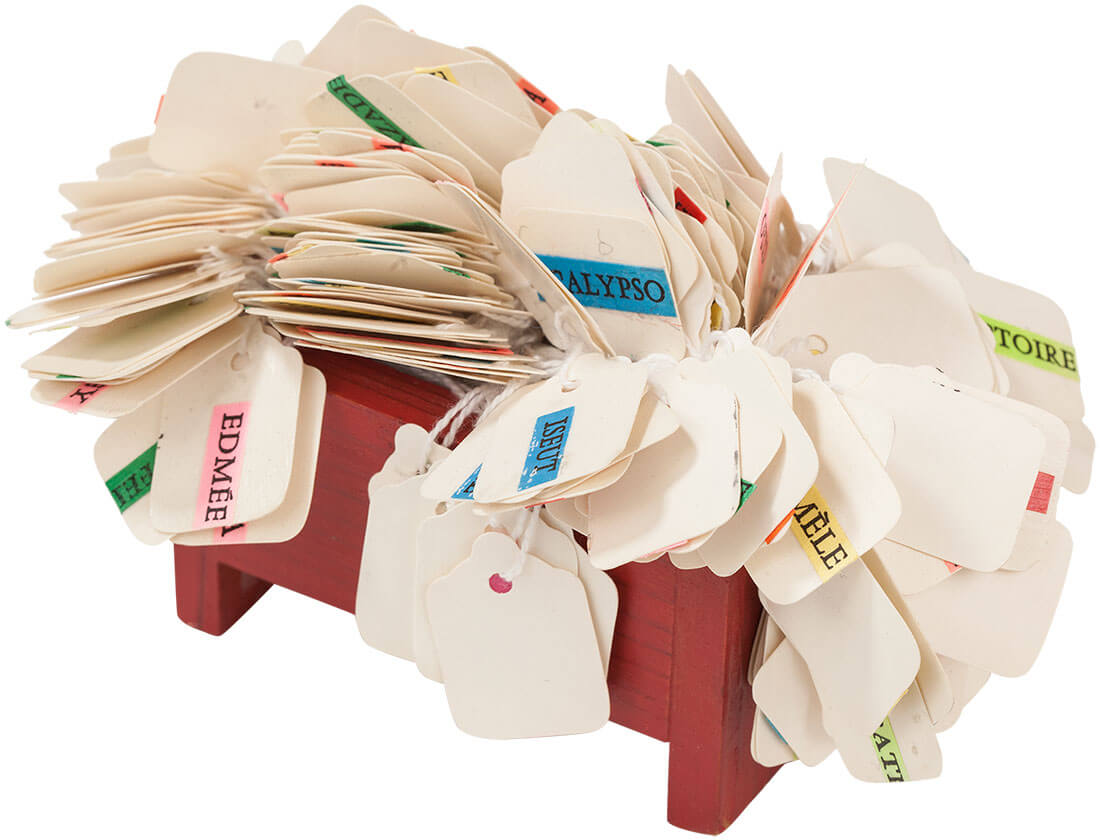
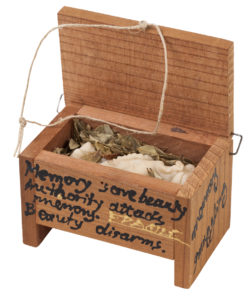
We are saddened to inform you of the recent passing of Women Beyond Borders Founder and UCSB alumna (B.A. ’63, M.F.A. ’75), arts advocate, teacher, and mentor, Lorraine Drammer Serena. She pursued her love of art and dance throughout her entire life. She taught her students to enjoy and appreciate the arts, and several of her students pursued successful careers in the field. She will be missed.
Lorraine Drammer Serena:
Artist Who Built Global Bridges Through Tiny Wooden Boxes
Lorraine Drammer Serena, whose vision transformed a small wooden box into a worldwide artistic movement celebrating women’s voices, died peacefully at her home surrounded by family in Ojai, California on Thanksgiving Day, 2024. She was 83.
Born January 20, 1941, in Elmora, New Jersey, Lorraine grew up between the green hills of Vermont and the coastal breezes of Santa Barbara, where she would meet her high school sweetheart and life partner of 68 years, Frank Serena at age 15. Their early courtship included shared daily lunch breaks punctuated by the crunch of Fritos tucked into sandwiches.
After earning both her bachelor’s and master’s degrees in Fine Arts from UC Santa Barbara, Lorraine began reshaping how art could build community. The Santa Barbara Arts Council recognized her contributions with their Art Advocate of the Year Award in 1984, and the Chamber of Commerce later named her Artist of the Month.
As an art teacher at Santa Barbara High School in the 1960s, each Christmas she transformed the Santa Barbara Museum of Art’s galleries into immersive “Magical Kingdoms,” where hundreds of students created crawl-through environments from reimagined refrigerator boxes. One student, discovering his creative voice under her guidance, declared, “For the first time in my life, I know what I’m doing” – a testament to her belief that everyone was an artist waiting to emerge. This belief in creative freedom extended to her own home, where she encouraged her daughter Stephania to paint directly on her bedroom walls – treating her child’s creative impulses with the same respect she showed her students.
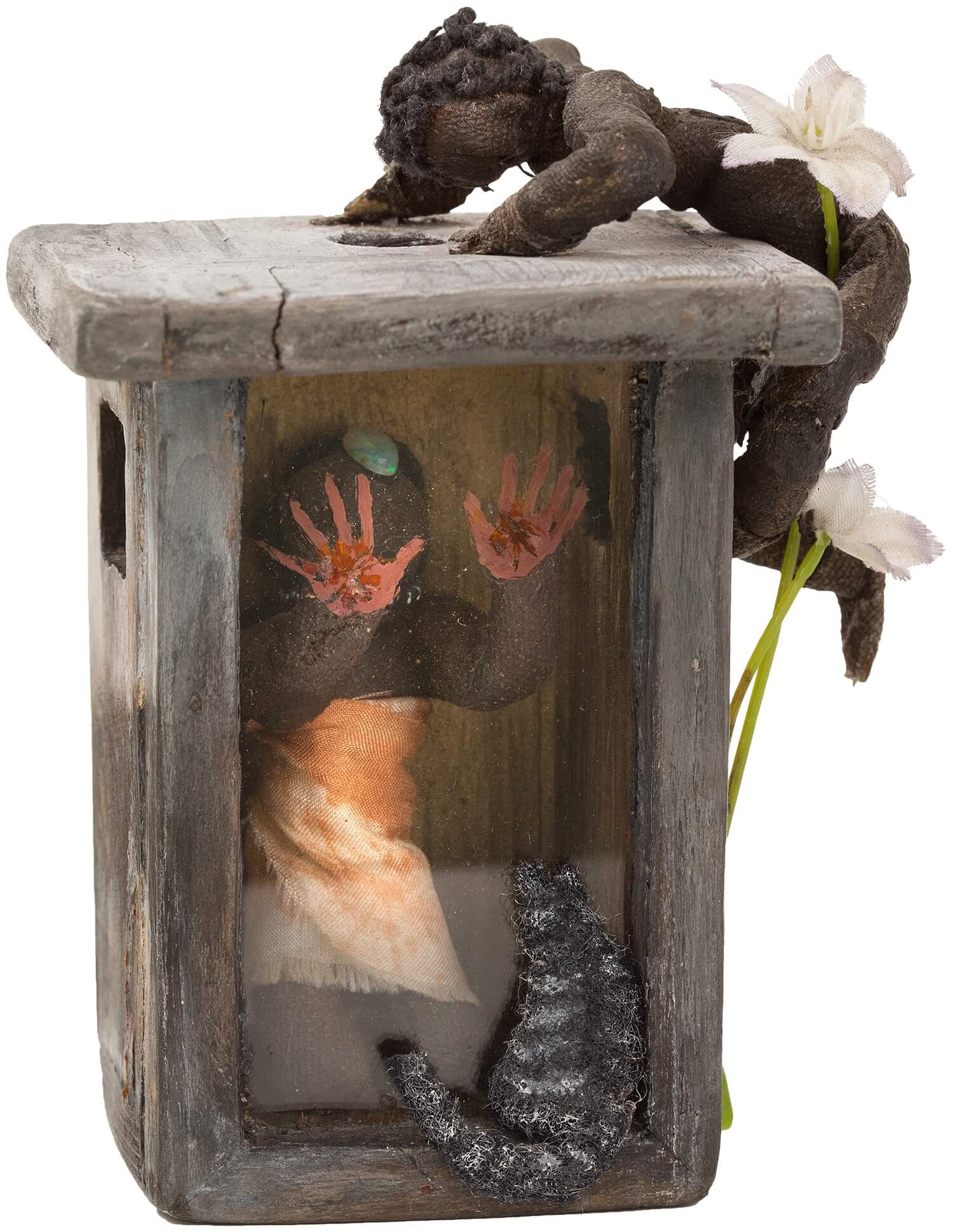
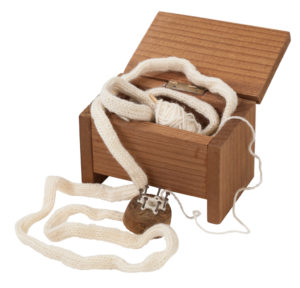
In 1991, a miniature wooden box sitting on her studio table sparked what would become her life’s work. Gathering with fellow women artists, Lorraine proposed sending these boxes – each no larger than a human heart – to artists worldwide. The project, Women Beyond Borders, grew from this seed into a global movement spanning 50 countries and touching over 10,000 lives. From genocide survivors in Rwanda to trafficking victims in Vietnam, women transformed these humble boxes into profound statements of their experiences, hopes, and dreams.
Museum directors who had never exhibited women artists suddenly found their galleries enriched with these powerful voices. A Swedish artist, declaring “the soul of woman is round and cannot fit into a metric box,” stuffed her box with a tennis ball. Another turned hers to sawdust, while others filled them with bullet casings or memories of fleeing war-torn homelands. Each box became a window into the universal experiences connecting women across cultures, languages, and borders.
One morning in Cuba, an artist named Elsa Mora encountered the exhibition and by the next day had created a piece balancing the scales between men and women. Lorraine’s work gently but persistently opened doors that had been closed to women artists for generations. In 2008, she received the Women’s eNews “21 Leaders for the 21st Century” award for building peace and connections worldwide through art.
The critic Josef Woodard described her own works as “liberal landscapes of an imagination-stirred mind,” but her greatest canvas was the human heart. Whether sharing morning coffee with Frank or hosting weekly dinners with her grandchildren and their friends from The Thacher School – who naturally began calling them “Nonno” and “Nonna,” Italian for grandparents. Lorraine made everyone feel like family. This gift for nurturing deep connections extended far beyond Ojai, as she maintained lasting friendships with artists, weaving a tapestry of relationships that spanned continents and cultures.
The Women Beyond Border’s archive, recently gifted to the UCSB Art, Design & Architecture Museum, ensures that future generations will continue discovering how a small wooden box, in the hands of a visionary artist, could help heal the world.
True to her lifelong pattern of pushing artistic boundaries, Lorraine embarked on yet another creative adventure at age 79 when Karyl Lynn Burns, Co-Founder of the Rubicon Theatre Company, envisioned bringing Women Beyond Borders to the stage. While some may view retirement as a time to slow down, Lorraine embraced this new artistic medium with characteristic enthusiasm. In 2019, the Rubicon Theatre Company premiered “Women Beyond Borders,” a play celebrating the project’s global impact. As audiences were transported from a classroom in Rwanda to a boat fleeing Saigon, they witnessed what Lorraine had long understood – that art, at its heart, comes from the Latin “ars, artis”: to join together.
In her final years, Lorraine would still share morning coffee with Frank, now sipped carefully through a straw – determined to savor life’s quiet moments even as dementia gradually dimmed her vibrant mind and her body weakened. It was the same spirit that had led her to send thousands of palm-sized wooden boxes into the world decades earlier, each one carrying an invitation to create, to connect, to be seen. Those boxes, like the countless lives she touched, continue to multiply in ways she could never have imagined: in museum collections that now celebrate women’s voices, in communities forged across continents, and in the courage of artists who learned from her that creativity knows no borders.
Perhaps her greatest legacy lives in something more intimate – the way she showed us that art, at its most profound, is not about the final creation but about the sacred act of sharing one’s truth and recognizing our common humanity. In this way, she achieved what every artist dreams of: her life itself became her masterpiece.
She is survived by her devoted husband Frank; children Stephania and David; daughter-in-love Kelley; grandchildren Wade, Serena, Liam, and Steven; and a global community of artists who carry forward her vision of art as a force for connection and change.
Special appreciation to Jon and Lillian Lovelace for their generous support of Women Beyond Borders from its inception. It is in their honor that we dedicate the Women Beyond Borders site.
I did see the exhibit and the boxes are all fascinating – such a very creative idea! – Lillian Lovelace
To all those who made Women Beyond Borders possible, we are forever grateful. Appreciation goes to all the participants including: artists, curators, coordinators, sponsors and directors of institutions, who have spent countless hours organizing unique and compelling exhibitions around the world. This collaborative spirit is at the heart of Women Beyond Borders. Curators and Coordinators
Helping to launch the WBB journey were Nancy Doll, Director Weatherspoon Art Museum UNC and Marla Berns, Director, Fowler Museum UCLA.
Also deeply appreciated are the early participants:
Isabel Barbuzza, Ciel Bergman, Sky Bergman, Rose Bilot, Judy Dater, Beverly Decker, Mary Heebner, Evelyn Jacob, Anna Jud-Hallauer, M. Helsenrott Hochhauser, Alice Hutchins, Saritha Margon, Penny Paine, Elisse Pogofsky-Harris, Tamarind Rossetti-Johnson, Elena Siff, Joan Tanner, Maria Velasco, Victoria Vesna, Judy Weisbart, Seyburn Zorthian.
The Women Beyond Borders website and book would not have been possible without the work provided by the following:
Content Provider: Lorraine Serena
Logo Design: Stephania Serena
Book Design: Kim Kavish
Web Design: BitVision Technology Group – Alison Bradley, Declan Blasini
Photography & Video: Wayne McCall, Bill Dewey, Frank Serena, Saritha Margon, Karen Nedivi, and renowned filmmaker Johanna Demetrakas, known for her films entitled “Womenhouse” and “The Dinner Party”, among others.
Women Beyond Borders began in a conversation at an art opening in Santa Barbara in 1991. Founder and artist, Lorraine Serena, contemplated the ease of shipping small works of art around the world with artist friend Elena Siff. Over the following year artists and art professionals came together in Lorraine’s studio to generate ideas to connect women artists and forge understanding and collaboration among women.
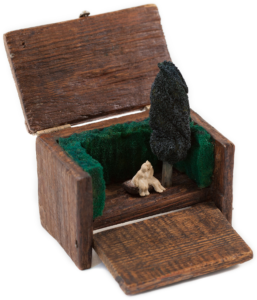
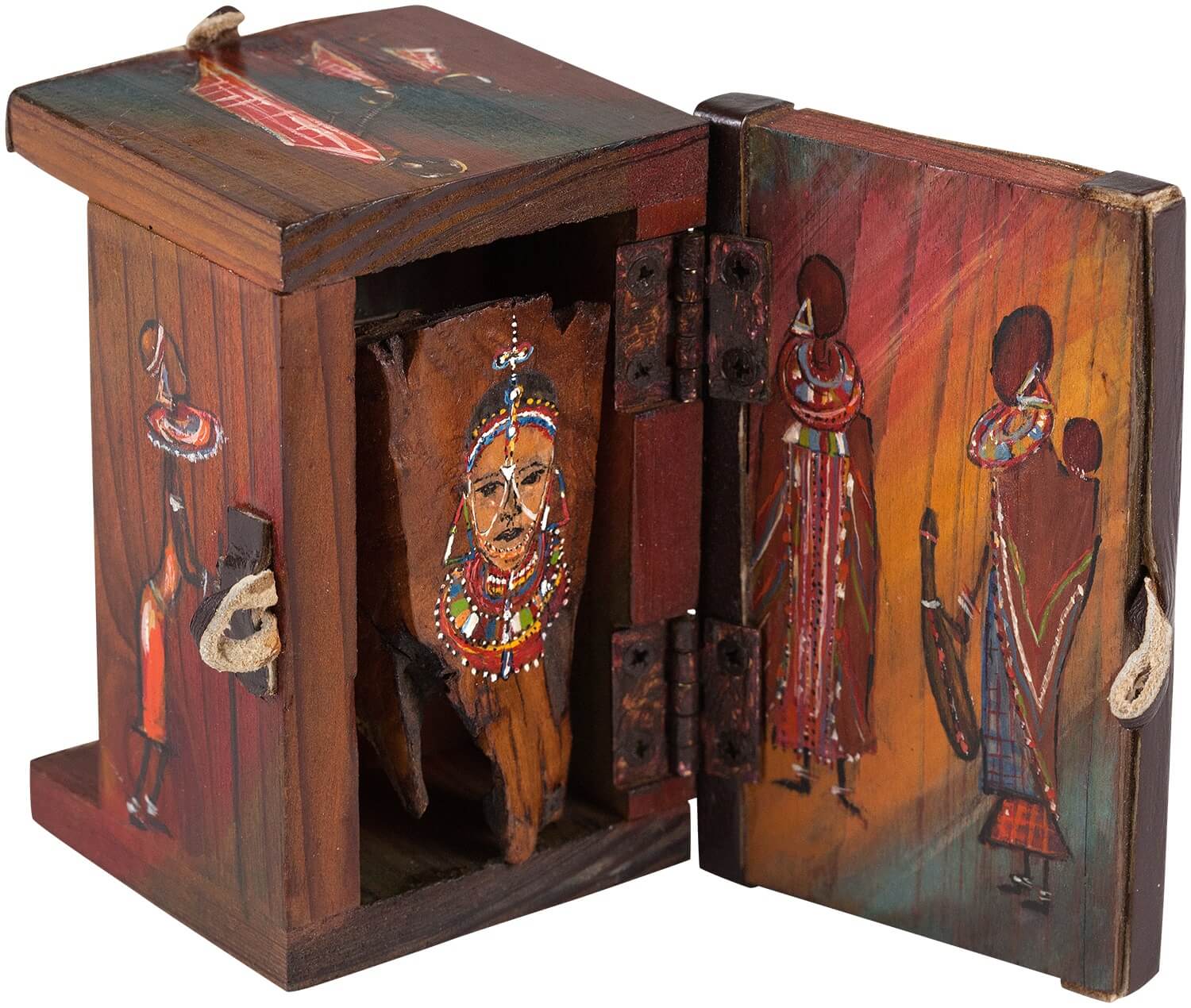
The original souvenir box
At one of the studio meetings, a vintage cedar souvenir box on the table struck a chord. “That’s it!” said Victoria Vesna, a professor at UCLA, and the “box project” began. This vessel, evocative of a womb, tomb, gift, shrine… developed into a resonating symbol of woman, herself.
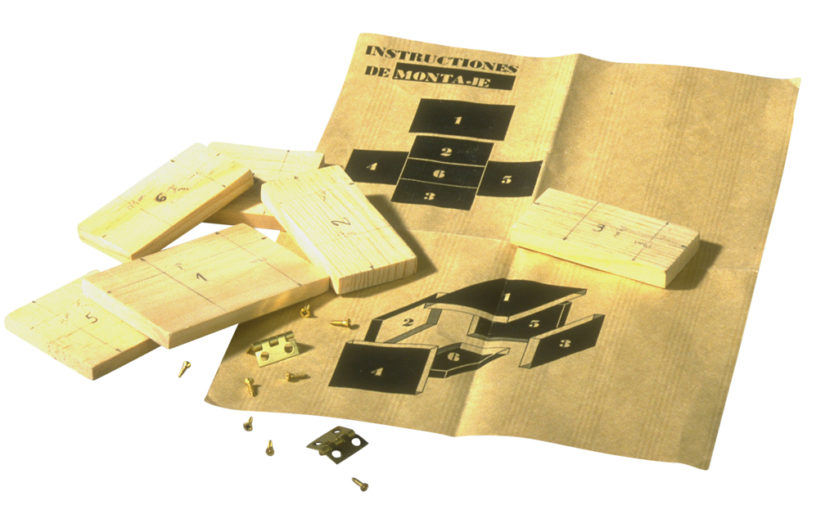
The box, about the size of a human heart, was practical to transport, intimate and yet metaphorically expansive. Several hundred boxes, each 3-1/2” x 2-1/2” x 2″, were constructed and distributed to artist friends including Isabel Barbuzza, Ciel Bergman, Sky Bergman, Rose Bilat, Beverly Decker, Elisse Pogofsky-Harris, Alice Hutchins, Evelyn Jacob, Saritha Margon, Maria Velasco, Elena Siff, Victoria Vesna, and Mary Heebner. Inspired, WBB participants swiftly began contacting artists and curators around the world who, in turn, invited up to twelve artists to participate.
Elena Siff, Lorraine Serena, and Beverly Decker
There was no formal process here, but rather improvisation! The selection of countries was made simply on the basis that someone in the group knew someone abroad. Evelyn spontaneously walked into a gallery in Paris and left boxes with a young woman who distributed them to friends. Beverly enlisted her sister-in-law in locating Native American women. Isabel enlisted the help of her 13 year-old son, Xavier, who carried boxes in his backpack to Argentina. Elena’s daughter, Ravelle, who was studying in Israel, contacted curator Daphna Naor, who scheduled an exhibition coinciding with International Women’s Day in Jerusalem. An exhibition at the Santa Barbara Contemporary Arts Forum inspired Marla Burns to reach out to Lorraine to share her enthusiasm for the project, click here to see a letter written by her to Lorraine in November of 1995.
The souvenir box that inspired the WBB box
Elisse took boxes to Magda Gonzalez-Mora at the Wifredo Lam Contemporary Art Center in Havana. Mary’s visitor, Mari Olguin, brought information back to Oaxaca and a week later there was a fax from the Casa de Mujer, “We seem to have hit a small gold mine of Oaxacan artists – send boxes ASAP!”
Opening boxes from around the world
A few months later we received the first box creations. We were astonished at the range of expression the boxes evoked. It was at this moment that the collaboration took wing and dialogue was established, opening doors to new possibilities. These original boxes served as a grassroots foundation which began its journey to virtually every continent in the world.
A small box was given to me. I had to take a stand on what that box should mean. The more I worked on it, the more condensed the energy became. It was like atomic energy, my life condensed. When my box took its place among all the other atomic reactions of love, despair, joy, fun and fear, it was such a reaffirming commitment to living and being a women, that I felt the room explode with all the creative energy that was present.
– Saritha Margon, WBB Artist
As contributing artist and team organizer of Women Beyond Borders, I learned to understand the world in a radically new way: one that is based in interaction and teamwork, versus the traditionally patriarchal view of individuality, competition and isolation. Woman is one and multiple at once; her strength resides in being so versatile to the extent that her individuality doesn’t feel threatened by working in collaboration. This attitude is very valuable and very rare nowadays. Collaboration, exchange, dialogue are the elements that contribute to the impact of a show like this. Woman extends herself and becomes “female”. Female exists beyond anatomical difference.
Lorraine Serena, Founder of Women Beyond Borders and the Board of Directors of Women Beyond Borders has announced that the Art, Design and Architecture Museum of University of California, Santa Barbara will receive the Women Beyond Borders archive and website as part of their permanent art collection. The archive which includes all the artwork produced by women around the world, the numerous quality ephemera and the WBB website will enhance the prestige of the Art, Design and Architecture Museum and will provide an important foundation for teaching, research and exhibition.
Women Beyond Borders is confident that the professional leadership team at the Art, Design and Architecture Museum will support and enhance the women’s art contained in the WBB collection. Lorraine Serena and the Board of Directors of WBB are truly grateful to Dr. Gabriel Ritter, Director, and his staff for seeing the value of supporting women artists and the WBB archive.
In addition, an Endowment Fund in the amount of $106,000.00 pledged over a five-year period will also be provided to ensure support of the WBB archive and website. WBB has been working for several years to find a proper supportive home for the valuable women’s art made from those little boxes.
An Excerpt of UCSB’s Announcement
Frank and Lorraine Serena
Lorraine Drammer Serena, B.A., Art, 1963 and M.F.A., Art, 1975, UC Santa Barbara), is the Artistic Director, Founder, and Artist who created Women Beyond Borders (WBB). Encouraged at a young age by her parents, she pursued her love of art and dance throughout her entire life. She has taught many young students to enjoy and appreciate the arts, and several of her students have pursued successful careers in the arts. In 1984, she was named “Art Advocate of the Year” for her work in the arts in Santa Barbara. Recognizing her collaborative exhibition, Women Beyond Borders, she was honored as one of the “21 Leaders in the 21 Century” in 2008, in New York City. Her husband, Frank A. Serena, (B.A., Economics, 1963, UC Santa Barbara), a native of Santa Barbara, is the Founder and Owner of The Serena Company. Frank was also a student athlete, who played Gaucho baseball. After three-years of service in Germany as an officer in the U.S. Army, he pursued a career in real estate development and general contracting in the Santa Barbara area.
Lorraine and Frank met at Santa Barbara High School in 1956 and were married during their senior year at UCSB. One year after graduation, Lorraine and Frank found themselves in Germany. They have two children, David (Ph.D., Computer Science, UC Santa Barbara), and Stephania (M.F.A., 1991, School of Visual Arts, NY), and four grandchildren: Wade Warren, Serena Warren, Liam Serena and Steven Serena. Frank has enthusiastically provided encouragement and support for Lorraine’s art endeavors and especially for the extraordinary WBB project. Early on and recognizing the need for a non-profit vehicle to provide financial support for the WBB and the exhibition, he established a nonprofit corporation, Women Beyond Borders, a California Non-Profit Corporation. Establishing relationships with people in other countries became a natural obsession and lead in part to Lorraine’s desire to collaborate with artists and curators around the world. A major catalyst in her pursuit of public art was her attendance at a workshop in Aspen, Colorado entitled “Making Art as if the World Mattered.” From that workshop, inspiration grew to give women around the world a voice through their art and it became Lorraine’s life work. As the exhibition grew from humble beginnings, countries began expressing interest in participating, and as it traveled, more women artists contributed to the exhibition. Previously, in several venues, where women artists had not been represented in the collections or exhibitions, as a response to the WBB exhibition, these institutions began collecting and exhibiting art created by women. WBB received acclaim and interest at each venue around the world, including in many communities in the United States. A website entitled “womenbeyondborders.org” was also established. It contains extraordinary content about women’s voices, visions, and struggles and continues to be a source of academic research. It is a component of the promised gift to the university. (See attached WBB promised gift document). From Afghanistan to Zambia, women are offered opportunities, through their art, to express themselves to the world. It has become one the most profound websites for women artists. Lorraine Serena’s website, that shows images of her artistic practice, is also closely associated with the WBB website and another component of the promised gift to the university. (See attached Lorraine Serena promised gift document). The theater community was enlightened to WBB when the Rubicon Theatre, in Ventura, California, under the inspirational leadership of Karyl Lynn Burns, created the play entitled, “Women Beyond Borders.” It was originally performed at the Rubicon Theatre in 2019 to rave reviews.
As proud alumni of UC Santa Barbara, Lorraine and Frank, with the support of board members Carol Vernon and Bob Turbin and other past board members, are establishing The Women Beyond Borders Endowed Fund to provide support for the collection and other materials that are promised to the Art, Design, & Architecture Museum at UC Santa Barbara. (See attached WBB Promised Gift document). The Fund is established through a generous gift from Women Beyond Borders, a California non-profit corporation. Lorraine and Frank believe it is fitting to establish an endowment along with the gift of the WBB archive and a sampling of original artwork by Lorraine because they regard the Art, Design & Architecture Museum as one of the shining jewels of the UC Santa Barbara campus. They believe that its leadership team will continue to enlighten the community through its exhibitions and academic work.
Santa Barbara, California
November 4 – December 23, 1995
Nancy Doll, Director of the Contemporary Arts Forum
Rita Ferri, Assistant Director
Lorraine Serena, WBB Founder, Coordinator
Elena Siff, WBB Curator, Coordinator
I am prouder than ever before for being a woman. I could feel the women whispering, like clocks ticking, like all these wild, intentional undone heartbeats. I will tell everyone.
– Valentina Grup-Kruip, Poet
A TIMELY ENDEAVOR
Lorraine Serena and Nancy Doll
Women Beyond Borders is a timely endeavor as it brings together women’s visions from around the globe, at the end of a century marked by their struggles for rights and freedoms. It is also particularly important in that it cuts across all borders – physical, political, religious, and racial. The project is a celebration of women’s progress and movement forward as they connect with one another on a global level. The exhibition surpasses all of our expectations, high as they were! I am quite sure that the exhibition will be received enthusiastically everywhere it goes. It is sure to be one of our most popular exhibitions. It is also one of our most meaningful exhibitions. Through the collective efforts of WBB artists and curators, a beautifully simple idea has been transformed into a profound project that extends literally and symbolically far beyond physical and conceptual borders.
– Nancy Doll, former Director Santa Barbara Contemporary Arts Forum, 1995
Lorraine Serena and Elena Siff
There is no hierarchy in this exhibition. We are all creating a piece from the same inexpensive pine box and there is a real sense of us supporting one another. We are women artists of all ages, from all economic backgrounds and with varying degrees of professional reputation in the “art world.” As this project has grown and the dialogue with other international artists has increased, through the fax and Internet, it is apparent that there is a vital stream which is flowing among us as the exhibition begins its epic voyage. Whatever happens on the way is the essence of Women Beyond Borders.
– Elena Siff, WBB Artist
Rita Ferri, Assistant Director, Lorraine, guest, and Sojourner Kincaid Rolle, WBB artist
The Santa Barbara Contemporary Arts Forum (now the Museum of Contemporary Art) was the site of the premiere exhibition on November 4th, 1995. In the exhibition were 185 boxes from Argentina, Australia, Finland, France, Israel, Italy, Japan, Kenya, Mexico, Austria, Spain, Sweden, USA and Vietnam.
Some boxes brimmed with hope, others were burdened with oppression. At times humorous, and often conceptual, the objects express universal thoughts, feelings, hopes and dreams of women around our world. All together, this exhibition was an impressive anthology of various life-stories along with powerful statements. A record number of people attended and responded to the expressive power of each work, as well as the collective pulse of the exhibition.
Lorraine Serena, WBB Founder, Be Ky Nguyen, WBB Artist, Suzie Vuong, WBB Artist, and Darlene Nguyen-Ely, WBB Artist
The original boxes served as a grassroots foundation of Women Beyond Borders, which then began its travels to virtually every continent. By word of mouth, exhibitions were scheduled by museums and galleries around the world.
Pilar Flores and her boyfriend traveled all the way from Ecuador to visit the exhibit.
Women representing various participating countries attended the opening. Meeting them was the highlight of the evening. Artists Lizet Benrey-Fuller and her mother Shirley Chernitsky traveled from Mexico City to attend. Ingeborg Pock and Eva Ursprung made the trip from Graz, Austria, Annica Karlsson-Rixon and Paulina Wallenberg Olsson represented Sweden at the event. Darlene Nguyen-Ely, Suzie Vuong, Be Ky Nguyen and her son represented Vietnam.
Alice Hutchins – Another Plaything, 1995, USA
Women Beyond Borders is an exciting, ground breaking project. It’s untraditional, open ended, indeterminate and inclusive quality recalls some of the liberating works of the 60’s.
– Alice Hutchins, Fluxus and intermedia artist, 1995
The most far-reaching exhibition of the year was Women Beyond Borders, a reaffirmation that good things come in small packages. Small wooden boxes which were sent to women around the world came back as works of art, filled with meanings from politics to motherhood to feminism to pure art.
– Joan Crowder, Santa Barbara News Press, 1995
This exhibition has been created in a female way. What has been accomplished is a real model of how the feminine process works. One doesn’t have to bulldoze people over in process of moving forward. You can be nurturing, flexible, open, caring, non-judgmental — all of those wonderful female attributes which are very powerful in a universal way. This would never been done without give-and-take, without collaboration.
– Beverly Decker, WBB Artist, Teacher
Southern California artists Lorraine Serena and Elena Siff thought that women’s creativity had been boxed up for too long. So they devised a plan to exhibit women’s artwork internationally and blew the lid off the notion of art as a solitary experience
– Melissa Minkin, Writer
Lorraine Serena is a Woman of the World. She has been a forerunner of building international community as her artform. She has a passion for bringing diverse women together and assisting them to see their commonalities.
– Gail Berkus, Art Patron
You did a great service to the whole world. – Mercedes Eichholz, Art Patron
Betsy Quick, Alicia Katano and Niki Dewart at the WBB Retrospective at UCLA
Fowler Museum of Cultural History, UCLA
Los Angeles, CA
December 2, 2001 – April 21, 2002
Marla Berns, Executive Director, Curator
Christopher Scoates, Chief Curator
Betsy Quick, Director of Education
Anette G. Kubitza, Art Historian, Curator
University Art Museum, UCSB
Santa Barbara, CA
October 1 – December 15, 2002
Bonnie G. Kelm, Executive Director
Maria Vierra, Assistant Director
Niki Dewart, Director of Education
Lynne Sprecher, Coordinator
Anette Kubitza, Art Historian, Curator
Penny Paine, Girls Inc. Consultant
University of California Santa Barbara
WBB Retrospective at UCSB Art Museum
Celebrating women worldwide for their creative expression, this powerful exhibition explored the nearly ten-year history and social impact of this unique international women’s art project. Transforming simple, identical boxes into vessels of artistic and cultural exchange, this retrospective featured nearly 150 of the diverse boxes from more than 36 countries around the world. Ranging from contemporary and abstract content to political and conscious-building messages, these compelling pieces give incredible insight into the lives of our individual communities while breaking down barriers and creating a global movement of women’s voices. – Anette G. Kubitza Ph.D., Art History
Lillian Lovelace, WBB Sponsor, Lorraine Serena, WBB Founder, and Penny Paine, WBB Curator and Artist
Marla Berns, Director of the Fowler Museum, Lorraine Serena, WBB Founder, Carol Kosterka, Attendee, and Rita Rivest, WBB Sponsor
UCSB Chancellor’s wife, Dilling Yang, WBB Founder Lorraine Serena, and Bonnie Kelm, Executive Director, University Art Museum
Henry T. Yang, Chancellor of UCSB, Dilling Yang, David Marshall, Dean of Humanities and Fine Arts at UCSB
Women Beyond Borders is an inspiring, thought-provoking, and aesthetically thrilling project. The connections it has fostered among nations and among women are remarkable. It also becomes a testament to the unbounded possibilities of human creativity, tested here in the seemingly simple transformation of the same small wooden box. – Marla Berns
Transforming simple, identical boxes into vessels of artistic and cultural exchange, this retrospective features nearly 150 of the diverse boxes from more than 36 countries around the world. Ranging from contemporary and abstract content to political and conscious-building messages, these compelling pieces give incredible insight into the lives of our individual communities while breaking down barriers and creating a global movement of women’s voices. A selection of boxes from extensive adjunct projects, including the Los Angeles School district and Girls Inc. were also represented.
Some of the events that took place during the retrospectives included an International Symposium titled, “ Redrawing the Map/Conversation Beyond Borders”, which was organized by the University Art Museum in Santa Barbara. Keynote speakers included Suzanne Lacy, an artist, educator and writer, who inspired the project WBB from her work in Public Practice. A panel included Betty Ann Brown, professor of Art History, CSUN; Victoria Vesna, Chair at the Dept. of Design & Media Arts, UCLA School of the Arts; Gloria Alvarez, Chicana poet/intermedia artist in Los Angeles, among others.
At the opening in Santa Barbara, the Chancellor of UCSB, Henry T. Yang and his wife Dilling Yang attended the event, which included many cultural ceremonies, dancers and musicians representing all different cultures from around the world. The University Art Museum had over 7,000 viewers with adjunct projects coordinated with the UCSB Multicultural Center, Women’s Center and Girls Inc. of Santa Barbara, as well as the TRIBE Teen Program.
Betsy Quick, Director of Education, leading a group of Girls Inc. students
The retrospective at Fowler Museum at UCLA also had a successful opening and adjunct projects included ‘Girls Inc./Stepping Out of the Box’ featuring the works of hundred Girls Inc. participants from the greater Los Angeles area. Another adjunct project, titled Youth Beyond Borders, created a city-wide box project featuring 1,000 students from Los Angeles Unified School District.
A PATH WELL TRAVELED
Women Beyond Borders Catalog: The Art of Building a Community
Marla Berns
William Horberg, Elsa Mora, Penny Paine, Dawn Simonelli, Annette Kubiza, Lorraine Serena, Victoria Vesna and her daughter
The remarkable trajectory of Women Beyond Borders traces a story of relationships amongst artists, colleagues, women, and friends. The small group of Santa Barbara artists who conceived this international art project in 1991 never could have imagined its subsequent journey and impact.
I was lucky to have been one of the individuals who sat around a table in Lorraine Serena’s studio one winter evening to discuss the possibilities and challenges of launching a traveling exhibition that would bring together the work of women artists around the world the decision to build the project around the transformation of a small wooden box led to the initial distribution of 200 boxes to women in 15 countries.
Like the collaborative process underlying the conceptualization of Women Beyond Borders, the inaugural “call for entries” drew on relationships and contacts that the project founders, Lorraine Serena and Elena Siff, had with curators and artists abroad. The 185 boxes that came back to Santa Barbara served as the foundation of Women Beyond Borders, which then began its travels to virtually every continent in the world.
The stunning success of Women Beyond Borders lives in its ability to cross many borders— from local to global, personal to public, singular to collective. The accumulation of boxes is impressive by virtue of its scale: more than 800 artists have created and contributed boxes that have been exhibited in over 40 unique settings. These contributions attest to the strength of women’s voices and their enthusiastic responses to using a simple box as a vehicle for a highly individual statement. Exhibited together, The boxes are astonishing by virtue of their global reach, ethnic diversity, artistic variety, and expressive range.
That’s such a simple object that has offered so much to so many is a testament to the foresight of Women Beyond Borders founders. It is clear that Lorraine and Elena have been struck by the willingness of so many women to open their hearts and share their most intimate desires, fears, joys, and sorrows. The project has yielded more than an exhibition of fascinating objects: it has established a worldwide network among women that has surely exceeded all expectations. Women Beyond Borders has made individual creative expression a valued avenue for communication across cultures.
While each transformed box is a highly personal statement, the scale of intimacy has permitted many of the participants the safety of bold and even risky messages. Women Beyond Borders has built a global community in which women’s shared, yet individual life experiences have given them common ground. Over the years I have marveled at the remarkable reception of Women Beyond Borders in such far-flung places as Kenya, Singapore, and Russia.
Marla Burns, Executive Director of the Fowler Museum in UCLA and Co-Curator of the Exhibition, Lorraine Serena, Founder of WBB, Allegra Fuller Snyder, Professor of Dance and Ethnology at UCLA
The 10-year retrospective exhibition was organized by the UCLA Fowler Museum of Cultural History and the University Art Museum, University of California, Santa Barbara, in collaboration with Women Beyond Borders. Titled Women Beyond Borders: The Art of Building Community, it served as a document of the world tour representing a selection of boxes from international artists. During the exhibition’s run at the Fowler Museum (December 2, 2001-April 21, 2002), it was fascinating to observe the responses of visitors, many of whom were seeing the boxes for the first time. There was always amazement at the sheer variety of artistic solutions and the creativity and ingenuity they reflect. The accompanying texts illuminated the meaning of the boxes and extended their expressive depth, which visitors often found extremely moving and provocative. People picked their favorite boxes and made their selections a focus of the conversation. The multiple levels at which the small but compelling works creed function sustained repeated visits, each yielding fresh and affecting experiences.
Credit for this extraordinary effort must go promote primarily to Lorraine Serena, who has nurtured it’s growth with a profound personal commitment and the firm belief that such an international art project could make a difference. The hundreds of boxes Lorraine gathered at her studio in Santa Barbara are a tribute to her passion, as well as proof of the powerful forces that are drawn so many women to this unique global enterprise.
At one time we thought that the Women Beyond Borders retrospective exhibition would provide a critical look back—but now it has also become the impetus for continuing the path forward.
Doran H. Ross, Past Director of the Fowler Museum in UCLA, Marla Burns, Executive Director of the Fowler Museum in UCLA and Co-Curator of the Exhibition, Betsy Quick, Director of Education at the Fowler Museum in UCLA, Anette G. Kubitza Ph.D., Art History, Co-Curator of the Exhibition
With its mission to honor and document women’s voices and visions, to build community through dialogue and collaboration, and to inspire all women to express their creativity, Women Beyond Borders as an ongoing project not only raises questions about what art is and who can be considered an artist, it continuously challenges national, political, ethnic, religious, and aesthetic boundaries. – Anette G. Kubitza Ph.D., Art History
A guard at the WBB retrospective at UCSB was so inspired by the exhibition, he felt compelled to write this poem about it:
Janna Syvanoja – The Soul of Woman is Round and Cannot Fit into a Metric Box, FINLAND
Women Beyond Borders is about dialogue. It is a gathering together of women so they can identify themselves, which is – speak for themselves. The importance of this action in a global society cannot be underestimated. – Suvan Geer, Artist/Writer Los Angeles Times, Art Week
WBB has been a catalyst for creativity and collaboration in many areas and has been interpreted by a variety of adjunct projects. Presented here are a few examples of how WBB has crossed over to academic disciplines such as psychology, anthropology, sociology, women’s studies, art education, art history, and public practice. Over the years, WBB has been acknowledged by anthropologists, theorists, art historians, curators, artists, and poets.
WBB inspires a variety of pertinent aspects:
• Creative expression
• Multi-Cultural awareness
• Creative thinking
• Dialogue and collaboration
• Engages community
• Perspectives on women worldwide
• Paradigm Shifts
• Challenging assumptions
• Invention
• Risk-taking
Women Beyond Borders has not only had an impact on women, but increasingly with men. WBB is more than “women’s issues” and as the project traveled the world it has affected and informed men and boys. Comments made by different men after viewing the exhibition have ranged from, “I have five sisters and only now am I beginning to understand them” to, “I want to apologize to all women for what men have done to them.”
Former President Bill Clinton and Former Israeli Prime Minister Shimon Peres at the Exhibition in Israel
Examples in Relation to Academia
Psychology
For many participants, Women Beyond Borders has been a catalyst to express themselves deeply and truthfully The intimacy of the box providing a place of self-exploration and awareness. Adjunct WBB projects, which focused on healing, included varied participants: troubled teens, Girls Inc., several thousand children with disabilities around the world via VSArts DC, women from the KK Women’s and Children’s Hospital in Singapore, homeless women in Seattle, chattel in Kenya, aboriginal women in Australia, recovering drug and alcohol addicts in Nashville, survivors of human trafficking in South Vietnam and survivors of the genocide in Rwanda.
SURVIVORS OF THE GENOCIDE IN RWANDA 2006
This group of boxes is part of 55 boxes that were taken to Kigali, Rwanda by Betsy Kain in collaboration with Solace Ministries in 2006. They were given to widows of the genocide in an effort to help them work through their losses and grief. The transformed boxes and statements reflect the atrocities and immense personal hardship Tutsi women went through, and their attempt to cope with memories of their loved ones being killed in front of their eyes.
Before 1994, our country was good. After April ’94, blood was shed. Many people died and the majority of genocide survivors are struggling for life. So, the telephone you see is calling for help. Inside the box, there is my heart. I will never forget my relatives, my friends, children’s blood… The blue color means that I hope to live happily… – Collette Mukandoli
BUILDING BLOCKS IN VIETNAM 2012
Building Blocks: Life Skills, Art, and Healing was a project spearheaded by Pacific Links Foundation and funded in part by the Consular Club of Ho Chi Minh City in Vietnam to support the reintegration process of survivors of human trafficking. The three-day intensive project was held in Mui Ne, a local beach town that allowed the young women from PALS’ Southern shelter to distance themselves from their current environment and gain perspective and reflect.
The Northern shelter residents also participated in a separate session with similar goals. With the goals of self-development, reflection, healing and reintegration, the project focused on helping trafficked returnees rebuild their lives through art. Through creative arts workshops, as well as individual and small group sessions, the project focused on building healthy self-esteem and healthy relationships.
The young girls started off with wooden boards and nails. They worked together to build boxes, paint them, and assemble them into a collaborative mosaic, symbolizing the individuality of each woman and the interconnectedness of their journeys together, to rebuild a new life.
TEEN PROJECT IN LOS ANGELES 2002
This homecoming retrospective explored the global impact of WBB. A selection of boxes from extensive adjunct projects, including the Los Angeles School district and Girls Inc. were represented along with several hundred Women Beyond Borders boxes. Numerous inclusions such as these have also taken place at other exhibitions and presentations around the world. Museums and entire school districts as well as community organizations have participated. Many students used the project as a vessel to express themselves and their own internal struggles through the medium of the boxes.
Michael Cashen – Self Portrait, All I want …, 2002, CULVER CITY, CA, USAJennifer Tanaka – Who am I?, 2002, CULVER CITY, CA, USA
Anthropology
Women Beyond Borders is an initiative of planetary dimensions involving varied cultures. Give a little box to an artist in order to free her fantasy and creativity, sparking the desire to meet and dialogue. The vessel is transformed with images, desires, expectations, dreams, and illusions, which represent the spectrum of human experience, love, birth, relationship, courage, violence, power, and death. – Dr. Cecilia Gatto Trocchi, Anthropologist
Hannah Hasiciimbwe – Shades of Africa, 2000, ZAMBIA
Everywhere you go in Africa a woman is always present. Through my presentation, I portray three major roles that make African women so precious in our society. A woman does not only bear a child in her arms, wood on her head, or a clay pot in her hands, she bears the daily burden of African experiences. She is the strength of Africa and I hope that we can learn to appreciate what a woman does and the one who created her. – Hannah Hasiciimbwe
Presentations by Anthropologists:
ITALY: Women Beyond Borders, Presentation by Dr. Cecilia Gatto Trocchi, cultural anthropologist, Gallery Extra Moenia-Art Moderna, Todi (May 1997).
NEPAL: Women Beyond Borders, Teen Dewal Mandir Temple, Presentation/Coordinator, Dr. Michéle Andina, nurse, anthropologist. Pachali, Kathmandu. (March 2 – 20, 1998).
MONTANA: Cross-Cultural Reflections on Art and Healing, Presentation by Kimber Haddix McKay, Professor of Anthropology, University of Montana, Artini: Connections (April 19, 2007).
UTAH: Women Beyond Borders: Multi-Cultural Aspects and History, Presentation and Gallery Walk, Art Access Gallery/VSA Arts Utah, Salt Lake City (Jan. 19, 2002). In conjunction with Women Beyond Borders exhibition at the Cultural Olympiad. (2002).
Sociology
Projects such as WBB cannot solve all social ills, however they can address a few: the satisfaction of self expression, the loneliness of spirit, the despair of exclusion, the universal awareness of our desire for healing, justice, liberation and connection to one another. WBB is a human interaction attempting to move beyond imposed boundaries and to create dialogue and inspire further understandings and collaboration.
Each work is an individual expression, but these works also express what it is to be a woman among women; an Israeli among Israelis; an Argentinean among South Americans. The project is more than a set of isolated works of art: it is about human relations. – Lynn Scarlet, Deputy Secretary US Department of the Interior, Washington DC (2005-2009)
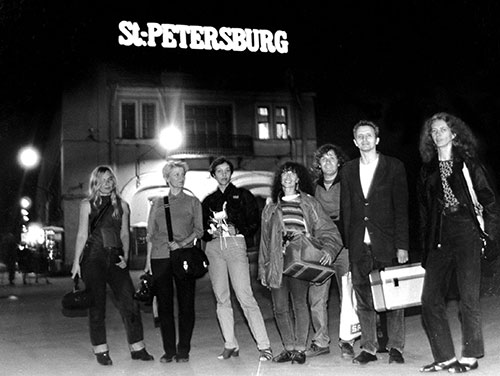
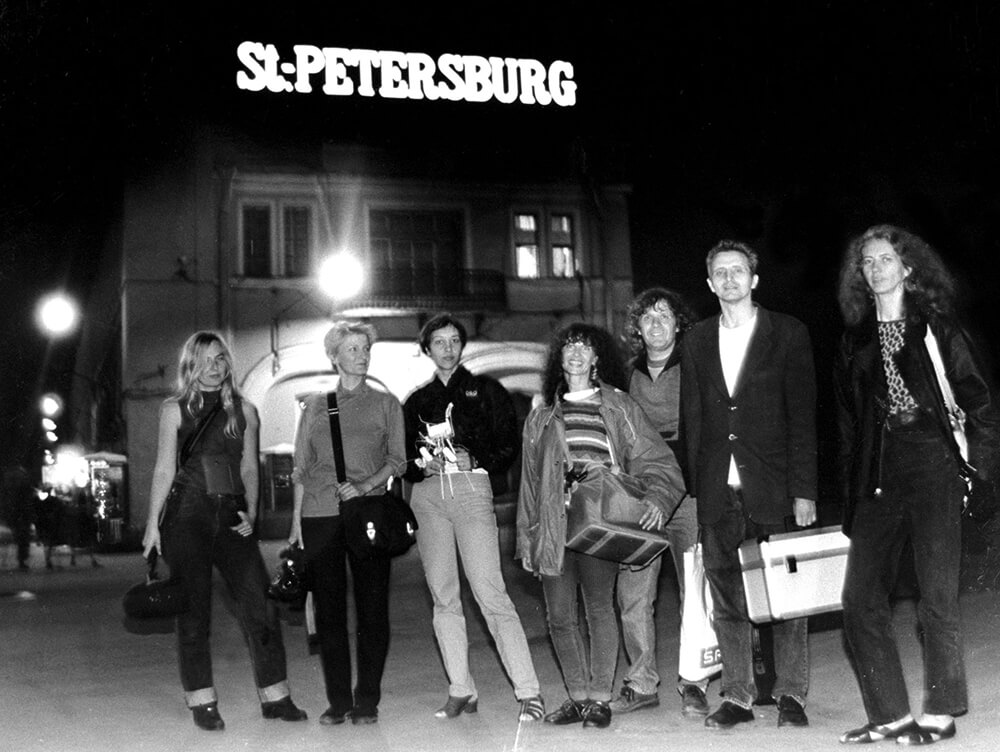
BOXES ON THE TRAIN AUSTRIA TO RUSSIA 1996
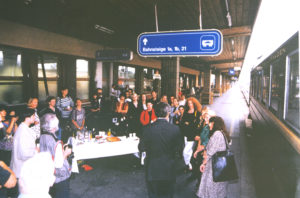
The exhibition leaving the train station.
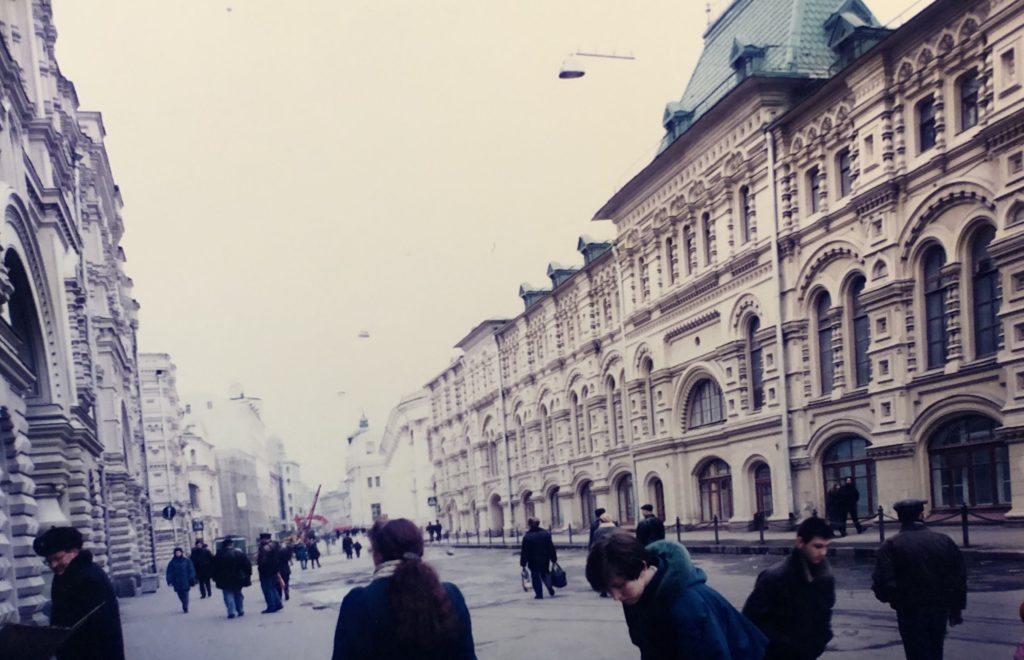
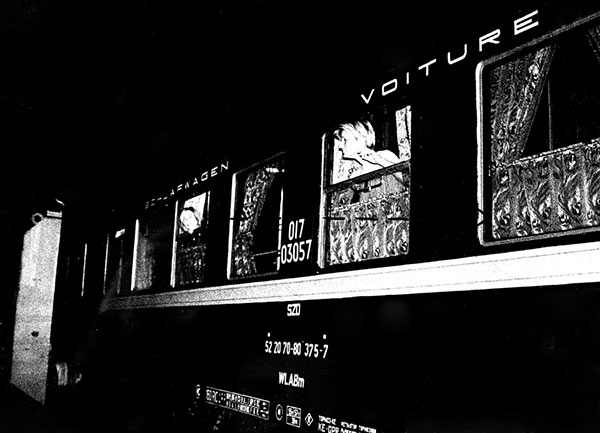
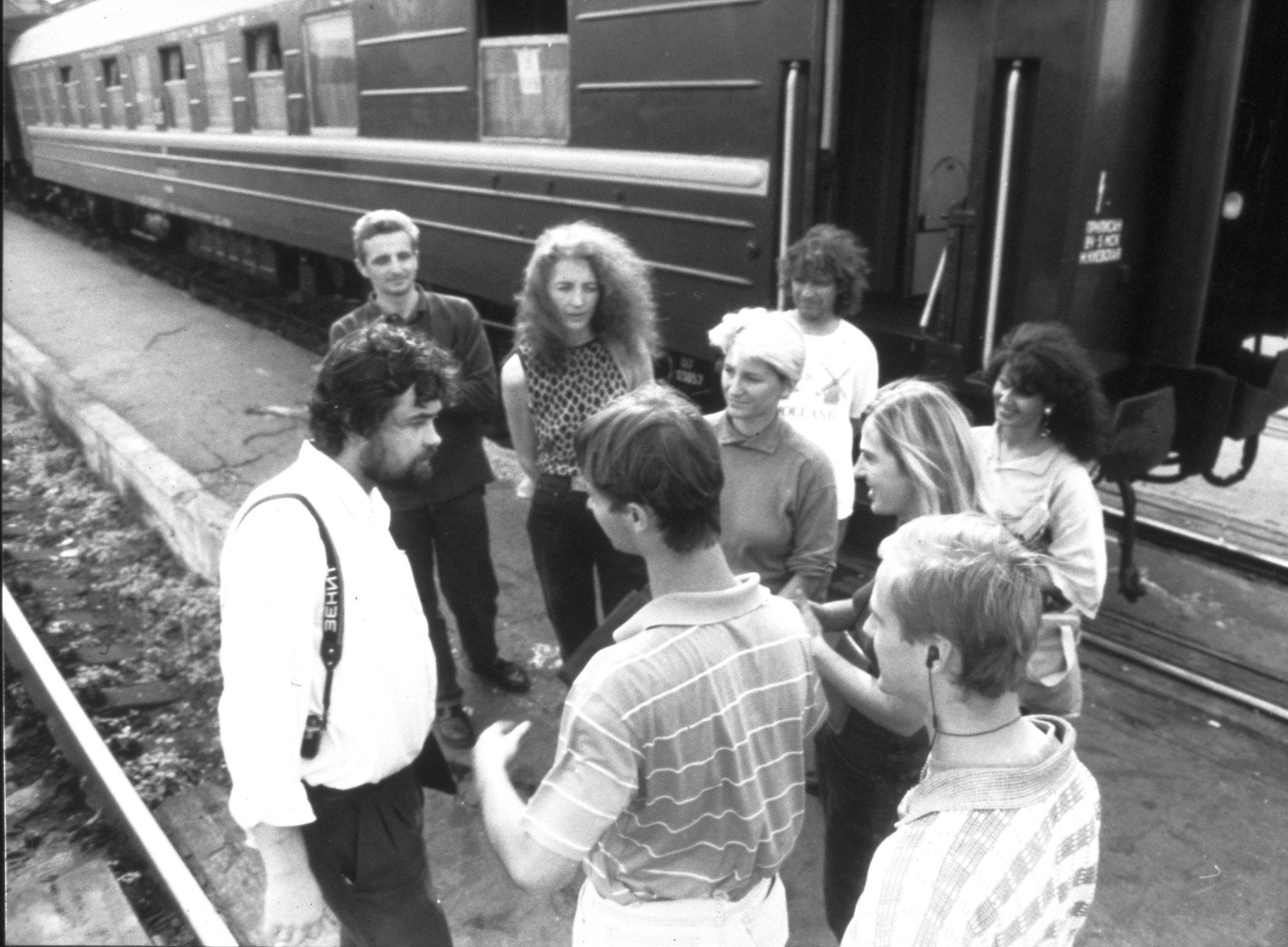
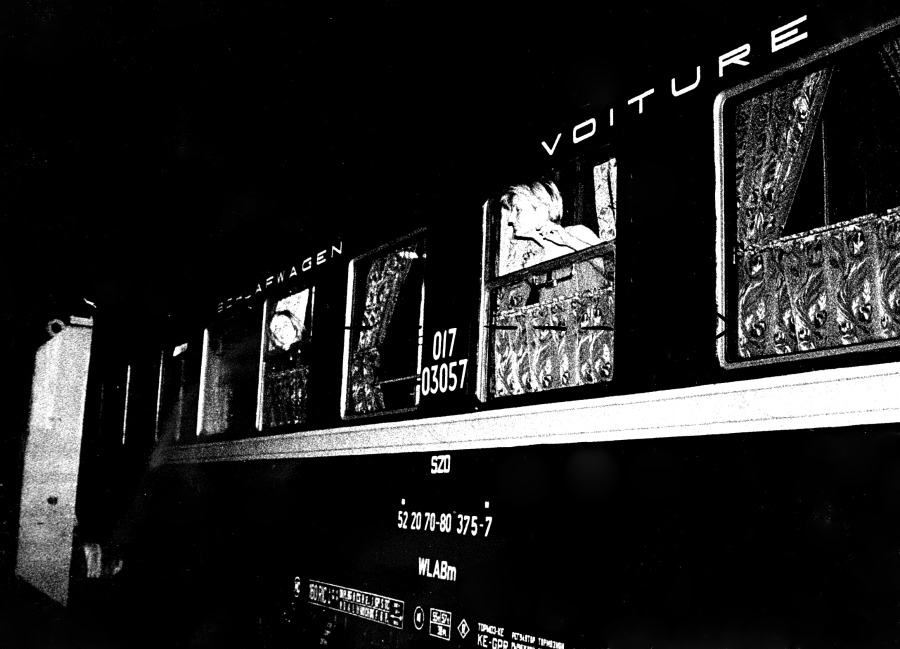
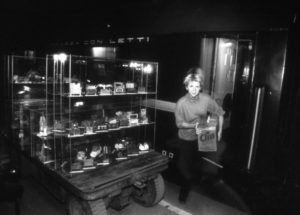
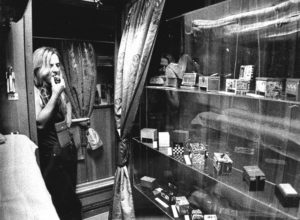
An unprecedented exhibition installed in a Russian sleeper car made its way from Austria to Russia with many obstacles along the route. Coordinators installed the boxes in a rented train car, creating a moveable sculpture in a newly defined open space moving from Graz, to St. Petersburg. In the course of the journey, eight borders were crossed.
For more information on the Russia to Austria Exhibition, see our page HERE.
BOYS AND GIRLS STUDY WOMEN’S ISSUES MONTANA 2007
WBB at the Missoula Art Museum, 2007
Over 1,200 fifth graders from Missoula County came to the museum every school day for three months throughout the exhibition to view the boxes and to discuss women’s issues. As each child entered the museum, both boys and girls were given cards with a specific issue relating to women. As they viewed the works, they collected information in reference to their card. Earnest discussions followed giving the students new insights into women. Next, the group viewed the WBB World Tour Journey video and then created their own boxes.
ART EXPRESSING LIFE SEATTLE AND PALO ALTO 2006
Louise Kikuchi – The Encrypted Future, 2006
Women Beyond Borders, with support from Tajima Creative, presented dynamic exhibitions, highlighting the personal stories of prominent national and regional women in Seattle and Palo Alto. To express these stories in art, the project paired women like California Senator Barbara Boxer, restaurateur and author Alice Waters, Barclays CEO (and former Washington Mutual President) Deanna Oppenheimer and others with established artists working in a range of media. The resulting pieces are both intensely personal and richly intriguing.
One of the criteria for selecting the women participating in the exhibition was that their personal stories be inspiring to young girls. In Seattle, adjunct workshops were conducted for GirlsFirst, a leadership program for high school girls of color facing social and economic barriers, and Angeline’s center for homeless women.
DIALOGUE BETWEEN SELF AND COMMUNITY SINGAPORE 2001
Prisca Ko – Constraints Faced by Contemporary Women, 2001, SINGAPORE
The women participants in Singapore created boxes in relation to a community, i.e. a collaboration with family, friends, a group of people, etc. The objective was to discover who women are and what women want in our particular society and context. Women first examined their personal identity and space, and second, related to their experience with the community, be it male or female. The community was engaged in the art-making process, thus extending the collaborative nature of WBB. This process gave rise to a more comprehensive reflection of societal values, needs, wants, and identity as a whole.
WOMEN BEYOND BORDERS: WHAT’S A BOX GOT TO DO WITH IT? REFLECTIONS ON THE BODY 2011
This WBB exhibition, addressing women and their bodies, was in conjunction with a symposium and weeklong program entitled Facing Our Bodies which took place during National Eating Disorder Awareness Week Jan. 31 – March 24, 2011. Organizers were Dennis Downey, Professor of Sociology and Irina Costache, Professor of Art History. As the boxes were opened at the exhibition, pertinent discussions were inspired on this often silent and widespread epidemic. The group of boxes on display focused on issues of the body and female subjectivity from a variety of perspectives. The box, providing an inner space as well as an interface, becomes a metaphor for the body itself in its myriad expressions, and a vehicle for introspection and dialogue
Diana Robson – We Are This And That And Everything In Between 1995, AUSTRALIA
Ironically, rather than dealing with ‘the individual’, Western society tends to place us in particular categories (little boxes) and more specifically opposing polarities in order to deal with us more easily, more quickly, less personally. This easy stereotyping is even more prevalent in regard to the position of women: Madonna/Whore, Mother/Worker, Young/Old, Beautiful/Ugly, Nature/Culture.
This box contains references to the stereotyping that we as women experience and the title, We are This and That and Everything in Between, refers to the true individual nature of the female sex.
Women’s Studies
It’s utterly prosaic, this box until it falls into the hands of the artists….at which point the box is transformed, exploded, expanded, shattered, sculpted, pasted, painted, and reborn into an expression of a woman’s identity. – Shanti Menon, East Magazine, Singapore
Magda Eunice Sánchez – New Apple, New Manifesto, GUATEMALA
For a long time, the apple has been a metaphor of the female’s voice, of Eve’s voice, the voice that carried Adam to the supposed sin and expulsion from paradise. Woman has endured this sinful story for centuries. The same tale is connected to the traditional story of Pandora’s Box. Pandora’s curiosity leads her to open a box that the gods have forbidden. Her sentence is to find within all the evils of the world. However, in this apple I present a new voice, one of many women who fight for their dignity. It is placed upon a stand and framed as an homage to the women who in the Orient, Africa, Europe, etc. struggle against practices that have put them in positions that are submissive, second class, and at times inhumane. This new apple is a new manifesto, that of the creative woman who has had to fight for her space and had to change old meanings. – Magda Eunice Sánchez
Presentations in Relation to Women’s Studies:
AUSTRIA: Women Beyond Borders, Presentation, Styrian Autumn Festival, Gender & Politics, Forum Stadt Park, Graz (Oct. 2, 1997).
CALIFORNIA: Beyond the Backlash: Feminism for the 1990’s, Panel moderated by Betty Ann Brown, including Dean Dresser, Cheryl Dullabaun, Cheri Gaulke, Sondra Hale, Rosalli Ortega, Sandra Rowe, and Lorraine Serena, UCLA Armand Hammer Museum, Los Angeles (June 8, 1996).
CALIFORNIA: Igniting the Edge: Women Beyond Borders, Panel Presentation including Lorraine Serena and WBB artists, National Women’s Caucus for Art and Southern California Women’s Caucus for Art (SCWCA), Los Angeles (Feb. 10, 1999).
AMSTERDAM: Traveling Heritages – New Perspectives on Collecting, Preserving and Sharing Women’s History, Saskia E. Wieringa (ED.), Aksant Academic Publishers, Amsterdam, Women Beyond Borders, pp. 79-82. Essay by Biljana Kasic, 2008
In light of our increasingly multicultural societies and the expanding “digital divide,” we need more inclusive approaches to the collection of cultural heritage. Critical reflection on the contents of collections and methods of acquisition is crucial. The International Information Center and Archives for the Women’s Movement (IIAV) in Amsterdam provides a case study in how to approach these issues. It considered how to make optimal use of new media, and whose histories should be represented in its archives. In Traveling Heritages, international and national heritage experts from academic, libraries, and archival professions reflect upon these concerns offering new perspectives on documenting women’s histories.
Art Education
Liz Wills – The Price of Beauty
For more information about our art education curriculum, see our page HERE.
A selection of student projects from around the world:
UTAH: Children Beyond Borders, Adjunct Exhibition, Art Access Gallery/VSA Arts Utah. Inspired by the success of Women Beyond Borders, VSA Arts invited 4,500 children with disabilities from more than 50 countries to transform cardboard boxes. The resulting Children Beyond Borders, a collection of original artwork expressing children’s ideas, dreams and visions, was first exhibited in Salt Lake City (Jan. 18 – March 17, 2002).
AUSTRALIA: Grrrls Beyond Borders, Satellite Exhibition of boxes by 300 female high school students held simultaneously with WBB exhibition at Tin Sheds Gallery. Organized by Michaela James. The Faculty of Architecture, The University of Sydney (Aug. 28 – Sept. 18, 1999).
SWITZERLAND: Pandora’s Box, Workshops for children in conjunction with Pandora – Women in Classical Greece. Organized by Anne Cathy Wildberger, Curator of Education, Antikenmuseum und Sammlung Ludwig, Basel (May – June, 1996).
Addendum
Women Beyond Borders contains extensive information, including a video archive of 80 DVDs of footage from the world tour. Included are documentation of exhibitions, workshops, presentations, and interviews with curators, artists, and viewers. Archives also include photos, press, ephemera and artist information (resumes, catalogs, images). These videos can be found HERE.
Christine Wu, Initiated WBB in Taiwan
Rose Huang, Collaborator
La Benida Hui, Collaborator
Roma Mehta, Collaborator
A New Exhibition
A staff wears a face mask with a Taiwanese flag design, as protection due to the coronavirus disease (COVID-19) outbreak, at a factory for non woven filter fabric used to make surgical face masks, in Taoyuan, Taiwan, March 30, 2020. REUTERS/Ann Wang
Women Beyond Borders are proud to announce that we have opened a new exhibition in Taiwan in conjunction with Red Room, a community-driven creative arts platform fostering inter-generational, cross-cultural expression. The Exhibition is entitled Formosa Tales and hosts the works of well over 70 artists. The exhibition was opened to the public at the Cloud Forest Gallery 27M in Taipei for International Women’s Day on Monday, March 8th, 2021 and will travel all across the island in the future!
The Following Was Provided by –
Kaya Lemaire
A Poster from the Taiwan Exhibition
Roma Mehta – Formosa Tales 寶島話匣子 at the Cloud Forest – March 27, 2021, Taiwan
Yes. It was as dreamy as it sounds.
It was cloudy, it was verdant, there were many women (and men!), and artists, amazing food, environmentally-conscious people & practices, and some snazzy latin music.
Let it be known that Red Room knows how to put on a fantastic cultural event.
Nestled in the hills under Yangmingshan, the Cloud Forest Collective has set up a shared art space/gallery next to their pottery studio. It’s a beautiful location, far away from the smelly scooters and honking Hondas.
It’s a space to find peace among artsy individuals and mindful friends. And perhaps make a bowl or two, if it suits you.
The event that took place on March 7th was the opening exhibition of Women Beyond Borders (WBB) Taiwan Chapter, titled Formosa Tales 寶島話匣子. Red Room collaborated with WBB to feature the personal stories of women from a variety of cultural backgrounds, through the physical medium of a box.
WBB is a non-profit, cross-cultural exhibition of women connecting women from all walks of life within and beyond their communities across the globe via a small, wooden box. Women from internationally known artists to women with no prior artistic experience, everywhere from Argentina to Zambia, have transformed these wooden boxes into a repository that contains a story from the artist.
Lorraine Serena is the brains behind WBB, holding the belief that,
“In light of the world situation, we move forward with even greater conviction that women’s voices and visions are a healing force in the world. The arts are a universal and essential language allowing us to look beyond ourselves in order to create a new model of relatedness.”
The women who participated could really do whatever they liked with the box…
… Changing its shape, orientation, color, or texture just to start. What emerged from the boxes were incredible stories of growth, change, heartbreak, tragedy, evolution, power, and more. It was amazing to see how the boundaries of a box could be pushed and stretched.
This is La Benida Hui’s box, broken into balance pieces to create “Her Story, Her Life and Her Lesson”
La Benida Hui
As with all the Red Room events, I have some sense of “coming home”. Growing up in a hippie household in Vancouver primed me for the things that maybe some others would find surprising about this community in Taiwan.
The sharing circles, jam sessions, and long hugs are indicative of the open-heartedness that is fostered between each person. It’s welcoming to people of any shape, size, color, identity, or other definers we humans can come up with. It’s a community that has grown around the arts.
When I walked into the courtyard entryway of Cloud Forest my ears were greeted by the hand pan and laughter echoing through the open gallery space. I was immediately in love with the setup.
The gallery is set in an old heritage building with a bright, open layout with boxes dotting all the surfaces.
A low-lying stone building to the right was where we found the live music, by the band Ambiente Latino, and an AMAZING spread of vegetarian food, drinks, and dessert. I’ve never been so impressed by the catering at a free event. The food was served on Rose’s plant-based plates and bowls (check out her brand Conscious Good Eats on Facebook).
In the beginning, there was a brief talk about the project and some reflections on the planning and execution of such an event. It ain’t easy to pull off this level of awesome.
The women behind the project were Christine Wu, Rose Huang, La Benida Hui, and Roma Mehta, who spent months planning the opening and collecting art projects, setting up and organizing every last detail. And it doesn’t end there.
Formosa Tales 寶島話匣子 is a traveling exhibition that will be moving around the island and showcasing the boxes and stories. Taipei was the first stop on its tour. If you’re interested, keep an eye on Red Room’s page to find out when/where the next exhibition will pop up.
People milled about chatting, laughing and enjoying the space. It was a chill and easy-going atmosphere, which is standard for a Red Room event. My friend Christiaan and I were admiring all the interesting people that passed through, with their feathers and frills and colorful braids.
One thing I love about trying new things is discovering all the different kinds of people that exist outside of your bubble.
Often it feels as though we live inside an echo chamber – hanging out with people who dress like us, think similar things, and hold relatively similar opinions. It’s rare that we go outside and talk to someone who is completely different from ourselves.
I want to make this point because it comes up around the topic of gender and other sensitivities, like race, class, sexual orientation, and so on.
Around the time of women’s day, I attended a few other events and the discussion around gender seemed very “othering”. And by that I mean men were often alienated from the conversation or alternative ideas were shut down.
I think there’s a lack of skill in our society when it comes to having conversations with people you disagree with. It’s incredibly difficult not to get emotions tangled into the narrative, which usually ends up with someone feeling hurt or maybe even an argument.
WBB at Cloud Forest was by far the most relaxing women’s day event I attended this year.
… And maybe we can chalk it up to the lack of a contentious topic being debated. Or maybe there wasn’t any trigger for it.
Or maybe it’s something else. The medium of art and self-expression didn’t overtly start pointing any fingers at anyone about this topic. Rather it was an opportunity for everyone to read and understand some personal struggles or stories.
The boxes didn’t confront anyone with statistics or blame or “call for reform now”. They just sat there wide open for anyone to take a look and take in what they said.
It was an invitation to empathize and relate.
Maybe an invitation is what is needed to initiate change. An invitation to listen. To comfort. To stand in someone else’s shoes for a moment.
There are many people out here pushing the borders towards uncharted territory, and they’re doing it without creating more hurt, harm, or suffering in the world. We sure as heck don’t need any more of that.
Out of the Box Twice Over
The Red Room celebrated International Women’s Day by organizing the 2nd Formosa Tales Box Project with the Namaxia aboriginal tribe in Kaohsiung, a region in southern Taiwan. March 12th to the 13th of 2022 was spent with the Namaxia matriarch and her community along with visits to matriarchs from other tribes in Taiwan. The Namaxia tribe connected with the project, leading to it becoming the impetus to help them revitalize their community. Inspired by the impact of the project, matriarchs from the other tribes are now interested in bringing the project to their own communities. Formosa Tales is alive and well and has taken a life of its own in Taiwan.
Suvan Geer, Artist, Writer for the Los Angeles Times – USA – 1995
Suvan Geer, Lorraine Serena, WBB Founder, and Darlene Nguyen-Ely, WBB Artist
Sometimes it seems so complicated, this being human. Especially now, in the 90s. Maybe it always seems difficult for those whose age it is, but certainly it is no less difficult now. Churches, governments, institutions, and families are all coming apart at the seams. There is a massive reconstruction going on socially, politically and culturally.
We are fast becoming a global community. I can know what someone is having for breakfast in China, get them to fax me the recipe and have it myself for dinner the same night. In one day I can fly home sneezing from a cold caught in Russia, watch someone gunned down in a live telecast from Bosnia, adopt a rain forest in South America, and buy Florida oranges from a Mexican American at a Los Angeles Freeway offramp, never exiting my car, which was assembled in sections on at least three different continents.
What can I know of such a world? What can I know about myself in such a world? What can I know about you? And so, we talk. Dialogue has got to be the biggest growth industry for what remains of the century. From Internet to National Public Radio, the opportunities for conversation are exploding. People want to know about each other. They want to know about themselves. From reality programming where TV becomes the national town square sharing gossip and information, traveling at the speed of light down optic fibers, to magazines clearly labeled “People”, “Self”, “Us” and “Interview”, we are trying to get to know one another and ourselves.
Art too is in a process of dialogue. During the 1980s feminist scholars challenged the humanist notion of a unified, autonomous subject which had dominated the arts since the Renaissance. They demonstrated that there was no single experience of being male or female, only gender representations. They took apart the idea that any one culture spoke for all cultures, or that any representation contained absolute “truth” for all humanity. In part they did this by looking at the power structures at play in languages, both written and visual, which represent or encode reality. The result has been a growing cynicism and distrust of all means of communication, including art.
Postmodernism suffers greatly from its inbuilt mistrust of language’s codes. Constant analysis of the way economic, social and political powers fix and maintain themselves and their worldview has made many tests completely skeptical about their ability to say anything and contaminated by prejudice, or art’s ability to speak to anyone outside the artworld’s corridors. Having found all expression to be biased by culture, gender, or economics many artists have given up feeling that art can even address the large, most pressing question of this or any century – what it means to be human. (It’s a pessimism society, unfortunately, shares with its artists. No wonder so many people feel that there is so little they can do to mitigate the confusion of the fast transforming global society).
Yet we keep talking. There is something within the process of dialogue that human beings instinctively try to summon for themselves. This is naming. The power of language to change the world. It is an awesome power and it is both active and reflective at the same time.
“Dialogue is the encounter between men, meditated by the world, in order to name the world. Hence, dialogue cannot occur between those who want to name the world and those who do not wish this naming – between those who deny others the right to speak with their word and those whose right to speak has been denied them. Those who have been denied their primordial right to speak their word must first reclaim this right and prevent the continuation of this dehumanizing aggression.”
Women Beyond Borders is about dialogue. It’s a gathering together of women so they can identify themselves, which is – speak for themselves. It is an opportunity for reclaiming identity on a global scale by looking at the codes of self imaging in various cultures. The importance of this action in a global society cannot be under estimated. Dialogue which begins with the silent, speaking for themselves, expressing who they are, their experience or their desires, opens an avenue for exchange and communication. It is an opportunity to alter and inflect the ongoing dialogue of signs and symbols which seek to define who we are. It is in a very real sense a revolutionary act.
In America we have become accustomed to women speaking out, having our words weighed, our presence recognized. Although, in truth, this recognition is still mostly confined to white, upper and middle class women, still there is a general perception that all women are entitled to this kind of presence in the world. But this is not the experience of women internationally. And certainly not of its women artists.
Women Beyond Borders is a step in undoing the isolation and hopelessness of silence. It is not a panacea, a goal or a Band-Aid. It is simply a step. Next will be the visits between artists in various countries, the letters and the Internet communications. These are interpersonal communications which will be followed by more self exploration, expansion of presence, and confirmations of global and community importance. Although we are invited to witness these exchanges by viewing the various exhibitions, unless we actively join the discussions most will be invisible to us. Documentation will never fully reveal what this dialogue will mean to the participants. That is to be expected, and in no way diminishes what this gathering together will signify to the world. Because every revolution is people. Not crowds, or movements or armies, but individuals coming to a common understanding that they have power. That they can change the world. And it always begins with knowing who we are.
April 1975, Vietnam: Everyone knows the communists will overrun Saigon, but no one expected it to happen so fast. Over the last month the sound of gunfire and explosions have slowly increased in frequency and force. We are so used to it that it has become a sort of background noise no one pays any attention to. Despite this I remember waking on April 30th, alarmed at how close the sound of gunfire and explosions was to our neighborhood. The city was in chaos, dark smoke blanketed the horizon as people ran with whatever belonging they could carry. But as I watched it seemed that very few had any idea of where to go.
My family and I hurriedly packed some clothes and fled to a friends house in another part of the city called Cho-Lon which was safer. We could no longer stay in our home because it was near an army camp and therefore dangerous. My father was not with us because he and my mother had separated years earlier. Adding to our anxiety was a rumor that the communists have threatened to flatten Saigon if there is resistance. By noon the presidential palace had fallen and we knew it was all over. I was only 7 years old at the time and did not realize how bad the situation was, so I innocently told my mom that now Vietnam will be one country again so she can go back to North Vietnam to see grandmother. My mom was delighted with the thought.
Later that afternoon we drove to the harbor to see what was going on since the radio station had been captured by the communists and we no longer were getting any news. As we drove around the streets were now completely deserted and an strange silence had fallen on the city. The only people we saw were a few people left still burning records and documents in front of some government and military installations. More ominous was the fact that in the harbor most of the navy and merchant ships had already left. I asked my mom what was going on but she seemed lost in her thoughts, maybe she was thinking of the harsh choice she would soon have to make.
My uncle and his wife had been staying one step ahead of the communists since they fled the central highlands. Because of the speed of the communist advance, the roads were jammed with refugees fleeing south making progress impossible for vehicles. Even though they did not want to be separated, my uncle was forced to put his wife on one of the boats heading to Saigon because she was pregnant and would never be able to keep up on foot. When he finally made it to Saigon a few weeks later, he found out that his wife has not arrived and not knowing where she was or what else to do, decided to stay with us in hope that she would find him. Later we learned that the boat she was on had unexpectedly dropped everyone, including his wife, off at Cam Ranh Bay (another city in the central highlands) to go back north for more refugees. My poor aunt was unable to find a way to get to Saigon until after the fighting was over and escape was impossible.
Meanwhile for the rest of us, time was running out. We knew that if we were going to leave it had to be now. We waved down one of the few remaining navy boats which was headed out to sea but stopped to pick us up. At this time not everyone was willing to escape by boat so while it was crowded, there was none of the panic and fighting such as I saw in the photos taken at the American Embassy that day as the last helicopters were leaving. The gun-fire was getting closer and my uncle was torn between staying to look for his wife and escaping, he was worried that he and his wife would face retribution if he stayed because he had been in the army. My mother was hesitant to get on board because she had to choose between leaving with us or staying so that she could see her mother for the first time since 1954 when North and South Vietnam were separated. Finally she decided to stay and promised to find us after the war ended. As the boat pulled away I can still remember my mother standing on the dock, crying and waving to us. I was yelling, “Stop the boat, go back and get my mom”, but it was too late. In those few minutes my family was torn apart and for last time I saw Vietnam. As my mother watched the boat leaving with her children she was overcome with grief and changed her mind. Desperately she stood at the dock for five hours waiting for another boat to take her out to our ship, but none came.
On the way out of Saigon, we saw hundreds of returning boats and some of them warned us not to go on because troops were shooting at any boats trying to escape to the open sea. The people on our boat were very determined and decided to take their chances and leave.
Many of the boats we saw leaving were severely overloaded and one of the ships had run aground in shallow water. Our smaller boat pulled alongside the old, rust streaked ship and an agreement was reached that everyone who wanted to could transfer from our boat to the ship, and in return our boat would help pull the ship into deeper water. After struggling for three or four hours both vessels finally reached deep water and all passengers were transferred. The small boat turned back toward Saigon, taking a few people who had changed their minds and decided to go back. The ship, even more overcrowded than before slowly headed out to the open ocean for the long dangerous voyage ahead. Even though we had made it out of Saigon there was no celebrating, everyone was dwelling on what they had left behind and what the uncertain future would hold. That night was pitch black, there were no lights on our ship or on shore. We watched fireworks shooting up from the coastal villages into the dark sky. The communists were celebrating their victory and we could hear one of the generals broadcasting a new set of rules which he called ” the ten commandments “. These commandments were to govern life for those left behind in the new Vietnam. Our intended destination was Singapore and we slowly headed south. The weather was good and if it were not for the grim circumstances I might have been able to appreciate the beauty of the blue ocean and the small islands we passed. Once we saw some whales which terrified everyone because they were nearly as large as our ship and came very close. When I look back on the event, I think that everyone leaning over one side to watch the whales was more dangerous to the ship than the whales themselves.
Things started to go seriously wrong a couple of days into the journey when our engine broke down. I guess this was not very surprising considering how old and decrepit our ship was to start with. There were many more small boats from coastal villages followed us and dumping refugees onto our ship each day. The water started to coming in from an existing hole on the side of the hull of our ship which is now below the waterline because of the refugees’ weight. After drifting a few days, our food and water were running out, making an already bad situation very desperate. People started to fight over food and water. Everyone was being very careful to ration their water and food except for this popular singer from Saigon who would use a great deal of her small supply of water to wash her face each day. Obviously some people are more afraid of being unattractive than dying.
Everyone thought that we were going to die slowly and horribly, despair settled over the ship like a numbing fog. A man near me decided not to wait and shot himself in the head. I remember screaming when his blood and brain tissue splattering on me. On the crowded deck there was no where to store the body so there was no choice but to toss his body overboard and within minutes the sharks were fighting over it. As days passed, so great was my fear and loss that I felt neither hunger or thirst. My mind had cut off my ability to feel or comprehend what was happening around me, which was maybe a good thing considering what life was like onboard. Even though the ship was extremely overcrowded there was very little talking, everyone seemed wrapped up in their own misery. My brother and sister sat nearby crying and hugging each other. The crowding was so great that one night when I stood up to stretch, I found that I could no longer find a space to sit back down so I ended up standing the entire night until I collapsed. Having learned my lesson I did not get up again until we were rescued.
Despite our SOS signals and desperate attempts to get their attention, many ships passed us by without stopping but finally after floating what seemed like forever we were picked up by a Danish freighter out of Thailand on their way to Hong Kong. After being left by so many other ships, everyone was afraid that if we did not get onboard the freighter fast enough they would leave without us. Most of the people started to panic and there was a lot of pushing and shoving to get on board. Some fights even broke out and many passengers left their personal belongings behind in the mad rush. One man’s leg got crushed between the two ships when they collided into each other. Many others fell into the water and drowned during the rescued. By the time we were rescued, I could not move my legs because of sitting in one spot for so long, I had to be carried up to the freighter by one of the ship’s crew. That night as I was resting from my ordeal someone stole all the cash and jewelry that my mother had given me.
So when it was over all I had left of Vietnam were memories of people and places that had been left behind. For many years afterward, I would get angry when I thought about what had happened and what I lost. I was not angry at anyone in particular, rather I was angry how events and ideologies which I did not understand could take me from everything I knew and loved. After my mother and other members of my family have moved here recently, I finally have the chance once again to know the family I lost twenty years ago.
Many journals and articles have covered portions of the WBB journey, below are articles from newspapers, magazines and other sources. Please note that these are a few highlights from our press archives and for a full list of sources refer to our press page in the about section of this site.
Prof. Dr. Peter Blome, Director
Prof. Dr. Margot Schmidt, Assistant Director
Dr. Barbara Begelsbacher, President Museum Commission
Anne-Kathi Wildberger, Head of Museum Education
Heide Hildebrand, WBB Austrian Curator and Coordinator
Ella Van der Meijden, WBB Swiss Curator and Coordinator
Dr. Sania Papa, WBB Greek Curator and Coordinator
Vera Giesel, Annerose Bekuhrs, WBB German Curators and Coordinators
Pandora, just to set things straight, was the Athenian name for the earth goddess Rhea. The nasty little tale told by Hesiod, the Greek historian, blaming all the world’s follies and ills on a woman who opened up a box of Spites, is “not a genuine myth but an anti-feminist fable, probably of his own invention,” according to mythographer Robert Graves. Pandora’s jar originally contained winged souls.
Well, than the real Pandora is back in action. Because of an idea hatched in Santa Barbara, 200 plus women artists from more than a dozen countries are sending their “winged souls” out into the world in tiny wooden boxes.
– Mary Heebner, Santa Barbara Magazine 1995
Lydia Dambassina – The Last Child, Greece, 1996
Lydia Dambassina – The Last Child – Greece My work is a continuous relation with movement and time. The spiral is a symbol of life and fertility: the permanence of being under its mobility.
Ellen Wessinhage, Lorraine Serena, Sania Pappa,WBB Greece Curator, Vana Xenou, WBB Artist at Opening of WBB Basel
THE NEED FOR SOLIDARITY
Women Beyond Borders Catalog
Annemarie Monteil, Art Historian
Anne-Kathi Wildberger, Educational Curator and Heide Bilderbrand, WBB Austrian participant had the inspiration of including a segment of WBB along with Pandora, Women in Classical Greece, an exhibition of vessels and objects from 5th Century Greece, organized by Dr. Ellen Reeder of the Walters Art Gallery in Baltimore, Maryland. Dr. Margot Schmidt, assistant director of the Antiken Museum, also wrote of this possibility, “I am looking forward to the realization of this project. If we can join WBB with Pandora in Basel, it would mean that we would link not only women of our time, but we would also link with the ancient Greek women who, at their time, had a strong need for solidarity. Pandora is the first ancient art exhibition in the world to center around women, and provides a groundbreaking perspective into their lives, customs, rituals and myths in an unprecedented gathering works of art from Greece.”
Dr. Sania Papa (Greece), Lorraine Serena, Dr. Margot Schmidt (Switzerland). Ella Van der Meijden (Switzerland), Frank Serena, Vana Xenou (Greece) at opening of WBB Basel
As these ensembles stream in toward us from so many different places on earth, it is as if they brought to us the essence and spiritual climate of the land and its inhabitants. The voice of the Swiss artists is cooler, more intimate. In Greece one feels in the familiar company of myth. And the Americans radiate self-assurance. Cradle and coffin, boat and garden, altar and shrine expressed by what are at first only anonymous little boxes.
Anne Sauser Hall, Untitled (Pandora), 1996, Switzerland
These happenings out of the lives of women, transformed through pictorial images, have nothing to do with feminine art but rather with the life wisdom of women – birth, death, transformation. With that wisdom, even within the smallest thing can lie the embryo of the great. Whoever finds her own vision as truly as possible has the power to grasp the world in the hollow of her hand.
Read Essay By Sania Papa about Greek Artists participating in this exhibition:
Elena Mary Siff Curator, Board Member, and Co-Founder of Women Beyond Borders
There is no hierarchy in this exhibition. We are all creating a piece from the same inexpensive pine box and there is a real sense of us supporting one another. We are women artists of all ages, from all economic backgrounds, and with varying degrees of professional reputation in the “art world.” As this project has grown and the dialogue with other international artists has increased, through the fax and Internet, it is apparent that there is a vital stream which is flowing among us as the exhibition begins its epic voyage. Whatever happens on the way is the essence of Women Beyond Borders.
– Elena Siff, WBB Artist
Elena Mary Siff and her husband Sam Erenberg were responsible for several of WBB’s International Exhibitions. Elena acted as a contact for the Boxes on the Train Exhibition, the Oaxacan Exhibition, the Cultural Olympiad, and the Australian Exhibition. We at WBB would like to give thanks for their hard work and dedication to the cause since its inception.
Elena Siff during the World Premiere of Women Beyond Borders, hosted at the Santa Barbara Contemporary Arts Forum
Elena Mary Siff- In the Garden, 1999
Lorraine Serena and Elena Mary Siff with a group of students from Stella Maris College in Manly, Australia
Elena Mary Siff- Narcissism, Me, Me, Me, etc., 1999
My box is titled ‘Narcissism, Me, Me, Me, etc.’ because I live in the dream capital of the world where appearance is paramount, and hope springs eternal.
According to the myth of Pandora, when the winged souls, the 10,000 woes, the spites that plagued mankind, were released by Pandora from the jar, only HOPE was left behind in the jar, and it was delusive HOPE that discouraged the mortals, through her lies, from committing a general suicide.
Because I live in Los Angeles, California, surrounded by vain, foolish, mischievous, idle, and beautiful women, such as Pandora, I felt compelled to turn my box into an anti-feminist statement, that Pandora would have appreciated.
Lan Huong Thi-Nguyen, Lorraine Serena, and Shoko Toma
BOXES AT RISK
Lan Huong Thi-Nguyen, Curator
Oh, how “underground” we were. I went through all kinds of paperwork to get an “exit visa” from the communist government and an “entry visa” to the USA and brought all the artworks out by hand.
Big Man, my late husband who was dating me for several years at that time, just laughed to see his woman just run transcontinental without thinking of business or any risk. He looked at the boxes and the way I looked at them, like looking at a diamond. The man who was dealing with Diego Rivera and Frida Kahlo and all the names of that period, loved my crazy energy and he asked “could you leave Saigon and come to San Francisco to live with me?” He did not get the answer until several years later.
Today, I got your message on the day of your anniversary! It made me look back at that Belle Époque of my life and all that I did. We were so happy, weren’t we! Congratulations for your happy anniversary! Also missing the Big Man who shared 25 years of my life! I wish you know how very emotional it is to watch the video clip you posted today in the giant archive of Women Beyond Borders.
It brings me back the memory lane of my career life I had before I had a family. Listening to what I told you that day, the moment we opened the boxes which I smuggled out of that communist country. I was so out of fear of everything because I thought I had to bring the voice of Vietnamese women to the world no matter what when I still could do it.
The Power of Life
LE THU-HANG
VIETNAM 1997
The difference between death and life…the immortal still rise from the grave and represent a strong life which is seen everywhere. The freshness of the flowers differs from the quietness of the gray burnt tombstone, the dry and stained pieces of iron and even the spike tunnel where death is always near by.
Flowers still live and rise above all.
To Know People Outside
YEN PHUONG NGUYEN THI
VIETNAM 1997
If I shut the lid tight, can anyone know for sure what it is in the box? The outside of the box is decorated attractively as a person intentionally embellishes their appearance to conceal their inner life. The ancient Vietnamese had a saying, “It is easy to know a man from his appearance, but difficult to recognize his thinking.”
To encourage dialogue, collaboration, and community
To inspire creative expression
There has been nothing like Women Beyond Borders in the world before. – Karen Wu, WBB Artist
The positive response Women Beyond Borders has engendered from audiences and critics around the world significantly enriches education and provides an in-depth understanding of women. Since its inception, Women Beyond Borders has acted as a catalyst for cultural exchange and change worldwide, thus taking a pivotal position at the intersection of contemporary art and today’s increasingly globalized, multicultural, and digitally connected society.
WBB celebrates women worldwide by sharing their untold voices and visions while honoring their spirit of mutual support. This endeavor is more than a collection and basis for exhibitions: it is a catalyst for further communication and collaboration. WBB challenges divisions of class, politics, geography, race, and creed. The original concept continues to be envisioned more as a collective effort than a series of individual projects.
The endeavor that was founded in 1991 by Lorraine Serena and a few artist friends has expanded well beyond it’s humble beginnings as a simple art project with the objective of honoring and connecting women and now reaches across the globe, fostering creative expression and inspiring others in it’s wake. Adjunct projects have cropped up the world over, expanding the scope of the project to many more groups: homeless women, girl scouts, men and boys, nomadic women, entire school districts, widows of the genocide in Rwanda, thousands of children with disabilities via VSArts, DC. and a project involving at risk girls and women in Vietnam. Though the offshoot projects are all unique, the original concepts are championed as a collective movement rather than a series of individual projects.
ACKNOWLEDGEMENTS
Over the years, WBB has been acknowledged by anthropologists, theorists, art
historians, curators, dignitaries, sociologists, artists, poets, and many more.
– Senator Hannah-Beth Jackson recognized Women Beyond Borders and Lorraine Serena for nearly three decades of the celebration of women worldwide by fostering a greater understanding of their lives and cultures by honoring and documenting women’s voices and visions, and inspiring creative expression. 2019
– Matt LaVere, Mayor of the City of Ventura, California, recognized Women Beyond Borders for its influence on the region and the world in perpetuity, declaring that April 27th, 2019 would be known as Lorraine Serena and Women Beyond Borders Day. 2019
– Dignitaries attending exhibitions have included US President Bill Clinton; Prime Minister of Israel, Shimon Peres; the First Lady of Singapore, Madame Goh Chok Tong; the International Olympic Committee Chairman’s wife, Mrs. Bovijn, and Mrs. Annan the wife of the United Nations Secretary General.
– WBB Artistic Director, Lorraine Serena, was awarded the Women’s eNews International Leadership Award as one of the Leaders of the 21st Century for building peace and connections around the world. 2008
– WBB was acknowledged by the US President’s Committee on Arts and Humanities for the size, scope and impact of the endeavor. 2007
– WBB received the Isabella Bird Award, Women of Vision, for its creative approach to building community among women worldwide and for the book Women Beyond Borders, The Art of Building Community. 2005
– Salt Lake City Magazine deemed WBB one of the top five events of the Cultural Olympiad along with Chihuly and the Pilobolus Dance Theater. 2002
IMPACT
– WBB has increased attendance up to 40% at museums and galleries that it exhibited at and has been an important attraction for fundraising.
– WBB is the first endeavor of its kind in the arts to build community via a worldwide collaboration among women artists.
– WBB crosses over and connects to many disciplines such as sociology, women’s studies, art history, anthropology, psychology, art education, and more
– WBB’s award winning website has become a major educational component internationally for women’s and girl’s organizations, schools, universities, and museums.
REVERBERATIONS
– One of the numerous notable offshoots of WBB: Organizers of the WBB train exhibition were inspired by WBB to collaborate on Danube Streaming, an investigative journey that navigated the Danube river from Vienna to the Black Sea, connecting artists, while addressing ecologic, economic and political issues along the way. 2007
– VSA ARTS, DC (Very Special Arts) sponsored a Children Beyond Borders adjunct project with over 6,000 children with disabilities from 52 countries. A selection of these boxes were displayed along with Women Beyond Borders as an official Cultural Olympiad event held in Salt Lake City. The Children Beyond Borders boxes expressed the young artist’s ideas, dreams, and visions. 2002
– Since the blockade, WBB was Cuba’s second cultural exchange between the US and the Wifredo Lam Center, Havana. 2000
– After having exhibited the WBB collection, the Contemporary Museum of Oaxaca began for the first time to collect women’s art. 1998
– WBB was the first exhibition of women’s art at the National Museum of Kenya. Shortly thereafter, the museum launched the its first exhibition to featuring women artists from Kenya and Uganda. 1997
– WBB Boxes on the Train exhibition was the first of its kind to unite women traveling from Graz, Austria through recently opened borders to St. Petersburg, Russia. 1996
United States President Bill Clinton and then-Prime Minister Shimon Peres of Israel at the Exhibition in Israel
ICC Contemporary Gallery Binyaney Ha’ooma
Jerusalem, Israel
March 13 – April 27, 1996
Edna Ramot, Director
Daphna Naor, Curator and Coordinator
Ravel Pittman and Elena Siff, Contacts
A DEDICATION
The WBB Exhibition in Israel was dedicated to the memory of Ruth Baram, a passionate patron of the arts and a driving force behind reshaping the ICC Jerusalem International Convention Center. Ruth successfully pushed for the open display of art throughout the public building, with the inclusion of local as well as international works. Blessed with the spirit of inquisitiveness, Ruth was constantly in search of the meaning of life through art.
ARTIST NETWORK BEGINS
Daphna Naor
Women Beyond Borders is an expression of the desire to establish a network of female artists who maintain an international dialogue and engage in mutual visits and joint exhibitions and publications. Worldwide parameters of communication have been made possible with the opening of a WBB Internet site.
For the dozens of artists who took up the challenge, the boxes serve as an impetus for a journey into their own inner enchanted worlds to distant temples, longings for a different reality, or expressions of secret hopes. Some artists found in their boxes a means of expressing pain, missed opportunities and despair. Others saw the small boxes as cells of communication through which they shot arrows of humor, optimism and power. Others rebelled against the box, challenging their physical boundaries and went beyond.
Jennifer Bar Lev – Fire – Israel Fire is an important symbol in the Jewish culture. There are many passages in the Bible condemning pagan ritual sacrifices at altars in the forest, and extolling proper burnt sacrifices to the One God:
“…then shalt Thou be pleased with the sacrifices of righteousness with burnt offering…” (Psalm LI: 21)
There are many holidays in which fire plays an important part: Lag BaOmer, when bonfires are made as an echo of the signal fires lit against the Romans during the Bar Kochba rebellion; Hannuka, when the miracle of a lamp containing oil enough for a day burned for eight; the tradition of “soul candles,” which burn for 24 hours on the anniversary of the death of a close family member.
But perhaps the most constant and important fire in Judaism is the Sabbath candles, to be lit on Friday eve by every daughter of Israel. I see the Sabbath candles as a symbol of home and the woman’s duty and privilege to protect and care for her family, physically and spiritually.
My piece contains an unlit Sabbath candle to remind myself that no matter how much women expand our potential as human beings, the role of homemaker is a very profound commitment. It provides the foundation of faith upon which miracles can grow.
Daphna Naor, two guests, and Edna Ramot
Historically, a box is a chest for treasures, a memory of a holy place, a womb or a tomb and linked with gift. These connotations are linked with intimate secret objects that create a space for personal meaning, a diary for sharing ideas with oneself, a place for the safekeeping of memories, for preserving culture, a place to hide from others. It can be viewed as a ‘box of secrets’ which brings a woman closer to her soul and, like a mirror, helps to recognize herself and to define her identity.
– Dr. Talya Birkhahn, Israeli Philosopher of Education
Santa Barbara, California artists Lorraine Serena and Elena Siff have initiated an international exhibition of women. They wished to express the recent revolution in women’s art that has taken place in recent decades, at the end of the century, in which women broke through socioeconomic boundaries women’s contribution to art is no longer that of someone sitting on the sidelines, but rather, that of a securely situated, confident individuals whose critique can contribute and enrich the central discussion and execution.
They sent miniature wooden boxes to female artists throughout the world. The boxes were originally intended to serve as channels of inter-cultural communication: it seemed that their uniformity would highlight the differences and diversity.
Among an international spectrum of artists. The dozens of artists who took up the challenge, the boxes served as an impetus for a journey into their own inner enchanted worlds to distant temples, a longing for a different reality, or an expression of secret hopes. Some of the artists found in their boxes a means of expressing pain, as they are “withdrawn” or embody missed opportunities and dispair. Others, however, saw the small boxes as cells of communication through which to shoot arrows of humor, optimism, and power. Some of them rebelled against the box, challenged their physical boundaries, and went beyond them.
Performing artist Suzanne Lacy explains how artists can ‘focus on transforming their art to embrace their concerns for the world,’ in an Anderson Ranch workshop
This paradigm shifting workshop, Making Art as if the World Mattered, inspired Lorraine Serena to pursue a Public Practice project with several other artists. After a couple months of determination and collaboration, the Women Beyond Borders project was conceived.
ARTISTS FROM AROUND THE COUNTRY EXPLORE A CHANGING ROLE FOR ART
Imagine a world in which the cry of “Art for art’s sake alone” is heard as loudly as “Art for society’s sake.”
Imagine art created not so much for sale, as for a seed – the seed of a new social consciousness.
Imagine art with a greater function than creating visual simulation or an investment value.
Imagine art with a heart – and a conscience – instead of a dollar sign.
These hopes and dreams are the motivating factors behind why writer/critic Suzi Gablik and performance artist Suzanne Lacy have brought together artists from all over the country for a workshop entitled, “Making Art as if the World Mattered.”
The workshop is being held this week at the Anderson Finch Arts Center as part of an interdisciplinary program to bring artists of different media together.
Suzi Gablik
CHANGING WORLD
“The imperatives of a rapidly changing world are overwhelming. Art as a positive and compassionate response is becoming urgent. Much of modern art seeks to maximize profit rather than to serve social ends,” according to Lacy.
Using the issues of the Aspen community as a model, the 16 workshop participants are exploring how to use their art to address the needs, issues and problems of any community, including the global one.
As part of the workshop, the participants spent time in Aspen searching for issues and needs of the community. They also listened to several speakers from the Roaring Fork Valley who gave their perspectives on the area.
The goal is for the participants to turn that information into a proposal for a work of art — a work that creates an awareness of a need, or points toward a solution to a problem, or motivates the viewer to act in a positive way on an issue.
‘ECO-CENTRIC’
It is to be art not just for art’s sake, but for society’s sake.
It is to be art not just for profit, but for providing awareness. It is to be art not based on the “ego-centric,” but the “eco-centric,” as Gablik calls it.
Gablik believes the paradigm or societal consciousness of recent times, such as consumerism, commercialism, conflict, and any other mentalities which are based on exploitation, are headed for a “dead-end course.”
What is needed in the world and in art, according to Gablik, is a paradigm shift away from “exalted individualism.”
“We simply cannot stay committed to our ideals of freedom and self-expression while everything in the world unravels,” she writes in an article entitled “Changing Paradigms for the Artist.”
PARADIGM SHIFT?
Gablik and Lacy both believe the paradigm is shifting away from the old one, and they hope the new one will embrace a “new kind of freedom” in which people are free to help others while taking care of themselves.
They note that already some artists are becoming disenfranchised by the art world and are seeking some other basis to fulfill the commercially defined idea of success.
“The skills (they got out of the workshop) are secondary to the attitude shift and (giving) them validation and support for their disenfranchised thoughts,” said Lacy.
The new paradigm Lacy and Gablik envision and which they are trying to help create in others is based on “a condition of understanding the world in terms of the web of connectedness, rather than in terms of the individual and separateness,” Gablik explains.
She adds it would be a paradigm “Focusing on processes and relationships between things, rather than on the things or products themselves.”
At the end of the intensive, week-long workshop, Lacy and Gablik hope the participants will take away with them not only a new awareness and empowerment, but also a way to pass that awareness and empowerment on to others through their art.
Beverly Decker, Doris Jauk-Hinz, Eva Ursprung, Lorraine Serena and Saritha Margon
The beauty of WBB was found in the spirit of support evidenced around the world as women came out of isolation into relation.
– Lorraine Serena, WBB Artistic Director
The first boxes arrived in late 1995, filling Lorraine’s studio with the spirit and imagination of their creators. No one had any idea what to expect. “Let things fall into place,” advised Liz Brown, then curator of the University Art Museum at UCSB. “This project has a life of its own. That’s the beauty of it.” A spirit of cooperation cut across cultural, religious, and economic boundaries. Artists drew from their own traditions, with each box becoming a distinct portrait.
Luz Maria Anguiano opening boxes from Ecuador
Mexican boxes represented ornate reliquaries, encrusted with pigment, gold and memorabilia. The Argentinians deconstructed boxes to create sculptural balancing acts. The Parisian works were sleek and abstract. In Africa, a woman carved the box surface into a body of a woman within which slept a tiny infant. The Israeli group added metal, concrete, and wire, revealing endless conflict. Together, all the boxes created a visual anthology of women.
A world map began to chart the journey with red push pins, identifying participating countries. Within each country, artists came together, perhaps because of WBB’s simplicity and unrestricted quality. A complex web of communiqués, enabled by the onset of the internet, swiftly aligned us with one another. Participants arranged an array of activities, including adjunct exhibitions, workshops and discussion groups.
Lorraine Serena opening a box from Italy
Suvan Geer, artist visionary, described Women Beyond Borders before it was launched as “a gathering together of women so they can identify themselves, which is, speak for themselves. It is an opportunity for reclaiming identity on a global scale by looking at the codes of self-imaging in various cultures. The importance of this action in a global society cannot be underestimated. Dialogue, which begins with the silent speaking for themselves, expressing who they are, their experience or their desires, opens an avenue for exchange and communication. It is an opportunity to alter and inflect the ongoing dialogue of signs and symbols that seek to define and refine who we are. It is in a very real sense a revolutionary act.”
Suvan continued, “Women Beyond Borders is a step in undoing the isolation and hopelessness of silence. Documentation will never fully reveal what this dialogue will mean to participants. That is to be expected and in no way diminishes what this gathering together will signify to the world. Because every revolution is people. Not crowds or movements or armies, but individuals coming to a common understanding that they have power. That they can change the world. And it always begins with knowing who we are.”
This exhibition further marks spaces for art made by women in Singapore. It is not on accounts that they are women that alone made such work invaluable, but because, largely opening to the theme, they reveal nuggets of thoughts and insights on themselves as women. What is encouraging is that the process of working was consciousness-raising about each individual self, about women as a community, about women in the community within that community.
This exhibition has attracted women from diverse backgrounds, living in different sub communities in Singapore. Sometimes it is the difference that forms the focal point of inquiry. Some examples: Jane Gover’s work, Close to the Edge, is a communal effort with a team of expatriate women, and their reflections of the difficult passageway between home country and the new; Ketna Patel as a diasporic Indian with routes in Kenya (birthplace) and Britain, and now in Singapore as a practicing professional architect/designer. Her box is a collaged encasement of photographs taken over a period of time, with the selection revealing a constant self referencing with Indian women living in India where she visits regularly as a tourist; Ruzana Saini’s affirmative work on the progress of Malay Muslim women from illiterate to literate, and its connection to poverty and economic well-being; Kumari Nahappan’s work utilizes materials, such as turmeric, linked to her communal practices of Hindu rites.
It does not detract from the exhibition whether or not the women artmakers concede to the potential space as space proffered for woman – as – feminist issues. In fact, the WBB (international component) does not even mention the word “feminism” in their seed document, and a further elaboration of its aims are detailed below. What remains as a significant component in the process of making of the work, is that there will always be an unconscious contextualizing by either directly or obliquely looking at the relationship of women and their communities, when they forage within systems of personal knowledge and personal experience, to come to some comfortable or uncomfortable expression if not of themselves, at best, from themselves.
For who best, except the women themselves, can produce a singular notion of what women here have come to realize and would except or reject about them selves, whether this is what would could form to the standard of equality of another order, or meet ideas of values attributed to women in another society? This exhibition has a feminist face – when it opens up opportunities for women to express “with intent and content” – to look in the mirror and discover/re-discover themselves. Women, if pockets of them are marginalized, need to egress to locate their own needs, to form their own shapes, to mark out there own spaces in which they work, fight, live, love and die. Such platforms as WBB has this terribly important role of allowing a space for women to think about these things, and to think things out for themselves.
WBB Singapore was set up along the lines created by it’s progenitor Women Beyond Borders (WBB). WBB’s aim is to:
— Honor and document women’s voices and vision;
— To build community through dialogue and collaborations;
— To inspire all women to express their creativity.
The objectives in WBB Singapore were applied in two ways:
— That women here (with a basic residency of three years) express ideas of their “women” identities;For a number of these women that these ideas emerged through a collaboration with a community of their choice.
— The works and processes by which the final creations transpired reflect some of these aims but there are multiple “accents” and they certainly inspired different anxious readings.
The collaboration is not a communal engagement among ourselves, for a sense of communal energy, but a collaboration between each artist from and already engaged perspective and a lady community of her choice. This community may be male or female, make a prize of one other intimate person, or hundreds of strangers. It’s purpose was to, hopefully, activate an interrogation/examination with the collaboration of lay communities, of the woman in Singapore today and otherwise often personifies as success is, without trying to resort to and rely, on previous and certainly western, textbook understandings of women.
Prisca Ko’s work Constraints Faced by Contemporary Women surveys a female population who inhabits HDB (public housing estates). They make up a diverse group of teenagers, single, married women with and without children, retirees. Noni Kaur obtained images of male friends and family; Ng Siew Kuan initiated her collection of thoughts at the Kandang Kerbau Hospital waiting rooms and ended at the websites; Fazelah Abas Supaat reached out to a rape victim; Dorathy Lye and Ruzana Saini obtained their contributions from friends and family as did Ye Shufang for recipes passed down from mothers to daughters; Margaret Tan collected the hair from various hairdressers, Saraswati’s box, Tentacles, awaits interaction with its audience at Sculpture Square. The collaboration with lay communities serve to demystify art and to forge a communal energy already evident in the enthusiasm and spirit in which of the boxes were taken and that exhibition was supported, by women across communities here in Singapore. The collaborative effort reveals the seamlessness of a bonded community – whatever their situation in life and wherever they are.
But it also provides insights that may, help in formulating a relevant value – definition. Similar to what has been encountered in some women’s exhibitions here, there exists a tentative resistance by some women artists to pierce excepted notions and reformulate ideas of self and worth in a community.
This is still evident in ways in which women artists present a self reflective expression from and embraced cultural, social site social or economic position – affirming there places in their respective communities. Kumari’s work Worship, is about “the mystical journey of life and hope”, reiterating and affirming the significant part that “self” plays in her religious practices. Ng Siew Kuan in her Voices of Women Time Capsule has stated that, at the outset, she felt it was not necessary to fight for equality, and she was just a “vehicle, a post box” for the collection of women’s written thoughts. Ho Soon Yeen’s Work, Transmitting Life, presents thoughts on the “genderless issue” of dying and living. Your statement concerns her father who has been ill and to whom the box is dedicated: “My Dad has been a friend since young being a traditional Asian man, he has never made me feel inferior for being female. In fact, he has allowed at the space to develop my potential as a person”. Ye Shufang’s work, Project Recipe Box – an ongoing piece, in which copies of the set of collected recipes will be exchanged during the course of the exhibition for a recipe from any of its collaborative audience – reinforces tradition but the ironic subtext title “mothers disguised as recipes disguised as art” questions this very position of value.
There are so many points on can be raised but space forbids it. Something, however, must be said about the glaring presence of this otherwise seemingly ubiquitous object identified with the exhibition. Of a standard size, diminutive in fact, the box can be transformed in anyway by the participant. It is the taking-off point of every participants work, a parallel to the framework and theme of the exhibition itself that she bears in mind. Interestingly a box had been considered as part of the body of metaphorical containers associated strongly with (or more accurately subsisting within) women’s art. Judy Chicago and Miriam Schapiro had discussed “theories about the high incidence of central-core imagery, of boxes, ovals, spheres, and “empty” centers in women’s art”. Outside of this, the box upon possession and handling by the artist, can seem as contradictorily as life – generating as the hope chest, or life – taking (the coffin). Whether the box should remain a container (something that keeps things in) or a prison (something to bind/hold things within) that is left to the artist to make out. Siti Annazia Hamsani, for instance viewed her gold-crocheted, and therefore, bound box as a “container for treasures, secrets, fear – feelings I dare not take out”. Suzann Victor sees the contradiction between the box and the concept of the project Women Beyond Borders that it represents: “the boxes inherently are about discrete entities/objects with their own definite boundaries, surfaces and edges. And these boundaries are walls them selves, not just an imaginary line or flat paths on the soil dividing countries not printed lines on the map”. Her work, in emasculating her box by fire and then re-interring the remains, deals with this “collision of concept and form”.
Just to set things straight, Pandora was the Athenian name for the Earth Goddess Rhea. The nasty little tale in which Hesiod, the Greek poet, blamed all the world’s follies and ills on a woman who opened up a box of Spites is “not a genuine myth but an anti-feminist fable, probably of his own invention” according to mythographer Robert Graves. “Pandora’s jar originally contained winged souls.”
The real Pandora is back in action. Because of an idea that began in Santa Barbara, two hundred women will be sending their “winged souls” out into the world, contained in tiny wooden boxes. The exhibit, Women Beyond Borders premieres at Santa Barbara’s Contemporary Art Forum November 4, 1995 and will travel to twenty countries ending up in Washington DC. in the year 2000 when a permanent home will be sought for the collection. “The care and work that went into transforming simple, inexpensive boxes into objects that are compelling and affecting must be seen to be believed.” comments Nancy Doll, CAF’s Director.
The homespun project that involves so many women artists began over three years ago when Santa Barbarans Elena Siff and Lorraine Serena played with the notion of a traveling women’s art show. “But the shipping costs alone would be impossible…unless what we made was tiny,” recalls practical-minded Elena. They grafted this fact onto an absurdly hopeful idea – women connecting with one another on a global level. With no format or venue, they proceeded through word of mouth to gather a small group of artists. The hardest part, which required more than a year of brainstorming, was coming up with the right vehicle for this concept.
A good idea can be right in front of you, and in this case it was right on the table. During an evening meeting someone noticed a little wood box stuffed with candies. “That’s it – a box!” And the project took wing. A practical size to ship, intimate, yet metaphorically expansive. The project began to define itself. Using the souvenir box as a prototype, Lorraine had 3 1/2” x 2” x 2 1/2” pine boxes made and distributed them to a group of Santa Barbara women artists. Several months later Isabel Barbuzza, Ciel Bergman, Sky Bergman, Rose Bilat, Beverly Decker, Elisse Pogofsky-Harris, Alice Hutchins, Evelyn Jacob-Jaffe, Saritha Margon, Lorraine Serena, Elena Siff, Maria Velasco, Victoria Vesna and I placed our box-assemblages on the table. Our art forms range from sculpture, installations, painting and writing, to weaving on the world wide web. Though we usually work alone, this project gave us the opportunity to be part of a unique network.
With an elfin industriousness we assembled information sheets, rubber-banded to two hundred boxes that we hand-glued together, and pooled our contacts in other countries. It was a little like quilting, where each person makes a piece that will eventually become part of a whole. The group fell into a working rhythm quite naturally, though Serena has been the mainstay of the project. “Building community is my art form,” she reasons, as she spends hours at the computer disseminating information, and assembling the necessary materials we’ve gathered in order to seek funding sources and confirm venues for the multi-sited exhibition.
Our hands-on process involved family members and friends. Our selection of countries was made simply on the basis that someone in the group knew someone else abroad. Maria Velasco contacted fellow artists and a curator in Madrid. Isabel Barbuzza enlisted the help of her thirteen year old son, Xavier, who hand-delivered plain boxes to Eliana Molinelli, a former art professor in Argentina. Eliana distributed the boxes to selected women artists. Elena Siff’s daughter Ravelle, a UCLA student studying abroad at Hebrew University in Israel received a letter from mom; “ You have an assignment. Find me an Israeli curator.” And she did. Daphna Naor represents several women artists from her home-based gallery in Jerusalem. She arranged for two exhibits in Jerusalem coinciding with an International Women’s Day celebration to be held there in 1996. “Women Beyond Borders could be a start of international communication …new ideas can emerge between the artists as a result of having open channels in a vital network.,” began her fax about scheduling. A friend of Elisse Pogofsky-Harris hand-delivered boxes to Cubana women and Elisse traveled to Italy to find an exhibition space in Tuscany. Beverly Decker arranged for a group of Native American women to represent their country within this country. Mari Olguin, visiting from Oaxaca, left my home with an information packet slipped in her suitcase and a week later we received a fax from Casa de Mujer’s (Women’s House) Director, Tanya Coen that opens, “we seem to have hit a small gold mine of Oaxacan women artists – send boxes ASAP!”
Santa Barbaran’s much coveted mañana-Zen lifestyle lends itself to a wild romanticism that allows one to dream. “This idea started out of frustration – feeling disconnected to a larger art world” Elena recalls, “but once we decided to have a group show, why limit it to a larger city – why not make it worldwide? If I had been living in L.A. I might never have gotten involved in this crazed notion.” Now, boxes and accompanying letters are arriving. They describe clusters of resultant spin-off activities in such places as Austria, Spain, Japan, Finland, and Italy. Within each country, Women Beyond Borders has served as a catalyst for bringing artists together, perhaps because of the utter simplicity and unrestricted quality of our proposal.
Most cultures have a tradition of working collectively, lending a hand. Native and pioneer Americans built kivas, raised barns, shared talk and talent in quilting, beading or basket making circles. It seems that the more self-sufficient we became the lonelier the act of making things became as well. Today many women are seeking ways to meet informally or collaborate on group projects as a step toward undoing the isolation of solitary work. This is a timely project that has netted an imagination beyond borders.
What’s in a box? Gifts are wrapped in boxes. A box’s exterior adornment may belie a troubled interior, or a treasure chest of memories, an inner world, a womb or a tomb. Is it an image of entrapment or seclusion or simply an empty stand used as a pedestal? The computer too is a box, through which thousands of messages are being transmitted worldwide to chart the progress of Women Beyond Borders. UCSB professor Victoria Vesna, one of the participating artists has facilitated this aspect, aptly dubbed “f-e-mail and beyond”.
The boxes started coming. We had no idea what to expect. Initially we had discussed themes for a group exhibition such as “self-portrait” or “women’s spirituality”, but this seemed like hyperbole. We wanted to be surprised by the unlegislated nature of the idea. We feared that any affiliation with Embassy programs or Museum Boards might impose a tangle of guidelines that would sap the energy from this grassroots endeavor. For centuries, women have communicated vital information to one another while attending to mundane domestic tasks. Word of mouth, folded into a larger conversation, is a hotline that simply works. We added the tools of modern communication technology to this age-old tradition, tailoring both styles to suit our needs for a rapid yet personal format.
One day Lorraine received an unexpected phone call. “Hi, I’m Yoni Waite from Nairobi. I’m at the Carpinteria Greyhound bus stop, can you come collect me?” Even though she was exhausted Yoni could barely contain herself as she pulled eleven transformed boxes from among wads of newspaper, “In Kenya women have been subjugated for years as chattels, but recently many have begun finding a voice…”. In the midst of helping Yoni unwrap the boxes Lorraine was hit with a profound sense of the project’s importance. “Because of Women Beyond Borders The National Gallery in Kenya has agreed to a first, an all woman show. These little boxes brought us together,” said Waite.
“Let things fall into place. This project has a life of its own,” advised Liz Brown, Curator of Twentieth Century art at the University Art Museum at UCSB. “That’s the beauty of it.” The spirit of cooperation integral to this undertaking cuts across cultural, religious and economic boundaries. Whether grouped thematically or clustered according to ways in which each artist draws from her countries’ cultural traditions, each box is a distinct portrait.
Several of the boxes use traditional motifs or materials. Many of the Mexican boxes are ornate reliquaries, encrusted with pigment, gold, and memorabilia. The Argentinians deconstructed their boxes to create sculptural balancing acts. The Parisian pieces are sleek and abstract. African women carved the box surfaces. The crouched body of a woman softens the hard edges of one box, within which sleeps a small infant. The Israeli group (including one Arab woman), use metal, concrete and wire – heavy visual interpretations of the trappings of endless conflict, linked with written messages stressing reflection and reconciliation.
The increased responsibility to effectively manage a project that has mushroomed has, of course, launched us into a new phase. Women Beyond Borders is now actively seeking volunteer help as well as private and corporate sponsorship to cover expenses for a full color catalogue, video documentation, a directory of participating artists, galleries and museums, and shipping costs. The word is out and a party line of women across the globe is open.
Individually, and as a whole, Women Beyond Borders is a visual anthology, a vivid tableaux of lives lived in community, fascinatingly diverse, slightly irreverent, confident and distinct. The warp of common themes and the woof of individual expression has created a fabric of the highest quality.
A map of the world hangs in Lorraine Serena’s studio, our usual meeting place. Red pushpins speckle the map, identifying participating countries. One or two exhibition spaces, a dozen women artists, adjunct workshops, discussion groups, and a complex web of fax, Internet and written communiqués dance on the head of each pin.
The title of my essay is taken from Lucy R. Lippard’s article of a similar title where she discusses the definition of women’s “hobby art.” She questions the boundaries that separate craft and art, “high” and “low” art, and finally, “fine” and “minor” arts. Often, the process involved in the creation of women’s art fringe upon craft work such as crocheting, needlework and quilting, thereby blurring conventional definitions that are held in distinguishing crafts from art. This is perhaps an appropriate start here to discuss the transformed boxes submitted for the curated section of WBB Singapore where craft techniques are noticeably applied in several instances. Not only are such “lowly” techniques used, the basis of the project is a pine box of an insignificant size that measures 2.5” x 3” x 2.5”. Furthermore, the box as Suzann Victor remarks in her artist’s statement, is a contradiction to the aim of the project with it’s implied boundaries. Yet interview reviewing the submissions, the box does serve well as a point of departure for each women artist as she questions and ponders over its meaning and representation of formulating her approach. The project as well as the submissions turns out to have many possible readings. One of the more pertinent questions we asked is whether there is a feminist orientation discernible in these submissions, and if there is, how it differs from that demonstrated by local artists and by expatriates who live in Singapore for an extended period of time. And besides, being a woman’s project, is there then a feminist consciousness in the participants’ formulations, although the terms “woman” and “feminism” do not necessarily equate?
Feminism unfortunately, is still a term that is shunned by many, including women themselves, for what it embraces and represents. In art, it’s basic goal as stated in the 1970s was to “change the nature of art itself, to transform culture in sweeping and permanent ways by introducing into it the heretofore suppressed perspective of women.” There is a ring of protest and of implied activism that not everyone is comfortable with. In briefly surveying the art scene in Singapore, there seems yet to be a strong feminist consciousness among the women artists in Singapore although since the early 1990s, women had began exhibiting their works openly with artists like Amanda Heng and Suzanne Victor working in the feminist mode. It is only in recent years that more women’s art projects are undertaken. Amanda along with Saraswati Gramich and Ye Shufang among others founded the Women’s Art Registry that keeps a list of women artists in Singapore. Early last year, the Women’s Art Project (WAP) took place at CHIJMES in which Suzie Wong and seven other artists embarked on site-specific installations on the premises and later in the year, Earl Lu Gallery of the LaSalle-SIA College of Arts organized an international touring exhibition, text and subtext: International Contemporary Asian Women Artists Exhibition. A three-day conference was held in conjunction with the event that brought together regional artists and writers to discuss notion’s and concerns arising from women’s art practices. This has been by far, the most ambitious event focusing on women’s art. As part of this growing consciousness in Singapore’s art scene, Women Beyond Borders Singapore (WBB Singapore) offers another platform for the voices and expressions of women. Participants in this event are not only artist but also women from different walks of life.
Reviewing the objective set by Women Beyond Borders, the co-curators feel that WBB Singapore should be open to as many participants as possible. The aim and objectives are clearly outlined in Suzie Wong’s article proceeding this essay. We are not keen to set up a selection community as we hope to display all submissions. This means that we will have a little control over the outcome of the exhibition the choice of participants or the “quality” of finish boxes. after much thought and debate, we decided on having two distinct categories – a “curated” section and an “open” section. We are conscious that by doing so, we are creating “boundaries” instead of transcending them. Therefore from the onset of these categories act as logistical tools for the organization of the exhibition. To further overcome this “created” obstacle, boxes from both categories will be exhibited undifferentiated with the 125 boxes from the WBB permanent collection. Ultimately WBB Singapore is a woman’s project and not a fine art exhibition in the conventional sense where exhibits are amongst the best by established artists. For the curated section, we targeted our invitation letters to women who are practicing artists, young and established alike who continuously engage in expressions using the visual language. We impose a certain level of discipline and formal questioning in the matter that practicing artists approach the box. Being a woman’s project, emphasis is given to the approaches that incorporate a gender consciousness. At another level, the artist should engage in community as WBB is conceived as a collaborative project. Therefore, we requested for proposals outlining approaches that will be taken, and basing the above stipulations as selection criteria, we selected 25 proposals that will be Singapore’s contribution towards the WBB permanent collection, of which 24 are featured here. Despite good intentions by these 25 artists to be faithful to their proposals, not every work is realized in the manner it is originally conceived. For a few of the artists, the approach we stipulated in the intimate scale of the project do not fit into their schemes of working such as Han Sai Por and Jesse Lim, and/or due to unforeseen circumstances, they are unable to carry out the collaboration as intended as in the case of Mary-France Dumolie and Ho Soon Yeen. In other instances, the initial idea develops into more concrete terms and the final outcome proves surprising as in the works submitted by Parvathi Nayar and Fazelah Supaat Abas. Much to can be said of the level of enthusiasm exhibited by the participants as they take on the challenge in the spirit womanhood.
With the measures put in place, the boxes are given out in November last year and returned in early January. As Linda Nochlin in her essay “ why have there been no great women artists?” Emphasizes that “art is the direct personal expression of individual emotional experience, a translation of personal life into visual terms…” the transformed boxes demonstrated different levels of intimacy and of personal expressions. Recalling the earlier statement on the feminist goal in art, one can say that a feminist orientation is in highlighting the “suppressed perspective of women” can be discerned in these works, however, they do not actively engage the viewer in changing attitudes towards the status of women in society as in “transform[ing] culture in sweeping and permanent ways…” instead they question the representation of women and attitudes towards her, hereby challenging the viewer to reflect upon his or her perception of women. By discussing the works of five artists, two Singaporeans and three expatriates, I would like to examine their interrogation of the “self” and to reflect on how the level of questioning differs individually in this context.
Among the works that interrogate the identity of women in the contemporary environment is I.T. Image Trap by a Annesa Connie Teo. Connie, who is now furthering her studies in ceramics in Australia, questions the images that we constantly portray to the outside world; whether we are happy to see these images and how we affect the people around us. Being trained as a visual arts educator, she cannot help but observe how strong the urges can be in her teenage charges as to forge an identity/image of themselves and for themselves. Inevitably consumed by commercialism, she asks to what extent “women are enslaved to project themselves as physical objects or are we confident enough to be looked upon as beings with enormous internal power to affect … our image conscious society.” In her presentation, she has created a flower form with stripped pedals struggling to get out from the confines of the box. She referenced it to it as a rose, using the familiar adage of a flower of beauty with its deadly thorns, and invites one to “unmask the trapped images within.” Posing a similar inquiry as Connie, Dorothy Lye focuses on the use of cosmetics as she unravels the different meanings to the term “make-up”: “the title of my work Make Up is chosen as it refers not only to the cosmetic we women apply to our faces; [the term also connotes ideas] of fabrication and supplement. Other meanings behind the words “make up” include: to collect, to put together, to parcel, to put into shape and to arrange, which tells of the process in which my artwork has been created.” Gathering old cosmetic items from friends, family and relatives, who intern help to collect from their friends, family and relatives, Dorothy sealed the original box with a collection of these objects. The box is treated as an unadorned woman, and with the attachment of each of the items, original surface is hidden from view. Eventually the box begins to look like a jewelry box, hinting at a woman hiding her “self” with cosmetics.
Ketna Patel’s use of imagining From a Picture Frame on my Mantlepiece differs from that of Connie’s and Dorothy’s. Mounting photographic cut outs on both the front and back of an old frame, Ketna tells a story of her life as a female Indian Diasporic artist. In the front of the frame, she begins life’s journey in a simplistic manner from birth to death. Based on the Hindu belief that for life to exist there must be death and distraction, and thus the image of Kali, the Goddess of Destruction marks the beginning. The original box forms a safe haven for the newborn child. The child grows up and soon she is to be someone’s bride. A second box acting as a dowry/treasure chest takes prominence in the center right of the frame, positioning marriage as an important event in traditional Indian society. Over it, Ketna pasted a photograph of a saree blouse, and the act of “undressing” of the female and transpires each time the dowry box cover is slid open, connoting to the wife’s act of submission and her duty. Death to Ketna is but an escape from the reality to which is referenced by an image of an elderly woman as she simply and quietly “slips” away. At the back of the frame, Ketna reveals the various aspects of her own life where the presentation contrasts with the neat narrative on the front. She juxtaposes photographs of get-togethers with family and friends, and her travels which she calls “memories.” By imagining her life against the conventional dictates of traditional Indian society, Ketna is conservative upbringing continuously haunts her as she tries to come to terms with her life and sense of displacement, having grown up in Kenya and England, and presently living in Singapore.
Another Indian artist, Parvathi Nayar deals with her sense of displacement. She currently lives alone in Singapore while her family are still in India. Realizing one’s need of comradeship and sense of belonging, Parvathi allocates importance on friendship. She questions the vitalness of friendship to her sense of identity, and gauges are friends in the discussion on their perceptions of her, her expectations, insight and support. She focuses on their eyes and draws and impression of them. She sees the army as an appropriate metaphor for watching, for caring and of insight. For community expanded to include her friends and family during her vacation back home in India. By breaking the box that she sees as a container for holding the things, notions, ideologies, her social and mental make-ups, Parvathi announces her transformation that took place during these therapeutic sessions in I/Eye. The act of breaking the box demonstrates her freedom from the cultural baggage she carries with her. Setting the box within the fence pasted with the eyes that she has drawn, Parvathi continues to acknowledge her personal boundaries, but finding strength in knowing the people she confides in will be there in case she strays.
The notion of “self” is also explored in Close to the Edge by Jane Gover, an expatriate who has been living for more than 10 years in Singapore. She stresses the importance of having a network of friends “who are there to pull you back when you are close to going over the edge.” Jane approaches the project in a “quilting bee” manner where her community of expatriate women who she personally knows, created diamond badges expressing their experiences as mother is in there host country. Often these women express the stress of adjustment, of coping with looking after their young children and of mundane routines they find themselves slipping into. They seem to find their self, eroding, their individuality being slowly consumed by the demands of their environment, and of finding their solace in the family.
In summarizing these five works, the approach taken by Connie and Dorothy is more introspective then Ketna, Parvathi and Jane who deal with their concerns on a more personal level. The three left her artists submissions show how each of them deal with the process of adjustment and adaptation in overcoming the problems that they face arising from geographical and cultural displacement. This observation in the different levels of questioning can also be extended to the other submissions in the curated section. Each of the works offers interesting readings. I would like to end this essay by briefly outlining the submissions that are not discussed at length in both our essays: Marie-France Dumolie takes a philosophical approach in Floating in my Void which she dedicated to suffering Afghan women; Shufang with her collection of recipes deals with memory and nostalgia in mothers disguised as recipes disguised as art; Meley in a highly religious and symbolic work Restoration, hopes to restore the woman through prayer; Rossalyn questions the role of women in today’s modern society in Indulgence; Siti heals her relationship with her mother in Journey of Love while Yvonne questions the ideal body as portrayed by popular culture in The Parcel. WBB Singapore has turned out to be a challenging project through the efforts of those involved and it is my hope that visitors can come away from the exhibition with an introspection that “something ” has been made/done.
Zilah Mendoza, Joanne Nguyen, Meredith Baxter, Play Director Jenny Sullivan, Jennifer Leigh Warren, and Ulka Simone Mohanty
Rubicon Theatre Company
Ventura, California, USA
April 24 – June 2, 2019
Karyl Lynn Burns, Producing Artistic Director, Writer
James O’Neil, Artistic Director Emeritus
Jenny Sullivan, Director
Lorraine Serena, Writer
Claire Bowman, Writer
Lauren Patten, Writer
Beverly Ward, Writer, Original Song Composer
Michael Ward, Original Song Composer
WOMEN BEYOND BORDERS AND THE RUBICON
Inspired by Lorraine Serena and the Creators of Women Beyond Borders.
The Rubicon’s Producing Artistic Director, Karyl Lynn Burns, first became aware of Women Beyond Borders in the late ‘90s, when she heard Lorraine Serena speak at a public event in Santa Barbara. Burns recalled, “I had never heard anyone speak so powerfully about the positive impact of art on building community.”
“I later wished I had recorded Lorraine’s comments as I have wanted to go back and listen with relish to every word over and over again. It was a transformative experience for me. Lorraine’s influence made me want to do more as an artist. It was much of the reason I wanted to become an arts administrator – I wanted to facilitate the kinds of conversations that happen when a idea resonates with an individual or a community.”
“After later seeing an exhibit and reading the artist’s statements,” said Burns, “I knew as a theatre practitioner that those statements should be given a voice onstage.”
“We have talked off and on over the years about the possibility,” continued Burns. “Our board felt that now was a perfect moment to share these stories. We are extremely grateful to the Women Beyond Borders’ leaders and board for being responsive to the idea and allowing us to begin what we know will be a beautiful journey together.”
THE WORLD PREMIERE
The Rubicon Theatre’s stage all set for the premiere
Over the course of about 85 minutes, the audience was transported to a forest in Upstate New York, a classroom in Rwanda, a boat fleeing Saigon — so many places and experiences that are deeply personal and yet universal. While the actors performed, images of many of the boxes were projected onto a big screen.
– Emily Dodi, VCReporter
For the Rubicon premiere, company members created a play in which the journey of the WBB project is interwoven with excerpts from many of the artist’s statements. Says Rubicon Artistic Director Karyl Lynn Burns, “We hope the play will provide serious and humorous insights into relationships between grandmothers, mothers and daughters, sisters, and friends; birth and the process of raising children; how women view their bodies; oppression and war; fairy tales, dreams and myths; and even our obsession with shoes.” The actors who expertly performed during the World Premiere were as follows: Meredith Baxter, Zilah Mendoza, Joanne Nguyen, Jennifer Leigh Warren, and Ulka Simone Mohanty. Preceding the premiere gala, the Rubicon Theatre produced a Tribute to Lorraine Serena for her work as founder of Women Beyond Borders.
THE PREMIERE GALA
Zilah Mendoza, Jenny Sullivan, Lorraine Serena and Karyl Lynn Burns at the premiere gala
THE PRODUCTION
Claire Bowman and Lauren Patten hard at work at a script meeting
Little things mean a lot, especially when they’re fueled by bold and creative ideas. In Rubicon Theatre Company’s innovative “Women Beyond Borders,” on stage through June 2, a rotating cast of five women expresses a diverse flow of ideas inspired by regional artist and activist Lorraine Serena and her outreach to artists throughout the world.
– Rita Moran, Theater Critic
The production of WOMEN BEYOND BORDERS was helmed by Rubicon Artistic Associate Jenny Sullivan, and written by Claire Bowman, Karyl Lynn Burns, Lauren Patten and Beverly Ward, with additional stories by Stephanie Coltrin and Sandra Tsing Loh. The production included extensive use of video projection to showcase the vast number of boxes included in the project. The multi-media was co-created by Yee Eun Nam and Eunnym Cho, who also credit for scenic design. The international, all-female design team also included Azra King-Abadi as Lighting Designer.
Lorraine and Frank Serena assisted with the talented writing team and dramaturgical assistant Samantha Winters to organize the stories into common themes or threads, to give the show a beginning and an end, and create an arc. Stephanie Coltrin-Beyries has also provided enormous support on the project and added a personal story of her own to the play.
Lorraine Serena and Lauren Patten
VIDEO PREVIEWS
THE ACTORS WHO MADE THIS POSSIBLE
World Premiere – Meredith Baxter, Zilah Mendoza, Joanne Nguyen, Jennifer Leigh Warren, Ulka Simone Mohanty
Narantsetseg Tserendagva, Organizer, Artist
Vesna Wallace, Contact, UCSB
Jan Dunbar, Contact, Designer
WOMEN BEYOND BORDERS IN MONGOLIA
Dear Lorraine Serena
I am Narantsetseg Tserendagva who met you in your
studio in California during my visit to the USA. I was invited by AWIU in 2003.
I was so impressed with the Women Beyond Borders exhibition.
That was wonderful! And everything, a book, video cassette, was great. I said myself I will do this project in my country sometime.
Recently the Youth Gender Center organized and advertised the Women Beyond Borders Exhibition in Ulaanbaatar, Mongolia. Ulaanbaatar is the capital of Mongolia and its largest city.
BOXES: What do they express? How beautiful they are. We are discussing two subjects:
1. Hurt feelings of those who are hit by violence.
2. Sexual harassment of different layers of society.
I hope you will send us your comments about this and help us to find financial aid.
All looking forward to your reply.
Sincerely yours,
Narantsetseg Tserendagva
FRIENDS OF FRIENDS
Jan Dunbar, a friend of Lorraine Serena, contacted a close friend of her own, Vesna Wallace, a professor of Religious Studies at UC Santa Barbara, who traveled to Mongolia to raise awareness about Women Beyond Borders and to bring back the beautiful box shown below.
Batchuluun, Altanzaya – The Color of Life, 2003, Mongolia
We never know that our color of life is so rich and various.
WBB celebration dinner after the opening in Toronto
Collaboration is the ultimate civilizing impulse. – June Wayne, Artist
From 1991 to the present, Women Beyond Borders has grown from a small group of passionate artists with an idea into a globe-spanning movement dedicated to sharing women’s experiences with the world. Through their efforts, tens of thousands of people all across the planet have been moved by the unique visions and stories of each artist through their creations.
Since its inception, Women Beyond Borders has acted as a catalyst for cultural exchange and change worldwide, thus taking a pivotal position at the intersection of contemporary art and today’s increasingly globalized, multicultural, and digitally connected society.
– Anette G. Kubitza, Ph.D., Art History
Community building is, above all, an art movement about inclusion.
– Betty Ann Brown, Ph.D., Art Historian/Critic/Curator
The project is a celebration of this progress and a movement forward with one another. This is a timely project which documents women’s visions and connects them at the end of a century which has seen their struggle for rights and freedoms.
– Nancy Doll, Director – Santa Barbara Contemporary Arts Forum
Ranging from contemporary and abstract content to political and conscious-building messages, these compelling pieces give insight into the lives of our individual women while breaking down barriers and creating a global movement of women’s voices.
– Anette G. Kubitza, Ph.D., Art History
Women Beyond Borders continues to grow, with the stage play becoming part of an ongoing movement which summons all women to express themselves. It belongs to all of us, it is a summons to all women to express themselves.
Leymap Gbowee, Lorraine Serena and Lillie Pearl Allen at the event
International Leadership Award
January 1, 2008
Lorraine Serena and her family during the International Leadership Awards
Women’s Enews is a globe-spanning nonprofit news service covering issues of particular concern to women and providing women’s perspectives on public policy. Every year the organization honors a small group of individuals and organizations at the forefront of supporting gender equality around the world as part of their “21 Leaders of the 21st Century” International Leadership Award. In 2008 Lorraine Serena was recognized as part of that group for her tireless work creating and expanding Women Beyond Borders from a small room of like-minded women into a movement that reaches out to encompass over 50 countries and countless individuals the world over.
“What does an Algebra book have to do with Women Beyond Borders?” Lorraine asked that question when she received a call from the Authors of “Discovering Advanced Algebra”. Images of Women Beyond Borders were sent and provided on page 84 of their 2002 publication with the following description:
Begun in 1992 by Lorraine Serena and Elena Siff, Women Beyond Borders is a worldwide art project in which women artists are given identical wooden boxes and asked to transform them. If you consider the original box to be the mean, some of the resulting artworks have large deviations.
Page 87 of the textbook
In addition, on page 403 photos of boxes prepared by children of “Children Beyond Borders,” are shown. The boxes by “Children Beyond Borders” were exhibited at the 2002 Salt Lake City Cultural Olympiad along with Women Beyond Borders and presented with the following description:
These boxes, on display during the 2002 Cultural Olympiad in Salt Lake City, Utah, through the organization “Children Beyond Borders,” were created by children with disabilities in countries worldwide. The children decorated identical 4-inch square boxes with their own creative visions, often in scenes from their counties and themes of love and unity.
Barbara Borcic, Director of Ljubljana Center for Contemporary Arts, WBB Coordinator
Koen Van Daele, Program Coordinator
Nada Beros, WBB Contact and Coordinator
The WBB exhibition in Slovenia was presented at the Seventh International Festival of Contemporary Arts – City of Women, as a permanent virtual exhibition at the Ivan Cankar Cultural Center.
A VIVID NETWORK
Barbara Borcic – SLOVENIA
WBB demonstrates an incredible richness and diversity, rarely seen in today’s art-scene.
Remember Mail Art? Lorraine Serena and Elena Siff – two committed artists from Santa Barbara, USA – decided to give the seventies’ term a completely different (female?) dimension. They mailed identical, miniature wooden boxes to curators and artists in over thirty countries. They asked each one of them to forward the boxes to up to twelve renowned or emerging women artists. And they invited each artist to interpret, manipulate, recreate the box, and then return it to sender. The result is Women Beyond Borders (aka WBB), an unprecedented cross-cultural exhibition, involving 600 artists, curators, and critics from around the globe. The boxes were transformed in a variety of ways via painting, drawing, sculpture, printmaking, photography, or mixed media. They were expanded, smashed, buried or deconstructed. Some artists kept the intimate character of the box keeping secrets or treasures, while others emphasized the claustrophobic notion. Every box contains its “message”, be it conceptual or figurative, dark or colorful, refined and sophisticated or rudimentary, provocative or pleasing, hidden or overt, enigmatic or manifest. Each box tells a different story. Each story is told from a different perspective.
In a time when it’s business as usual that one curator or one institution conceives, selects, and curates an exhibition, the founders of Women Beyond Borders challenge this common model by experimenting with, and re-introducing a collective approach. The surplus value is obvious: WBB demonstrates an incredible richness and diversity, rarely seen in today’s art-scene. And, more than just an exhibit, WBB is also a vivid network, connecting participating artists from around the world, fostering unique collaborations and spin-off activities. The transport from Austria to St. Petersburg in 1996 for instance was organized as a traveling sculpture, presenting 178 boxes in a train, accompanied by artists and journalists. Two years later 26 boxes travelled and were exhibited throughout Nepal in the context of a women’s activists trek.
“Building community is my art form” says artistic director and founder Lorraine Serena. Beside the artistic value of the individual pieces the collective dimension of the project is perhaps its most powerful characteristic. WBB is much more than the sum-total of its parts. In other words: these are boxes to treasure. Since 1992 Women Beyond Borders has toured through over thirty galleries and museums worldwide. From November on it will be on display at the Fowler Museum of Cultural History in Los Angeles. City of Women presents a permanent slide installation with a selection of exhibits from Argentina, Australia, Bosnia, Croatia, Cuba, Ecuador, Fiji, Guatemala, Indonesia, Israel, Japan, Kenya, Mexico, Nepal, the Philippines, Tibet, Uganda, USA, Vietnam, Yugoslavia, Zambia, and Slovenia. The participating artists from Slovenia are: Marija Mojca Pungercar, Ema Kugler, Janja Vrabec.
THREE SLOVENE ARTISTS
Barbara Borcic
February 25, 1998
For the international project Women Beyond Borders, I have chosen three Slovene woman artists: Marija M. Pungercar, Ema Kugler, Janja Vrabec.
In their art practice all three artists have been occupied by the question of woman and the position of woman artist in the society. In some specific aspects their artwork has been related to fashion. Two of them, Marija M. Pungercar and Ema Kugler, have been known as fashion, set, and costume designers. Their creations, however, have never been meant to be simply worn. They have always been used in the context of performance, exploring the symbolic, semantic, and visual possibilities of dress-as-object within the framework of a contemporary ritual. These experiences can be traced in their recent art practice.
Ema Kugler – Made 1991 – Slovenia, 1998
Ema Kugler’s field of interest covers different media: performance, installation, and video. Her inter-media performances combine word, body-sculpture, movement, acting, video picture, and music. The performances form a basis for her video works of advanced technology questioning the relation between nature and culture, mythology and everyday rituals.
Marija Mojca Pungercar – Made By Woman – Slovenia, 1998
Marija M. Pungercar’s installations and performances are characterized by play and humor and are, at the same time, reflections upon the repeated everyday rituals, bond to place and time. We could say that the artist has become a contemporary nomad willing to share her experiences with others.
Janja Vrabec – A Sock and a Soap – Slovenia 1998
Janja Vrabec explores the relation between a painting (its margins and the decentered surface), real objects (clothes, a shoe, a handbag, flowers), ready-made images (shadow pictures), and the specific gallery space. The artist arranges the material into still lives, and finally freezes a chosen incident into a frame. Her recent objects derives from the artist’s own imagery. They are fragile personal memories, subtly transformed and combined into works of art.
Elena Brokaw, Executive Director of Museum of Ventura County
Denise Sindlar, Program Director of Museum of Ventura County
Karyl Lynn Burns, Producing Artistic Director of the Rubicon Theatre Company, Event Coordinator
Danielle Morales, Curatorial Assistant of Museum of Ventura County
ANOTHER OPENING OF ANOTHER SHOW
While the Women Beyond Borders Play was still in it’s planning stages, Karyl Lynn Burns, the Producing Artistic Director of the Rubicon Theatre Company raised the idea of a new exhibition that would coincide with the premiere of the play. The idea involved using a small selection of WBB boxes to showcase the history and scope of the organization. This provided more context in conjunction with the stories preformed during the ongoing WBB Play. Before anyone knew it the exhibition was well underway and the boxes were the talk of the town.
Joanne Nguyen, Actor, Jennifer Leigh Warren, Actor, Karyl Lynn Burns, Producing Artistic Director, Zilah Mendoza, Actor
The exhibition would not have been possible without the hard work of Danielle Morales, Curatorial Assistant, Denise Sindlar, Program Director, Elena Brokaw, Executive Director, and everyone else at the Museum of Ventura County.
The actors of the Women Beyond Borders play at the exhibition were inspired by the boxes that they were able to see for the first time in person.
One small section of the exhibition
Karyl Lynn Burns and Danielle Morales enjoying the exhibition
A collection of WBB press clippings from all around the world in the exhibition
Jennifer Leigh Warren, Actor, Lorraine Serena, WBB Founder, Joanne Nguyen, Actor, and Ulka Simone Mohanty, Actor
A few beautiful pieces on display
Kirby Ward, Education and Outreach Director at the Rubicon, Walt Wood, Acting General Manager at the Rubicon, Frank Serena, WBB Treasurer, and Beverly Ward, Education and Outreach Director at the Rubicon at the exhibition
Zilah Mendoza, Jennifer Leigh Warren, and Ulka Simone Mohanty at the exhibition
Women Beyond Borders: THE ART OF BUILDING COMMUNITY
Anette Kubitza Ph.D., Art Historian – USA – 2005
As a woman, I have no country. As a woman, my country is the world.
– Virginia Woolf
Thinking and acting globally has many faces. Ideally, it includes creating an intercultural dialogue that fosters our shared responsibilities as citizens of this world. Women Beyond Borders, a cross-cultural art project founded with the goal of encouraging collaboration and community among women and honoring their creativity, has given new meaning to Woolf’s vision of female world citizenship. As this project has developed from a grassroots, local initiative to a savvy international art project, it has continued to challenge national, political, ethnic, religious, and aesthetic boundaries.
“THAT’S IT – A BOX!”
THE ORIGINS OF WOMEN BEYOND BORDERS
Santa Barbara artist Lorraine Serena initiated Women Beyond Borders in 1991 with Elena Siff with the objective of reaching out to female artists worldwide. Eager to leave behind the isolation of her home studio, Serena began to ponder organizing a traveling exhibition of art made by women in order to forge international connections. Over the years, she held a series of gatherings of artists and art professionals in her studio to generate ideas for this traveling show. At one such meeting, a small souvenir box caught the attention of the group. They decided that such a box—evocative of a vessel, womb, tomb, gift, or shrine—provided a powerful symbol for women. It also could be shipped inexpensively and would offer artists an inspiring form for expressing their thoughts and feelings. Having found a suitable vehicle for their concept, the group prepared instructions for participants and hand-glued 200 boxes to be sent abroad. They contacted female curators and artists in 15 countries who were asked to invite 12 women in their home countries to participate. Each participant received an identical pine box with a lid, measuring 3.5” long x 2” wide x 2” high. As a result of the first outreach effort by Women Beyond Borders, about 185 boxes were submitted. They were exhibited for the first time at the Santa Barbara Contemporary Arts Forum in 1995. Since then, the project has drawn international attention and momentum.
Hundreds of boxes have been added to the project from Europe, Africa, Canada, North and South America, Asia, and Australia. The participants range from accomplished artists to women with no prior artistic experience. They are asked to transform the simple boxes using paint, sculptural objects, photographs, text, or any other materials they deem fitting—not to exceed 12 inches in any direction or four pounds in weight. The completed artworks reflect a wide diversity of artistic styles and concerns, from abstract and strictly conceptual pieces to narrative and nostalgic works. Some boxes represent, on a small scale, the spectrum of trends in contemporary art, while others are inspired by the cultural traditions of their creators’ home countries. Despite the high level of individuality reflected in the boxes, it is interesting to note distinctive traits that connect a group of boxes from one country—for example, playful irony in the British, elegant simplicity in the Japanese, and folkloric colorfulness in the Mexican. In most cases, the meaning of the transformed boxes exceeds their modest size. Not only are they repositories for the artists’ individual expression, but many also reflect personal, political, and economic realities—as well as the hopes and joys experienced by women everywhere.
SPREADING THE BOX
WOMEN BEYOND BORDERS AROUND THE GLOBE
The stated mission of Women Beyond Borders is to honor and document women’s voices and visions, to build community through dialogue and collaboration, and to inspire all women to express their creativity. The process of building community, which Founder and Artistic Director Lorraine Serena considers part of her artistic practice, lies at the heart of the project. Women Beyond Borders has become a catalyst for women’s art activities and cultural exchanges wherever the boxes are shown, as Serena and her small staff coordinate worldwide requests for exhibitions, solicit boxes from new countries, and communicate with curators and participants.
However, this success is also owed to the determination of the many women worldwide involved in this project. Today, Women Beyond Borders has grown into an international art project involving over 1,000 participants in 37 countries, including several dozen curators and 700 established and emerging artists who have created box assemblages. Over 30 exhibitions plus special events in museums, galleries, and alternative venues on all continents have been organized, as well as numerous adjunct exhibitions, women’s support groups, panel discussions, and workshops for women, men, and children.
Women Beyond Borders is not a simple exhibition—packed, shipped, installed, and opened—it comes with cultural baggage and a political imperative. The organizers took on diverse challenges, sometimes even personal risks, to meet that imperative. Each country hosting Women Beyond Borders developed a unique format and context for the boxes, depending on the availability of space and funding as well as the interests of the foreign curators. In Jerusalem, Israel, boxes were exhibited to coincide with an International Women’s Day celebration; in Basel, Switzerland, a selection of boxes was featured alongside a show of ancient Greek art entitled Pandora—Women in Classical Greece; in Oaxaca, Mexico, an exhibition of boxes was part of a program on women’s health issues. Boxes were taken in a suitcase by California women on a trek to rural Nepal to help educate the women there about health care, domestic violence, and human rights. Boxes were shown in settings as diverse as the National Museum of Kenya, the Wifredo Lam Center in Havana, a mall in Toronto, a restaurant in Zagreb, and Stansted Airport near London. Each exhibition proved to be an adventure as organizational obstacles, cultural differences, and national borders were overcome. For example, in 1996 a group of Austrian artists from Graz decided that an installation that could literally travel would be a fitting format to go with the theme of overcoming borders. The artists—Doris Jauk-Hinz, Veronika Dreier, and Eva Ursprung—rented a Russian sleeper and displayed the exhibition in cases installed between the sleeping berths, intending to convert the train car—a box itself—into a mobile sculpture. The exhibition was made accessible to the public en route from Graz to St. Petersburg via Vienna, Budapest, Lvov, and numerous towns in Lithuania, Latvia, Estonia, and Russia. However, as the train moved farther into Eastern territory, world views, values, and notions about “women,” “art,” and “nationality” changed rapidly. The artists accompanying the exhibition observed that the objective of fostering worldwide communication among women via small boxes became more questionable. They were challenged by puzzled viewers and unsympathetic border officials. Upon their arrival in St. Petersburg, they learned that the boxes would have to go into storage until a place and money to display them could be found. Four months later, the exhibition was finally shown at The Russian Museum. Afterwards, the boxes were secretly hand-carried out of the country in two suitcases to reach their next destination, The National Museum of Kenya in Nairobi, since the visa necessary to export them officially had been retained at one of the border crossings.
The exhibition coordinators were not the only ones challenged when Women Beyond Borders traveled to its first Southeast Asian destination in spring 2001. Singapore curators Joyce Fan and Susie Wong took Women Beyond Borders to a more complex level. They invited local artists to create boxes based on an interrogation of individual identity in relation to a specific community they would engage with over several weeks—from as small as a family to as wide as the world. In response, a number of women explored their experiences as members of the many expatriate or minority sub-communities living in Singapore. Others entered into a dialogue with their religious or aboriginal communities, or gathered material from a group of women for their boxes (such as recipes, memories, remedies, or kitchen conversations). One artist enclosed statements written by Women Beyond Borders participants in her box—turned into a time capsule to be opened in 50 years.
As the Women Beyond Borders project meets with growing interest, it is adapting to ever new and diverse contexts and audiences. With recent exhibitions at highly public spaces, such as the Ontario Airport near Los Angeles and the Olympic Games in Salt Lake City—and with its newly launched “daughter” projects, the international Children Beyond Borders and the California initiatives Youth Beyond Borders and GIRLS/Stepping Outside the Box—Women Beyond Borders has indeed become an international art project catering to mass audiences. From early on, Women Beyond Borders has fostered relationships with students from the elementary level through high school and college. In recent years, however, the project has opened up in particular to children and young women through workshops and adjunct exhibitions. When Women Beyond Borders toured Australia in 1999, one of the satellite exhibitions organized was Grrrls Beyond Borders. Over 200 boxes created by female high school students from Sydney were shown simultaneously with the international Women Beyond Borders boxes at Sydney University’s Tin Sheds Gallery. Most recently, a worldwide initiative called Children Beyond Borders was launched by Art Access Gallery in Salt Lake City in collaboration with the international organization Very Special Arts. This project involved several thousand children with disabilities from 33 states and 19 nations; their boxes were exhibited at the Cultural Olympiad in Salt Lake City in 2002 as well as in their respective states and nations.
WOMEN ARTISTS’ MOVEMENTS, MAIL ART, AND NEW MEDIA
AN ART HISTORICAL CONTEXT
The Women Beyond Borders project is positioned at a crucial intersection in today’s art. While the inspiration for Women Beyond Borders is rooted in the history of U.S. feminist art and politics of the past three decades, the project’s concept and vision are pointing to an increasingly globalized, multicultural, and digitally connected future. The founders of Women Beyond Borders have been hesitant to label their work feminist. However, the feminist and women artists’ movements emerging in the late 1960s in the United States and Europe can be considered a crucial inspiration for the project. In particular, project founder Lorraine Serena was inspired by a workshop titled Making Art As If the World Mattered, taught by well-known feminist artist Suzanne Lacy and art theorist Suzi Gablik.
The form and content of Women Beyond Borders take up many of the criticisms the women artists’ movement has leveled at established art practice since the early 1970s. One of the fundamental issues taken on by that movement was to question dominant notions of art, genius, and greatness in art, which in the past have functioned to exclude women from art training and acknowledgment in art historical publications. With its striving for inclusiveness, Women Beyond Borders has raised fundamental questions about what is considered art and who can be considered an artist. The process of building community, which Serena considers part of her artistic practice, lies at the heart of the project. While Women Beyond Borders rests on the creation and exhibition of actual art objects—the boxes—the project’s uniqueness lies in the network its founders have built together with supporters all over the world.
With its goal to connect women, the Women Beyond Borders project has followed a tradition in feminist art making since the early 1970s. Historically, feminist community building originated with the consciousness-raising process, in which women gathered to share deeper concerns about their lives. On the West Coast, for example, artists Judy Chicago and Miriam Shapiro integrated the concept of consciousness-raising into their path-breaking feminist art education programs. The emphasis on community building has continued to be explored in artworks by many feminist artists. Chicago embarked on a large-scale artwork from 1974-1979, The Dinner Party, consisting of a monumental triangular dinner table elaborately set for 39 women from the mythic beginnings to the present. The artist worked locally with over 400 volunteer collaborators who created, among other things, the exquisitely crafted table runners. She also reached out to women internationally with a quilting bee. Supporters of Chicago’s project contributed triangular-shaped commemorative quilts for women of their choice that were exhibited along with Chicago’s dinner table. Further, Lacy, who had been a student of Chicago and Shapiro, organized an event designed for the opening of The Dinner Party at the San Francisco Museum of Modern Art in March 1979, which she entitled The International Dinner Party. She sent over 1,200 invitations to women all over the globe asking them to come together for ritual dinner parties, which they would dedicate to women or women’s causes they chose. Lacy conceived this 24-hour event as a performance through which the contemporary lives and loving connections of women around the world would find expression, and asked the diners to send telegrams or cables to the project’s office, where she indicated on a large wall map the places where the dinner parties took place. Future exhibitions on several continents of The Dinner Party itself sparked grassroots organizing as well as women’s events, from informal discussion groups to elaborate galas.
As mentioned above, the work of Lacy in particular served as an inspiration for the founder of Women Beyond Borders. Lacy, one of the most prominent artists committed to large-scale community projects, developed several public performances involving large groups of women. In her activist performance In Mourning and in Rage of 1977, a group of Los Angeles women commemorated the victims of the infamous Hillside Strangler on the steps of City Hall. More recently, Lacy’s 1987 Mother’s Day performance Crystal Quilt involved 420 older women sitting around tables in groups of four in downtown Minneapolis, discussing their concerns.
While many of the feminist art projects described above were concerned with a more immediate notion of community and togetherness, Women Beyond Borders has relied on and conceptually integrated international communicative networks such as the postal service (for sending the boxes; small for inexpensive shipping) and the Internet (for communication among the participants and coordinators). The building of community through art by using international communicative networks has its predecessor in the mail or correspondence art that emerged in the 1960s. Postal art activities were practiced by members of the international Fluxus group and by the New York Correspondence School. The group’s name was a word play on the then-popular New York School of Abstract Expressionists, which relied on large formats and wealthy dealers. Mail artists, in contrast, considered the distribution of small, inexpensive items via the postal service a more democratic form of exchange.
In the 1970s, female artists already took advantage of these networks. A women’s postal art event called Feministo, for example, was initiated in Great Britain in 1975. Artists Sally Gallop of the Isle of Wight and Kate Walker of London sent small artworks back and forth that expressed their feelings of being confined by childcare and domestic responsibilities. As more women from England, Scotland, and Germany became involved, Feministo functioned as a lifeline for artists who felt trapped in their homes as mothers and housewives. It became a living process, a dialogue among its participants, with occasional exhibitions of the small artworks entitled Portrait of the Artist as Housewife.
Throughout the 1980s, many mail artists became networkers who pursued the intercultural transformation of information within a new global network— the Internet—carrying along with them the idealistic, democratic values of former postal art communities. Mail art found a parallel world online, and electronic mail artists established local as well as global networks. Early on, feminist activists and artists discovered the Internet as a new tool with both subversive and supportive potential for women. Although access to computers and the Internet is still limited, the Internet can be particularly important for geographically and socially isolated women who would not have access to empowering information and supportive environments otherwise. Many international cyber-feminist networks and informative sites concerning women have emerged, filling Woolf’s quote with an up-to-date dimension. New achievements in communication technology have been crucial to the development and success of Women Beyond Borders. Indeed, teaching women to communicate via the Internet has been an intrinsic aspect of the project from the beginning. Digital artist and Women Beyond Borders participant Victoria Vesna established the Internet link f-e-mail and beyond, designed to assist women in becoming knowledgeable about digital technology as a communicative tool. Further, in order to make the project more widely accessible, Santa Barbara artist Sky Bergman created a website with images of the boxes, exhibition dates, links to related projects, and other information about Women Beyond borders. In order to expand access, websites about Women Beyond Borders exhibitions and related projects abroad have been created by the Austrian, Japanese, and Australian project coordinators.
Taking advantage of modern technology and a general movement towards globalization, the project has successfully transcended borders of all kinds and built a community of women, who, through their involvement with this project, have become advocates for women’s creative visions and social change. Women Beyond Borders has developed into one of the most intriguing and inspiring cultural phenomena at the arrival of the 21st century. While the shape of the box may symbolize containment to some, and was critically approached by several participants, its broader framework challenges existing norms and limits.
The text accompanying a box by a Women Beyond Borders participant in Singapore adroitly summarizes the complexities of this project: “I have gathered a few women and men from my community to witness a cremation of this box, after which the ashes were placed in a custom-made, cut-glass replica of the box. Death to borders…of course the glass box and its walls are practically a vitrine—to enshrine the diminishing of all borders that divide us.”
When WBB was still in its earlier years, much of the correspondence between the artists, curators and coordinators were done through faxes. Coordination between people spread across several continents was a challenge with the technology available, messages had to be sent at odd hours and sometimes they wouldn’t reach the recipient at all. But through all that, these correspondences provide an inside look at the connections that WBB fostered.
Kate Firestone, Coordinator
Mary Ann Evans, Coordinator
Jan Dunbar, Coordinator
Kate Firestone organized much of the benefit with the help of her team.
The Bon Voyage Benefit was hosted at St. Marks in the Valley for a box viewing and discussion with Lorraine Serena. The benefit raised money and awareness for the new cross-cultural exhibition before it departed on its first international tour abroad to Jerusalem in March later that year. The exhibition would then go on to expand WBB to Switzerland, Austria, Spain, France, Germany, Italy, Sweden, Kenya, Japan, Australia, Vietnam, Argentina, Cuba, and Mexico.
A selection from the thousands of colorful task lists Lorraine Serena compiled to organize each day of work on the project beginning in 1991
“Women beyond borders has become enormously sophisticated, thanks in large part to the long hours Lorraine Serena clocks each day to work on the website for funding, logistics and the search for a permanent home for the boxes. But there’s no martyrdom here.” Lorraine replied: “This is not about me. This is not about one woman, this is about all women.”
– Melissa Minkin
Not many have seen the tremendous collaboration and commitment going on behind the Women Beyond Borders scenes for over three decades, both internationally and in the USA. Since we were a grassroots project starting out on an unknown process away from the mainstream art world, we learned by doing: packing, shipping, unpacking, acting as conservators, archivers, curators, translators, fundraisers, event planners, videographers, photographers, and negotiators. All that, with many a customs challenge along the way! The photos below show a microcosm of our work.
Lorraine working at her desk in 1991, she didn’t know it then, but she had just begun a journey that would span multiple continents and would still be a part of her life over three decades later.
This was the first computer Lorraine used to work on the project, a Macintosh IIci.
A note was left by the hotel front desk for Lorraine Serena, informing her of a call that was made by Daphna Naor, the primary curator for all Israeli WBB boxes and an early partner in the project.
Lorraine Serena and Curator Esther Regueira in Lorraine’s studio sometime after the initial box exhibition. Esther was the first guest to come to see the boxes in Lorraine’s studio, she traveled all the way from Spain for the visit.
Anette Kubitza Ph.D., Art Historian and Archivist cataloging WBB boxes.
Lorraine Serena and Anette Kubitza, just before interviewing Fluxus Artist Alice Hutchins about her life and works.
WBB artists Saritha Margon and Pepa Devan working with a friend to repair boxes in Santa Barbara.
Luz Maria Anguiano, Assistant and WBB artist preparing boxes for shipment.
Jenna Drammer, playing with an Italian music box in Lorraine’s Studio.
Jenni Marsh, Assistant, in the process of creating a database.
Lorraine’s Studio, filled with boxes from all around the world.
Lan Huong Nguyen carried the boxes all the way from Vietnam with three of her siblings. She said that “it (WBB) was a new way of art for Vietnam”.
Frank Serena lifts another completed crate that he built to transport WBB boxes internationally.
Jan Fieldsend, Manager of Tin Sheds Gallery, the University of Sydney with Frank Serena, Seraphina Martin, and Paola Talbert preparing to open the crate of WBB boxes for the exhibition. All three women created a WBB box.
Jan Fieldsend, Lorraine Serena, and Paola Talbert opening the crate.
The WBB Big Green Crate returning to California.
Karen Nedivi, WBB Assistant, photographing hundreds of boxes for the website.
Dawn Simonelli, Assistant, reviewing the WBB collection.
Unpacking and inventorying of WBB boxes returned from an exhibition abroad.
Lisa Marsh receiving a new box.
Karen Nedivi and Alison Bradley, Creative Director at Wackypuppy Design and Bitvision Technology Group, reviewing the initial design for the WBB website.
Declan Blasini inventorying a group of boxes returning from an exhibition at the Museum of Ventura County.
Lisa Marsh, Professional Archivist, placing all WBB boxes in an organized and accessible storage area.
An archive of many WBB boxes with the color-coding and numbering system visible.
Lisa Marsh and Anette Kubitza completed the comprehensive archive.
Calico Brown, Artist and Administrator taking WBB home to work on our video archive.
Reflections on Women Beyond Borders by participants around the world. Women’s Voices is a collection of interviews of Women Beyond Borders’ participants discussing their lives as artists in their respective countries and comments on WBB and their box creations.
Such are the imaginations of women around the world captured in small, almost ordinary prototype boxes, transformed into poignant works of art and soul.
Women Beyond Borders (WBB) is a touring cross-cultural collaboration that celebrates womanhood by honoring her voice, her wisdom and her experiences.
Ten years ago in Santa Barbara California, Co-founders Lorraine Serena and Elena Siff drew their attention to a miniature wooden box sitting on a coffee table. Lorraine’s dream was to make community building her art, taking her “out of isolation as a singular artist into the world of collaboration.” She calls it “making art as if the world matters.” Her definition of art is derived from the Latin ars, artis: to join together. The WBB movement started via inertia as Lorraine and her friends worked through numerous networks of friends and family with the purpose of documenting and honoring women’s voices through the women’s works of art.
Today, the thoughts, aspirations and feelings of women throughout the world are encased in some 400 boxes from over 36 countries worldwide.
Each artist is given a similar miniature wooden box (3.5″ x 2″ x 2″), reminiscent of a hope chest -an American dowry box. These small pine boxes are then crafted into individual works of art that extend beyond the box’s confines – transforming a finite medium into an infinite expression space.
Completed boxes evolve into different shapes, colours, sizes and dimensions from the small pine box that they once were. More importantly, boxes from every country give the viewer a glimpse into the spirit and social climates of the lands. Those from Mexico are colorful and vibrant – reminiscent of fiesta and life, those from Afghanistan carry a deep longing for freedom, creations from Japan are provocative and chic, while boxes from Israel are etched with the Sabbath and spirituality.
Universal themes of the ideal woman, women’s roles in society, oppression, freedom for expression, hope, love, and religion are embodied in the creations. Rich and insightful local themes are also evident in works such as Singaporean artist, Prisca Ko’s “Constraints Faced by Contemporary Women. Her creation was modeled into a block of public housing apartments and sought to explore and express the constraints faced by contemporary women who live in public housing apartments – also known as Housing Development Board (HDB) flats – in Singapore.” She expressed her lack of physical space, and the constraints of “physical, emotional, mental and social to religious realms” in the various ‘units’ in her block of flats and the ampoules that they held.
On the other side of the world Lobsong from Tibet uses the symbols and colours of Buddhism and the produce of the land (barley and yak cheese) as she etches her religion and the simple abundance from subsistence living into her box. Diana De Solares shares of her existence in Guatemala as portrait of the Artist as a box (her heavily nail – armored creation) speaks of the physical violence and unrest around her and of her physical and psychological resilience to remain unscarred within.
“As the boxes are opened, so is communication,” says Lorraine. “The beauty of Women Beyond Borders lies in this spirit of support evidenced as women contact one another, exchange, collaborate, and converse as they come out of isolation into relation.” This exhibition crosses the boundaries of race, religion, caste, politics and geography as women around the world come to relate to their sisters though the viewing and the creation of art. A new understanding and reverence of women around the world takes root as one experiences the deep, intimate dialogue that occurs between artist and viewer.
Intensely personal stories of rape, abuse, and struggle are told at the WBB exhibitions. The late Hwee Choo – a cancer patient who had died before her box was complete – had her incomplete box exhibited in the WBB Singapore exhibition held at Sculpture Square in May this year. The words “Cancer is a terrible disease” were scrawled almost painfully and illegibly on the side of her box. “The illness is like the box itself,” said the artist’s statement. “Though the box may represent the ravages of cancer, the body still holds a bright and vibrant heart, undivided by the struggle.” Such were the intensity and the intimate outpourings found in many of the boxes at the WBB Singapore leg of the tour, and at all the exhibitions that preceded it.
Be it in a train car in Russia, or a temple in Katmandu, each exhibition has reinvented itself from place to place as the boxes continue their journey throughout the world, bringing healing and understanding amongst women and men worldwide.
“A womb, a tomb, a gift, a shrine.” These boxes echo the signs of our age, and tell the tales of womanhood in this century. They represent the collective voice of women around the world – honest, intense, sincere. Never to be ignored, and definitely not to be forgotten.
Box Above: Faye Shen – The Vessel of Light, Singapore, 2001
Women Beyond Borders is a cross-cultural women’s art project initiated with the goals of documenting women’s voices and visions, encouraging collaboration and community among women, creating an international dialogue, and honoring women’s artistic creativity worldwide.
Over the past decade, Women Beyond Borders has developed into one of the most intriguing and inspiring cultural phenomena at the turn of the twenty-first century, successfully reaching out to large and diverse audiences internationally and challenging national, political, ethnic, religious, and aesthetic boundaries. As guest curator of the project’s ten-year retrospective Women Beyond Borders: The Art of Building Community, organized by the UCLA Fowler Museum of Cultural History and the University Art Museum of the University of California, Santa Barbara (2001/2002), I want to review some of the project’s implications for today’s feminist (art) practices, its role in fostering personal expression and transformation, as well as cross-cultural and global understanding.
Women Beyond Borders was founded in 1991 by Lorraine Serena and Elena Siff, together with a group of local artists and art professionals in Santa Barbara, California. The vehicle which the group chose to reach out to women internationally was a small wooden box – evocative of a vessel, womb, tomb, gift, shrine, or hope chest. The box was not only found to be a powerful symbol for women, but it could also be shipped inexpensively around the world.
Originally, in the early 1990s, 200 copies of a simple prototype were sent to female curators and artists in fifteen countries. Each participant received an identical miniature wooden box with a lid, measuring 3 ½ in. x 2 in. x 2½ in (c.9 cm x 5 cm x 6.2 cm). Participants were asked to transform these boxes using paint, sculptural objects, photographs, text, textile and any other materials they deemed fitting. Up to today, the boxes sent out to participants by Women Beyond Borders have these same measurements and come with the same guidelines.
The completed boxes reflect a wide range of artistic styles and concerns. Their form and content ranges from abstract and conceptual to narrative and folkloric. Whatever the style, the meaning of the transformed boxes exceeds their modest size. Not only have they become repositories for the creator’s individual aesthetic expression but many of them also reflect personal, political or economic realities experienced by women worldwide. The written statements, which accompany many of the boxes, speak about, either a woman’s artistic concerns, her personal hardships, her social situation, or the political situation in her country.
In 1995, the Santa Barbara Contemporary Arts Forum hosted the first exhibition of 185 boxes. The exhibition then traveled to venues in the participating countries, including countries such as Cuba and Russia. Along the way, more boxes were added. Since then, Women Beyond Borders has drawn international attention and momentum. Today, more than 900 hundred participants from 45 nations, from Argentina to Zambia, have transformed the miniature boxes into elaborate artworks for Women Beyond Borders. They have ranged from accomplished, nationally and internationally known artists to women with no prior artistic experience. Several dozen curators from different countries have organized over thirty exhibitions of these boxes on all continents, in places as diverse as the National Museum of Kenya, a mall in Toronto, a restaurant in Zagreb, at Ontario International Airport, and at the winter Olympics in Salt Lake City, in addition to numerous art galleries.
Women Beyond Borders is not simply an exhibition – packed, shipped, installed, and opened – it comes with the social imperative to connect women. Organizers in each country hosting an exhibition have taken on diverse challenges to meet that imperative. For example, in Jerusalem (1996), boxes were exhibited during an International Women’s Day celebration. In Basel, Switzerland (1996), boxes were shown in conjunction with Pandora, an exhibition featuring objects from ancient Greece. In Oaxaca, Mexico (1998), they were part of a women’s health program. Boxes were taken on a trek to rural Nepal (1998) by a group of California women, to help educate Nepalese women about health care, domestic violence, and human rights. In 1996, a group of artists from Austria installed a show of boxes in a Russian sleeper car and made it accessible to the public en route, traveling from Graz to St. Petersburg, via Vienna, Budapest, Lvov, and numerous towns in Lithuania, Latvia, Estonia, and Russia. Thus, the exhibition literally crossed borders, as the train car – a box itself – was turned into a moving gallery. These examples highlight the diverse “uses” to which Women Beyond Borders has been put.
Even though the international traveling activity of the hundreds of boxes in the care of Women Beyond Borders has been on hold for administrative reasons since a very successful show in Singapore in 2001, exhibitions in the United States are still organized. Further, the artistic director of the project, Lorraine Serena, is in the process of finding a permanent exhibition opportunity or curatorial agency that would showcase the boxes – or part of them – in a professional and widely accessible environment. However, the concept of the project continues to be very alive in different parts of the world. For example, just recently, a woman from Ulaanbaatar, Mongolia, contacted the Santa Barbara founders asking for financial support to do a box project in her community to deal with violence against women and issues of sexual harassment. Women Beyond Borders has also lent an inspiring hand to new projects, such as the International Museum of Women in San Francisco, which recently invited ‘young women in their twenties and thirties from every corner of the globe to submit their stories and art’.
Wherever the boxes have been shown, the project has acted as a catalyst for cultural activities and exchange. Numerous adjunct events such as satellite exhibitions, panel discussions, symposia, support groups for women artists, school outreach programs, and box-workshops for women, men, and children, were part of most Women Beyond Borders shows. To name just a few examples: in connection with a Women Beyond Borders exhibition in Manly, Australia (1999), a satellite show, Boxes Out Back, was organized in the remotely located community of Broken Hill. It featured boxes by female residents from that community and included a presentation of their boxes to the public. During an exhibition of WOMEN Beyond Borders in Singapore (2001), an adjunct exhibition invited 100 female residents to create a box for 100 Women’s Voices. At the accompanying forum Feminist Consciousness in Singaporean Art, organized by Joyce Fan and Susie Wong, practitioners in the visual, performing and literary arts discussed the question of whether there is a feminist consciousness in art in Singapore.
The stated mission of Women Beyond Borders is to ‘honor and document women’s voices and visions, to build community through dialogue and collaboration, and to inspire all women to express their creativity’. The process of building a global community, I believe, lies at the heart of the project. While Women Beyond Borders rests on actual art objects – the boxes – the project’s uniqueness and one of its strengths, I believe, lies in the vast network its founders and supporters have managed to build all over the world. Lorraine Serena has emphasized that building communities among women has become a substantial aspect of this project and can be considered an art form itself. The exchanges fostered by Women Beyond Borders are documented in endless e-mail messages among participants, in video documentations of gatherings, openings, and workshops, in the quotes by women who have seen the exhibitions worldwide, and in the relationships that have formed because of the project.
Women Beyond Borders has relied on and conceptually integrated new achievements in communication technology, in particular the Internet, from the beginning in order to build a global dialogue among women. Further, a virtual web-exhibition made the boxes widely accessible beyond their international displays (see: http://www.womenbeyondborders.org). This active exchange between women can be considered a form of worldwide happening, along the lines of the much smaller-scale mail art events such as Feministo, created as a life-line among European women artists in the 1970s.
While forming communities among women at any level is an empowering process, creating a positive international dialogue assumes more meaningful implications in a war-ridden, economically imbalanced global society, in which we increasingly share responsibilities as world citizens. Given its US origin, however, the question needs to be asked whether Women Beyond Borders imports and imposes a Euro/American-centered notion of feminist art and feminism. Taking a closer look at this question, which I have done at length elsewhere, I found that while the founder’s inspiration for Women Beyond Borders undoubtedly lies in the history of US and European feminist art and thought, the project itself is non-prescriptive, and it has rather become part of a redefinition of feminism in an international arena.
While I consider further critical analysis and theorizing about Women Beyond Borders in the context of feminist art and globalization a valuable undertaking, I have come to appreciate Women Beyond Borders foremost as a form of hands-on feminism. It is feminism-in-action, internationally and locally. I have come to see this project as a vehicle much more than an agenda, which is an important distinction to make at a time when US-American exports are being scrutinized with increased caution. Women Beyond Borders seems to have been able to touch participants as well as visitors in a unique way wherever it has been “offered”.
As guest curator of the ten-year retrospective of Women Beyond Borders, I have been interested mainly in understanding how this project has connected women internationally. After all, women from countries such as Cuba, Russia, Afghanistan and Iran have contributed boxes to this US-initiated project, a couple of these countries even hosted exhibitions under adventurous circumstances. However, recently, I have been able to explore Women Beyond Borders from another vantage point, other than the curatorial and academic, as an educator. I have come to realize another immanent value of this project, which is found in the creation of the actual boxes.
Much of academic feminist writing – and thinking – seems to have become especially disconnected from the needs of many girls and young women today, or rather, their urgent cries for help. Something which has come forcefully into view through my own work teaching in colleges and raising a teenage daughter. Although feminist artists and critics (including myself) have addressed subjects such as illness, aging, and death, as well as an assortment of sexual orientations and preferences in a courageous way, burning issues that affect girls and young women today seem to hit a blind spot. While, according to statistics, girls finish first when it comes to academic achievement, and we, as feminist mothers and grandmothers can take pride in the “expansion” of their minds, the well-being of their bodies has been vastly neglected. The elaborate theorizing about the female body in feminist theory seems of little actual help when it comes to re-feeding an anorexic 12-year old, moved beyond her senses by self-starvation. Recognizing the very dramatic, very dangerous, and very real problems of a new generation of women and finding fast and effective ways to alleviate them, is, I believe, where feminism needs to be at this point.
From the beginning, Women beyond borders fostered relationships with students from the elementary level through high school and college. Since the late 1990s, the project has been opened up in particular to children and young women through workshops and adjunct exhibitions. When Women Beyond Borders toured Australia in 1999, one of the satellite exhibitions was Grrrls Beyond Borders. Over 200 boxes were created by female high school students from Sydney, which were shown at The University of Sydney’s Tin Sheds Gallery.
For the retrospective of Women Beyond Borders at UCLA and UCSB (2001/2002), we teamed up the project with L.A. and Santa Barbara chapters of Girls Inc., who created their own boxes, which then became part of the retrospective. The personal statements that accompanied each box were direct and compelling: it seemed that for these girls creating a box became a catalyst to work through difficult experiences and emotions. Around the same time, a worldwide daughter-initiative called Children Beyond Borders was launched by the organization Very Special Arts to foster children’s self-expression. It involved about 4,500 children with disabilities from different nations, whose boxes were exhibited for the first time at the Cultural Olympiad in Salt Lake City in 2002.
Recently, I decided to do my own box-assignment in a course I teach on women in the arts at a California State University campus. The task was for the students to enter into a dialogue with a woman from a different culture, century, or country, or with a female artist of their choice. At the end of the course, the students (mostly female, some male) presented to the class their boxes, which they had elaborately transformed at home. The results were beautiful and breathtaking. Some of the boxes were very personal and even included oral history, and it was clear that the project had become an intimate process or journey for the student. Other boxes were tributes to a favorite role model or an important woman of the past. Though this was an art history class consisting of students from a variety of majors, my students were very enthusiastic about this hands-on activity, and I felt it was the most valuable and galvanizing assignment I had ever done.
Women Beyond Borders is positioned at a crucial intersection in today’s art and society; it has been a successful tool in creating meaningful dialogue on several levels – the personal, the local, and the international – and offers us a challenge to how we consider today’s role of art and of feminism, far beyond the box.
I would like to thank Women Beyond Borders for use of their archive, and Lorraine Serena in particular for her continued support of my research, making information about the project available to me and answering my many questions.
Until a strong line of love, confirmation and example stretches from mother to daughter, from woman to woman across the generations, we will still be wandering in the wilderness.
I choose a very simple, but meaningful theme for my box “Reflections”. As I age, I find myself reflecting not only on the path before me, but also on the path behind me. So many memories to reflect upon, both good and bad. My favorite time of day to reflect is the late evening when the world is finally quiet. The pearls represent Martin, Lauren, Nikki, and myself. I was hoping the bell would make a more cheery sound, but oh well. It is what it is, kind of like life, “It is what it is, until you make something of it”.
A selection of WBB boxes was in an exhibition in Kathmandu and also on on a trek, which traveled through native villages in Nepal. The boxes acted as a catalyst to open discussion on reproductive rights and other women’s issues.
Fifty boxes from the Women Beyond Borders exhibit were used as part of an international women’s trek to Nepal in March of 1998. The purpose of the trek was to facilitate communication and understanding between an international group of women and Nepali women by using the boxes as a universal, non-verbal tool for sharing the common visions, hopes and experiences of women throughout the world.
In my work as a nurse-anthropologist I have had many opportunities to meet and work with women and women’s groups throughout the world. Over the years I have attempted to share these profound experiences with my friends. But, I have realized that mere words cannot possibly convey the emotions of meeting with women in their villages and seeing the struggles and joys that they face in their daily lives.
My recent work has focused on the impact that being a member of a women’s group has on women’s lives. As a result of this work we at the Pacific Institute for Women’s Health are advocating women’s organizations as a vehicle for women’s empowerment, in addition to the conventional strategies of primary education and access to economic resources. We feel that women’s organizations should be supported by the international development and donor community as a strategy for empowerment and to enhance the status of women.
Mithileshwar & Sita Kama – Untitled #1, 1998, NEPAL
I invited a select group of my friends (approximately 15 from Europe and America, representing six nationalities) to join me on a trek to Nepal in March 1998. We met with local Nepali women’s organizations, both in Kathmandu and during a five day trek. Each day we visited another village and met with local women’s groups. How can we (in spite of our multiple language capacities) communicate with these women? Although we had two educated Nepali women with us, communication, especially personal communication, was not easy. Therefore, my desire to use the exhibit, Women Beyond Borders, as a tool to facilitate communication. The universal language of art and the themes so vividly depicted by the boxes unite women across and beyond borders. The capacity of these boxes to “share the visions, dreams and hopes of women around the world” will enabled us to establish immediate rapport with our hosts.
Expanding Circles: Women Art & Community – Betty Ann Brown, editor
Lorraine Serena, WBB Artist Founder – USA – 1996
Lorraine in her studio with a collection of her paintings
THE WAY OF WOMEN
Women in communication, sharing ideas, insights, dreams, joys, sorrows and collective memories, an age-old concept.
Women Beyond Borders is an extension of this continuum and represents women at their collective best. It is more than an exhibition, it is a worldwide conversation among women and about women. Over two hundred artists and curators from diverse backgrounds and cultures collaborated for almost three years in order to create exhibitions which will travel to fifteen countries, and connect the participants via modern technology. As we move toward the next century, we have challenged ourselves to see beyond limiting categories of class, politics, ethnicity, geography and belief, to who we are in a reality beyond definition. Through this experience we have been led to understanding, interaction and trust. Together, we have envisioned this collaboration in a way far greater than we could have individually. The beauty and power of Women Beyond Borders lies in this spirit of support witnessed around the world as women converse, exchange and send their visions further into the world.
My work with Suzi Gablik and Suzanne Lacy in a workshop, “Making Art as if the World Mattered,” at Anderson Ranch, Colorado during the summer of 1991, was undoubtedly an underlying impetus for this project. We acknowledge our human desire for community and concern for our world through this project. As we cross borders and bring women into relation, we have embarked on building a world community. This building of community has become the art form.
Lorraine opening a box
A GRASSROOTS BEGINNING
Women Beyond Borders was born in a conversation at a gallery opening in Santa Barbara, California in September 1992, as Elena Siff and I contemplated the ease of shipping miniature works of art around the world! The idea spread by word of mouth and very soon we found ourselves collaborating with over a dozen area artists. At one of our studio meetings, we focused on a miniature wooden souvenir box from the 1950’s which was on the table in front of us. “That’s it!” someone said, and the “box project” began. Several hundred boxes, each 3 1/2 inches x 2 1/2 inches x 2 inches were constructed. Inspired, we swiftly began contacting artist and curator friends around the world who, in turn, invited up to twelve artists to participate.
In describing our inventive distribution process, Mary Heebner states in a Santa Barbara Magazine article, “Our selection of countries was made simply on the basis that someone in the group knew someone else abroad. Isabel enlisted the help of her thirteen year old son, Xavier, who carried plain boxes to artist Eliana Molinelli in Argentina. Elena’s daughter Ravelle, a UCLA student studying at a Hebrew University, found Daphna Naor, a curator in Israel. A friend of Elisse Pogofsky-Harris, Carole Rosenberg, took boxes to Cubana women and Elena traveled to Italy to find an exhibition site there. Mari Olguin, visiting from Oaxaca, left my home with an information packet in her suitcase, and a week later we had a fax from Tanya Coen, director of Casa de Mujer: “We seem to have hit a small gold mine of Oaxacan women artists–send boxes ASAP!”
There was no formal process here! Evelyn Jacob Jaffe spontaneously walked into a gallery in Paris and left a half dozen boxes with a young women who distributed them to friends. They returned as some of the most elegant, conceptual pieces! During a stay in Paris, Alice Hutchins discussed plans for a segment of the exhibition in France. My daughter, Stephania, contacted artist friends in New York City. Beverly Decker enlisted her sister-in-law to locate Native American women in New Mexico.
At the inception of this project, Liz Brown, Curator of the University Art Museum at the University of California at Santa Barbara, said, “You have a conceptual elegance in your vision, keep it flexible, use a diversity of venues based on interpersonal connections and allow the project take on a life of its own.” Women Beyond Borders now moves forward and expands, as a living entity. We let it go and indeed, it now has a life of its own!
Artists included to date represent the United States, Japan, Austria, Uganda, Kenya, Argentina, Spain, Mexico, Italy, Sweden, Finland, Australia, Vietnam, Israel, Cuba, and France. Arab women have joined artists in Israel. A Phase II of Women Beyond Borders includes Ecuador, Russia, England, Switzerland and Germany. Another thirty countries await information. Participants include emerging artists, self taught artists, nationally and internationally known women. Artists range in age from eighteen to eighty eight! Not only have geographical borders been crossed, but the borders of rejection and limitation as well. All boxes were accepted.
After traveling to each of the participating countries, Women Beyond Borders will return to the United States in the year 2000 for a final exhibition and become a part of a permanent collection, to be determined. A few of the exhibition sites include: The Santa Barbara Contemporary Arts Forum, Santa Barbara, California; Wifredo Lam Center, Havana, Cuba; The National Museum of Kenya, Contemporary Gallery, Nairobi, Kenya; Kunstlerhaus, Graz, Austria; Tin Sheds Gallery, Sydney, Australia; ICC Contemporary Gallery, Jerusalem, Israel; Kulturhuset, Stockholm, Sweden; and the Extra Moenia, Arte Moderna, in Todi, Italy. Adjunct events and exhibitions are also being planned.
Beyond these exhibitions, participants have formed support groups, visited one another, raised funds, and organized panel discussions and workshops. A dialogue has been established among women and doors have opened to new possibilities.
THE PREMIER OPENING
The Santa Barbara Contemporary Arts Forum was the site of the premier exhibition on November 4, 1995. The boxes struck a deep cord in those who attended. A record number of people came and responded to the quality and power of each work, as well as the collective pulse of the exhibition.
“Women Beyond Borders exhibition surpasses all of our expectations, high as they were! I am quite sure that the exhibition will be received enthusiastically everywhere it goes. It is sure to be among one of our most popular shows. It was also one of our most meaningful exhibitions.
Women Beyond Borders is such a timely endeavor as it brings together women’s visions at the end of a century marked by women’s struggles to find their places and their voices. It is also particularly important in that it cuts across all borders-physical, political, religious, racial. Women Beyond Borders has been transformed from a simple idea into a profound project that will engage and affect people as it makes its way around our world.”
Nancy Doll, Director – Santa Barbara Contemporary Arts Forum
Women Beyond Borders is an inspiring, thought-provoking, and aesthetically thrilling project. The connections it has fostered between nations and among women are remarkable. It also becomes a testament to the unbounded possibilities of human creativity, tested here in the seemingly simple transformation of a small wooden box.
Marla Berns, Director- University Art Museum
University of California, Santa Barbara
Women representing various participating countries attended the opening. Meeting them was the highlight of the evening. Lizet Benrey-Fuller, artist and daughter of Shirley Chernitsky (curator from Mexico City), attended with her family. Ingeborg Pock and Eva Ursprung came to the opening from Graz, Austria! Annica Karlsson-Rixon and Paulina Wallenberg Olsson represented Sweden. Darlene Nguyen-Ely, Suzie Vuong, and Be Ky Nguyen and her son, now living in Southern California, represented Vietnam.
VARIATIONS ON THE THEME OF A BOX
Historically the box is reminiscent of a vessel, treasure, shrine, womb, tomb, gift, hope. As we began to receive completed works, it became clear that the humble container which we spontaneously selected was a powerful symbol, a resonating archetypal symbol of woman herself.
Completed works range from powerful, conceptual pieces to whimsical and nostalgic boxes. Those from Mexico are colorful, some sinister; from Israel, powerful and provocative; from Argentina, sculptural and earthy; from Paris, sophisticated and deliberate. Some works are fraught with the terror of oppression and others brim with hope and humor. There is a great variety, all compelling and unique. The images represent the spectrum of human experience: love, birth, relationship, power, courage, violence, death, and the sacred. These miniature boxes, which can be held in one hand, transmit a depth of vision which belies their size.
Joan Crowder, Art Writer, Santa Barbara News Press speaks of individual boxes:
The boxes are their own form of communication representing everything from universal women’s issues to personal memoirs. A few artists took the boxes apart and reconstructed and transformed them. Carin Ellberg of Sweden ground the box into sawdust and placed it in a Plexiglas box of the same dimensions.
Kabura Simpiri of Kenya calls her box “My Culture, My Pride.” It is a container for a miniature portrait painted on the bark of a tree sacred to her Maasai culture. “By revealing this beauty of the Maasai people, I hope my contribution in some way helps in the preservation of this priceless culture,” she writes.
The contradictions between the expectations of women and the realities of women concern a number of the artists. Rowena Galavitz of Oaxaca, Mexico, created an elaborate quilted satin box, fine and feminine. But inside, viewed through a blue scrim, is the photo of a nude woman and a sinister looking knife.
Akane Asoaka calls her box ,”Until Death Do Us Part.” Inside is a tiny white cotton shirt that extends out from the box and becomes a wedding dress at the other end. In her statement, Asoaka says the piece comes from a collective memory of playing mother. “In Japanese, when we say ‘to get married’ we use the word ‘to be tied up,’ she explains.
The most poignant boxes are from Cuba. Jacquiline Brito Jorge’s is a boat, set for escape. Another contains a lock of hair and a tattered bandage. Its title is “No Escape is Possible.” Memory is the subject of Shuli Nachshon of Israel who filled her box with slips of paper on which were words that she wished she had said to her mother.
Ciel Bergman’s “Grief Repair” contains wax with blood behind it, threads and a needle. She calls it a metaphor for the efforts of women all over the world to heal, to keep communities whole, “despite a world which seems eternally based on war and conflict.”
Lorraine Serena’s box is filled with empty bullet shells, a statement about violence and anger and in a poem she asks, “Where is the greatest battlefield to conquer, on the terrain or in the heart?”
Judy Dater says she was shocked by the box she created, coated with lava and filled with green jelly buddies. She calls it “Virus Box”. It feels appropriate at this time, she says, in view of “threats to the environment, threats to our health, to our civilization and our culture.”
But there is an underlying tone of hope in the exhibition, with women recognizing their strengths and taking responsibility for their futures.
Japanese artist Chiori Ito’s box refers to nature and natural history. She explains. “Each of us is connected by our umbilical cords through hundreds of generations of women into one continuous line…like the growing roots of a plant…we are simultaneously standing both in history and the frontier of the new world.”
Lesley Tannahill, also from Japan, calls her entry “Pandora’s Box,” but the items in it are good, not evil. She offers the other version of the story: “The box which Pandora opened contained everything that was good and when (against her husband’s advice) she raised the lid, all that was good escaped out into the world. I like this story and think it’s a fine metaphor for the creative, open-minded nature of womankind.”
Women Beyond Borders “GETS WIRED”
Audiences throughout the world can now view the Women Beyond Borders exhibition via the Internet, including: images of the boxes, exhibition locations, dates, essays, reviews, comments, etc. Hundreds of men and women from nations around the world have already logged on, including: Chile, Brunei Darussalam, Bahrain, Lithuania, Thailand, United Arab Emirates, Malta, Russian Federation, Kuwait, Malaysia, Iceland, Indonesia, Slovenia, Turkey and on.
Victoria Vesna, artist/professor at the University of California, Santa Barbara, created a component, “f-e-mail and beyond,” to further elicit dialogue among women to assist in empowering them with new technologies. Victoria emphasizes, “knowledge is power.” The possibilities of this connection cannot be underestimated as women continue to discuss relevant issues as well as to plan future collaborative ventures. Women are encouraged to gather around this electronic hearth to connect and create in a way more vast than ever imagined.
STORIES ALONG THE WAY
In February, 1995, Jony Waite from Nairobi, Kenya arrived via a Greyhound bus just down the street from my studio to hand-deliver the first completed boxes! As she began to unwrap them, I felt the initial impact of time, energy and creativity invested by each individual artist. According to Jony, “African women have a strong desire to interact with women from other countries. Women Beyond Borders is an enormous step in enriching and connecting us. In Kenya women have been subjugated for years as chattel, but recently many have begun finding their voices and power. We are delighted to work with Women Beyond Borders and look forward to networking with creative groups worldwide.” Before Jony left to continue her journey, she expressed her gratitude for acknowledging women in Keyna and Uganda, and said that the Contemporary Gallery at the National Museum of Kenya will be honoring the African participants with an exhibition!
When Eva Ursprung, artist/publisher from Graz, Austria joined Women Beyond Borders, she in turn invited women from the project to participate in a group she founded entitled Kunstverein W. A. S. (Woman’s Art Support). As Eva states, “One of the main aims of W. A. S. is international networking of woman artists, so Women Beyond Borders fit perfectly and several Women Beyond Borders participants in Austria have become members of the executive committee.”
The townspeople of Graz pitched in to give artist participants and their works a festive send-off. A copy shop printed the invitations gratis, a local bakery provided refreshments and the neighborhood hardware store donated pedestals for the works of art, a generous extension of the community support!
As a result of a poetry reading ‘Poetry For and About Women,’ December 7, 1995 held in conjunction with the Women Beyond Borders Exhibition, Bunny Bernhardt was inspired by fifteen year old Joss Jaffe’s poetic plea to support all young women afflicted with self abuse. Bunny will be forming a group entitled “Grandmothers to Protect Granddaughters”, wise women tossing a life raft to young women of the world! What a concept! If this were the only outcome of Women Beyond Borders, it would have been enough.
A father came to my studio with his daughter to view the boxes prior to the exhibition. They spent two and one half hours discussing issues expressed: birth, death, conflict, the imagination…. It was a profound dialogue which exemplified the depth of human relationship.
An unexpected fax recently arrived on May 16th, 1995 from Heide Bilderbrand from Vienna stating, “I am a friend of Gina Ballinger and one of the twelve women in Austria who worked on a box. Last week we had a meeting in Tuscany and I want to report to you the following: Anne-Käthi Wildberger works at the Antikenmuseum in Basel/Switzerland and is assisting in the preparation of an exhibition entitled ‘Pandora’s Box: Women of Classical Greece.’ She had the idea of enlarging the exhibition in Basel with a Swiss segment of Women Beyond Borders. I find this a brilliant idea, as the exhibition will deal with antique boxes, vessels, etc. To actualize it by a present-day segment of female art work is just an ingenious idea.” Dr. Margot Schmidt from the Antikenmuseum Basel also wrote of ‘Pandora’s Box,’ I am looking forward to the realization of this project. If we can join Women Beyond Borders with ‘Pandora’s Box’ in Basel, it would mean that we would link not only women of our time, but we would also link with the ancient Greek women who, at their time, had a strong need for solidarity.” Thus with these two communiqués, we began Women Beyond Borders Phase II.
There is no hierarchy in this exhibition. We are all creating a piece from the same inexpensive pine box and there is a real sense of us supporting one another. We are women artists of all ages, from all economic backgrounds and with varying degrees of professional reputation in the “art world.” As this project has grown and the dialogue with other international artists has increased, through the fax and Internet, it is apparent that there is a vital stream which is flowing among us as the exhibition begins its epic voyage. Whatever happens on the way is the essence of Women Beyond Borders!
– Elena Mary Siff, co-founder
As contributing artist and team organizer of Women Beyond Borders, I learned to understand the world in a radically new way: one that is based in interaction and team work, versus the traditionally patriarchal view of individuality, competition and isolation. Woman is one and multiple at once; her strength resides in being so versatile to the extent that her individuality doesn’t feel threatened by working in collaboration. This attitude is very valuable and very rare nowadays. Collaboration, exchange, dialogue are the elements that contribute to the impact of a show like this. Woman extends herself and becomes “female”. Female exists beyond anatomical difference.
– Maria Velasco
Most cultures have a tradition of working collectively, lending a hand. Native and pioneer Americans built kivas, raised barns, shared talk and talent in quilting, beading, or basket-making circles. It seems that the more self-sufficient we become, the lonelier the act of making things becomes as well. Today many women are seeking ways to meet informally or collaborate on group projects as a step toward undoing the isolation of solitary work.
– Mary Heebner
The feminine perspective needs to be seriously looked at and rediscovered. Women Beyond Borders has been created in a female way. It has been very successful and powerful in this regard. What has been accomplished in this project is a real model to me of how the feminine process works. One doesn’t have to bulldoze people over in process of moving forward. You can be nurturing, flexible, open, caring, non-judgmental — all of those wonderful female attributes which are very powerful in a every universal way. This would never been done without give-and-take, without collaboration.
– Beverly Decker
A small box was given to me. I had to take a stand on what that box should mean. The more I worked on it, the more condensed the energy became. It came to mean a squared world of love and death in a 3 1/2″ x 2 1/2″ x 2″ space. I felt it was like atomic energy, my life condensed. When my box took its place among all the other atomic reactions of love, despair, joy, fun and fear–all done by women, it was such a reaffirming commitment to living and being a women, that I felt the room explode with all the creative energy that was present.
– Saritha Margon
In the comment book:
The exhibition touched my soul. My eyes were filled with tears when seeing all these works. I am prouder than ever before for being a woman.
– Athena
I could feel the women whispering, like clocks ticking, like all these wild, intentional undone heartbeats. I will tell everyone.
– Valentina Grup-Kruip
The depths of women’s souls we can now share together, far and deep. thank you for lighting a way.
– Diana Rossetti
Poetry of the soul, a treasure chest of marvels, a creation of possibility, thank God! We are so different and so the same. From everywhere the boxes scream the theme we are each other.
– A. Black
A great honor to women, may we continue to show the way to others.
– Kathie Martin
Thank you for the opportunity to share a wonderful, meaningful afternoon with my daughter. Questions that don’t normally arise in everyday life suddenly get talked about. Why? Inspiration and laughter.
– B. J. Danetra
Very touching, I have tears in my eyes, and my heart sings praise to Eve.
– J. Brown
I have returned yet again to commune with other women and feel the depth of our commonalty. I am a deeply moved by all my sister’s feelings and feel a better person after studying their expressions of love and hope.
– Angie Ritenour
Remarkable- there must be a way for us to help each other, to help ourselves.
– Lee McCarthy
A perfect expression of women’s spirituality — a truly sacred expression, food for the soul.
– Noel
This is a new movement!
– Cindy Martin
It is a tearful, moving experience to see the agony, joy and creativity of women, sisters, humankind. It is also a moment of pride.
– Eva Haller
ONWARD
Women Beyond Borders honors the vitality, wisdom, sensitivity and collective power of women’s expressions. As we move forward with a sense of solidarity and collective confirmation, there is no doubt that extending community has become the work. It is in this process that we find the greatest meaning of the word art as derived from the Latin root ar – to join together.
Suvan Geer, artist/writer states in an essay about Women Beyond Borders:
“Women Beyond Borders is a step in undoing the isolation and hopelessness of silence. It is not a panacea, a goal or a band-aid. It is simply a step. Next will be the visits between artists in various countries, the letters and the Internet communications. These are interpersonal communications which will be followed by more self exploration, expansion of presence, and confirmations of global and community importance. Although we are invited to witness these exchanges by viewing the various exhibitions, unless we actively join the discussions, most will be invisible to us. Documentation will never fully reveal what this dialogue will mean to the participants. That is to be expected, and in no way diminishes what this gathering together will signify to the world. Because every revolution is people. Not crowds, or movements or armies, but individuals coming to a common understanding that they have power. That they can change the world. And it always begins with knowing who we are.”
In the broadest sense, Women Beyond Borders is not only about these women, it is about all women. Look and listen to these women. Hear their universal pleas for healing, justice, respect and liberation. Observe their reverence for the home, the world and one another. The women of the world express their deepest convictions. Look beyond these particular women – listen to and honor the voices and visions of all.
Diep Vuong, Co-Founder and President Pacific Links Foundation
Patricia Nguyen, Art Coordinator
Vanessa Tantillo, Consulate Officer
Stephania Serena, Contact
SURVIVORS OF HUMAN TRAFFICKING
Building Blocks: Life Skills, Art, and Healing
Building Blocks: Life Skills, Art, and Healing, was a project spearheaded by Pacific Links Foundation and funded in part by the Consular Club of Ho Chi Minh City in Vietnam to support the reintegration process of survivors of human trafficking. The three day intensive project was held in Mui Ne, a local beach town that allowed the young women from PALS’ Southern Shelter to distance themselves from their current environment and gain perspective and reflect.
The Northern Shelter residents also participated in a separate session with similar goals. With the goals of self-development, reflection, healing and reintegration, the project focused on helping trafficked returnees rebuild their lives through art. Through creative arts workshops, as well as individual and small group sessions, the project focused on building healthy self-esteem and healthy relationships.
The young girls started off with wooden boards and nails. They worked together to build boxes, paint them, and assemble them into a collaborative mosaic, symbolizing the individuality of each woman and the interconnectedness of their journeys together, to rebuild a new life.
Laura Millin, Executive Director
Steve Glueckert, Curator
Renee Taaffe, Curator of Education
Meridith Rippey, Missoula Art Museum Visitor Services
Cricket Winfield, Coordinator
Missoula Montana continues to feel the ripple effect of Women Beyond Borders.
– Cricket Wingfield, WBB Coordinator
Over 1,200 fifth graders from Missoula County came to the museum every school day for three months throughout the exhibition to view the boxes and to discuss women’s issues. As the students entered the museum, both boys and girls were given cards with a specific issue relating to women. They viewed the works and collected information in reference to their card. Earnest discussions followed giving the students new insights into women. Next, the group viewed the WBB World Tour video and then created their own boxes.
An evening in Missoula with the artists
Thinking INSIDE the box:
Local artists add their voices to world-touring ‘Women Beyond Borders’ exhibit
April 26, 2007
By JOE NICKELL of the Missoulian
The exhibit includes work by women survivors of genocide in Rwanda. The box on the right, titled “Beatrice’s Box – A Coffin” by Beatrice Nicyascra, shows figures representing her four children and a drawing of her husband who was hacked to death while she was forced to witness.
Think you know what a box is? Google offers 44 definitions of the word, drawn from 32 different sources. Yes, a box is “a (usually rectangular) container,” but it is also a “compilation of rare and unreleased tracks by Klinik,” and a “juggling pattern for three objects, most commonly balls or bean bags.” It is a technique of cocktail mixology, a hockey strategy, an area of a craps table, and slang for a tornado watch.
Not one of the definitions dredged up by Google mentions the word “feminine” or “woman.” Yet to more than 900 women in 50 nations around the world, a simple, pine box has become a symbol not only of femininity, but of the cultural concerns, economic challenges and personal struggles that bind all women around the world.
Expressions of that symbolism are currently on display at the Missoula Art Museum as part of an exhibit, titled “Women Beyond Borders.” The traveling exhibit, which has circled the globe over the past 16 years, is the brainchild of Santa Barbara, Calif.-based artist Lorraine Serena, who visited Missoula recently for the show’s local opening.
“The box is a shrine, it’s a vessel, it’s a womb, it’s a tomb,” said Serena in an interview with the Missoulian. “There are so many ideas and concepts familiar to women that attach to the box, even though it’s a rigid object. It has been life-altering and mind-boggling to witness the range of concepts and expressions that women have come up with in response to this simple little box.”
The project traces back to 1991, when Serena and a group of other Santa Barbara artists were trying to dream up an art experiment that could involve women from around the world, something that would address issues of politics, identity and community. They lit upon the idea of the boxes for reasons both practical and metaphorical.
“We were trying to think of something that would be easy to ship around the world, and that would have a lot of symbolism and opportunity for artists to interact with in a meaningful way,” said Serena. “I put some of the found objects from my artwork on a table, which included a small box. We looked down and thought, that’s it, the box.”
The organizers – led by Serena and Elena Siff – launched “Women Beyond Borders” by sending out 200 pine boxes, each measuring just 3 1/2 inches by 2 inches by 2 inches to artists around the world. Initially, they contacted artists with whom they had some degree of connection. But as word of the project spread, requests and contributions came in from unexpected quarters around the globe.
“It spread so fast even with an assistant we could hardly keep up,” said Serena. “It seemed like every day we were getting them submitted, from just everywhere. It was such an unexpected experience of life – I feel it was almost a part of a destiny for me.”
The first exhibit, featuring 185 artistically altered boxes, took place at the Santa Barbara Contemporary Arts Forum in 1995. Since then, the exhibit has visited 47 locations in 50 different countries. If that math seems backwards, it’s because one of the exhibitions literally traveled, on a train, across eastern Europe.
“This group of women had the idea to hold the exhibition on a train going from Austria to Russia,” explained Serena. “They exhibited it in the berths for people as they traveled. The show went across recently opened borders, carrying the boxes, so they really made the idea interesting.”
The exhibit was part of the 2002 Cultural Olympiad, in coordination with the Winter Olympics in Salt Lake City. It has also visited a shopping mall in Canada, a temple in Katmandu, airports and the Ontario International Airport near Los Angeles.
“We go where the boxes are wanted,” said Serena. “This is not the kind of thing that is meant to be only for museumgoers.”
It is also not meant only for practitioners of fine art. Many of the contributors to “Women Beyond Borders” are first-time artists; others are professional craftspeople.
“The boxes have come from women who live in very humble places to very elegant places, women who have a lot of creative experience and women who have very little or none at all,” said Serena. “Our goal has always been to honor and document the whole range of women’s voices around the world.”
Kelly Garrett strolls past some of the boxes made by artists from 50 nations at the Missoula Art Museum Tuesday afternoon. The exhibit, “Women Beyond Borders,” has circled the globe over the past 16 years, includes 900 boxes and has recently has grown to feature work from Missoula artists.
Elaine Tajima, CEO Tajima Creative LA, Coordinator and Curator
Brad Hennig, Tajima Creative
Kathleen Holliday, Tajima Creative
Kathy Prost, Tajima Creative
Marie Moore, Tajima Creative
Rita Rivest, WBB Contact
ART EXPRESSING LIFE
A COLLABORATION WITH TAJIMA CREATIVE
Elaine Tajima and Kathleen Holliday
A box by an unknown artist
Stephania Serena, Lorraine Serena, another attendee, and Diep Vuong – President of the Pacific Links Foundation, in Palo Alto
Kathleen Holliday, Lorraine Serena, Elaine Tajima, Kathy Prost, Rita Rivet, and Marie Moore, in Seattle
Women Beyond Borders, with support from Tajima Creative, presented dynamic exhibitions, highlighting the personal stories of prominent national and regional women in Seattle and Palo Alto. To express these stories in art, the project paired women like California Senator Barbara Boxer, restaurateur and author Alice Waters, Barclays CEO (and former Washington Mutual President) Deanna Oppenheimer and others with established artists working in a range of media. The resulting pieces are both intensely personal and richly intriguing. One of the criteria for selecting the women participating in the exhibition was that their personal stories be inspiring to young girls. In Seattle, adjunct workshops were conducted for GirlsFirst, a leadership program for high school girls of color facing social and economic barriers, and Angeline’s center for homeless women.
Artist: Louise Kiukuchi
Woman: Phyllis Campbell,
President/CEO The Seattle Foundation
The Encrypted Future
Right angles are only made by human beings. And if one thinks of the ultimate object created, one is led to the computer and its binary innards. The dots on the unpainted, rectangular box are like the zeroes and ones used to create software. The disks represent programs which have strategies for solving problems of all dimensions, from local to global levels. The box is about hope in the computer, that it will be able to help humanity.
Artist: Dianna Cohen
Woman: Alice Waters
Owner of Chez Panisse Restaurant and Café
Founder of The Edible Schoolyard Project Lettuce Revolution
We need a revolution, a delicious revolution, that will induce children – in a pleasurable way to think critically about what they eat.
– Alice Waters
Within the Edible Schoolyard project, Alice is teaching us all by demonstration, that we are what we eat. She creates a sense of community and interconnectedness. These are values that I hold high and attempt to eschew and embody in my work in a more formal way as compositions made up of disparate parts joined together to form whole. This “Lettuce Revolution” box piece for the WBB project attempts to visually embody the ideas of Alice Waters.
Betsy Kain, Coordinator Rita Rivest, Coordinator Pat McClure, Contact
This group of boxes is part of 55 boxes that were taken to Kigali, Rwanda by Betsy Kain in collaboration with Solace Ministries in 2006. They were given to widows of the genocide in an effort to help them work through their losses and grief. The transformed boxes and statements reflect the atrocities and immense personal hardship Tutsi women went through, and their attempt to cope with memories of their loved ones being killed in front of their eyes.
Pat McClure, Betsy Kain, and Rita Rivest
Women of Rwanda expressing their creativity and emotions through their boxes as part of a healing exercise
Beatrice Nicyascra – Beatrice’s Box, A Coffin – Rwanda, 2006
Beatrice Nicyascra – Beatrice’s Box, A Coffin – Rwanda
The figures on the top represent her husband and four children who were all murdered during the genocide. She had to (forced) watch, as her husband was hacked into four or five pieces. Overwhelmed with tears, she could not go any further.
Annie Mbabazi – Untitled – Rwanda, 2006
Annie Mbabazi – Untitled – Rwanda Green, yellow and blue are the colors of our flag. Rwanda, a nation recovering from the blood shed of man. The red doom is the symbol of Genocide and the white cross with the bleeding heart of Jesus, who sacrificed that Rwanda be made clean, symbolized by the white cross.
Yellow is sunshine, hope for Rwanda. Green is life and growth and blue is reconciliation, possible only though the blood of Jesus.
Chase Rynd, Executive Director
Mark Scala, Curator
Katie Welborn, Associate Curator
Dr. Pedro and Dr. Priscilla Garcia, Coordinators
THE MUSEUM EXHIBITION
“The works are extraordinary and provocative,” Frist Museum curator Marka Scala said. “Some art is a little bit difficult to connect with, but in this case, the connections are going to be so immediate. This exhibit gives us the opportunity to think about women and girls in Nashville and in a way broader international context.”
Dr. Priscilla Garcia and Dr. Pedro Garcia
The WBB exhibit was introduced to the Frist Museum by Dr. Priscilla Partridge Garcia, a psychologist and professor married to Metro schools Director Pedro Garcia. Dr. Pedro Garcia later introduced the Metro Schools to WBB. The exhibition drew a record 52,000 viewers, the largest turnout to an exhibition in the museum’s history. When asked about the exhibition, its founder Lorraine Serena said that “The collection has sparked the growth of a new community of artists and has become a virtual launchpad from which artists and viewers can progress together with a greater understanding of each other’s struggles and achievements. This community is invaluable because it provides a place in which their voices can be heard. Also, the women feel empowered by the worldwide reception of the art and by the local communities they form. The boxes not only evoke personal, emotional and thoughtful responses from their audiences, but they also convey the beliefs of the individual artists.”
WBB Artists with Lorraine Serena
ADJUNCT PROJECTS
The Frist Center for Visual Arts encouraged adjunct projects, including 1,000 teachers and students from the Nashville School District and other various groups. Workshops were held at the Renewal House and Magdalen House, recovery communities for women and their children who are suffering from alcohol, drug abuse, and prostitution. In addition, Nashville’s Rites of Passage, Hermanitas and Girls Scouts expressed their ideas and visions through personal boxes. Watkins College of Art and Design students joined in with their own creations and displaying them at the college gallery.
Metro Art coordinator Carol Crittenden said, “It’s the concept that is so great, having students be honorary women for the day. As much as anything, the thing I like for the young men, is the viewpoint for them to see it from the women’s perspectives. I’m very interested in all of our children seeing literally outside the box of what our lives and lives around the world are like.”
Elizabeth Mask – Ripened Fruit – Tennessee, 2003
Elizabeth Mask – Ripened Fruit – Tennessee, USA “This world is a tree to which we cling– we, the half-ripe fruit upon it. The immature fruit clings tight to the branch because, not yet ripe, it’s unfit for the palace. When fruits become ripe, sweet, and juicy, then, biting their lips, they loosen their hold. When the mouth has been sweetened by felicity, the kingdom of the world loses its appeal. To be tightly attached to the world is immaturity; as long as you’re an embryo, blood-sipping is your interest.”
– Mevlana Jalaluddin Rumi
A fascination with seeds, seed pods, fruit of both tree and vine accompanied my own struggle with fertility. What appeared to be fallow in my life gradually evolved into a period of regeneration and rebirth. At present, these familiar forms reflect the renewal of my work and symbolize the opaque and marvelous mystery of the human life. This box is lovingly dedicated to Mary Interlandi: May 20, 1983 – February 10, 2003
Lorraine Serena and WBB student participant
GIRL SCOUTS BEYOND BORDERS
The Frist Center and the Girls Scouts of Cumberland Valley collaborated to extend the Women Beyond Borders exhibition to the Nashville community. Four Girl Scout troops were selected to participate in an outreach program related to the exhibition. Two of the troops, Vine Hill and Magness-Potter Community Centers, were from the Rites of Passage program that provides the Girl Scout experience to girls living in or near public housing developments. The other two troops, McMurray and Glencliff Middle Schools, were Hermanitas troops, in-school programs that match Hispanic girls with bi-lingual adult mentors.
The girls, aged 5 to 13, received identical, miniature wooden boxes (3.5” x 2” x 2”) like those given to the artists in the Women Beyond Borders exhibition. They explored issues relating to their lives, and their boxes were created as statements about themselves. Many girls used their box to tell of their family and cultural background, while others used their box to express things that they loved.
The Women Beyond Borders art project involved women artists around the world in a cross-cultural collaboration honoring creativity and building community through dialogue. The 57 girls from the Nashville Girl Scout troops continued this dialogue through the creation of their boxes.
VSA Arts, Children Beyond Borders
Ruth Lubbers, Executive Director and Curator
Vonnie Wildfoerster, Curator
Julie Newland, Programmer
Stephanie Moore, VSA Arts Artist Services
Contacts: Elena Siff, Sam Erenberg and Frank McEntire
WBB was invited to participate in the 2002 Cultural Olympiad. The exhibition was rated as one of the top five events along with the Pilobolus Dance Theatre and Dale Chihuly. Children Beyond Borders, an adjunct project of the Olympiad, included a selection of boxes from over 6,000 children participants with disabilities around the world. Additionally, adjunct projects in Brigham City created 3,000 boxes for the Paralympics. Special guests included IOC Chairman’s wife, Mrs. Bovijn, and the UN Secretary General’s wife, Mrs. Annan.
LESSONS FROM THE BOXES
Boxes Beyond Borders 2002
Dr. Aden Ross
Thinking outside the box is neither a metaphor nor a joke to the artists in Women Beyond Borders. This astonishing, compressed exhibit, founded by California artists, Lorraine Serena and Elena Siff, has been growing for seven years from its grass roots and now includes hundreds of women artists from all over the globe. While the voices are diverse and the expressions range widely among individuals and artistic genres, the collective visions of women supersede all the boundaries of politics, disability, class or culture. Open these boxes, and you will recognize, in many shapes and colors, your own story.
If some issues could be termed archetypal “women’s” concerns, these boxes beautifully embody them. Many explore the bearing and caring for children, with associated images of wombs, nests, eggs, and private talismans of motherhood. Several pieces imply the violation of women’s deepest inside space, whether through violence or other kinds of abuse, as well as the particular powerlessness many women feel, whether physical or cultural in origin. Further, current neuro-anthropologists argue that many women possess more connections between their brain lobes and, therefore, easily inuit, communicate and cooperate – all “feminine” traits celebrated in these pieces.
An attendee, Julie Newland, Lorraine Serena, and Dawn Simonelli at the exhibition
WHAT IS A BOX?
Music box. Jewel box. Mailbox. Lunch Box. Pill box (both bunker and hat). Box springs. Shadow box. Box step. What is a box, exactly? Because there serve as coffins and cradles, gifts and shrines, torture chambers and treasures, boxes carry as many layers of meaning as they do lessons. In this project, the box is the given, the parameters representing the “rules” or laws with which we are presented and from which we must find or create our own meaning. Our box might be our gender, our socio-economic status, our degree of ability and disability. We can perceive our “givens” as limiting or liberating: the atonalist composer Schoenberg reminded us, “ There are still many beautiful songs to write in C-major.”
Jennifer Barton – House Cleaning, 2001, USA / Utah
IMPORTANCE OF PLACE
To some Utah artists, a box, loosely, is a place. Many of us live in our boxes comfortably, appreciating and intensifying their natural beauty, as Lee Bennion does by painting a magical nightscape on her “Moon Box.” In her characteristic abstract expressionistic style, Lee Deffebach adds a splashes of color to any environment, especially this “found” object. Jennifer Barton creates a tiny mansion and grounds from her box; perched on top is a half-nude ceramic doll with a pincushion and a tutu skirt on which are pinned lines about “cleaning our houses” of useless things but retaining foolish fears. Using imagery from her Corn Stalk Clan, Reyes Madalena celebrates her larger home – the earth, with a circular bowl and tiny figures representing different peoples. Jean Tokuda Irwin’s box tells a different story of place, implied first in her title, “East went West and got lost.” Her delicate collaged pictures of Japanese women and slivers of bamboo suggest a place at once disjointed and emergent, a tiny house of fractional walls and mysterious scrolls whispering of remoteness and strangers, but also of “beating out one’s own exile.”
Jena Tokuda Irwin – East went West and got Lost, 2001, USA / Utah
FAMILY MEMORIES
To both the International and Utah artists, a box represents a repository for family memories and associations. Maureen O’Hare Ure placed two painted eggs insider her box, then crowned it with a fanciful songbird which, like many of her creations, in her words represent “all the assorted family characters and stories filling my head as I paint.” As a new, nursing mother, Heidi Moller Somsen filled her box with tiny plastic dolls and plastered it with nipples from baby bottles, one of the few overtly humorous entries in the exhibit. Carla Jimison turned her box into a house papered with text about heredity, out of which grows a family tree, replete with names ribboning its branches. For Ruby Chacon Hurst, the project became part of her ongoing discovery and celebration of her Indian and Mexican heritages; the miniature portraits of women she painted all over her box, as well as the baby inside, represent part of her ‘personal ceremony for her invisible family.’
Carleen Jimenez – Lift, 2001, USA / Utah
SPIRITUAL MYSTERIES
Three Utahns focused on the enigmatic qualities of a box, particularly its associations with spiritual mysteries. Pandora, not incidentally, was the Athenian name for the Earth goddess Rhea, who originally released winged souls from her box, not the evils attributed to her in Hesoid’s anti-feminist fable. Using a closely related myth, Janet Shapero evokes the mixture of death and hope in Persephone legend; “ Entombed/ Exhumed” in beautiful wire mesh, Persephone is simultaneously trapped and empowered by her relations to her husband, the god of Hades, and her mother, the goddess of fertility. Trent Alvey, in “Cosmic Blue,” characteristically mixes science with spirituality and art, using blue- the color of argon in neon lights- to suggest the ambient energy around us all. Blue also united with tantric symbols for the throat chakra and Trent’s own poem, which encourages women to speak out for what they believe. Carleen Jimenez tucked a red fabric slit into the white folds inside her box, then attached moveable wings to suggest simultaneously both sacred and sexual flight. The artist’s epigraph cautions, “When the secret mirror first opened, she was obliged to recognize the elaborate and multiform disguises behind which oneness lies.” This implies that, whether we join Saint Teresa in mystical ecstasy or simply put on our power suit for the day, we should remember the Platonic reality at the center of ourselves.
IDENTITY
V. Kim Martinez – Core Sample, 2001, USA / Utah
Whatever we suspect lies behind our disguises, we nonetheless continue to conceal or protect our innermost selves. Martha Klein played on “box” as the slang term for the woman’s most private parts, filling it with red sumac berries to symbolize a woman’s eggs, creating an “Ovarian Matrix” with threads from her weaver’s craft. Having worked with incarcerated populations, V. Kim Martinez portrays life as a box within another box of bars shaped like an animal trap. There is no escape from social structures or constant surveillance, and the only “view” is of a “core sample” of paint scrapings from her palette. In a lighter vein, Jacqui Biggs Larsen deconstructed her box and loosely reconnected the pieces to form a woman over whose heart she painted a question mark. While the piece is reminiscent as an unfolding child’s toy, in Larsen’s words, it illustrates “the dichotomy between the posed image of an individual and that individual’s inner life.” Sue Cotter locates a woman’s privacy inside her head. Her wild-haired box has a spooling tongue of flesh-colored, hand-made paper spilling Muriel Rukeyser’s lines: “What would happen if one woman told the truth about her life? The world would split open.”
PERSONAL THEMES
As one would expect, private imagery predominates in some pieces, adding to the intrinsic mystery of any box. “Come Home” is covered with photographs Cary Stevens Jones took on one of her last car trips before she dies after a prolonged battle with cancer. The lid is propped permanently open to allow others to come
Blanche P. Wilson, Tell Me Show Me, 2001, USA/ Utah
with her, as indeed, we will. Silvia Lis Davis chopped up her box and mixed it with wood scraps from other sculptures to laminate a cat’s head, sleepy and enigmatic as only a calico wood cat can be. Blanche Wilson flattened her box and carved it into a woodblock plate to print a hand holding a smaller one, set against a globe and bookshelves in the background. As a teacher of children who are blind, she feels that “women have always been teachers of those who are in the dark.” Of the Utah boxes, perhaps Bonnie Sucec’s is the most enigmatic. Her box is a magician’s stage prop, decorated in pink and bloody Victorian taste; the victim, represented by a little black bird, waits to be chopped in two. Bonnie’s title ominously suggests the predicament of far too many women: She didn’t put her knives away correctly.”
THE VIEWER’S BOX
Frank McEntire – Reliquary for a Magic Rock, 2002, USA / Utah
This exhibit elicits from its viewers a new response in new shapes. For me, as a writer, it inspired my stacking words into a different confinement and, thereby, discovering a different liberation:
What, precisely, is a box? What are its Platonic locks In wire, wood, words, flesh, in thought, or a relationship?
Who decides its right height, How fat its legs, its weight? Who Dictates to you?
What is your box? What does it mean to be a “woman”? What are your “borders”? These pieces answer with anger and beauty, fear and nostalgia and hope. For some, being a woman means feeling confined, literally or metaphorically, within borders of her own and someone else’s creation. Others defy any borders-physical mental, spiritual, or political. Even with their “given” box, all of these artists certainly ignore conceptual borders, whether they decorate their prison or blow it apart. The depth of vision and power of these tiny boxes belie their size, just like women everywhere- and just like art.
Barbara Andolsek – Dreams Fly, California, USA 2004
Barbara Andolsek – Dreams Fly – California, USA Inside this box, within a bird, a dream is sealed.
Please PICK-UP and hold this wise, matriarchal creature. Shake her gently and listen. Hear her dream stir? What is within her; within you? Permit your vision to awaken emboldened, released with wings spread and soar beyond every limitation that you impress upon yourself.
Goethe said, “Whatever you do, or dream you can begin it. Boldness has genius, power and magic in it.” Truly, all women have dreams and passions pleading to be set free on the wings of imaginary flight.
Kelley Serena, Hearth, USA – California, 1999
Kelley Serena – Hearth – California, USA Diverse meanings are attached to the shape of a box. This particular box represents the amalgam of two ideas. The first is the idea that all our judgments and ill-imagined, preconceived notions might go up in flames so that we might remember to view each other with fresh, clear perspective.
The other idea is that each of us would throw our boxes of hope and treasure onto the pyre for warmth of body and food on a cold night. This flame of necessity, real for some, but taken for granted by others, might illumine a way of looking at life – that we might value the bare essentials of life more than we do – and care for those who don’t have them.
The green flame represents the possibility for growth and a new way of life that would rise from the kindling of excess with unsurpassed brilliance.
Betty Spindler – Woman Thinking Outside the Box , USA – California, 2004
Women Beyond Borders 10 Year Retrospective at UCSB University Art Museum in 2002. At the opening in Santa Barbara, the Chancellor of UCSB, Henry T. Yang and his wife Dilling Yang attended the event, which included many cultural ceremonies, dancers and musicians representing all different cultures from around the world. The University Art Museum had over 7,000 viewers with adjunct projects coordinated with the UCSB Multicultural Center, Women’s Center and Girls Inc. of Santa Barbara, and the TRIBE teen program.
Christine Scott, Girls Inc. Program Director, Art Therapist
Jody Nelson, Girls Inc. Program Director, Filmmaker
Women Beyond Borders collaborated with Girls Inc. at the Ten-Year Retrospective in 2002. Girls Inc. held workshops where young students created boxes that were exhibited at the WBB exhibition. Christine Scott worked throughout the program to empower young girls to tell their truth through art. After the program was completed the girls were encouraged to keep their boxes as reminders of their powers of self-expression. Below are a few heartfelt statements the girls wrote to describe their boxes.
A pair of young artists with their boxes and their teacher at the exhibition
Emmaly Read, Age 8 – Court – California, USA I was thinking about how a judge who doesn’t know me, my dad or my mom changes my whole entire life in a few minutes. I think if you live with your mom, you should get to still see your dad every few weeks, and if you live with your dad, you should still get to see your mom every few weeks. I don’t like how you can never see your dad or mom again because some judge says that. Judges should have to learn how to meet somebody before they judge them.
Breanna Maxwell, Age 10 – Nothing, Something – California, USA My box is about being a girl who doesn’t have a dad who lives with me and who has a dad that lives in a car and doesn’t live in a house. My dad doesn’t have a house, he has a car as a house. He made the wrong decision. It is his fault but the devil just made him. He made a very, very, very, very dumb decision. It sometimes feels like I have a dumb dad.
Rebecca Ramos, Age 10 – A Mess – California, USA My aunt says that girls in Mexico start cleaning when they are 5. They clean because their parents have to work. I have to clean a lot because my mom isn’t there. I have to wash the dishes and take out the garbage and clean the bathroom and get my sister ready for daycare and clean our room. (Sarah helps me) I wish everybody in my family would pick up their mess instead of me cleaning it.
Girls Inc. Program Film by Jody Nelson
Christine Scott and her students view the original boxes at Lorraine Serena’s studio
Ruth Lubbers, Executive Director and Curator
Vonnie Wildfoerster, Curator
Julie Newland, Programming
Stephanie Moore, VSA Arts Artist Services
VSA arts first displayed the original 52-box exhibit during the 2002 Olympic games and Cultural Olympiad held in Salt Lake City. VSA Arts invited students with disabilities from all countries to express their own personal ideas, dreams, visions and unique situation by reconfiguring identical boxes into original works of art. Over 6,000 Children were encouraged to use the boxes to create statements about their lives and the places where they live. The resulting Children Beyond Borders Exhibition of boxes from over 83 nations and 45 states embraces our differences and highlights the unbound possibilities of children’s creativity.
Special guests, IOC Chairman’s wife, Mrs. Annan, and the UN Secretary General’s wife, Mrs. Bovijn visited the exhibition. WBB was selected as one of the top 5 events of the Cultural Olympiad this year.
My box creation reflects my passion for abstract shapes and patterns. I love to arrange elements in horizontal lines and use strong, vibrant colors.
Kevin Williams – Untitled, Washington D.C.
Art is a personal expression of each child’s ideas, dreams, visions and unique situations. VSA arts celebrates the artistic expression of young artists with disabilities by joining the efforts of the Olympic Winter Games of 2002 held in Salt Lake City, Utah. VSA arts promotes arts opportunities as a place for children with disabilities to experience the esteem of self-accomplishment and build self-confidence.
A postcard from the 2002 Salt Lake City Olympics
The imagination of a child is capable of spanning any border, whether political, radical, religious, physical or mental. Since its founding in 1974, VSA arts has been recognized by the United States Congress as a Program of National Significance for Arts in Education.
One California student changed the box into a grand piano and wrote “I have a piano at home. Mom wants me to play. I go to my teacher Carol’s house and practice. I like my piano teacher. I feel happy when I play.” Another work, created by a student from Utah, features a bright green dragon rising from the box which is decorated with brightly colored bees (a symbol of Utah) and is entitled Flying Peace.
The Boxes Beyond Borders event catalog featuring Children Beyond Borders
VSA arts was founded in 1974 by Jean Kennedy Smith as an affiliate of The John F. Kennedy Center for the Performing Arts, and led by Interim CEO Deborah Stuart, VSA arts is an International organization that creates learning opportunities through the arts for people with disabilities. The organization offers arts-based programs in creative writing, dance, drama, music and the visual arts implemented primarily through our vast affiliate network in 41 states and the District of Columbia and 86 international affiliates in 83 countries. VSA arts programs now serve 4.3 million Americans and 1.3 million people in other parts of the world.
Sister Catherine Paul of KK Hospital, WBB Artist Faye Shen, WBB Founder Lorraine Serena, General Manager of Sculpture Square Patricia Chen-Law, and her daughter, Regina Law.
Sculpture Square
Singapore
March 8 – May 13, 2001
Edmund Cheng, Founder and Director
Patricia Chen, Founding General Manager
Joyce Fan, Assistant Curator
Susie Wong, Assistant Curator, Singapore Art Museum
Michèle Andina, Anthropologist Ph.D., Contact and WBB Coordinator
The women participants in Singapore created boxes in relation to a community, i.e. a collaboration with family, friends, a group of people, etc. The objective was to discover who women are and what women want in our particular society and context. Women first examined their personal identity and space, and second, related to their experience with the community, be it male or female. The community was engaged in the art-making process, thus extending the collaborative nature of WBB. This process gave rise to a more comprehensive reflection of societal values, needs, wants and identity as a whole.
Prisca Ko – Constraints Faced by Contemporary Women, Singapore, 2001
Prisca Ko – Constraints Faced by Contemporary Women – 2001, Singapore
This work seeks to explore and express the constraints faced by contemporary women who live in public housing apartments, also known as Housing Development Board (HDB) flats in Singapore. About 86% of Singaporeans are housed in these HDB flats. Like the vast majority, I, too live in a HDB flat and one of the personal constraints that I face is the lack of physical space. This inspires me to conceptualize the given wooden box as a block of HDB flats with many dwellers within. Each of the niches in the box represents a female dweller.
The different constraints faced, ranging from physical, emotional, mental, and social to religious realms, are reflected in the interior decoration of the units and the contents of the vials. Women from different phases in life; teenagers, singles, married with and without children, and retirees, were invited to participate in a survey, and their views are expressed collaboratively in this box.
Regina Law – Family Bed – 2001, Singapore
Regina Law – Family Bed – 2001, Singapore
I’m three years old. I made a five-decker bed because I want my family to be together. My papa works in Jakarta four days a week and I miss him. I also love double-decker beds but papa said it is too dangerous for children my age. A five-decker bed will be nice–everybody can sleep together and Babybathtub (my doll) can have her own bed. I wanted to have a five-decker bed and mama helped me saw the box. Papa is very old, his bed has many beads–my hands get tired and Nadene che che helped me with the sticking. My bed has three beads because I am three years old and Babybathtub is only two.
WOMEN BEYOND BORDERS: SINGAPORE STYLE
Curator Joyce Fan, Lorraine Serena, and Curator Suzi Wong
When Women Beyond Borders was shown in Singapore in 2001, the curators Joyce Fan and Susie Wong invited local artists to submit boxes that would interrogate individual identity in relation to a specific community – from as small as the family unit to as wide as the world. In response, several artists explored their experiences as a member of one of the many expatriate or minority sub-communities living in Singapore. Others reflected on the identity of women in contemporary society at large. One box by Prisca Ko was a collaborative box with 40 women, which reveals the constraints faced by women living in Block Housing. Another box depicted the mending of a mother and daughter relationship using a crochet needle and gold thread. The objective was to discover who women are and what women want in our particular society. We directed women artists into first, self-examining their identity and space, and second, in the course of this journey, relating that to their experience with the community.
A blind woman examining one of the boxes from the collection
The WBB Exhibition in Singapore was held at Sculpture Square with an overflow of 125 new boxes. The Singapore exhibition consisted of three sections: a Curated Section featuring invited women artists, a Women’s Communities Section with participation from KK Women’s and Children’s Hospital, Association of Women for Action and Research (AWARE), the University Women’s Association of Singapore (UWAS) and the Singapore Council of Women Organization (SCWO) and an Open Section which feature creations by women from all walks of life. These boxes were shown alongside the WBB collection of international boxes. The first lady of Singapore, Madame Goh Chok Tong, was Guest-of-Honor.
Susie Wong, Curator, Elena Lui, UWAS, Patricia Chen-Law, General Manager of Sculpture Square, Lorraine Serena, WBB Founder, and Mrs. Goh Chok Tong, First Lady of Singapore
It’s utterly prosaic, this box, until it falls into the hands of the artists… at which point the box is transformed, exploded, expanded, shattered, sculpted, pasted, painted, and reborn into an expression of a woman’s identity.
– Shanti Menon, East Magazine, Singapore
Suzanne Victor – Untitled, Singapore, 2001
Suzanne Victor – Untitled – 2001, Singapore
I find this concept very challenging although of course initially, I found the concept of Women Beyond Borders and the form (BOX) contradictory, as boxes inherently are about discreet entities/objects with their own definite boundaries, surfaces and edges etc. And these boundaries are walls in themselves, not just an imaginary line or flat paths on the soil dividing countries nor printed lines on the map. In other words, the whole notion of borders and liberating women from it contradicts the very form of the box given to every participant that say so disturbingly otherwise. My intention for the approach to producing a work for this project is to deal with this collision of concept and form. I have gathered a few women and men from the community I am with, to witness a cremation of this box, after which the ashes would be placed in a custom made replica of the box but it will be in cut glass. Death to borders–of course the glass box and its glass walls is practically a vitrine – to enshrine the diminishing of all borders that divide us.
Broome Gallery, California State University, Channel Islands
Camarillo, California
January 31 – March 25, 2011
Dr. Anette Kubitza, Curator
Lorraine Serena, Curator
The group of boxes selected for this exhibition focuses on issues of subjectivity and the body from a variety of perspectives. The box, providing an inner space as well as an interface to the world, becomes a metaphor for the body itself in its myriad expressions by hundreds of women. It has provided a vehicle for introspection as well as dialogue, reflecting the personal feelings and realities of women across the world.
– Dr. Anette Kubitza, Art Historian
This WBB exhibition, addressing women and their bodies, was shown in conjunction with an interdisciplinary symposium and weeklong program entitled Facing Our Bodies which took place during National Eating Disorder Awareness Week (January 31 – March 24, 2011). Organizers were Dennis Downey, Professor of Sociology and Irina Costache, Professor of Art History. Dr. Justine Reel, a University of Utah professor and specialist in eating disorders and body image delivered a keynote speech. The exhibit featured a selection of approximately 80 boxes from the “Women Beyond Borders” collection. Co-curated by Anette Kubitza, Ph.D. an Art lecturer at CSUCI, and artist Lorraine Serena, founder and artistic director of Women Beyond Borders.
Jan Fieldsend, Director and Curator
Nazanin Marashian, Wbb PROJECT Coordinator
MANLY ART GALLERY & MUSEUM
September 22 – October 17, 1999
Manly, Australia
Therese Kenyon, Director and Curator
Samantha Tunbridge, Assistant
BROKEN HILL ART GALLERY
September 30 – October 17, 1999
Broken Hill, Australia
Diana Robson, Director and Curator
IN THE OUTBACK
In a town as isolated as Broken Hill, the idea of ‘community’ takes on added meaning. With the isolation comes a feeling of ‘us’ and ‘them,’ there are those who are from here, everyone else is ‘from away.’
Is it possible to feel a sense of community with a group of women, most of whom I will never speak to, nor even meet?
It is four years since about two hundred other women and myself were each given a small wooden box and instructions to transform the box in any way we so desired. I have never been to Finland, Cuba or Japan. I do not know what these people look like, I know nothing of their history, however in the creation of their boxes something personal has been revealed, something intimate has been shared.
To others this may seem a very tenuous connection on which to base a sense of community, however to me it is powerfully real.
– Diana Robson
Diana Robson – We are This and That and Everything in Between, 1995, AUSTRALIA
Ironically, rather than dealing with ‘the individual’, Western society tends to place us in particular categories (little boxes) and more specifically opposing polarities in order to deal with us more easily, more quickly, less personally. This easy stereotyping is even more prevalent in regard to the position of women: Madonna/Whore, Mother/Worker, Young/Old, Beautiful/Ugly, Nature/Culture. This box contains references to the stereotyping that we as women experience and the title, We are This and That and Everything in Between, refers to the true individual nature of the female sex.
– Diana Robson
Diana Robson, Director of the Broken Hill Art Gallery
Therese Kenyon, Director of the Manly Art Gallery
Jan Fieldsend, Director of the Tin Sheds Gallery
Student Boxes from Stella Maris College in Manly, Australia
STUDENTS BEYOND BORDERS: ADJUNCT PROJECT
Nazanin Marashian
Nazanin Marashian from the University of Sydney invited a group of university women to participate in the WBB exhibition and assist in the preparations of the WBB exhibition at the Tin Sheds Gallery, University of Sydney in 1999.
As part of the expansive opportunities that WBB ignites, the 12 University of Sydney artists have joined to form the Wbb PROJECT. The Wbb PROJECT is an exciting supplement to the Australian tour of Women Beyond Borders, with the generous support of the Tin Sheds Gallery, the University of Sydney Union Cultural Grant Scheme and FASOC, they have been able to develop a working relationship with WBB and become part of an international women’s art event. The aims of the Wbb PROJECT are to recreate the sense of community and dialogue that WBB has illuminated since its first exhibition, this time on a local level.
The Wbb PROJECT is structured as a mini-curatorial endeavor, an exhibition within an exhibition, running for approximately six weeks. An artist’s space at the Tin Sheds studios was established with weekly meetings of creative production and dialogue.
During its run, the Wbb PROJECT produced an art catalog, a series of t-shirts, and a website, all in service of expanding the voices of women in their community. The ambitions, talents, and support of everyone involved have been a true inspiration, giving all who come in contact with this extraordinary exhibition the motivation to keep extending the borders until they finally disappear.
Nazanin Marashian (Right) and her friend Lucy Wayland (Left) were instrumental in the success of the WBB PROJECT
GESTURING A PLACE
Nazanin Marashian, Student, University of Sydney – AUSTRALIA
On my 7th birthday my mother gave me a box. A magical, mystical box. The kind that captures a child’s imagination. Inside, was a ballerina wearing a red tutu. She danced to an indiscriminate song and as she twirled, dreams, blanketing consciousness, soothed the child to sleep.
I filled the box over the years with my most precious possessions. A blue and white beaded necklace, sent from Iran by my Grandmother. A pebble, which, once held in my hand made me invincible. My first watch. A gold ring. A rose. It became for me a private house– a secret site of childhood fantasy and pleasure. Since then I’ve collected numerous other “boxes”: a tool box, a letter box, an artist’s box….all carrying something of the past and the present. Containers of memories which fuse together to define who I am, or who I attempt to be.
Twelve years later, on my sister’s 7th birthday I gave her my magic box, enchanted with secret dreams of yesteryear, to share with her not only my object fetish but also, to inspire her own imagination. The box became a sacred rite, a passage of symbolic connection between two sisters– two women.
We all create or are given “boxes”, real or metaphorical. These boxes are endowed with an alluring mystery– a whispered game of desires, ambitions, fears. Yet, they are at the same time, an ambivalent object which define boundaries. A closed space, a private space, a space which can expand your mind, or suffocate your soul.
Investigating the “boundary” is at the heart of Women Beyond Borders.
The box can be understood in all languages and points of reference. It is a thing which stands as a representative of a common link– that we as women, as living beings need to speak of the whole of our experience: the hostility, the sadness as well as the joys and triumphs.
The WBB exhibition brings that reality to fruition both in its boxes and through its travels.
The opportunities this exhibition has offered throughout its five year existence, whilst acting as an agent for the ideas and feelings of women, has encouraged and inspired creativity and above all communication. Communication both cross-culturally and trans-globally. In Russia the boxes traveled on a train from Graz to St. Petersburg, a moving sculpture, which literally crossed eight borders. The event was filmed and aired live via the Internet at the Austrian and American WBB exhibition venues. In Kenya, WBB acted as catalyst for further women’s art exhibitions. In Nepal a doctor carried the boxes into remote villages where they were shown to local women, as a means of raising awareness of health issues. There have been numerous workshops, and supplementary web sites, designed to showcase artists who utilize digital media and to promote education in digital arts for women.
Change develops out of knowledge. Making visible the spectrum of experiences, both on a personal and global scale is the power and appeal of WBB. Whatever the individual boxes speak of, whether it be personal stories, political issues, or formal concepts, it is in the space of the exhibition that the communication and debate comes alive; and via this spark moves beyond the walls and into the world. Private spaces made public.
Like my magical, mystical box, the Women Beyond Borders project gestures a place for the imagination. As a meeting of strangers and friends across seas, cultures, and languages, the exhibition becomes a universal sign of community; the passing on of ourselves through the gift of a box.
Women Taiko drummers at the Akino Fuku ceremonial opening
Akino Fuku Museum
Tenyru, Japan
April 17 – May 30, 1999
Tamotsu Asano, Director of the Akino Fuku Museum
Yoshihiro Ikka, Curator of the Akino Fuku Museum
Shoko Toma, Independant Curator, Coordinator
Lesley Tannahill and Toshiyasu Ohi, Contacts
Gallery One, Park Tower
Tokyo, Japan
June 4 – 27, 1999
Nobuhiro Sato, Artistic Director
Shoko Toma, Independent Curator and Coordinator
THE FORTRESS MUSEUM
The Women Beyond Borders exhibition at the Akino Fuku Museum opened in Tenryu on April 16th with a fanfare of women Taiko drummers resounding an ancient and powerful cadence amidst cedar forests and blue skies above the Tenryu river. The fortress-like museum offered a powerful backdrop for the boxes from around the world. In addition to the permanent exhibition of works by the master artist Akino Fuku, several special and planned exhibitions are held at the museum throughout the year. For more information about the Akino Fuku Museum, click here.
Shoko Toma, Lorraine Serena, and Yoshihiro Ikka
At the opening, we met Japanese participants and Yony Waite, WBB artist, and curator from Kenya. The Mayor of Tenryu, the Director of Education, Director of the Akino Fuku Museum, and many other dignitaries gave formal speeches, which embraced a depth of understanding and appreciation of WBB and beyond to the power of the mythical significance of the box in a land which comprehends and reveres such things in daily life.
Artists, officials, men and women from the nearby towns gathered after the opening at a lakeside Ryokan for a traditional banquet of delicacies, joyful conversation, more speeches, rituals and singing into the night led by Yoni Waite. Yoni surprisingly spent many years in Japan and spoke the language fluently!
A PIECE OF A SMALL WOODEN BOX
Women Beyond Borders Japan Catalog
Yoshihiro Ikka, Curator of the Akino Fuku Museum – JAPAN
On this occasion of the opening of the Women Beyond Borders Exhibition, I would like to share some of my thoughts with you. First, I heard that the women of the world had joined hands and created artistic works using small wooden boxes and that an exhibition of these works was on tour throughout the world. Tenryu is a sylvan city and has declared itself a city of trees. This city has a museum of the arts which has a permanent exhibition of the works of a famous Japanese woman artist, Akino Fuku. Thus, the city was ideally suited to hold such an exhibition. The museum has become known to a certain degree as a museum specializing in Japanese style art. However, I feel it is the work of the museum to help develop an appreciation of all kinds of art, widely defined. Therefore, I would like to see the museum hold exhibitions of Japanese art, oil paintings, contemporary art and other styles of art as well. However, I wondered whether a small art museum in a regional area could successfully generate a wide acceptance and understanding of contemporary art such as the WBB exhibition.
The opening ceremony of the Akino Fuku WBB Exhibition
As the opening of the exhibit approached, my worries on this point grew. I wondered why it had to be an exhibition involving only the works of women artists. Why couldn’t it be an exhibition of the works of both male and female artists, I wondered. At that point, I decided that it was time to study the situation more closely. Thus, early this year, I went to the United States with Ms. Shoko Toma (the Japanese Representative for the Women Beyond Borders Exhibition) to visit Lorraine Serena in Santa Barbara, California.
During our visit, her atelier was filled with women who supported WBB. It was as if a great female power was focused on that peaceful town and I was stunned by the way they collaborated to support the project and make it a success. Behind the scenes, their friends and family members were supporting them, in spirit and effort, a scene which moved me.
As the exhibition went around from country to country, there was a very strong response. For example, in countries such as Russia, Kenya, and Mexico, the status of women is still very limited thus, the exhibition provided an opportunity for voices to be raised for increasing the sensitivities of all regarding these problems which, when I hear about them, have a powerful emotional effect.
Supporting such an extensive exhibition of female artists’ creations is a way of expressing hope that we will have a peaceful world in the years to come. These were the thoughts that I brought back with me.
PARK TOWER TOKYO
Park Tower, Tokyo
The Women Beyond Borders Exhibition was created by Lorraine Serena, an American artist from California, and her associates. The project has in turn, caused more and more women artists to contribute their work to the exhibition. The exhibition here in Japan consists of 200 of these works. I think you will agree with the others who have seen the exhibition and were thrilled by the wonderful individuality of the various works and their artistic expression. I believe that these unique works will speak to you about the hopes of all, both men and women, the young and old, and all races for not only a 21st century without war, but continued peace in the coming millenniums. I am sure that this is the hope of all women everywhere. Let us also hope that this exhibition will lead to additional opportunities throughout Japan, and all the countries of the world, to communicate and express our humanity.
– Shoko Toma, Independant Curator
Shoko Toma, Independent Curator and Coordinator (second from right), with the Tokyo Urban Gas and Development sponsors of the Park Tower exhibition
Fernando Solana, Director
Mari M. de Olguin, Coordinator, La Casa de Mujer
Shirley Chernitsky, Curator
Cynthia Martinez, Curator
Rowena Galavitz, Curator
Justina Fuentes, Coordinator
Mary Heebner, Contact
Crispina Navarro, Lorraine Serena, and Margarita Navarro
The success of WBB in Oaxaca has been wonderful, every time I pass the museum it is jammed with people visiting the exhibition.
– Mari M. de Olguin
The Women Beyond Borders exhibition in Mexico brought together artists from different socio-economic classes for the first time. Women from small villages in Mexico who work in crafts and don’t normally see themselves as artists came together with prominent artists from the big cities. After the great success of the exhibition, the director of the Museum of Contemporary Art in Oaxaca decided to start collecting women’s art at the museum. Margarita Dalton, a Mexican poet and anthropologist wrote the statement below for the exhibition.
Women Beyond Borders tells much more about the human condition than all of the peace agreements that have been signed in the world today.
Crispina Navarro, WBB artist weaving at her studio
Women Beyond Borders comes forth as a flame that ignites the mountain. The artists started working knowing beforehand that their work would travel around the world. Therefore we find extraordinary labor of hundreds of women joining their wills to discover something that we all have in common; the desire to express deep feelings through art.
The women artists have united themselves to declare with their art, with their sensibility, and creativity, that they share a common universe. They participate in a planet that expands and joins us as sisters and brothers beyond the borders of political differences, religious ideologies, and aesthetics. Beyond everything, there are similarities in all human beings. There is a humanist dimension without borders.
Women Beyond Borders is an effort for the peace and harmony that must prevail in the world. An effort that synthesizes the desire to unite and to combat the real enemies of all women: hunger, sickness, injustice, inequality and pain in all their representations.
Rowena Galavitz, Posibilidades, 1995, MEXICO
The will that moves mountains has become a reality, “The dream of a common language”, as Adrienne Rich stated. The language of art in these boxes expresses the feelings of each woman who participated in the exposition and as a whole is the expression of millions of women in their daily reality. Women Beyond Borders tells much more about the human condition than all of the peace agreements that have been signed in the world today.
Linda Abrahams, Curator and Co-director Women’s Art Resource Center
Kate Brown, WBB Artist and Coordinator
Fay Cromwell, Co-director Women’s Art Resource Center
Mary Thorn, Dufferin Mall Management
Evangeline Wong, Coordinator of Visual Arts Toronto School District
VISUAL ART AS AMBASSADOR
Linda Abrahams
Ever since pictorial records were etched on ancient cave walls, visual art as communicator and ambassador has remained as constant as the human urge to seek ways of knowing. As we now approach the millennium, the exhibition Women Beyond Borders stirs an evocative reconsideration of that time-honored feminist adage: the personal is political. This exhibition expresses tangibly how what we share in common and what we need for a sustaining diversity can coalesce in a natural state of fullness.
Traveling from a temple in Nepal to a gallery at the Dufferin Mall in Toronto, WBB fully lived up to its vision. Such unique exhibition sites reached out to develop a new relationship between the artist and the viewer and included many who would not otherwise have visited a traditional cultural institution. Another important component of the Canadian exhibition involved hundreds of students from across the city of Toronto visiting the gallery to create their own works of art in the form of miniature boxes. As a result, in the true spirit of WBB, Students Beyond Borders came into being. Looking beyond borders, we can see how one thing leads to another.
Shirley Brown – Two Virgins, 1998, Canada
Canada’s own multi-cultural contribution to WBB aptly reflects the rich diversity of contemporary Canadian art practice. Our participating artists explored beyond the borders of time and place, with each unique box creating a link along a continuum that extended from exploring ancestral roots to empowering us conceptually to imagine what we don’t yet know.
The nineteen participating artists curated from across Canada include Shirley Bear and Rebecca Baird who celebrated their aboriginal heritage, with Baird examining the complexity of one’s cultural memory and Shirley Bear contemplating the potent relationship between aboriginal spirituality and healing.
Works by both Winsom and Buseje Bailey reflect their African heritage. Ancestral spiritual tradition informs and transforms to become the signature of what is contemporary for Winsom, while Bailey inscribes a historical tracing of her personal/political process of empowerment.
Reni Packer, as an artist of dual citizenship, probes the role of icons of national identity in the context of cultural displacement and assimilation. The buoyant energy and sharp wit of artist Kristine Erglis engages the viewer to break through prescribed barriers and stereotypical perceptions of disabilities. Artist Catherine Widgery reflects upon her sense of ecology, her box now depicting an environmental locus of rootedness. In Linda Edward‘s contribution, the viewer is poignantly invited to share the personal. The artist’s breast tissue, encapsulated, arrests our attention to provoke thoughtful consideration of the condition of women’s health.
Jan Swinburne, Winsom, and Linda Abrahams enjoying the collection
Both Nancy Paterson and Sandy Smirle‘s tribute to technology examine the relationship between sensory intuition and mechanical manipulation. Paterson chooses to put a lid on technology, literally nailing it shut to lock down the computer chip, while Smirle chooses to keep the human touch, via a light switch, connected to the bright ideas of science. In artist Kate Brown‘s conceptual framework, boundaries become mutable, as elemental essences give way to imaginable form.
All of these artists, along with their many WBB Canada and worldwide colleagues, shared a distinguished consciousness of community, creating the genesis of a global consciousness that borders with all their powers can no longer keep contained. The exhibition WBB invites the viewer to imagine.
WBB celebration dinner after the opening in Toronto
Llilian Llanes, Director
Magda Gonzalez, Co-director and Curator
Eugenio Valdez, Curator
Elisse Pogofsky-Harris, Contact
BEYOND THE BLOCKADE
Magda Gonzalez – CUBA
Summer brought with it to Havana a breathless cultural activity. Opening August 7, 1998, at the Centro Wilfredo Lam was the Women Beyond Borders Exhibition, of special relevance in our aesthetic environment and of great resonance at an international level. If my memory serves me, I believe that this is the second cultural exchange between our institution and the United States; the first took place when we received an exhibition by North American artists titled Contra el bloqueo . (Against the Blockade)
Winsom, Lorraine Serena, and Magda Gonzales Mora, Co-director and curator at the Wifredo Lam Center
Women beyond borders is a project that exceeds its own expectations. It is a common aspiration that extends beyond its own borders and stimulates enriching interchange. It not only gathers artwork from different parts of the planet but also guarantees indestructible ties of human emotion and respect. It is an infinite dream that stimulates commitment to future proposals in an act of praiseworthy tribute.
Yamilys Brito, Lorraine Serena, Belkis Ayon Manso, and Jacqueline Brito
On this occasion the WBB project is much more a reconciliation centered on the conflicts, needs, aspirations, repercussions, etc., of feminine activity in our environment. The project’s intent not only puts the woman artist at the forefront but also offers these artists a freedom of choice as they approach different types of art–such as photography, painting, sculpture, printmaking, and why not installation in miniature–starting with a small pattern: a diminutive wood box, which reactivated the ingenuity and talent of all the artists who participated in this magnificent exhibition.
The diversity of Cuban art today is encouraging, so that the Cuban artists shown here demonstrate only some of the thematic directions or artistic paradigms. They are striking to us for their spirit of renewal and their ability to create works with the intention of explaining and implying a series of truths that constitute the active element of their work.
In Cuba we have had relevant figures among women artists not only in the visual arts but also in literature. Some examples should be mentioned: Amelia Pelaez was able to masterfully integrate the lessons of the European avant-garde, to give to posterity magnificent canvases of Havana interiors, showing all the richness and splendor of our colonial architecture. Antonia Eiriz produces violently expressionist work, possessed of a profound and passionate force, reflecting the drama of the moment. Equally celebrated are the vindicating texts on the liberties of women, the texts of Gertudis Gómez de Avellaneda and the significant contributions of Vicentina Antuna, Camila Henriquez Urena, and Lydia Cabrera to Latin American letters.
Able inheritors of a tradition, Cuban women artists have known how to channel their symbolic poetics in the issues that mark our tremulous times. The Brito sisters, despite their family relationship and its associated obligations, maintain autonomy in their work.
Yamilys Brito is a tireless printmaker, who in spite of her youth must be mentioned for her contribution to contemporary printmaking. Her personal chronicle or diary captures the enchantments and the tastelessness of her city. Some significant titles are: Callejón sin salida (Cul-de-sac), Via Crucis, Al Final de la Calle (At the End of the Street), among others.
Jacqueline Brito in her studio
Jacqueline Brito, with her evocative painting, feels a special nostalgia for her surroundings through a stratified process of personalization and a complex cartographic system that revolves around the fabled real or recreated fiction. Life is like theater, and in this piece we adopt different postures all the time, our manner of behaving varies, adjusting itself constantly to our interlocutor, the moment, the place, even the climatic conditions can affect our reactions. The segmentation of her paintings helps us to focus on certain aspects that interest her, and in this way her work has to do with narrated stories, books read, or personal experiences.
Jacqueline Brito – Naufragio, Cuba, 1995
Sandra Ceballos. All the garments used in hospitals serve her as a pretext for expressing the chaotic world in which one finds the human being in urgent need of help. She always maintains a feminist stance, a vanguard stance that criticizes and erodes masculine virility in a socialist society like ours. Her work is shocking, aggressive, without affectation, of a moving purity. Paralleling her work as an artist, she directed an alternative gallery known as Espacio Aglutinador, which carries out excellent curatorial projects with Cuban and foreign artists.
Zaida del Río. Her work takes us to another narrative dimension, which allows us to make a fantastic voyage where elements of her personal life constantly mingle with African myths and rural legends. In many cases she herself is the protagonist; thus we see the figure of Yemaya, crowned with a bird’s head, reappearing like the trick of a ghost that guides us in its passage. She belongs to the first generation of artists graduated from the Instituto Superior de Arte. Endowed with excellent drawing skills, she also works in ceramics, painting, and photography. The artist has noted that for her any theme can provoke a storm of emotions.
Aimée García. Starting from a variety of allegories she relates her poetic artistry to the feminine condition and its sensibility. She recovers the image of woman over different periods in the history of art and religion. With irony she parodies the traditional canons of feminine beauty, subordinated to affectations of pose and display. Her works compete with conventional art forms, and they receive ornament and handwork as the stigmatizing sign of the female sex.
Rocio Garcia in her studio in Havana
Rocío García. Her work is a constant play with quotation and parody, in many cases referring to Greco-Roman culture, thereby establishing timely parables about sexuality that have parallels in today’s society, she tries to bring to light the human side of amorous relations between people of the same sex, with reference to the polarity created between acceptance and repression by others.
Minerva López is a self-taught artist, gifted with a special sensibility. In her painted fables she recreates myths, recollections that she has preserved since childhood, based fundamentally on rural life. She has also borrowed African religious themes, which have earned her prizes in the Biennial Arte Bantu organized by the Bantu International Center of Civilization in Zaire.
Jacqueline Maggi remains at the edge of all the tendencies or groups favored by critics. Nevertheless, her work is always represented in shows and competitions. She has a special talent for recycling found objects and for experimentation. Not long ago, she remarked to me that she was keeping a piece of ebony in water to do an installation with umbrellas, etc. She amazes visiting friends who nonetheless trust her creative capacity to revitalize objects made of an old wooden board eaten away by time.
Elsa Mora, WBB artist in her home in Havana.
Elsa Mora. Her work possesses great visual subtlety, resulting from a profound personal experience, which amplifies or intensifies our sensory perception in order to free recollections associated with different places and moments in time. The different textural effects in her works are a continual provocation to penetrate them, to leave our own traces imprinted, as a record of our lives, as vestiges of our existence and our passage, converting us in this way into recipients of her singular interior richness and into witnesses-accomplices of her spiritual ecstasy, of her supreme clairvoyance.
Elsa Mora – Este Es El Misterio, Cuba, 1995
Grisell Morales recreates the entire domestic world of tasks that are exclusively those of women, like embroidery, tailoring and sewing, knitting, etc., taught and transmitted over generations in the old schools of homemaking. Grisell tries to preserve this familiar memory of the past with great tenderness and respect. Thus in her installations she incorporates different objects (embroidery hoops, pins, sewing patterns, industrial fabrics, etc.) once used by our grandmothers and our mothers.
Grisell Morales – Vulnerable, Cuba
Cirenaica Moreira – Untitled, Cuba
Cirenaica Moreira photographic montages are permeated by theatrical gesture, honoring her true profession: acting. Cirenaica is an artist given to excess when it comes to taking on daring projects. Recently, she completed a film that she ventured to make with her photographer-husband Carlos Alom. Her work takes us to the world of affective memory, be it individual or collective. She creates strongly charged, poetic pieces with an aesthetic impulse that springs directly from the unconscious.
Marta María Pérez maintains the anthropocentric character of her work, working from her own body. In her formulations she includes the entire conceptual structure of myths, the taboos and rituals rooted in popular beliefs. One feels in her work a metaphoric reclamation of woman’s role, of her possibilities and her existential problems.
Sandra Ramos’ theme of migrations has been an obsessive constant in her work. She alludes to the ocean voyage, to the risks accrued by frustrated desires, to the rupture of personal emotional ties, with all the repercussions and trauma that an act of this avant-garde breadth can provoke in our psyche. Sandra is, in many instances, the protagonist of her installations; she incorporates in them suitcases filled with memories and hopes. In a metaphorical way, her proposals claim the attention of all of us in one form or another suffer the effects of crisis.
Lidzie Alviza starts from the premise of “art-life!” Her work and her personal-experiential memory strongly overlap. She tries to reconstruct episodes from the past, gathering all kinds of familiar objects: embroidered handkerchiefs, lace work deteriorated with age, negatives, photographs, etc., in work that formerly favored the use of ingenious metaphors. The birth of her daughter Alicia has deeply affected her artwork, and Lidzie includes her in some of the works. The artist thinks of herself as a “reliquary” holding all of those intimate objects. She wears a strong mask in order to unveil these memories.
Belkis Ayon – Mbori, Cuba, 1995
Belkis Ayón, who belongs to the generation of the 1990’s, makes large-format prints that refer to the religious rites of the Secret Society ABUKUA, a sect for men. The artist’s greatest merit lies in her ability to adopt the mythic force of ethical and philosophical belief system in order to penetrate and manipulate iconography. She does this through meticulous prior study in which she de sanctifies the myth and incorporates it into the world of her own experience, in a discourse based on the symbolic.
Women’s Voices is a collection of interviews of Women Beyond Borders’ participants discussing their lives as artists in their respective countries and comments on WBB and their own box creations.
Nada Beros, Zagreb Museum of Contemporary Art, Curator and Coordinator
Nancy Doll, Contact
DIALOGUE AMONG DIVIDED WOMEN
Nada Beros – CROATIA
An indoor and outdoor installation of boxes from Croatia, Bosnia-Herzegovina, and Slovenia was arranged by Nada Beros, curator of the Zagreb Museum of Contemporary Art. In addition, a virtual exhibition of boxes from around the world was projected on the walls. Women participants from Sarajevo were in Zagreb for three days for the event.
The six women artists whose works we are presenting as part of the international art exhibition Women Beyond Borders is a small but characteristic sampling of contemporary art in Croatia. We have endeavored to show the work of three generations of artists whose works came into play in the 1970s, 1980s, and 1990s, and who either directly or indirectly interpret women’s issues. We believe that the heterogeneity of their art and approaches, ranging from post conceptualism and post minimalism to ambient and interactive approaches, plus the strength and relevance of artistic discourse confirms the liveliness and high level of achievement in the contemporary art scene in Croatia.
Sanja Ivekovic – Ex-tension, 1998, CROATIA
Sanja Ivekovic, whose work is based on conceptualism and feminist thought, is one of the most vital representatives of contemporary Croatian art. In her work entitled Ex/tension for the WBB project, the artist combines a post-conceptual approach with feminist criticism. On her assigned box, which she treats as ready-made, the artist draws out the essential nature of the elastic band, which has a very practical use in this work. The elastic band holds together the guidelines for participation in the WBB project, which are printed on a piece of paper and serve as a formula for the artist. The word extension, which refers to the size of the work, is interpreted by the artist as having a double meaning: that of past tension and of extension. She covers the box with multi-colored elastic bands– the kind homemakers regularly use to prepare preserves, leaving only the label of the product visible. The box thus becomes an object of soft, rounded edges, with an unrecognizable function, just as the role of the elastic bands is altered. (Statement from artist: “Please, put one rubber band over the box-let’s keep our spirit growing!!!”)
Vlasta Delimar, Why?, Croatia
Vlasta Delimar is one of the most radical Croatian women artists. Her trademark, regardless of the medium, is her own face, which is most often a photographic self-portrait, sometimes interpolated in fixed surroundings of ambiguous meaning. We find a similar ambiguous message in her work entitled WHY? The artist perceives the box as a mother’s body, which she places on lace. a characteristic material that is frequently used in her work. With this lace she emphasizes lightness and fragility, just as the open box allows the body freedom and flotation. The artist’s photographic self-portrait is covered by a condom, quite possibly the most widespread and most advertised device in today’s world. It is no wonder then that this equally powerful and undesirable aid, blocked on the path between love and responsibility, the body’s desire and fear, is at the same time protecting the face while making it more open and vulnerable.
Jelena Peric – Untitled, 1998, Croatia
Jelena Peric is an artist who consistently continues the tradition of minimalism and post-painterly abstraction in her work. Her series regularly transforms two-dimensional models into structurally complex spatial entities. She aspires to relativize the artistic act and its uniqueness and particularity by using geometric forms, the square and rectangle, monochromatic and dichromatic color schemes, and an impersonal way of painting. In her work Untitled, she transforms the box into a post-minimalist sculpture with a simple gesture. By moving the box’s lid to its bottom, filling the newly formed hollow with pieces of red paper (the characteristic color in her work) and then setting the box upright, the artist’s “sculpture” simultaneously plays with the effect of confinement and openness as with the concept of handmade and ready-made.
Ksenija Turcic is an artist who committed herself to spatial work at the beginning of her art career. Her first works are still comprised of object-pictures, but they deny their painterly nature, testing above all spatial relationships, perspective, gravitation, flotation. In her most recent works, the material that is most often found in her installations and settings is the mirror. Simultaneously cold and sensitive to gusts of air and heat, hard and susceptible to breakage, light and dark, reflective and absorbent, this material shows itself to be ideal for the artist’s current considerations of space and our place in it. By covering the sides of the box with mirror surfaces–resting precisely one against another and constructing an inner box that looks into itself, into its own womb, into its own darkness–the artist creates an inverted situation. Instead of “expanding,” dilating the space, she destines it to disillusion and tautology. The title Open Me, however, explicitly guides one to its different life, to the game of light and reflection, change and transience, strength and fluidity.
Ivana Kesser, Personal Newspapers, 1998, Croatia
In 1994 Ivana Keser began her project titled “Exhibition of Local Newspapers”, which was envisioned as a work-in-progress. For this project, she published only one copy of her Personal Newspapers project, dated February 25, 1998. Investigating the relation between the private and public domains, the artist wittily toys with the stereotype of uniqueness, which in itself ties in with some difficulty in reference to newspapers. “Personal discourse,” small dimensions, and the publication of only one copy is her way of paradoxically increasing the value of these newspapers, transforming this otherwise inflationary product that quickly dates itself into a work of art of universal meaning.
Magdalena Pederin is among the rare Croatian women artists of the younger generation who has methodically pursued new media and interactive projects. The miniature wooden box from the WBB project serves as an old-fashioned container in which she places LED diodes–indicators of the loudness of recorded sound. Contrasting two different types of material and two different technologies, the artist suggests the need for a new sensitivity.
The simple electronic mechanism is still while the box is closed. When the lid is opened, the battery turns on and the red and green bulbs begin to light up in unison with the increase in sound, entering from the outside including that produced by talking, clapping hands, and similar movements. By tying in the various sensors and materials in this interactive entity, the artist strives to revive the idea of modern synthesis prevalent everywhere, although we are frequently unaware of it.
Peggy Orchowski, Jasna Janicijevic and Lorraine Serena
Gallery Zvono
Belgrade, Yugoslavia
November 11 – 19, 1997
Jasna Janicijevic Ph.D., Professor of the University of Belgrade, WBB Coordinator
Peggy Orchowski, Contact
SECRETS & INTIMACIES
Jasna Janicijevic Ph.D. – YUGOSLAVIA
In 1997 WBB gathered several of the most prominent Yugoslav sculptors and painters, as well as a few emerging artists. The opening exhibition of their work in Belgrade showed an unusual variety of expressions and, in a way, reflected the core of the very individual, poetic approach of each participant.
Symbolically, the idea of the box-object was voiced by WBB artist, Gordana Kaljalovic Odanovic, who wrote, “When we say a box we think of an inner room, a secret, intimacy, a safe place, opening, closing, but first of all, of female forms.” These are some conceivable associations. As a gathering point of life energies and the last breath, it can be a cradle as well as a sarcophagus. The life cycle (from birth to death) is closely connected with this multi-evocative object.
Gordna Kaljslovic Odanovic- Model of Intimacy
A box exists by its void which keeps it safe. The inside of the box corresponds to the outside as a positive form to the negative one. Whether small or large, deep or low, long or narrow, it evokes the feeling of intimacy, safety, but also of bodily sensations: touching, holding, feeling. A mechanism of the will to possess, opens its numerous drawers.
Some of the Yugoslav artists present themselves through their own thoughts:
An essay by Milica Stevanovic appears in her new book, titled Perspective in Gravitational Fields and Other Themes. Paintings, drawings, and objects deal with the exploration of perspective in a space where things are permanently contorted, if we understand the contortion as mutual influence among the things themselves as well as between us and them. The lines of these influences or actions form a certain “contorted space,” which we can treat as a contorted space of our own consciousness from which emerge the images of the objects we observe or imagine.
One of the imagined objects appears in her box Unknown Thing. The lid of the box has opened and something “I do not know what” gushed out of it. Something I do not want or maybe do not have to know (to name), since it was not supposed to be named. Perhaps that was what moved the lid. Looking from outside, a box is almost always a shelter– of a secret, of some unpredictable power, of different unexpected things. (Even something that we ourselves put away in some box, could become, after a time, a surprise).
One can never tell if something, or what, will come out of the box, opened or even demolished. Looking from the outside, there is something Unpredictable and Infinite in the box. Looking from inside, a box means something quite opposite: closeness between the walls of the predictable, the entropy of certainty. However, the very event of opening/destroying the box does not allow taking an easy watching distance. Or, does not give a chance for choosing and changing the point of view (on the relation outside-inside). “The opening of the box” as an action or event confronts us directly with a unique, raw, naked reality, with the need to define ourselves critically toward it and to involve ourselves in the events with our own activity. The titles for this event (“opening of the box”) therefore, could be different, although they all say (almost) the same thing: power of change, life, protest, play, etc. and of all that seems to be inevitable, though we do not know what it will be like.
Nevena Hadji-Jovancic sculptures are fragments of reminiscence, but they are also literal physical fragments. It is important that each sculpture, each piece has enough space and therefore reminds us of still life. They are loud forms because of the versatile material: acrylic on velvet and painted plaster. Also, her sculptures are noisy, since the color with its smoothness, its uniformity, connects scattered parts into one plane. But the color is unusual, as in her tiger colored box, with little figures of animals, the memories of childhood: Yes, I Remember.
Borislava Nedeljkovic-Prodanovic is a sculptor, painter, and craftsman, working with clay and metal, which helps her to seek through the transparency of the world for the new non-descriptive forms, always strong and vigorous but at the same time light and small. Just like her box Atlas, which establishes not only a dialogue between the material and space but also between different materials: aluminum and wood. Her sculptures stick to the space, adapt to it without confrontation, but they also fight for survival and oppose the limits of spatial and spiritual existence.
Gordana Kaljalovic-Odanovic tries to expand traditional artistic expression as well as the associative dimension of the work of art. The chosen medium– wood– the ways of treating the planes, the leveling of the rhythms, cuts and carvings, suggest some subtle variations of the objects. Attached to the pure plastic form, the ways of building by constructing and composing, reduction and cleanliness, typical of modernist practice, are visible in her sensitively planned and carefully built sculptures. The visual impact and the power of attraction of these integral forms full of intimate geometry, suggest an open and subtle emotional experience.
Darja Kacic‘s main concept, which defines the context of her work, deals with permanent movements, assimilation, and colonization of new territories. Her Vivarium for Snowflakes and Stardust, refers to the little box as an object for a woman, containing all the exquisiteness, wealth and mystery, safety and dreams she possesses, as well as her disorders. It is her tiny pet-toy, which she never abandons throughout her whole life. Fluently changing so many of her daily roles, she tugs her little vivarium along, and in it her snowflakes and glitters, snakes and puppies, babies and tears.
Valerie Squires, Mayor of Milton Keynes and Penny Paine, Coordinator
Milton Keynes Gallery
Milton Keynes, UK
July 12 – August 16, 1997
Francesca Alden, Gallery Officer
Soraya Billimoria, Assistant Gallery Officer
Emma Gregory, Learning and Development
Marian Wallace, Coordinator
Penny Paine, Contact, Coordinator and WBB Artist
Newport Community Center
Newport, Ireland
July 25 – August 30, 1999
Maureen McGee, Coordinator
Penny Paine, Contact, Coordinator and WBB Artist
Rivington Gallery
London, UK
July 4 – 12, 2000
Harold Werner Rubin, Director, Rivington Gallery
Barbara Grundy, Chair, Foundation for Women’s Art
Belinda Harding, Co-Chair, Foundation for Women’s Art
Penny Paine, Contact, Coordinator and WBB Artist
International Airports
Heathrow and Stansted Airports, UK
March – June, 2000
Barbara Grundy, Chair, Foundation for Women’s Art
Belinda Harding, Co-Chair, Foundation for Women’s Art
Two pieces were even handed over to me under the clock at Waterloo Station along with hugs and tears followed by cups of tea
– Penny Paine, Santa Barbara 1997
THE BEST OF BRITISH…
I was hooked from the moment I heard about Women Beyond Borders. With a fine arts degree from the University of London and twenty-five years of professional work in gender equality in the United States, this project somehow brought it all together… a way I could nourish my roots. Noticing that there were no participants from Great Britain. I proposed to founder Lorraine Serena that I would like to sponsor and gather some British women artists. I felt sure I could find some and I was equally sure there would be a venue eager to participate in this amazing and inspiring effort.
So where other participating nations started with a curator, Great Britain started with artists. It was a bit like the A. A. Milne poem, the King asked the Queen who asked the dairymaid who asked the cow… and so on. One contact led to another, which luckily led to a gallery. The artists were not quite sure what this was all about but they agreed to work quickly and coordinated with my own visit to see my parents. As requested boxes arrived at my parents’ house through the mail or were delivered in person. Two pieces were even handed over to me under the clock at Waterloo Station along with hugs and tears followed by cups of tea.
Finding a venue proved much harder than anticipated. I got responses like “ We have done women this year.” or ” We are scheduled for the next five years.” There were many transatlantic phone calls in the early hours of the morning, along with faxes and email. Eventually, with the help of Marian Wallis, a participant artist along with the persistence of Francesca Alden, curator for the Milton Keynes Public Library, the Milton Keynes venue was scheduled for July 12th – August 16, 1997.
Boxes from the USA, Great Britain and the original traveling exhibit were brought together and totaled 200 boxes (the remaining 88 boxes in the collection joined the exhibit for Greece). The boxes made an impressive statement and were wonderfully displayed by Curator Soraya Billimoria and assistant Emma Greggory. Along with the museum staff they worked diligently to set up the venue assisted by Alexa Allen, intern from Scripps College, Pomona, CA and myself.
The exhibit was officially opened by Milton Keynes Mayor Valerie Squires and guests viewed the exhibit while being serenaded by a string quartet and refreshed with very English Pimms #1 and cucumber sandwiches.
With new additions there was now a total of twelve British boxes. Support and interest from Belinda Harding and Barbara Grundy, Board Members with the Museum of Women’s Art, London was encouraging and it is hoped that another venue in London to benefit their cause to obtain a building and to celebrate the millennium can be arranged.
Penny Paine introducing Women Beyond Borders in Ireland
PLENTY TO DECLARE
The Guardian National Newspaper
John Henshaw, Journalist – ENGLAND
That doyen of box art, Joseph Cornell, would no doubt approve.
– Barbara Grundy, Chair of The Foundation for Women’s Art, London
Plenty to declare If you want to understand woman’s place in the 21st century, try looking in a box at Stansted airport. John Henshall reports International Women’s Day: special report Wednesday March 8, 2000. Travellers who pass through Stansted airport in Essex over the next four months will be able to view a radically original touring exhibition of the work of women artists from around the globe.
One hundred boxes, featuring a huge range of art forms, go on display from today, International Women’s Day. They will remain at the airport, accessible to all visitors, until the end of June, when the curators hope to show them in London for at least a week before they travel to Athens on the next leg of their journey. The show is called Women Beyond Borders (WBB) and its British visit constitutes the millennial exhibition by the London-based Foundation for Women’s Art, which was launched in 1992 as the Museum of Women’s Art. The FWA persuaded the airline KLM and BAA to co-sponsor the Stansted display, and most of the boxes, which are made from pine and are about the size of a large chocolate box, are in KLM’s departure lounge.
It seems fitting that these exquisitely decorated artifacts, from which explode displays of painting, sculpture or found objects (with the box as part of the artwork) should be displayed in an airport, since they have been circling the earth since their creation. The WBB “mail art” project was started by two American artists, Lorraine Serena and Elena Siff, at Santa Barbara, California, in 1992. Their idea was to devise a traveling show “to honor and connect women on a global, grass-roots, collaborative basis”. They sent self-assembly kits to curators in 15 countries, who each invited 12 women artists to transform a box into a work of art.
The pieces were first shown in Santa Barbara in 1995; now there are 400 boxes, and WBB shows have been staged in 26 countries. The Stansted show is the first in the UK. The participating artists have agreed to give up ownership of their works for the permanent collection that Serena and Siff intend to establish in California next year. While the WBB exhibition is in this country, a number of British women artists and women in public life will construct their own boxes, to add to an already diverse collection. The chair of the FWA, Barbara Grundy, used to run a commercial gallery in London, and took on the job of organizing the MWA/FWA at the end of last year. Since then the FWA has identified a suitable exhibition space in central London, one that is not currently used for showing art. The FWA has not yet secured funding for a permanent space, though Grundy will oversee the preparation of a new application to the heritage lottery fund. So far, a lack of funds has restricted the FWA to mounting about one show a year, at other people’s galleries.
Previous exhibitions have included the work of the tragic and neglected Cynthia Fell, who died in a psychiatric hospital in 1977 aged 44. An earlier show highlighted the work of Charlotte Salomon, a Jewish artist working in wartime Europe who entrusted her “visual autobiography” of 1,300 gouaches to a French friend before she was killed by the Nazis at Auschwitz in 1943, aged 26. Grundy describes the WBB project as “an example of women at the end of a century of intense change, showing solidarity with one another and looking at where we’ve got to in relation to our role and place after decades of struggle”. The result is an exhibition of masterly creativity and admirable resourcefulness. That doyen of box art, Joseph Cornell, would no doubt approve.
An unexpected, anonymous offering from Ireland
IRELAND
A LETTER FROM IRELAND
IRELAND loves the boxes
I can now be at the next lunch as we Mr. Paine and myself are not going away. I am glad and sad I really was looking forward to sleeping a little. Oh well. I have had two calls from Ireland. They put a notice in a National paper and had some response from women and they have a center in Dublin involved. Maureen said this project could easily get out of hand! the interest is great! I said it already was out of hand! Can Ireland have ten boxes they already have four so that would make 14 and we are set for the mini Irish venue and she will get me details for the Dublin connection. I will get stuff to send after you are back and if you ok this. Also I noted that a Girls Inc. got 100,000 from the UPS Foundation for computers. UPS is boxes and I think they should give money we need to review. See you soon. Enjoy the children and I agree about the temperature it can’t be healthy. We did not have central heating until I was about 15! Just a boiler for the water and a fire in the front room! – Love from Penny
– email from Penny Paine to Lorraine Serena
A FAX FROM IRELAND
October, 1998
Dear Mairin,
A quick hello from Santa Barbara everyone is very excited about visiting Newport next year for the handball tournament and the proposed exhibit. It is a go and the only thing that Women Beyond Borders asks is that perhaps a couple of women artists from Northern Ireland could be found and asked to participate. Let me know about that…(I did explain that they really belong to the UK!) but give me your thoughts as we will need to send over more boxes and forms. Have you talked to Sinaed because if nothing else she and her colleagues can help identify possible Irish national and local artists.
I will bring over about 25 boxes from other places and with the Irish submissions we hope to have about 40 for the exhibit. You can certainly do one to honor Graine Uhaille…definitely a great idea.
Maureen McGovern is interested in helping and she would be happy to pin down the gallery space, etc. As it stands we could open on the Saturday or Sunday for the handball players and local dignitaries with a special preview and perhaps midweek for the public. I am faxing this but I need your address to send forms and photos. Talk soon.
Love Penny
PS We drove through Omagh just an hour before the bombing. Shocking.
– Fax from Penny Paine to Mairin McGee, Artist and Curator at the Galway Art Center, Ireland
Vera Kealy – Simply Confused, Ireland, 1999
Vera Kealy – Simply Confused – Ireland, 1999 I robbed my little box of a purpose, but I gave it yours.
Caroline Coon – One Thousand Years Of Sewing Into The Night, UK, 2000
Caroline Coon – One Thousand Years Of Sewing Into The Night – UK, 2000 My grandmother’s sewing box, a gift from her mother, handed down to me by my mother, is my inspiration for Women beyond borders. I have made a tiny sarcophagus of pins, cotton and frayed red velvet – to symbolize thousands of droplets of blood from pin-pricked fingers – all embedded in the wax of candles burned into the night, lighting women’s often unappreciated work of skill, toil and pleasure.
Penny Paine – Dispelling the Cinderella Myth, USA, 1995
Penny Paine – Dispelling the Cinderella Myth – USA, 1995 For all the girls growing up today: A Pumpkin, Six White Mice, and a Pair of Glass Slippers Just Won’t Do.
Women Beyond Borders narrates in a succession of expressions, the most interesting aspects of female art produced today in Europe and beyond.
– Martina Corgnati, Art historian
Gallery Extra Moenia – Arte Moderna, located in a 15th C villa overlooking the hills of Umbria, was the site of the WBB exhibition in Italy. The exhibition brought together WBB participants from Rome, Perugia, and Florence. Anthropologist Dr. Cecilia Gatto Trocchi spoke in the gallery on her impressions of the exhibition. In Dr. Trocchi’s words, “A simple and extraordinary point of departure, fascinating and complex: give a little box to an artist in order to free her fantasy, creativity, the impulse to meet and talk.”
“WBB is an initiative of planetary dimensions, involving many varied cultures, bringing forth discussions over a cube of unfinished wood of reduced dimensions. The creations are dressed in images, desires, expectations, dreams, and illusions. The omens and symbolic content of the creations are revealed by each artist in an unambiguous way. The boxes encompass conceptual concerns, crafted objects, nostalgic thoughts, including jewel cases or safety boxes containing treasures or secrets which every woman jealously keeps. These powerful objects represent the spectrum of human experience, love, birth, relationship, courage, violence, power, and death– objects of magic and enchantment.”
Lorraine Serena, Claudine Lapique and her family
Martina Corgnati, art historian from Milan, explains, “WBB narrates, in a succession of expressions, the most interesting aspects of feminine art produced today in different countries, Europe and beyond. Perhaps, to this day, only Cesare Zavattini has conceived of building an exhaustive and exacting collection in “small format,” obliging all the artists, therein, to remain within the measurements of 10×10 cm.”
In reality the challenge of WBB is full of psychological and poetic interest, pertaining to women, such as refinement, intimacy, care for detail, sensibility. It is not surprising to notice these qualities in all the participants selected for this show. The fact that each succeeded in achieving a personal, unmistakable stylistic imprint, even though working within a limited format, is surely remarkable. For example, Carla Accardi, has created a tiny chamber symphony in blues and reds for the exterior and interior surfaces of the support including marks and traces over all that are typically, undeniably Accardian, filling the space that, although minute, seems to open up to an unexpected and unpredictable vastness.
Lorraine Serena, Founder of WBB and Giuliana Dorazio, Director of Galleria Extra Moenia- Arte Moderna
In antithesis to this is the work of another Italian artist who, must be mentioned immediately because of historical precedence. For Dadamaino, actually, the box is not an indifferent support. It is not simply a way like any other to scrawl marks on a concave and a convex surface. On the contrary, it is literally a container in which to place, at least nominally as the title reveals, The Ashes of the Occident, reflecting a strong ideological tinge, yet one that is not without poetry. That there then should be an actual meaning is not so important; what counts is the naming and defining of meaning, and in this Dadamaino recalls the procedure conceived by her friend Piero Manzoni. The container, however, the symbolic urn, is closed. Is there really someone who would touch the ashes?
Claudine Lapique – The Gossip Box, Italy, 1995
The Gossip Box by Claudine Lapique and Al Cuore del Cuor by Lise Apatoff are realistic miniaturizations of imaginable full-scale stages- A theater in the real sense of the word, which brings to mind the intimate and glittering choreography of Fausto Melotti. Rich with narrative values, magical boxes from which a story might issue, resulting from the meaningful contrast between internal and external: the sober decoration or almost subdued banality outside; and the extremely detached, colorful, even glittering descriptive treatment inside.
With playful curiosity, a taste for discovery, and the preciousness of fragments, Angela Dorazio (Num Num), Ilse Girona (Fancy), and Maril Eustachio (L’occhio) were chosen to represent our country on this long journey. An unbearable pleasure in painting appears, especially in the works by Dorazio and Girona. A sensitivity to images, overlapping and entwining in multicolored knots, transforms the container in to an unexpected visual carillon. In general, a certain discrete and intelligent concern for painting emerges in the work of the Italian artists. A brief and very general look at this exhibition, which is truly beyond borders, offers an overall view of the creativity of women artists, and of their expressions of imagination and freedom.
Yony Waite, Curator, Coordinator and WBB Artist
Wendy Karmali, Director
Ruth Schaffner, Art Dealer, Art Collector
Gail Berkus, Art Collector
HONORING WOMEN IN AFRICA
This aptly titled exhibition defies borders bringing together women artists from all continents into one space in an unprecedented event in the Kenyan art world.
– Peter Kimani, Daily Nation, Nairobi, Kenya
Yony Waite, WBB Kenyan Artist and Curator
In February 1995 Yony Waite, a WBB Kenyan Artist and Curator, hand-delivered the first completed boxes for the Women Beyond Borders exhibition to California. She arrived via Greyhound bus just down the street from Lorraine Serena’s studio to personally deliver the works. Yony began to unwrap them, revealing the impact of time, energy, and creativity invested by each individual artist. Themes encompassed the emptiness of prostitution, pride and reverence for culture, imprisonment of body and soul, respect for nature, mystery and magic. Yony told us that “African women have a strong desire to interact with women from other countries. Women Beyond Borders is an enormous step in enriching and connecting us. In Kenya, women have been subjugated for years as chattel, but recently many have begun finding their voices and power. We are delighted to work with Women Beyond Borders and look forward to networking with creative groups worldwide.”
Yony Waite – Untitled Ambiguity, Kenya, 1999
Before Yony left to continue her journey, she expressed her gratitude for the growing recognition of women artists in Kenya and Uganda. The National Museum of Kenya would go on to honor the African participants of WBB with an unprecedented women’s exhibition at the museum.
It’s wonderful being part of the worldwide web of women artists and particularly of this first global tour. Experiencing each box, as we dismantled the show at the National Museum, gave me an incredible range of sensations, from awe and wonder through shock and distaste. Judging from the remarks heard from the thousands of school children, tourists, and locals who visited the Women Beyond Borders exhibition in Nairobi, most reactions were curiosity and delight, although quite a few viewers were actually frightened!
– Yony Waite, Artist
Margarat Matanda – The Facade of Glamour, Kenya, 1995
The glamour we see in women is not always representative of her inner self. It is just a facade. This box has all that goes with glamour on its outside, but on the inside it has all the turmoil and agony resulting from her daily chores.
– Margarat Matanda, Artist
G. Kabura Simpiri – My Culture My Pride, Kenya, 1995
The Maasai are a pastoral people who live in Kenya and Tanzania in the Great Rift Valley of East Africa. The Maasai believe all the cattle on earth were given to them by God. The Maasai way of life is spent in moving from one place to another in search of grass and water for their herds.
Today, the unique customs and traditions of the Maasai still exist and are treasured by them. Great effort must be made by all to see that this treasured culture is preserved for the future.
By revealing this beauty of the Maasai people, I hope my contribution in some way helps in the preservation of this priceless culture.
The small portrait is of a Maasai woman painted on a fragment of a special and very useful “Oleleishwa” tree. The tree is used by the Maasai to clean calabashes for milk, as perfume, for making clubs and thatching beds.
The boxes arrive in St. Petersburg on a train at midnight
Ethnographic Museum – Russian Museum Complex
St. Petersburg, Russia
December 9 – 30, 1996
Polina Fedorova, Curator and Coordinator
Tatiana Stepanova Ivanova, St. Petersburg A/YA Society
Katya Galitzine, Coordinator
Lynn Scarlett, Coordinator,
Nina Vozobieva, Chief of Art Department of the Ethnographic Museum
ST. PETERSBURG IN WINTER
Saint Petersburg, Russia
Due to the inspiration of Lynn Scarlett in California, the WBB exhibition was introduced to Princess Katya Galitzine, an artist and writer. Katya was visiting Santa Barbara to promote The Romanov Legacy, a book for which she wrote the introduction. Through Katya’s efforts, Polina Fedorova, who was working with the St. Petersburg A/YA Society became the coordinator of the WBB Exhibition in Russia.
After seeing boxes from Vietnamese, Cuban and Israeli women, I felt such a big pain in my heart. I understand the cries, tears, and sorrows of the persecuted nations.
I want to tell more and more feelings which I had while looking at every box in this exhibition. I really enjoyed visiting such an original exhibition. I think we should have more exhibitions like this which give us the hope of being understood, of being able to break the chains our society has put upon us.
I want to thank you for idea of creating such boxes which open up the worlds, souls and hearts of women for others and helps us to find strength in our future fight with our destiny.
– Helen, 16 years old
Pink marble room at the Russian Ethnographic Museum, St. Petersburg
When the “Boxes on the Train” exhibition from Austria arrived in St. Petersburg, it was unprecedented news. Through Polina’s efforts, the arrival and exhibition of WBB in Russia was televised throughout the entire Russian Federation. Her experiences regarding the exhibition became increasingly complex because the official documents for the exhibition were confiscated during a customs check on the train trip. Despite this, WBB exhibition was installed by Polina and friends with the help of the A/YA Society, in the magnificent Russian Ethnographic Museum.
The details of the departure of the trip from St. Petersburg to Nairobi, Kenya, are too numerous and complex to mention here. In the end, after thirty letters were sent to Russia Customs from US Senators, Russian dignitaries, US Cultural Organizations, Consul Generals etc, the only way to transport the exhibition out of Russia was for a Russian, in this case Polina Federova, to personally accompany the exhibition to the National Museum of Kenya. Funds were raised in St. Petersburg and by WBB in California, in order to sponsor her trip to Kenya. Polina left Russia in below zero weather to arrive in the heat of Kenya in time to assist with the installation and opening of WBB. For this major effort, WBB is grateful to Polina for her determination and perseverance.
Polina Fedorova – Untitled 1996 RUSSIA
Everything started when the boxes were stopped by Russian customs on the train trip from Austria. The customs officials said that there were no documents and Russian laws do not allow anything unofficial to pass the border.
It took me and my friends two nights to replace all the labels on the boxes. Beside that, I had to argue with several customs officers to get a stamp on the documents: “No cultural value”. Only then I was able to cross the Russian border.
At Nairobi airport I was met by the curator of National Museum of Kenya, Contemporary Gallery. She was was very surprised to meet me carrying just a couple of bags (but the bags were pretty heavy). The exhibition when first shipped from Santa Barbara to Israel weighed almost 300 lbs., now I had the exhibition in suitcases.
– Polina Fedorova, WBB Curator
Elisabeth Haitto Connah, WBB Sweden/Finland curator, Lorraine Serena, A pair of WBB artists, Polina Fedorova, WBB Russia curator
In Russia, women of all ages were deeply moved by the personal expressions viewed from around the world. Visitors expected images similar to the traditional painted boxes found in Russia, depicting fairy tales and troika rides. As viewers examined the boxes, they felt terror and awe at the intense and direct universal expressions, which ran the gamut from birth to death. Response to the exhibition is best described by young women viewers themselves from the All Girls Gymnasium N. 628 in St. Petersburg who visited the exhibition.
When I was told about this exhibition, I thought that these boxes would be painted as simple boxes for jewelry, so when I saw the exhibition, I was surprised. Everything was strange and unusual to me. We tried to understand the inner world of some women artists according to their boxes. I felt pain, sorrow, tears, yet hope. I cannot remember all the works of all the women, but I want to tell them that they are very courageous.
When our teachers suggested us to think about our own boxes, I understood that it is very hard to show my own inner world. First, it is hard to get the better of fear. Next, I don’t know how to transfer my idea in life. If I could create my own box, it would be only for me. I’m afraid to share my own world with other people, because it may not be interesting or understood by the majority of them.
Maybe I’ll do my own box in order to show you my love of the earth and of the world. I want to show people that they are loved and that they are needed. Maybe it is one of the themes of the boxes.
– Maria Molchanova, 16 years old, St. Petersburg, Russia
Russian School Girls visiting the Women Beyond Borders exhibition in St. Petersburg
I am very impressed of this exhibition. I’ve never seen anything of that kind! I didn’t expect to find in a small hall that very colorful, vivid and unlimited collection of little boxes. Each of those boxes is enriched by the mood and inner world, the way of thinking of those women The boxes contain individuality and soul.
At first sight the boxes may seem pleasant, like unusual things that are very carefully and sincerely made. But a lot of work, imagination and women’s truth is put in them.Frankly speaking, those boxes which were close to my soul and my vision of the world. I wished to have at home on my table. I think that the arguments and commentaries on the meaning of any of those boxes will never end.
Women doesn’t limit herself and doesn’t want her box to be evaluated strictly, I believe. I was mostly impressed by works of Cuba and Vietnamese women. I knew and understood a lot while viewing this exhibition in Russia, in a famous museum which I visited nearly everyday in my childhood and liked very much, and which I like now even more.
Eva Ursprung, Doris Jauk-Hinz, and Veronica Drier speaking to reporter in Lviv, Ukraine
Austria to Russia
Graz, Austria
Vienna, Austria
Budapest, Hungary
Lviv, Ukraine
St.Petersburg, Russia
August 29 – September 1, 1996
Project Team: Eva Ursprung, Gina Ballinger,
Ingeborg Pock, Doris Jauk-Hinz and Veronika Dreier
Contact: Elena Siff
SCHEDULE
8/29/96 Opening and Bon Voyage Buffet – 6 pm Graz Houptbahnhof
8/30/96 Presentation and Champagne Breakfast 9 am – 10:07 am Vienna Westbahnhof
8/30/96 Presentation – 1:18 pm – 4:14 pm Budapest Train Station
9/1/96 Arrival and Transfer of Boxes to WBB St. Petersburg
BOXES ON THE TRAIN
Boxes on the Train Catalog
Eva Ursprung, WBB Artist and Curator
Our WBB exhibition crossing eight borders was quite an experience! In addition to openings in train stations, we went through the entire train from time to time, inviting people to come to our rented car to view the “Boxes On the Train” exhibition. Some passengers stayed with us for hours into the night discussing the project. Everybody told us that this trip would be impossible. I like to do impossible things.
Exhibition on the Train
In August 1996, the WBB exhibition was due in Graz, Austria. With St. Petersburg, Russia next on the schedule, conceived of an original idea. They installed the boxes in a rented train car, creating a moveable sculpture in a newly defined open space moving from Graz, Austria past Vienna, Budapest and Lviv, Ukraine and on to St. Petersburg. Passengers viewed the exhibition en route with presentations and receptions held in train stations along the way.
Train station reception
The installation was presented in a nostalgic sleeper compartment, beset with golden drapery, a silver tea service, three women artists, a writer, a photographer, two EDP experts, two Russian sleeper attendants, a laptop with an Internet connection, a video camera and 178 boxes from women artists all around the world. The exhibition crossed eight borders on the way to St. Petersburg.
Leaving the train station
This sculptural installation, which took its form from the transport process itself was open to all the passengers on the train. Passersby became guests, tours were conducted throughout the WBB wagon.
Both the purpose and the itinerary of the trip were published and recorded. Apart from the press-conferences, publication of the event was mainly concentrated on the internet. The wagon functioned as an ‘analogous’ gallery and a mobile interface between its journey in real space and its virtual correspondence to a “digital gallery.” An online event was planned between those on the train and the artists left behind in Austria and in USA for the exhibition’s arrival in St. Petersburg.
TRAVELING FEVER
Doris Jauk-Hinz placing the boxes in the train
Before we set out we were repeatedly told, it would be impossible to travel through all these countries with 178 artworks and arrive in St. Petersburg unscathed. We were also told that there were no general customs forms and no consistent laws between the new countries, and that we would probably be attacked and robbed by organized bands of thugs and thieves. Just an hour before we were due to depart, we received a call from the Austrian Ministry of Foreign Affairs, suggesting we should postpone the trip for an indefinite amount of time. Then, the Austrian Cultural Attaché in Budapest tried to stop us from setting out, saying it was all far too dangerous.
BETWEEN HERE AND NOWHERE
Eva Ursprung admiring the exhibition on the train
The idea of border-crossing exhibition with the sole purpose of establishing a world-wide communications network for women artists, overcome separations and find common ground to build upon, free of nationalism, began to appear more and more absurd the further we traveled away from our “Western civilization”. In Hungary, the customs officials let us pass, not without considerable interest, but the project came to a complete halt on the border of the Ukraine in a whirl of total misunderstanding. Everything became different here – not even the width of the train track remains the same: huge cranes heaved the wagon two meters up in the air onto a new substructure conforming to the Russian norm.
The further east our journey took us, the more adventurous it became in an increasingly foreign world. The values and attitudes changed with the kilometers which went ticking by and our undertaking started to appear more and more questionable. The concept of “woman”, “art”, and “nation” here changed at breakneck speed. There was an irate question from a journalist in Lviv; “Why aren’t there national flags by the artists’ names?”
Eva Ursprung with Train Officials
The tone of the customs officials also changed dramatically – in the middle of nowhere, in the middle of the night, there was a heavy pounding on the compartment door, the sound of military boots, and harsh voices yelling “Control!”, with a hasty “No Camera!” following hot on his heels. After checking our passports and a wide-eyed inspection of the boxes, the officials stood there looking totally lost. Our sleeper carriage escorts, themselves not entirely clear on our objective, tried to explain. Our three-language (German, Hungarian and Russian) brochure was avidly studied with great shaking of heads. More officials were called, and, later on, the friends and relatives, wives and children filed through the exhibition far into the night.
Our letter of recommendation from the Austrian Consulate in Moscow (written in Russian) was also thoroughly examined, drawing a few smiles and timid friendliness. Our initial fear was replaced with a sort of fatalistic relaxation. These villages were not even marked on the map and we were surrounded by foreigners as far as the eye could see. Just what exactly were they supposed to do with us? It was obvious they thought we were somewhat crazy but, nevertheless, harmless. The one stark certainty was that they did not want to keep us in their country under any circumstances. A considerable relief was clear all around when some reason could be found to help us continue on our journey. This, however, did not occur without some hiccups. The customs document we had allowing us to take the boxes out of Austria disappeared after one customs check. Then, when we arrived in Russia, we were informed our visa was only partially complete, the part allowing us to leave the country again was missing. It had probably been retained when we had left Belarus.
WOMEN OUT OF CONTROL
Gina Ballinger, WBB Artist and Coordinator
Our arrival in St. Petersburg finally took place after a 64-hour, 40 minute trip, including a twelve-hour delay. In the event, the WBB Internet-Exchange between Graz and Santa Barbara had taken place without us 12 hours before we arrived, and the invited journalists were long tucked up in their beds. The porters wanted to charge thirty dollars for moving the boxes one hundred meters, and Polina Fedorova, responsible for the WBB exhibition in St. Petersburg, had no idea where to store them.
All the next day was spent in the Austrian Consulate and the Russian Ministry. We were in the country illegally, the whole situation was totally impossible, and we weren’t even supposed to be there. After a long period of arguments batted back and forth, we were given a new visa (again in exchange for more dollars), and a resting place was found for the boxes. When Polina had finished reading our letter of recommendation, she turned us with a laugh: In Russian there is no term for borders, only district control. As a result, given this translation, Women Beyond Borders means ‘Women out of Control’.
Sania Papa Ph.D., Director of the Thessaloniki Center of Contemporary Art – GREECE – 1996
Twelve Greek women artists of different generations are participating in this unique exhibition of Women Beyond Borders, a symbolic journey enclosing and dispersing at the same time the transcultural memory of a polysemic past-present. The boxes reveal a multitude of transformations: ambiguous, tragic, enigmatic, subversive, astonishing, tender. They offer different levels of meaning and interpretation: physical, intellectual, emotional. The Greek participants follow the laws and principles of the esoteric harmony of their logos. They become the “hermeneutes” of their individual histories, which arise from their relevant motherland and tradition.
During the present period of political, social, and cultural disharmony and the domination of the mass media, a characteristic homogeneity establishes a norm for all forms of human communication, thus destroying the meaning of duration, interior time, and authenticity in works of art. This effete eclecticism creates a misleading spiritual euphoria, based on the repetition, the fake, the feigned and the substitute.
WBB reinforces the dire need for a truthful and authentic communication, which will reveal the importance and power of a spiritually rejuvenated plane of human relationship among the members of world-wide family of art.
The Greek artists participants are expatriates and scattered, living in a variety of different countries (Greece, USA, France, United Kingdom, Germany, Italy, Spain) independent of their spiritual hinterland, their own individual forms of visual expression. They select the road of intellectual homelessness with return journeys to their homeland and continuous links with the international art scene. These individual histories which arise form the relevant motherlands, traditions of expression and contradictory cultural frameworks, will be interpreted here as individual entities.
Jenny Marketou – Amazons of the Next Millennium, 1996, GREECE
Jenny Marketou is an interdisciplinary artist, born in Athens. She lives in New York, teaches at Cooper Union School of Art and The New School for Social Research in New York. In the mid 90’s, she immerses in new media and Internet technologies as new domain to create art. Her work addresses complexities and contradictions, uncertainty, discomfort and anxiety which corresponds to the fluid, transversal ideas created by new subjectivities, biological manipulation, surveillance, virtual spaces, networks and speed. In her work entitled Amazons of the Next Millennium, the painted box is filled with a series of women’s names (200) of all nationalities from antiquity to the present, printed in different colors on white paper tags. The open box, as she explains, is a symbol of the Amazon warriors who lived and fought together in a migratory way of life during the golden age. Filled with names of women we know, we read, we are of, we want to be, signifies the power, the importance, the influence and the voice we women could achieve working together, for our rights against violence and discrimination at the beginning of the next millennium.
Lydia Venieri – Pandora’s Bomb, Greece, 1996
Lydia Venieri, artist of the 90s studied and lived in Paris from 1982 until 1995. Her work, ancient-future, apocryphal and enigmatic, transcends both past and future to reveal the ever flowing continuity of the Eternal Present. The artist narrates and interprets the history and behavior of matter in the quest of realization of its shapes, its formulation. Working the amorphous, shapeless mass of raw lava as an organ of memory, interprets and manifests their hidden qualities. She steals the energy of the material in order to reconstitute it. The ideas and concepts as the energized particles of the spiritual logos, present a new order in the field of sculpture seeking for primary forms. As a sacred place of comparison and relationship, her work, polytheistic and transcultural concerns the analogy between the matter and the anti-matter, the primary (immaterial) lava and the (embodied) clay. She achieves to interconnect, unify and amalgamate in an almost alchemical manner the opposing natures of materials and combine them amicably. The power of attraction is unified with the principle of struggle and strife. Pandora’s Bomb represents the beauty of Nature liberated from the destructive dowry of Authority. Memory loves and saves Beauty form the destructive megalomania of Authority. Due to this, Authority attacks Memory. By trafficking in Memory, the artist smuggles Pandora’s bomb with the belief that Beauty disarms Authority.
Thalia Chioti – Knitting Machine for a Woolen Cord, Greece, 1996
The Work, Knitting Machine For a Woolen Cord by Thalia Chioti, artist of the 90s, is full of allusions to the female element, mythology and cord craft. Wood thread is the main material of her knitted sculptures. The box contains a small knitting machine and a small bobbin of wool thread. It’s traditional, an old way of making a cord, and anybody can go on knitting this cord. It is like a trip. A memory. But the tip of the thread must remain in the box.
Chryssa Ramanos- Map / Labyrinth, Greece, 1996
In her need to grasp and arrest lost time, Chryssa Romanos, artist of the 60s transforms her thought into motion. She selects and puts together parts of maps of favorite cities she has already traversed or has yet to discover, producing narrative, emotional labyrinths, always reversible and with specific or non-definable areas. The artist changes the name of her maps into Labyrinths, thereby altering irrevocably the dialectic between form and content. The intersections of routes on Chryssa’s Map/Labyrinths describe a specific area where the ways of the polymorphous shapes, the graphs of time and space get tangled into trapped desires. The artist breaks the conventional rules of perception and interpretation of visible objects and the relation between form and content and proposes a personal way of interconnection and interaction between pictorial and verbal elements. She conceals and at the same time exposes on the watery, chaotic substratum of Plexiglas the very act of painting, the etched on transparency infinity. The transparent surface rescues the visibility of the images. Map/Labyrinth, Romanos encloses into a Plexiglas box with the characteristic disparate forms of the declare process, the wooden box, painted in white. This symbolic act of locking and protecting, revealing through transparency at the same time, corresponds to the most precious and humanistic sentiment, which is hope.
Aphrodite Litti – Box-Bird and Branch, 1996, GREECE
Aphrodite Litti, artist of the 80’s, imposes the question of preservation and survival of the creation of natural models and their influence on the world of sculptural forms. In the era where the technology, genetic and government evolution based on the infinite alternations of the personal or mass reality, increase their definitions and interpretations. Her sculpture, in three-dimensional habituated expansions are determined as big support of the monumental nature, who is removed and transported to the space of civilization. She tries to join the nature’s undeclared and native nature with the civilization’s clear and simulate, the nature reproduction with the dissimulation of the artificial nature reproduction of ideas, forms, organisms. She elaborates mainly, traditional resisting materials, basic production materials (iron, mortar, plaster, mosaic, grits, glass, stone, mirror) and uses hand made elaboration’s ways (modeling of clay, construction of molds, oxy-acetylene welding). The Box-Bird and Branch incorporates ecological concerns by contrasting elements in order to suggest the interplay of human intervention in natural processes.
Lydia Dambassini – The Last Child, Greece, 1996
Lydia Dambassina was born in 1951 and lived in Paris for many years, processes and assembles materials or scavenged ready-made used objects (iron, plaster, wood, cowhide, feathers, wooden shoe trees, motors, etc.), the residual fragments of other hypothetical constructions along with structural arrangements and altered, combined transformations form different directions (constructional, combinative, sculptural, manually manipulated, crafted). In her work, two levels, another. The spiral is the symbol of life and fertility, of evolution.
Rosa Martinez, Independent Art Critic and Curator – SPAIN – 1995
The prestigious Belgian anthropologist Levi-Strauss said that, looked at over the millennium, passions have not changed substantially and to omit at random ten centuries wouldn’t effect significantly our knowledge of human nature; the only irreparable loss would be the works of art that had been produced. Artistic creations reflect thought structures, conserve memory, and translate the existential and aesthetic preoccupations of their time allowing the projection of ghosts, the solidification of beliefs and the outlining of utopias.
Women Beyond Borders is an exhibition that began its world tour the 5th of December 1995, at the Contemporary Arts Forum of Santa Barbara (California). It conveys, in a very specific way, the global desire for dialogue and the need for connection that inspires many women on this planet who are preoccupied with establishing new lines of collaboration and interchange which widen established channels, in order that our voices can be heard. Taking off from this base, a group of artists from Santa Barbara began to enlarge the project and have succeeded in weaving a wide international network that is spreading through many continents and which has welcomed, up to now, women artists and curators from the United States, Kenya, Mexico, Cuba, France, Spain, Austria, Israel, Argentina, Japan, Sweden, and Finland, to mention a few of the first countries included in the convocation.
The inspiration has been a small wooden box, copies of which have been sent from California to the curators of each country who in turn have been responsible for selecting 12 artists and asking them to freely transform this common object. The format, the design, the material of the box and the requirements for installation condition enormously the creative possibilities. However, these have not been obstacles for the creativity of the artists who have taken off in many directions with statements that go from the ethnic to the philosophical passing through nostalgic origins, religion, memories of journeys and questions of sexual roles and generic identities.
One of the most surprising conceptions is that of Victoria Gal, who presents a funeral ritual by putting a dead hedgehog in her box. She buried it for 4 months in the countryside of Extremadura and then dug it up; provoking reflection on the effect of the passage of time on the living and the dead. One of the most ironic was that of the American, Ana Jonsson, who has a woman dressed in red hanging over a simulation of a tampon box alluding to a reality that women cannot escape, that of the role of wife and mother.
While the majority were willing to work within the limitations that the box imposed, respecting the measurements and just adding color, small objects, photographs or other materials, some artists went further, questioning the physical aspect of the object itself. The Catalonian artist, Eulalia Valldosera, for example threw away the original box and put in its place another of transparent plastic into which she placed phalanges of the ring finger of a dead woman on which she put a ring, alluding dramatically to the symbolic death of love. The Valencian woman, Ana Navarrete, took the box apart and after carefully recording the measurements of every part of the box put the six pieces into a plastic bag along with instructions on how to put it back together. The ideas of play, destruction and reconstruction are implicit in this operation while underscoring the question of closed structures and a will to rethink reality, even though the possibilities of creating new situations appear limited. This same type of questioning appears in the work of Ciel Bergman from New Mexico, who interprets the box as a metaphor of human logic, valuable for organizing and systematizing, but capable also of repressing and shutting up the pulses or impulses of the body. Ciel Bergman filled her box with translucent wax, having previously put a needle, blood, and thread inside. According to her, the needle under the skin symbolizes the effort of women to cure, to sew up the wounds of a world based on war and conflict. Wax also appears in the project of the woman from Andalucia, Carmen F. Sigler, who reflects upon how formalities that institutionalize our identity limit us and close off possibilities. The idea of existential and aesthetic traps that hover over women as mother and as artist are present in the piece of the Israeli, Deganit Schocken, whereas the Argentinean, Gloria Priotti, in her work “The challenge” alludes to the effort that we still have to make and the walls that still need to come down.
One of the most unsettling pieces is by the Basque artist, Begona Montalban, who has placed, on the inside top of the box, a photograph of the eyes of a woman whose eyelids are drooping drastically because of a nervous disorder. In an attempt to overcome this situation she has fixed a hairpin on one eyelid to hold it open. Turning the box around, we see that Begona has converted it into a hairpin container, expressing the will to fight. The Mexican artist Lilian Ribeiro, from Oaxaca, transformed her box into a baroque jewelry box, a container in which silver relief images and decoration allude to a past that is remembered with nostalgia. The Argentinian, Mirta Tocci, who has been working with the poetry of the heart, converted her box into a metaphor of this organ encircling it completely with a cord to allude to the frequent impossibility of extending itself to another.
The Spanish artist, Akane Asoka, presents a very delicate work on the myth that is told to the little girls of her country that says that each one is tied to her future husband by her little finger with an invisible red thread. Akane has created a suit where a masculine shirt (coming out of the box) is joined to a feminine dress (lying on the floor) uniting the two with a red thread.
The quality of small miniatures that all these works share speaks of the need for facilitating the transport of an exhibition that has been made without counting on institutional financing and that has only been possible thanks to the interested collaboration of artists and curators. It reflects also the confinement to which women have been submitted artistically. It speaks of boxes in which secrets are guarded. It suggests the generosity of the offerings. It alludes to closed worlds, to small objects in which meanings are condensed, and to a domestic tradition in which decoration and handicrafts have been the pillars on which feminine creativity has been sustained. Departing from this reality generates conflicting emotions. On the one hand, women enjoy the diversity of approximations and styles, on the other hand, we demand other spaces and other formats which permit us to grow artistically.
The show will continue to receive new contributions. It will then begin in New York and go on, among other places, to the Contemporary Gallery of Jerusalem, the Kunstterhaus of Grasz, the Contemporary Gallery of the National Museum of Kenya in Nairobi, the Kulturhuset of Stockholm and the Centro Wifredo Lam in Havana. In Spain conversations have begun with Maria Luisa Lopez, director of the Museum of Contemporary Art in Seville.
The transcultural character of the show, like the connections through “Femail” and the Internet, contributions to establishing modalities of dialog that permit us to continue to profile the feminine perspective which, as the art critic Suzi Gablik says, has been absent not only from politics and scientific thinking but also from aesthetic philosophy. Questioning the power of big exhibitions and the hierarchy that separates great art from small works, this exhibition of Women Beyond Borders will contribute to the articulation of the theory and the practice of a new social construct of reality and play an important role in creating other anthropological visions.
Get Updates
Enter your email address below to signup for our newsletter. We promise to never sell your info.

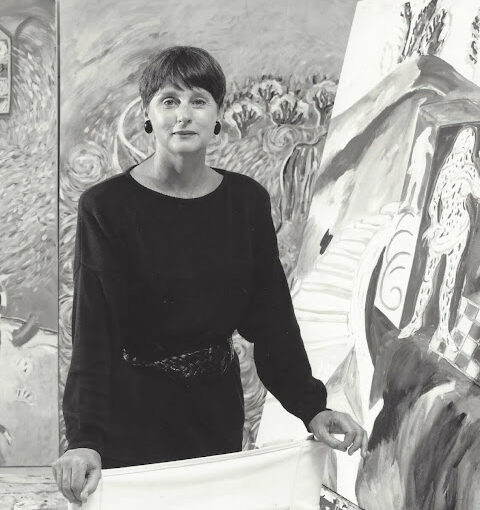
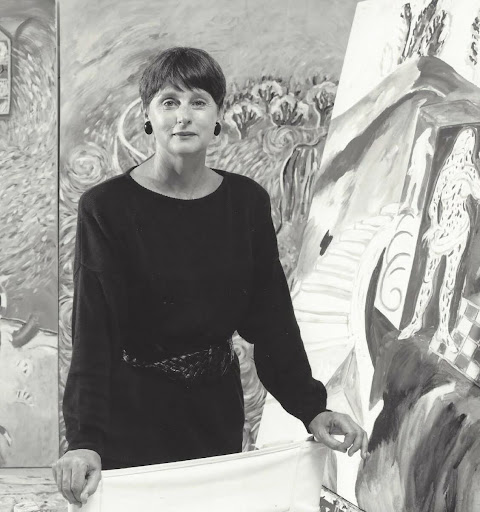
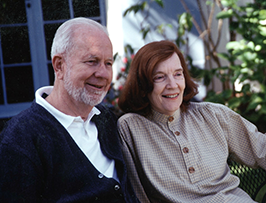

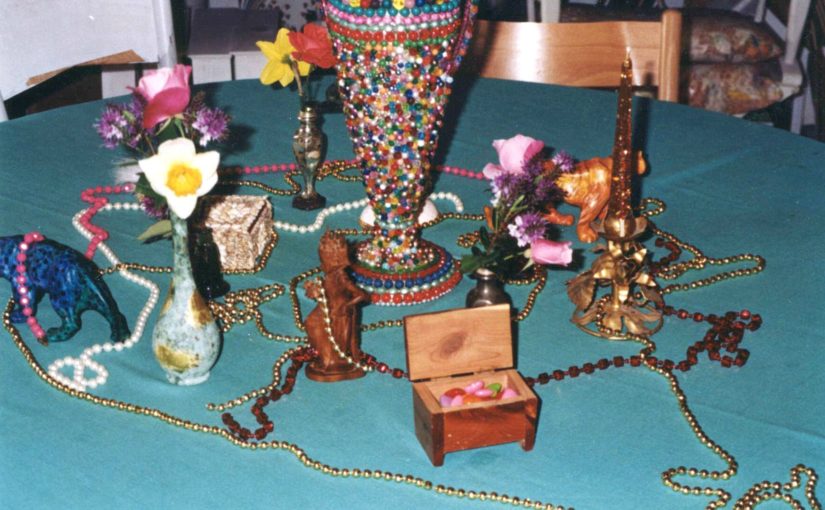
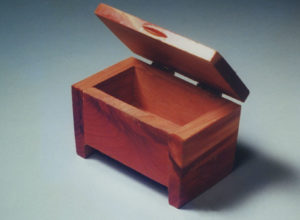
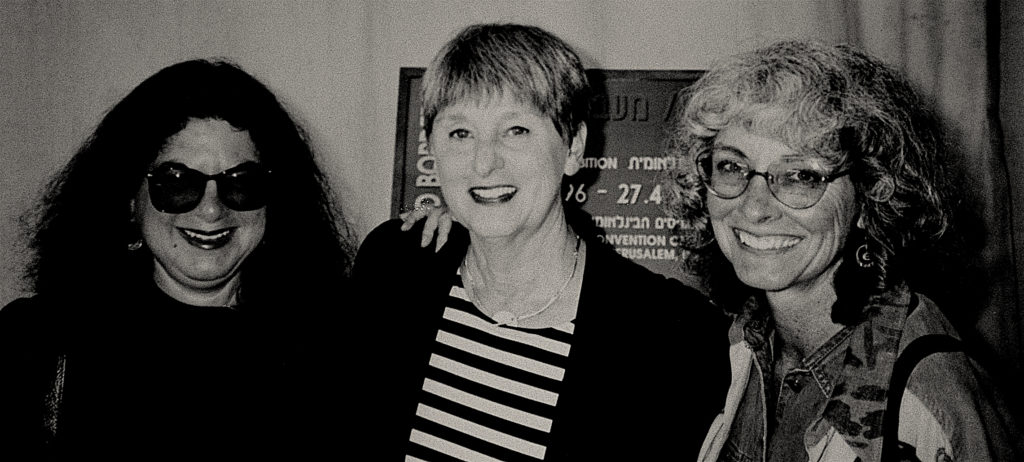
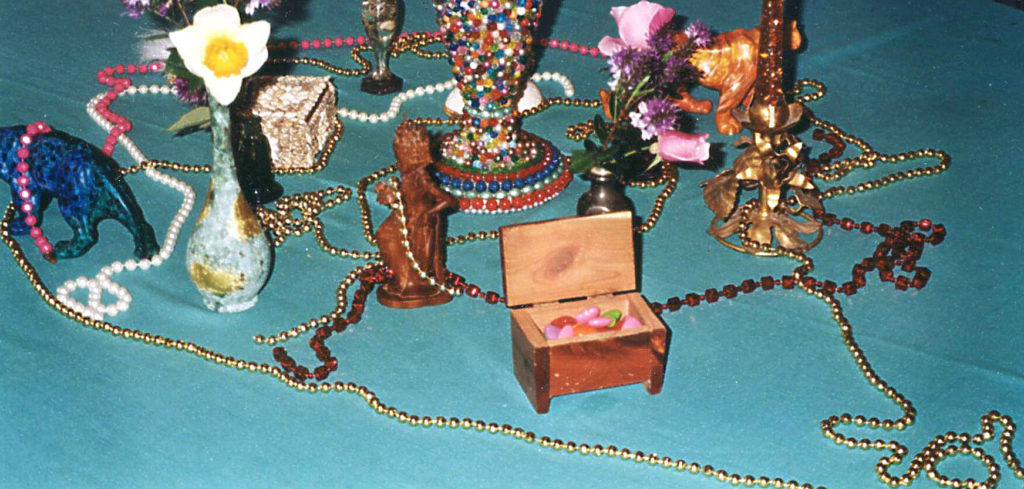
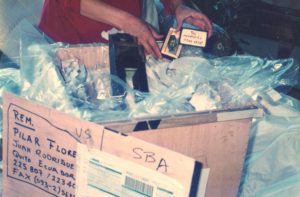

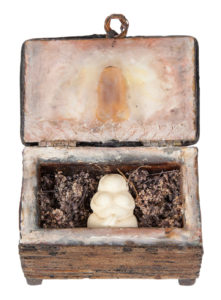

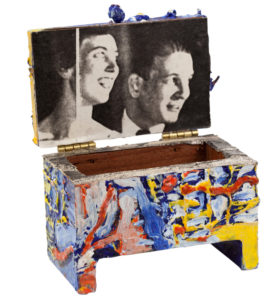
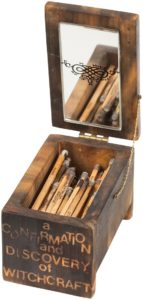
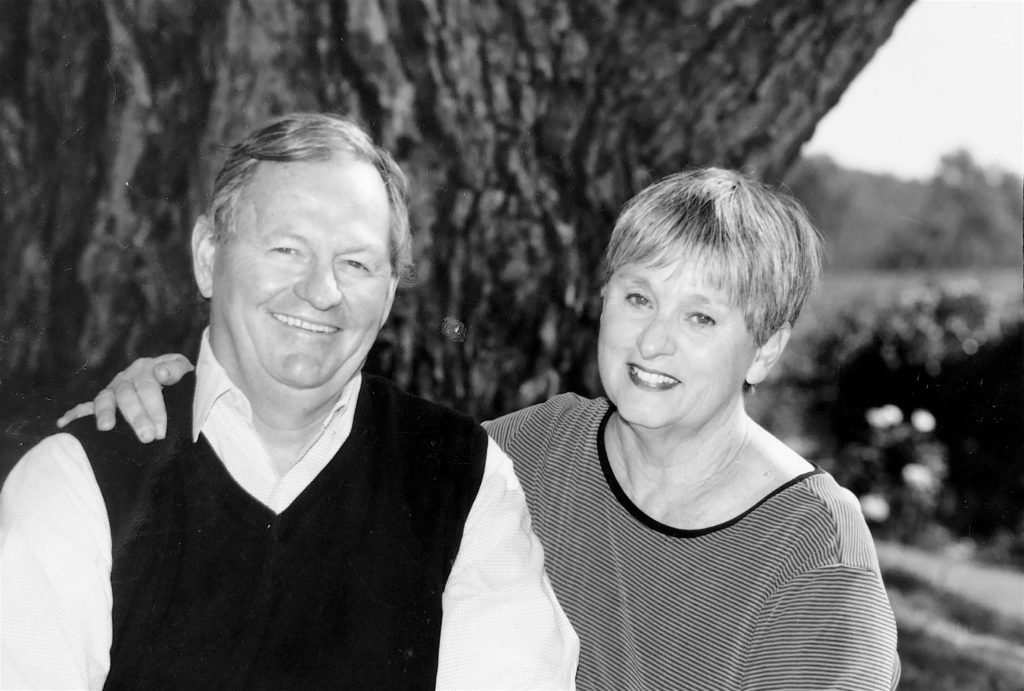
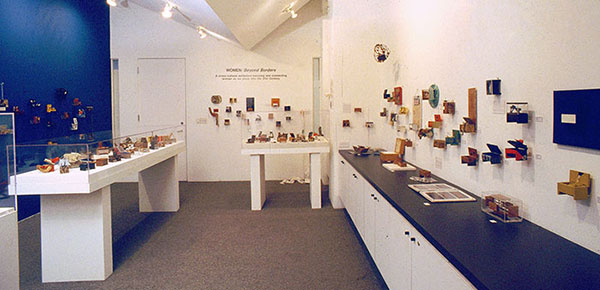
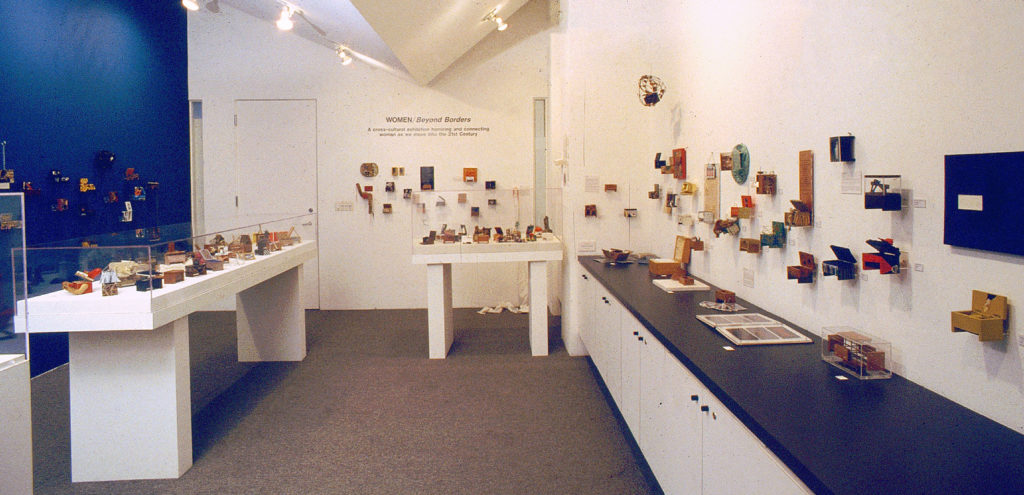
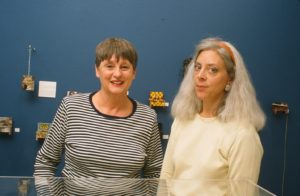
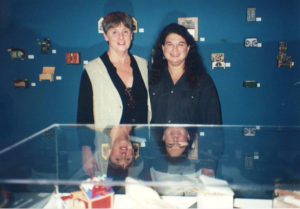
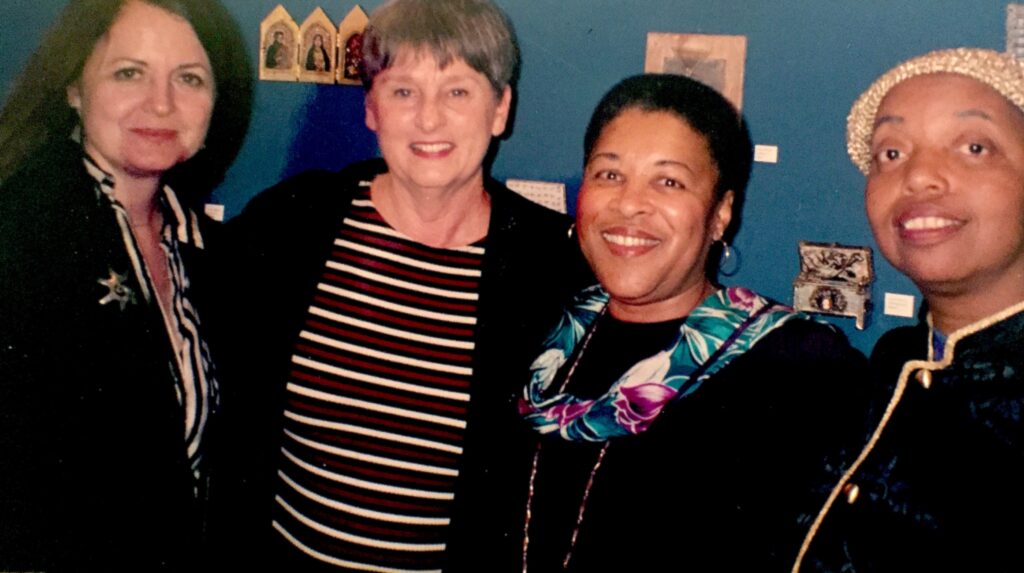
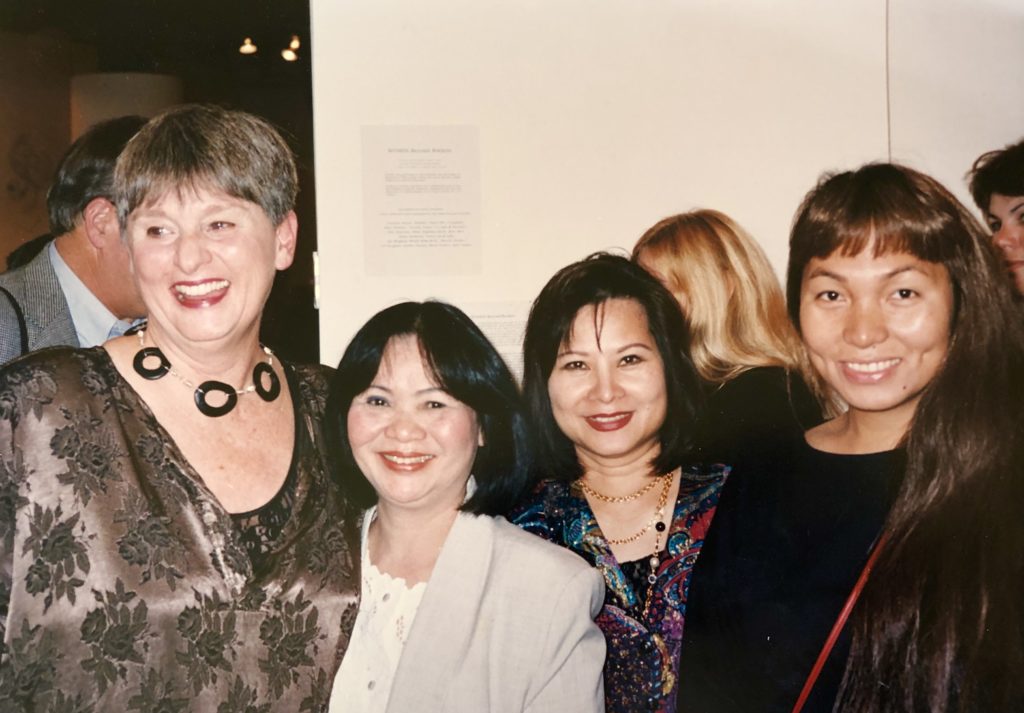

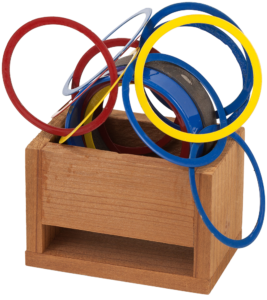
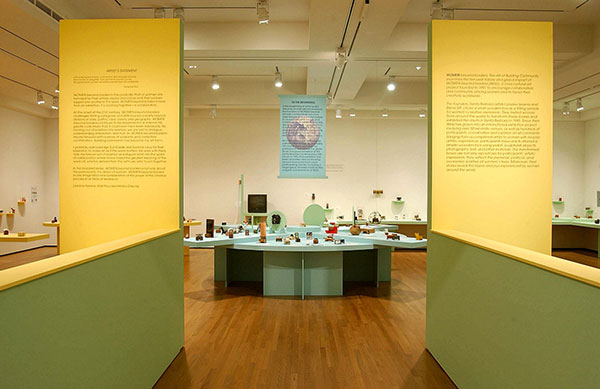
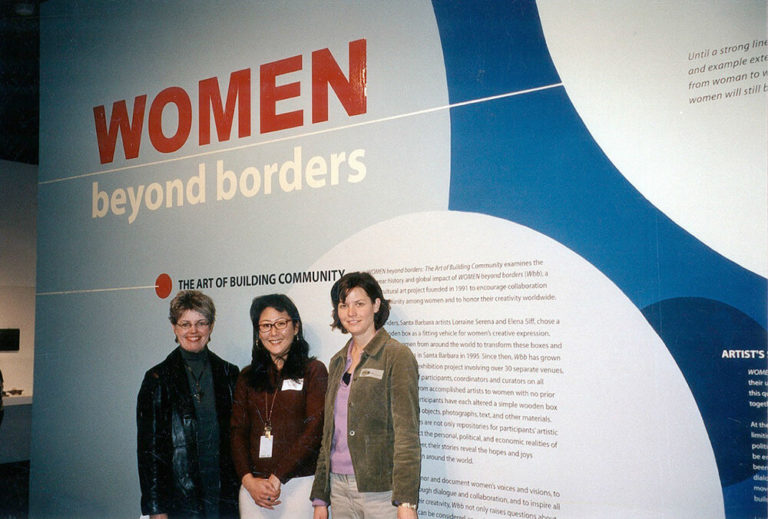
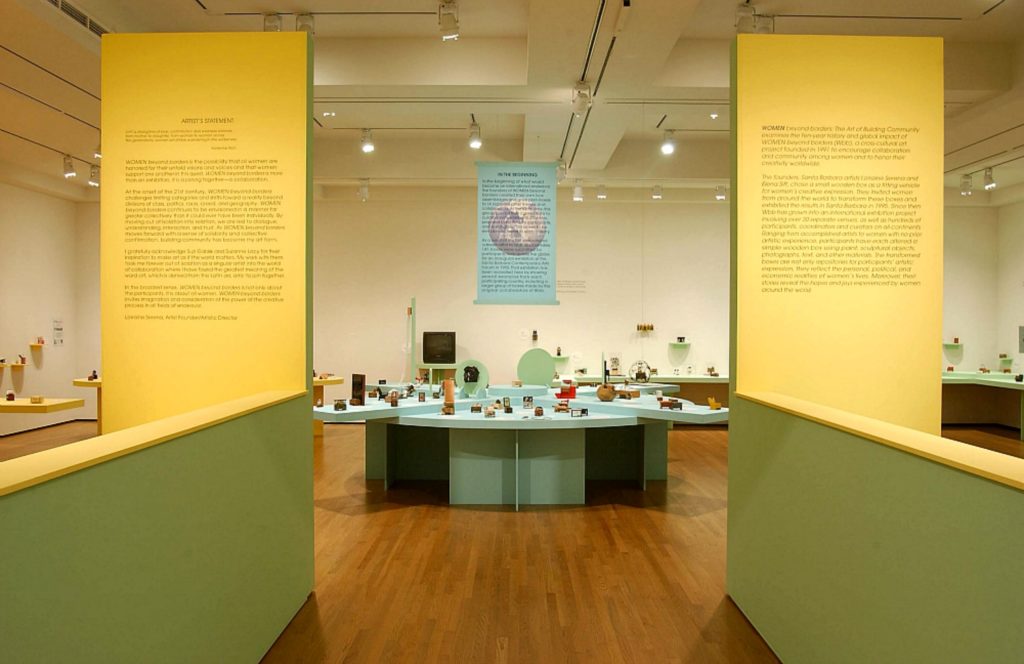
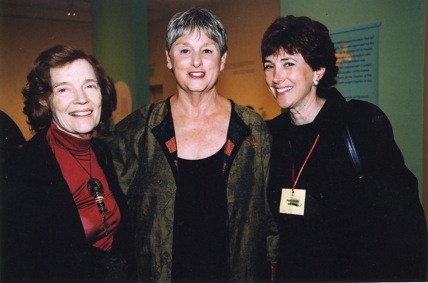
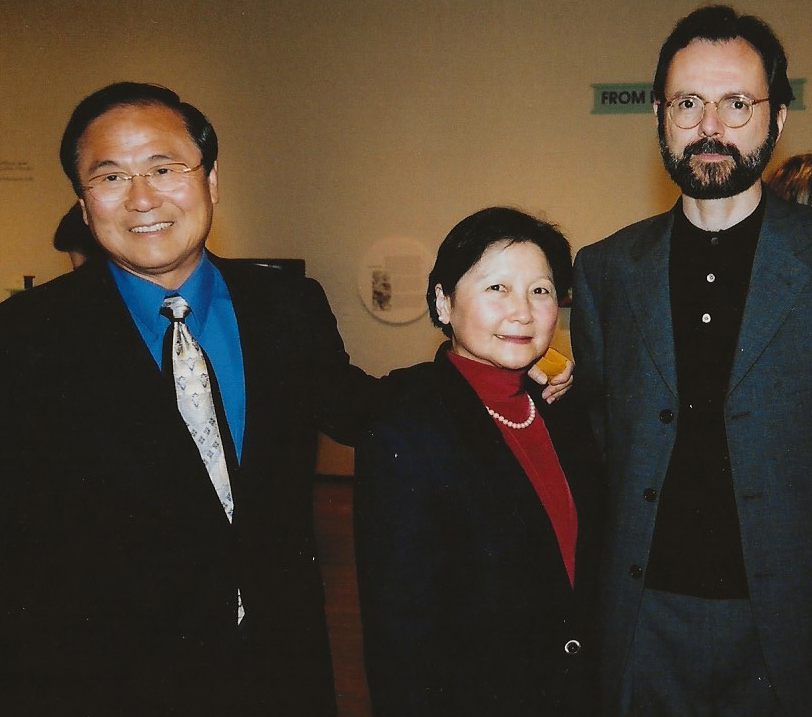
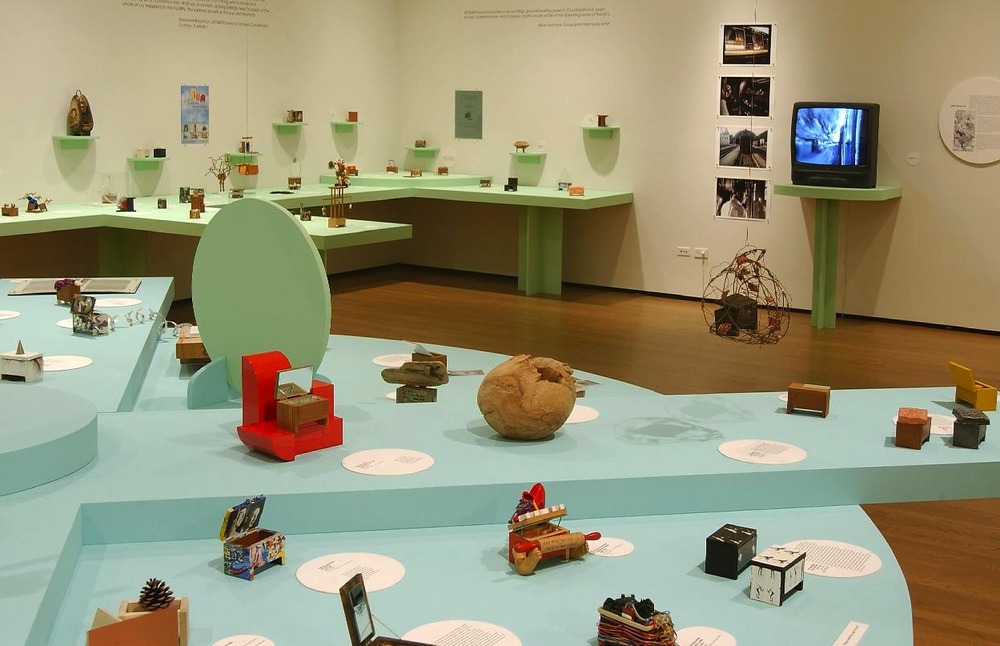 Transforming simple, identical boxes into vessels of artistic and cultural exchange, this retrospective features nearly 150 of the diverse boxes from more than 36 countries around the world. Ranging from contemporary and abstract content to political and conscious-building messages, these compelling pieces give incredible insight into the lives of our individual communities while breaking down barriers and creating a global movement of women’s voices. A selection of boxes from extensive adjunct projects, including the Los Angeles School district and
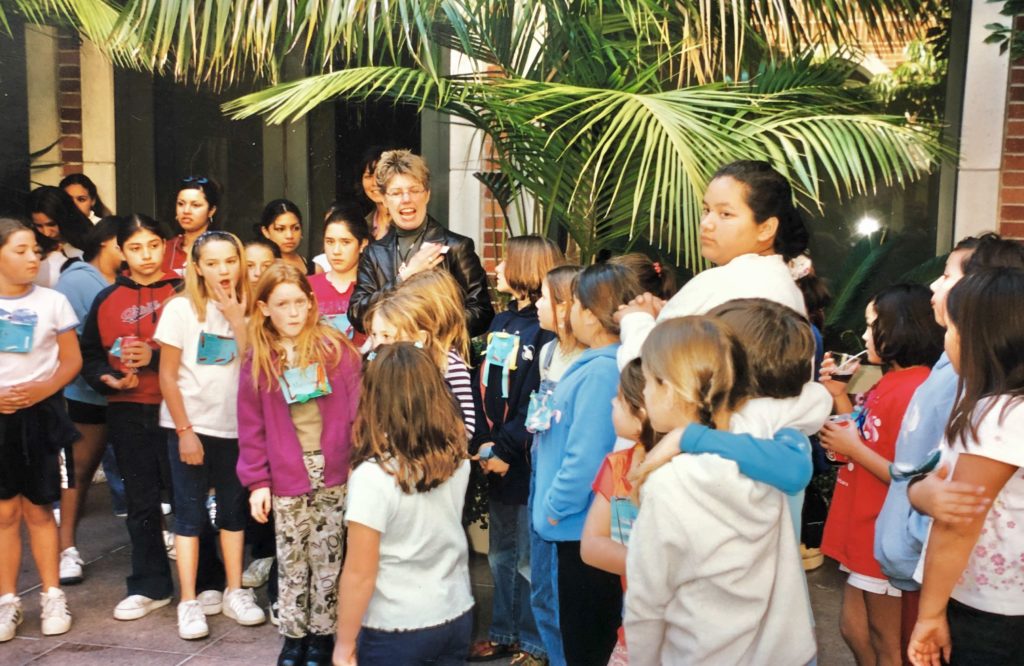
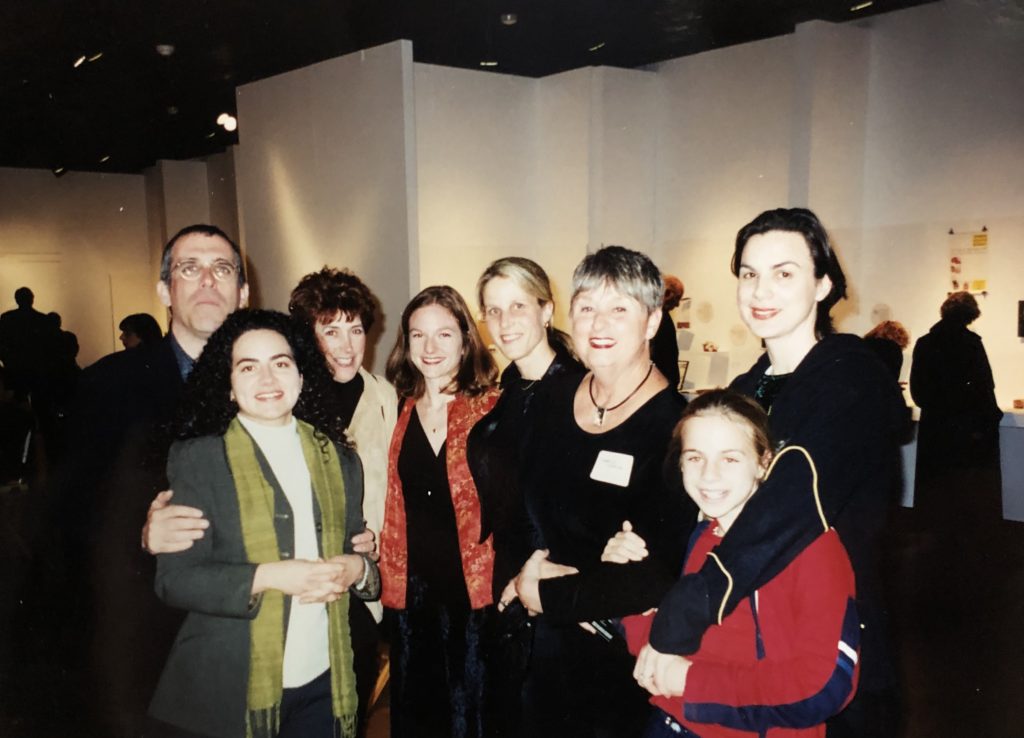
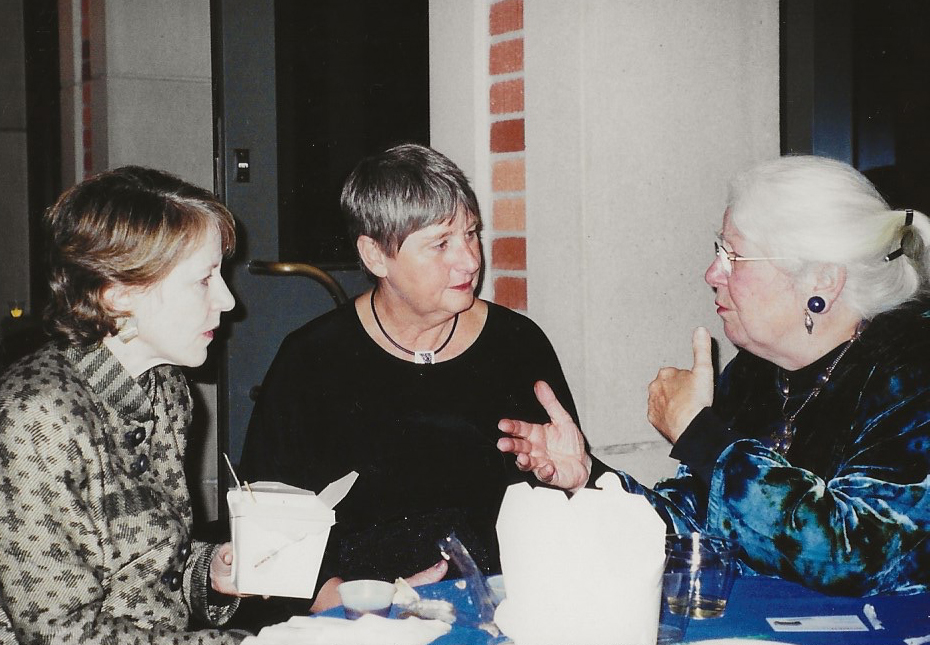

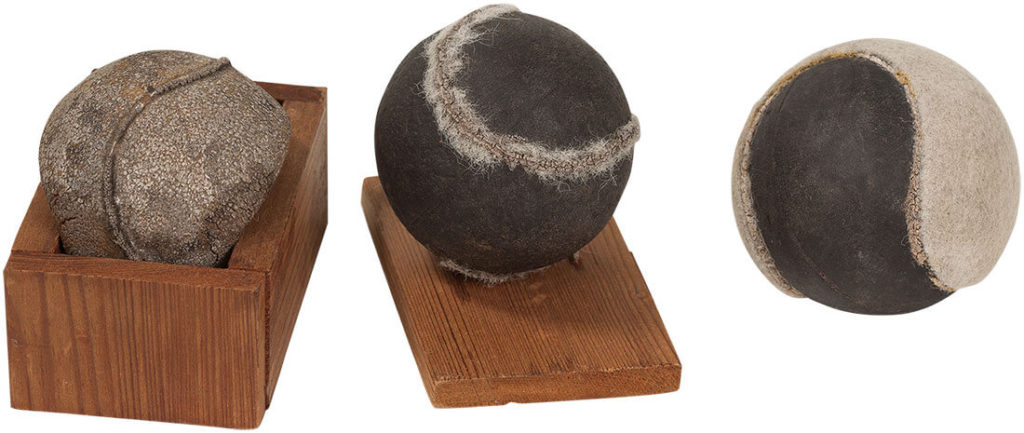
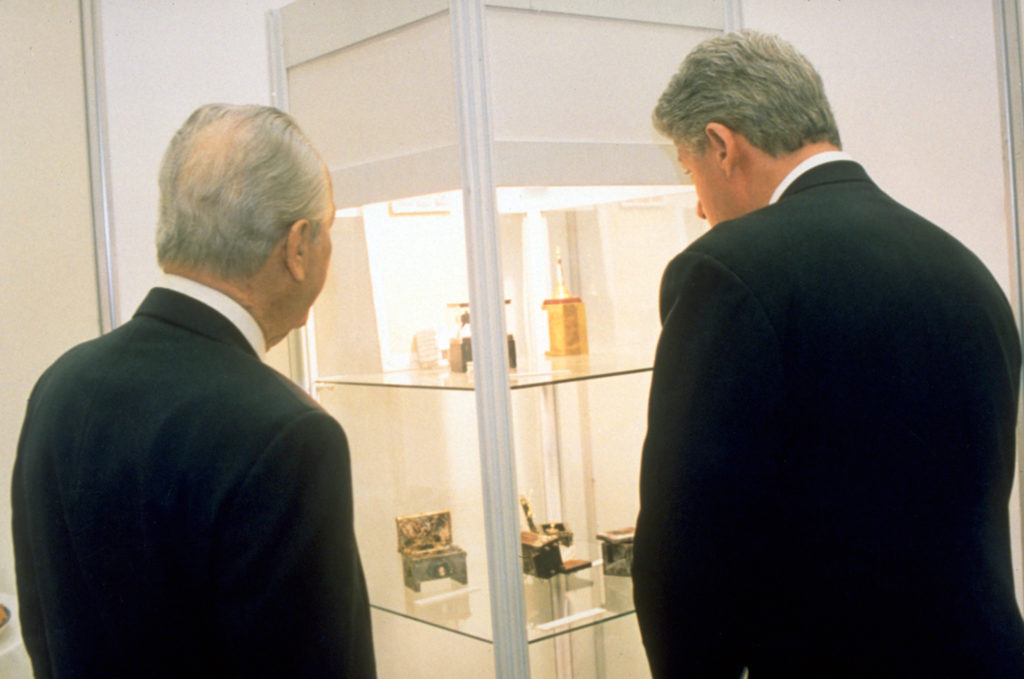
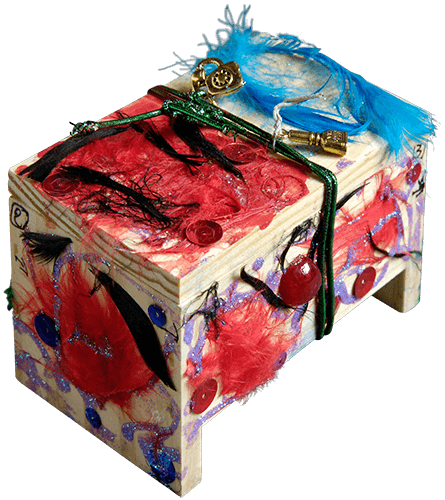
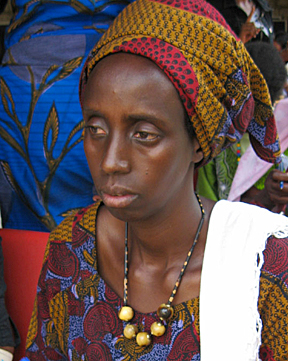
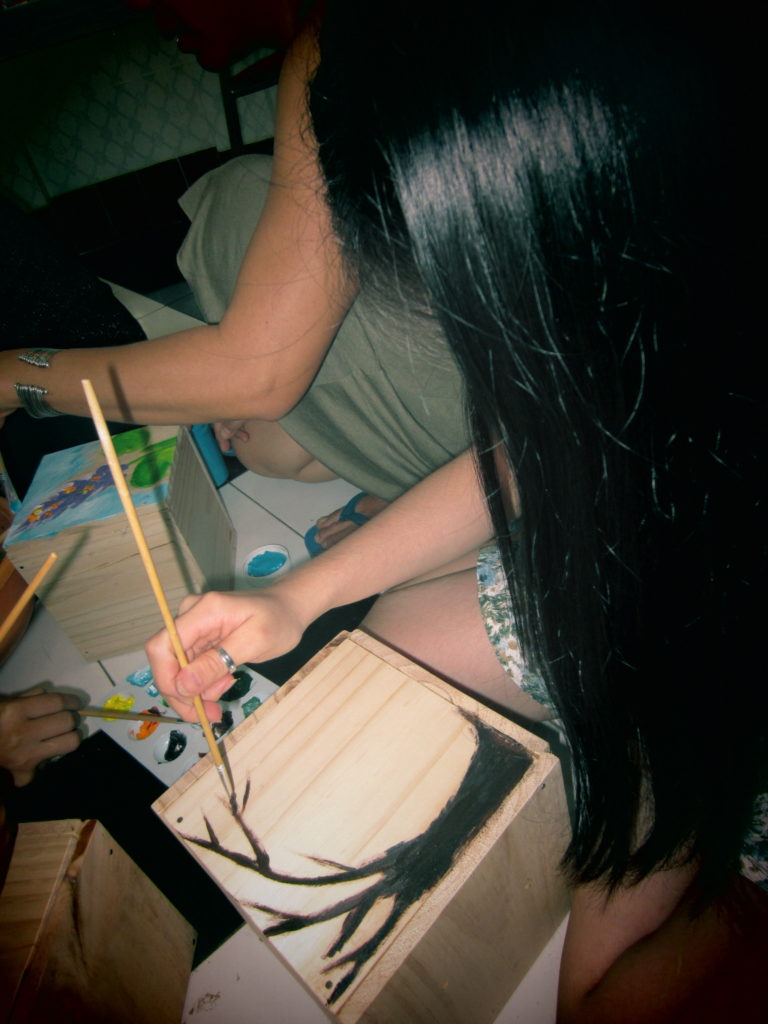
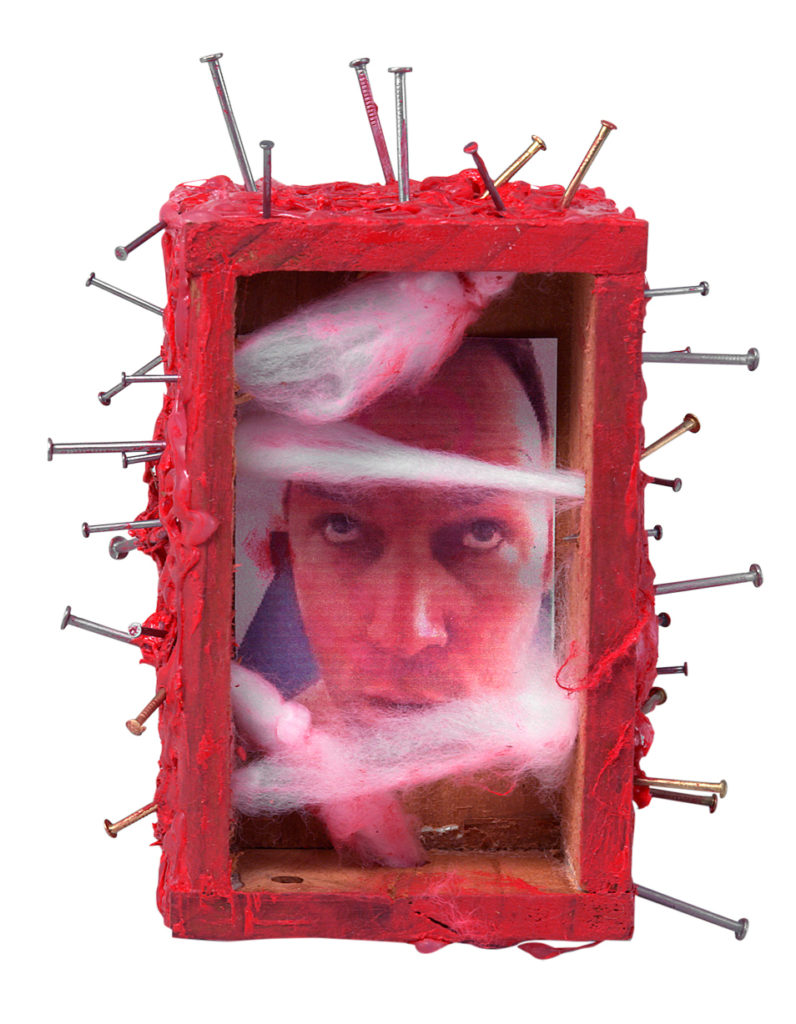
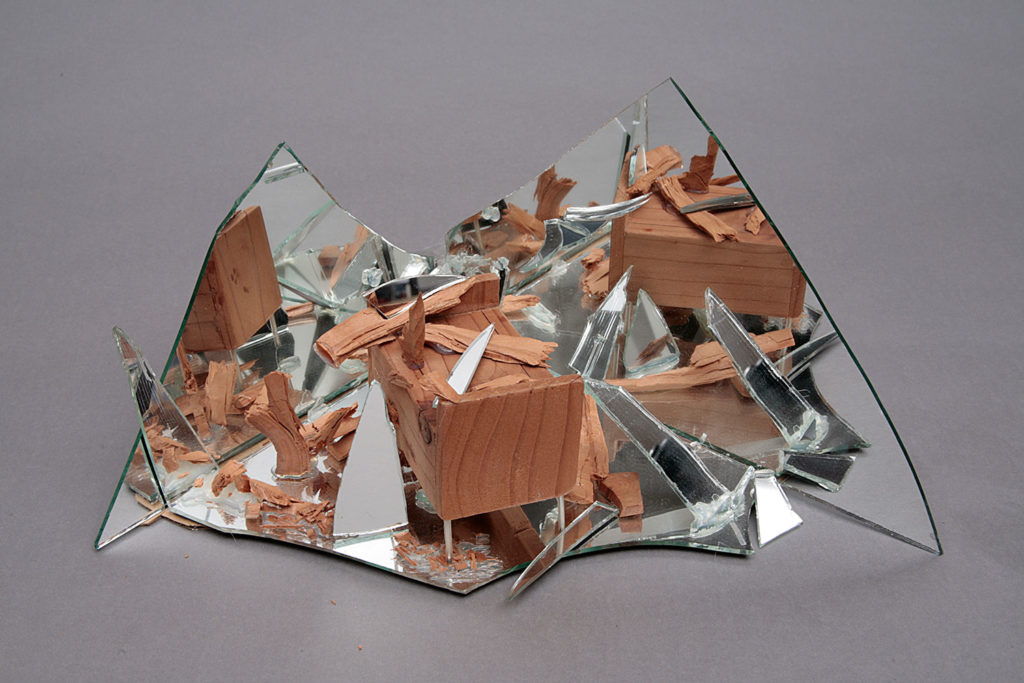
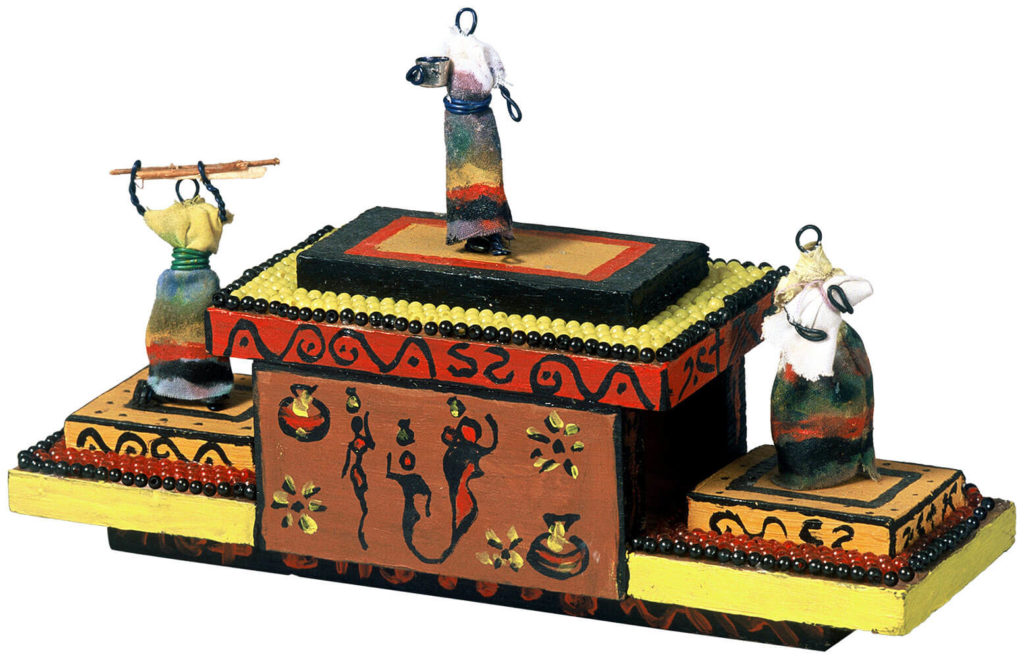
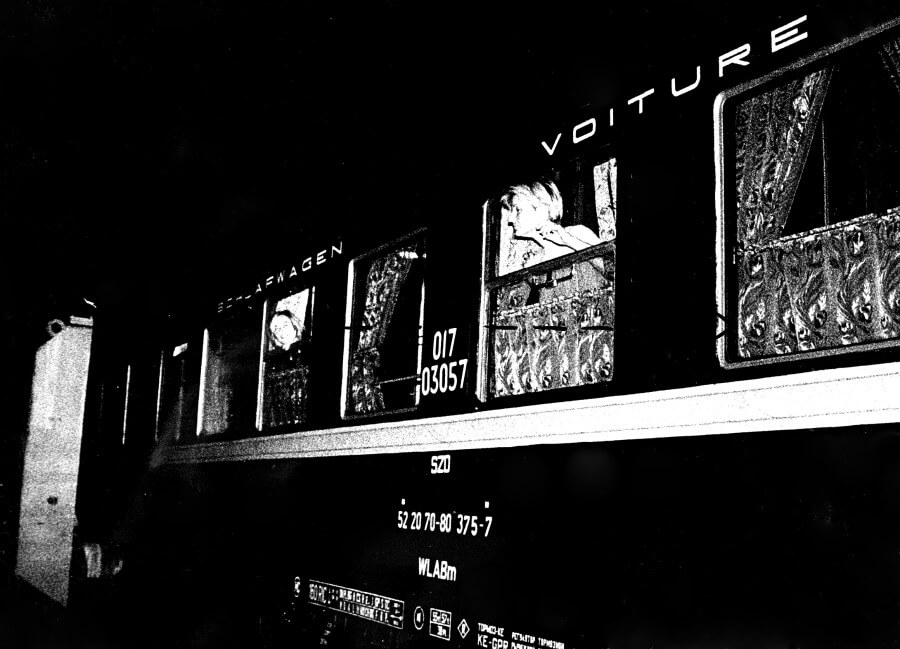
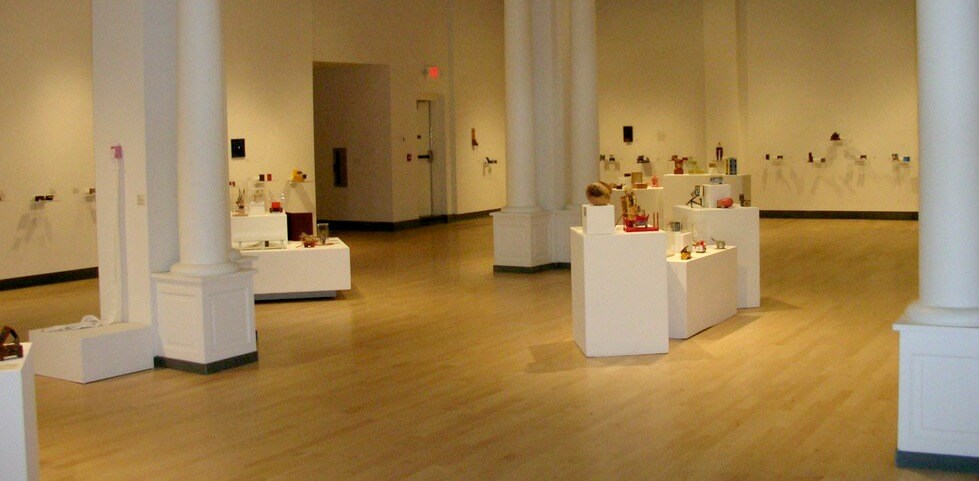
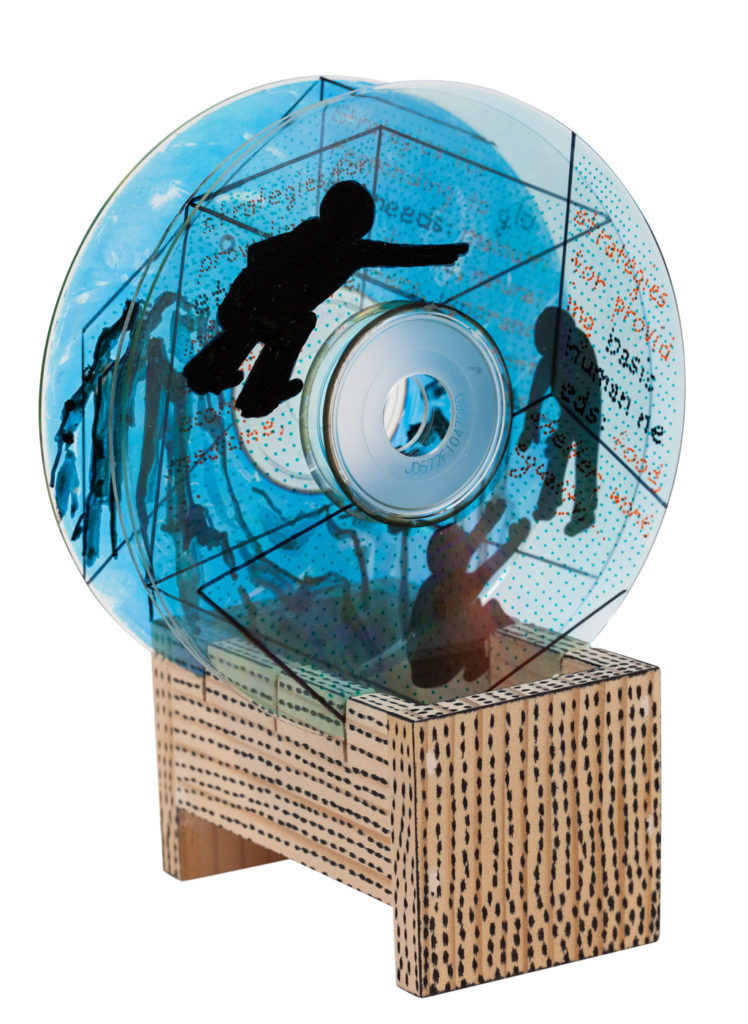
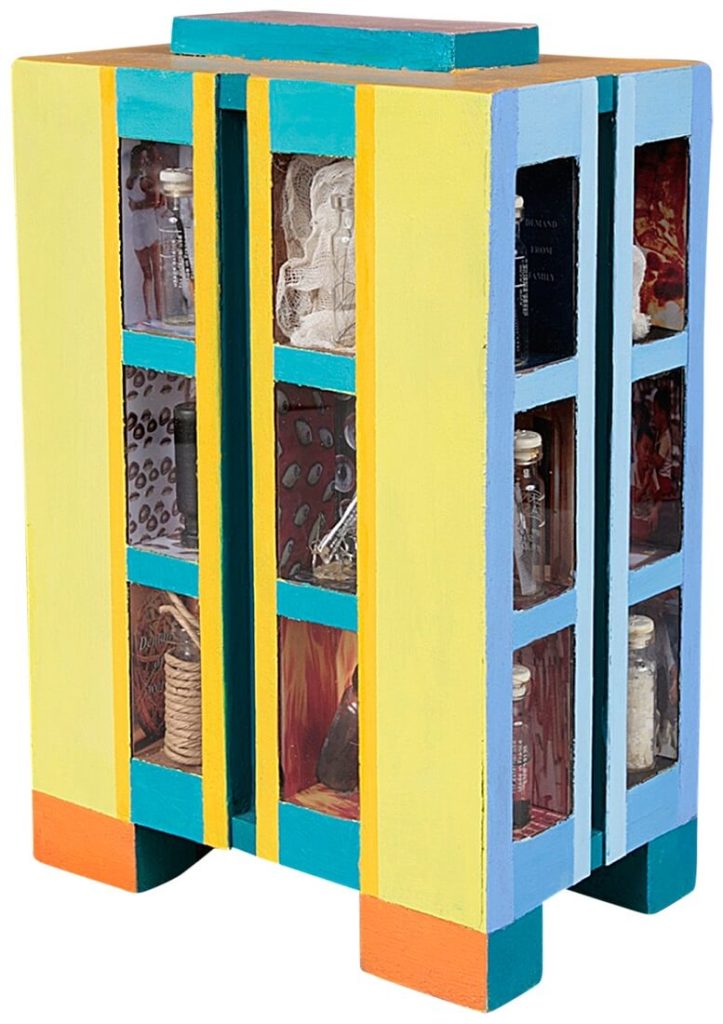

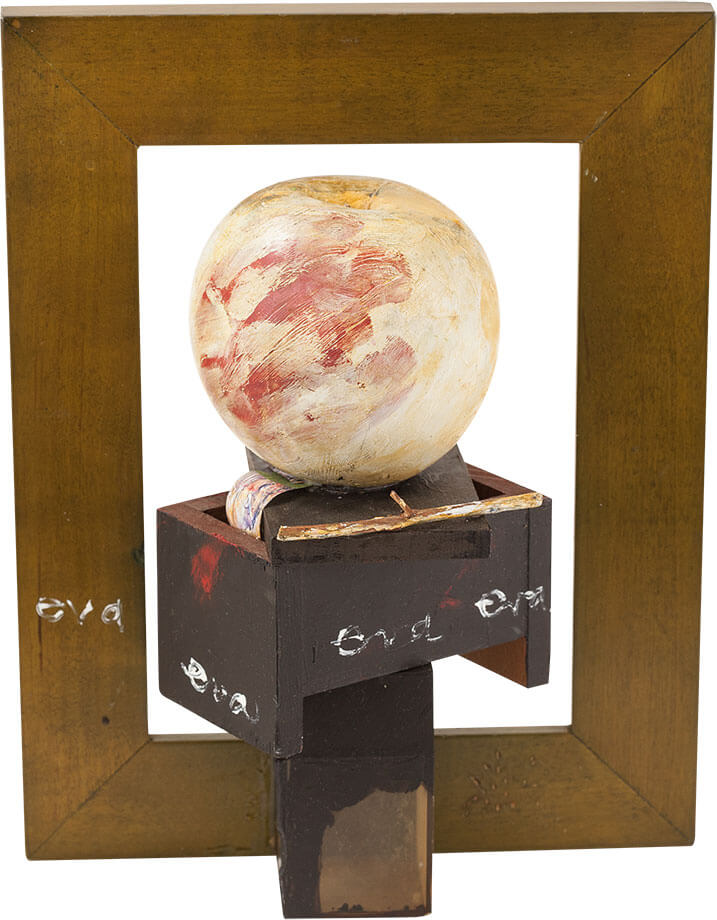
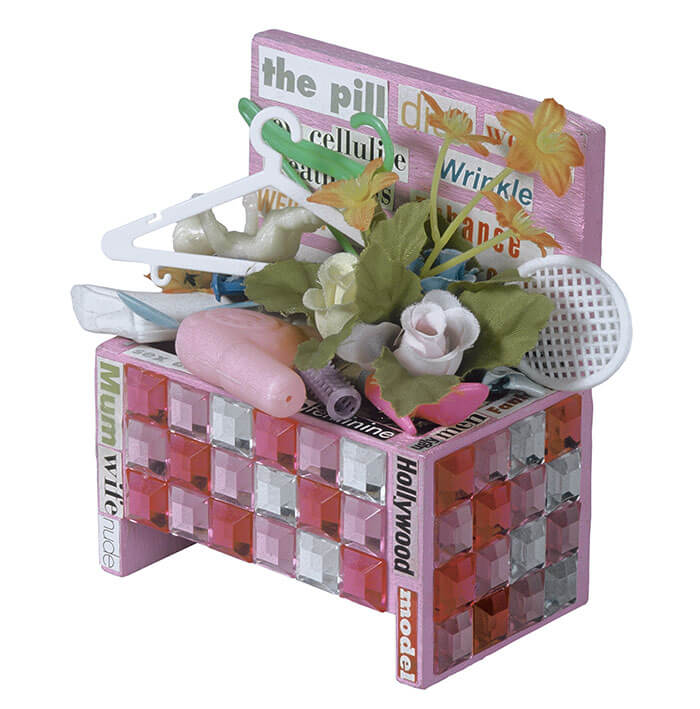
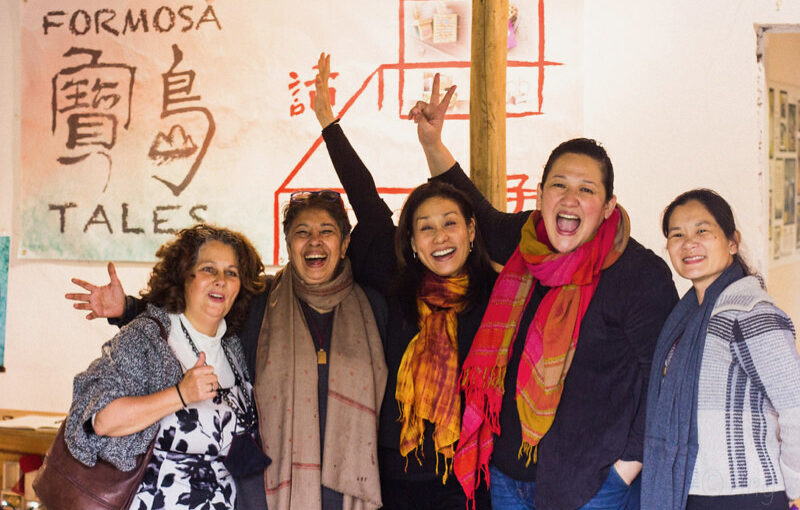
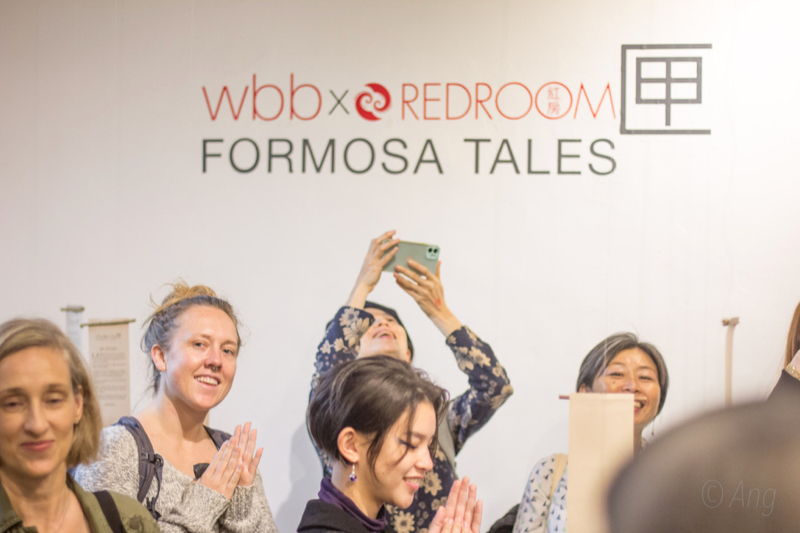

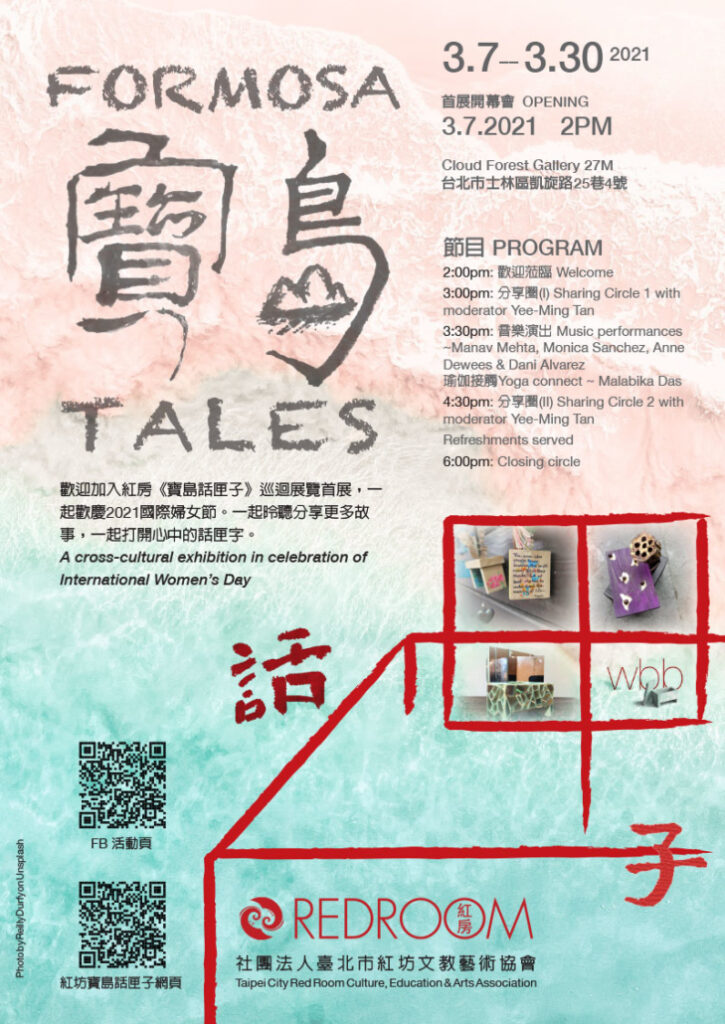



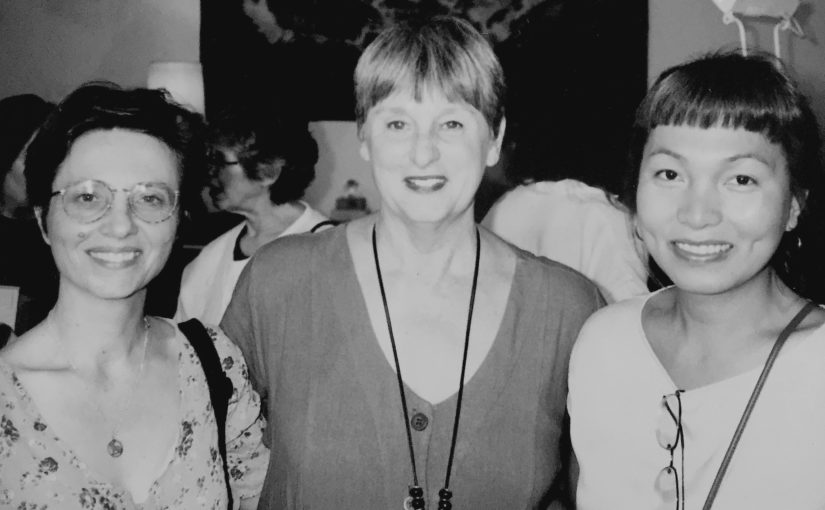
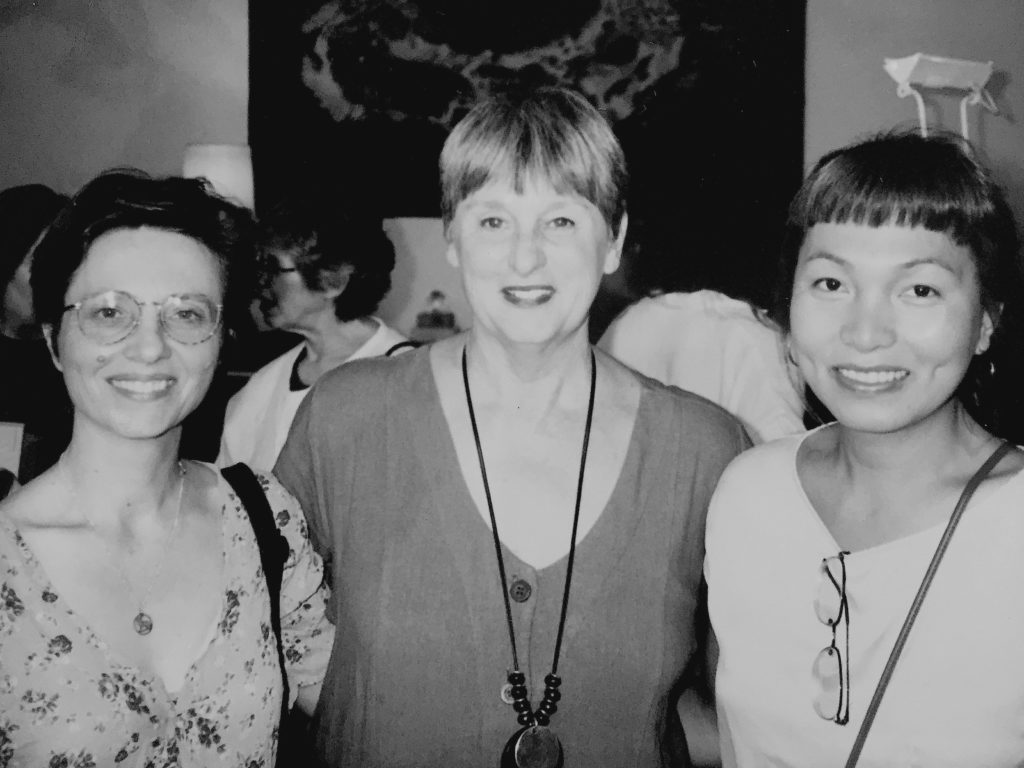
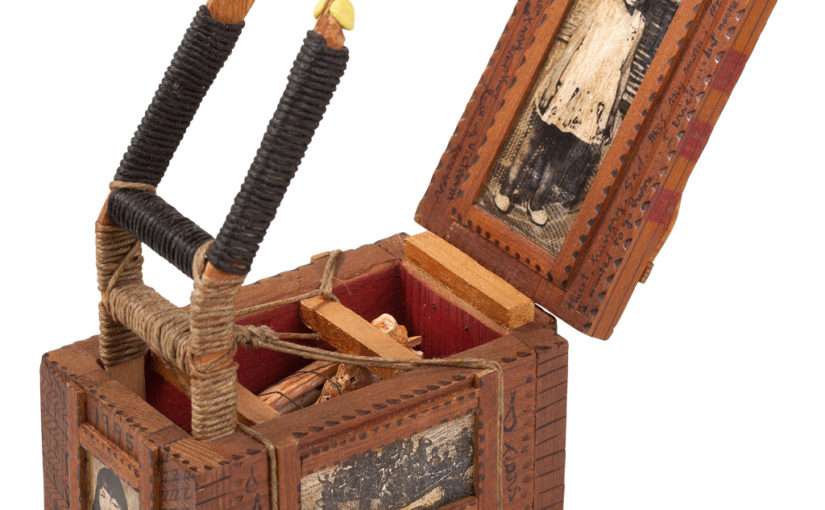
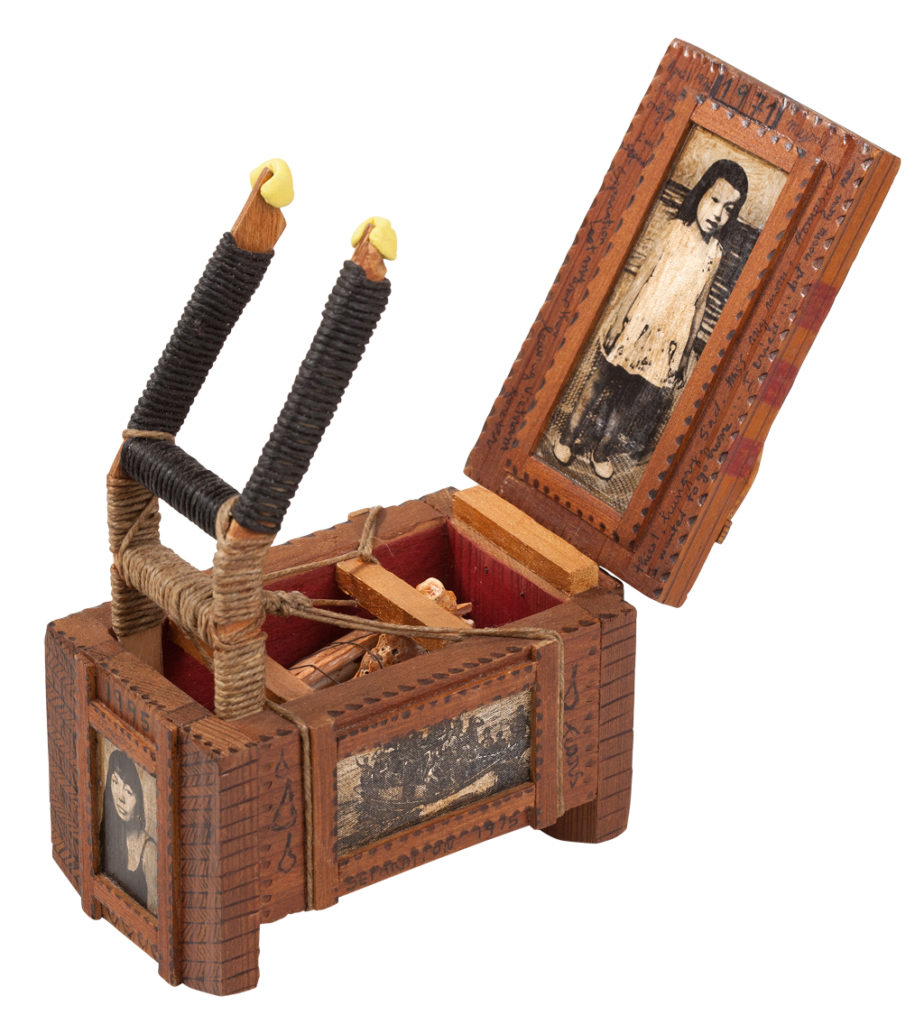
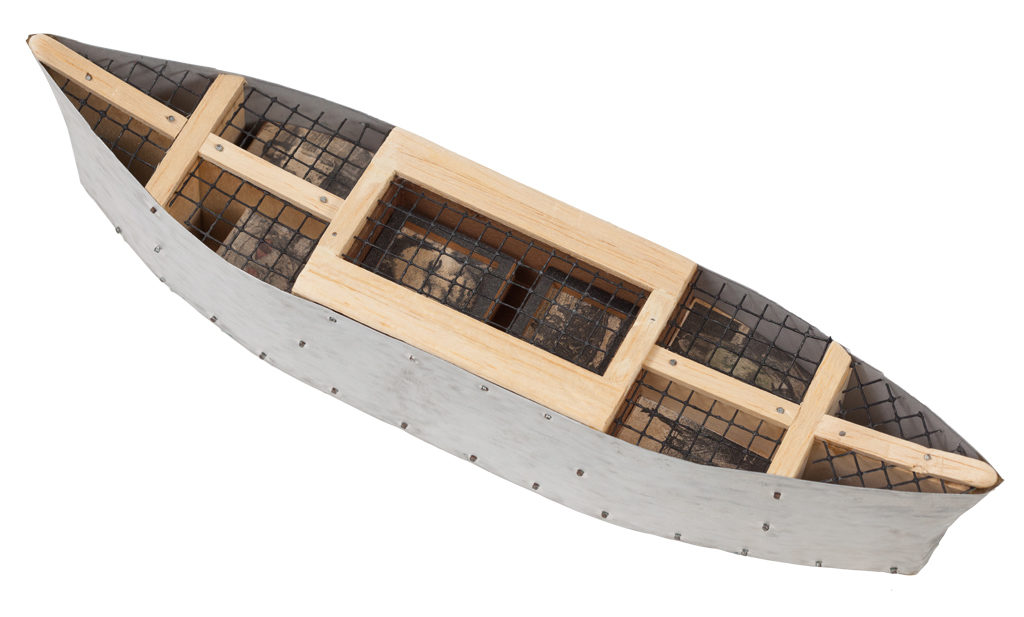
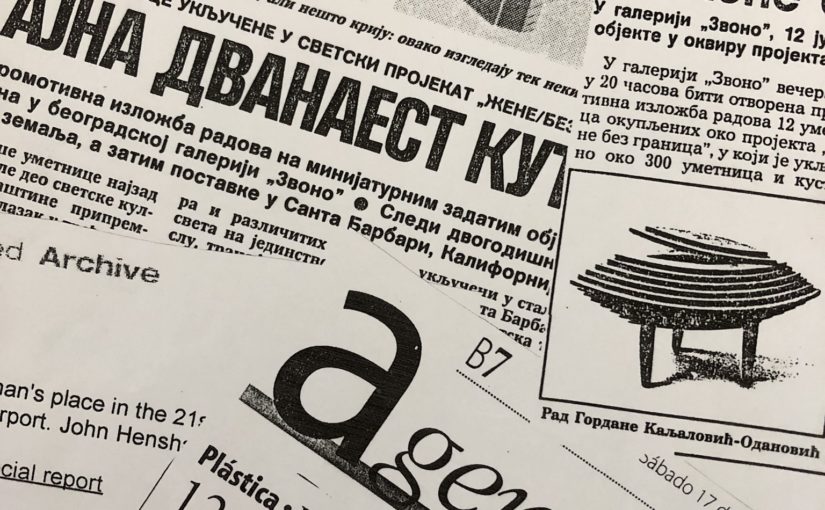


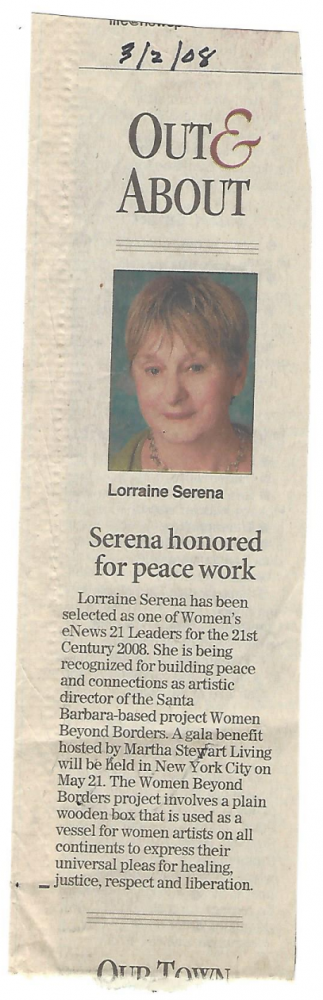
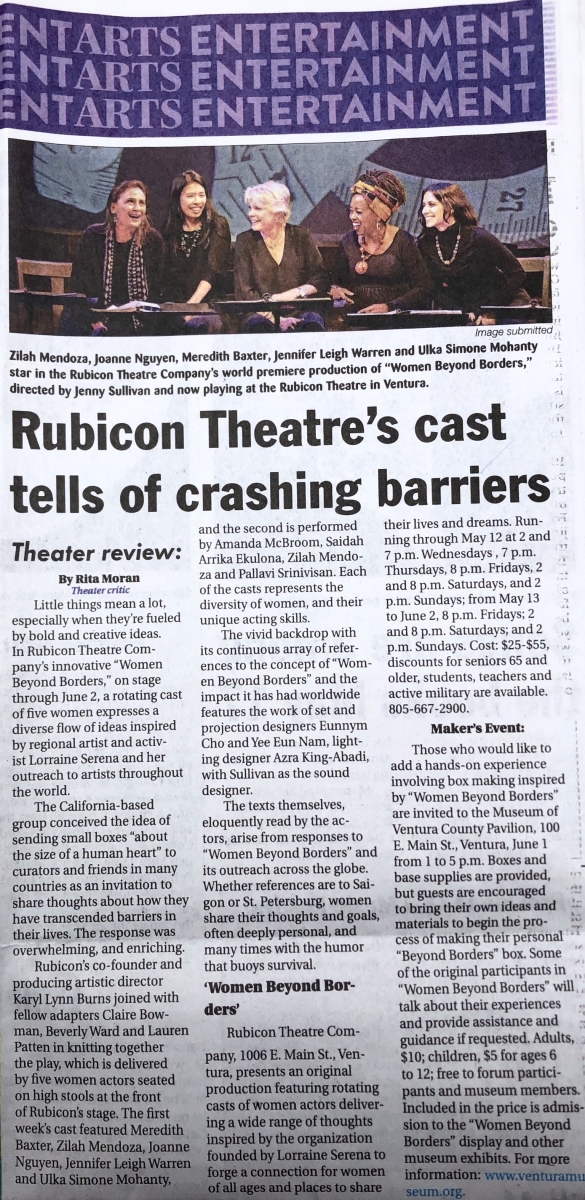
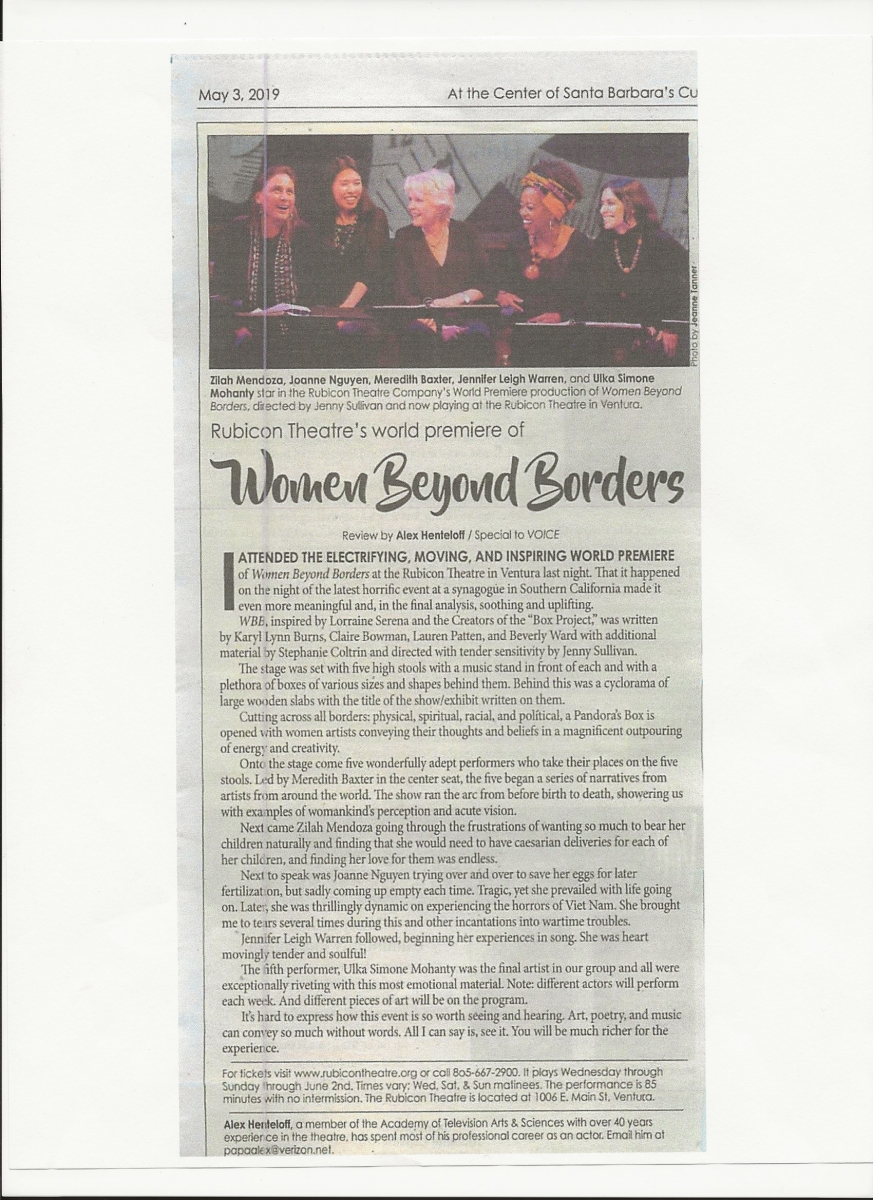
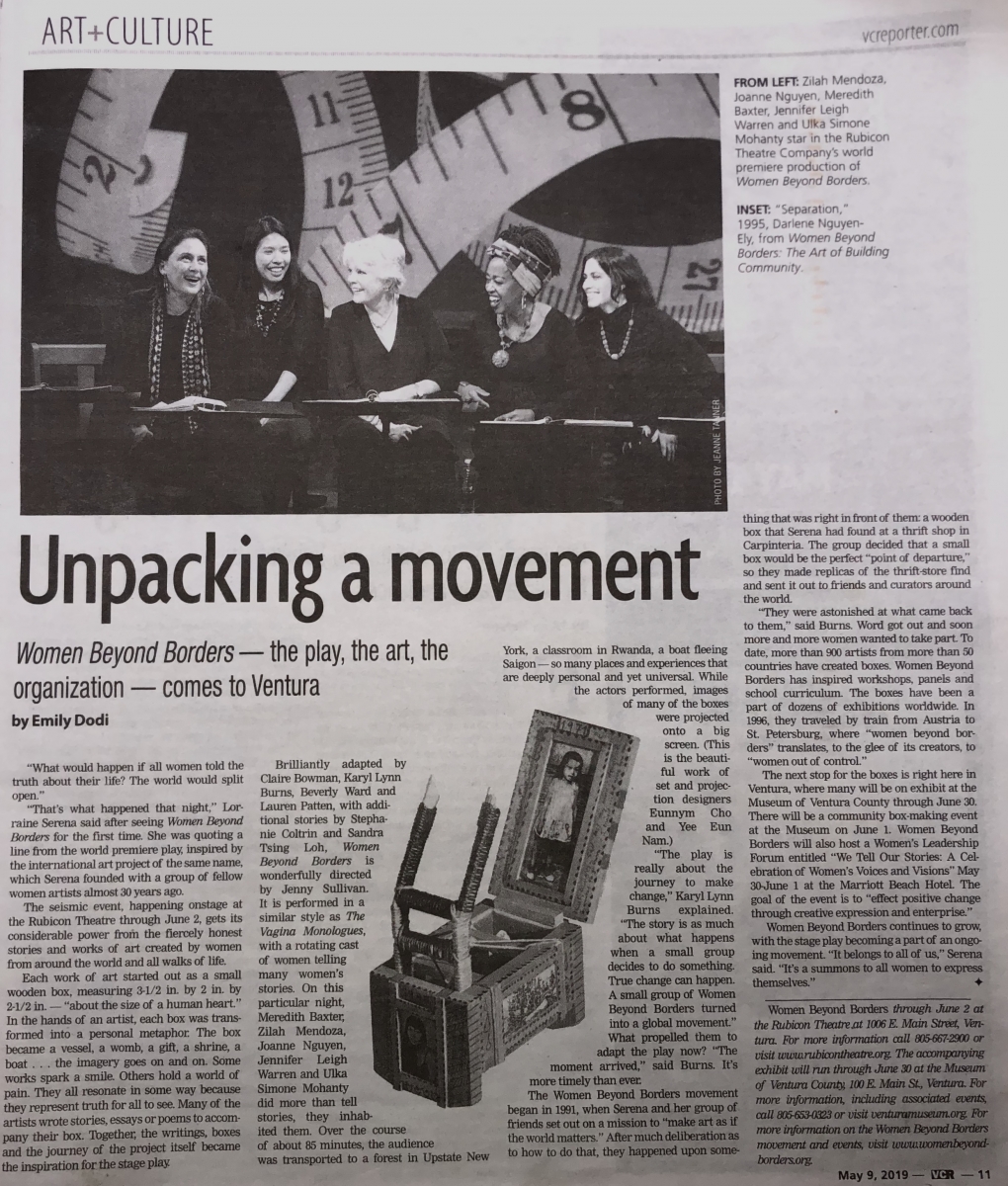
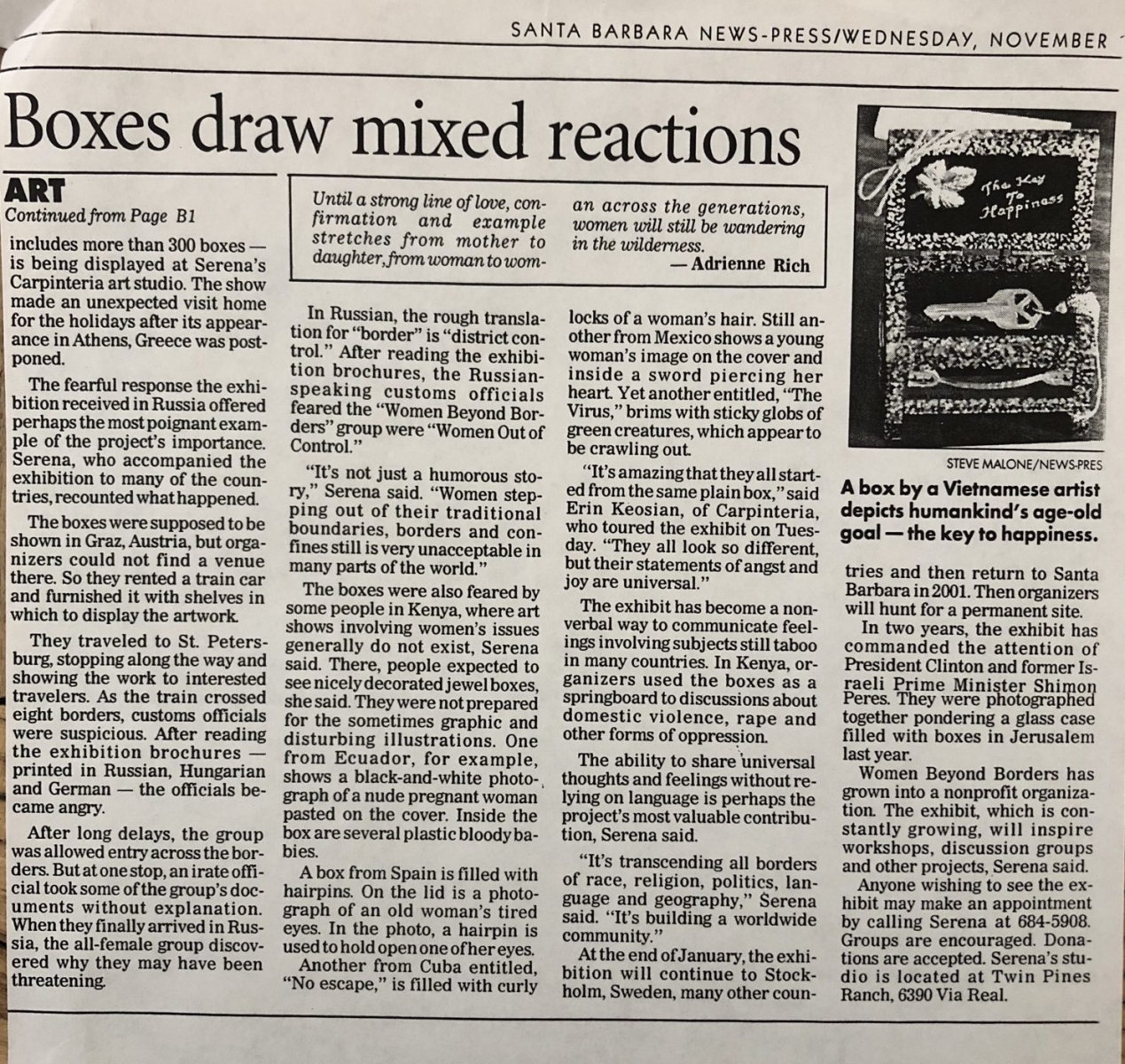
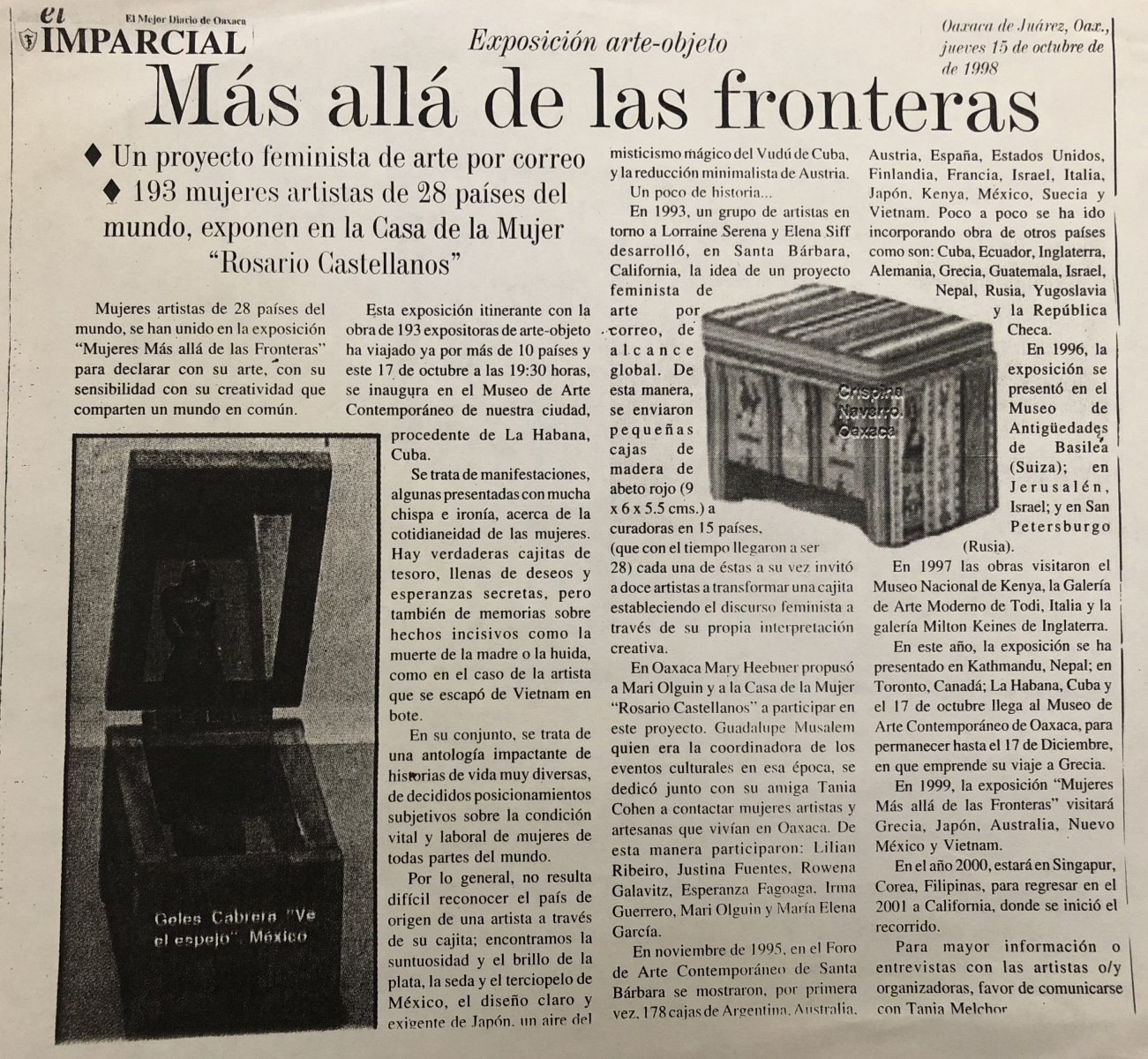
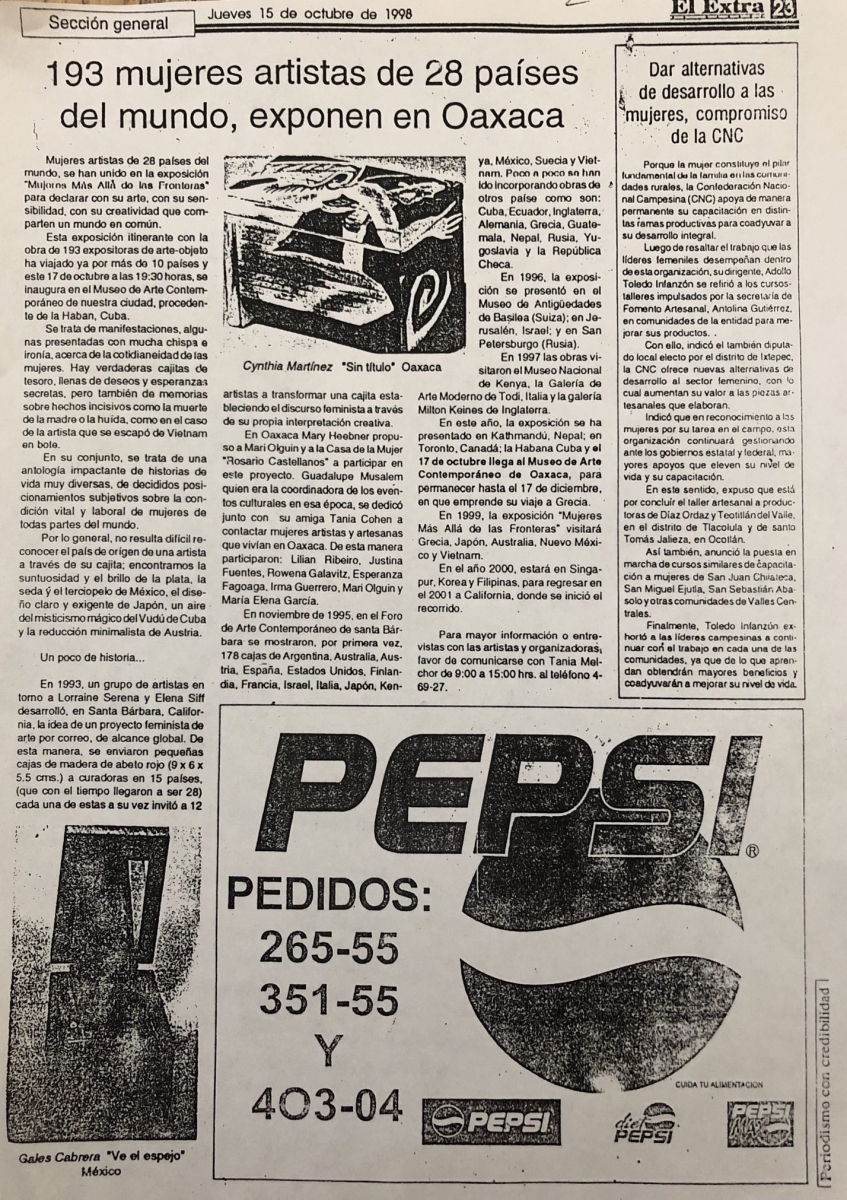
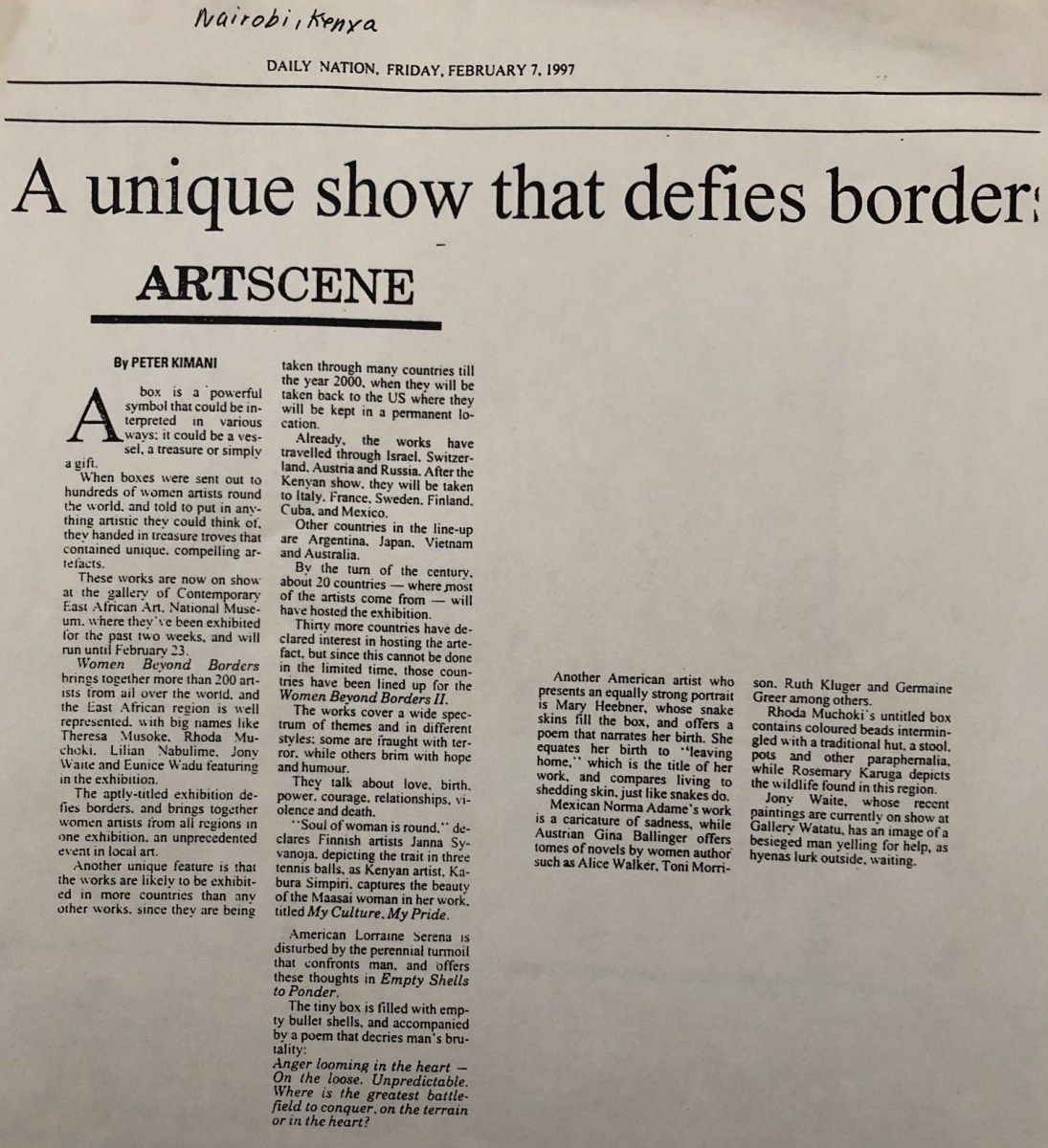
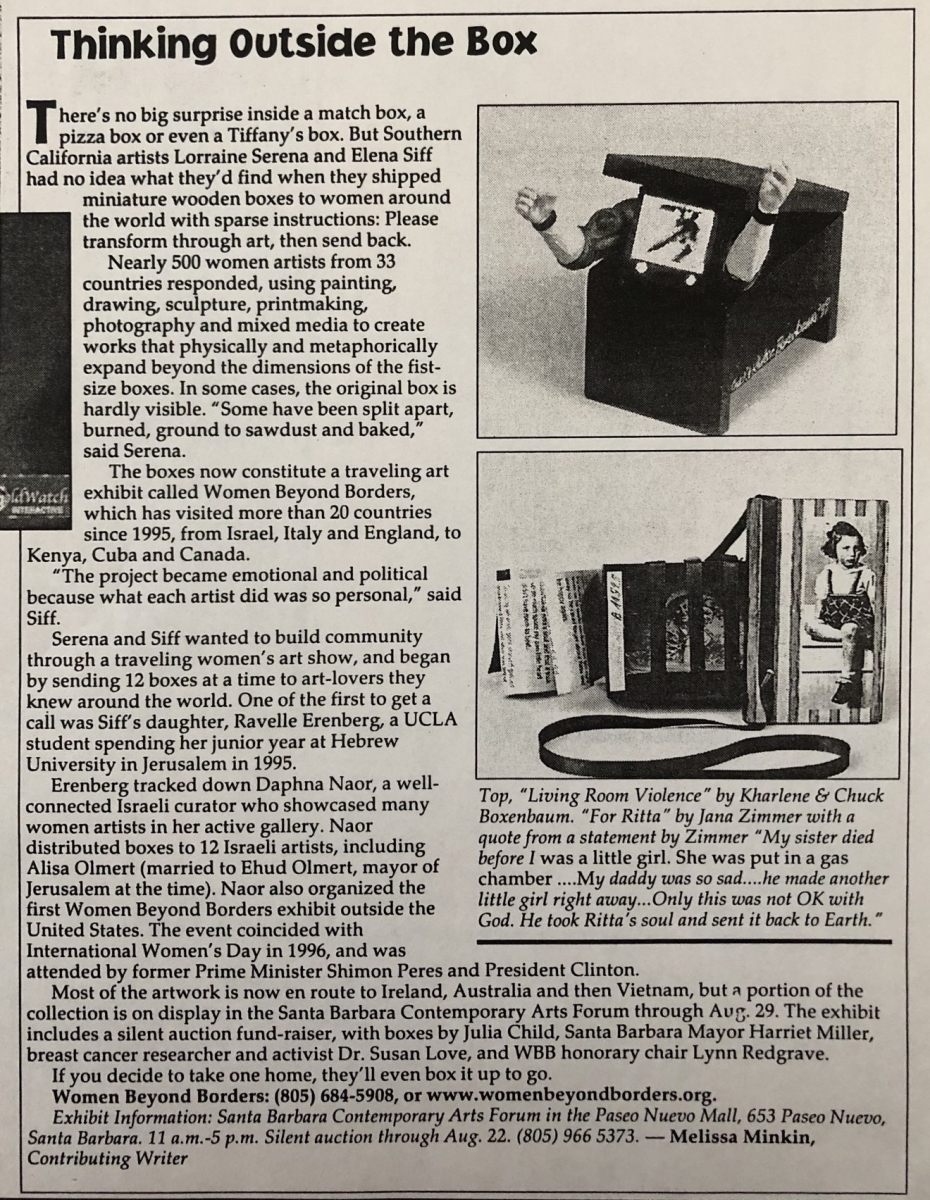
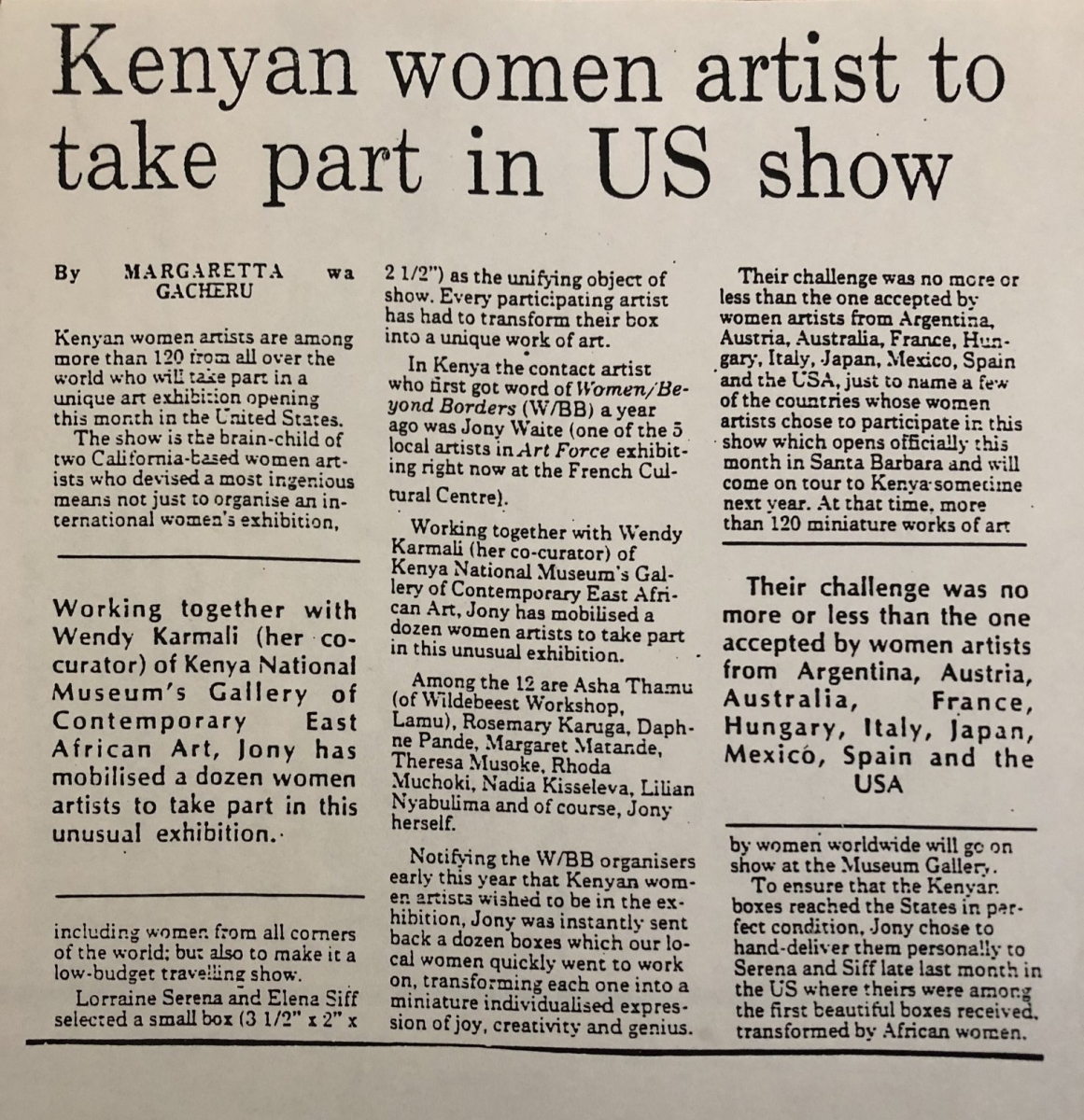
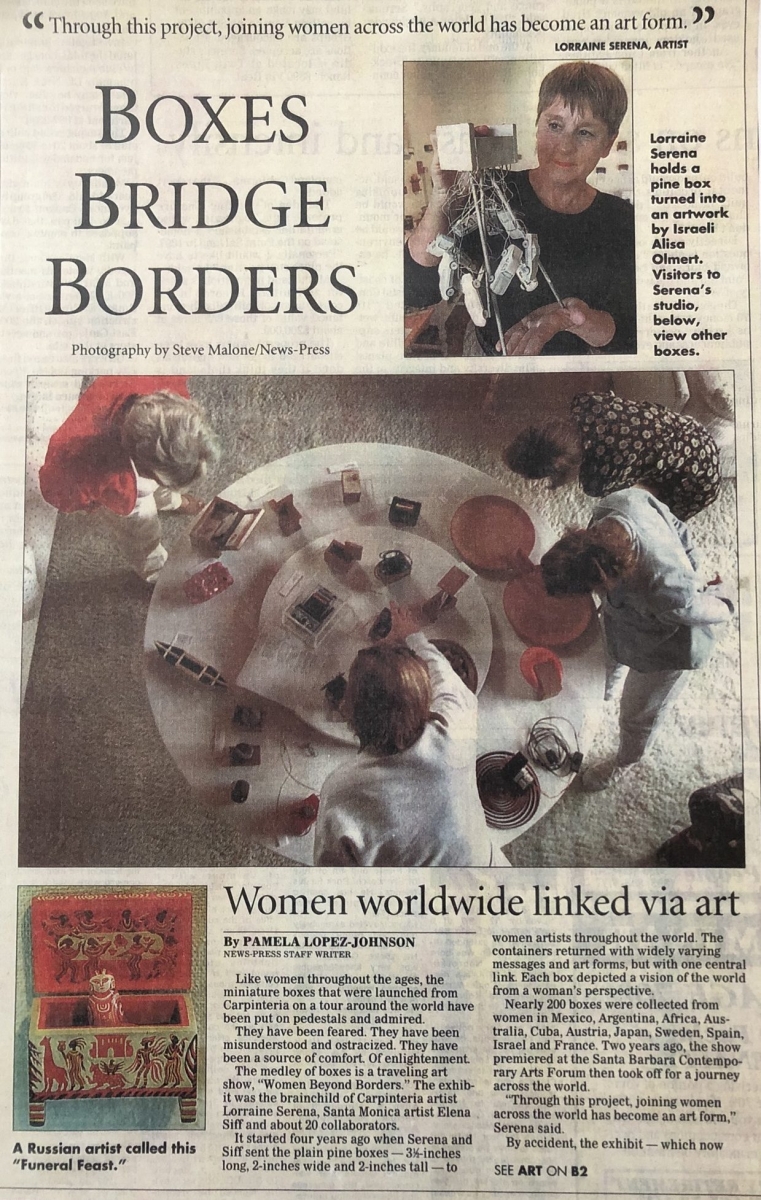
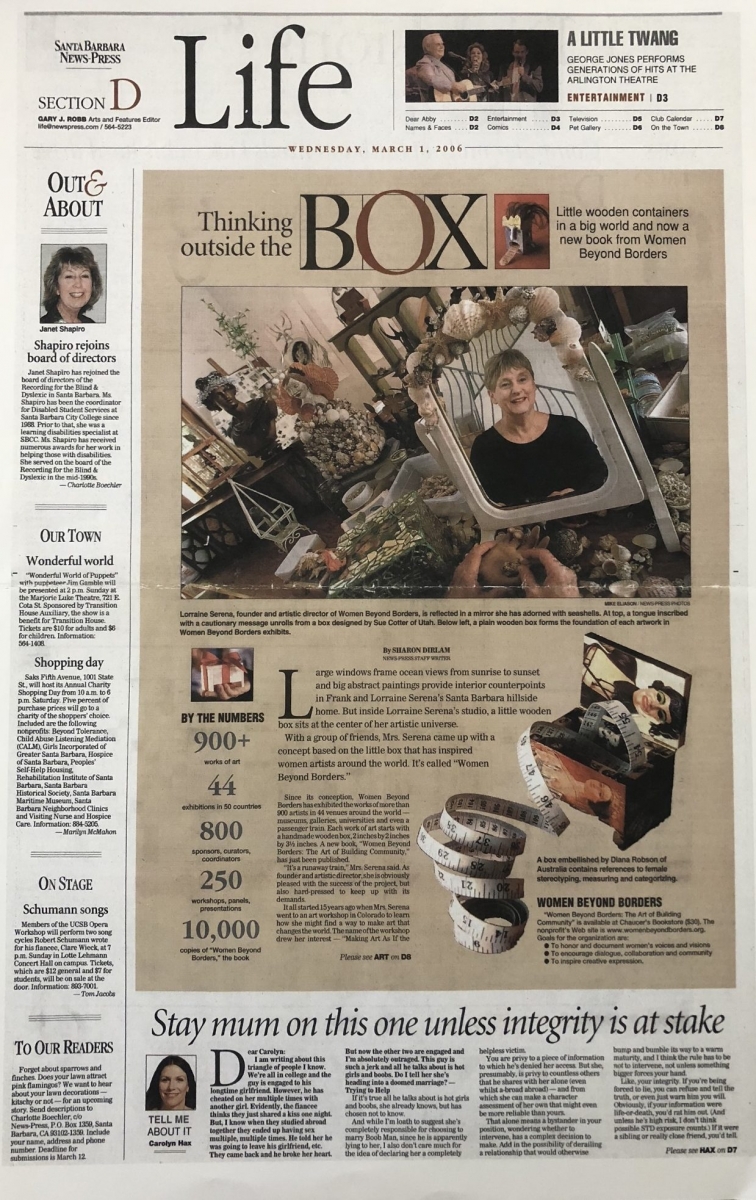
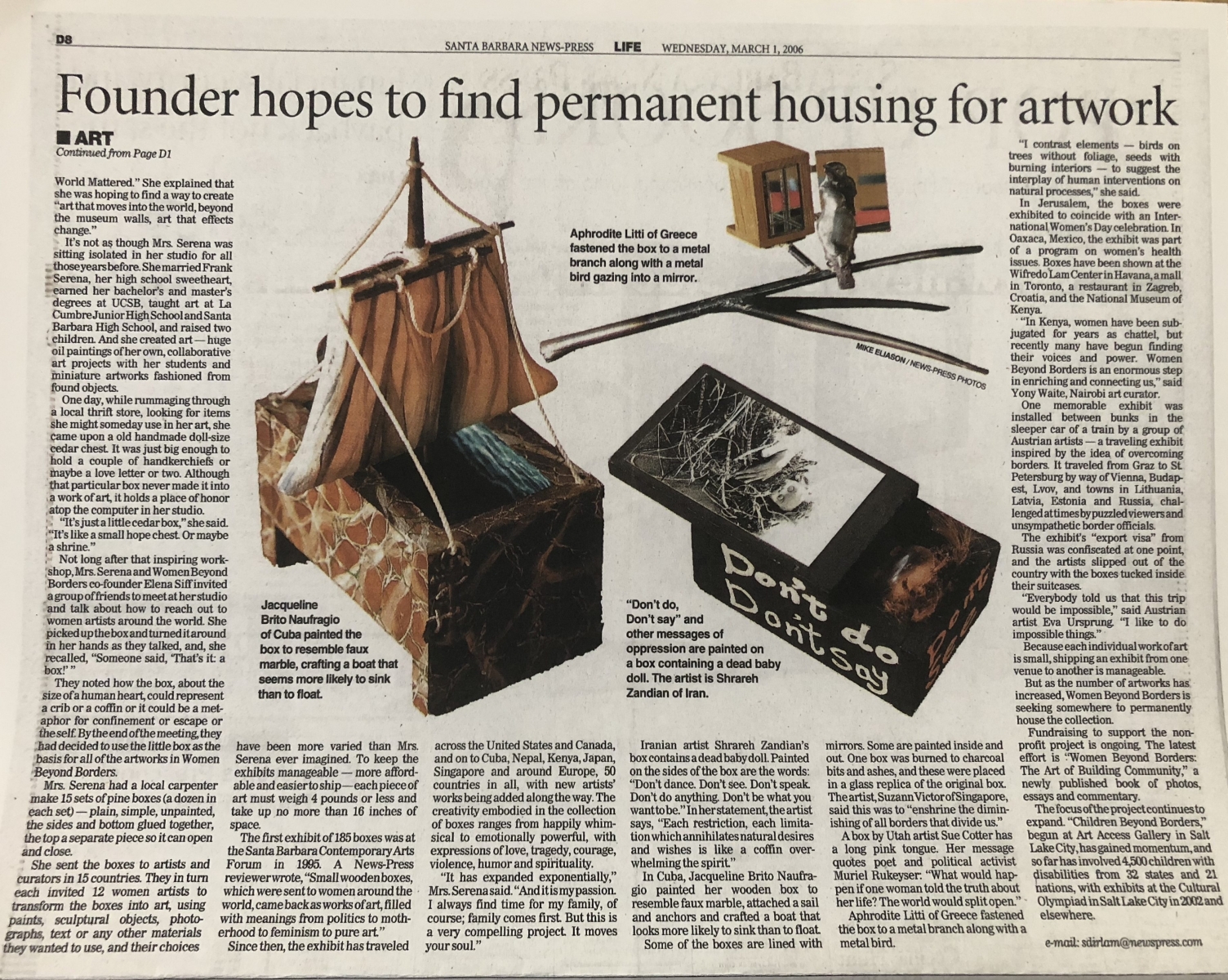
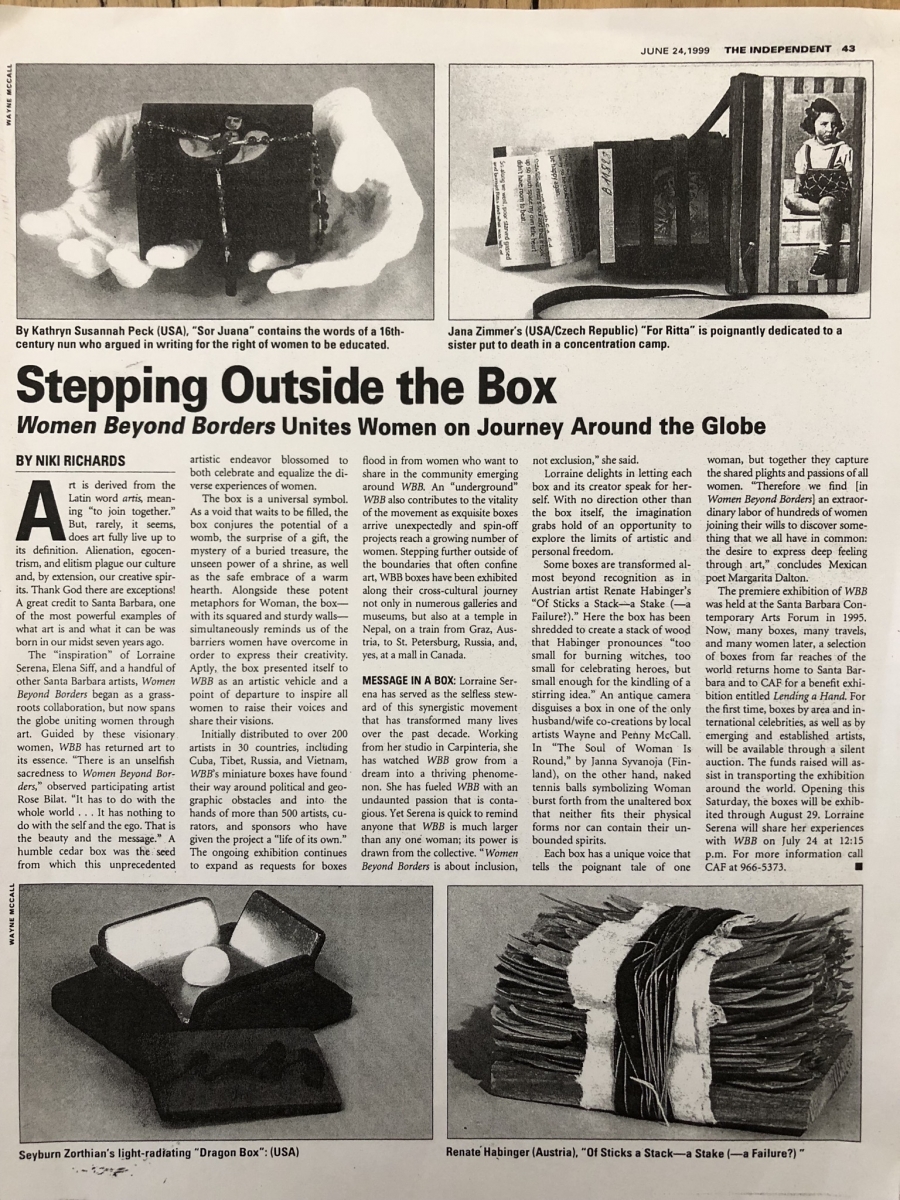
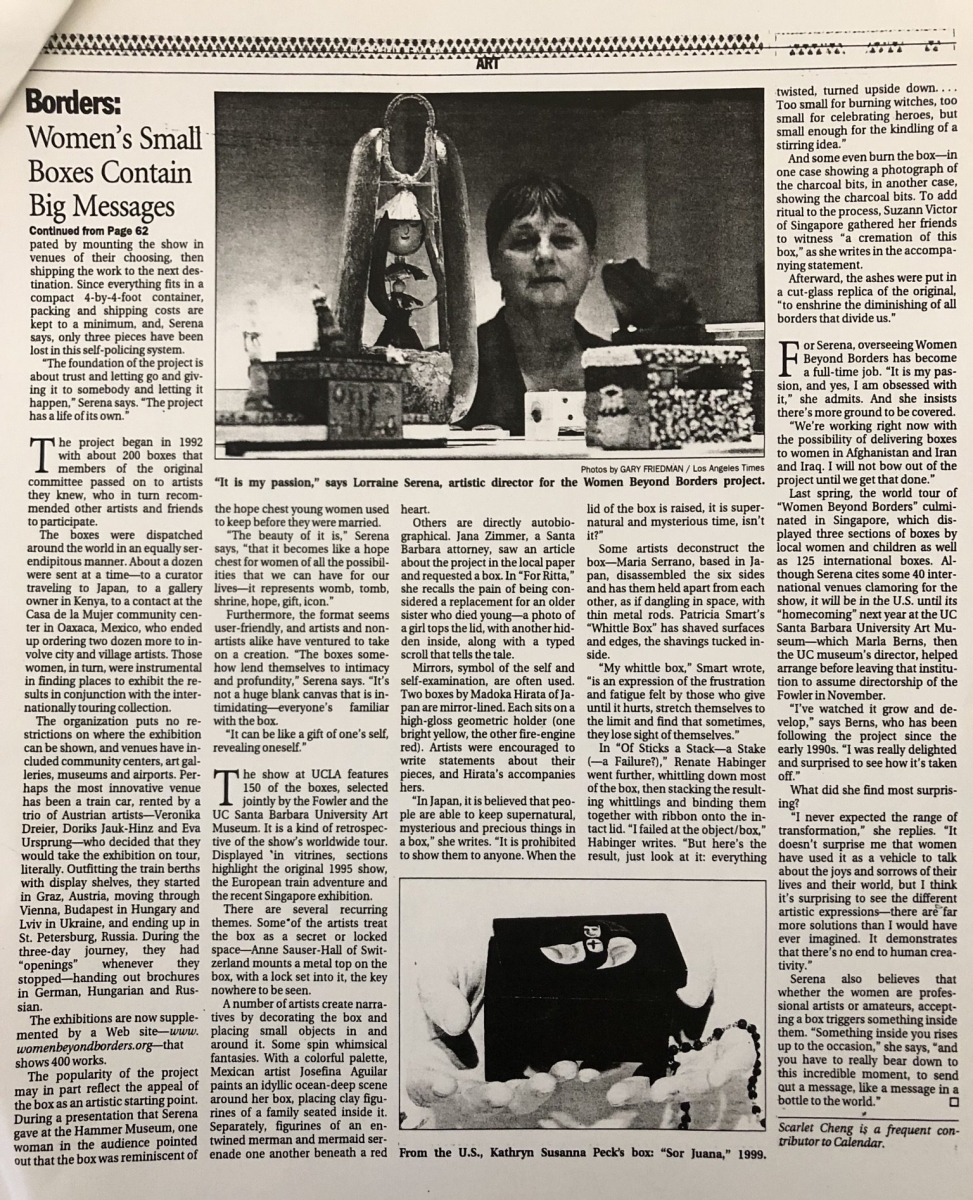
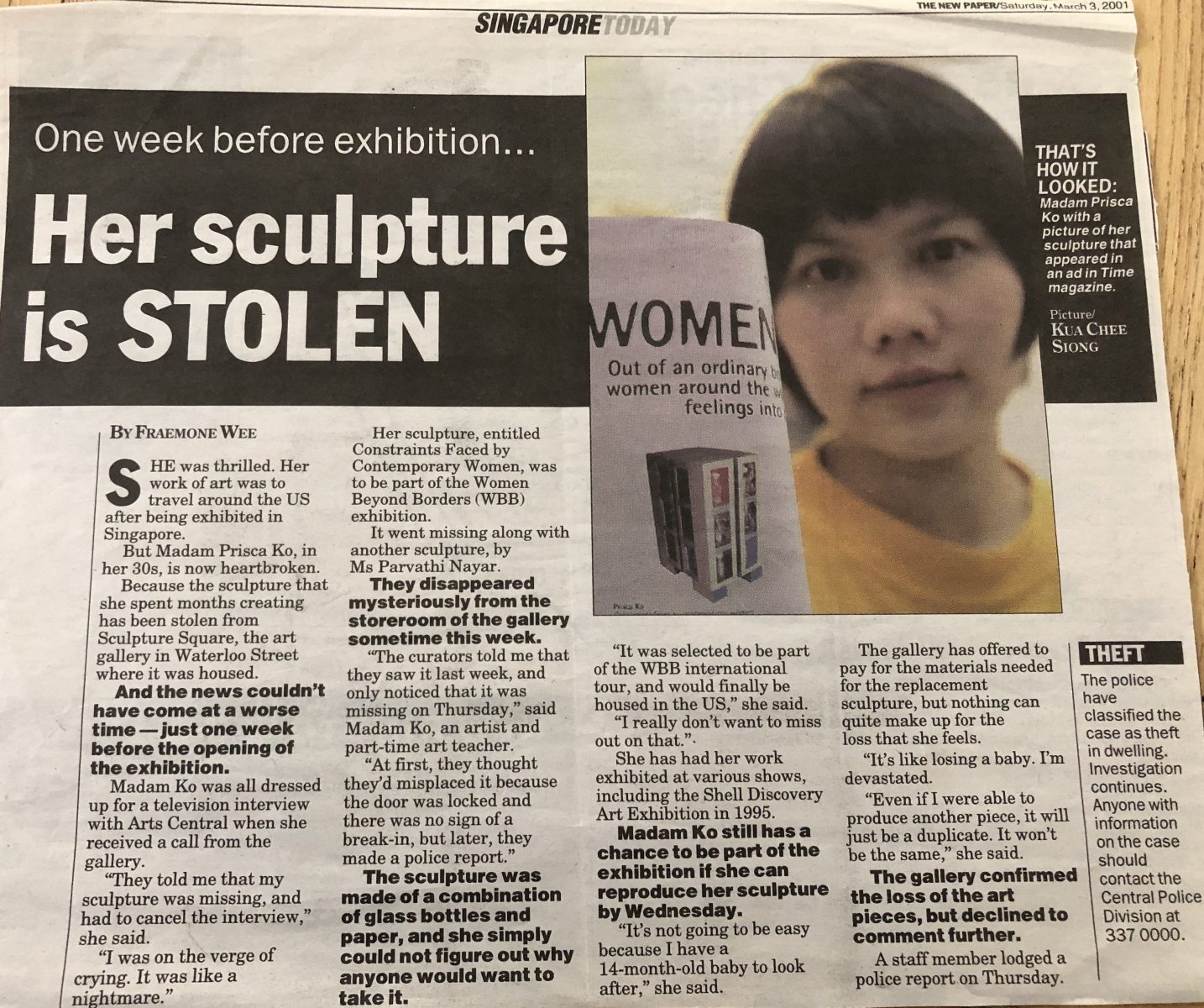
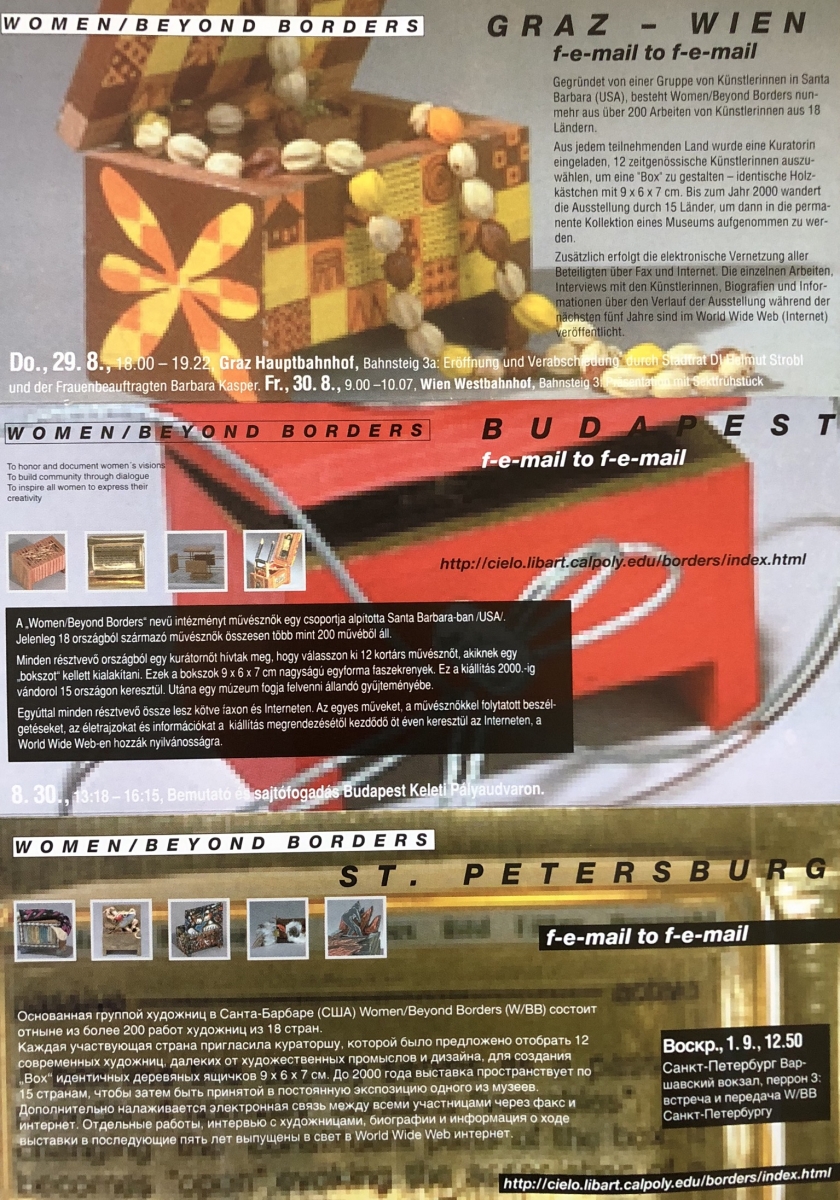
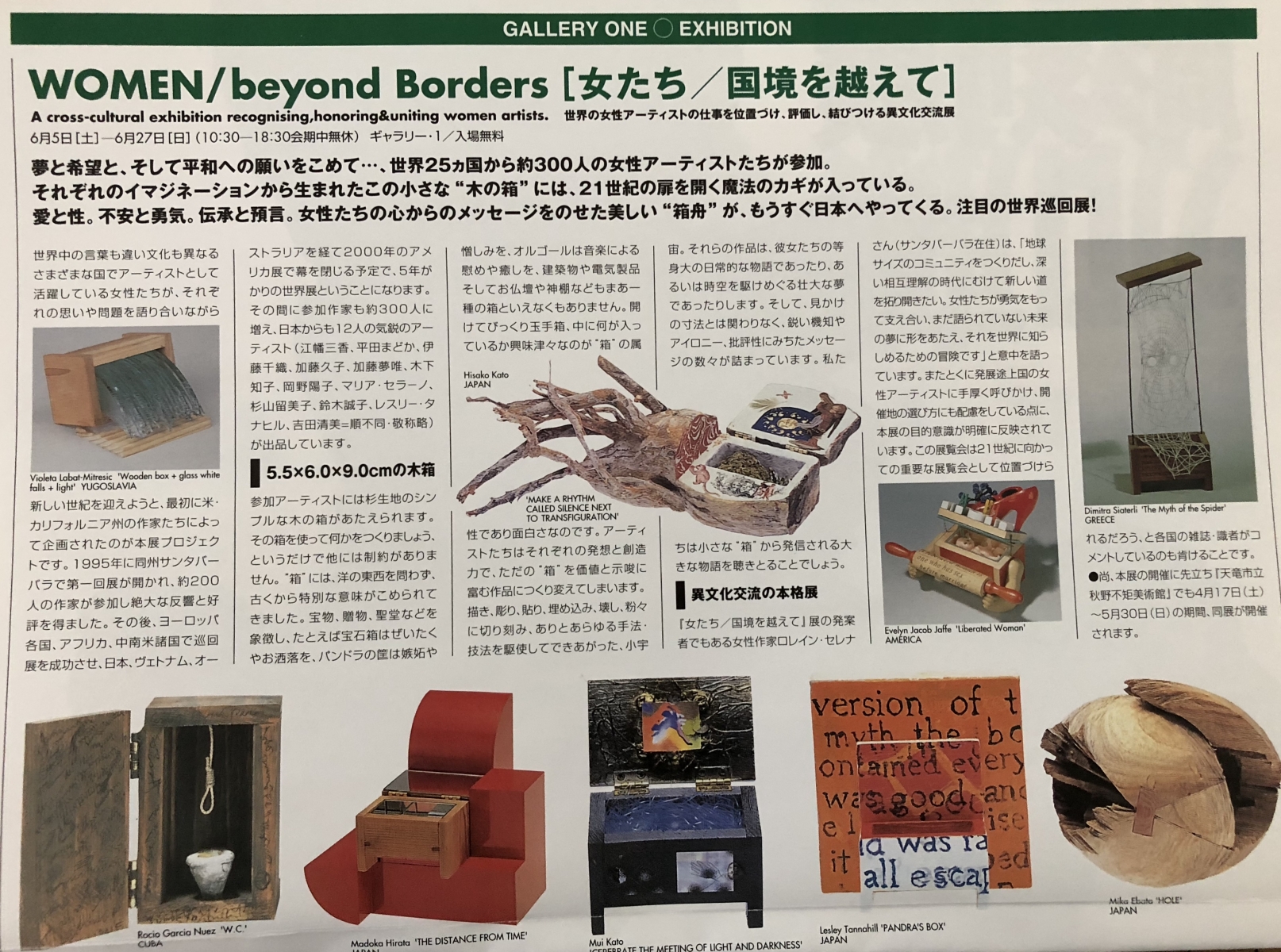
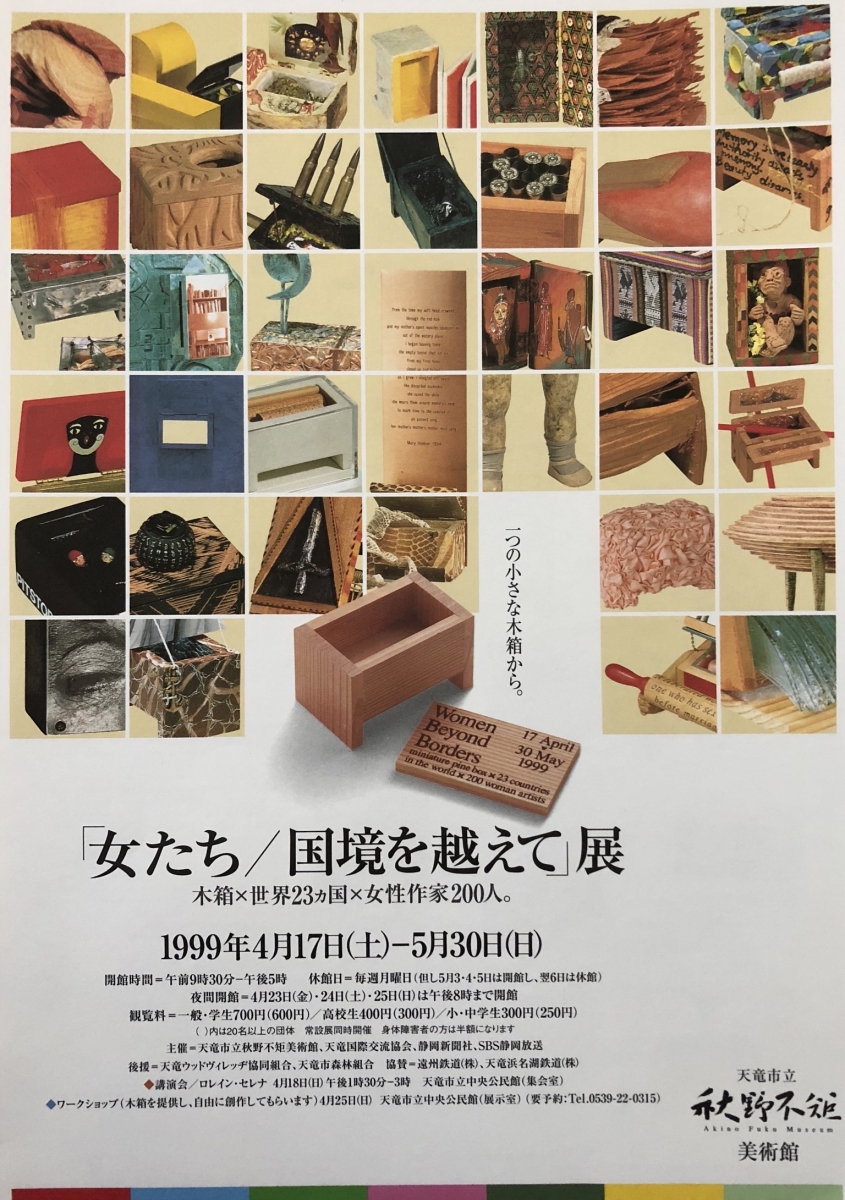
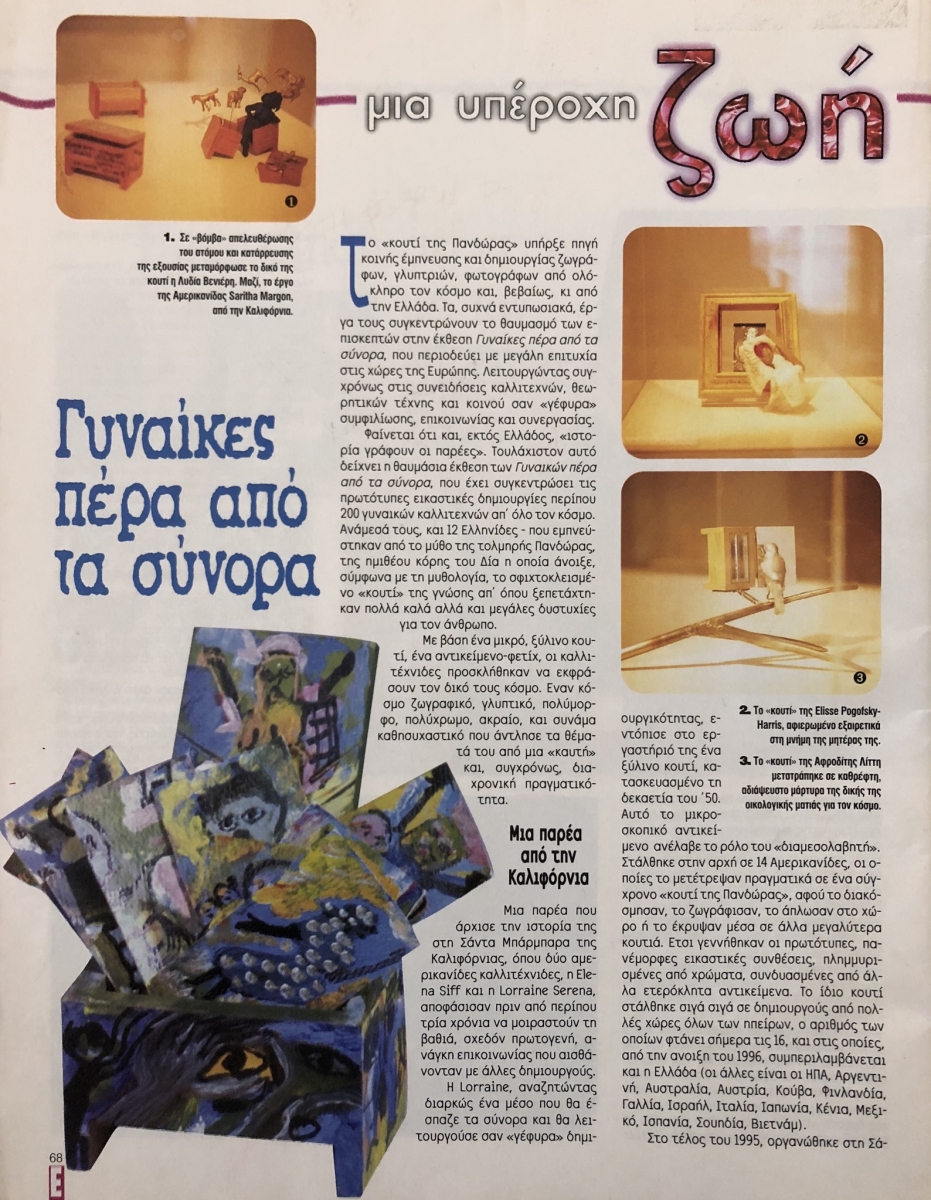
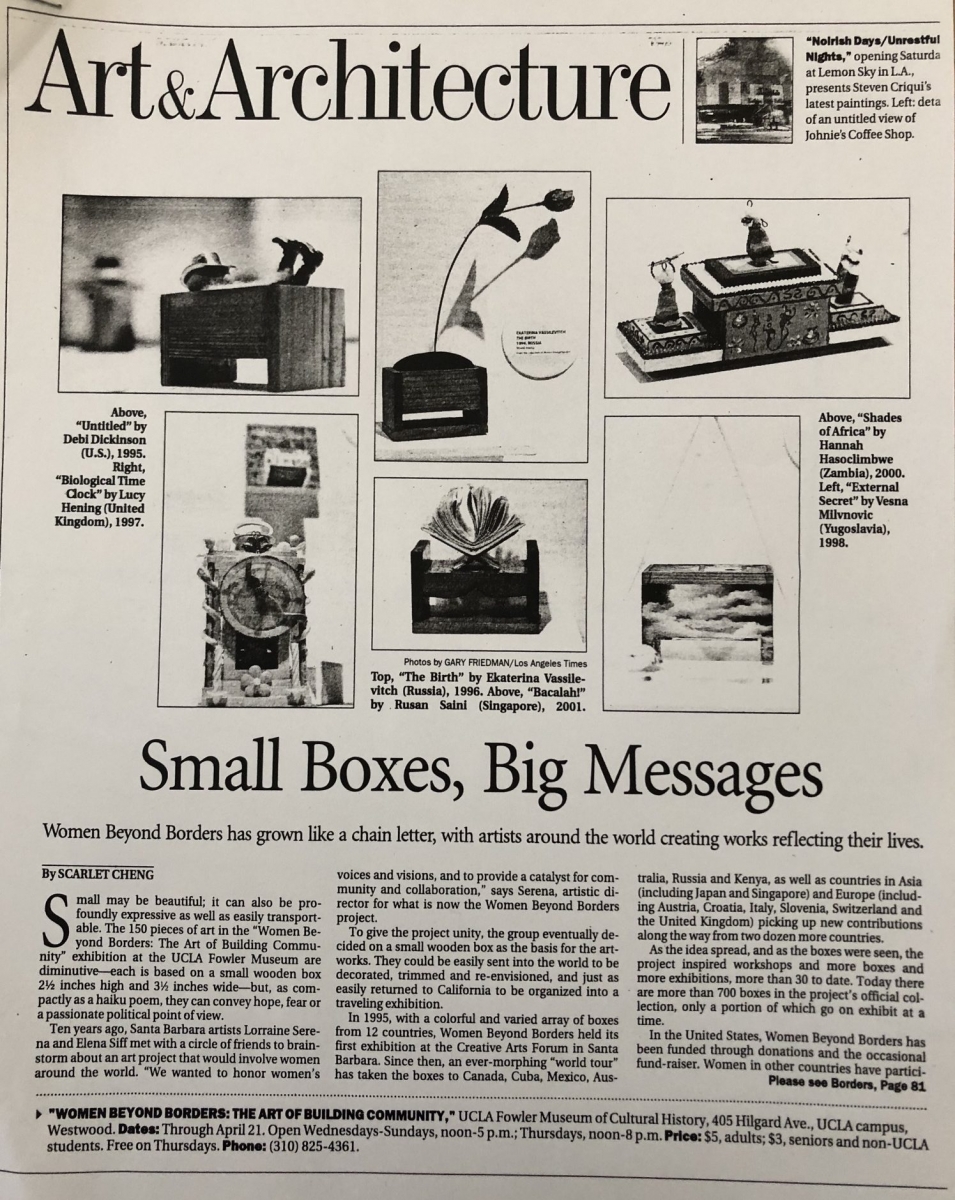
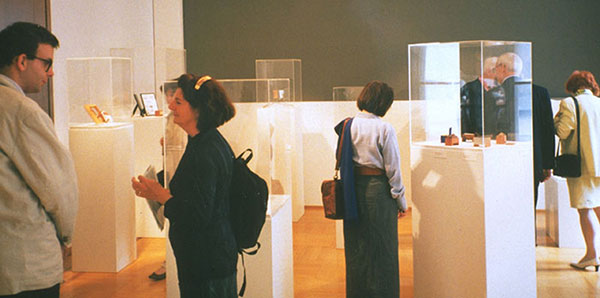
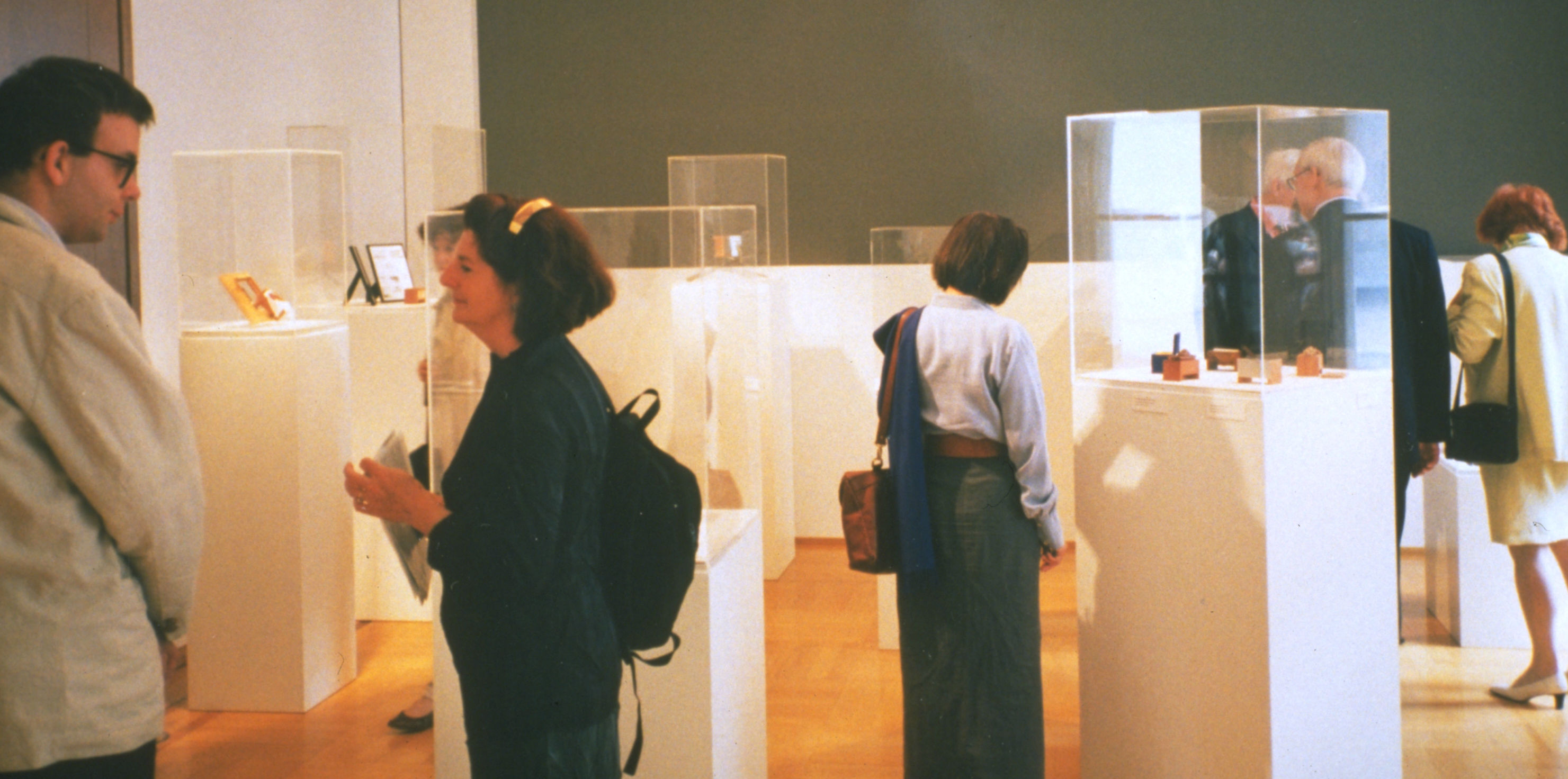
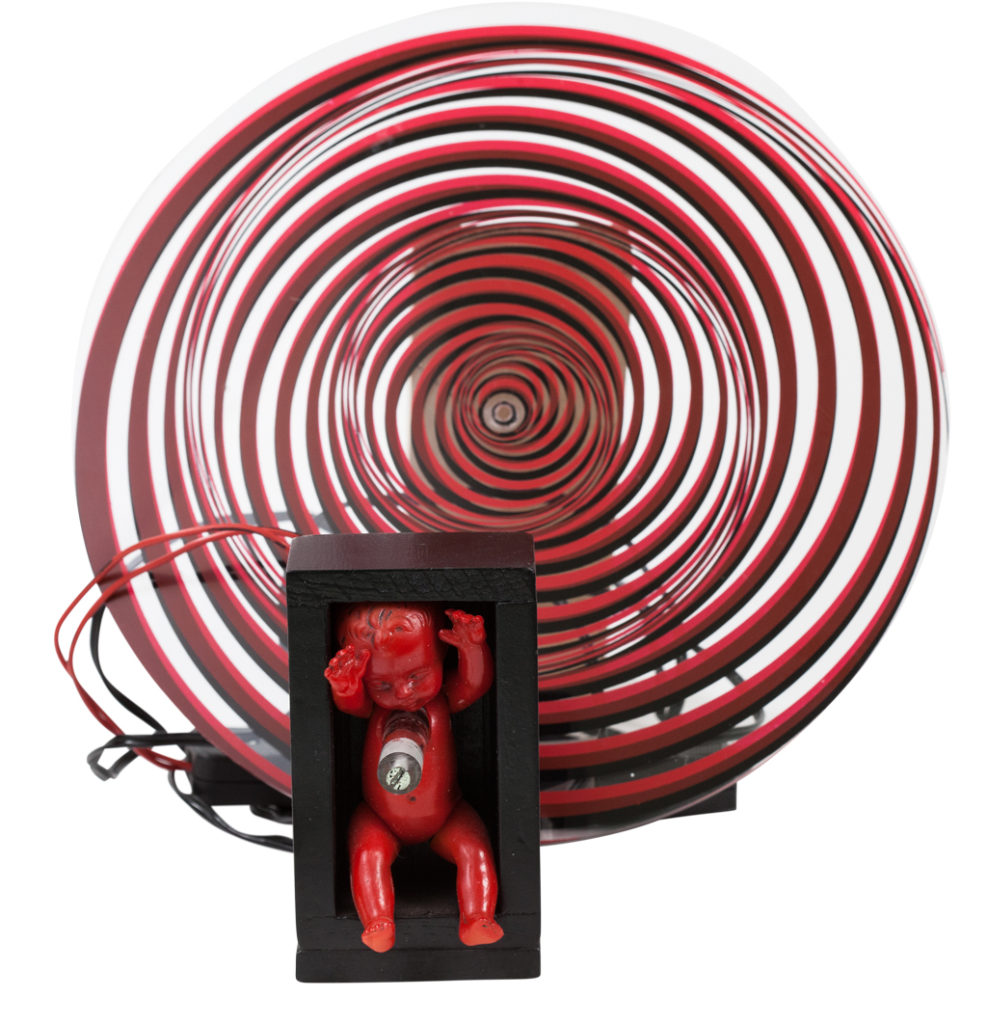
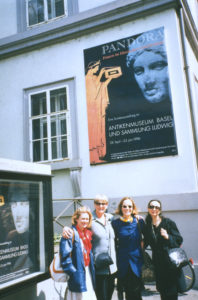
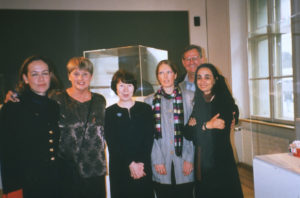
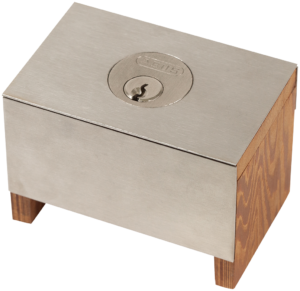
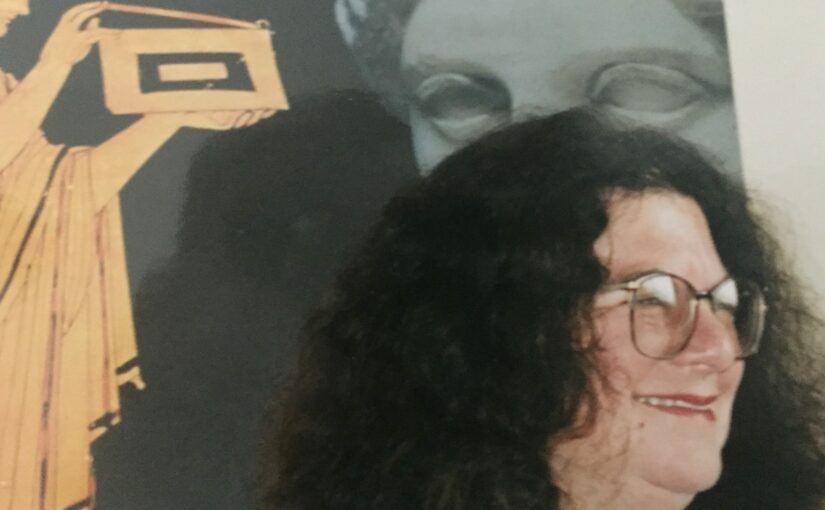
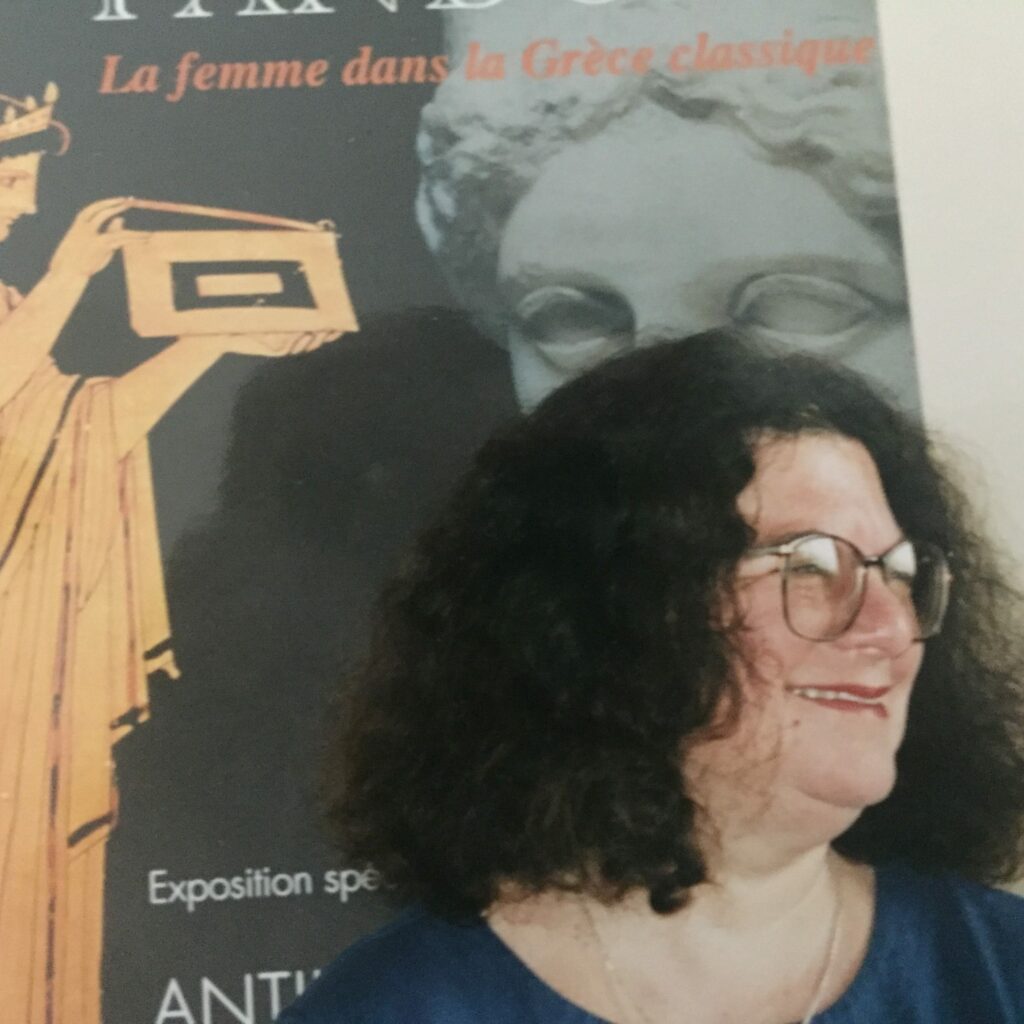
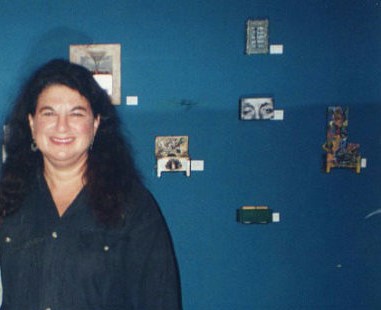
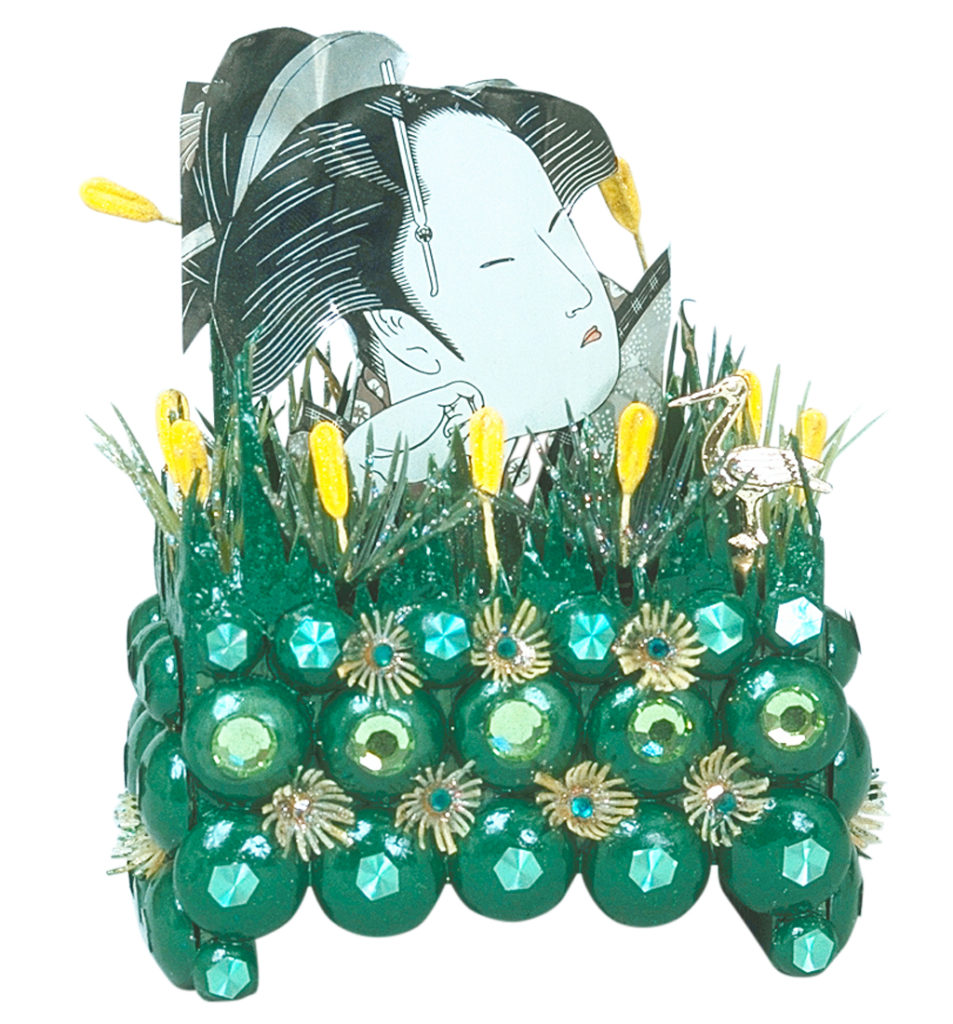
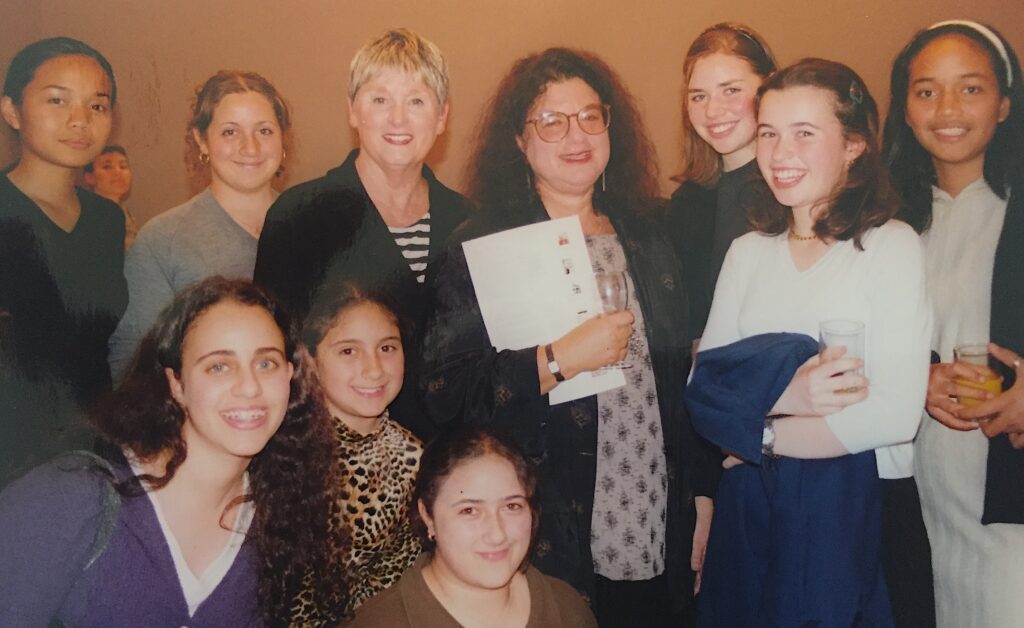
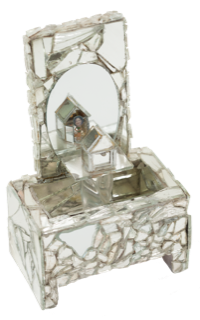
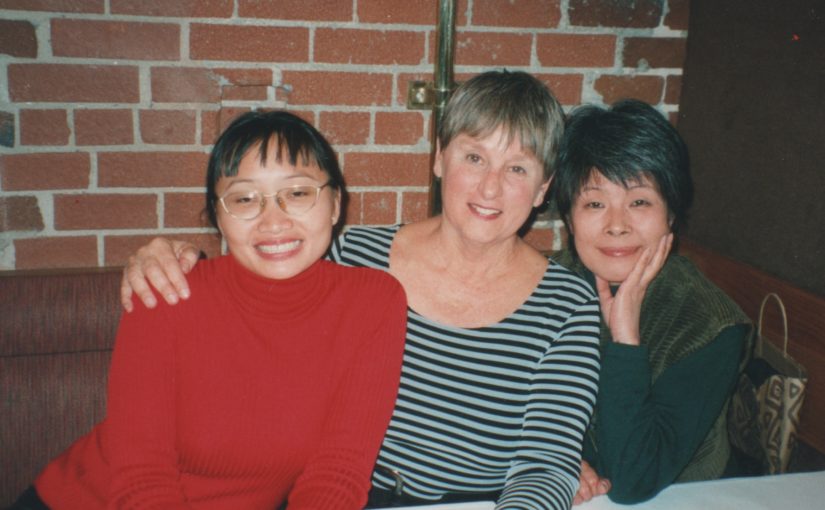
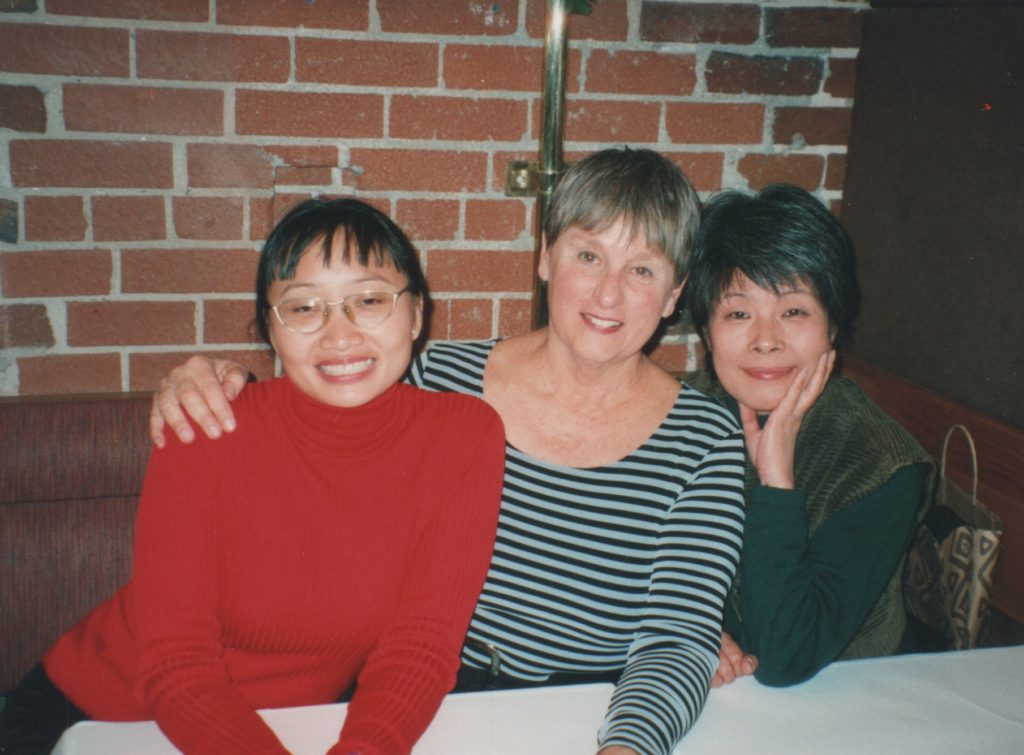
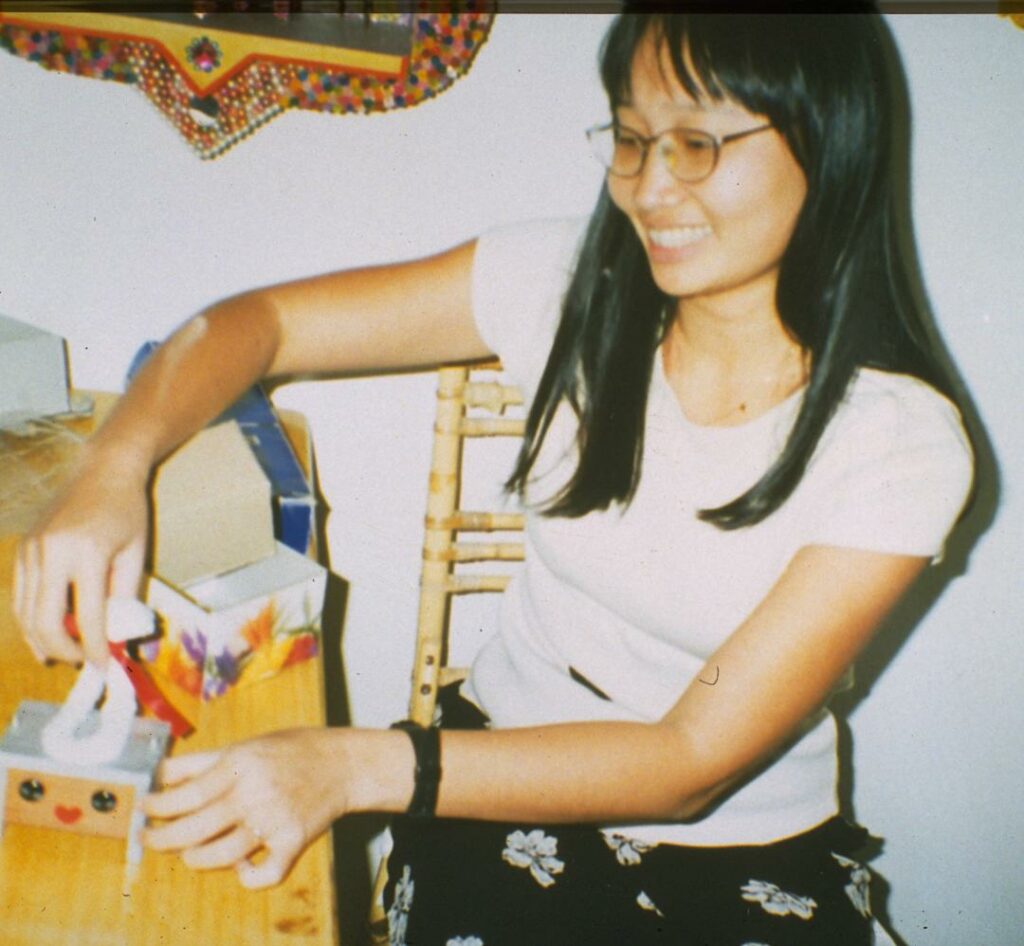
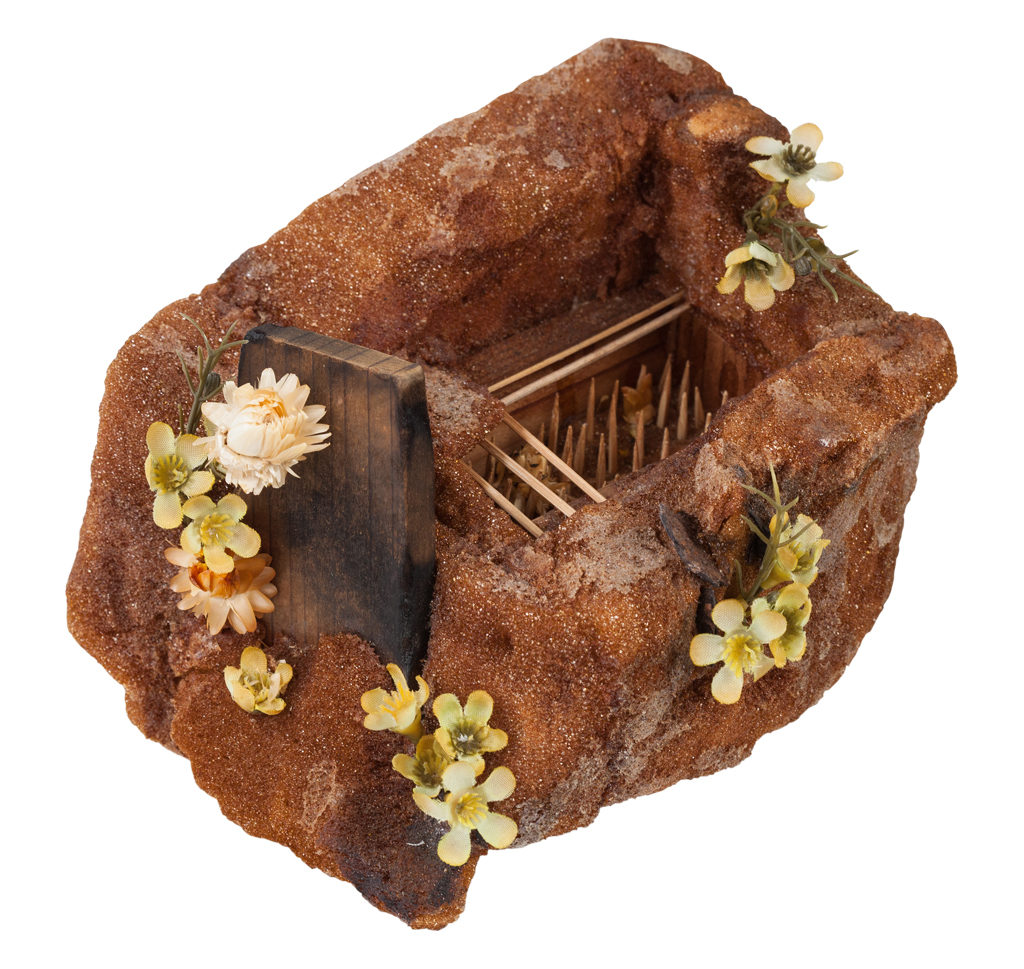
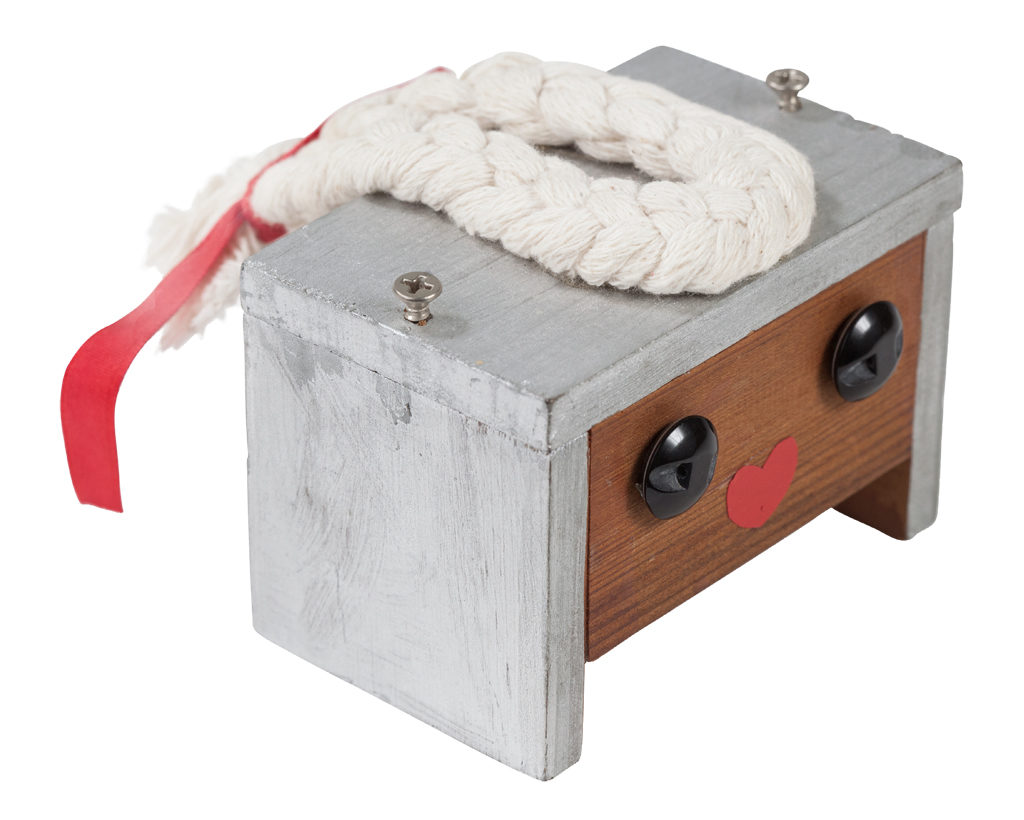
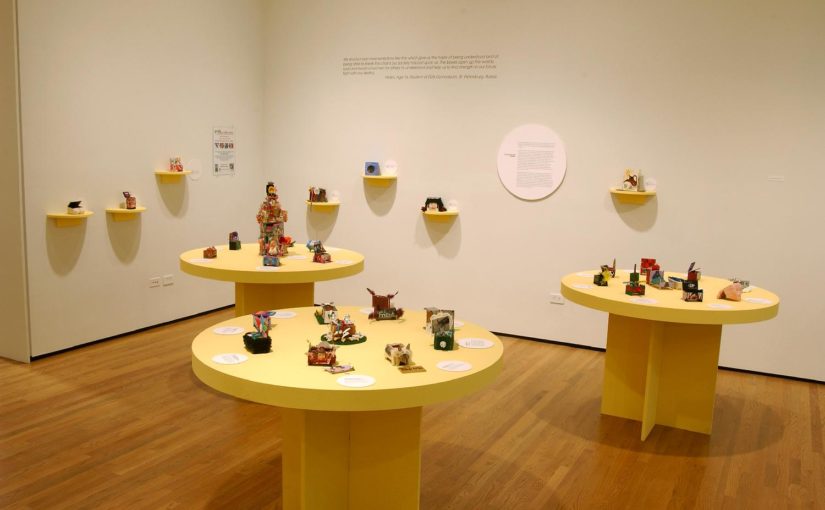
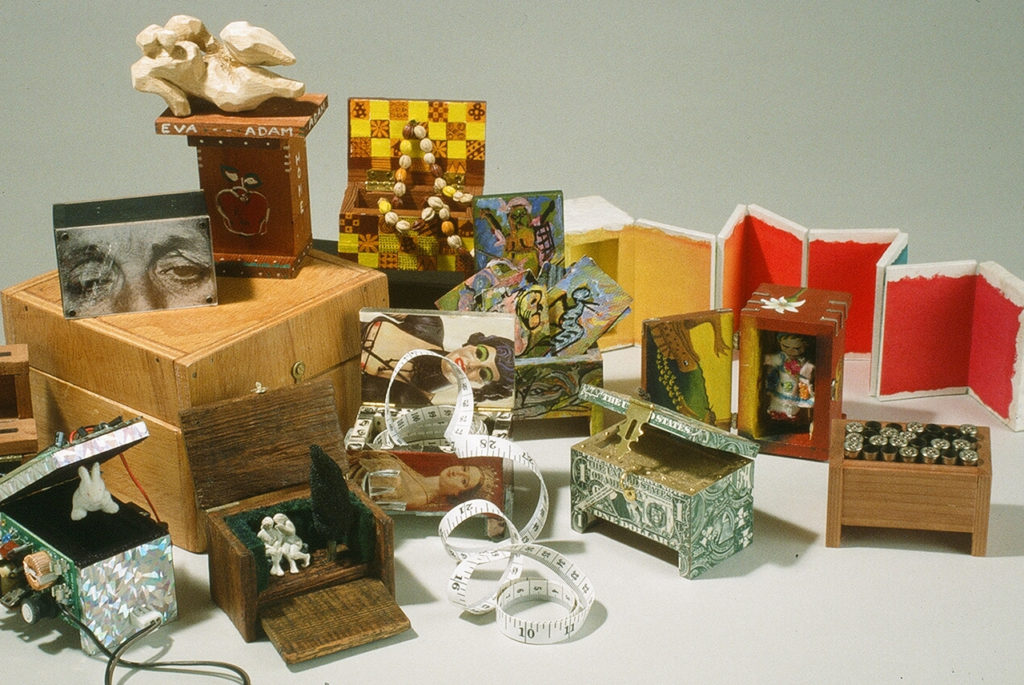
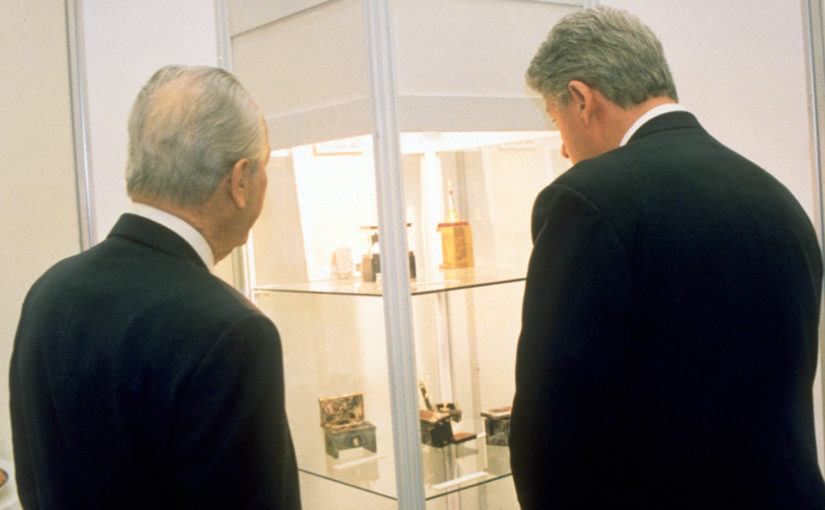
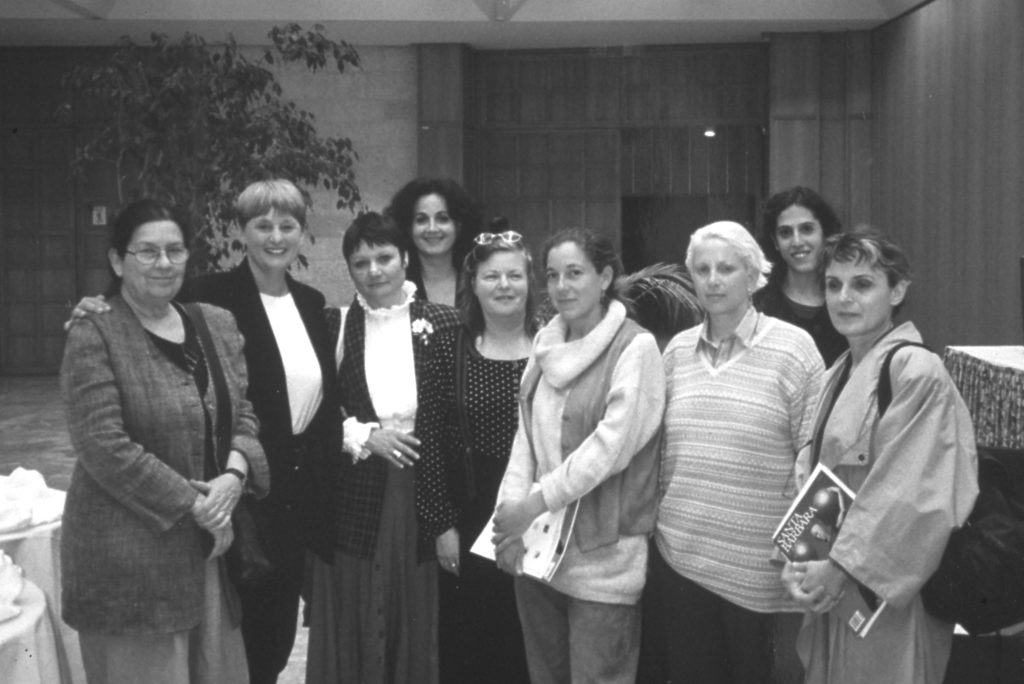
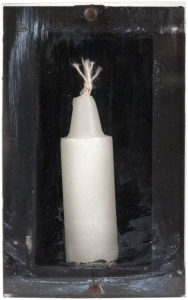
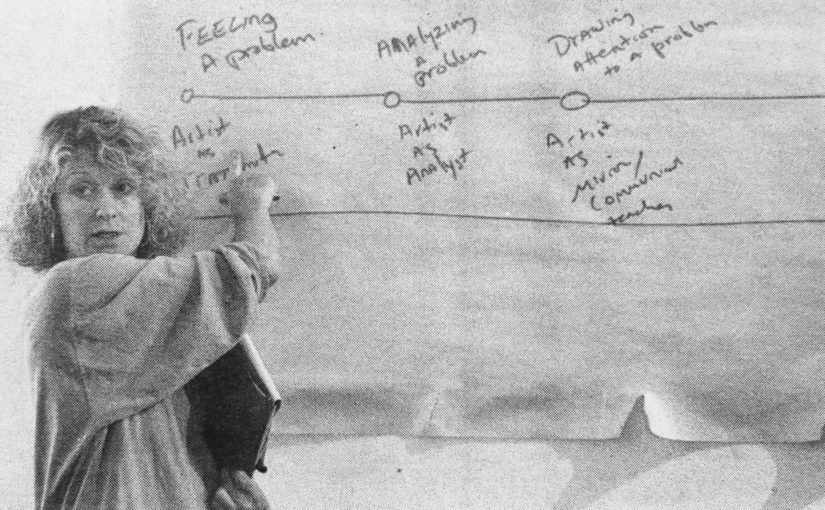
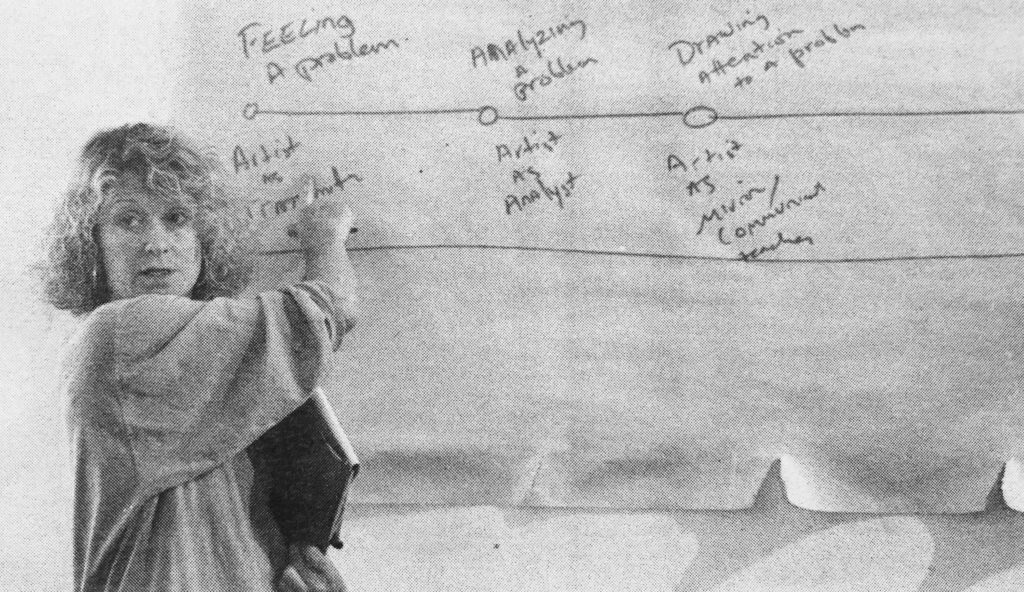
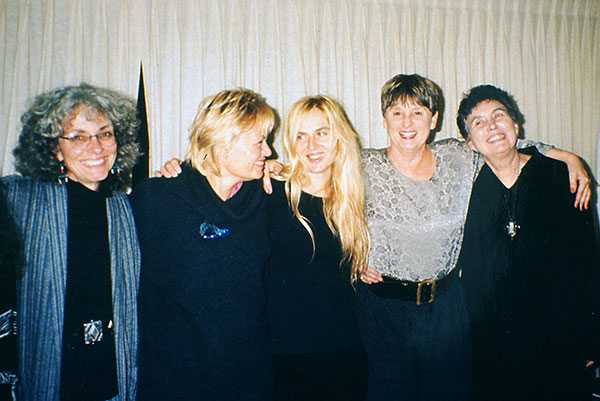
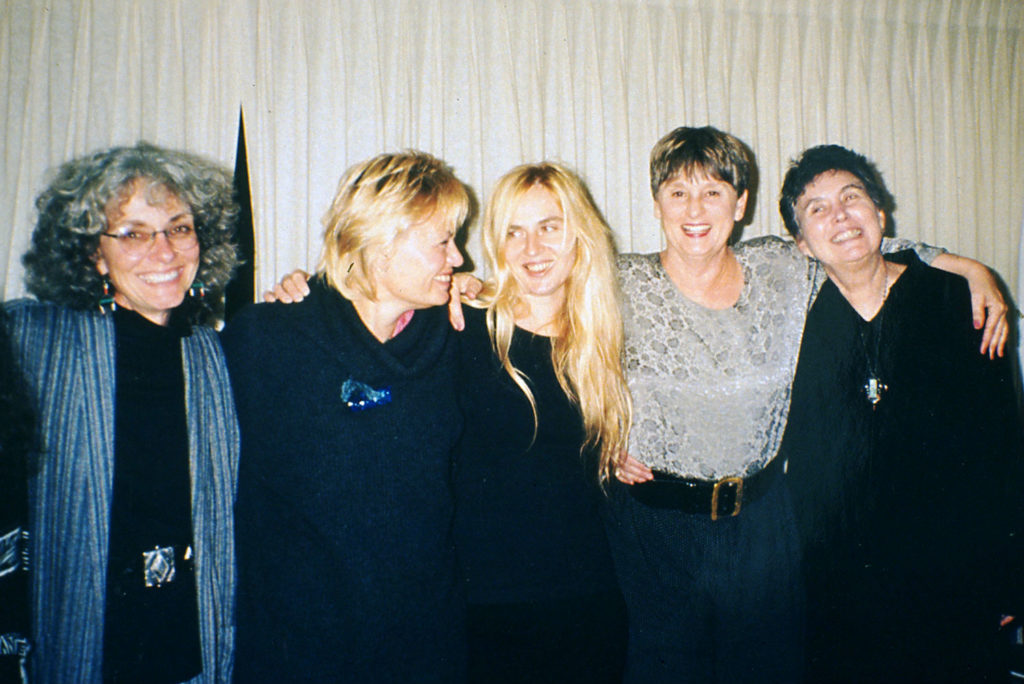
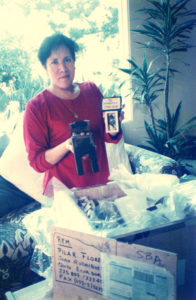

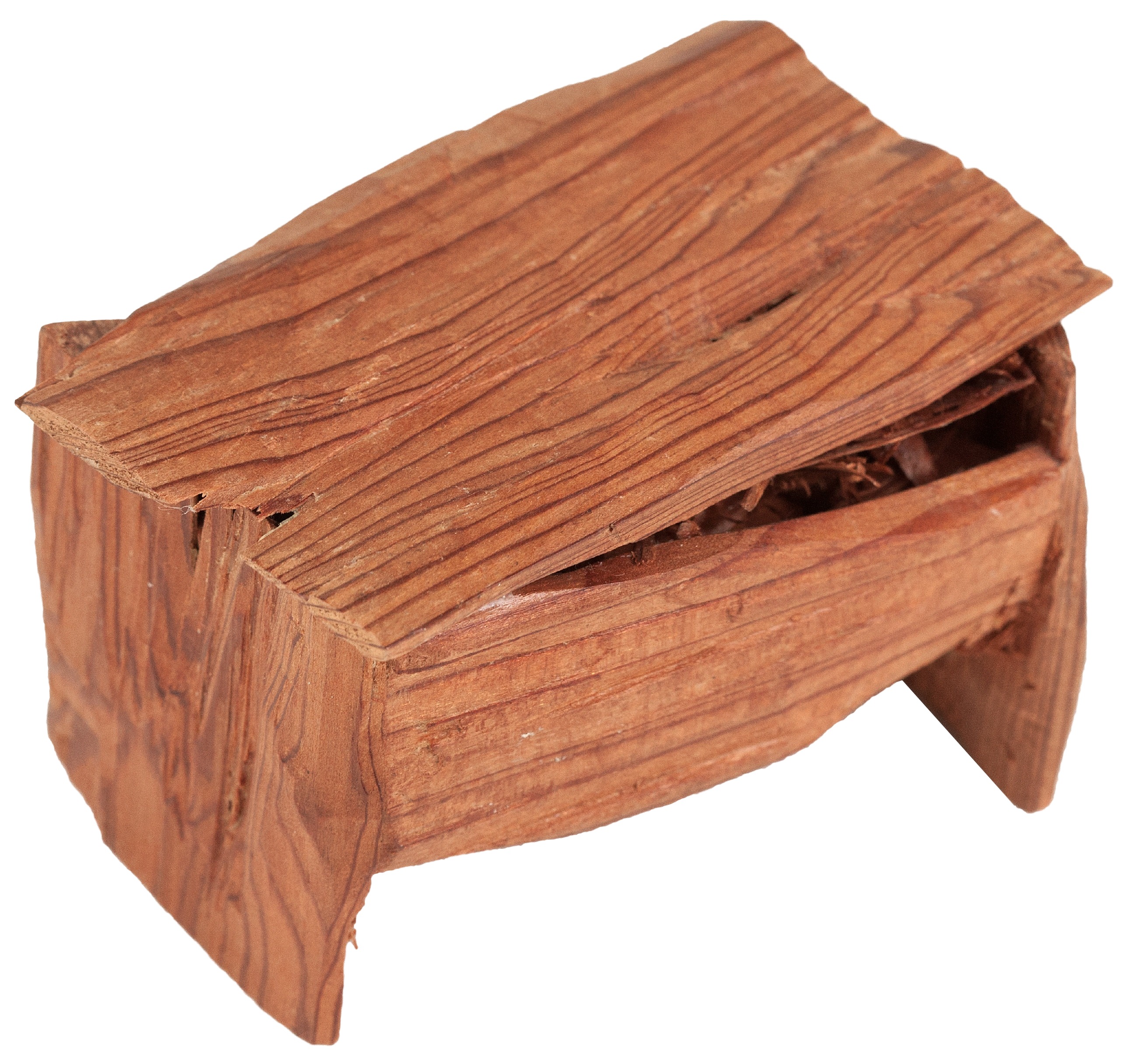
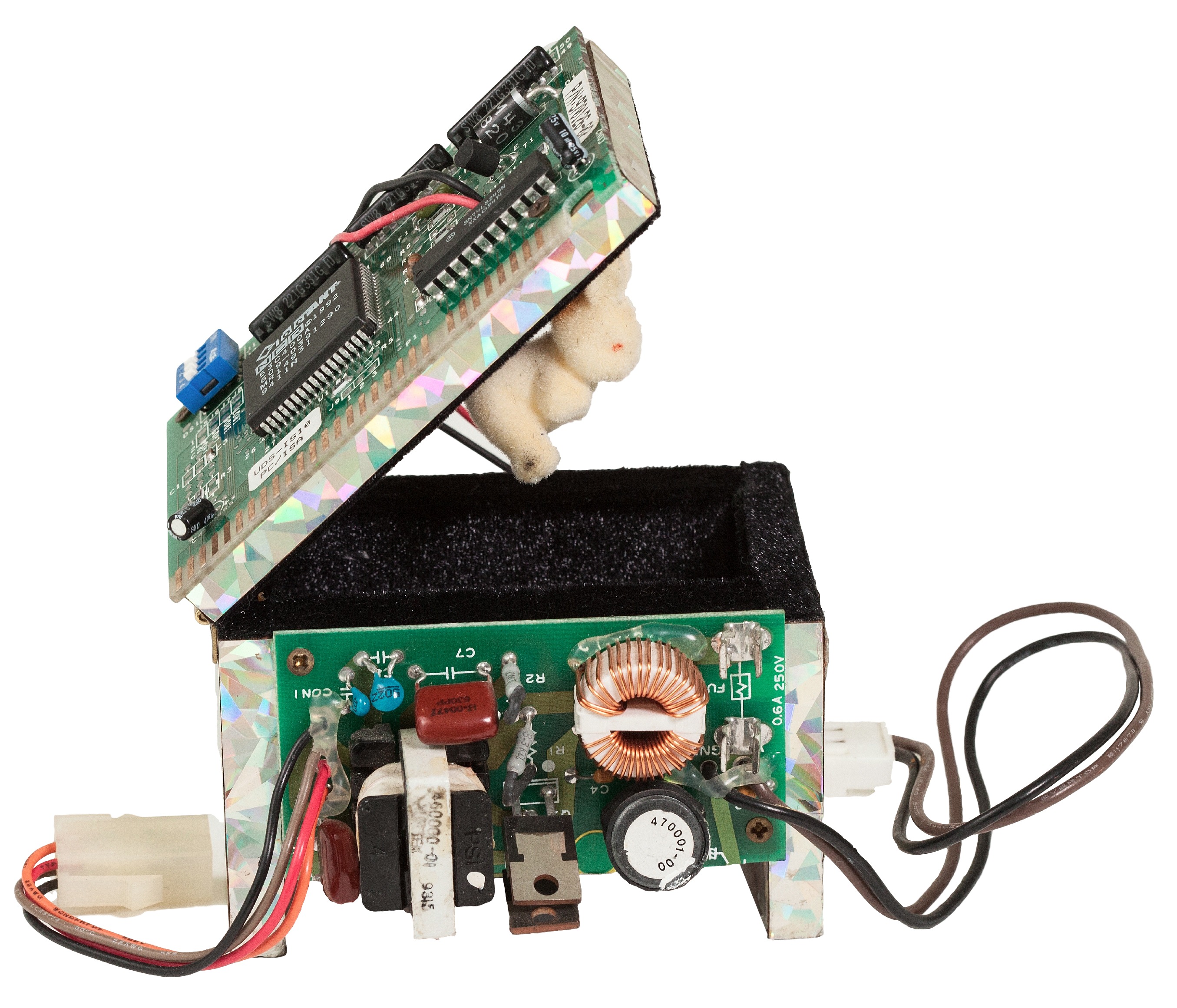

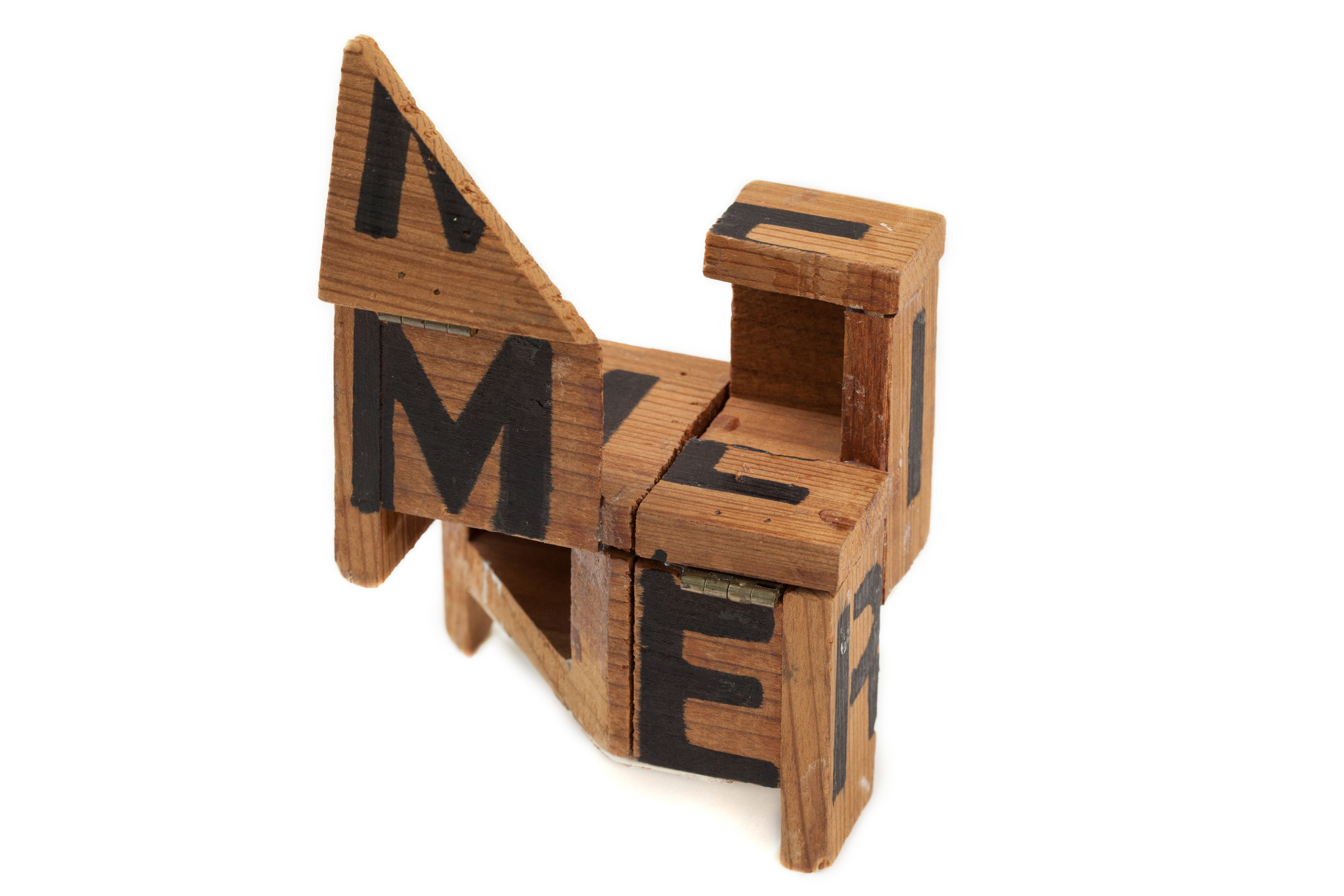


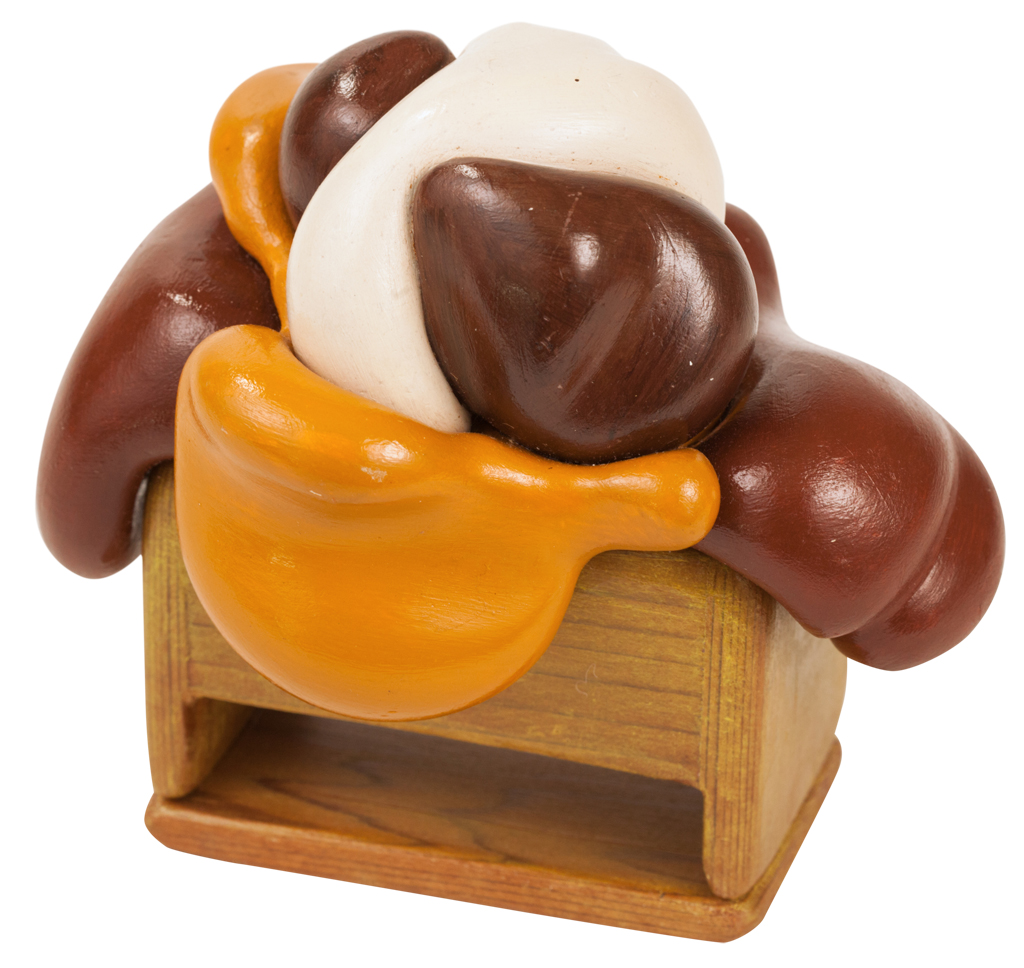
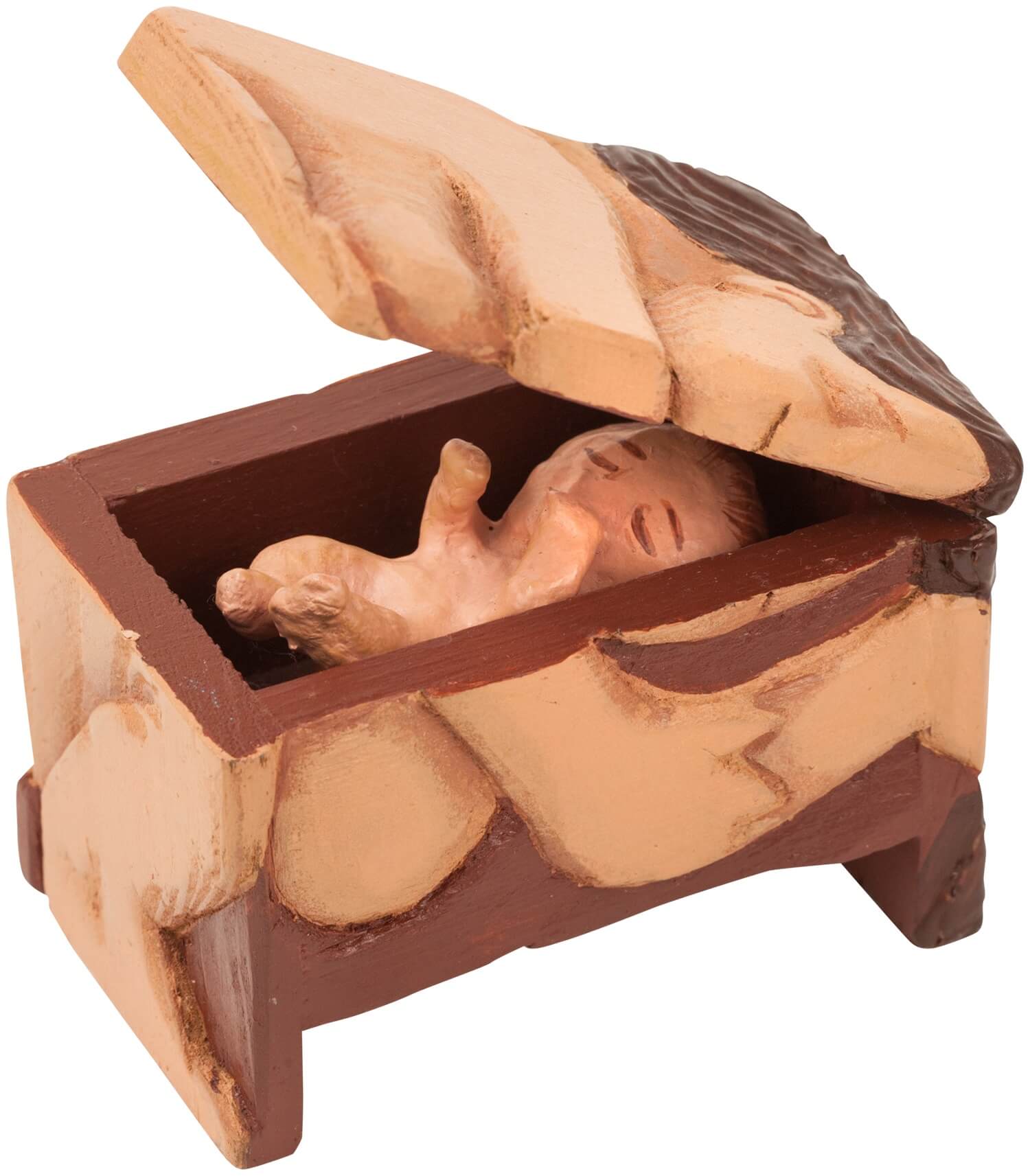
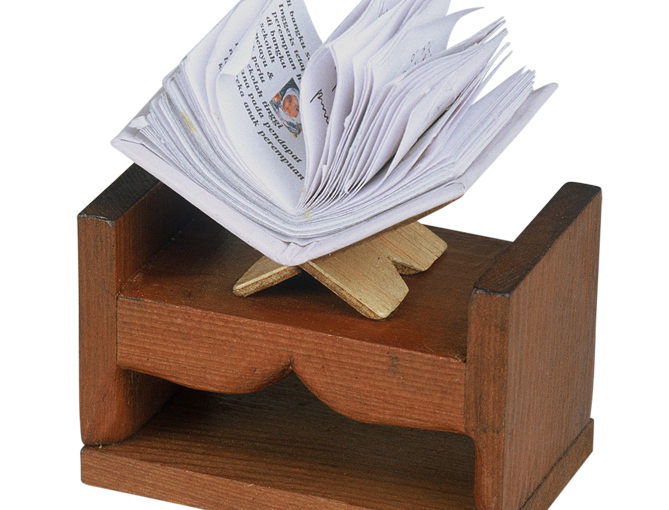
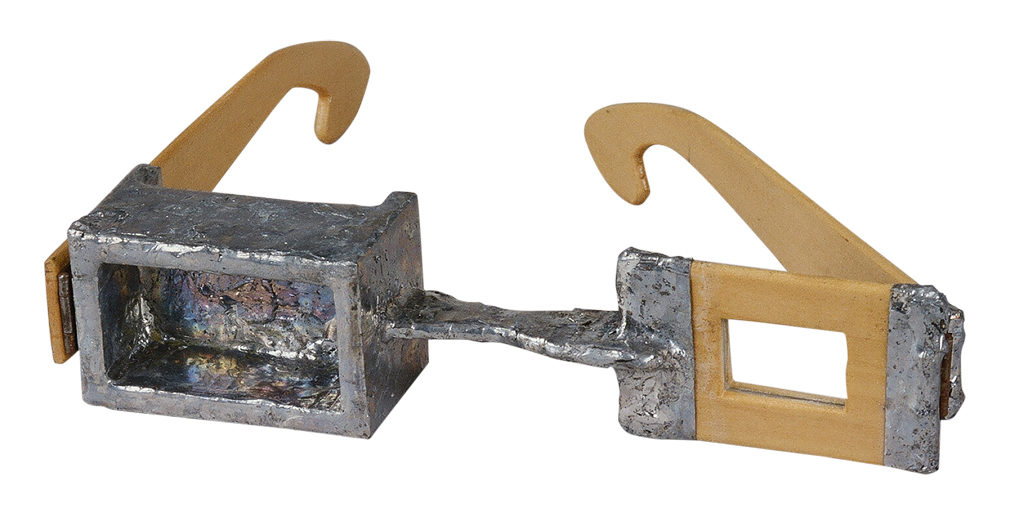
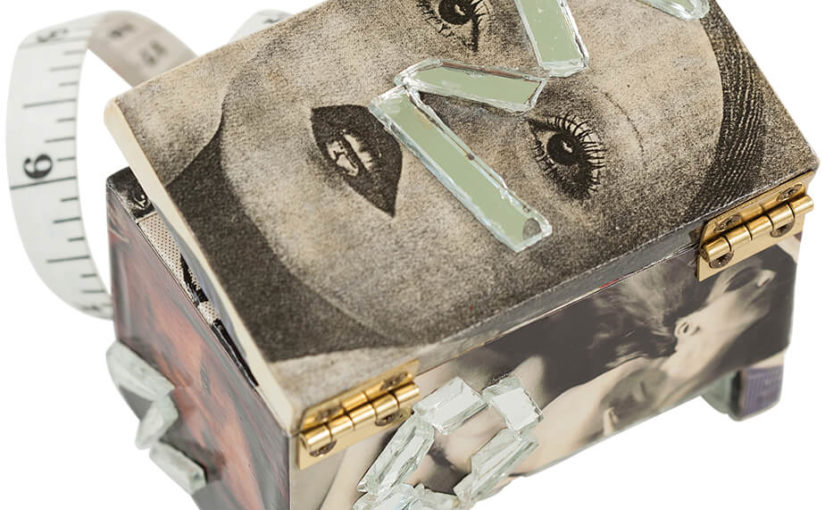

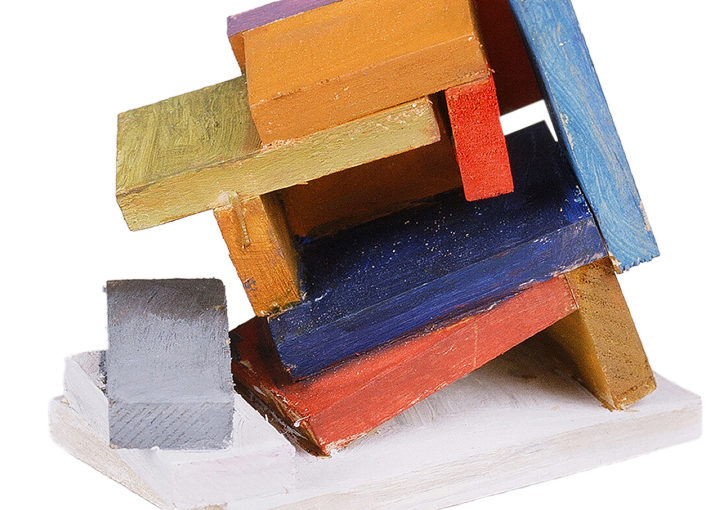
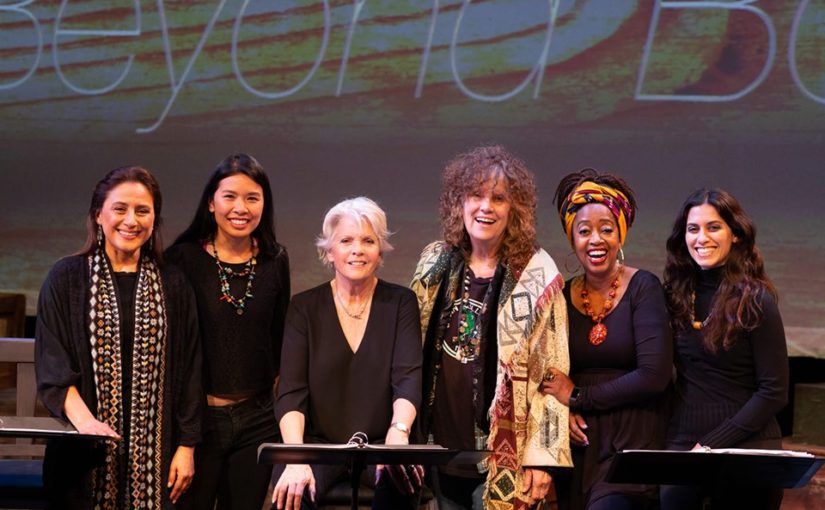
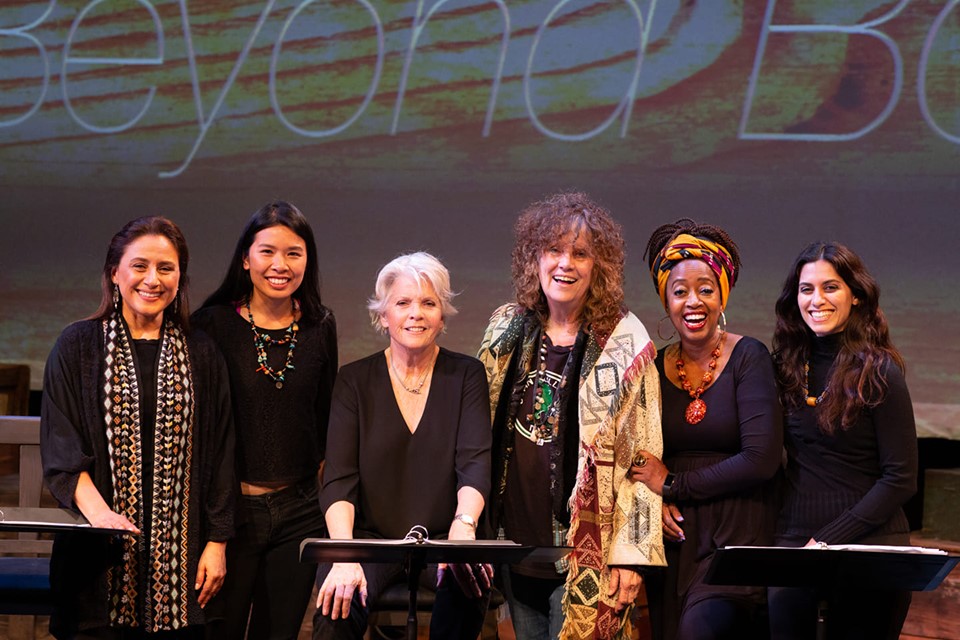
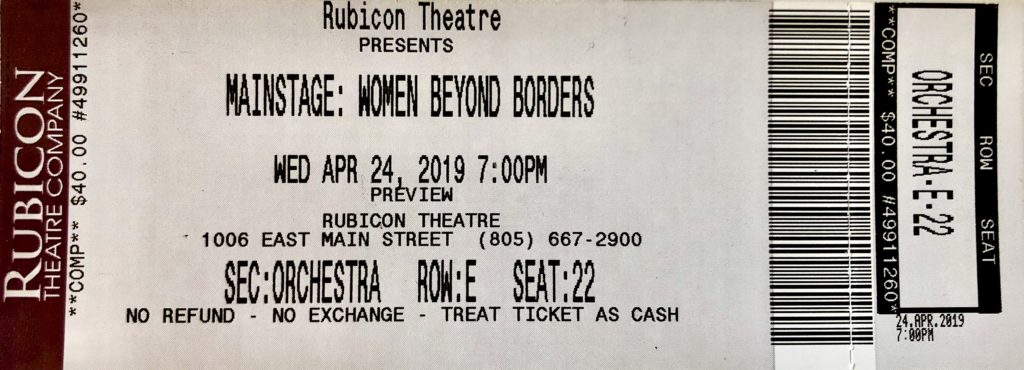
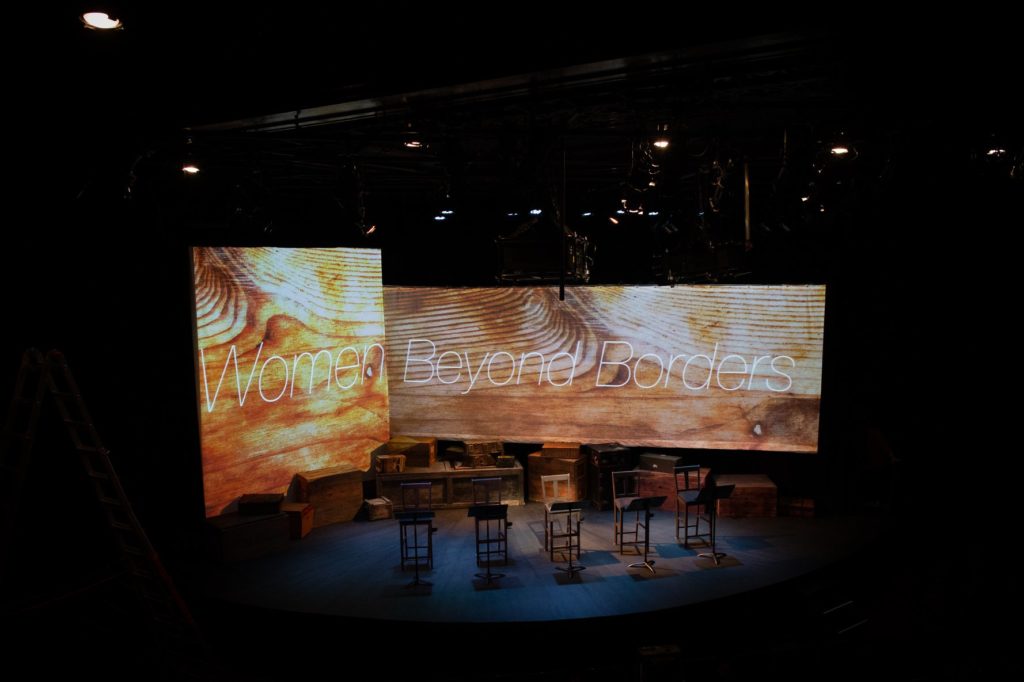
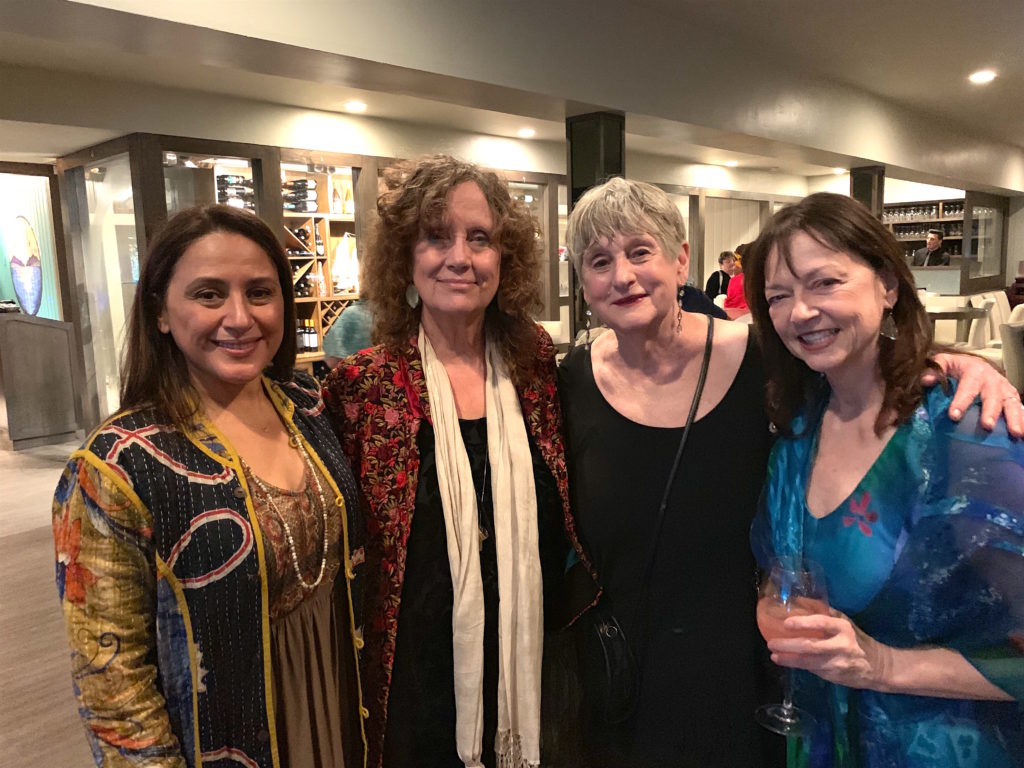
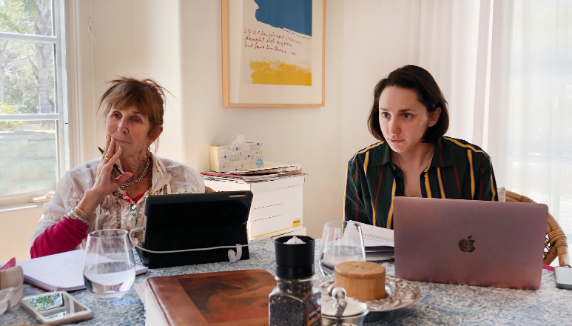
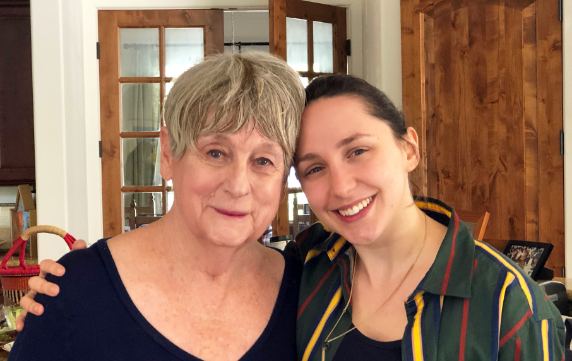
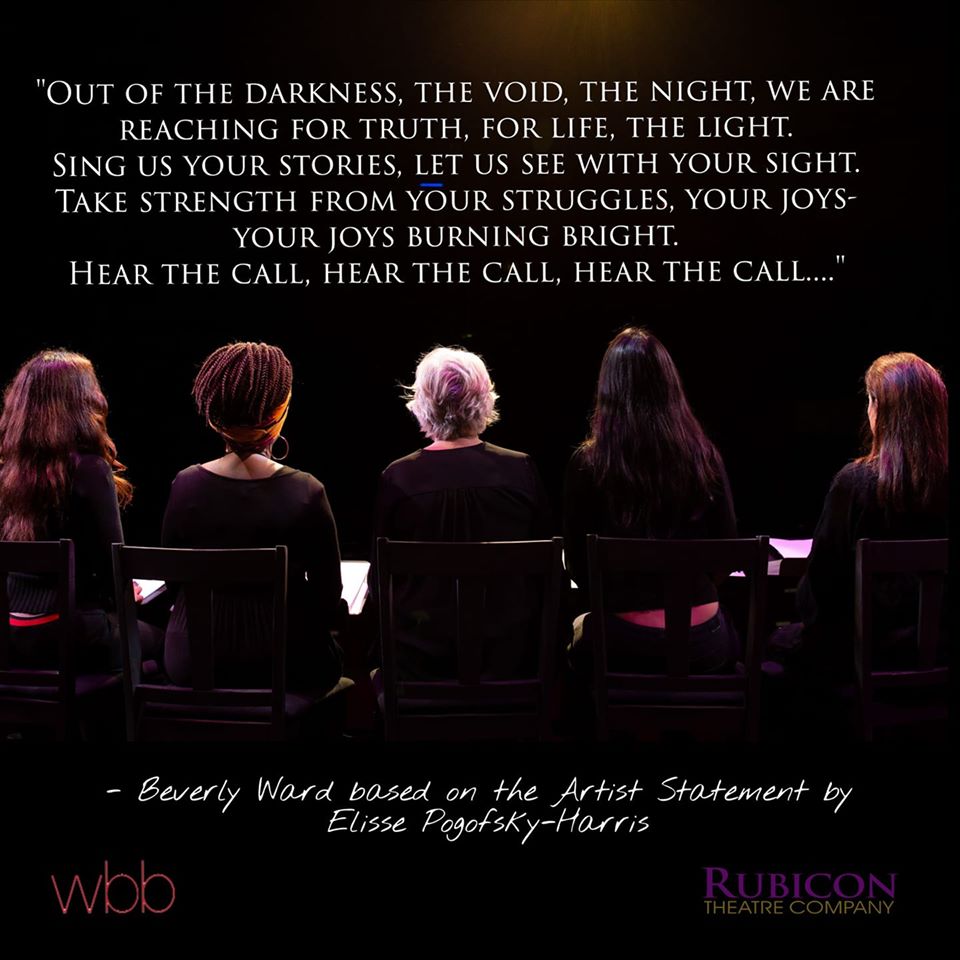
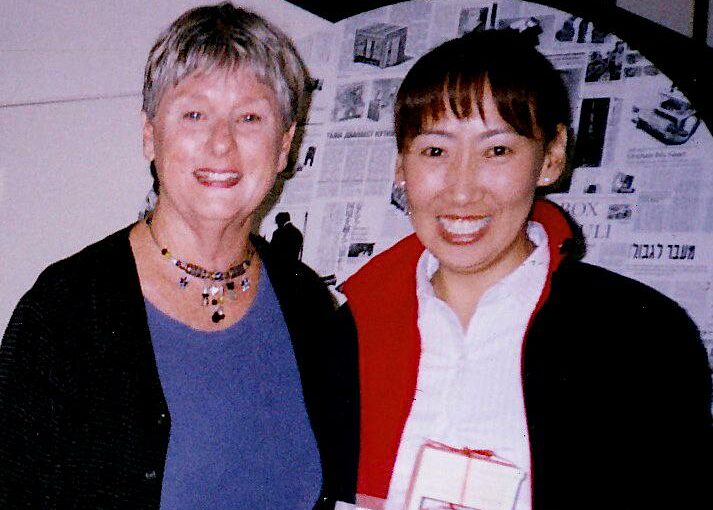
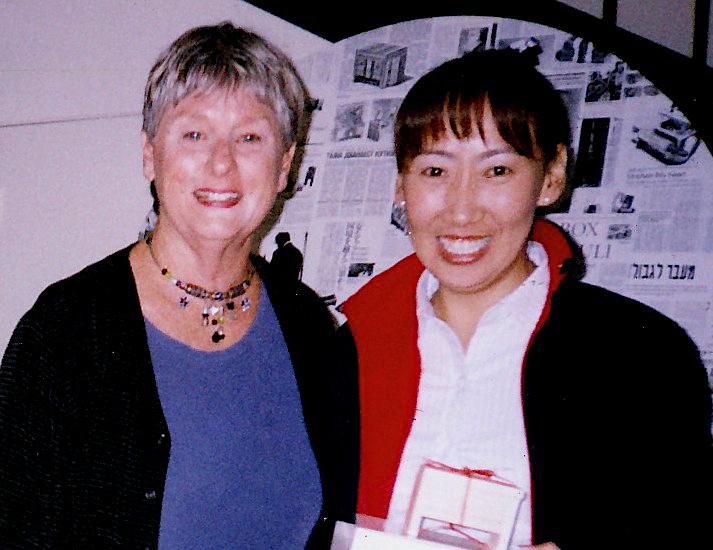
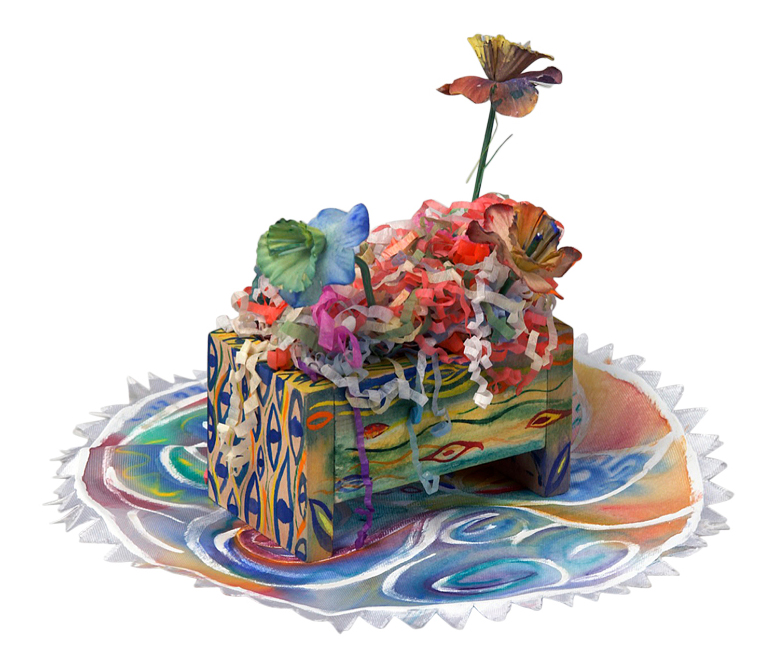
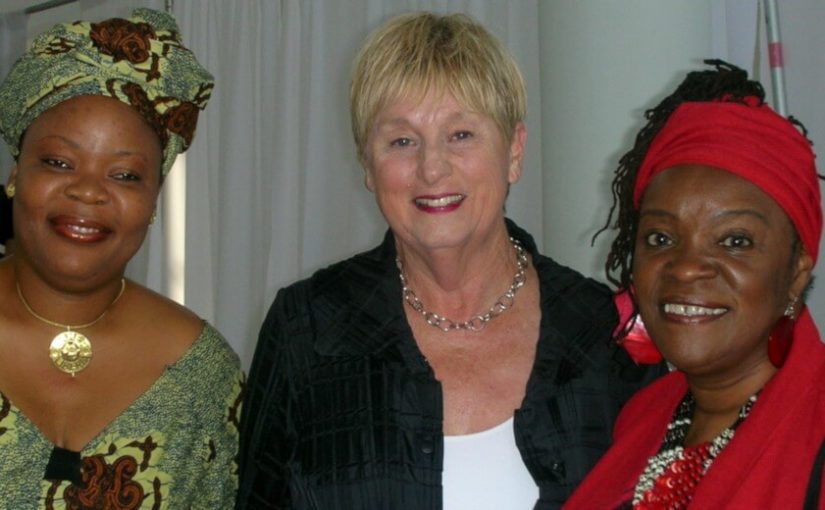
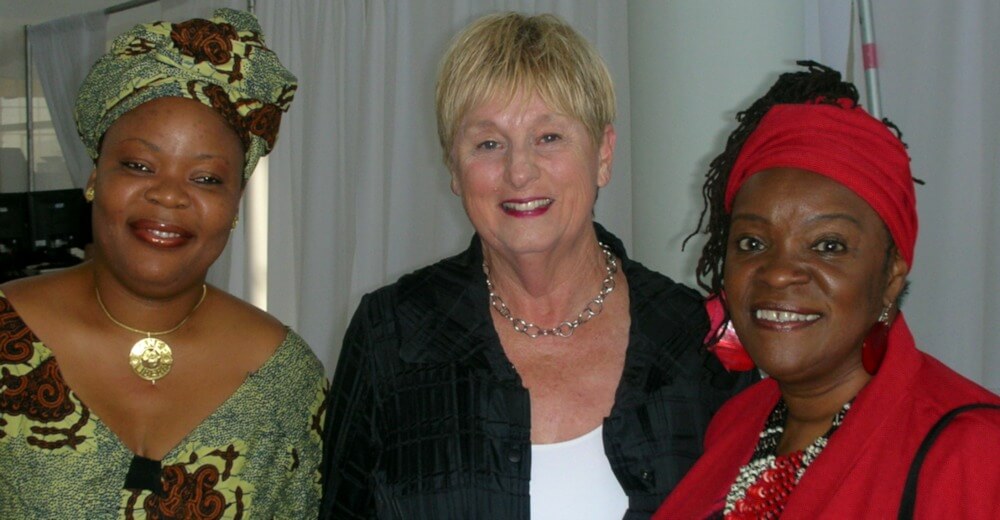
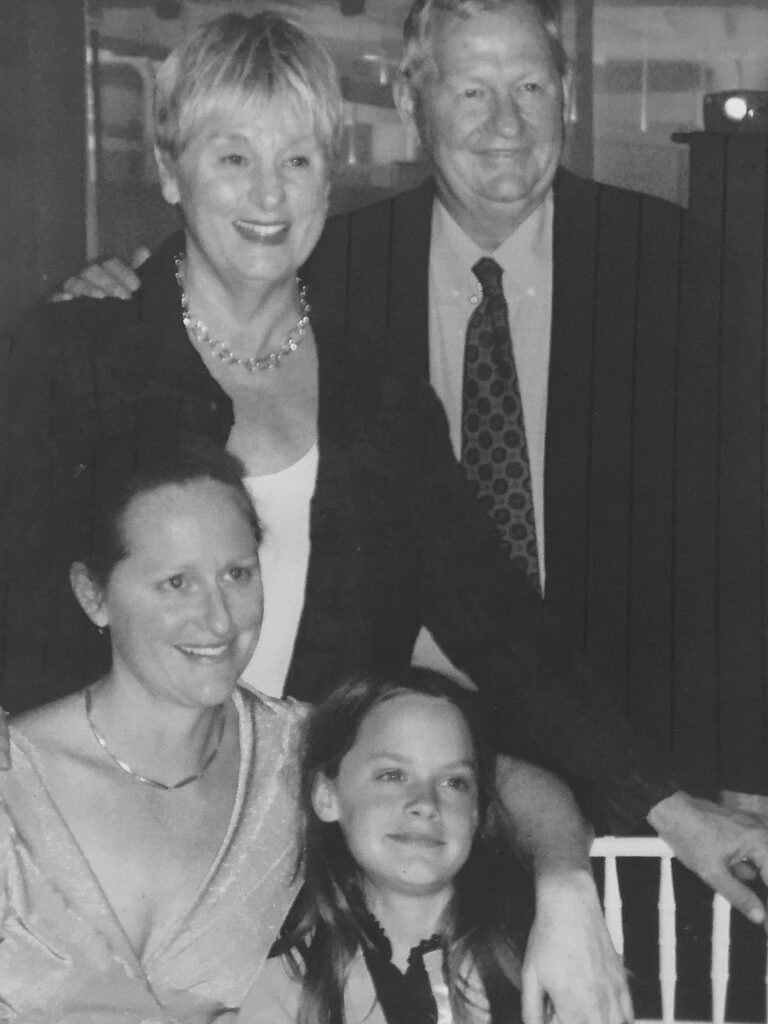
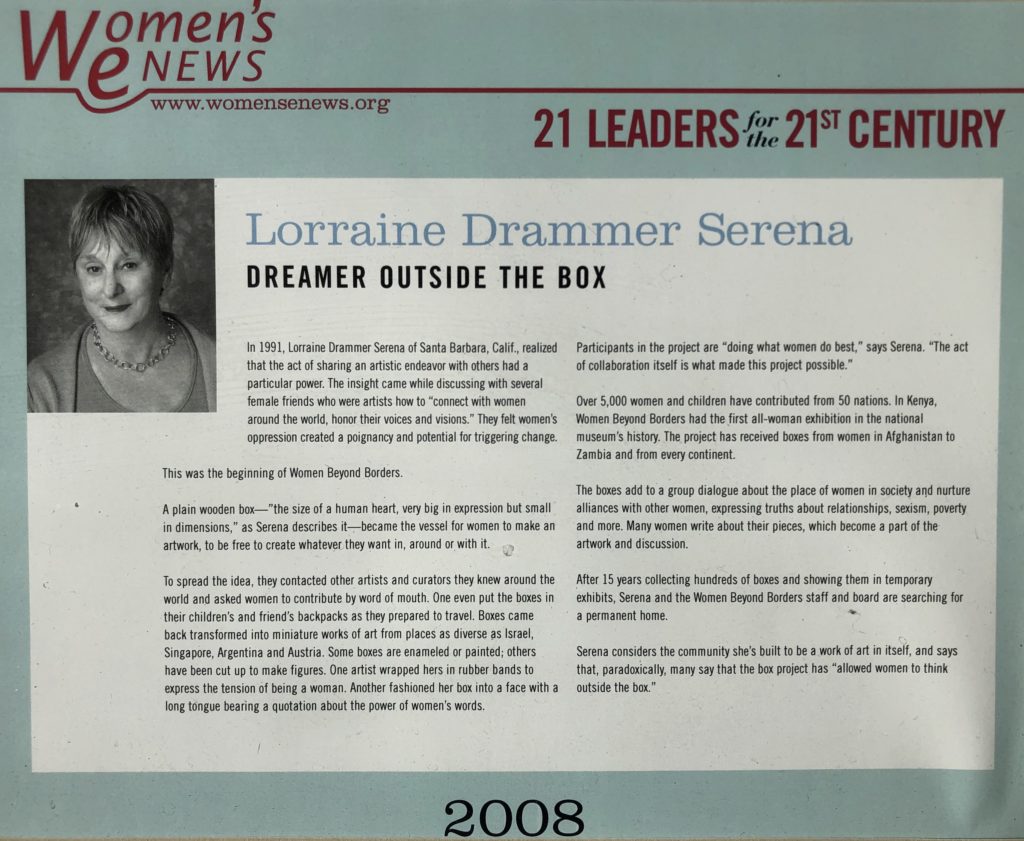
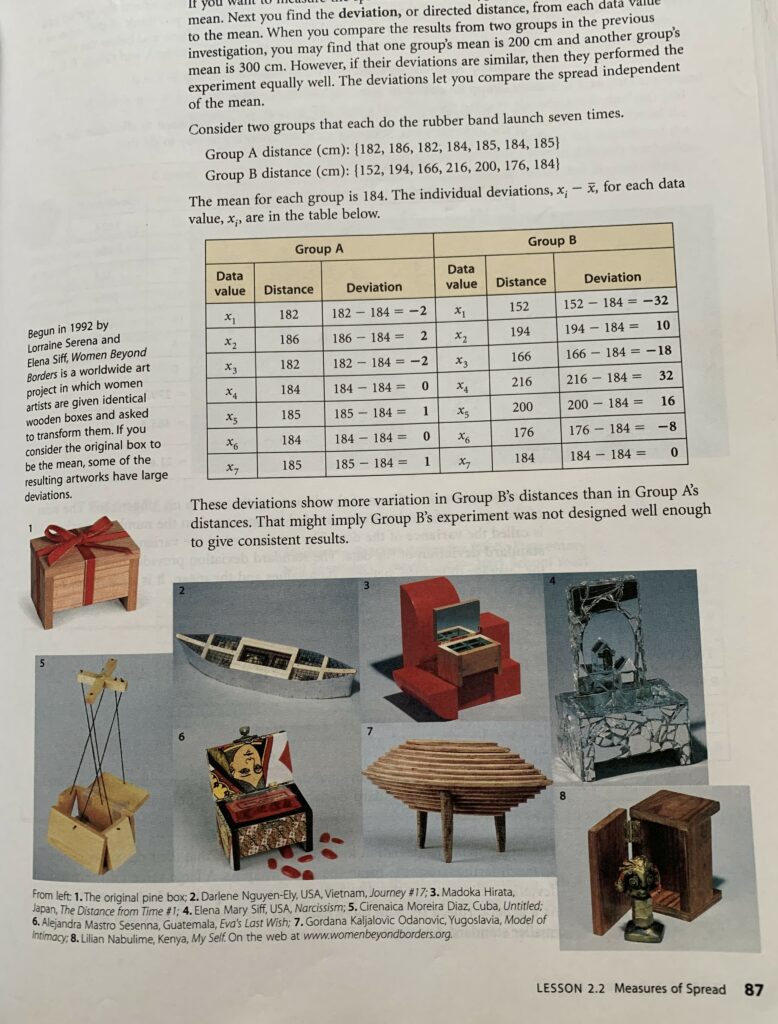



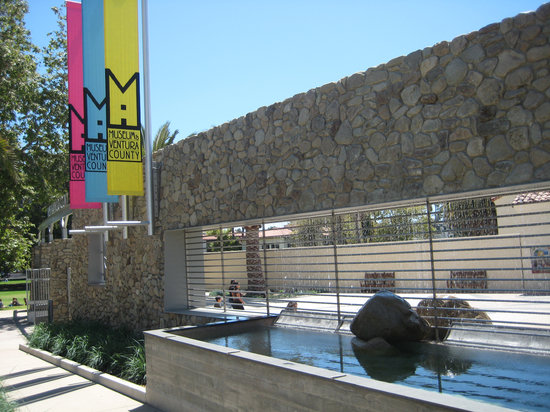


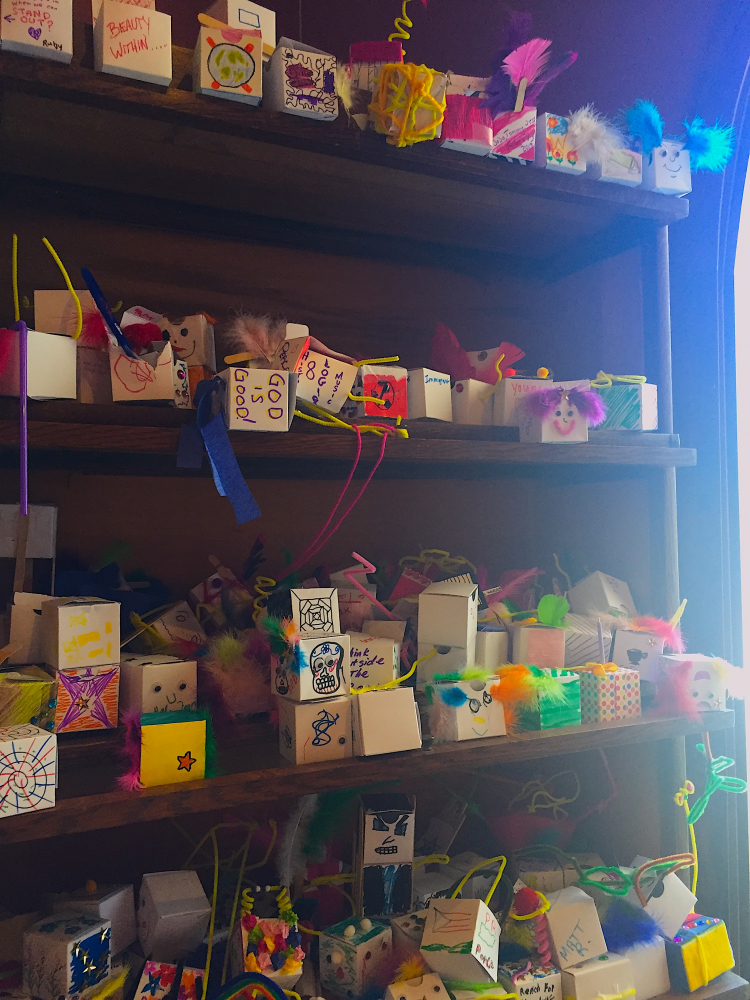
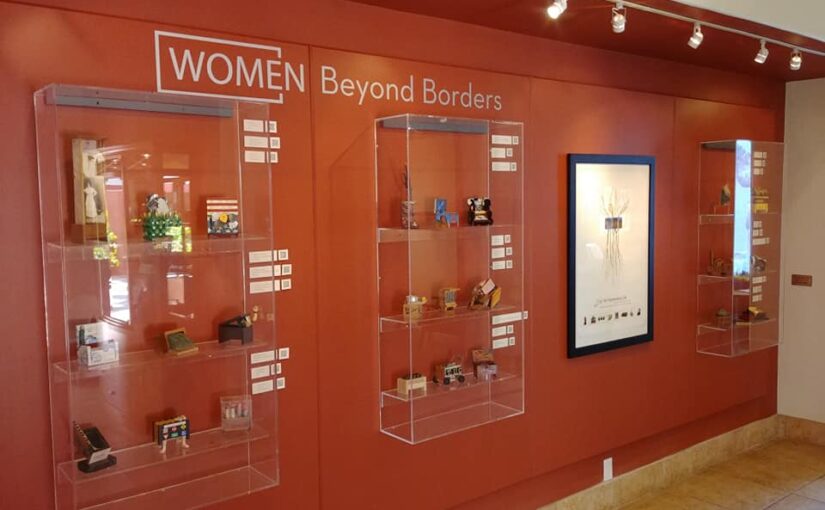





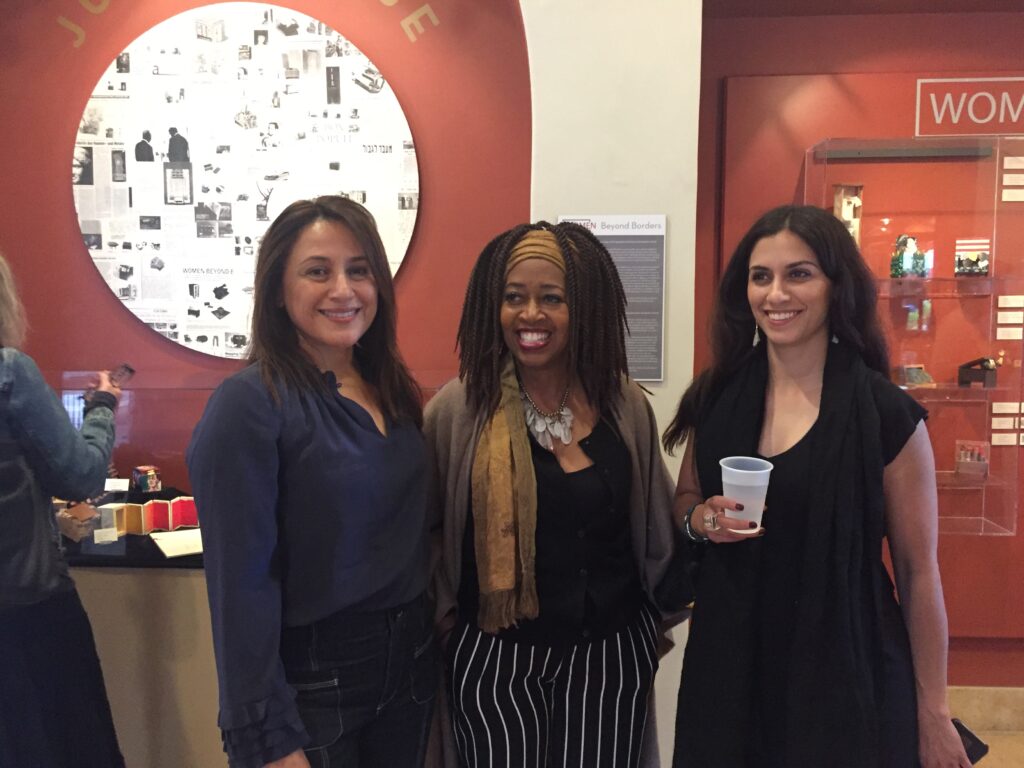
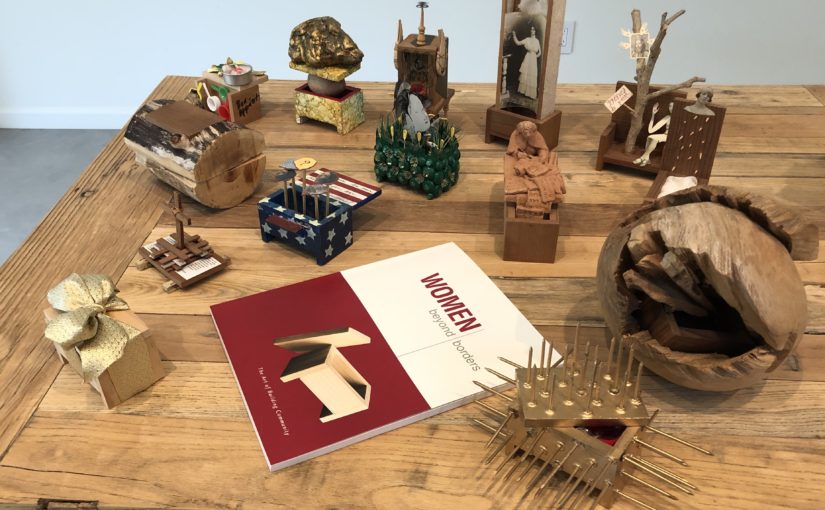
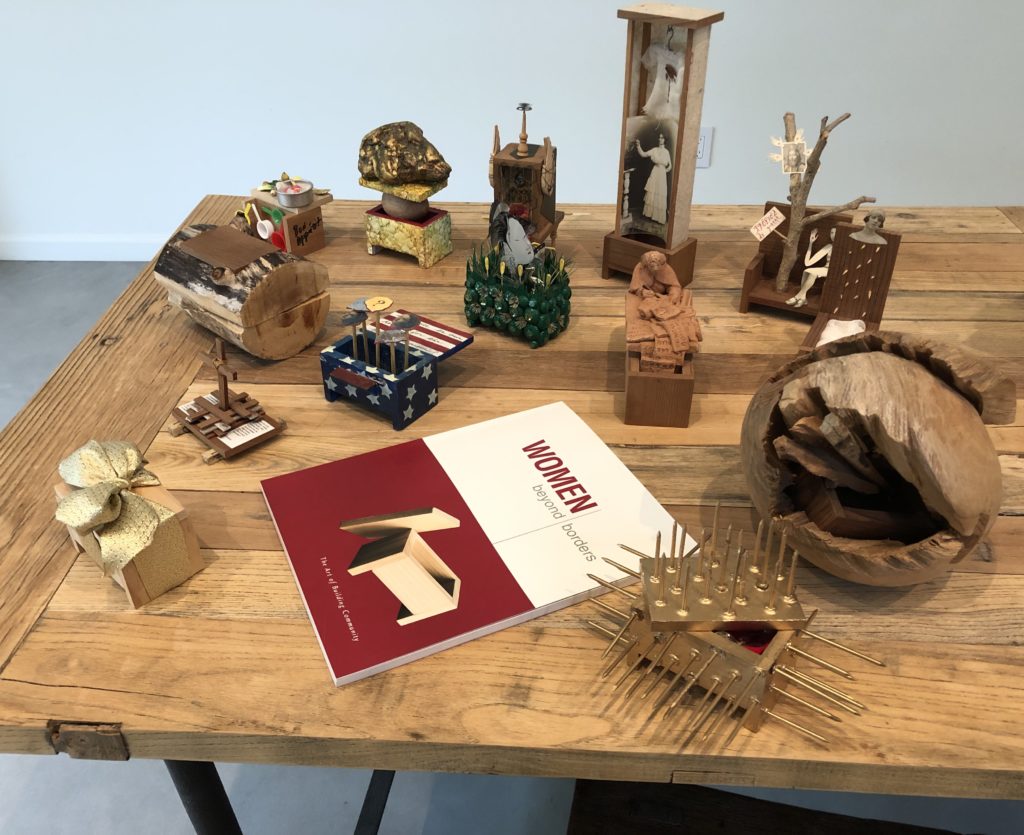
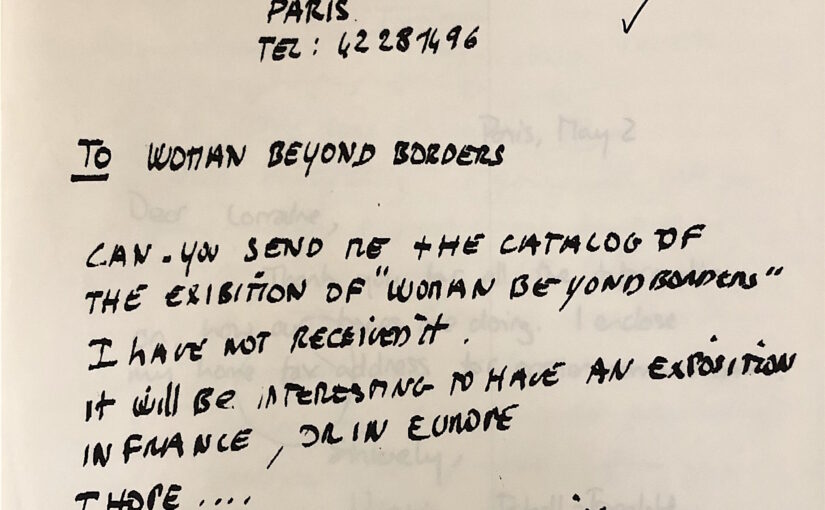
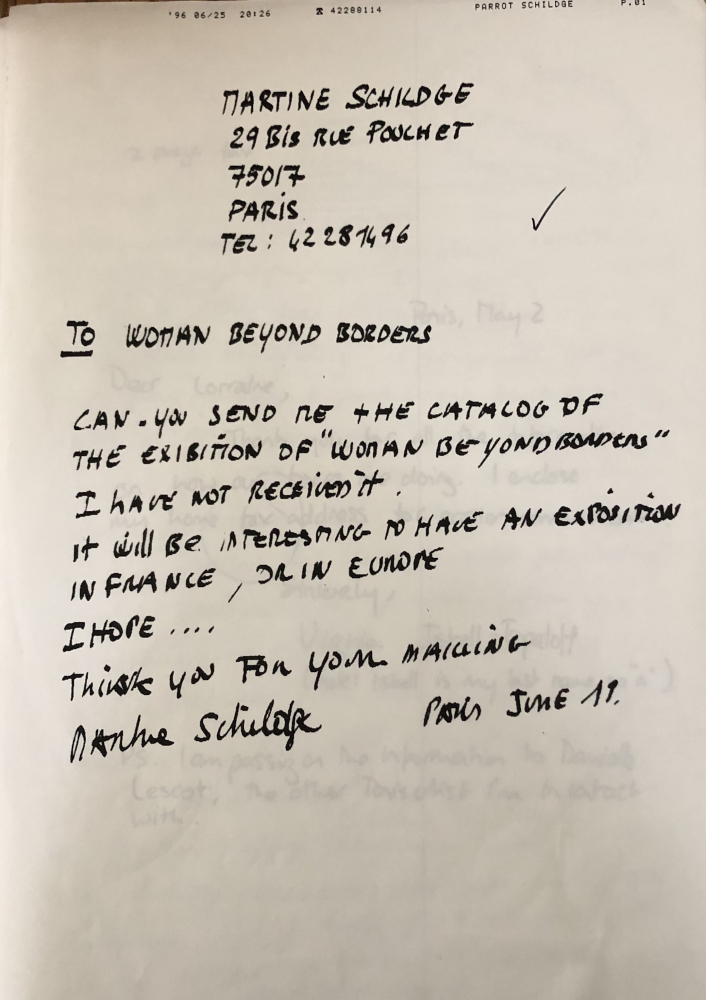
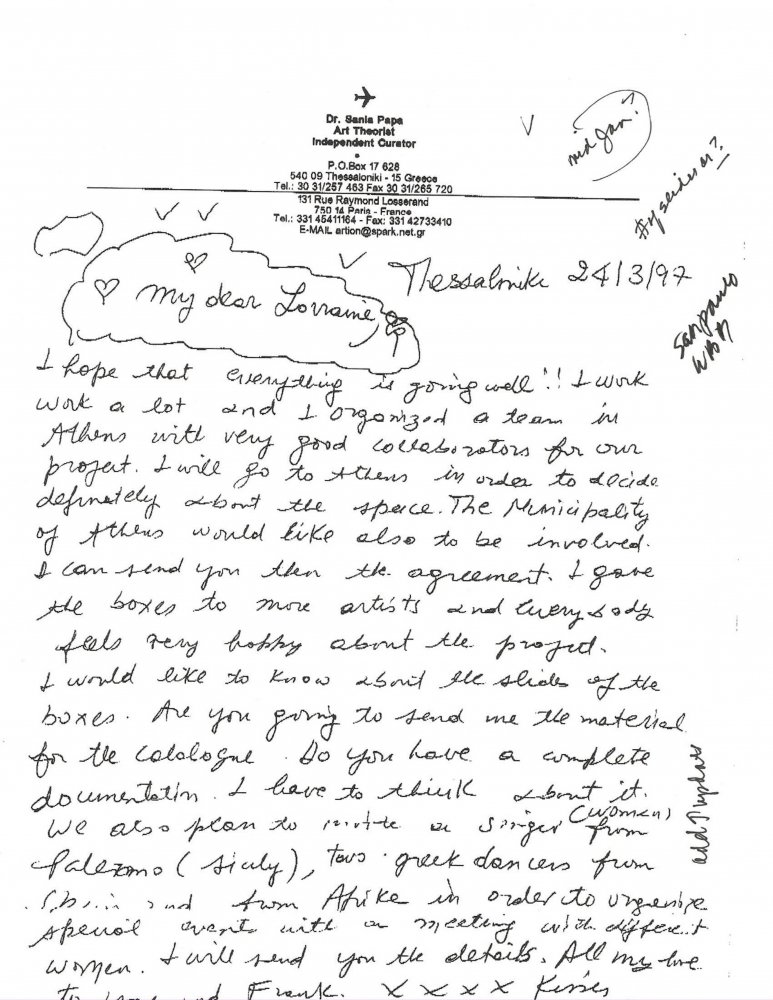
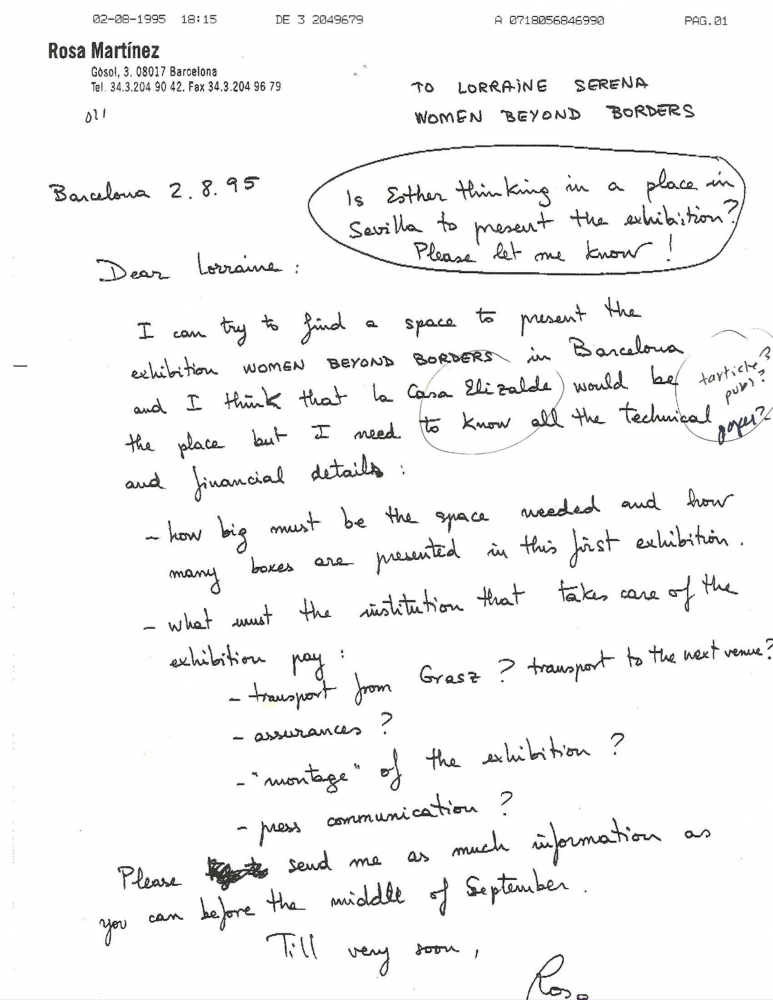
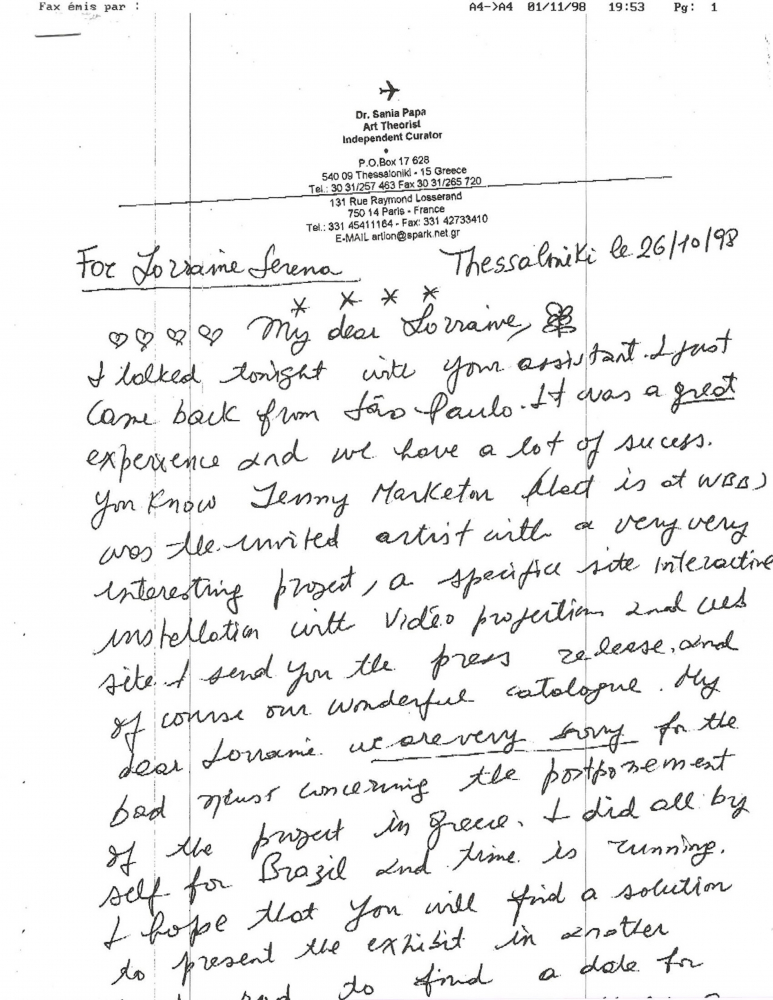
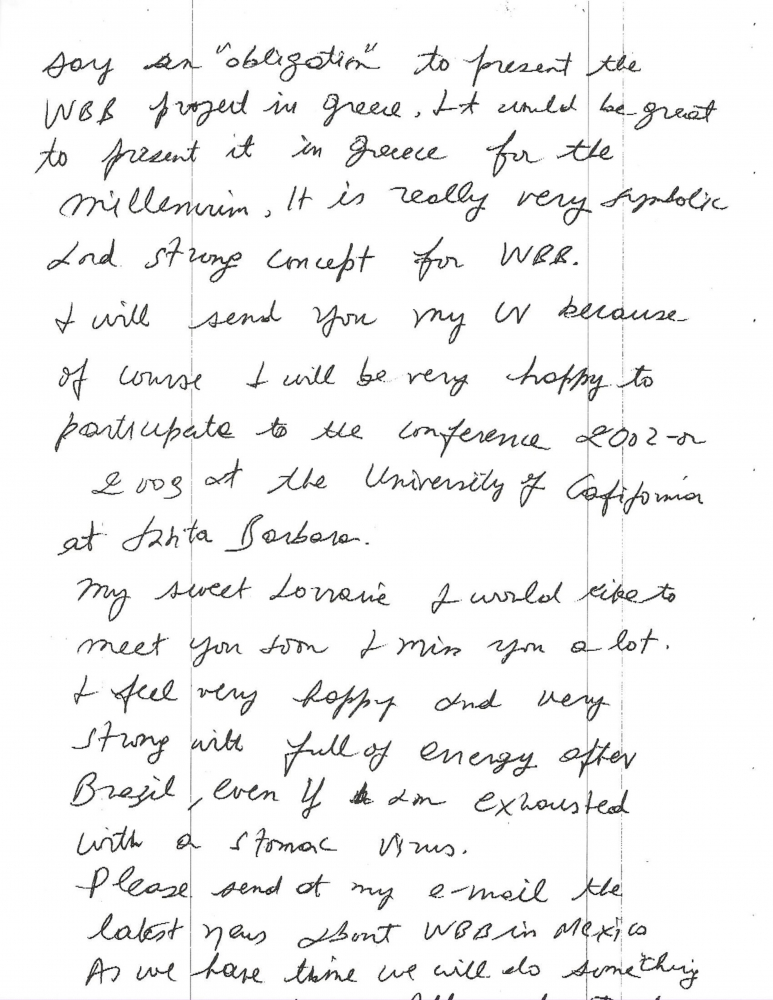
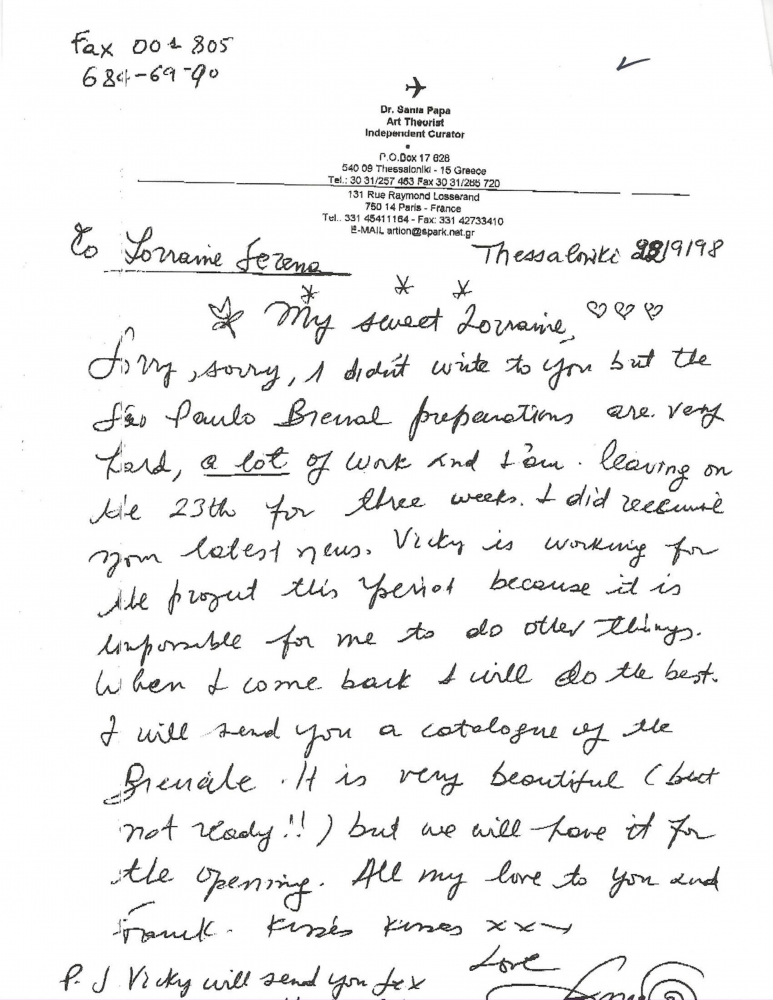
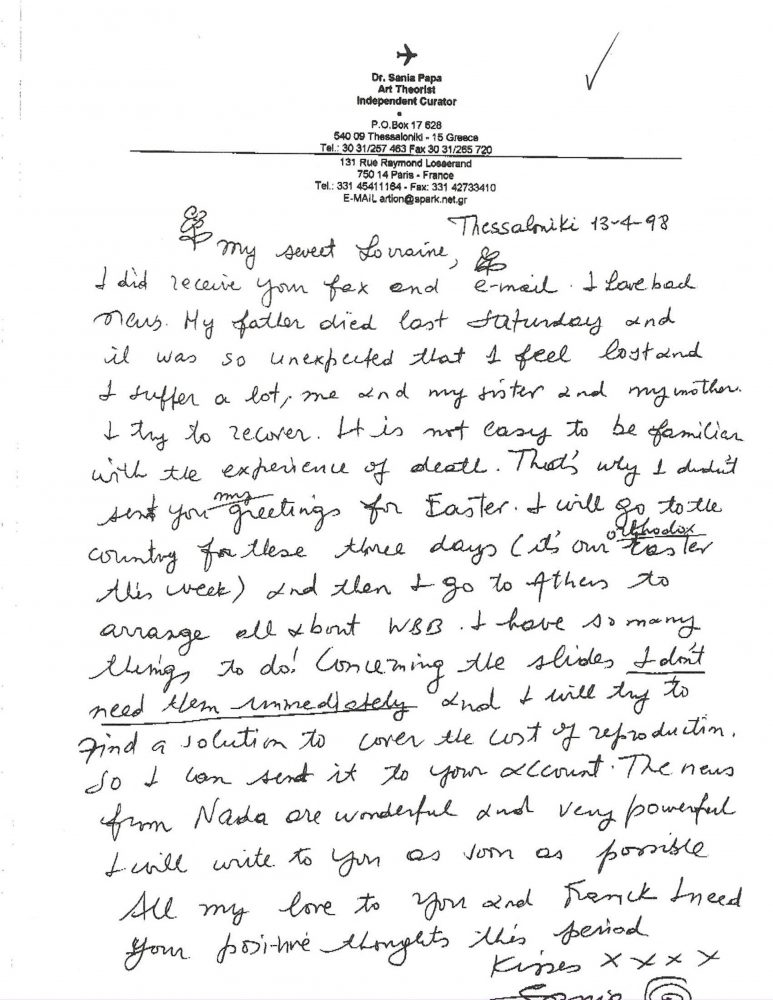
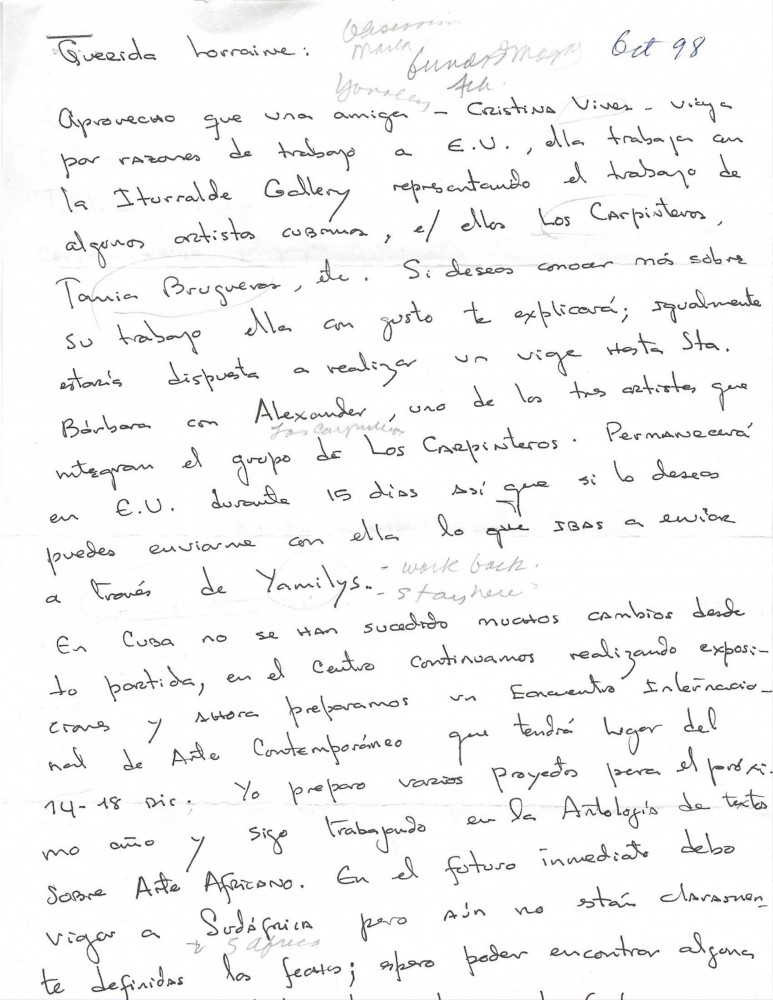
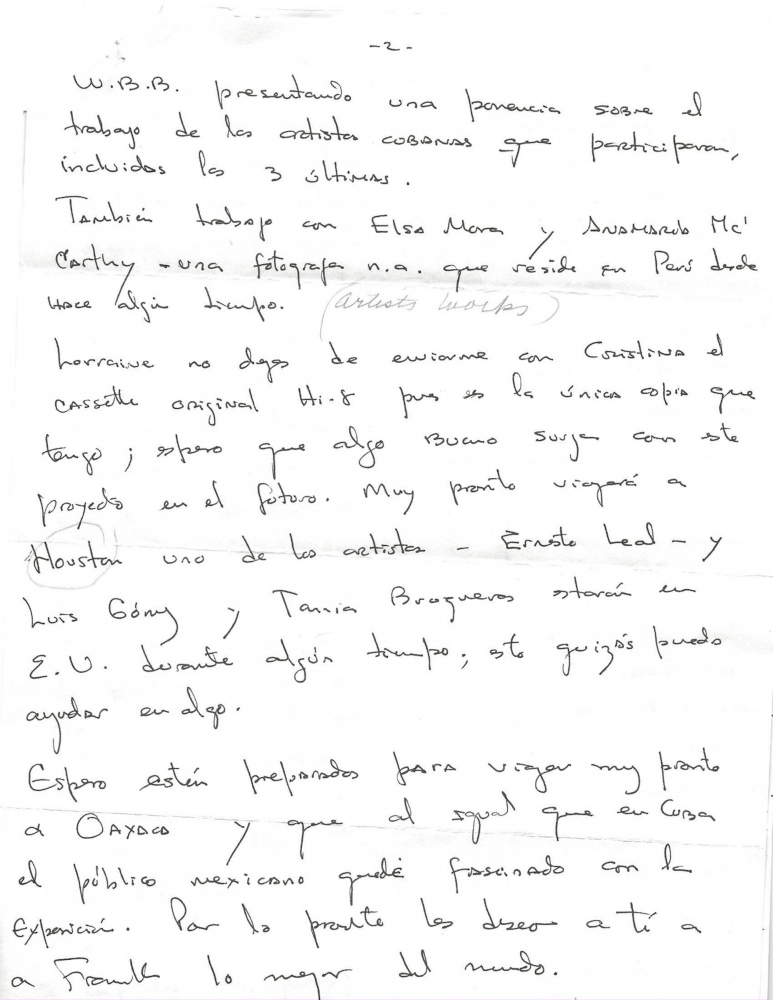
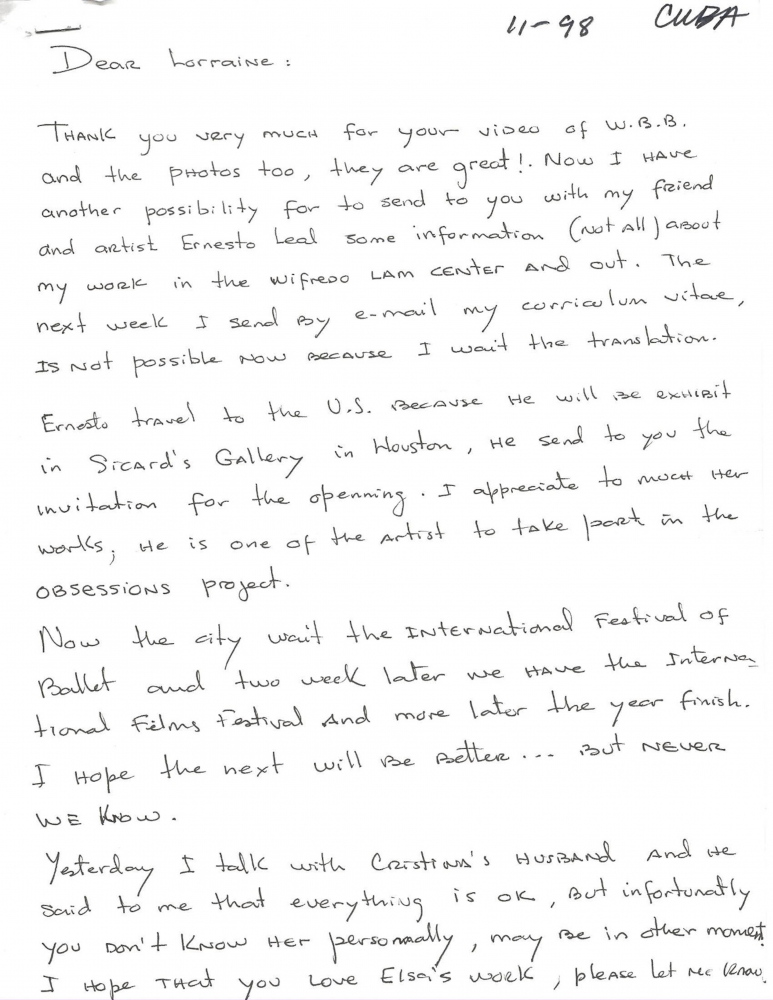
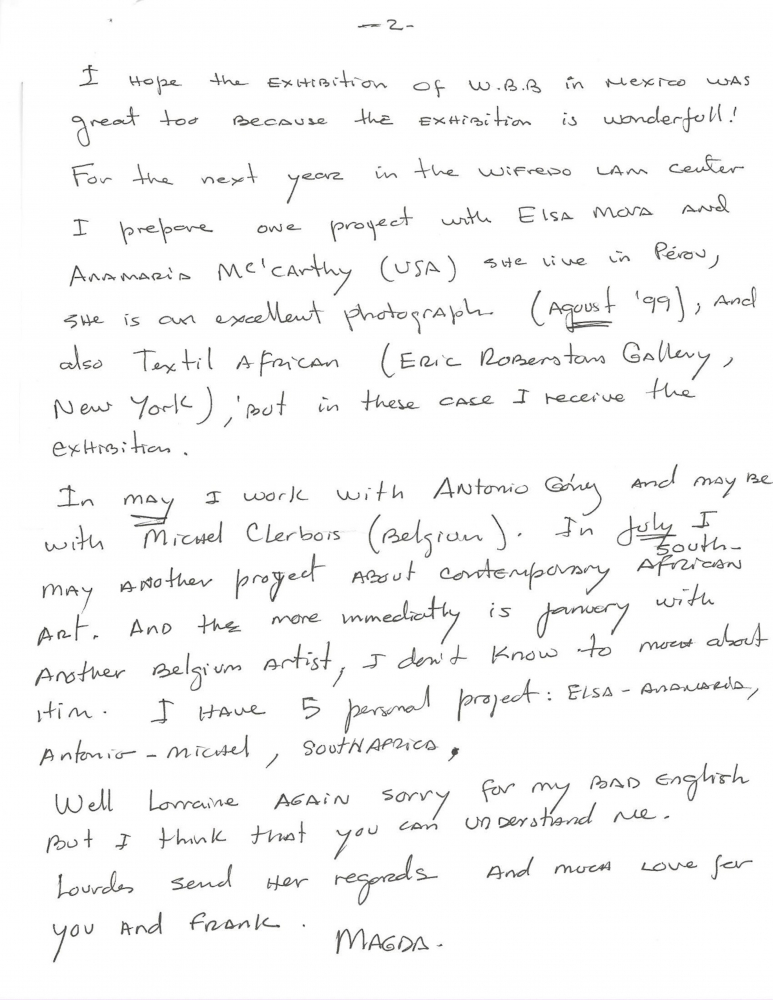
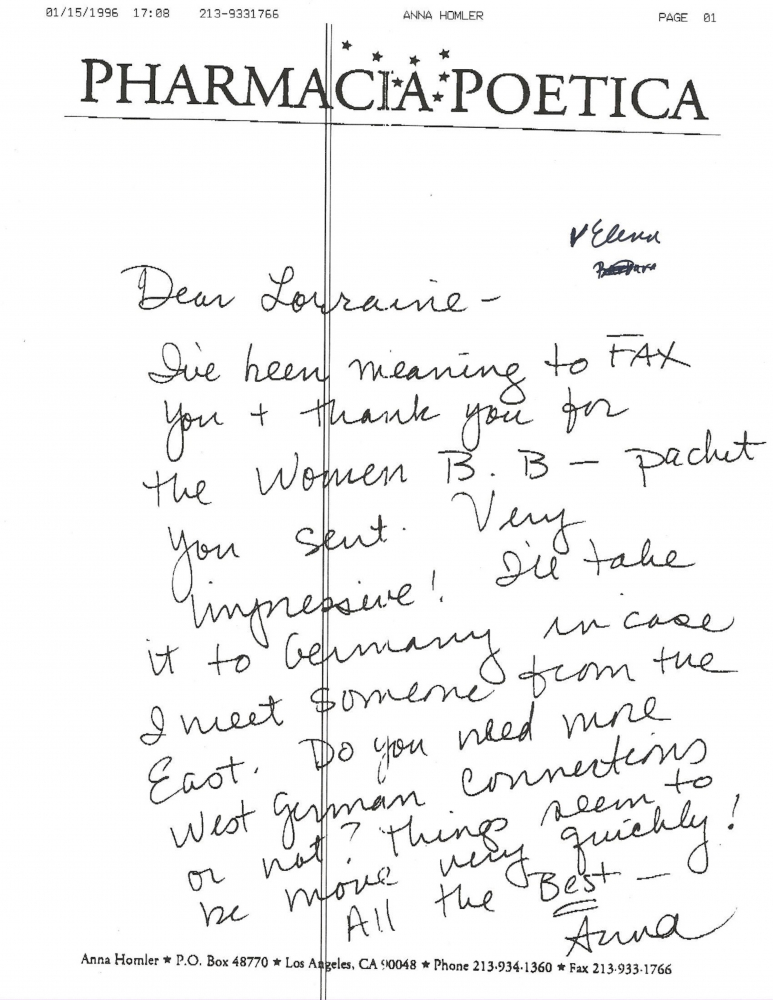
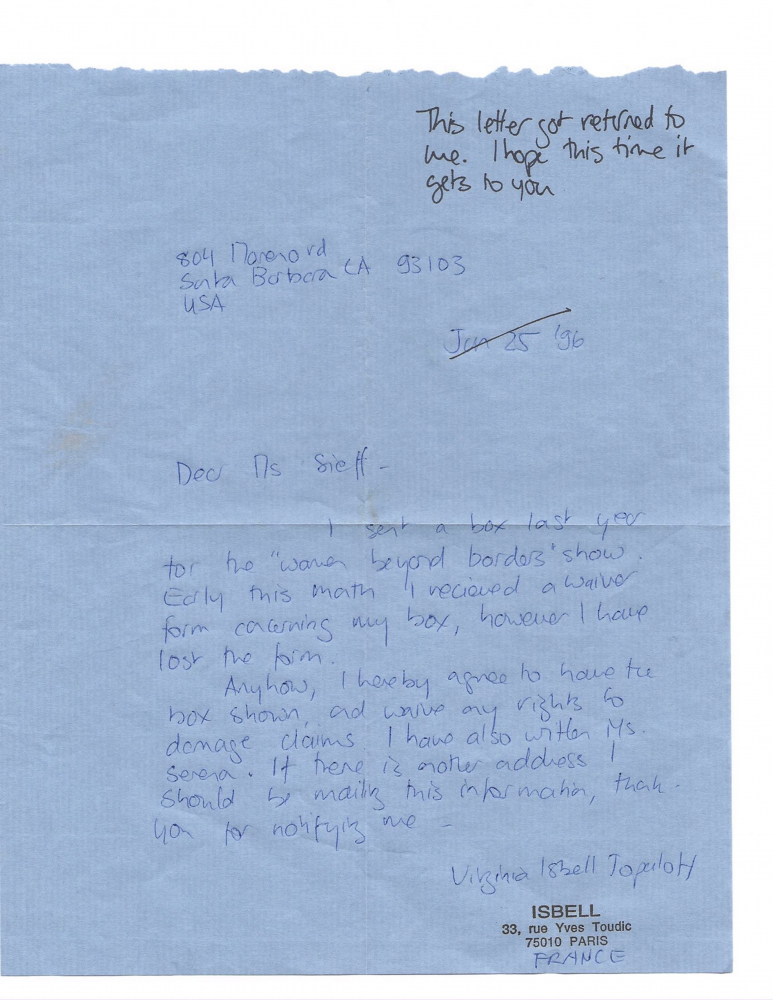
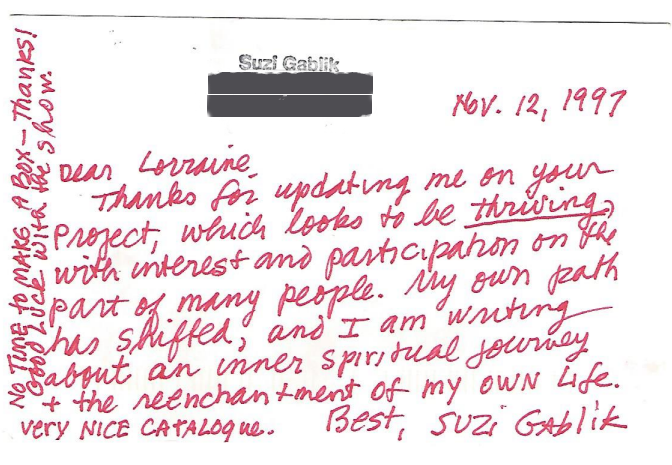
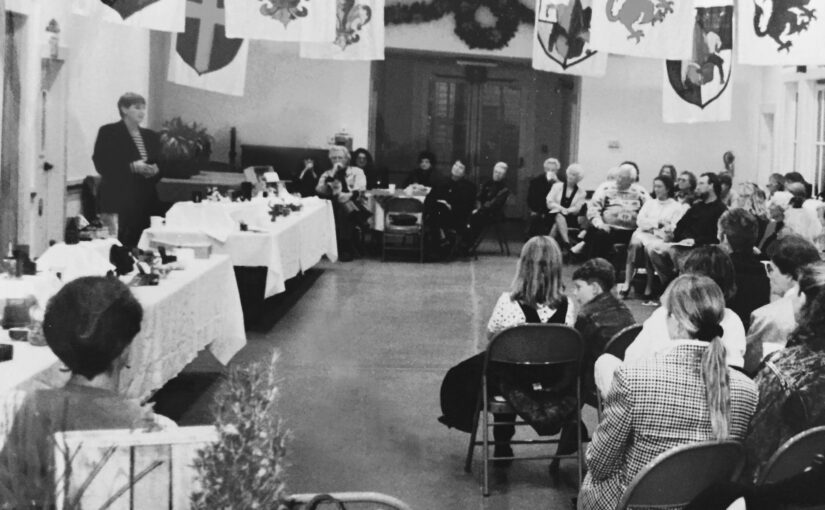
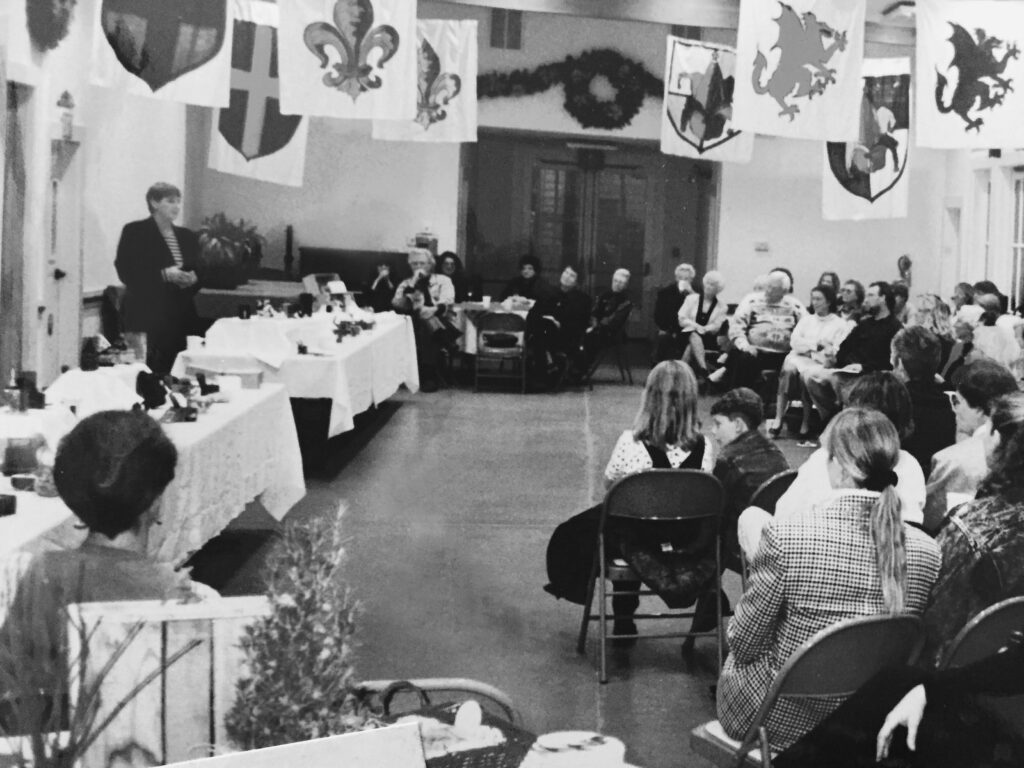


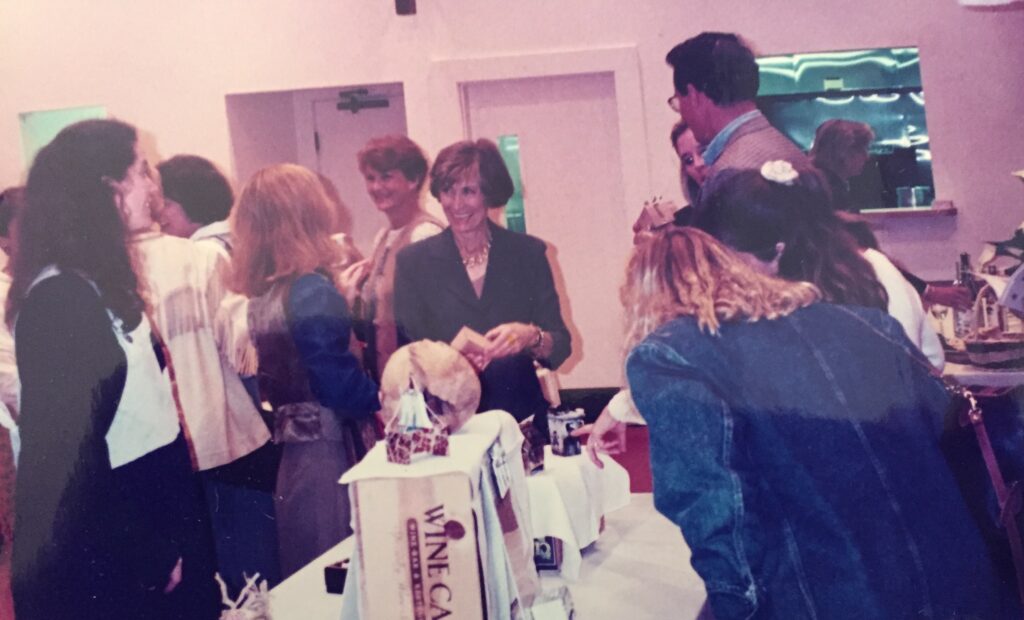
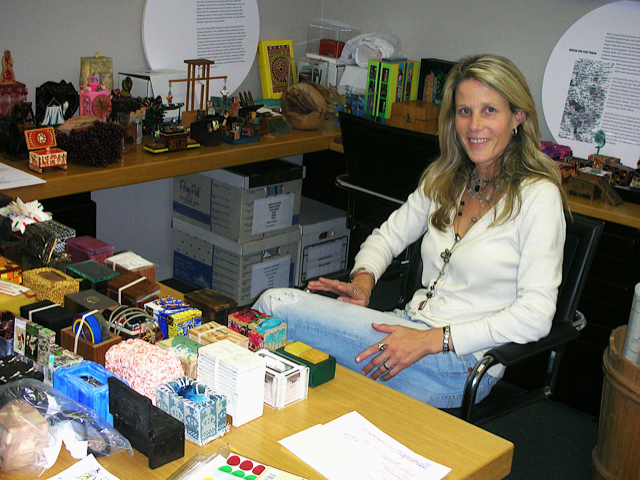
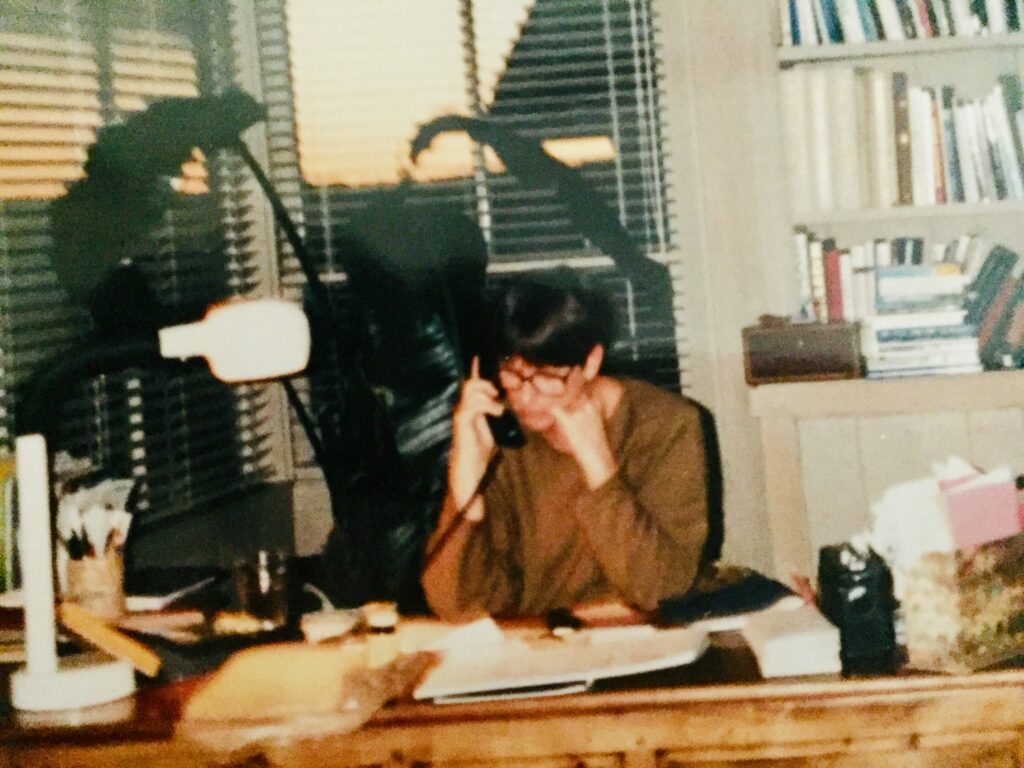
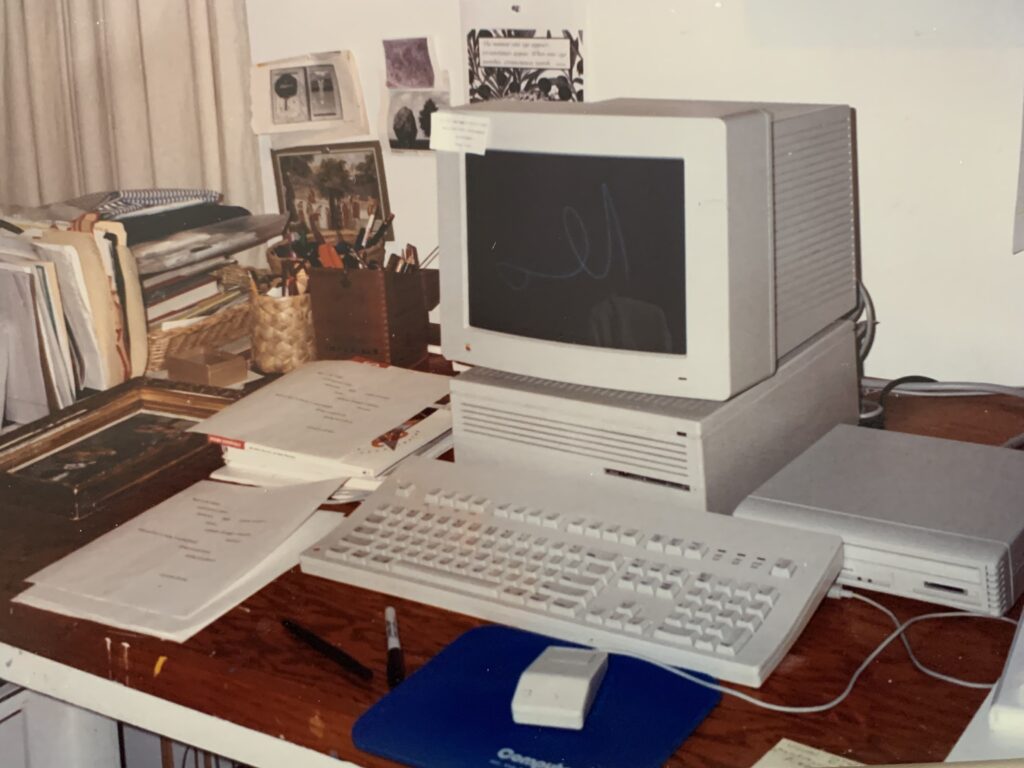
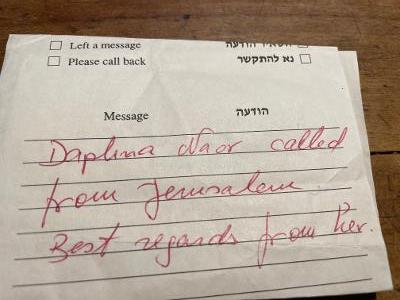
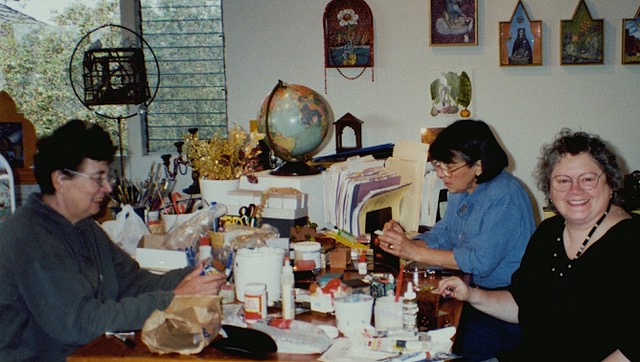
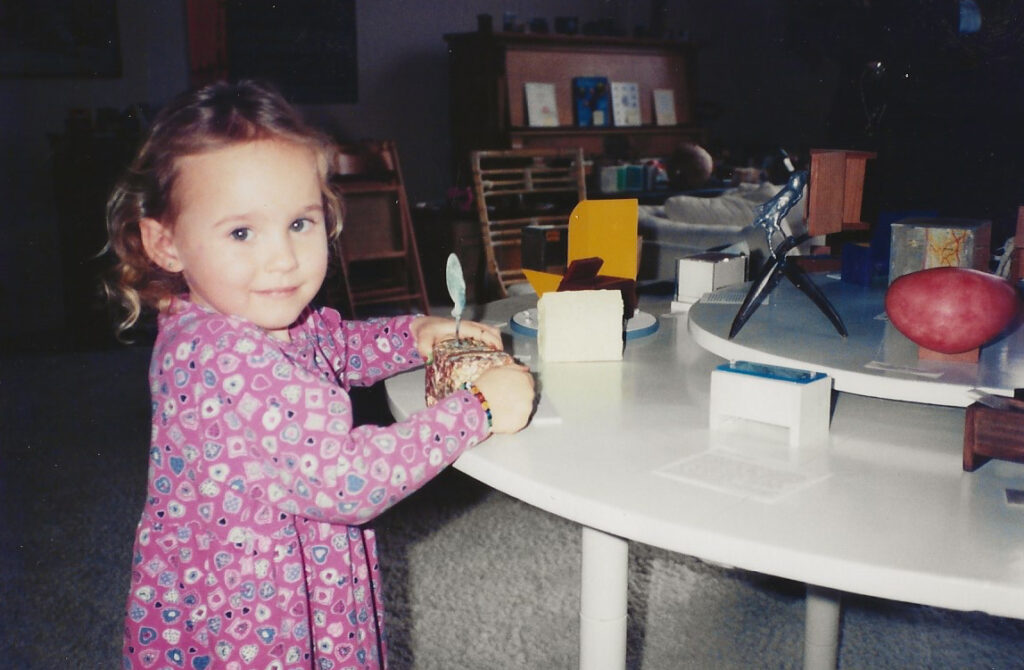
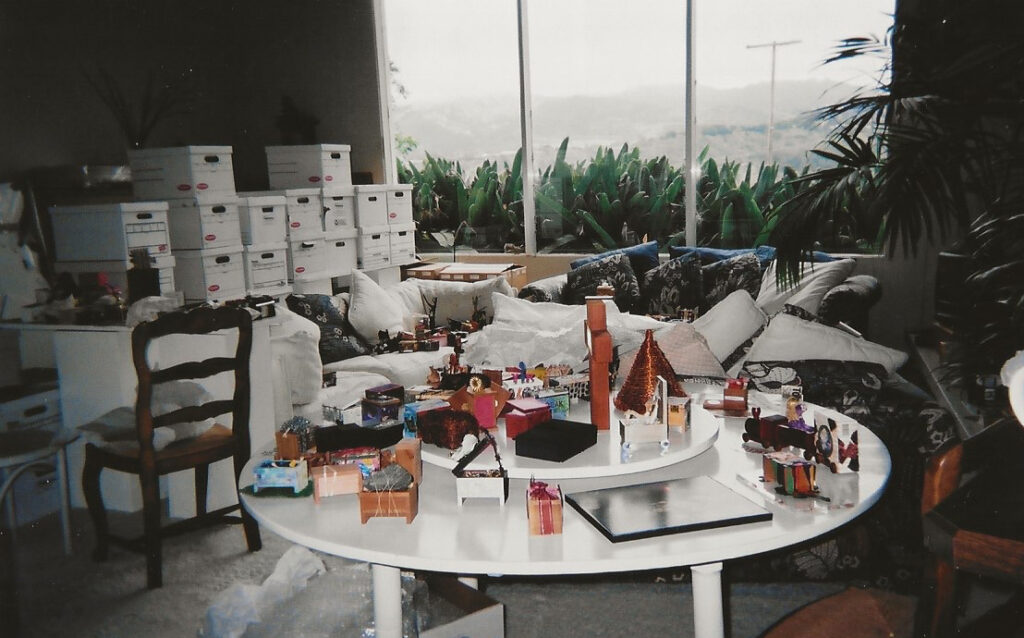
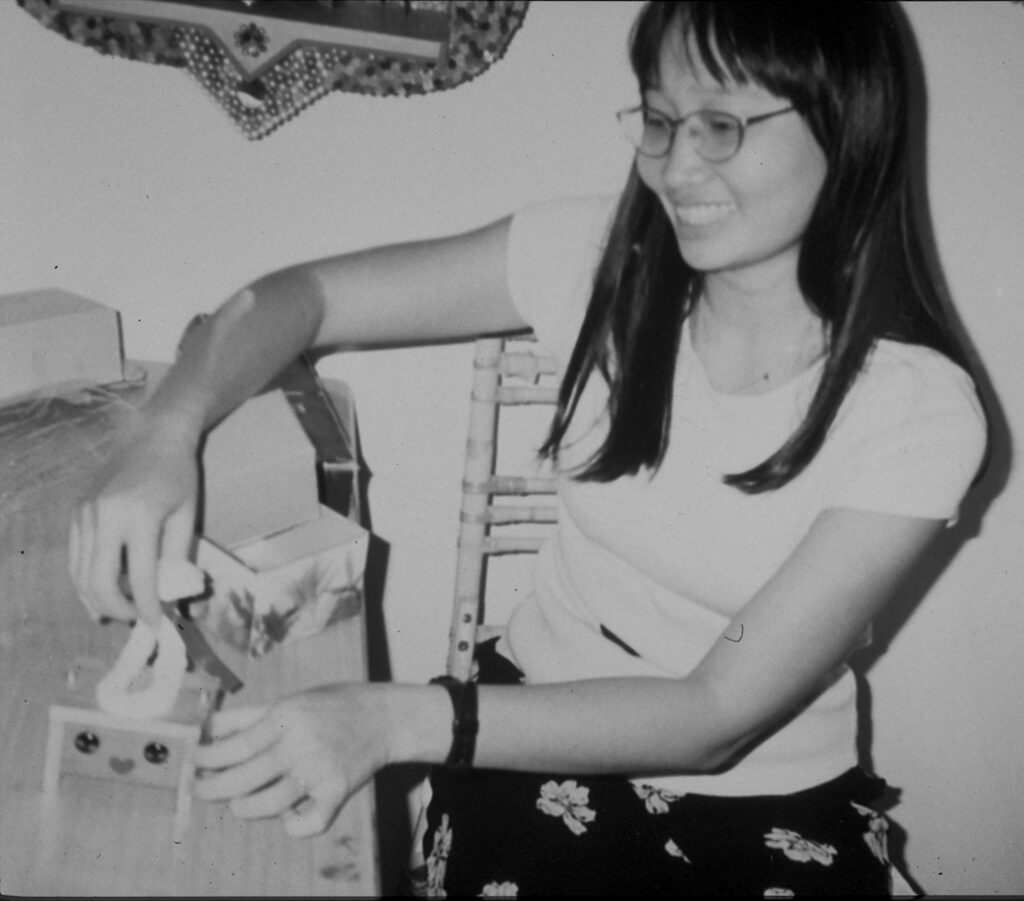
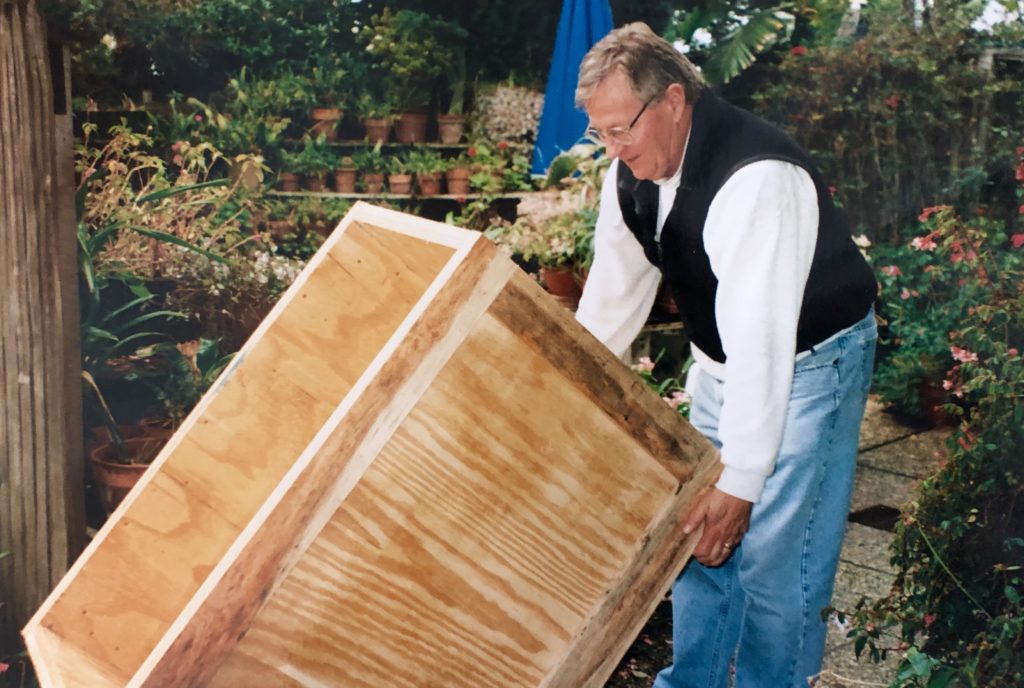
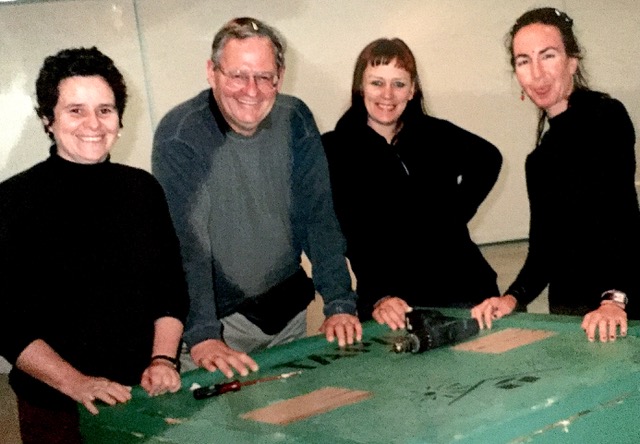
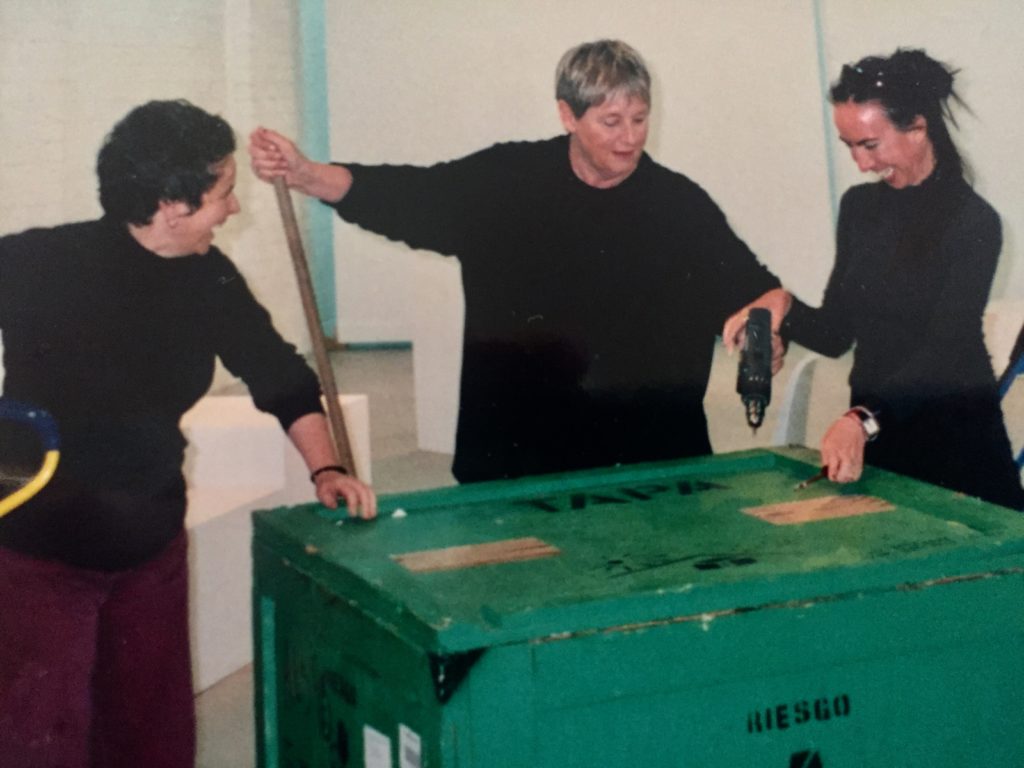
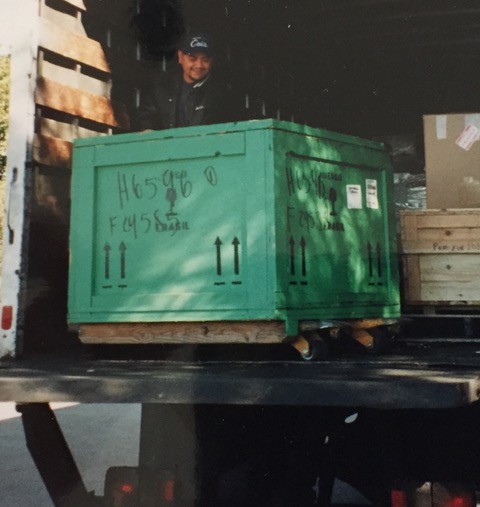
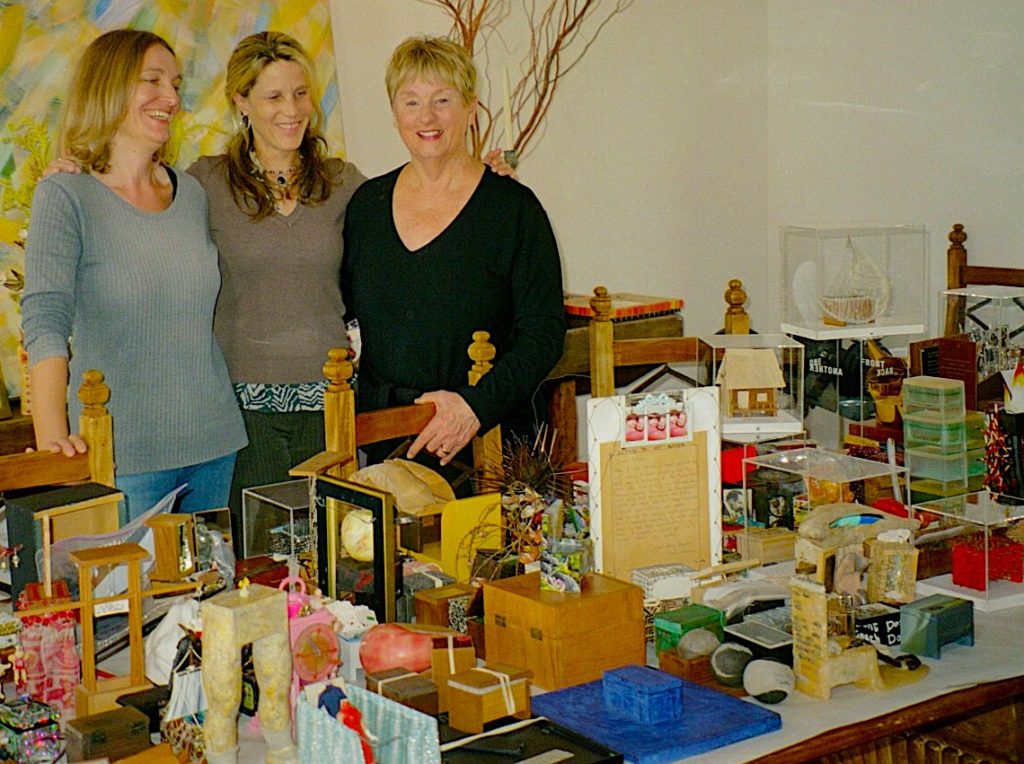
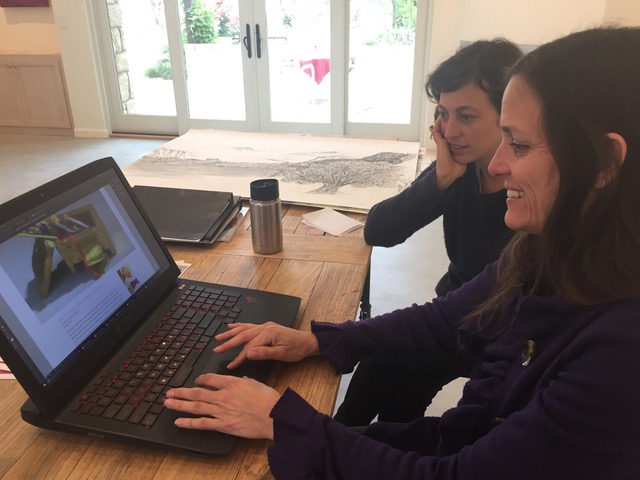
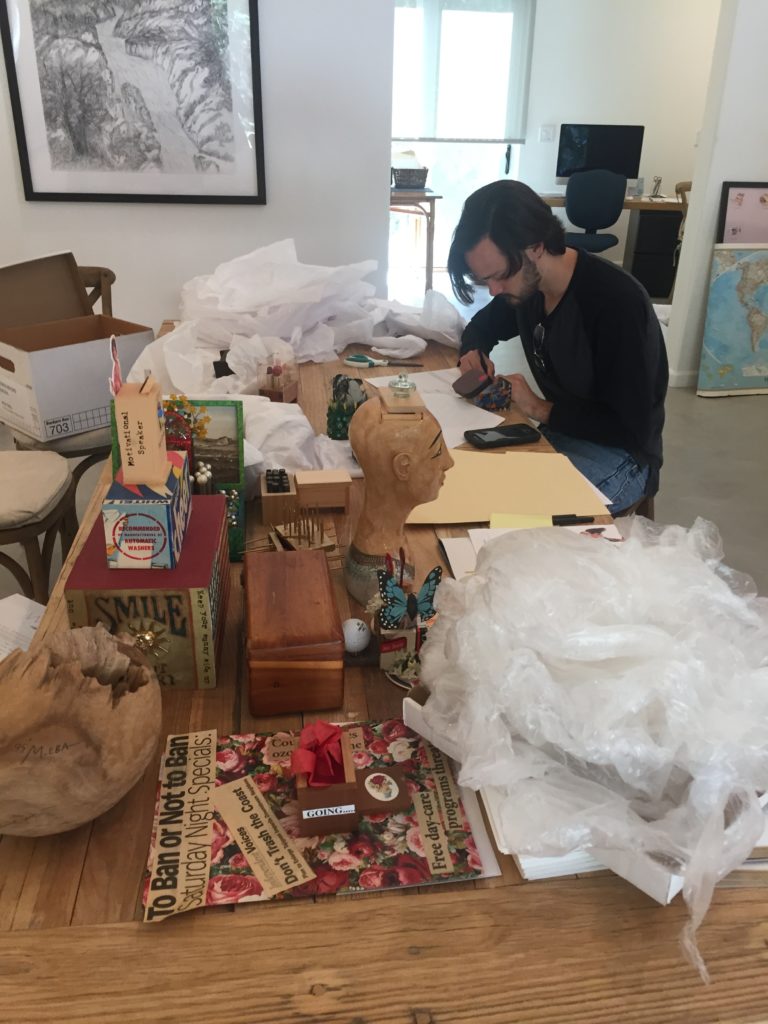
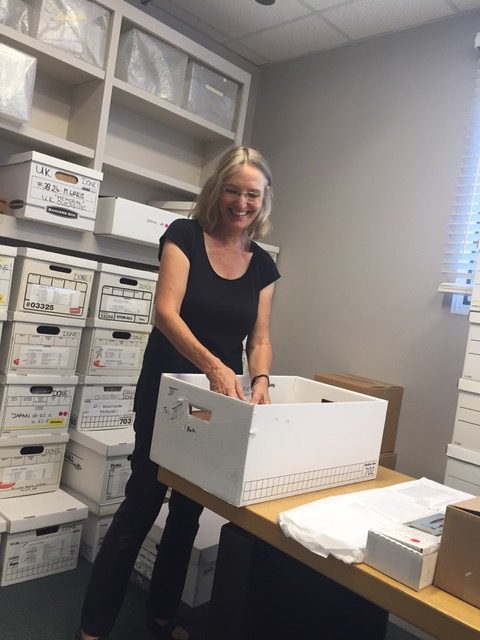
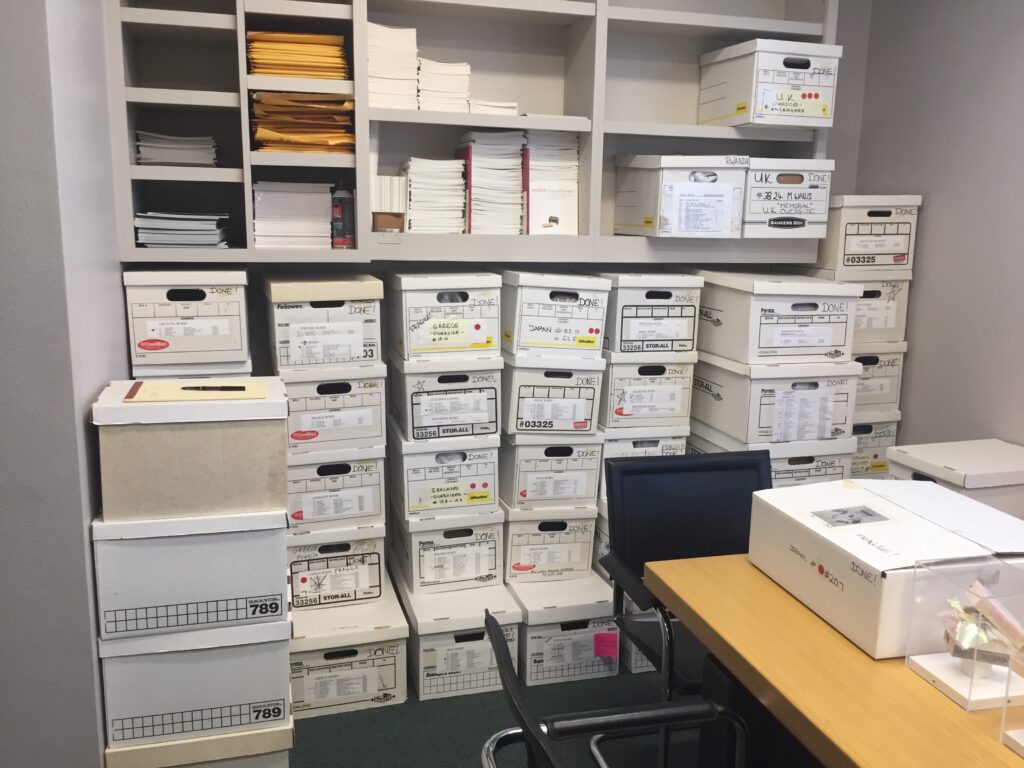
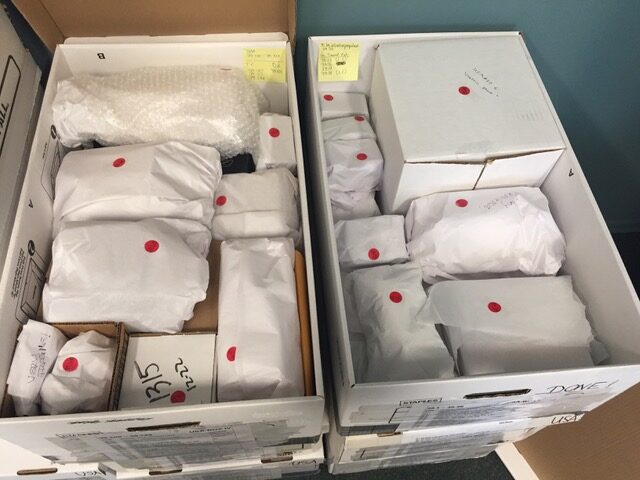
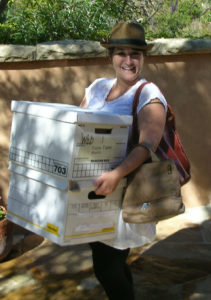
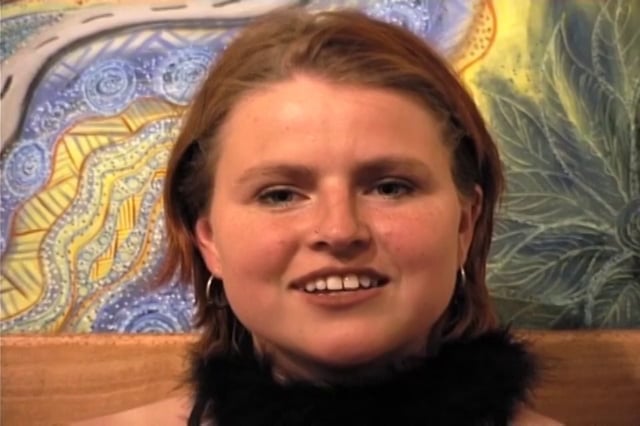
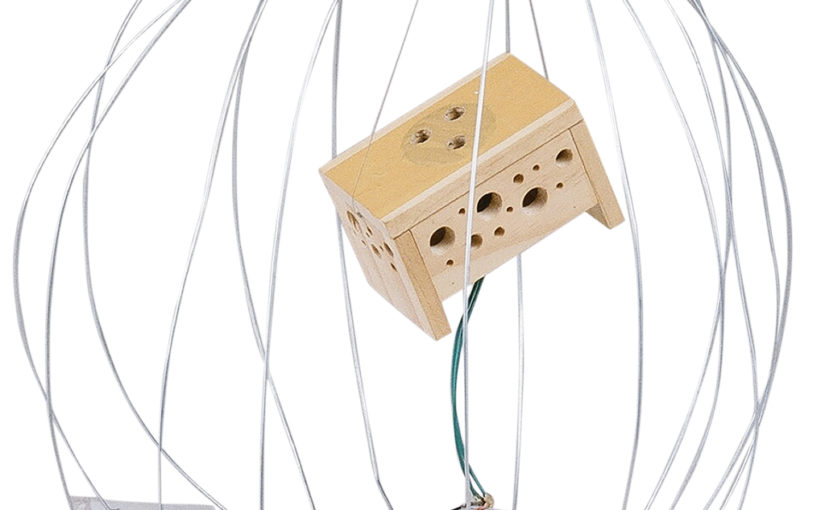
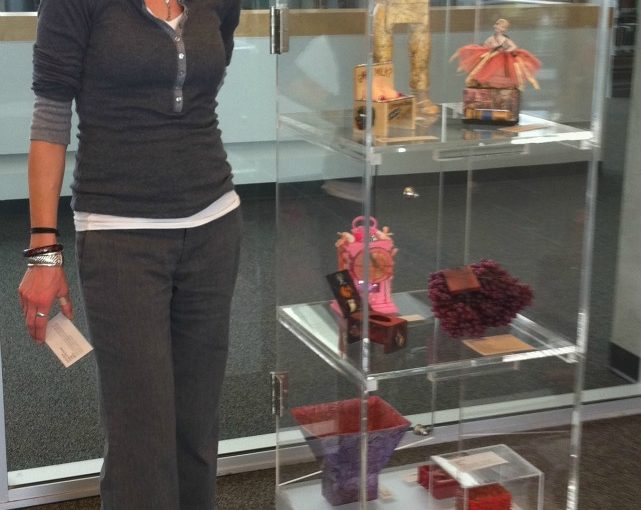
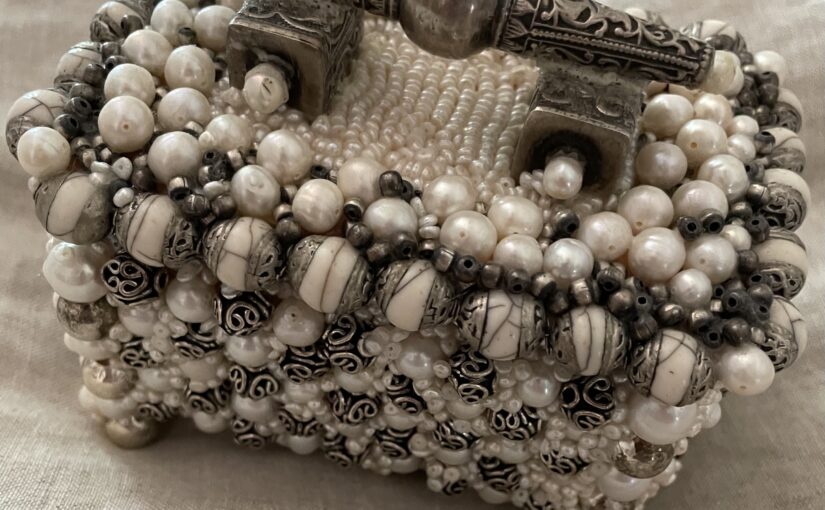
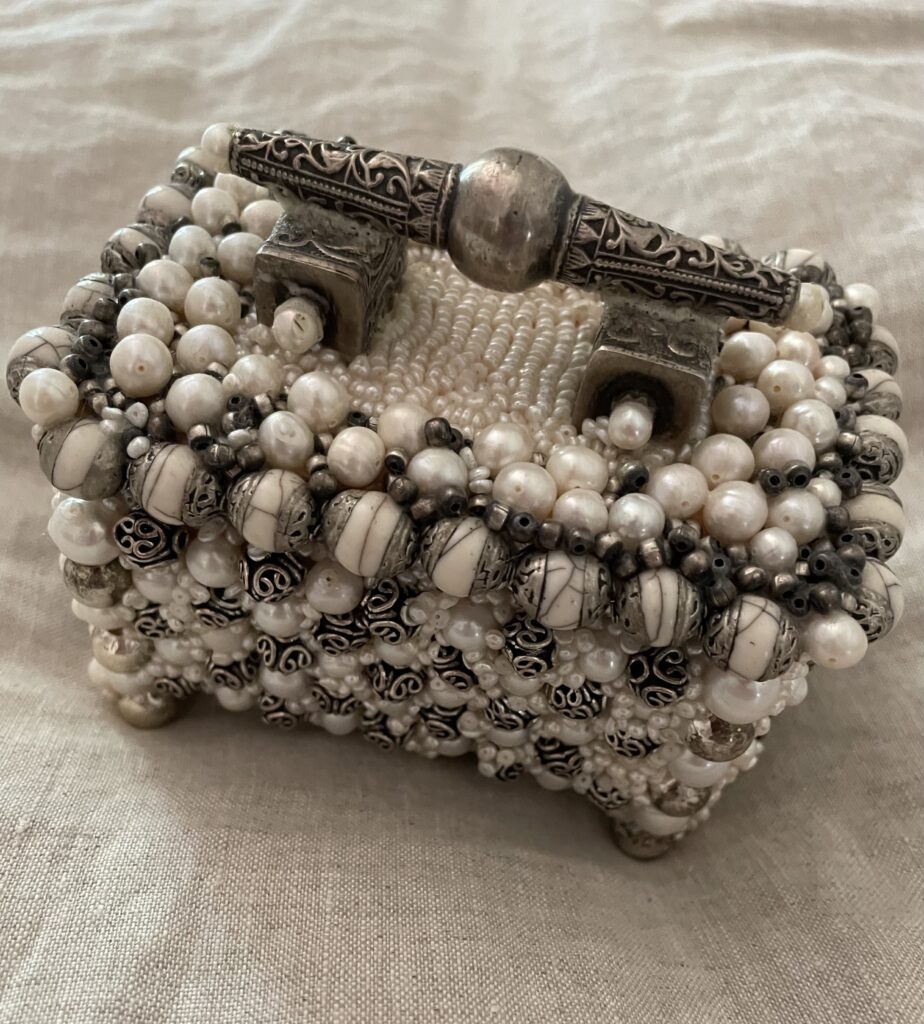
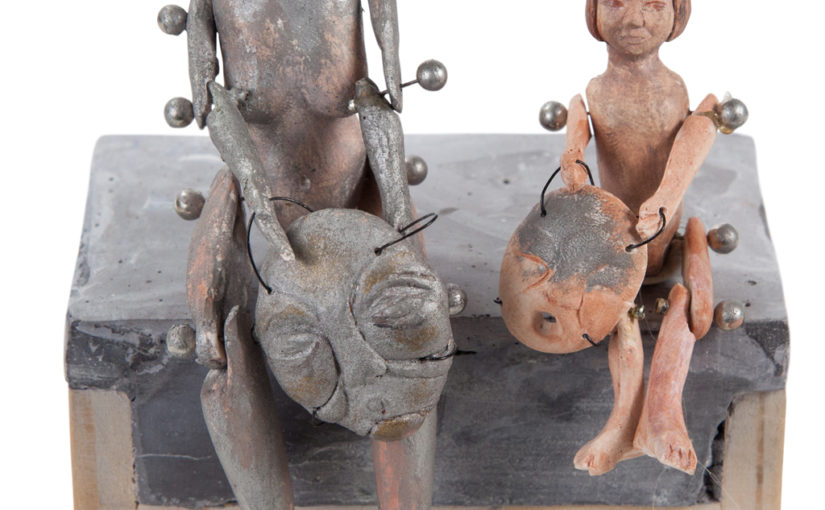

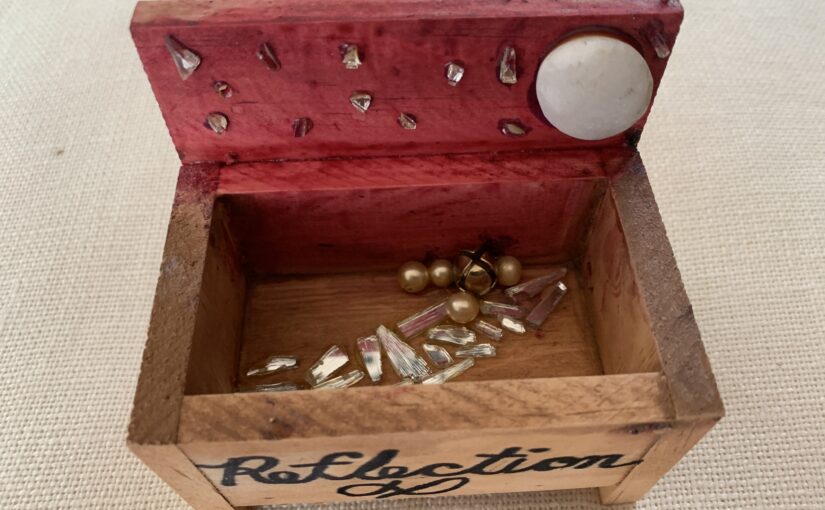

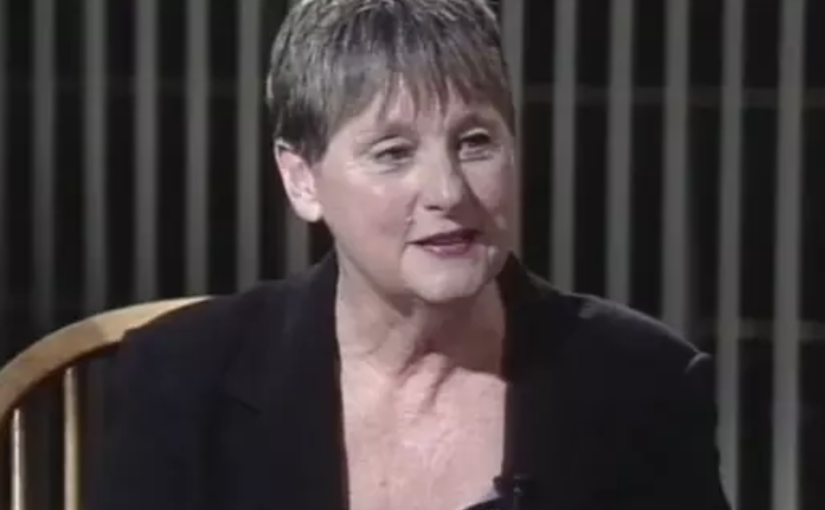
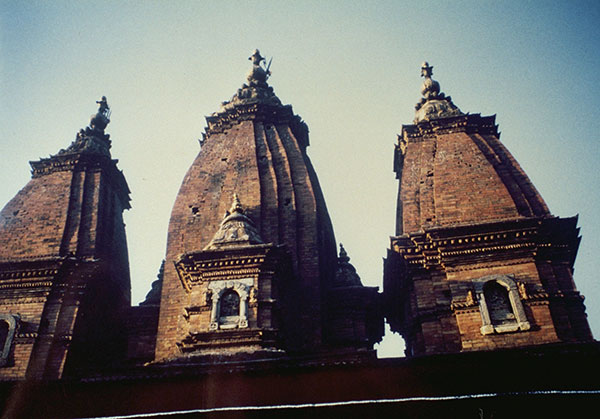
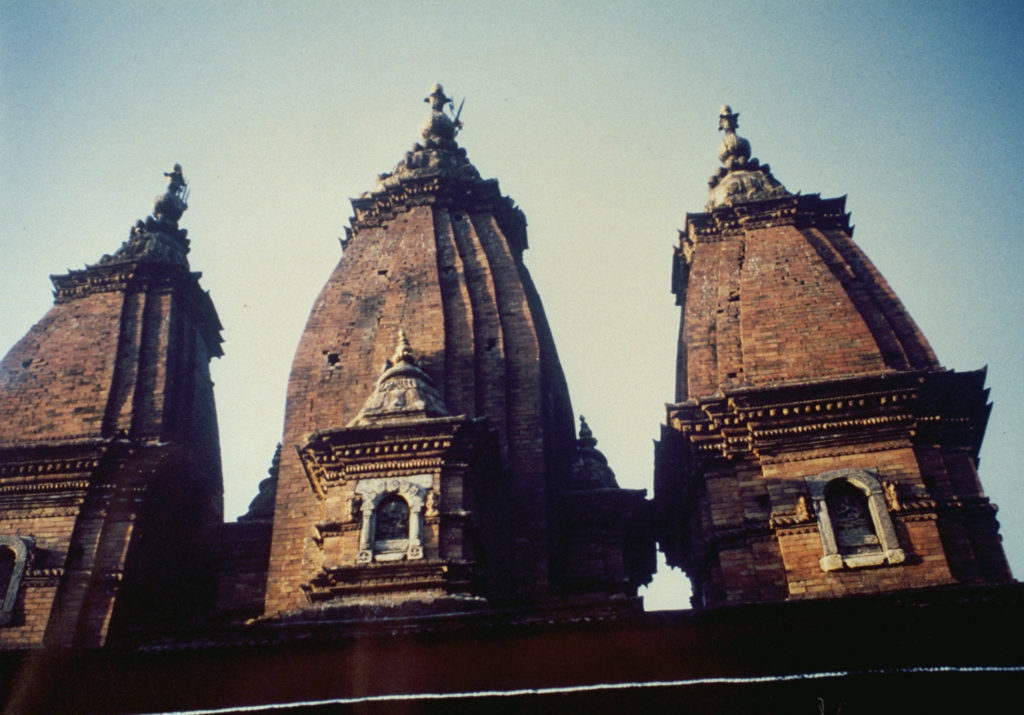
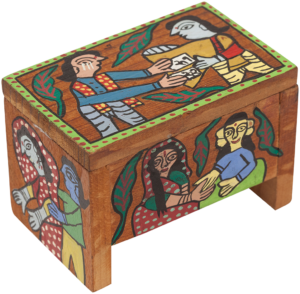


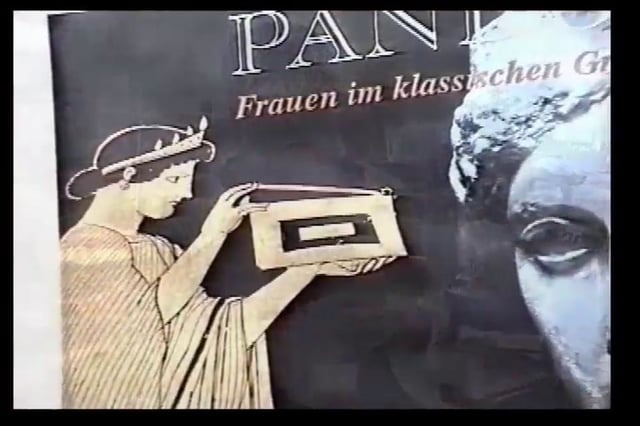
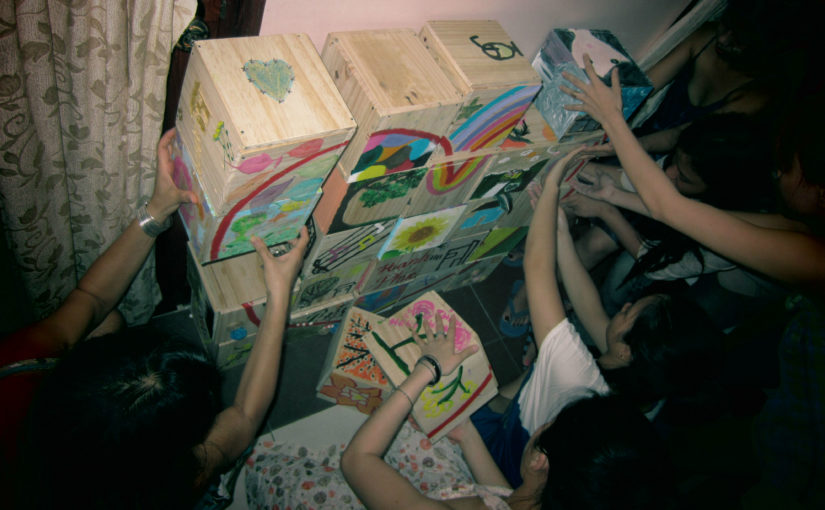
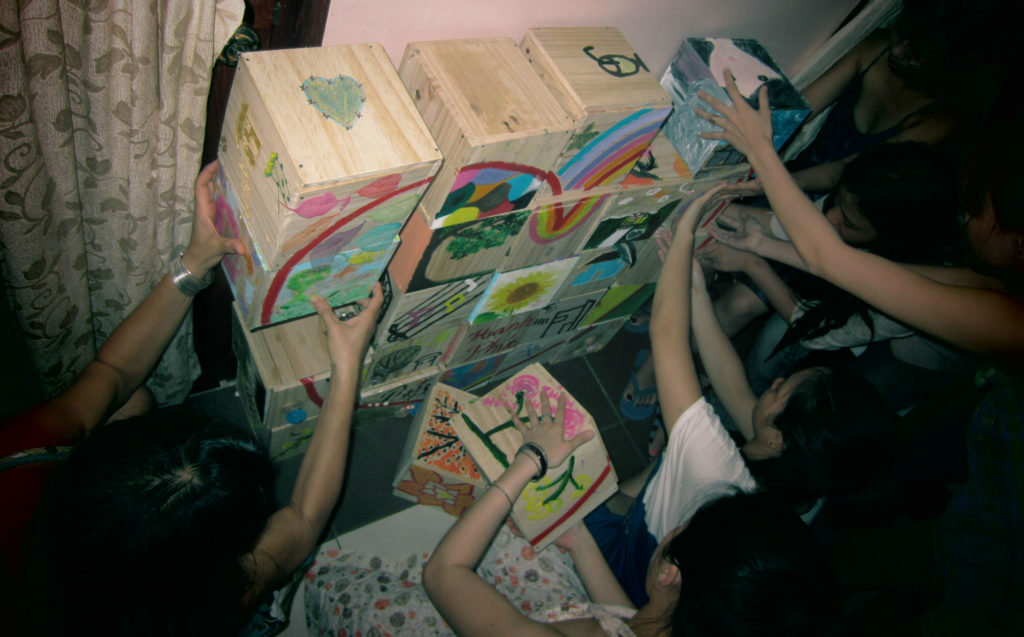
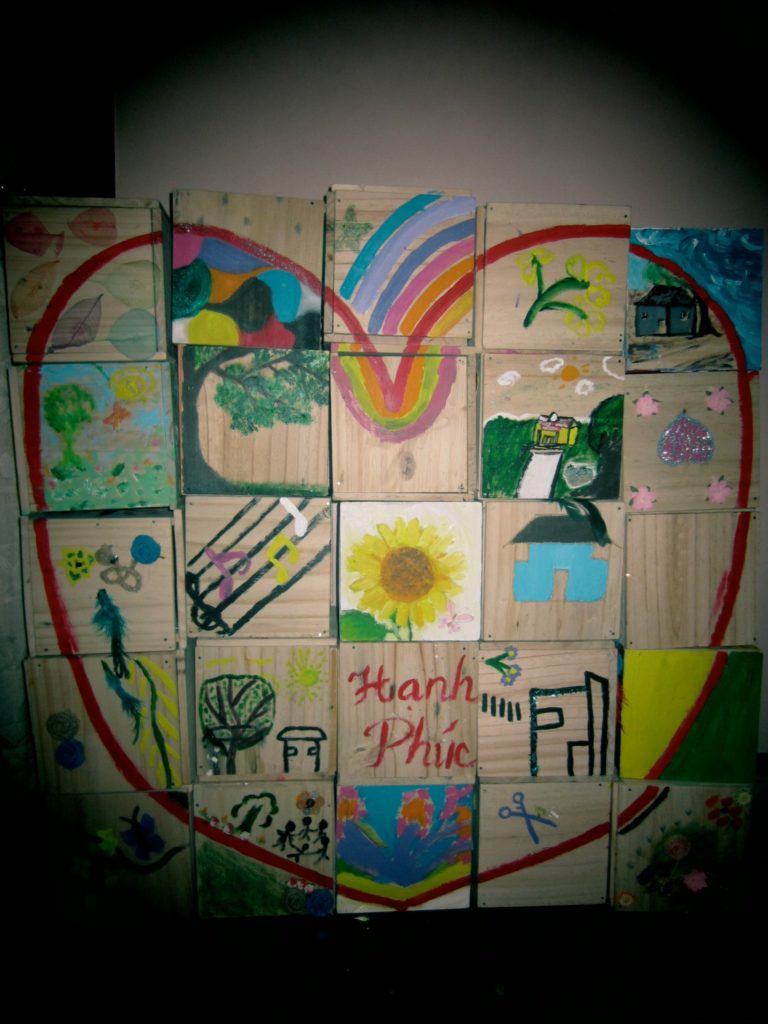
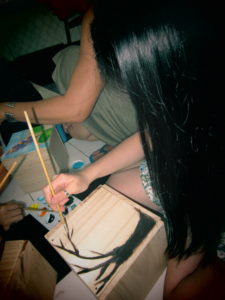
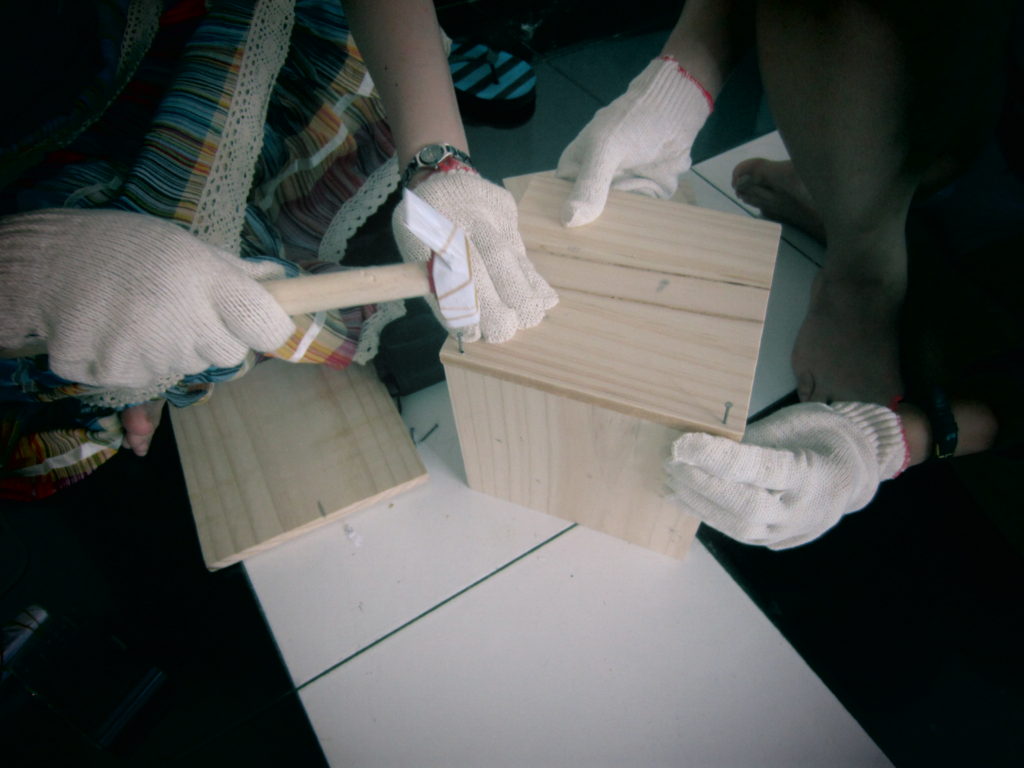
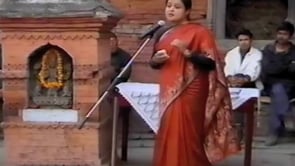
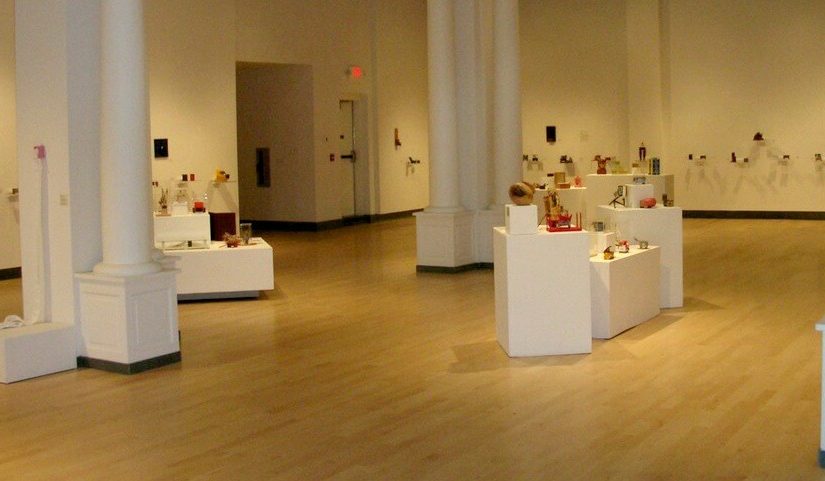
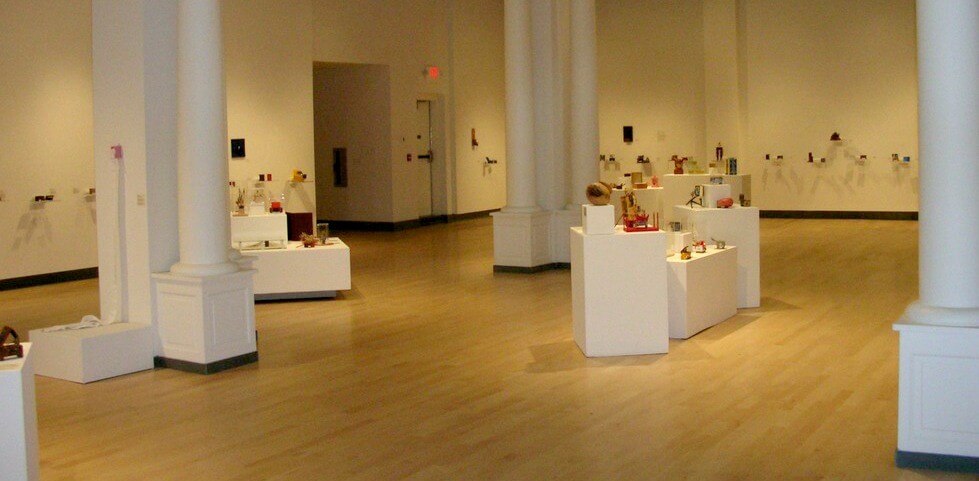

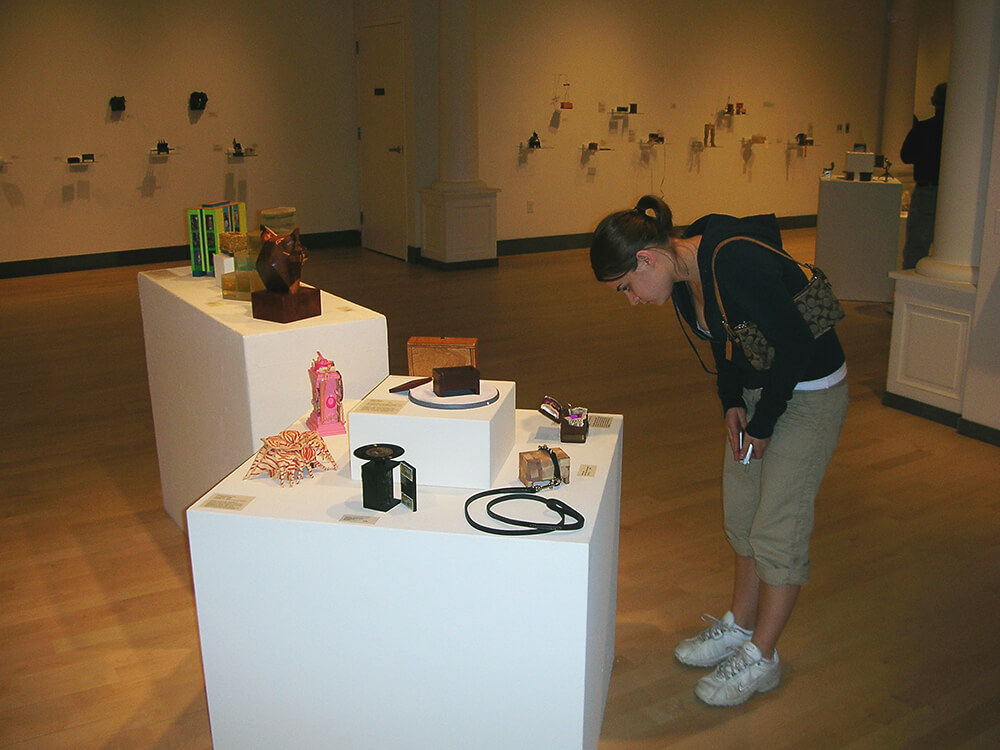
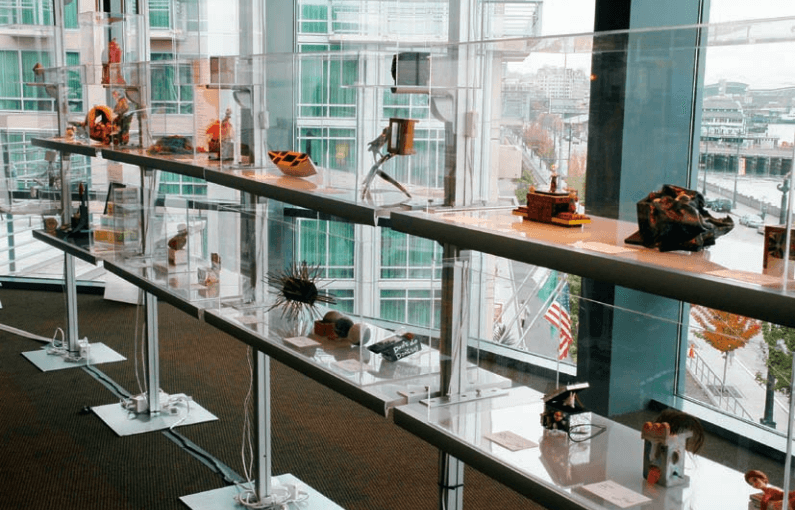
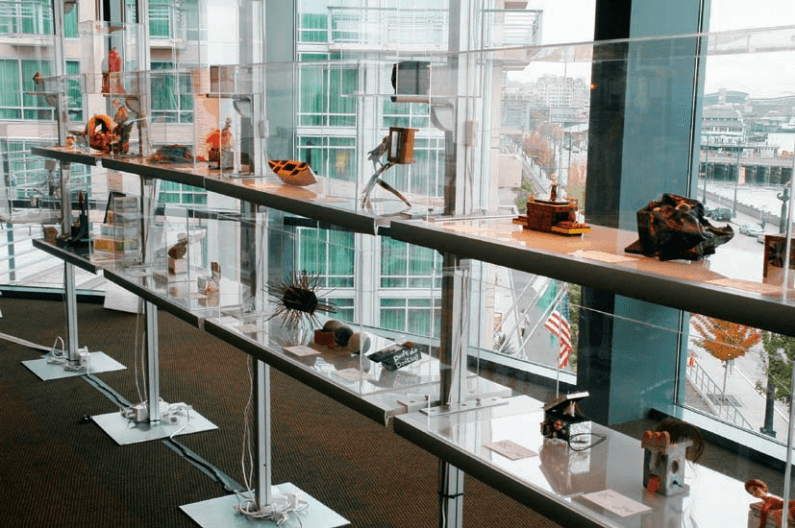

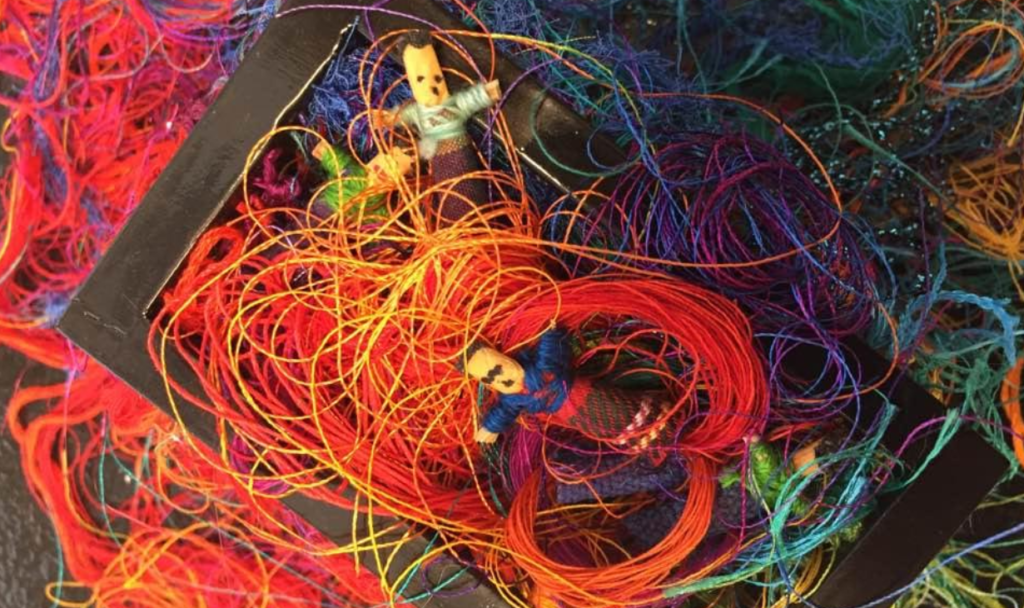
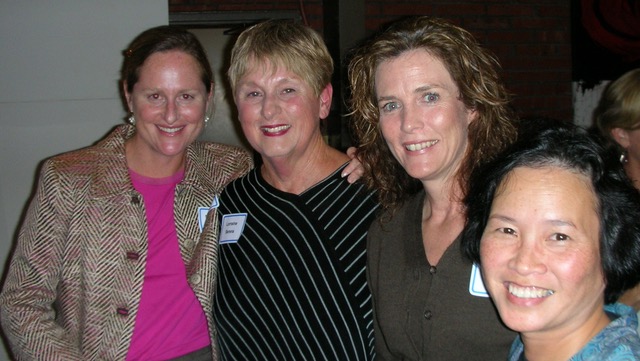
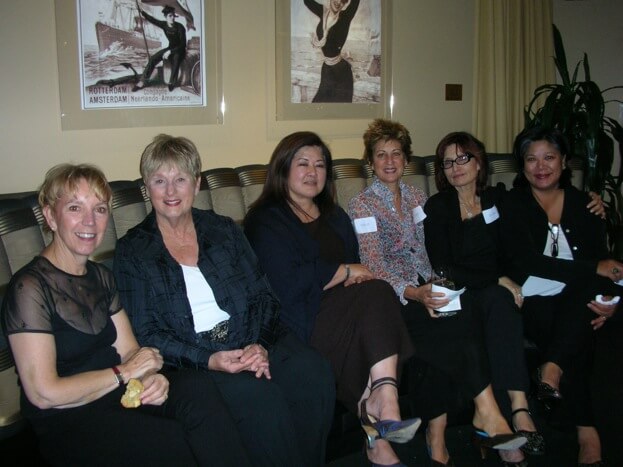
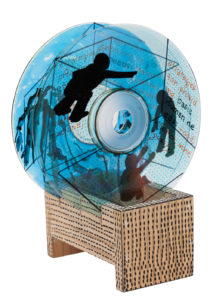
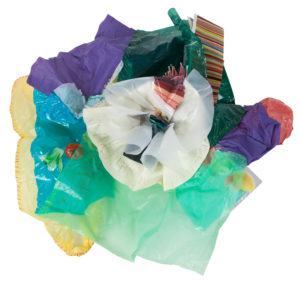
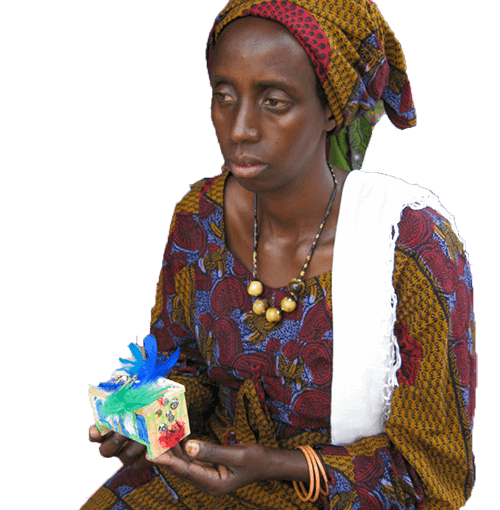
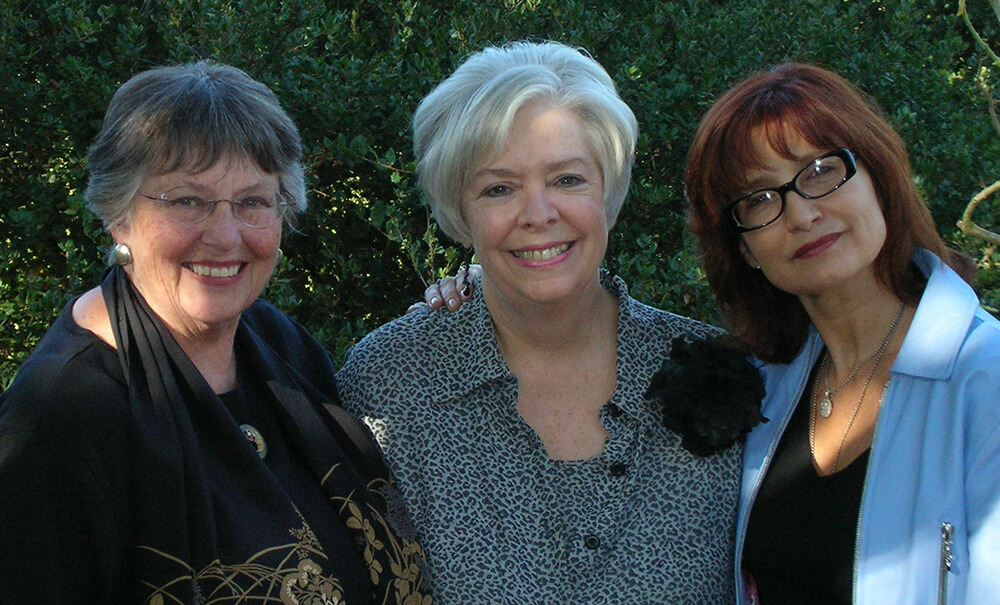
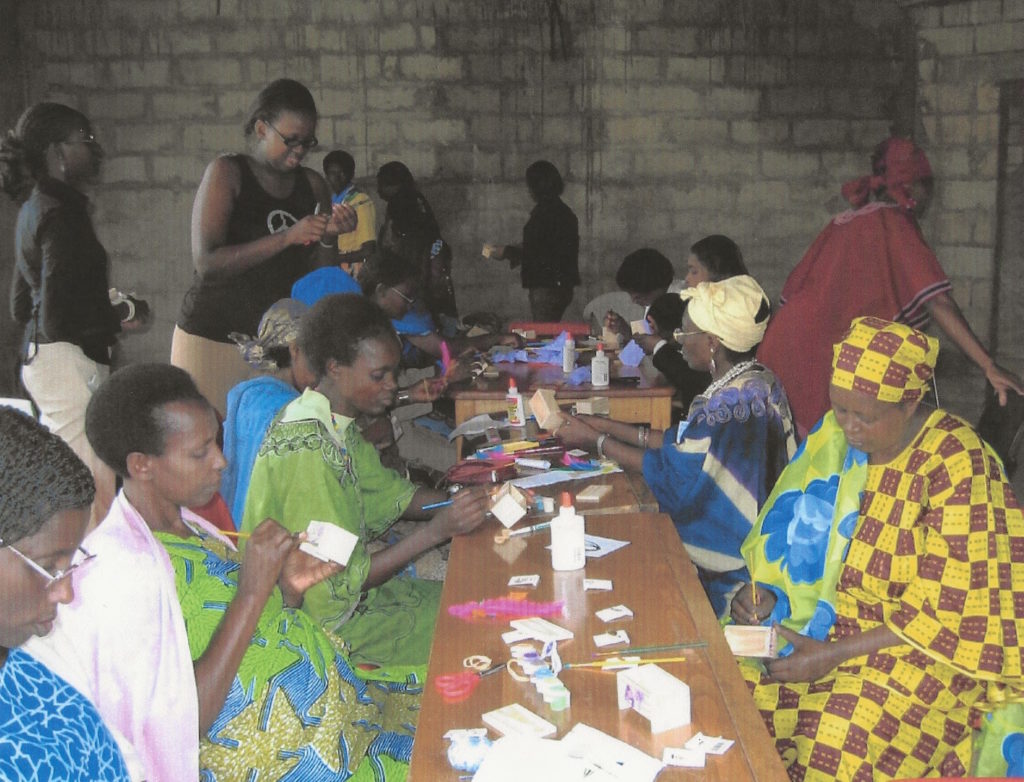
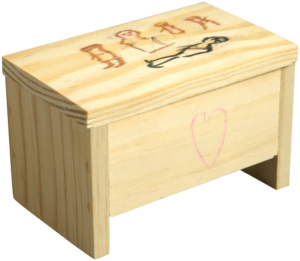
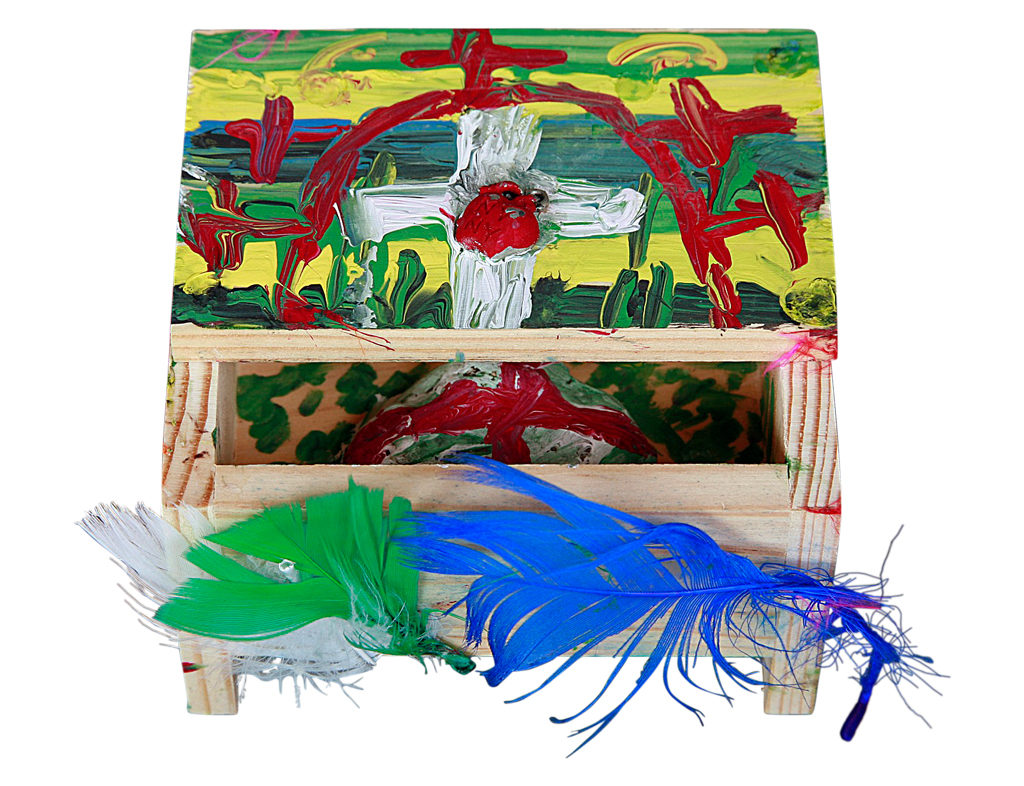
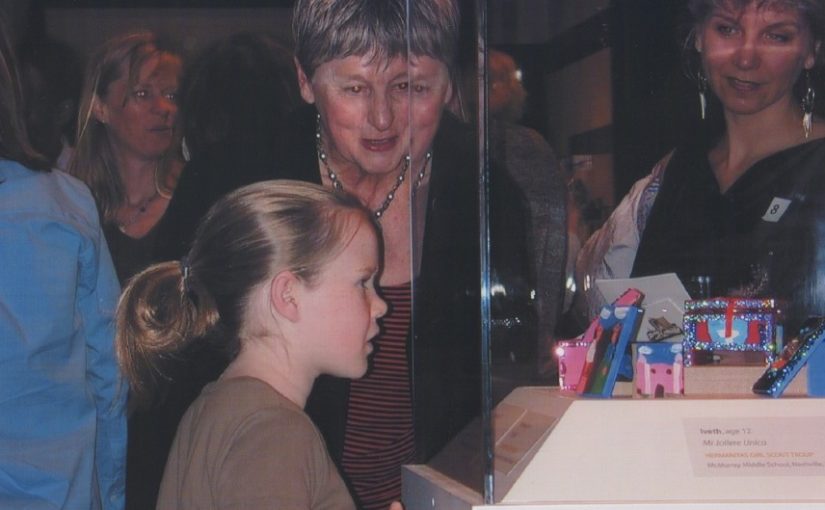
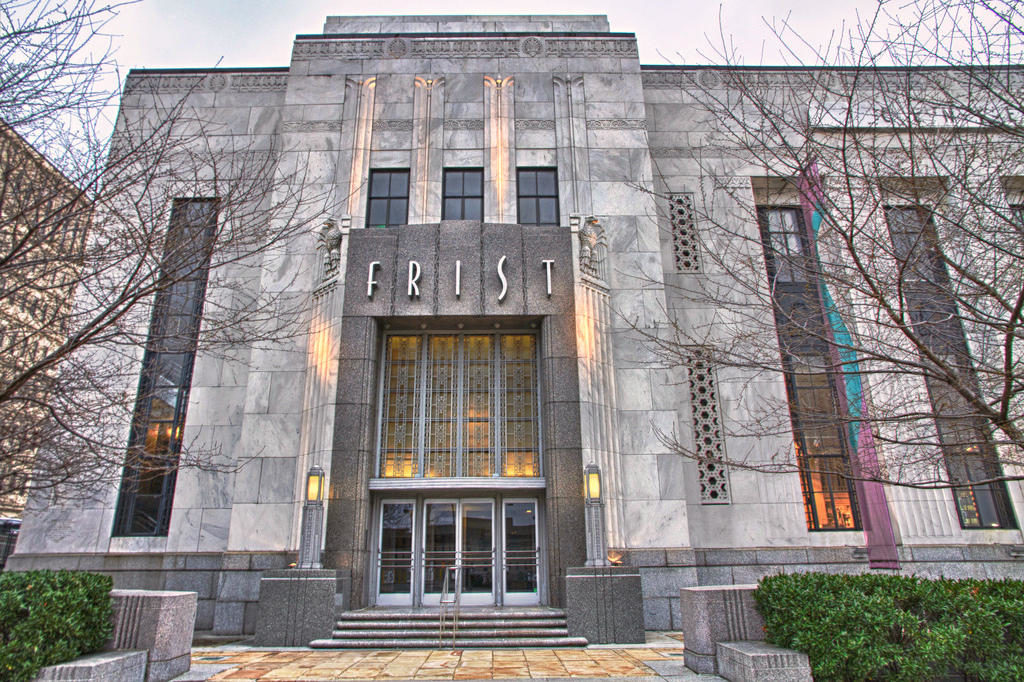
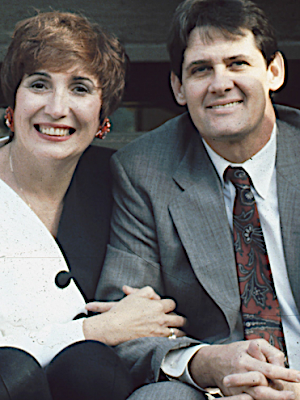
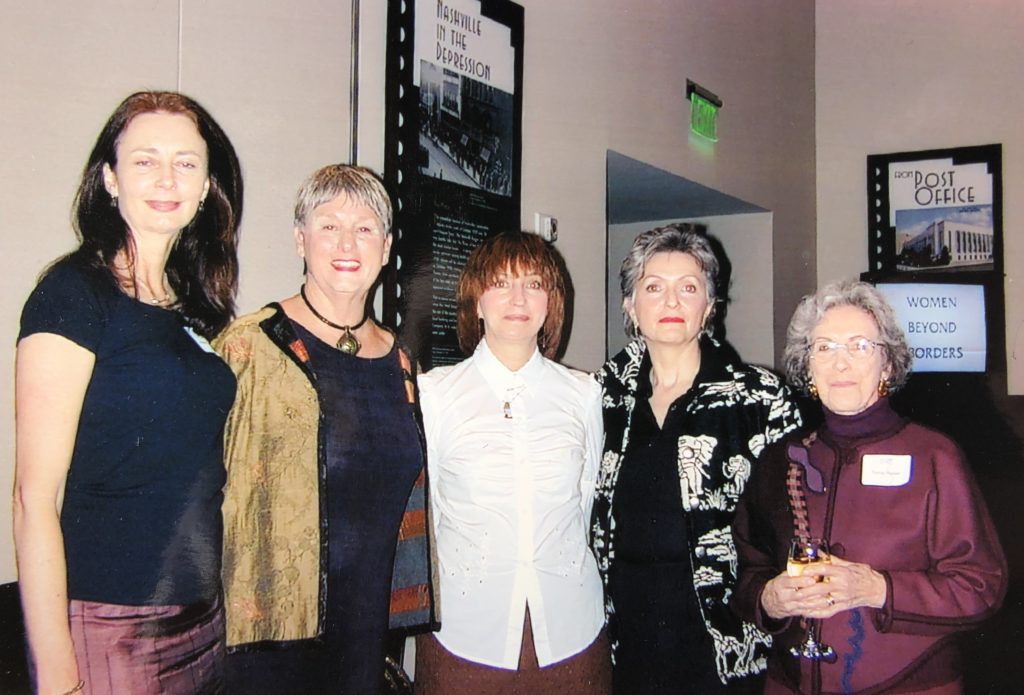
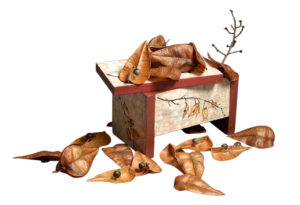
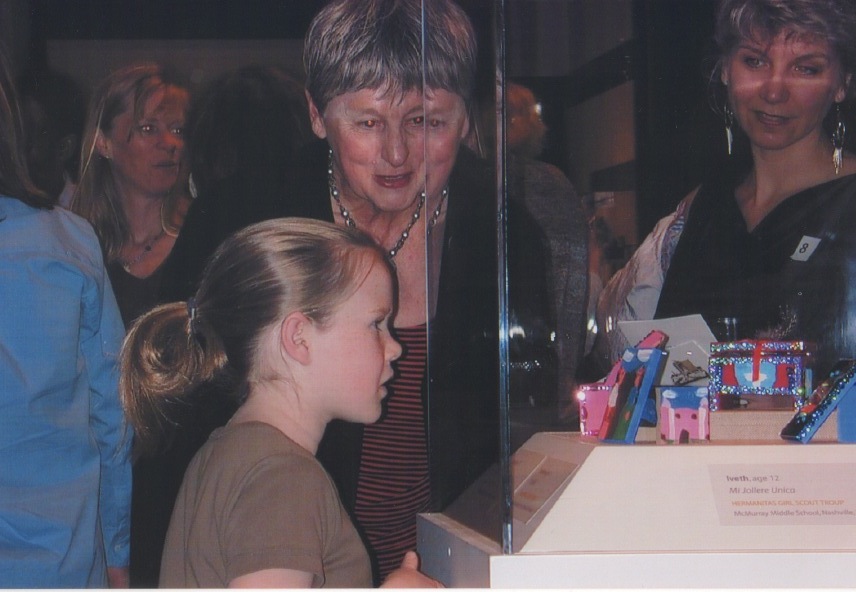
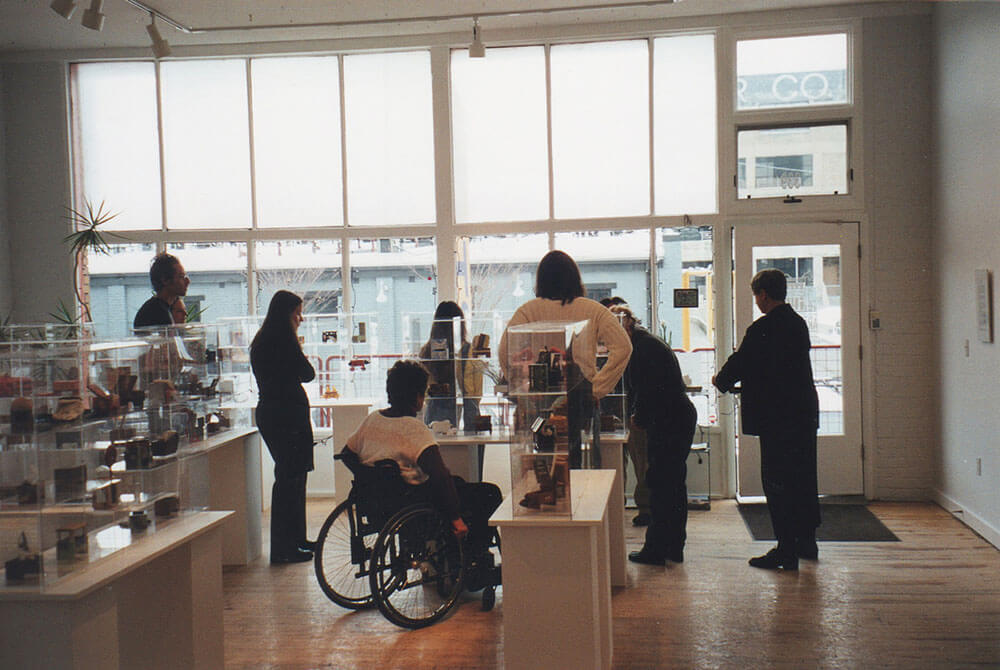
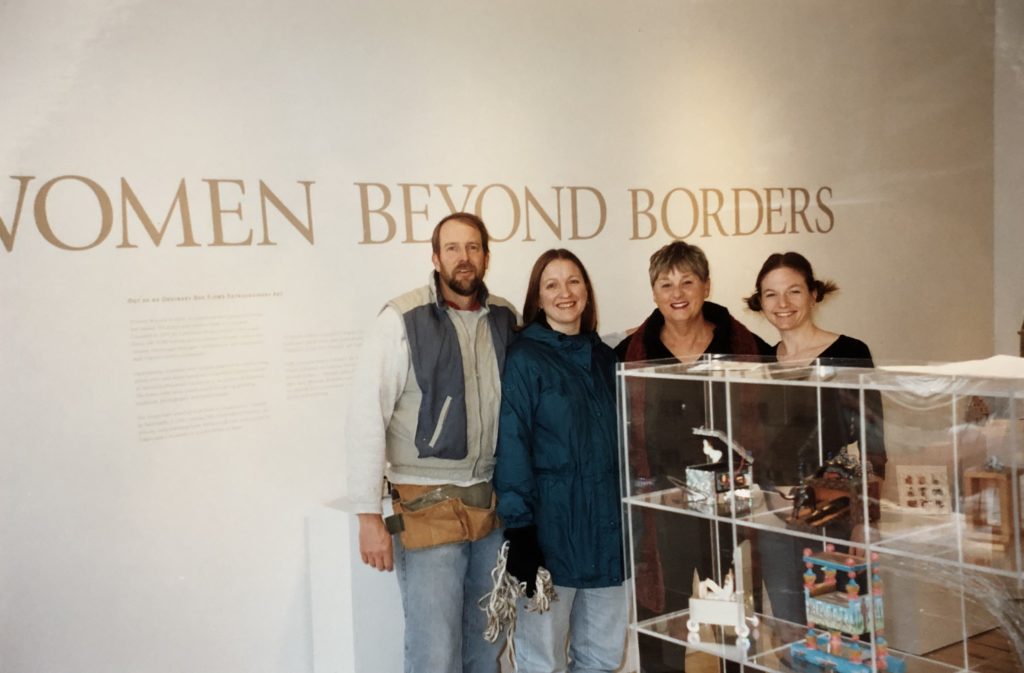
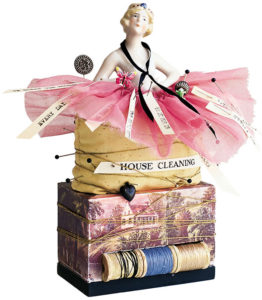
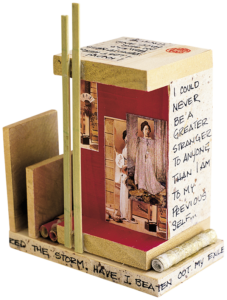
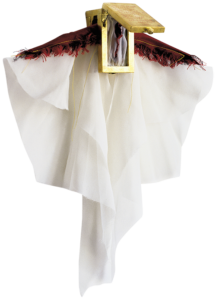
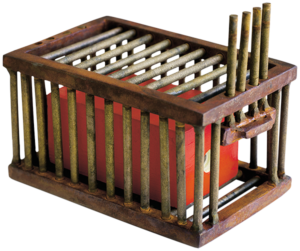
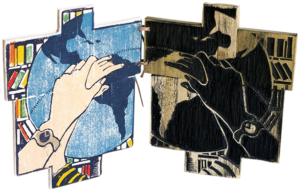
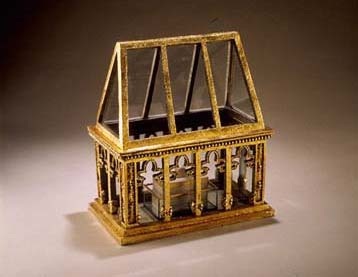
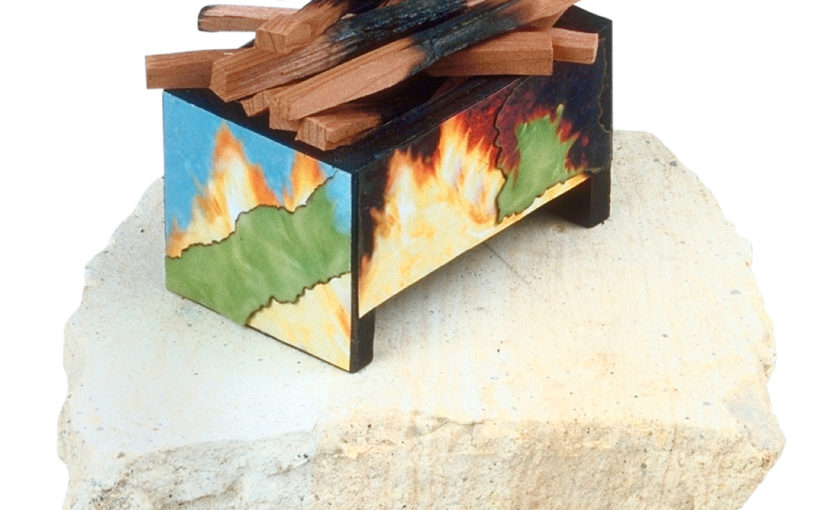
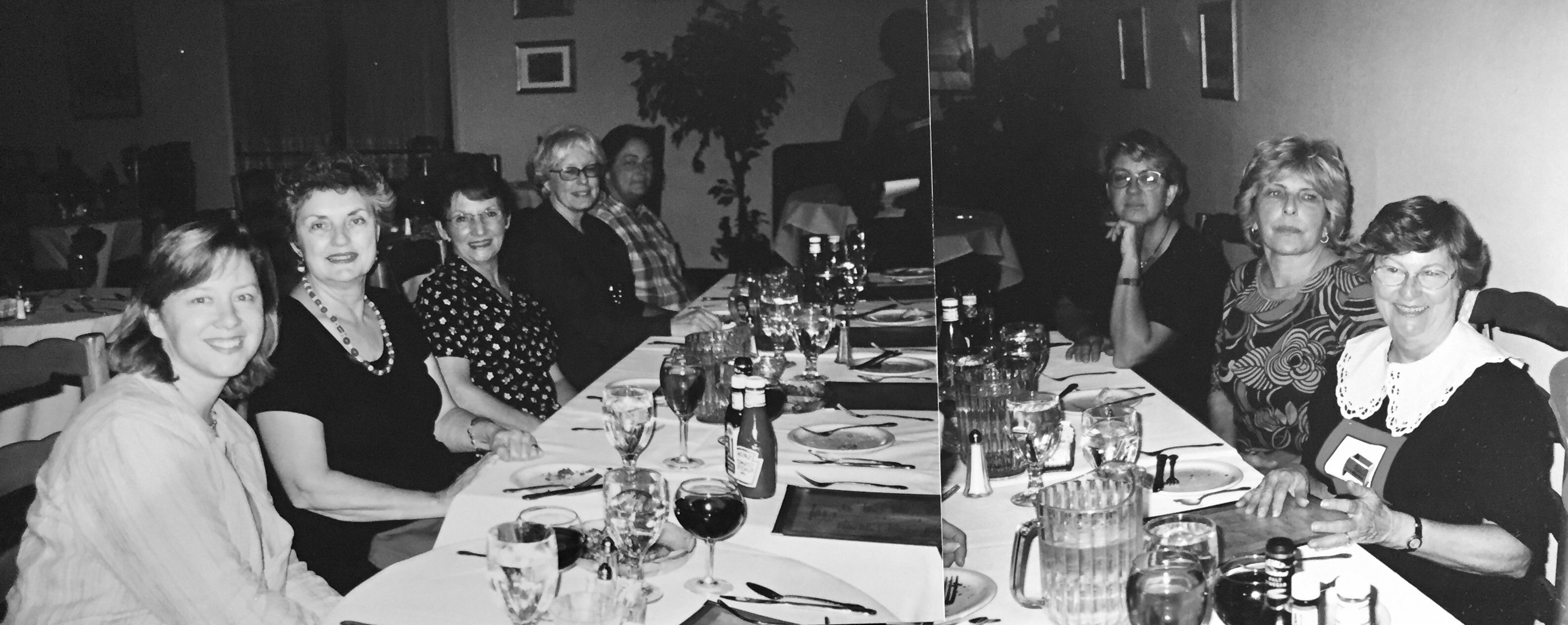
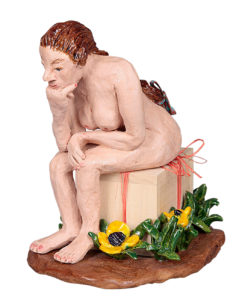
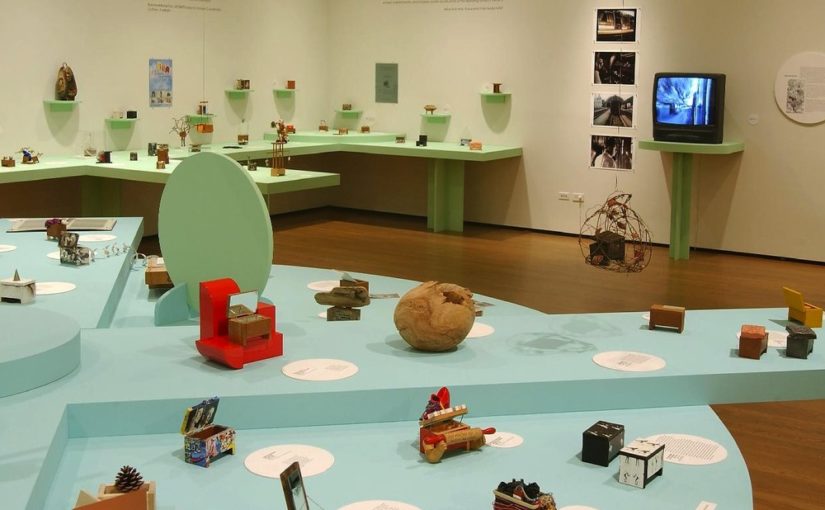
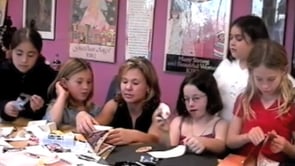
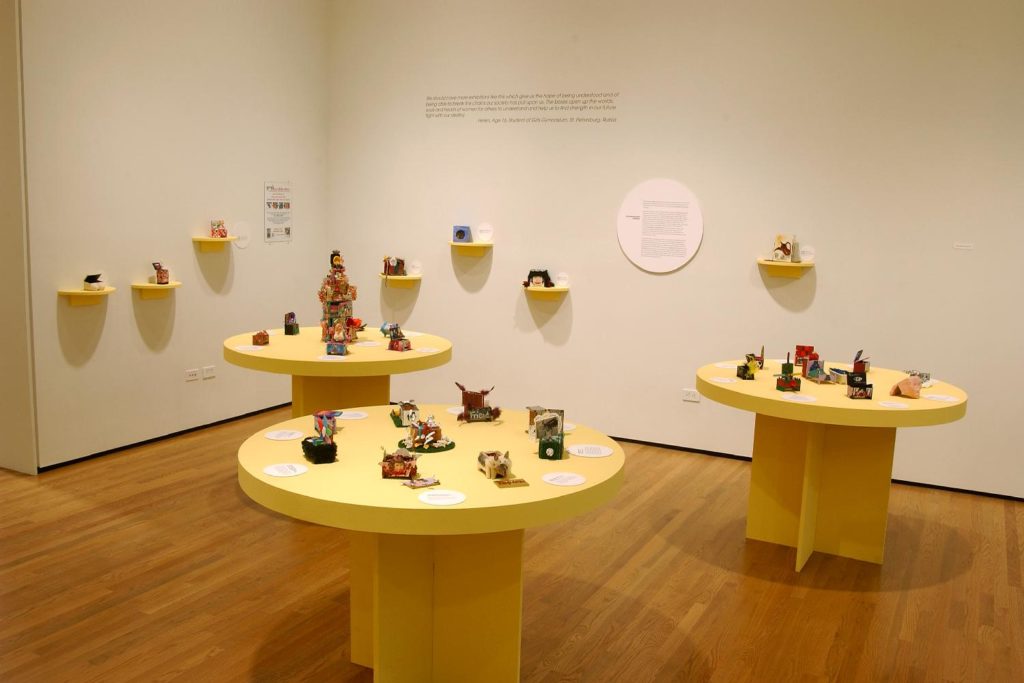
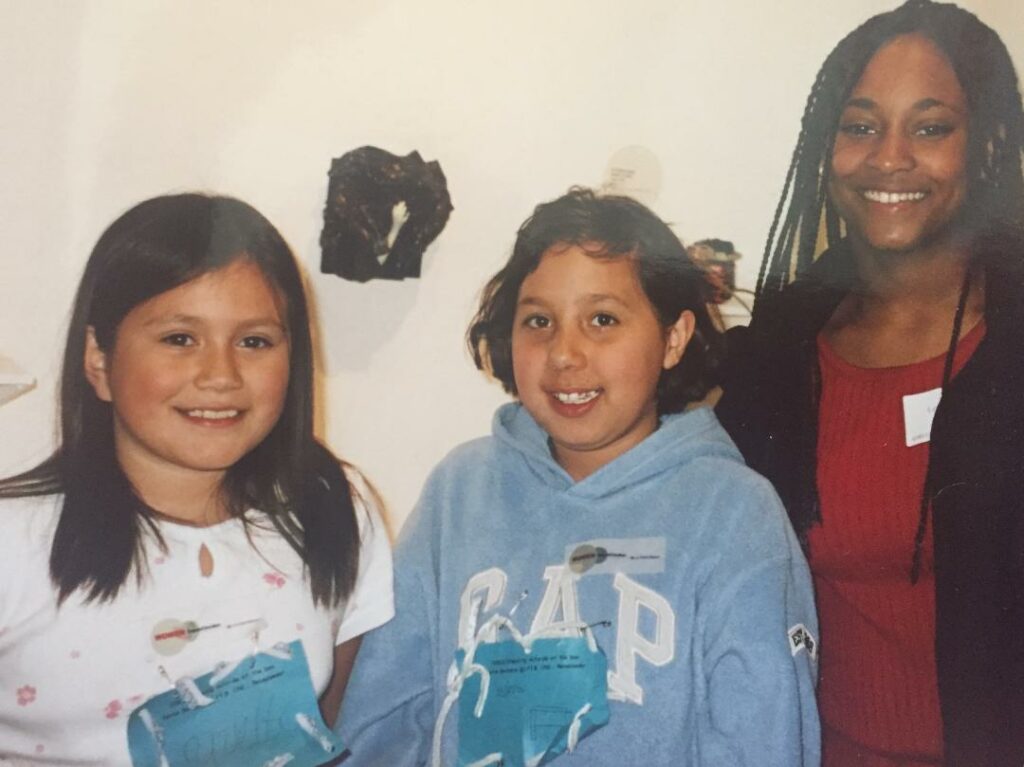

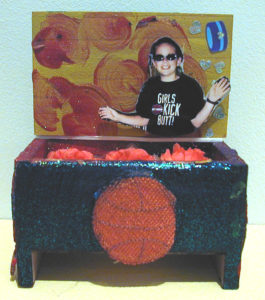
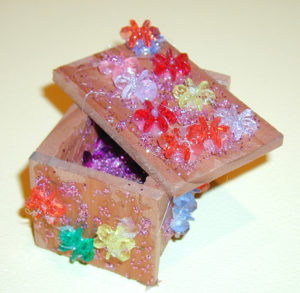
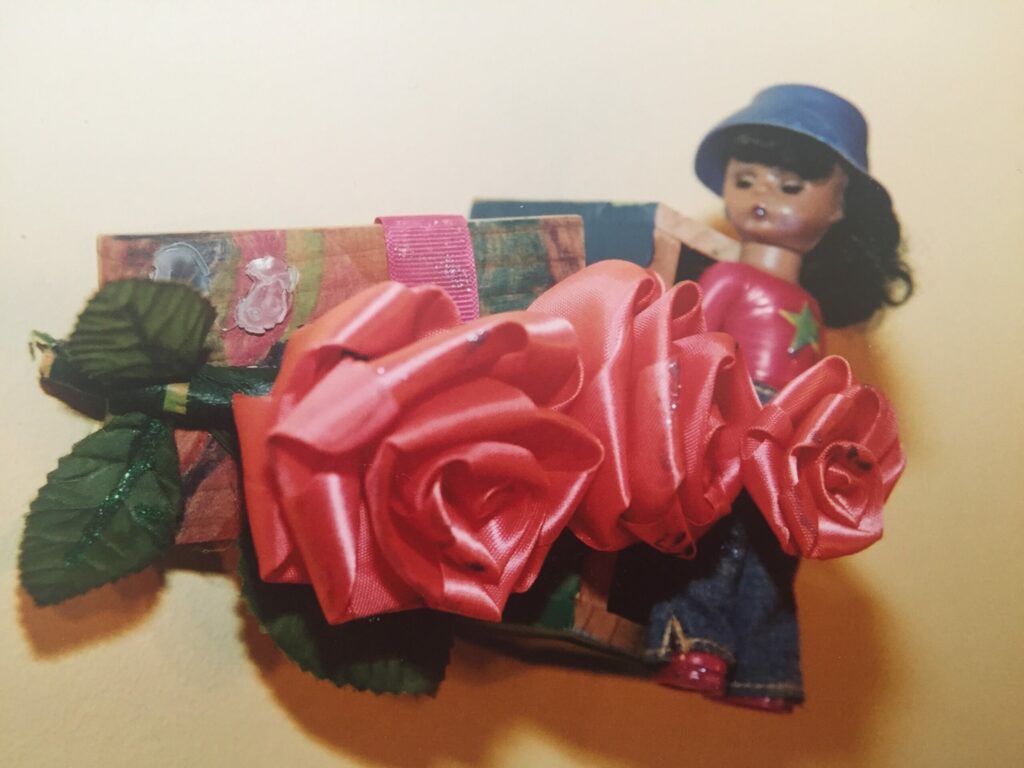
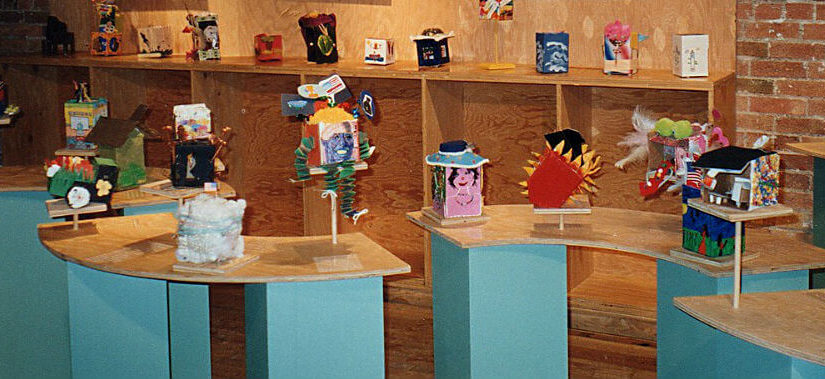
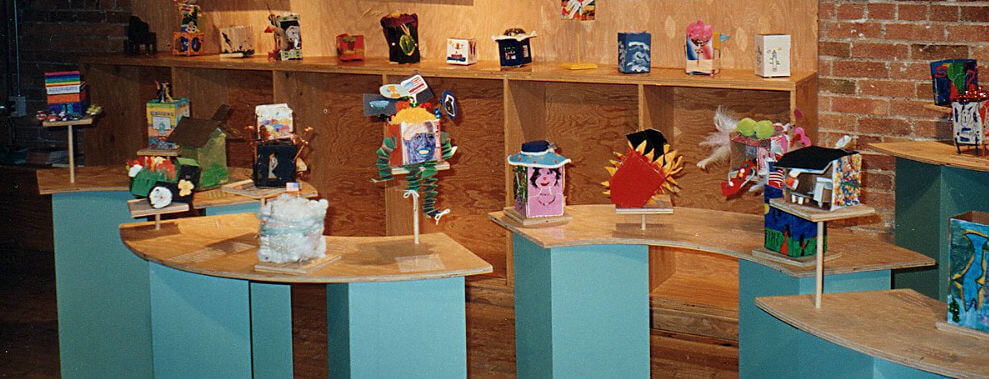
 displayed the original 52-box exhibit during the 2002 Olympic games and Cultural Olympiad held in Salt Lake City. VSA Arts invited students with disabilities from all countries to express their own personal ideas, dreams, visions and unique situation by reconfiguring identical boxes into original works of art. Over 6,000 Children were encouraged to use the boxes to create statements about their lives and the places where they live. The resulting Children Beyond Borders Exhibition of boxes from over 83 nations and 45 states embraces our differences and highlights the unbound possibilities of children’s creativity.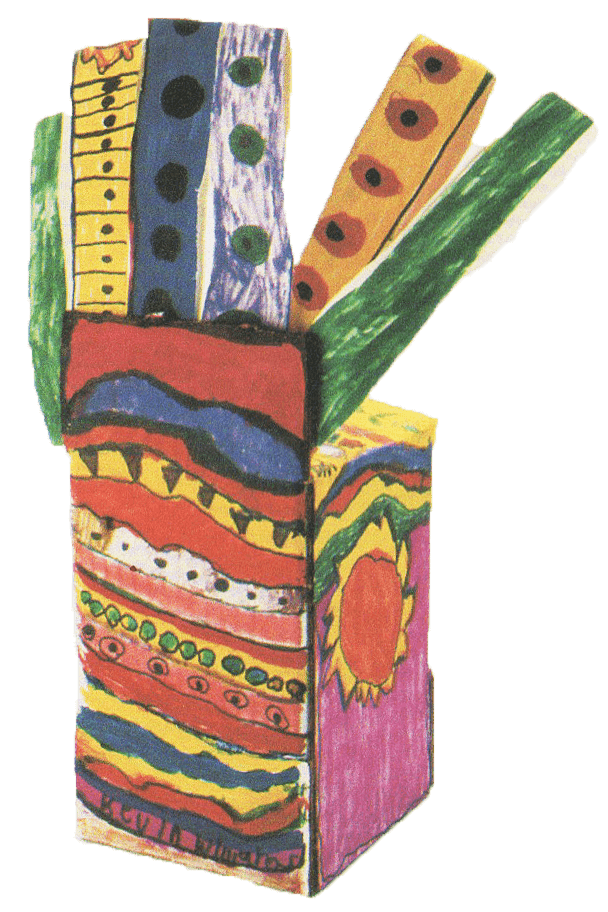
 One California student changed the box into a grand piano and wrote “I have a piano at home. Mom wants me to play. I go to my teacher Carol’s house and practice. I like my piano teacher. I feel happy when I play.” Another work, created by a student from Utah, features a bright green dragon rising from the box which is decorated with brightly colored bees (a symbol of Utah) and is entitled Flying Peace.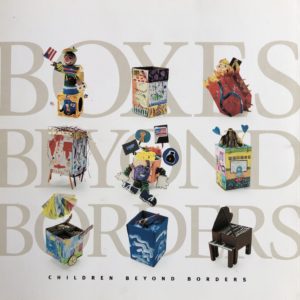
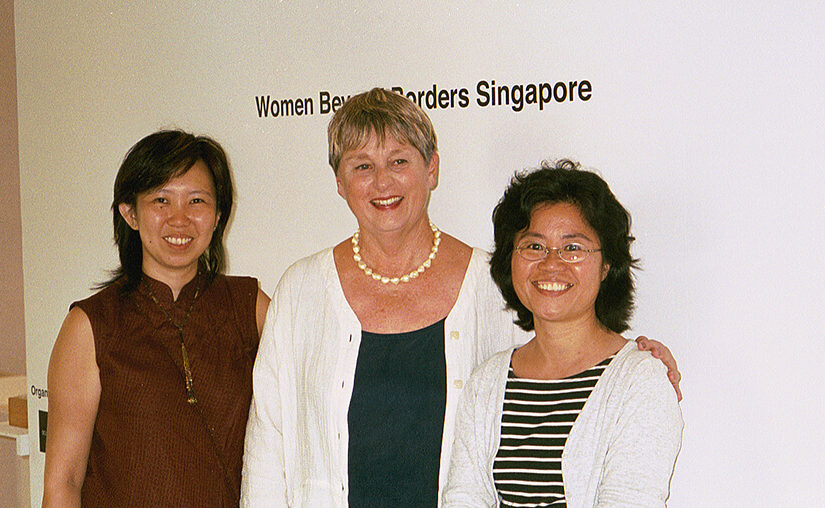
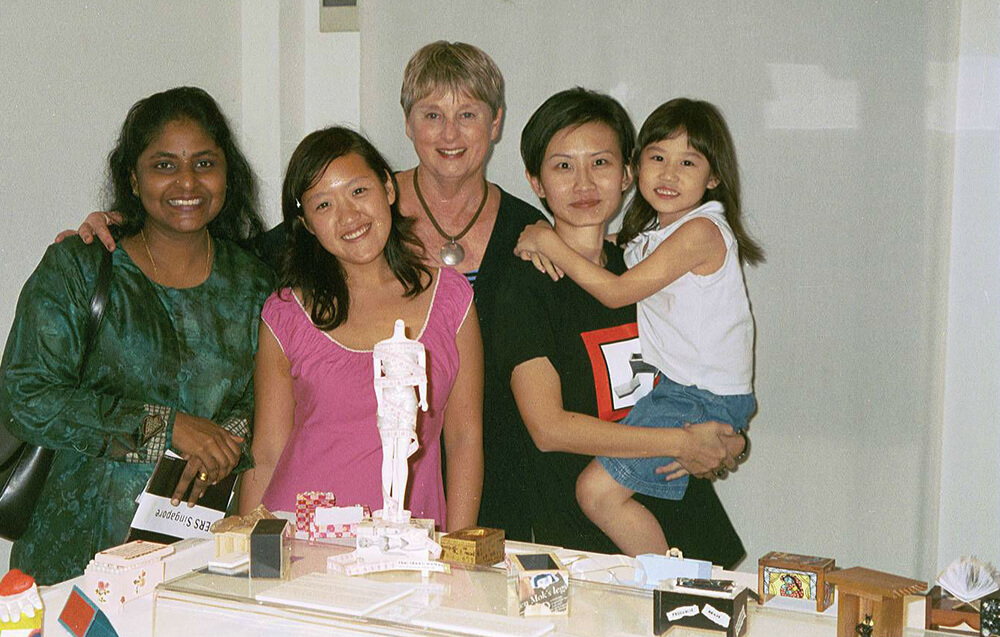
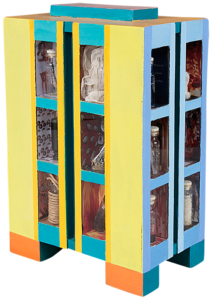

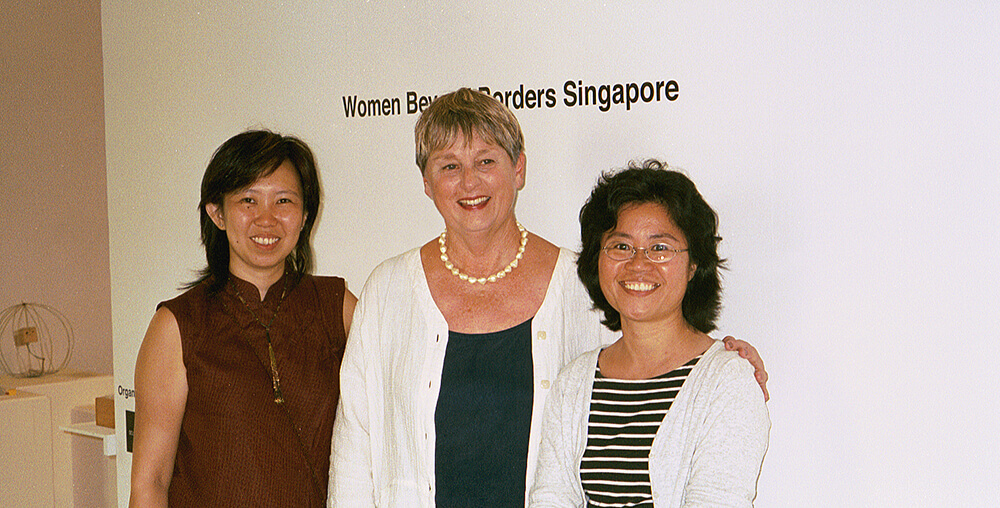
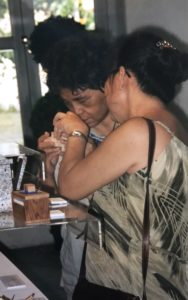
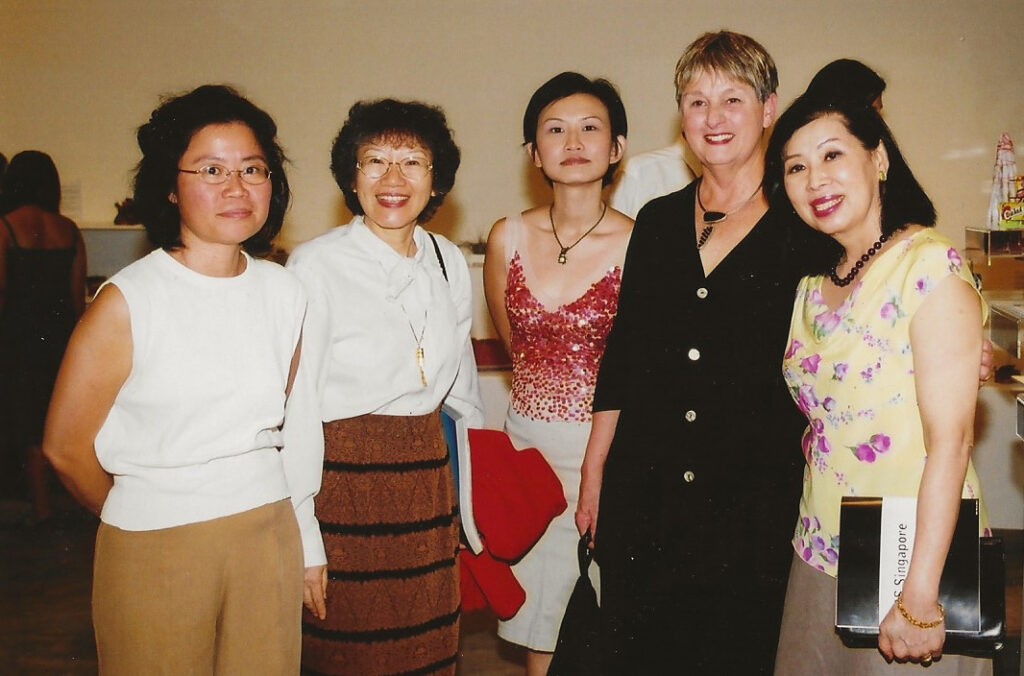
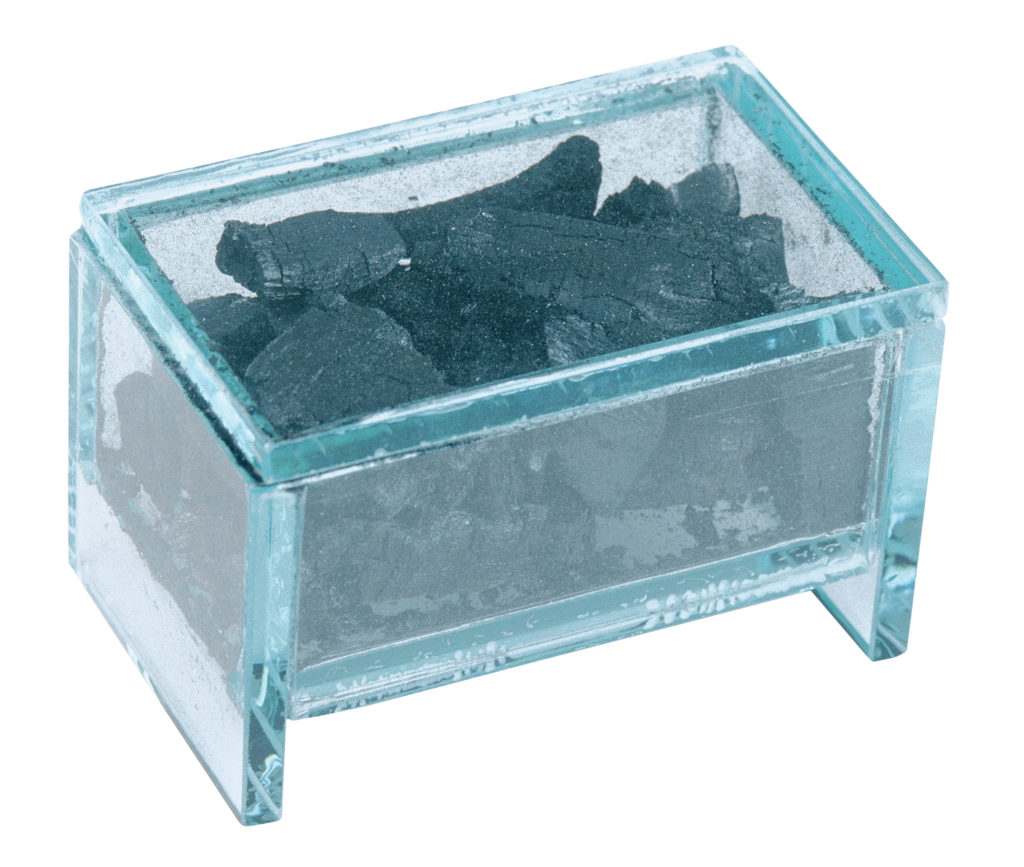
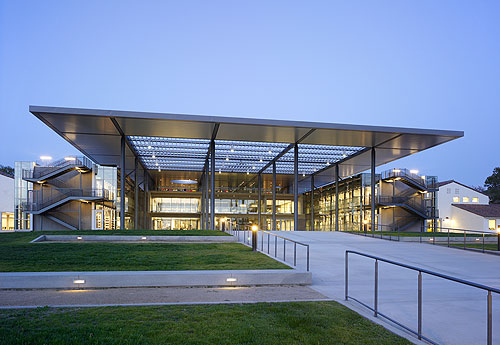
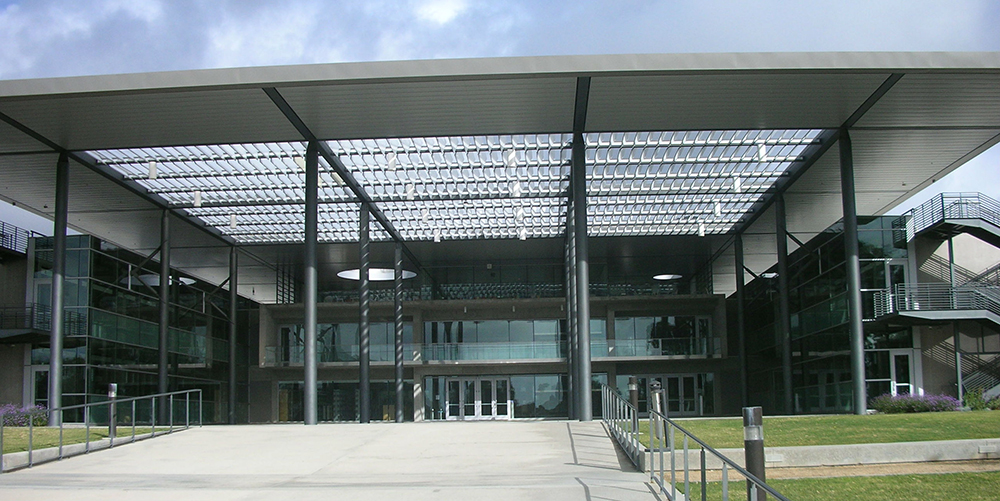
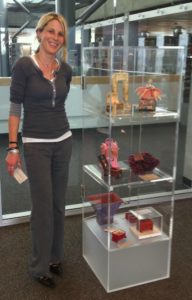
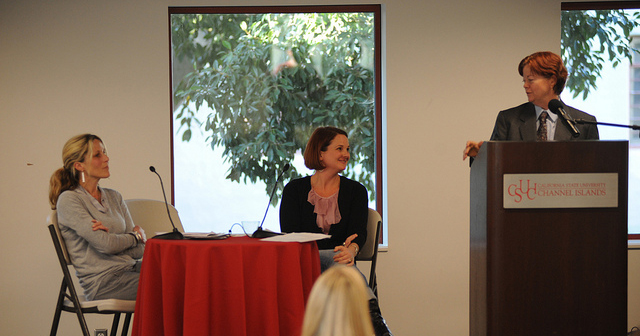
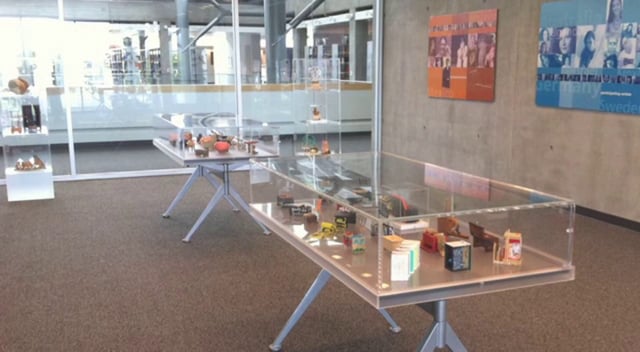
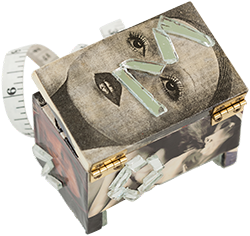
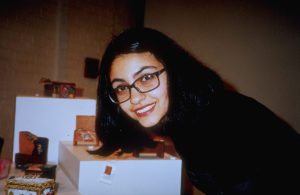
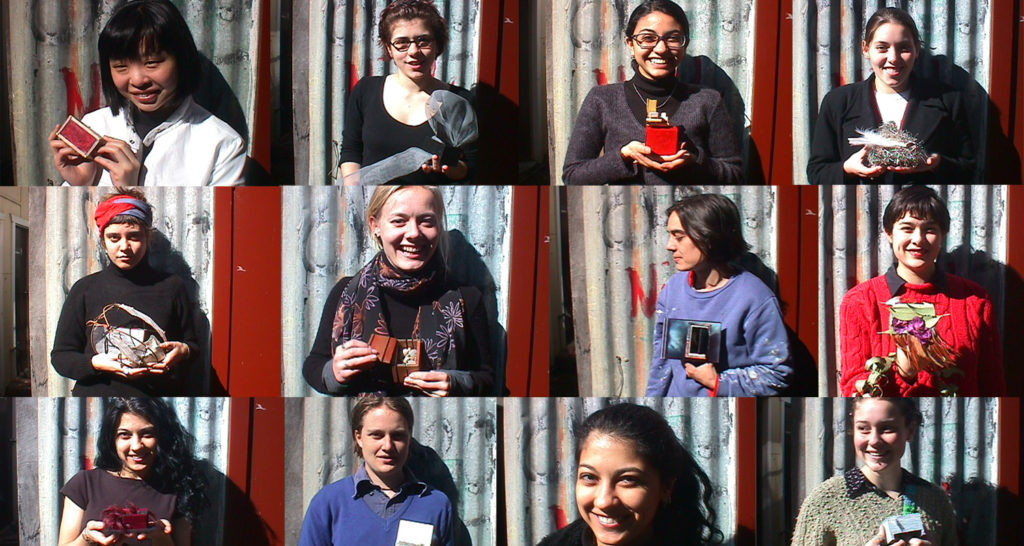
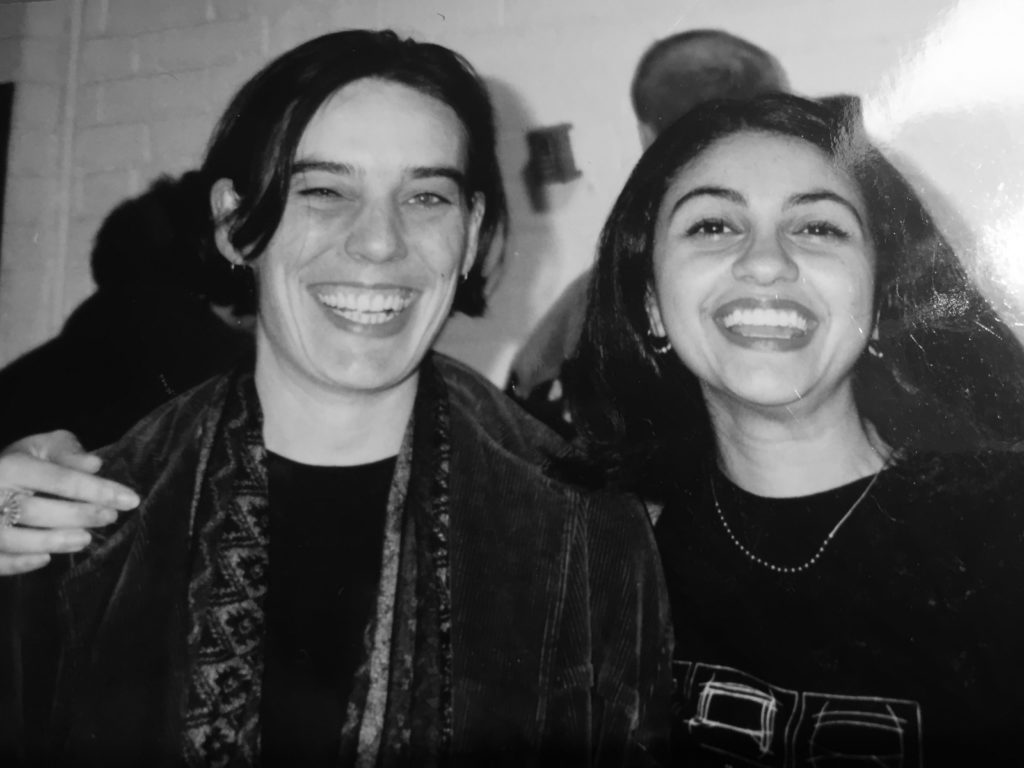
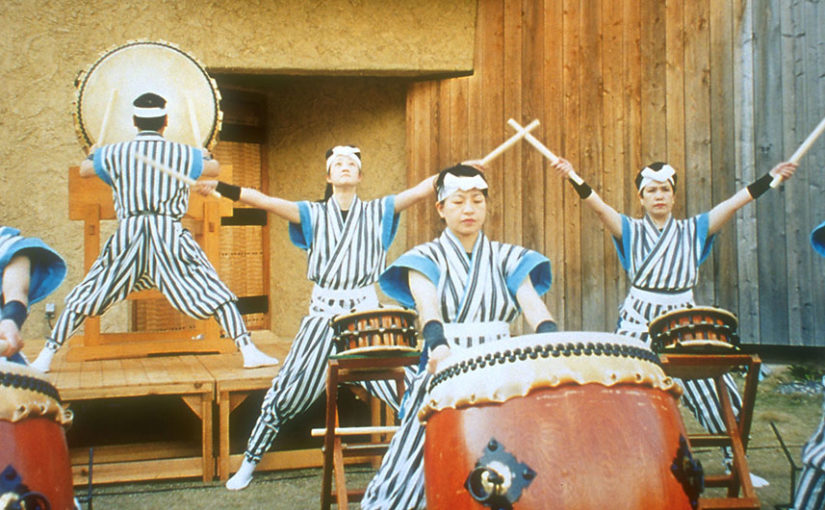
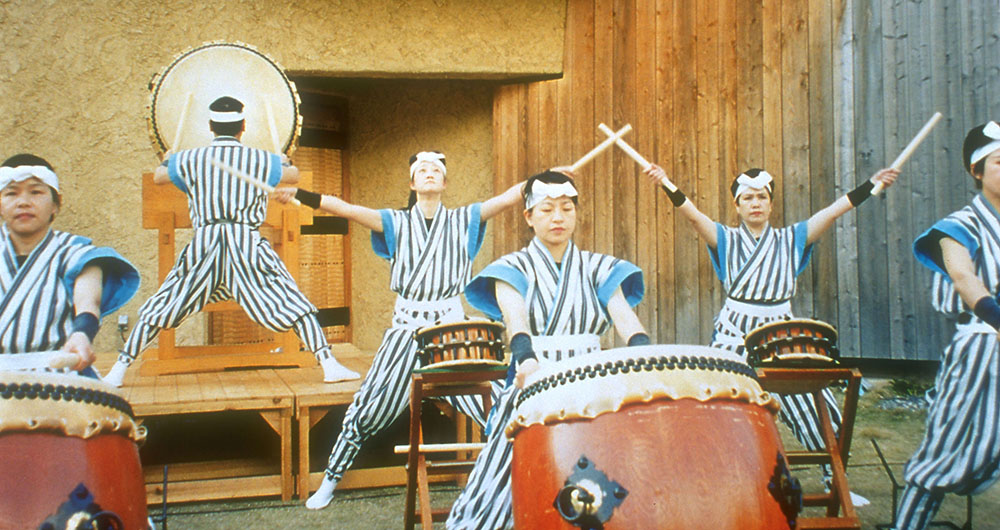


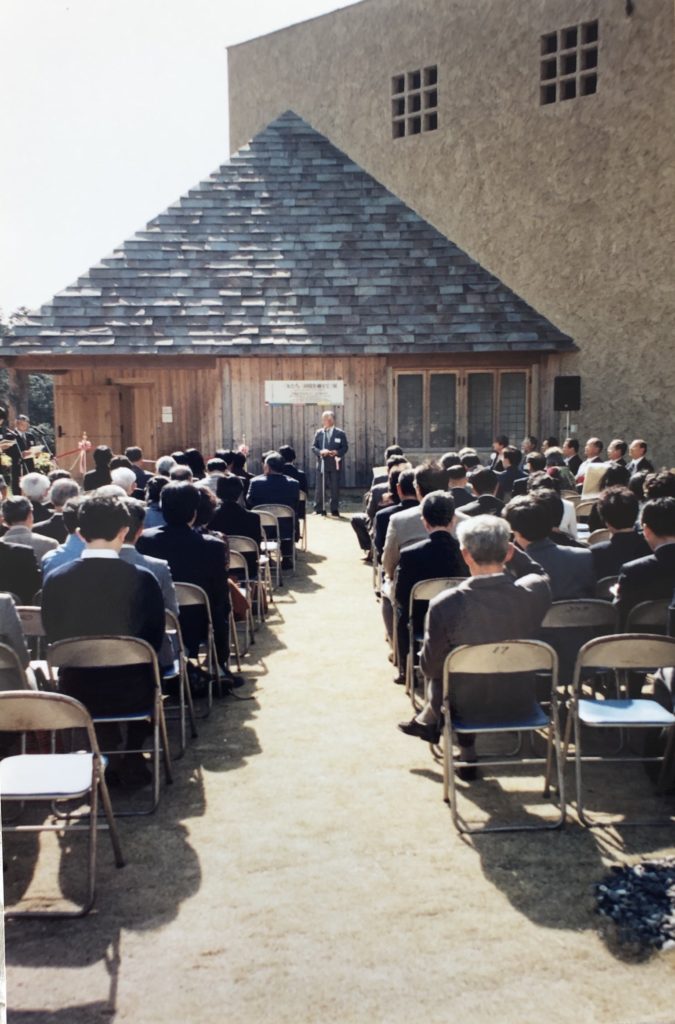
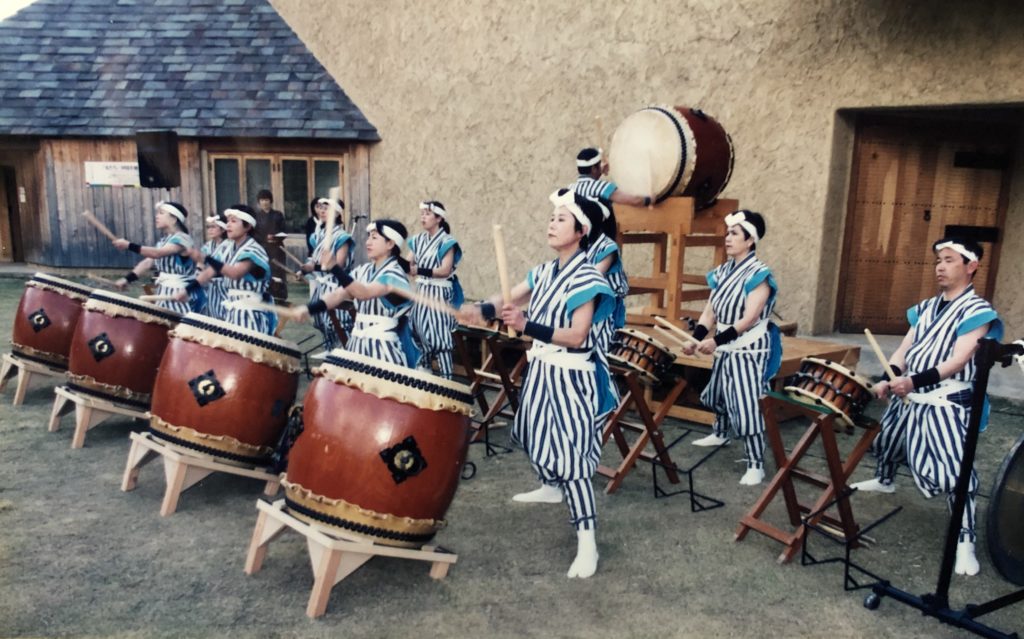
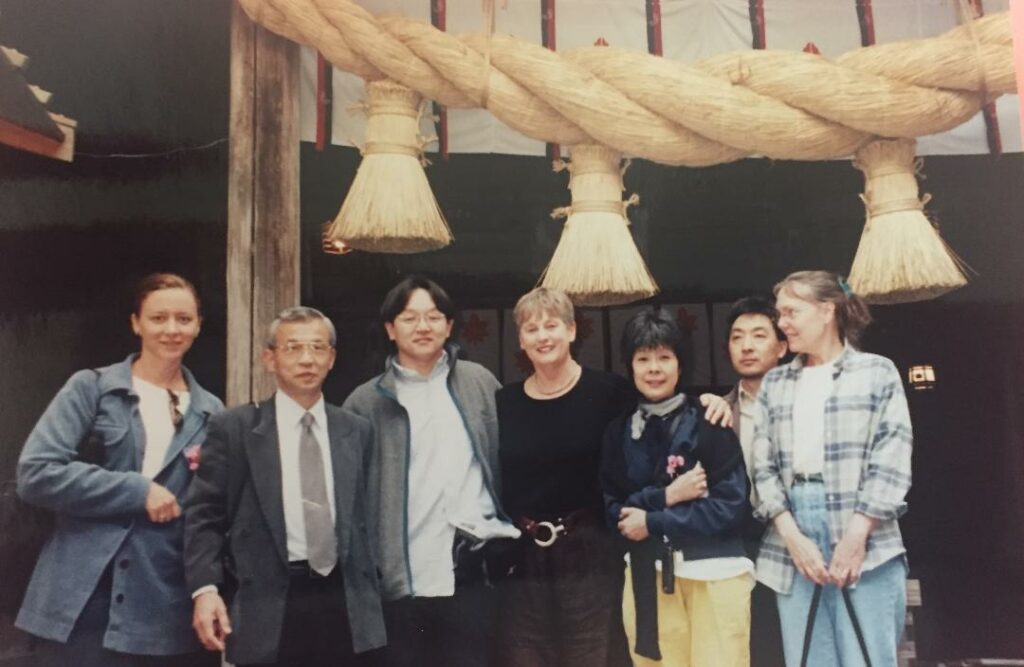


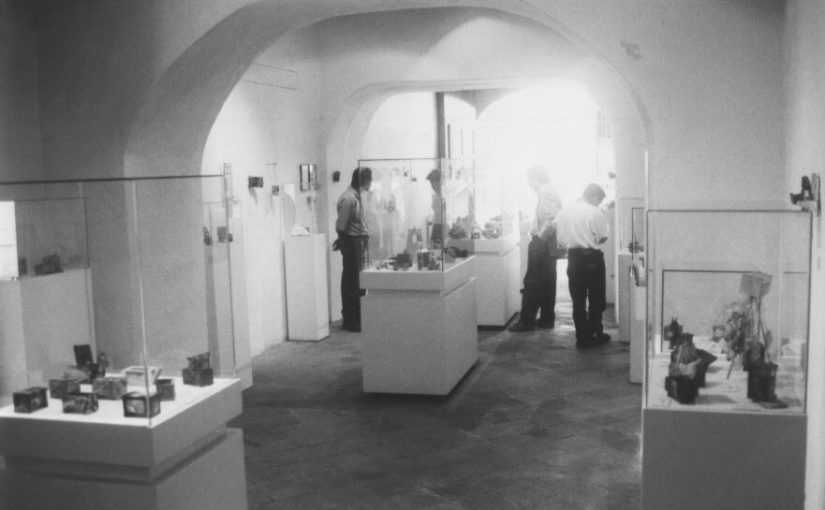
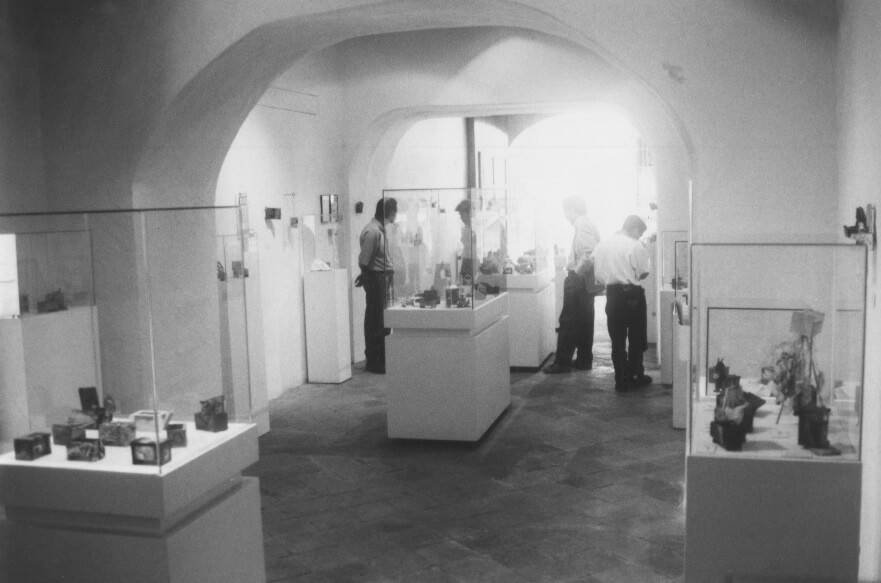
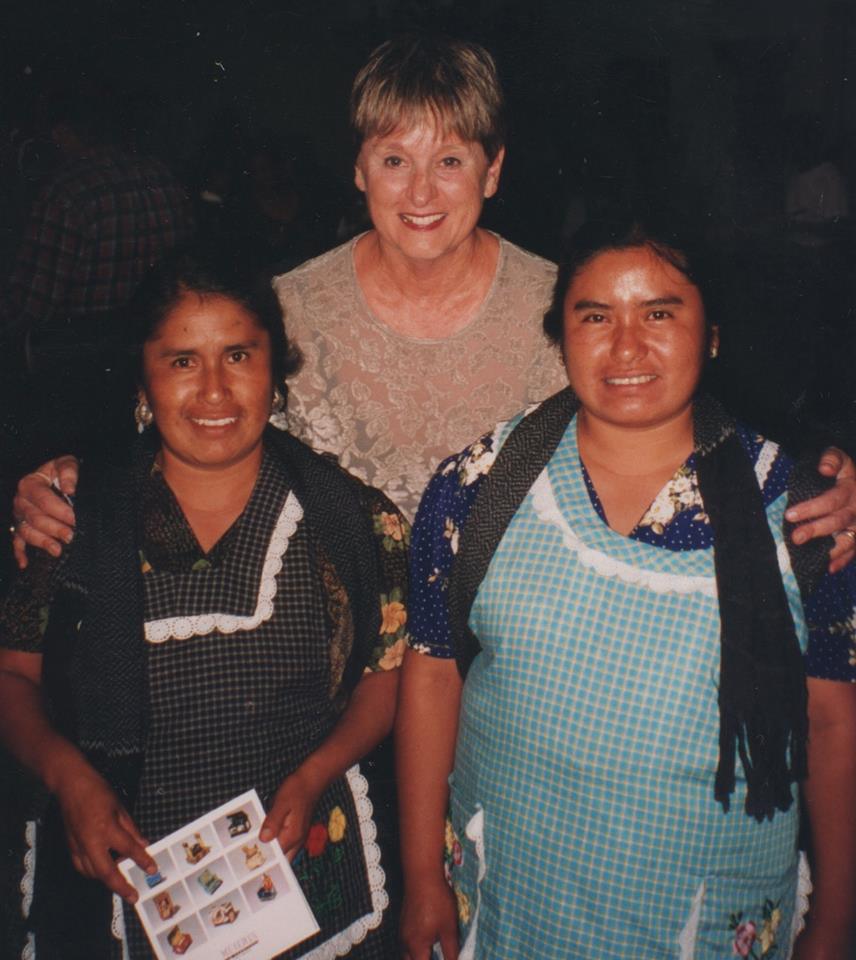

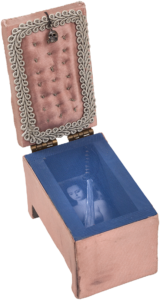
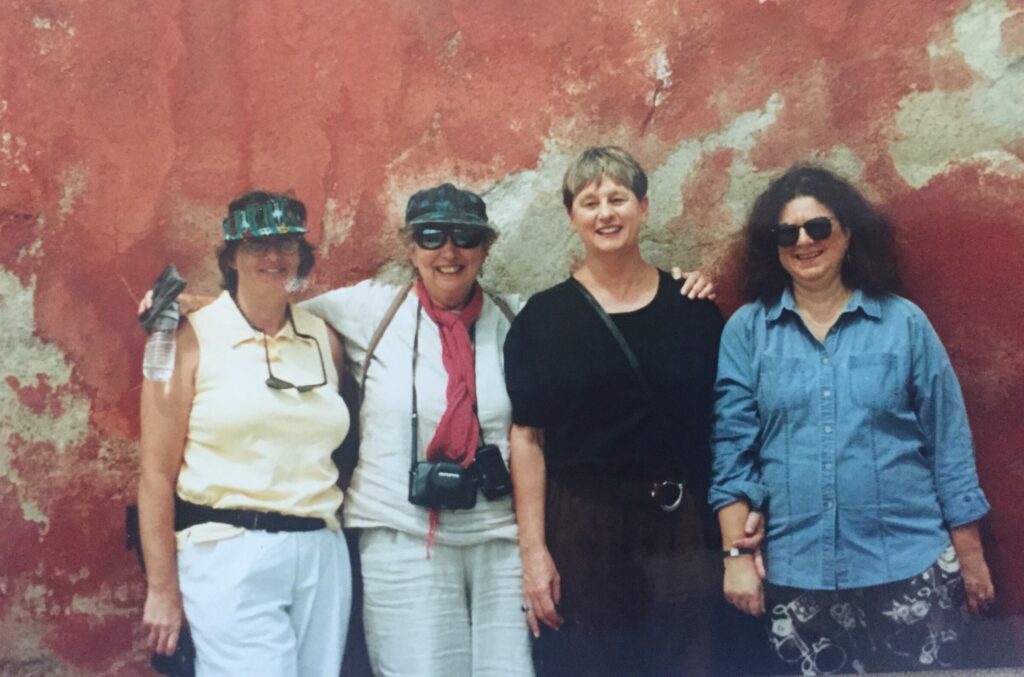
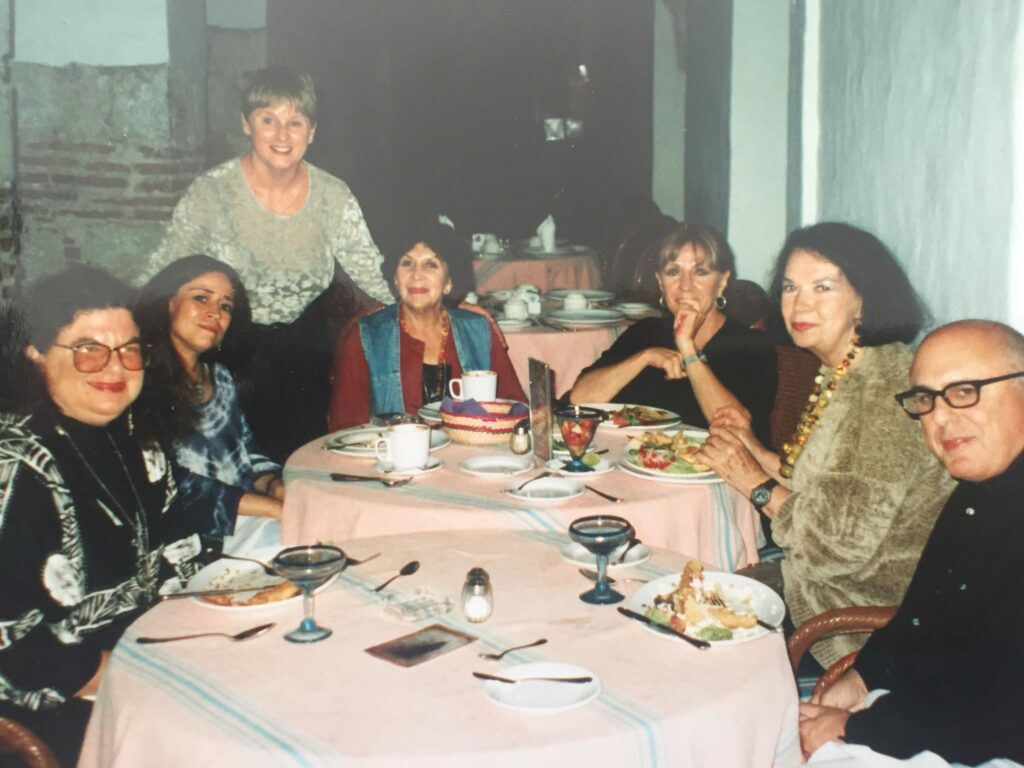
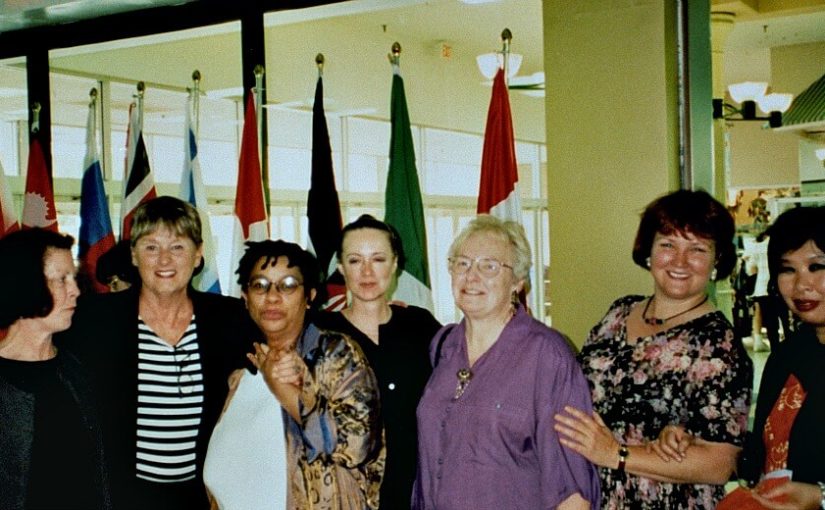
 Traveling from a temple in Nepal to a gallery at the Dufferin Mall in Toronto, WBB fully lived up to its vision. Such unique exhibition sites reached out to develop a new relationship between the artist and the viewer and included many who would not otherwise have visited a traditional cultural institution. Another important component of the Canadian exhibition involved hundreds of students from across the city of Toronto visiting the gallery to create their own works of art in the form of miniature boxes. As a result, in the true spirit of WBB, Students Beyond Borders came into being. Looking beyond borders, we can see how one thing leads to another.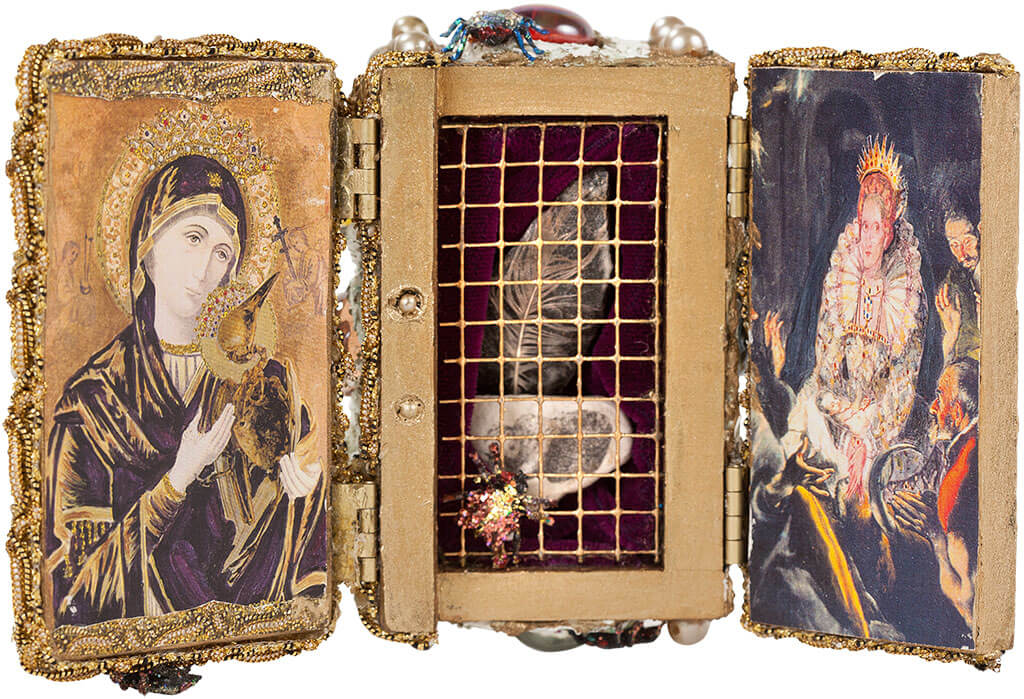
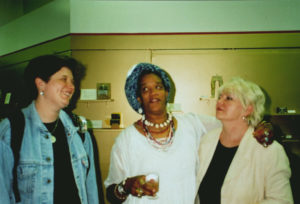
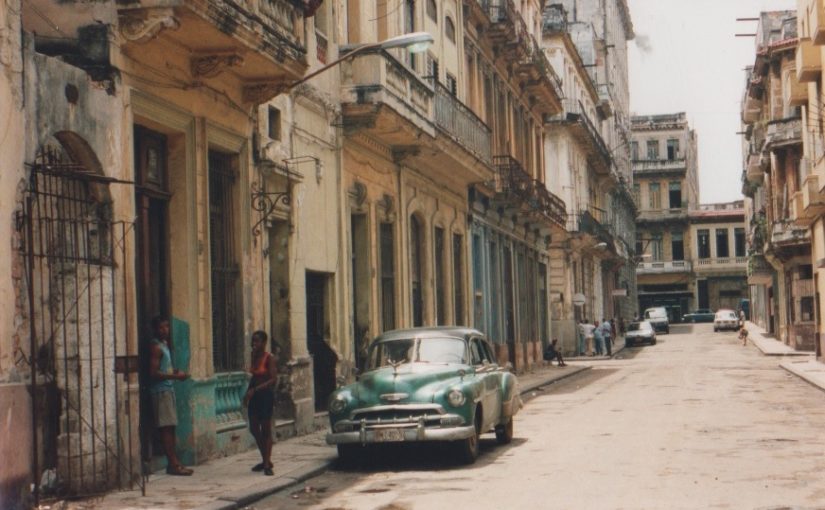
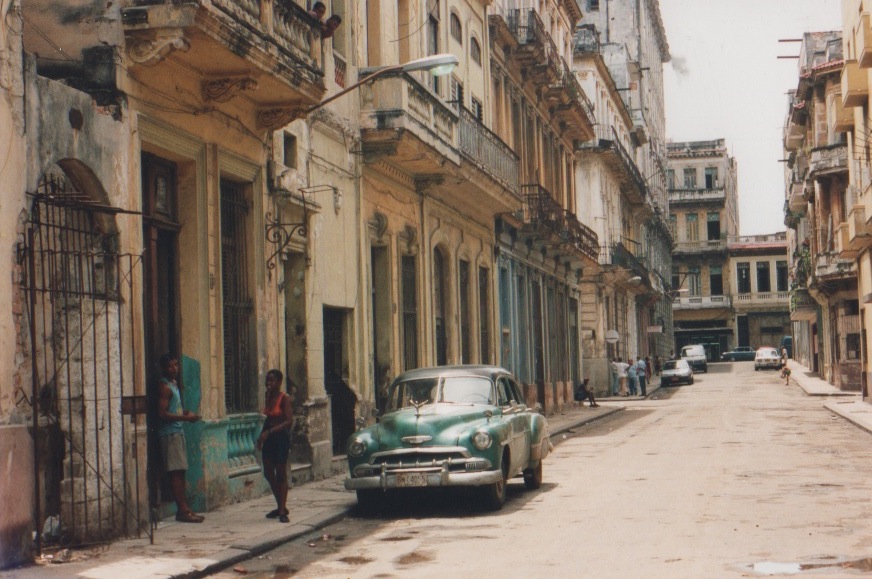
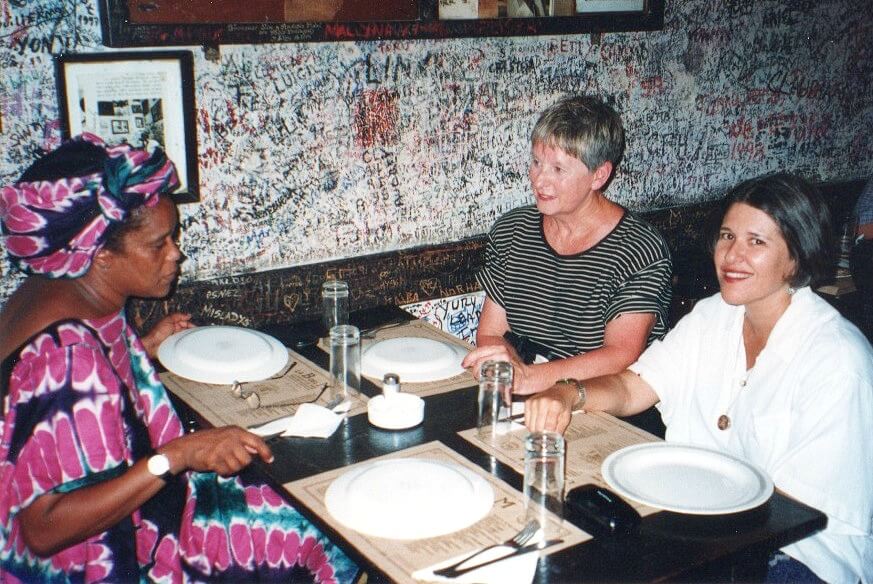
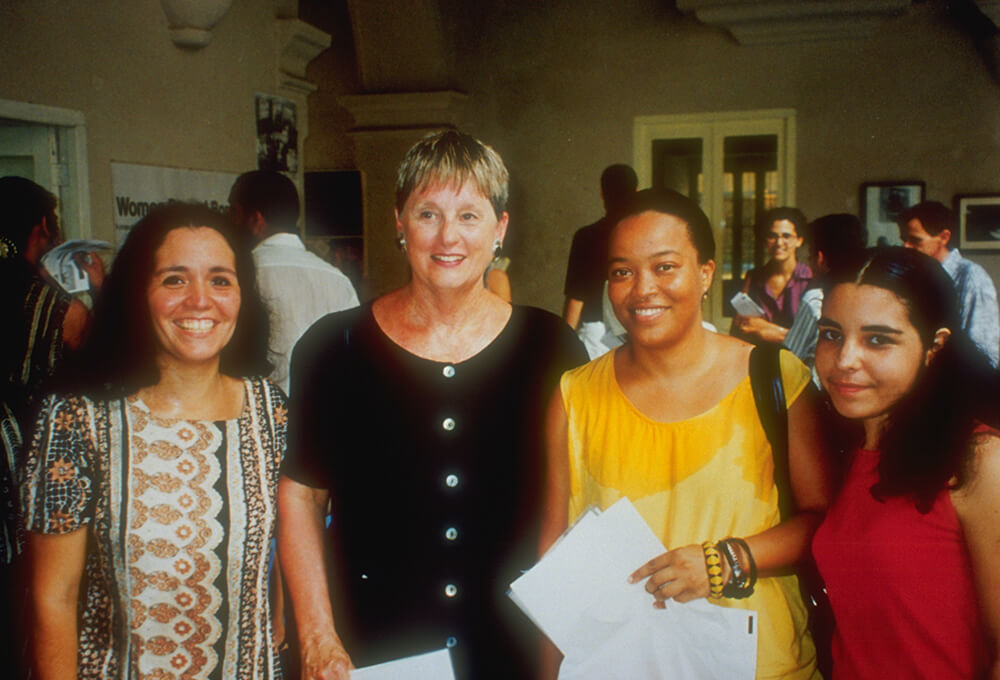
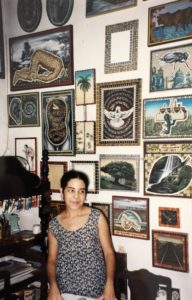
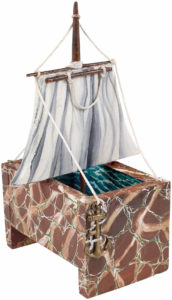
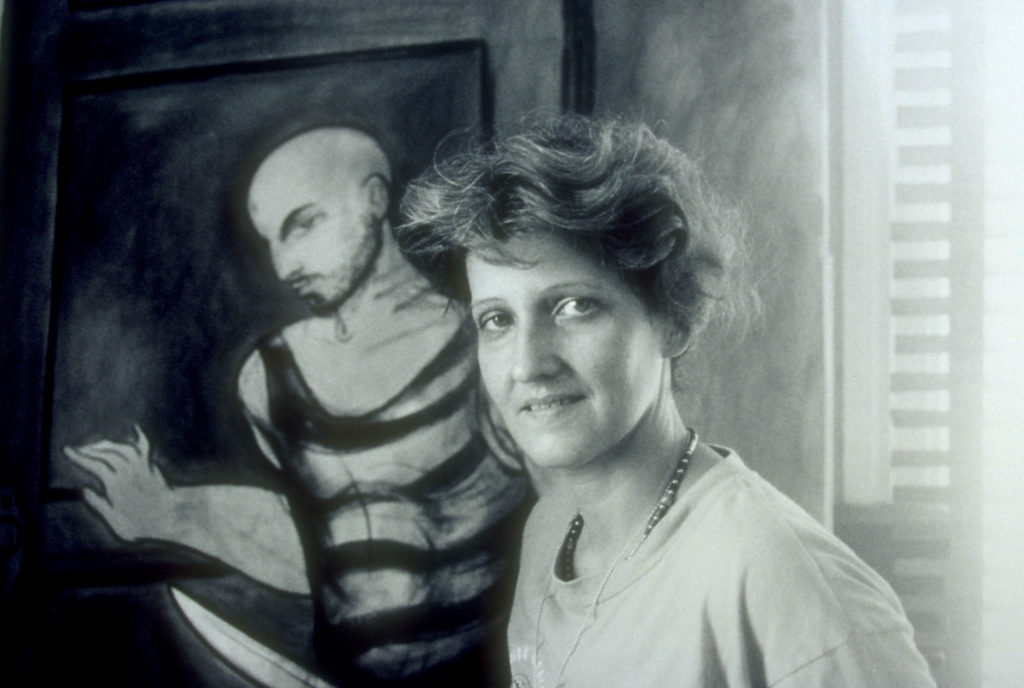
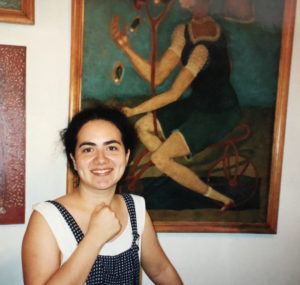
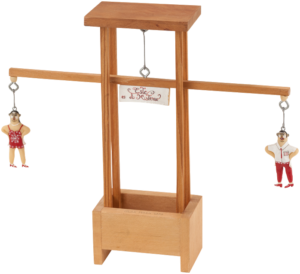
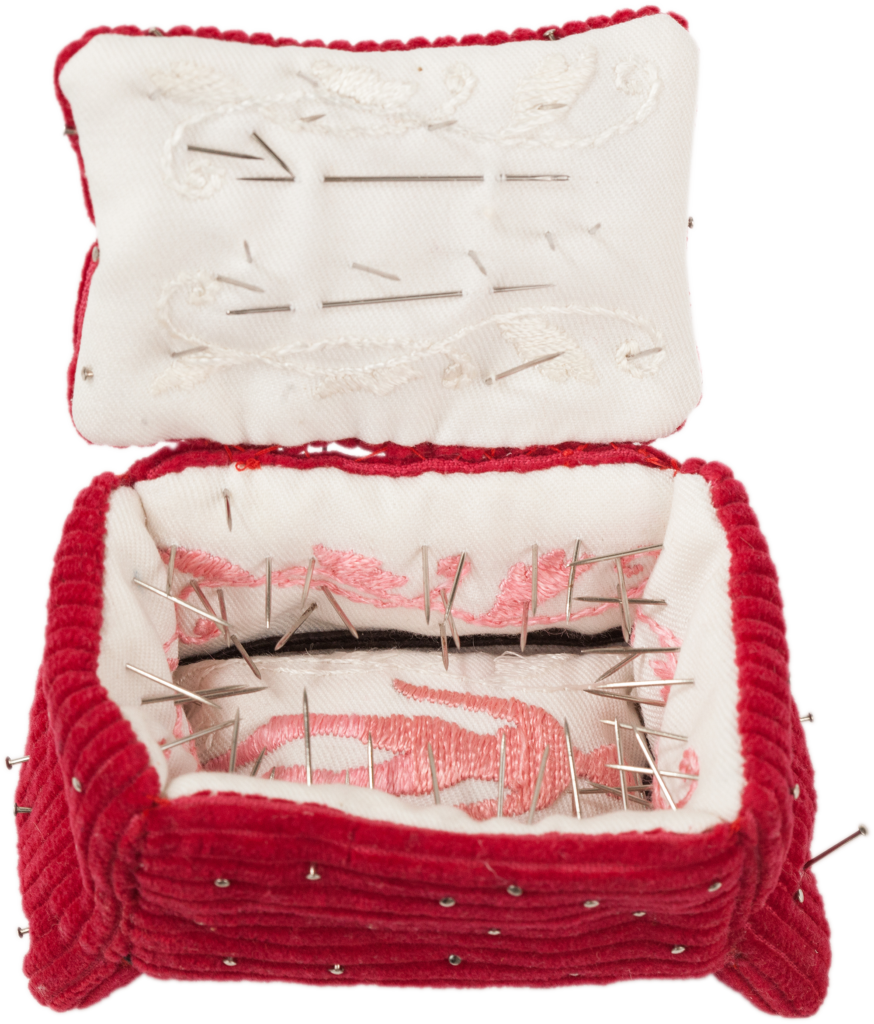
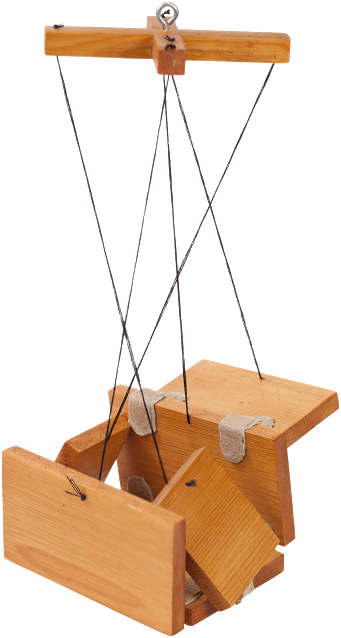
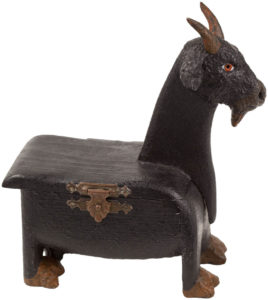
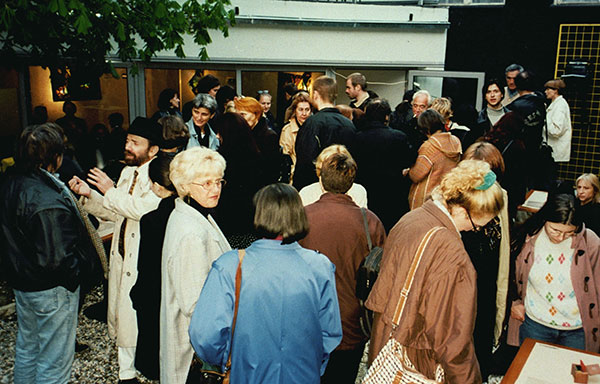
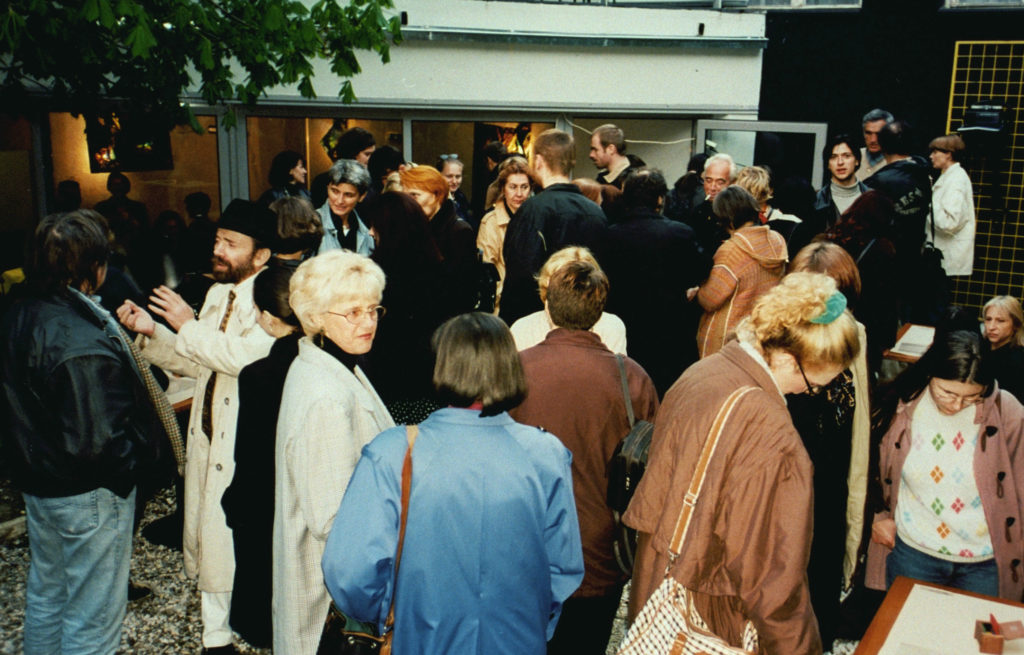
 An indoor and outdoor installation of boxes from Croatia, Bosnia-Herzegovina, and Slovenia was arranged by Nada Beros, curator of the Zagreb Museum of Contemporary Art. In addition, a virtual exhibition of boxes from around the world was projected on the walls. Women participants from Sarajevo were in Zagreb for three days for the event.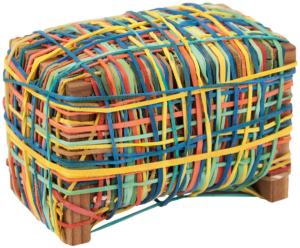
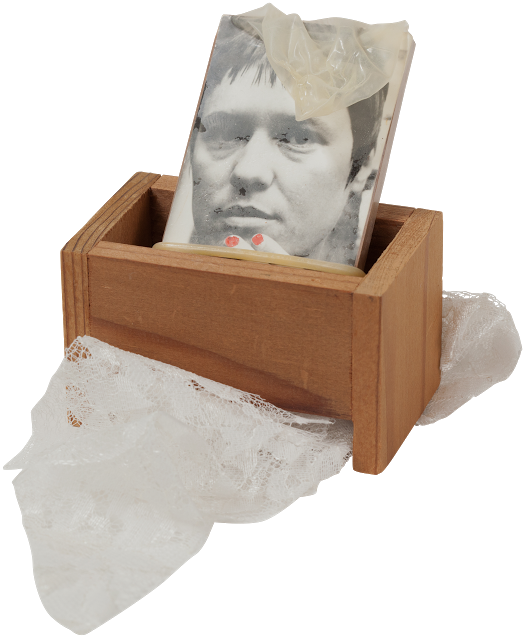


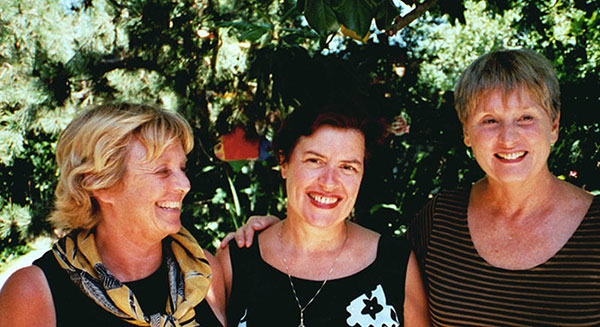
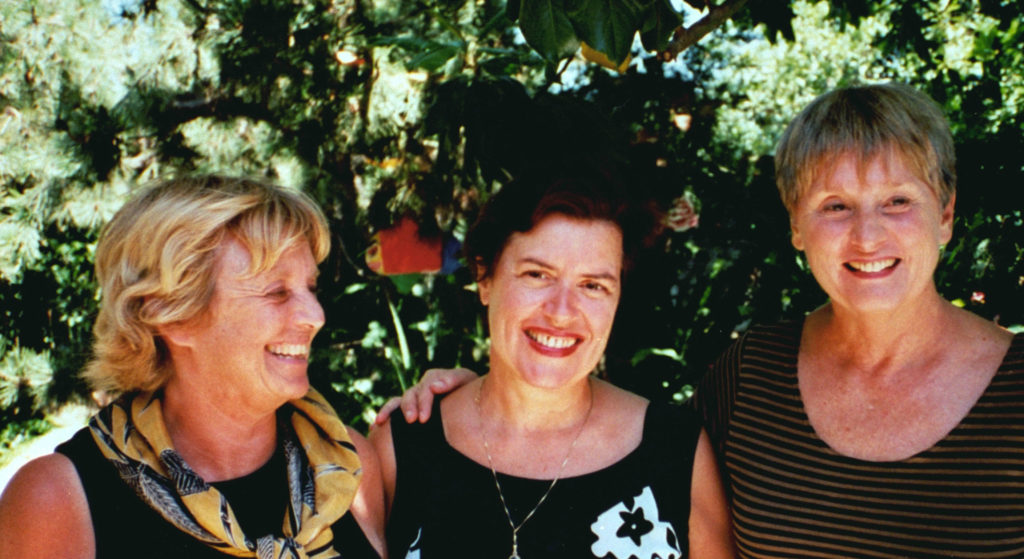
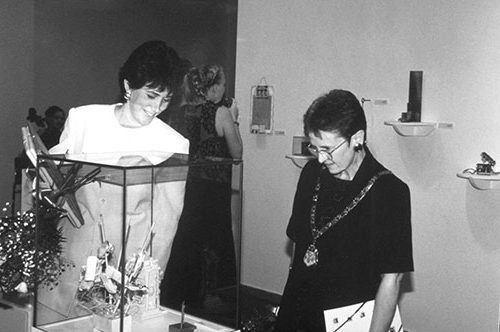
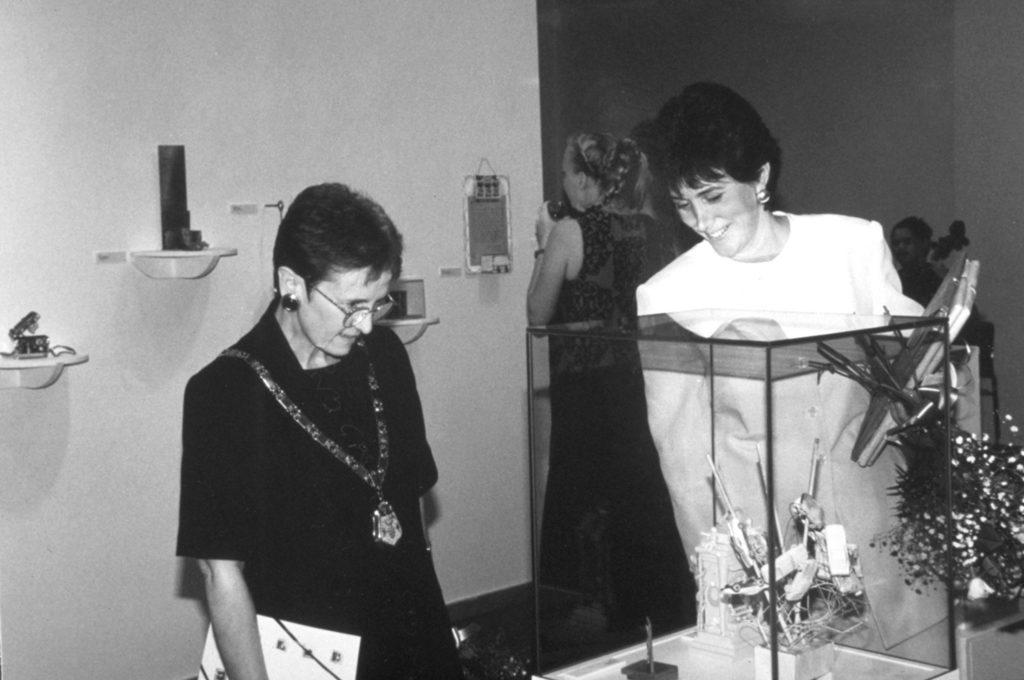
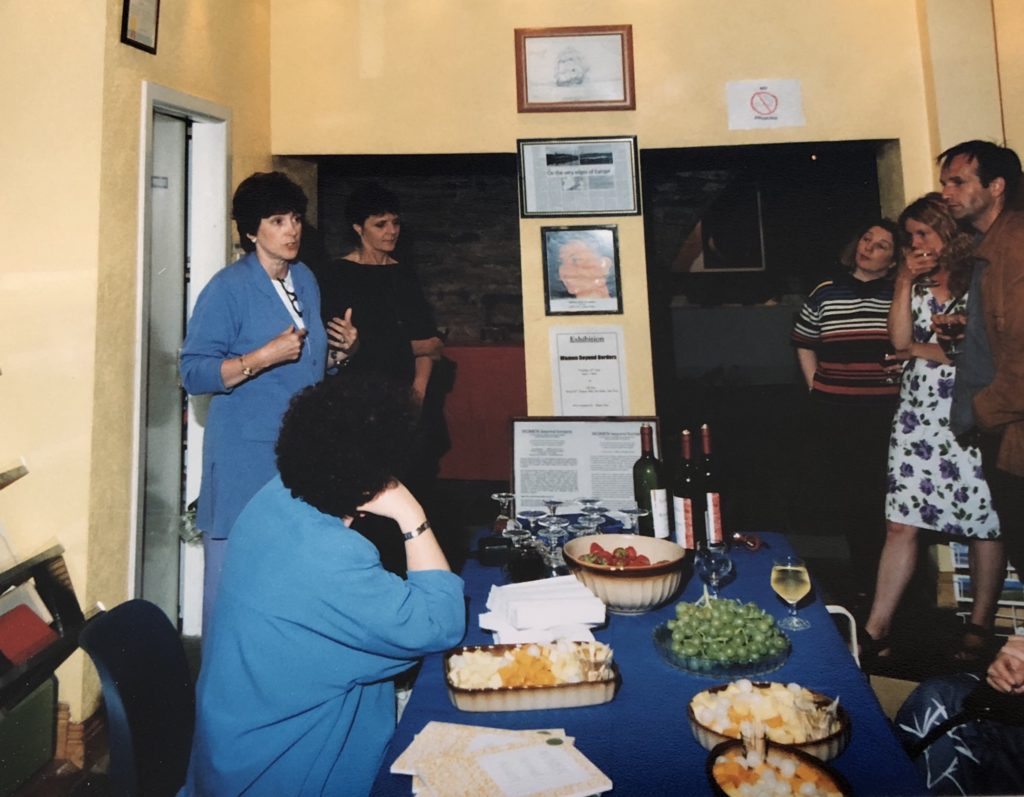
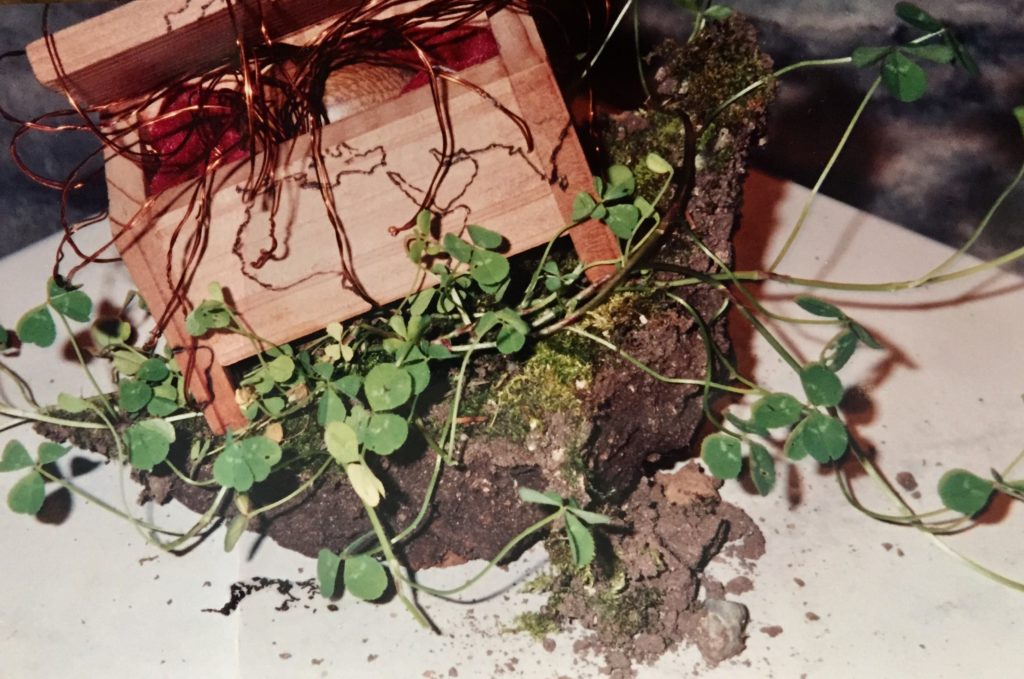
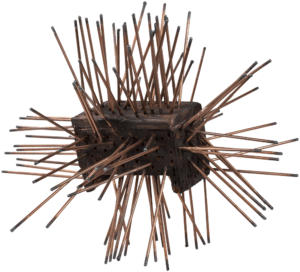
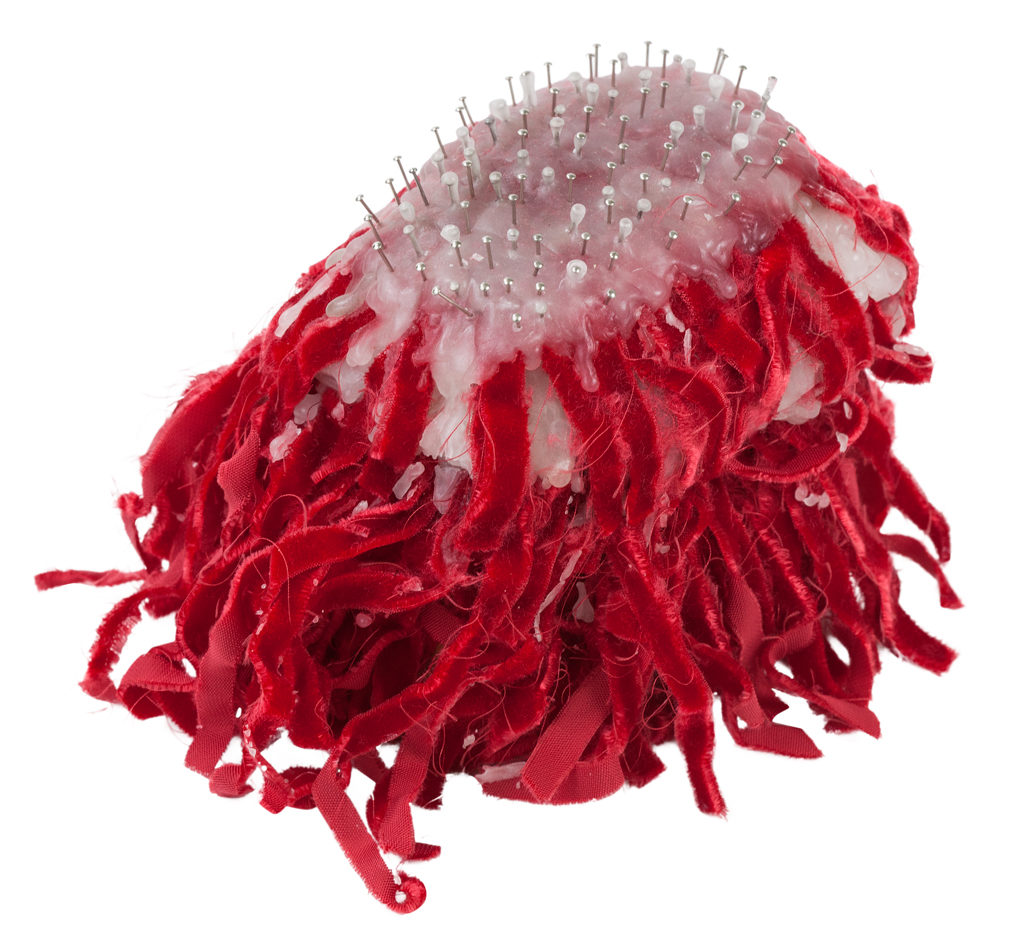
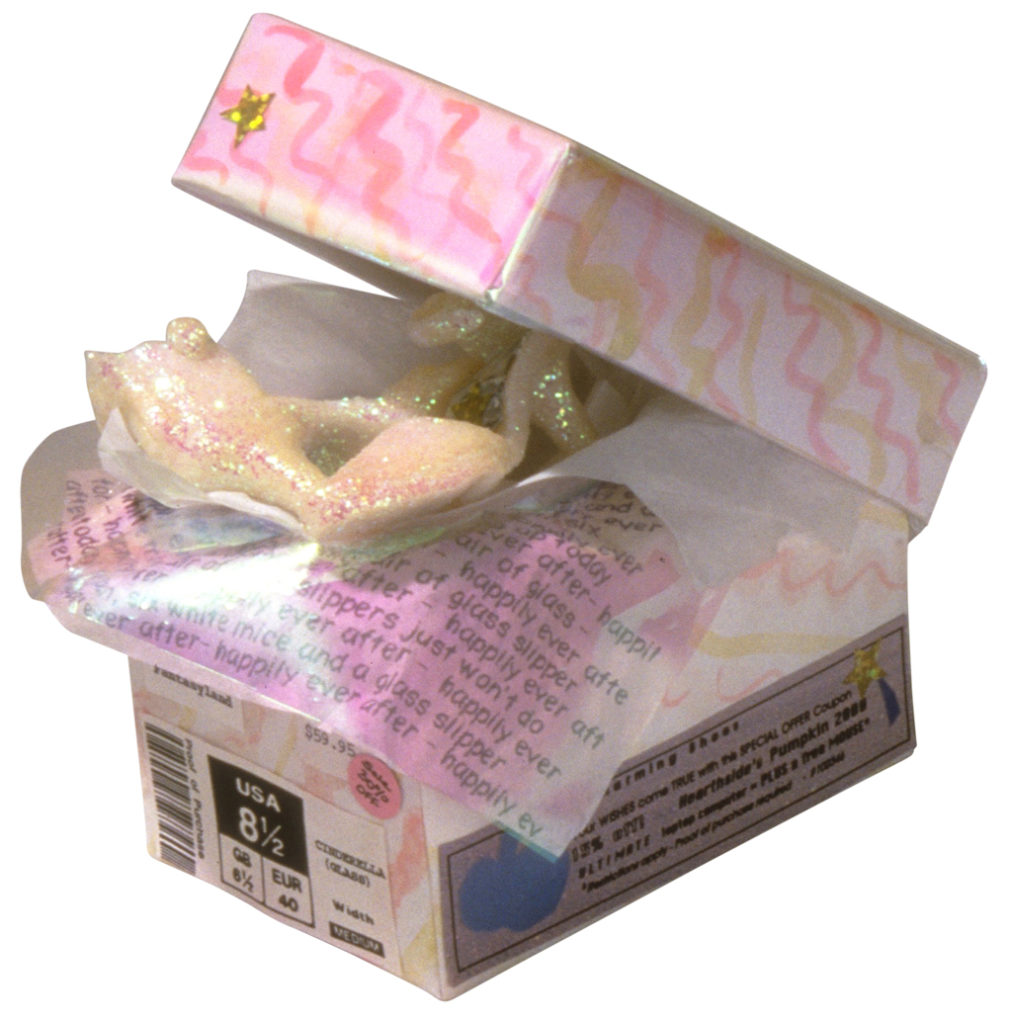
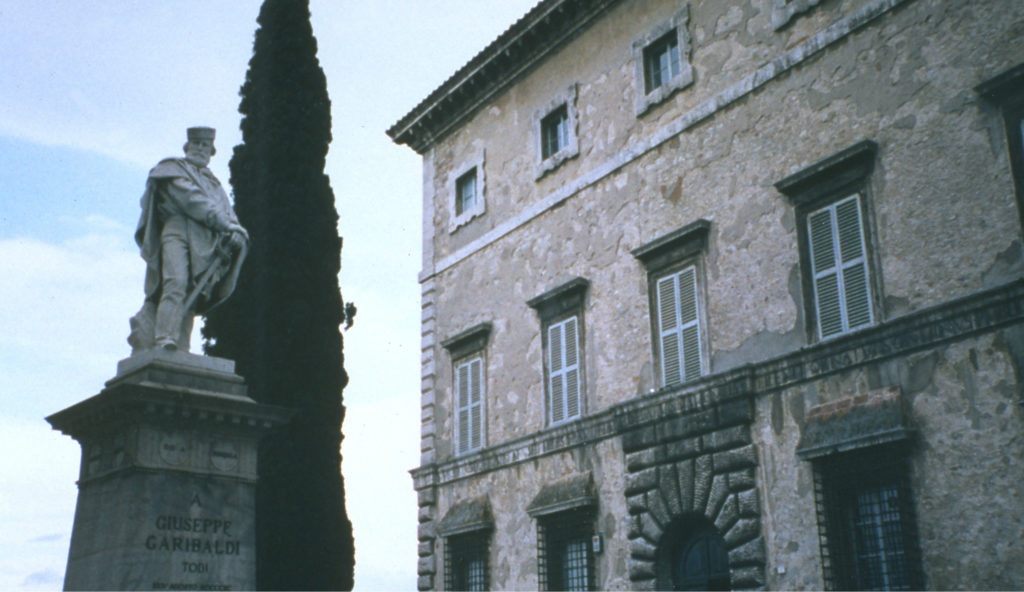
 Gallery Extra Moenia – Arte Moderna, located in a 15th C villa overlooking the hills of Umbria, was the site of the WBB exhibition in Italy. The exhibition brought together WBB participants from Rome, Perugia, and Florence. Anthropologist Dr. Cecilia Gatto Trocchi spoke in the gallery on her impressions of the exhibition. In Dr. Trocchi’s words, “A simple and extraordinary point of departure, fascinating and complex: give a little box to an artist in order to free her fantasy, creativity, the impulse to meet and talk.”