
Tag: collage
Global Vision
As a child, I lived in Europe for several years, enabling me to feel connected to other peoples, languages and customs. Always collecting objects from my travels at a young age, I was preparing to become the artist I am now – an assembler of a great variety of objects, textures and colors.
My goal from an early age was to “become a part of all I have met.” Living in California for most of my adult life it has been easy for me to experience aspects of many cultures, as so many people from all over the world live here.
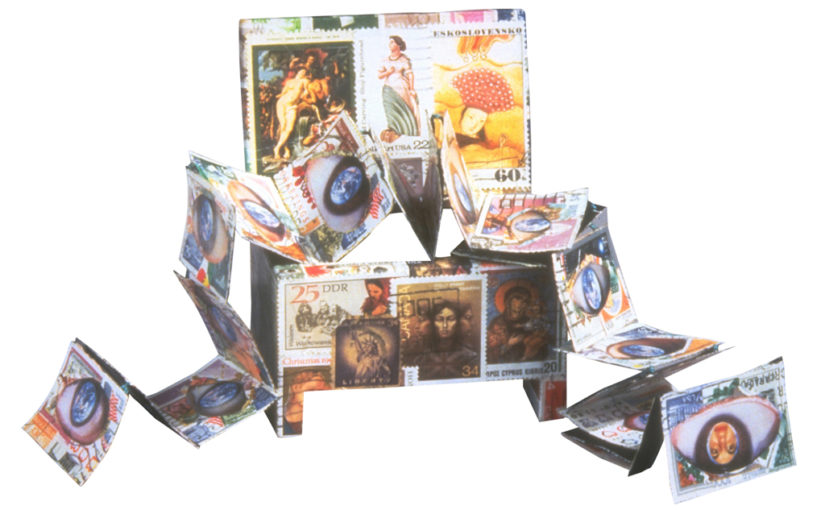
My box is very much about a global view. I chose international postage stamps, with images of women, to cover the box. The “I/EYE scroll” contained within the box includes my quote from above and images of the human eye which approximate the shape of our planet.
I feel that Women beyond borders is first and foremost an expression of clear and profound communication between cultures – a communication that I know will enrich and inspire the lives of many of the women who are participating for many years to come.
I look forward to the new friendships that will be created as a result of our efforts.
Untitled
GRRRLS Teen Box Project.
Re:Mapping
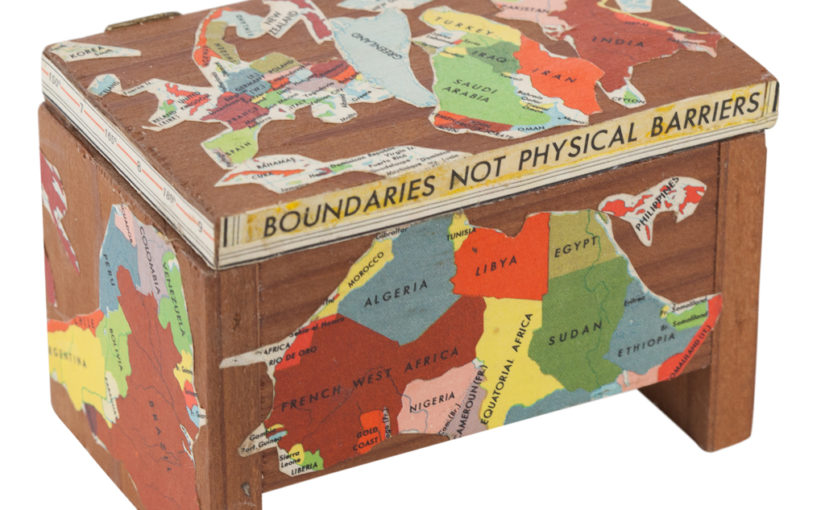
When I was asked to create a box for this project, I wanted to use ideas and images representing the spirit behind Women Beyond Borders. I found a 1957 atlas with a world map and an accompanying text, which are very anachronistic relics of the Cold War era. More than 40 years later we have seen a myriad of changes in borders resulting from our late 20th century, capitalist, post-colonial, multi-national, global politics. More importantly, we know only too well the tragedies that have ensued when multitudes of human beings are displaced and dislocated from their homes and homelands.
On this box I attempt to re-map the world to show the arbitrary and contrived nature of geo-political borders. While many countries appear as they are today, some nations no longer exist and others have yet to be established. I have tried to de-contextualize the borders to remind us how they are always in flux. Inside the box is an idealistic and paternalistic text fragment from the atlas, a bittersweet reminder of a 1950’s American dream that has all but collapsed as we approach the year 2000. The text on the lid is my own bit of wishful thinking: Even though boundaries will undoubtedly persist to exist, hopefully they will not continue to prevent us from moving freely across borders.
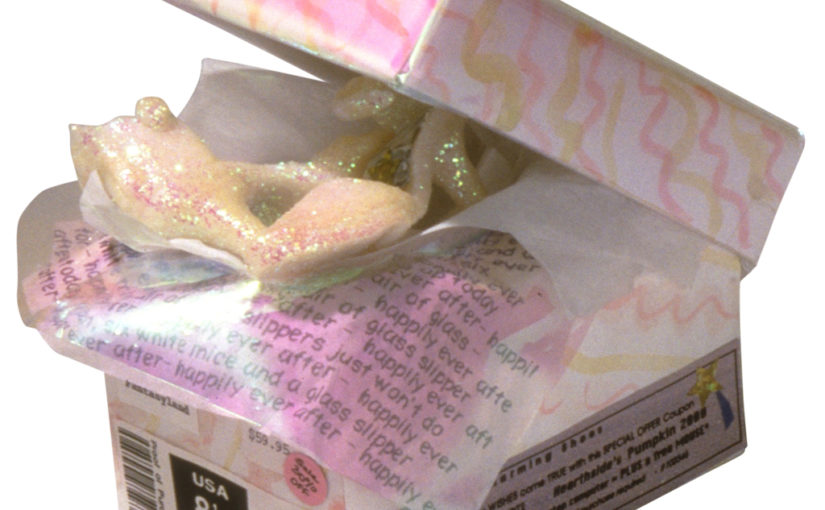
Dispelling the Cinderella Myth
For all the girls growing up today:
A Pumpkin, Six White Mice,
and a Pair of Glass Slippers Just Won’t Do.
Dedicated to Mindy Bingham and Sandy Stryker.
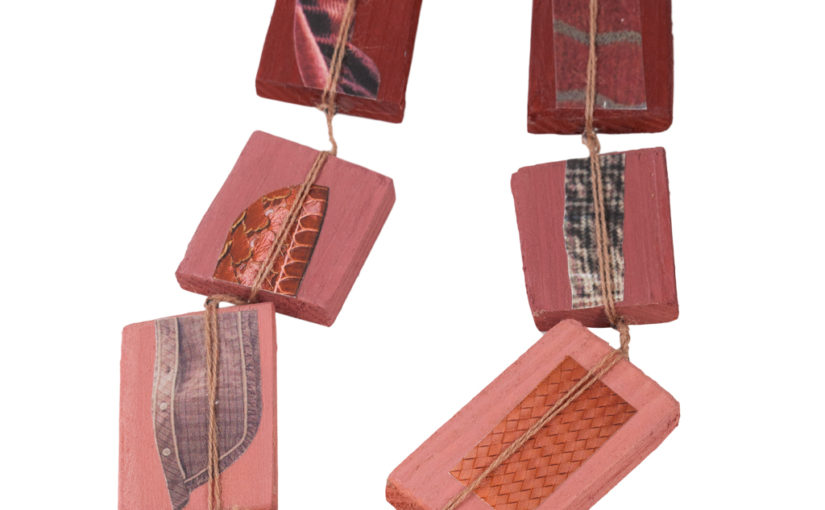
Justica
Tajima Box Project. An artist and an extraordinary woman collaborate to create a box.
Julie Su, Esq., LITIGATION DIRECTOR, ASIAN PACIFIC AMERICAN LEGAL CENTER, RECIPIENT OF THE MACARTHUR GENIUS GRANT and Nancy White, ARTIST
Too often, we fail to think about where the clothes we wear actually come from. Clothes, like this necklace, are worn, but they are also made—made of fabric sewn together by human beings. Women workers are the faces behind the garments we wear, hidden as in this locket, invisible, yet upon closer examination, resilient, strong, able to rise up against exploitation and sweatshop conditions to raise one voice, in many languages, for justice.
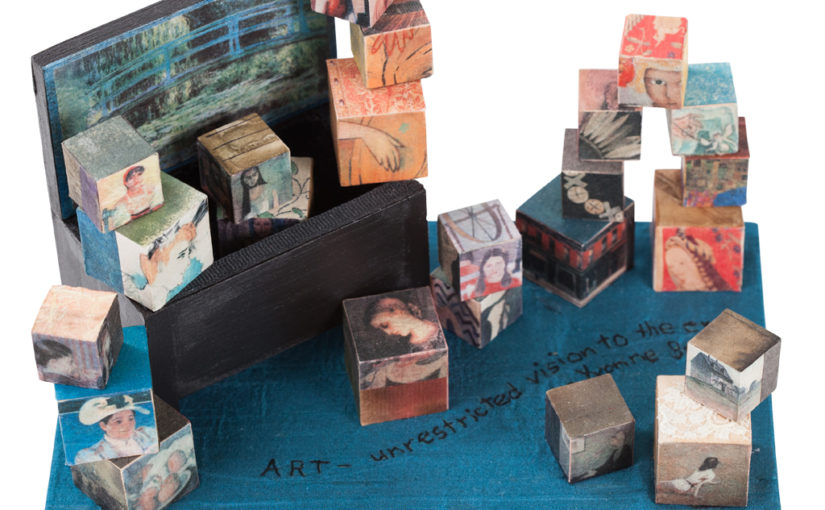
Art Box
Tajima Box Project. An artist and an extraordinary woman collaborate to create a box.
Yvonne Banks, Owner of Art Consulting Services and Marie Hassett, artist.
Yvonne Banks is passionate about art! She has been instrumental in bridging the art world with the rest of our community for over 20 years as an art consultant and former gallery owner. Art Box is a tribute to her contributions. Her own vision and tireless energy strengthens her advice to young women, “You can do anything if you’re willing to work to get there.”
It was my pleasure to spend time with Yvonne sharing stories from our lives, finding commonality in our experiences as mothers, gardeners and lovers of art.
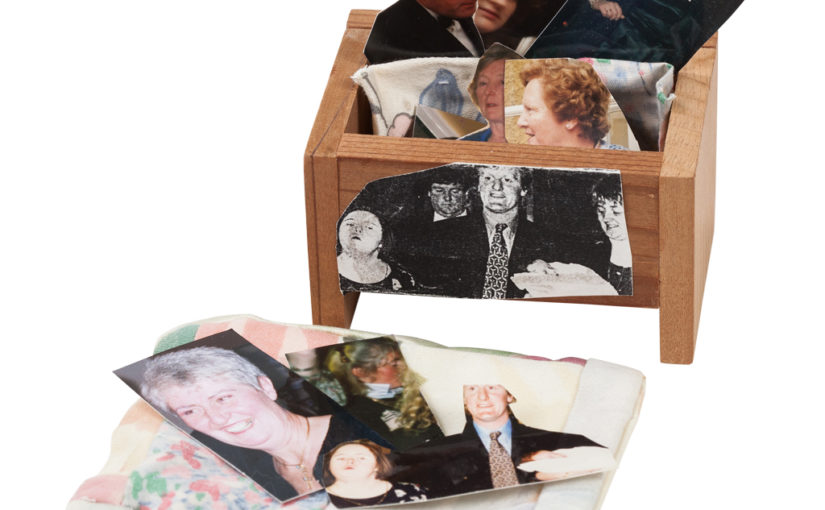
The Family Box
Croash Patrick
Time to talk to learn memories from the past
Pick up after the loss of some of my family
Hope in peace beneath the wings and carry me away from strife
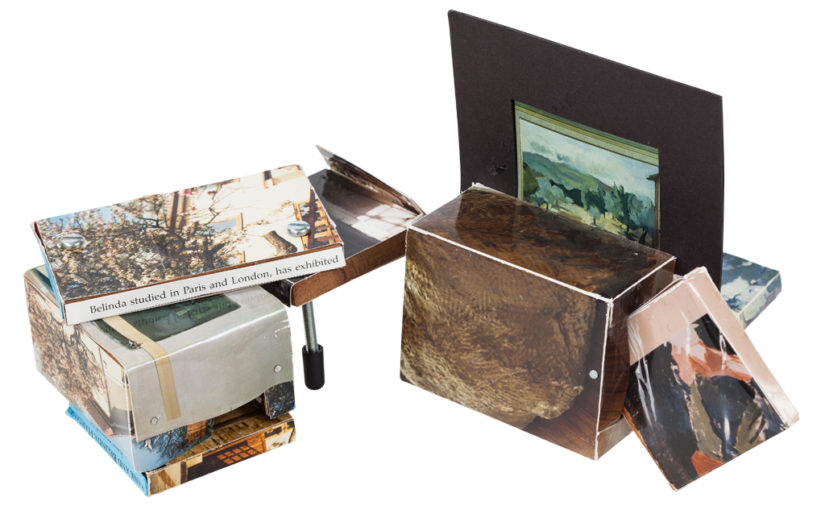
Moving
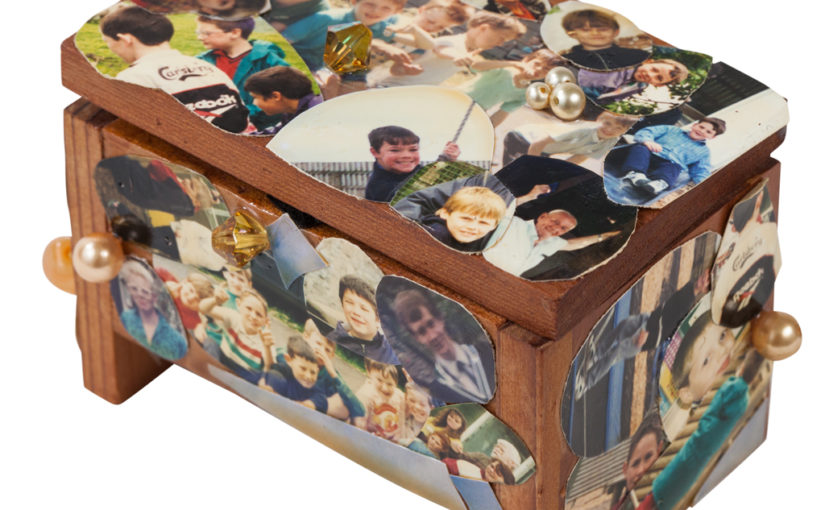
Jewels In My Crown
This collage was inspired by the fact that much of my working life has been spent with children. I also included my own children and other members of my family and friends who have been supportive of my efforts. It encapsulates lots of memories for me.
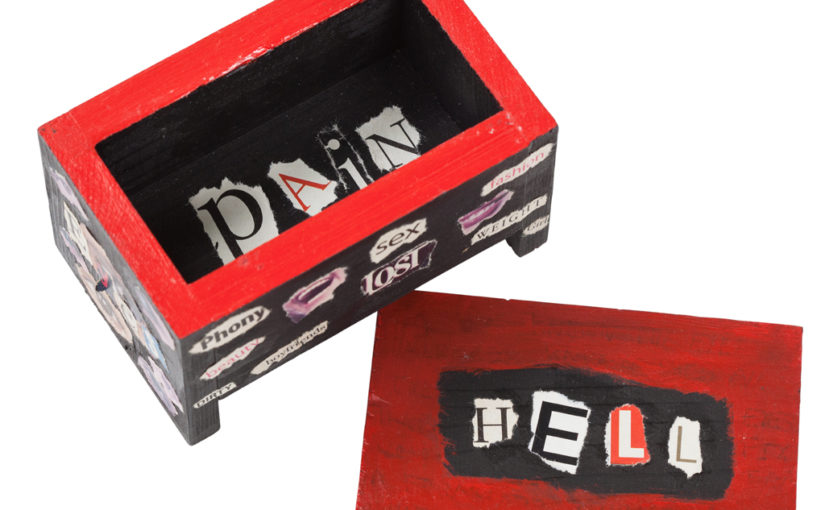
Untitled
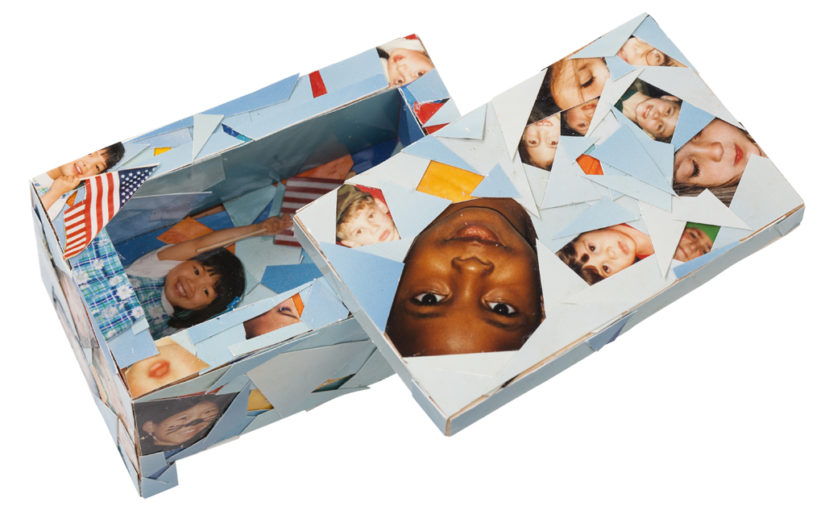
Mosaic
This box represents the beautiful mosaic of children in the United States. The girl holding the flag is my niece who was recently adopted from an orphanage in China and became a U.S. citizen.
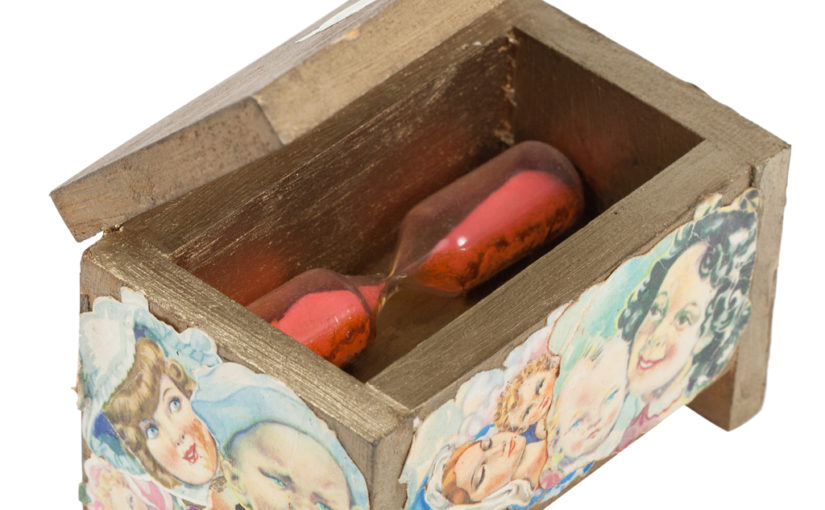
Untitled
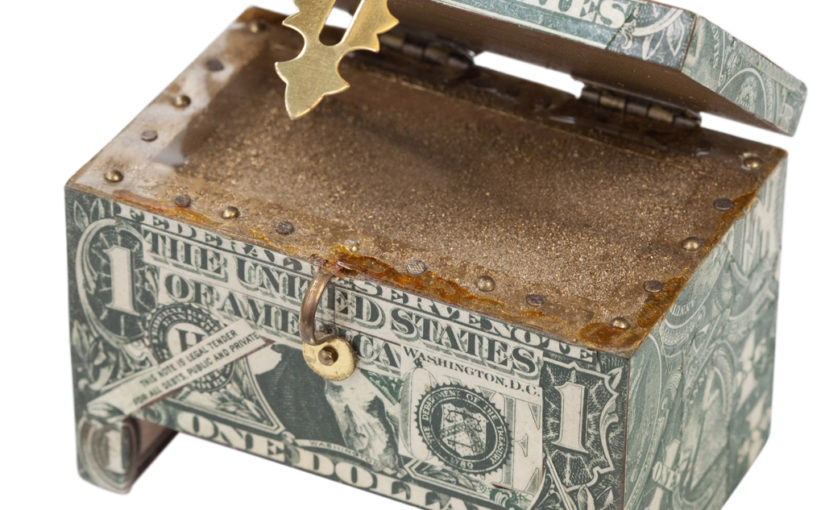
The Guardians R Us
The One Dollar Bill, rather than any other currency, is to me an art form.
Green and White = the colors of peace.
Gold = the heart of women everywhere.
And a symbol for stability and universality.
Additional boxes by same artist
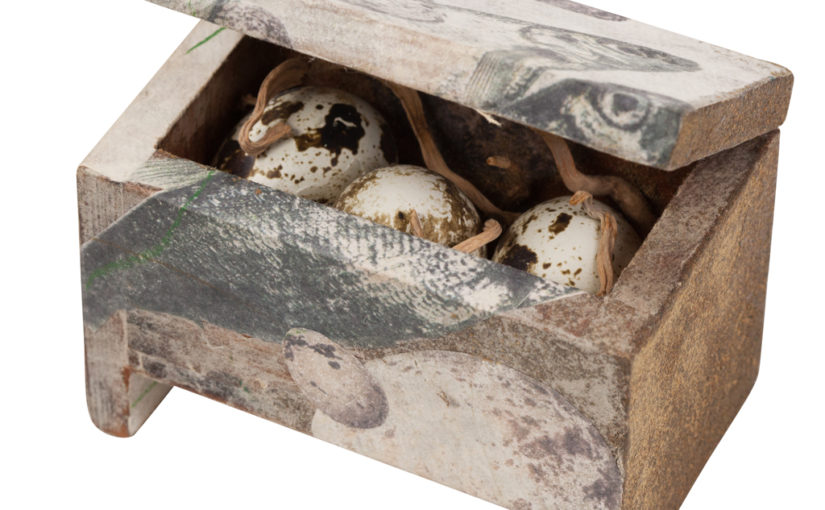
Untitled
The critical point that reflects
and fuses inanimate sensitivity
with nature’s understanding.
The differentiated shadow of dreams.
The resonation of conception.
The shearing of thought.
Spiritual Evolution.
Inspirations more archaeological than literary.
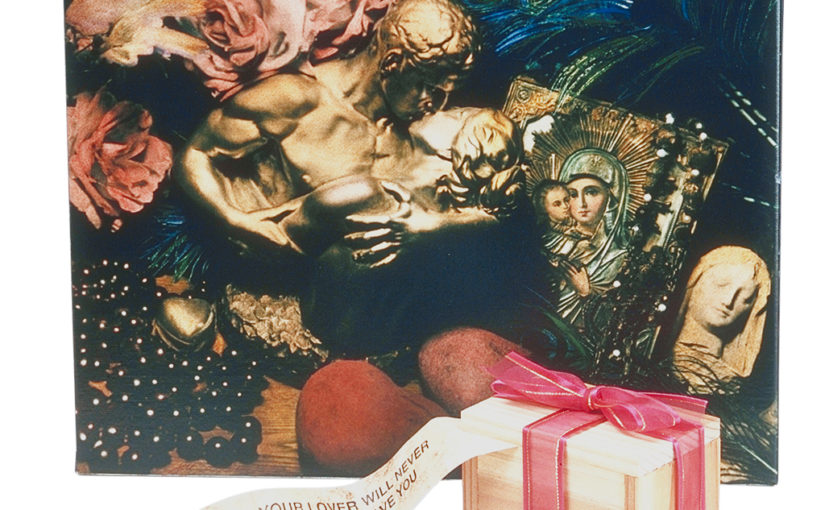
Pure Love
The love that a man
feels for a woman
and a woman’s love
for a man
is the true longing
that in all hearts
yearns for union with God.
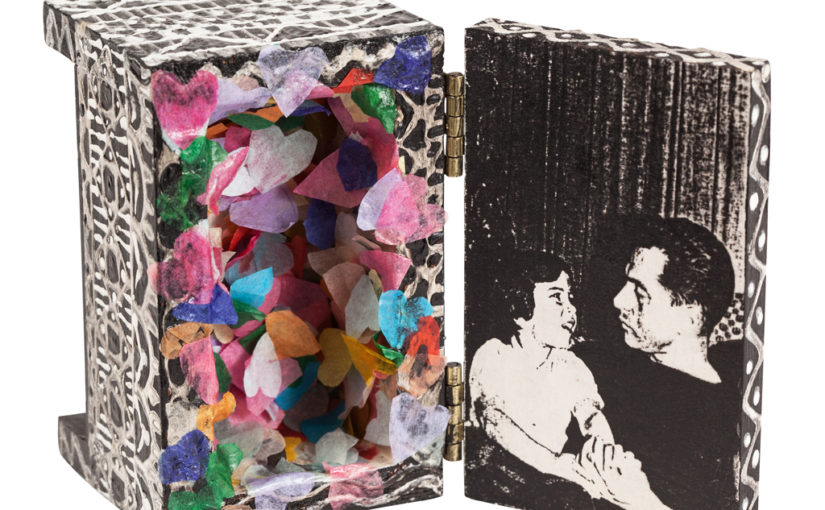
Al Cuore del Cuor
My connection and admiration for my fellow women grow ever stronger as I grow older. This was to have been the theme of my box.
My father died in my arms a short while ago, calling “Mama.” How varied, how interchangeable, how understanding of the incomprehensible we must be. How I strive to trust my instinct that taps deep, deep, deep into the strength, the capacity, the tenacity of a woman.
My box is for my father, whom I miss with all my hearts. He was a painter, he taught me to see.
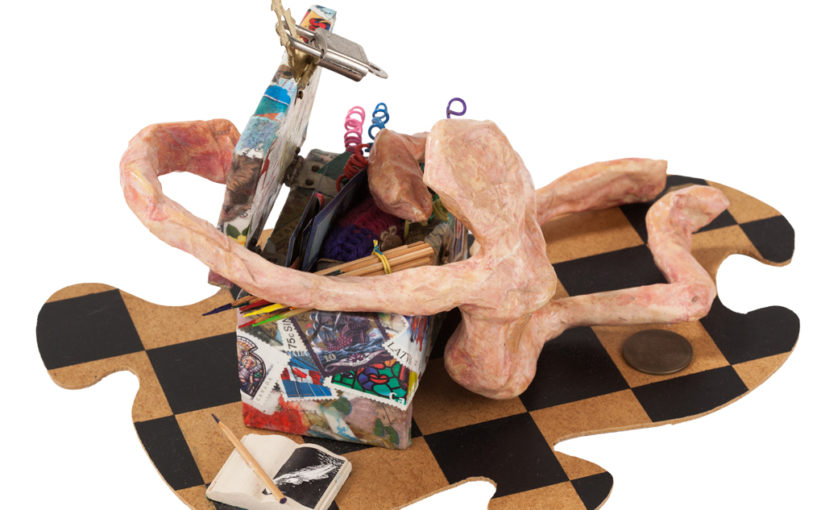
Kristine’s Hope Chest
The central character in this visual story is the Hope Chest. I play a secondary role and I am represented here by the paper mache figure with the hole in her soul and an exposed heart. The setting “Life” is a jigsaw puzzle piece cut from a chess board.
The first things to be taken out of the chest are my sketchbook and pencil. There are three other items on the board and they symbolize external influences that always shadow my moves.
The contents of the chest are: two teddy bears, a doll, a key, a warm knitted blanket, a couple of books, paintings (my work and that of others), pencils, a tin angel and bits of coloured wire. All these items are needed by this nest builder to turn a room or apartment into HOME.
The colourful tin angel was given by a friend, here it means friendships and friends who are sometimes angels.
The colourful curly corkscrew bits of wire are the wonder and amazement that I carry around with me.
On the inside of the lid is a rejection notice from the New Yorker Magazine, and a letter written by my granny when she was 65. She lived and died in Latvia. She learned enough English to cobble together a now cherished letter to her 10 year old granddaughter.
I write a lot of letters and the stamps are the decals from my travels by mail.
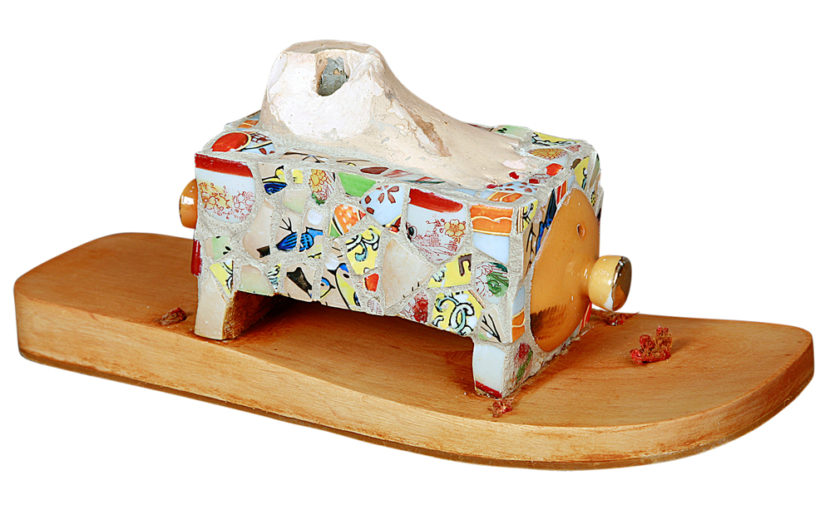
Bound – Unbound
“The child’s foot doesn’t know yet that it’s a foot,
And wants to be a butterfly or an apple.
But then stones and pieces of glass,
Streets, ladders
And the paths of the hard earth
Go on teaching the foot that it can’t fly,
That it can’t be a round fruit on a branch.
The child’s foot then was overcome, it fell
In the battle,
was a prisoner,
condemned to live in a shoe.”
From To the Foot from Its Child
By Pablo Neruda
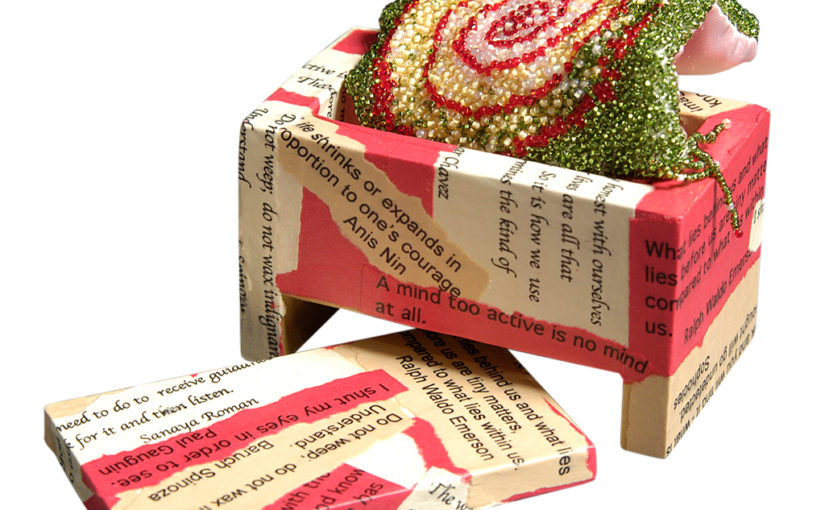
Ask for Guidance
When I started this project, I had a general idea of what I wanted to say and how I would do it. However, once I started beading it began to take on a life of its own. For one thing, the beading took much longer than anticipated, which forced me to slow down and enjoy the process.
Beading is a mechanical type of thing which allows contemplation while still doing the work. It began to look a bit different than I planned and time was getting short so while I beaded, I literally asked for guidance and trusted that this would lead me somewhere. Is it a pillow, a blanket, a symbol?…it is any and all of these things and a place to rest and to think. The idea to glue messages to the box came as I beaded. Lesson learned.
“All you need to do to receive guidance is to ask for it and then listen.” Sanaya Roman
“Learn to get in touch with the silence within yourself and know that everything in this life has a purpose.” Elizabeth Kubler-Ross
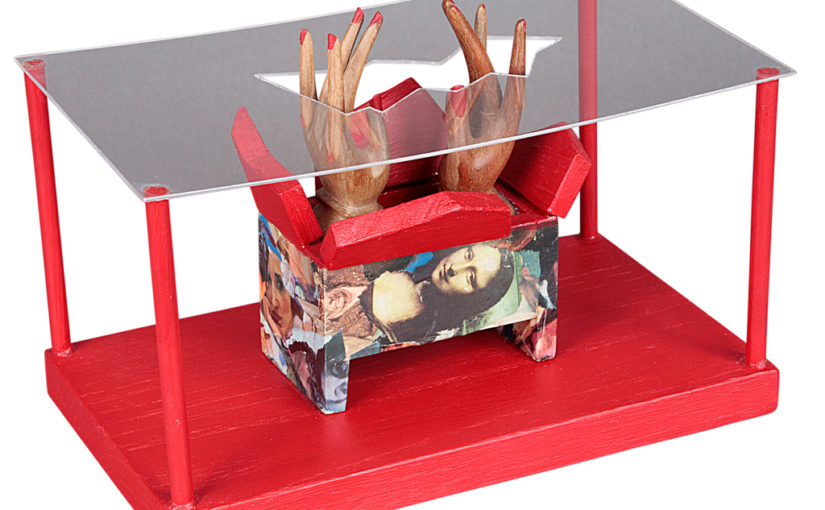
Breaking Out of the Box…
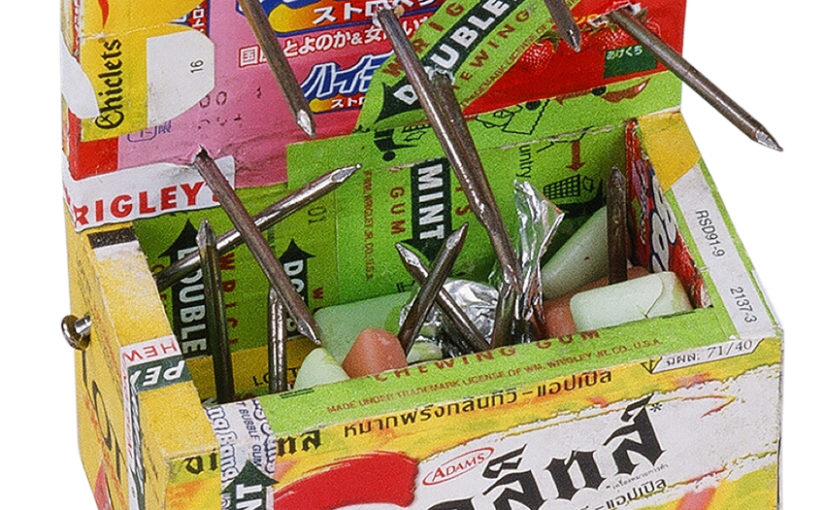
I Would Still Like to Have…er…Chewing Gum
The ban of chewing gum a decade ago has caused quite a stir not only in Singapore but internationally too. Although it may seem to be a trivial act or even unimportant matters in a political dimension, it has nonetheless created some public awareness of how far an average citizen can tolerate this form of authoritarian regime.
As a law-abiding citizen of Singapore, I have no choice but to give up one of my favorite habits and life’s little luxury during my younger days. Nowadays, we can still spot someone chewing gum discreetly in public especially on board of public transport. It’s not a big crime or anything like that as long as it is disposed properly into the bins. Although the government has shown a good degree of tolerance, it is still against the law to sell or import chewing gum.
I still chew gums that I brought back from overseas and enjoy blowing big bubbles like I used to so; what’s a little law-breaking gonna do to me?
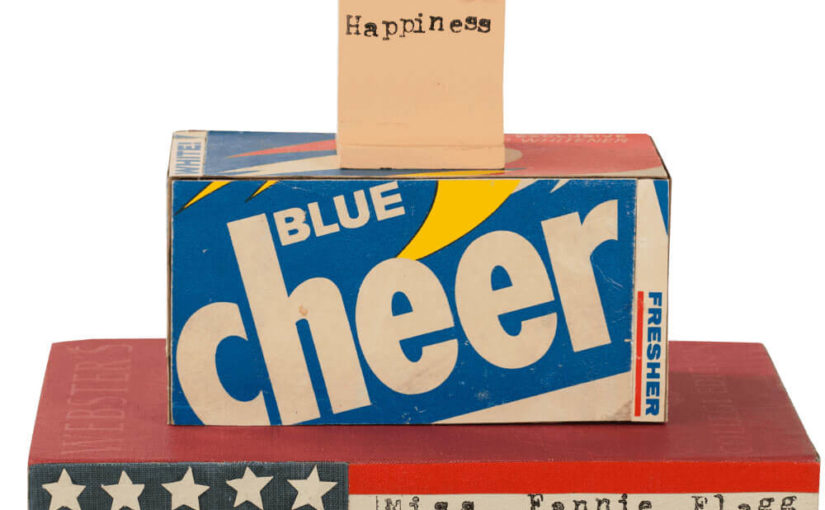
Fannie’s Soap Box: The Story of an American Cheerleader
Tajima Box Project. An artist and an extraordinary woman collaborate to create a box.
Fannie Flagg, ACTRESS, COMEDIAN, AND AUTHOR with Ramona Otto, ARTIST.
When I was told that I would be doing a piece on Fannie Flagg, I was honored. We are from the same generation, and I’ve always enjoyed her TV and film work, and was impressed that she was also a brilliant author and screenwriter. Because word play is often a part of my work, my original thought was to make the box into a soapbox, and then I could make the theme into whatever message was important to Fannie.
Fannie’s wish was to have a positive art piece because she was tired of all the negative art and energy being released into the world. She hoped her piece could reflect that life was good.
I hope my title gives a whole new meaning to the word “cheerleader.”
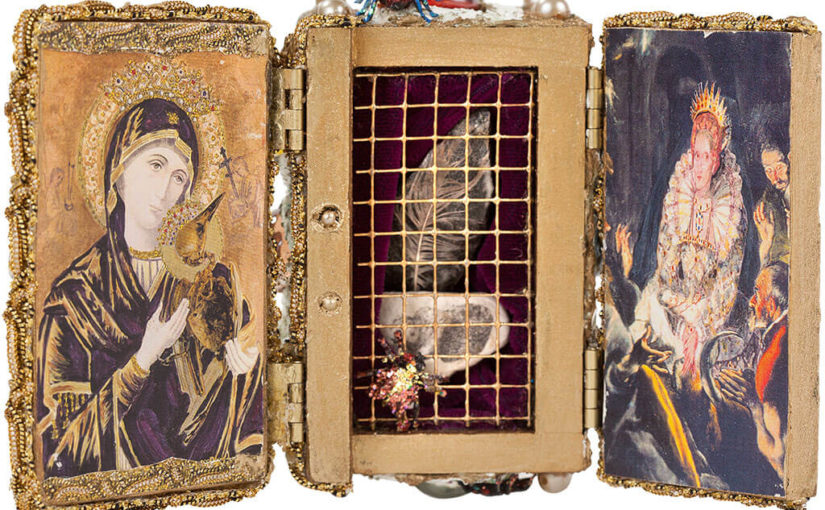
Two Virgins
We Are This and That and Everything In Between
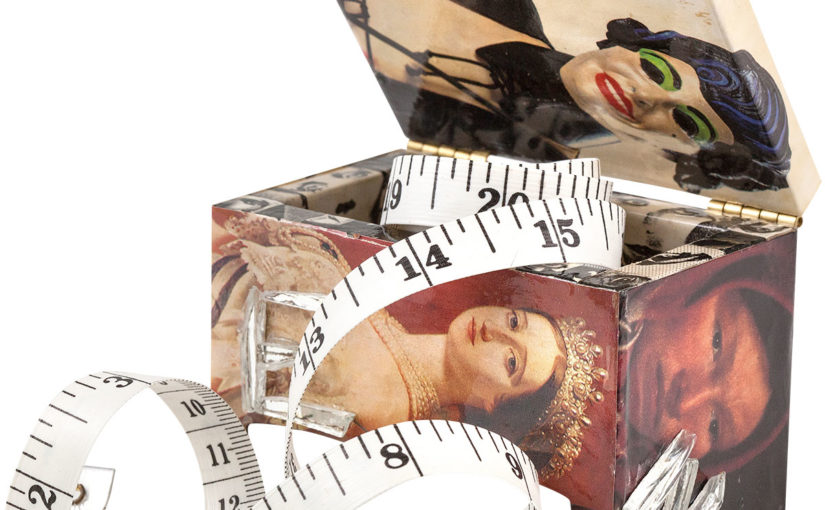
Ironically, rather than dealing with the Individual, Western society tends to place us in particular categories (little boxes) and more specifically opposing polarities in order to deal with us more easily, more quickly, less personally.
This easy stereotyping is even more prevalent in regard to the position of women: Madonna/Whore, Mother/Worker, Young/Old, Beautiful/Ugly, Nature/Culture. This box contains references to the stereotyping that we as women experience and the title, We are This and That and Everything in Between, refers to the true individual nature of the female sex.
The Women’s Voices: Diana Robson from WOMEN BEYOND BORDERS on Vimeo.
From a Picture Frame On My Mantelpiece
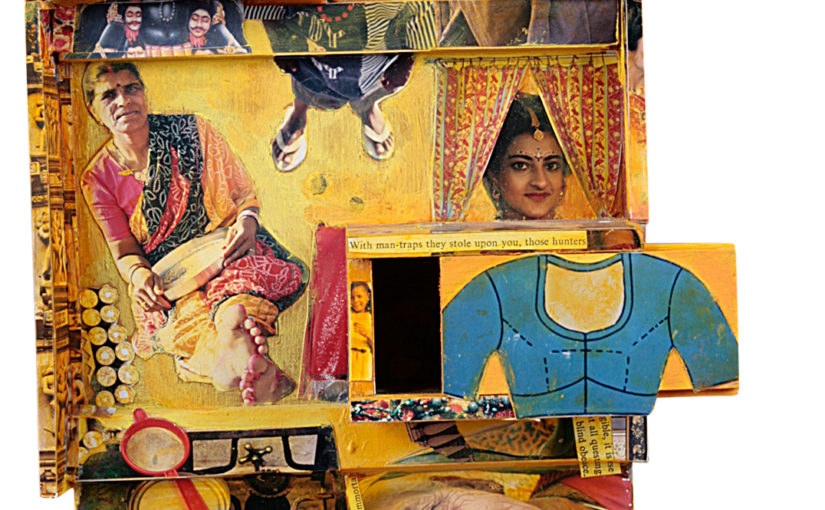
As a 32-year old female Indian Diasporic artist, my preoccupations are complex. Feelings of confidence and vulnerability exist at the same time. My formal research, for the longest time, has been a documentation of my interactions with people and experiences by using photography. These photographs form part of a tale. The front, from top to bottom, depicts a meandering path of images of women, starting from infancy to old age. The back of the frame shows my life, whilst growing up in a politically charged environment, that all pervasive racism between the whites and the blacks and the Indians, and my moving to England at the age of fourteen, conflicting lifestyles, hidden desires, and a magnetic pull towards my (so-called?) homeland, India. Almost all my work reflects my relationship with India. In that murky sea of conflicting humanity, a different code is at work; therefore I am not in control, and have much to learn, and to re-learn. This preoccupation is less a romance, and more a sort of obsessive compulsion.