womens beyond border logo

BOXES beyond borders

Sor Juana

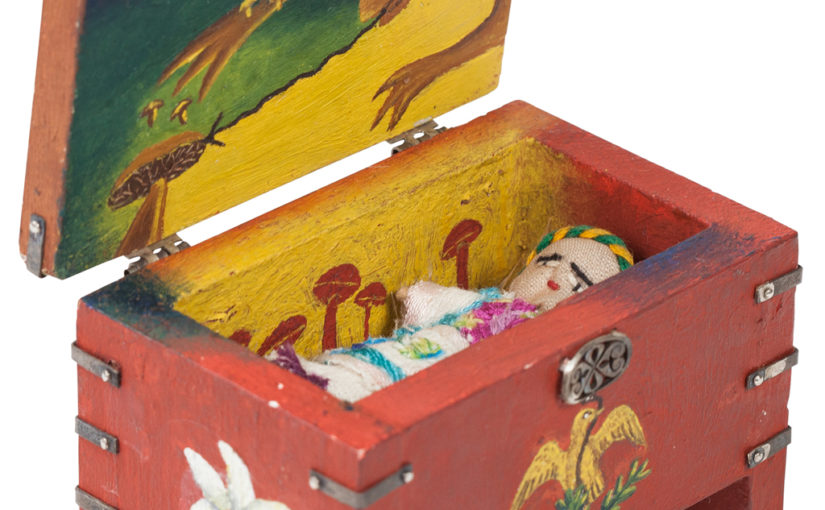
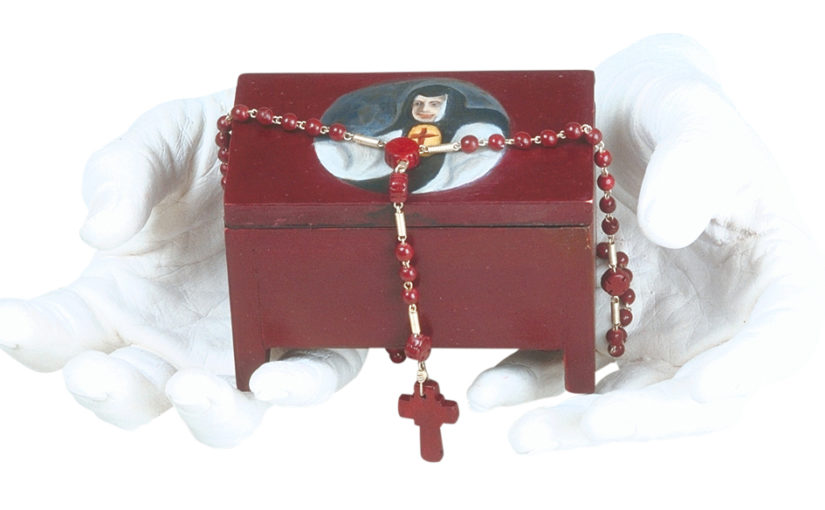
Sor Juana Ines De La Cruz was a 16th century Mexican nun. Not only was she one of the greatest poets and playwrights of her time, she was also the first person on this continent to argue in writing for the rights of women to be educated.

In Sor Juana’s time, a girl had only two real choices: she could marry or she could join a convent. Juana was illegitimate and had no father to pay her dowry, so marriage to a wealthy man who might foster her deep love for knowledge was out of the question. Marriage to a poor man would end her education, so reluctantly she joined a convent. In her convent she had extensive free time which allowed her to continue her studies.

Although she was not allowed to leave the convent, she was allowed visitors and many important people came regularly to visit this brilliant woman. She became quite famous and her books were bestsellers in Spain.

Defying the Inquisition and the profoundly patriarchal world she lived in, she filled her room with over 4000 books and wrote voluminously, particularly poetry. Later in life, she was threatened into silence by the male Church hierarchy and forced to sign a statement of repentance.

Her final days were spent caring for the poor, and she died after she gave up writing while caring for her sisters during a plague.

In her room was a sign that she had not completely surrendered; an unfinished poem, carefully hidden.
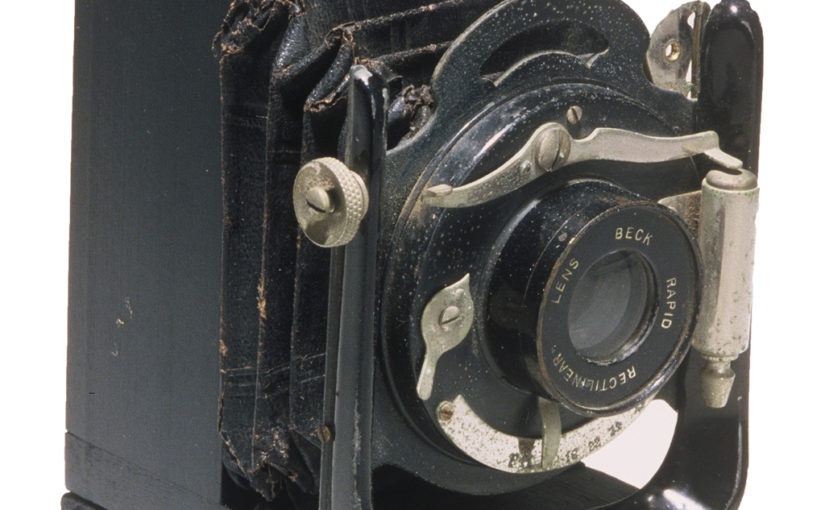
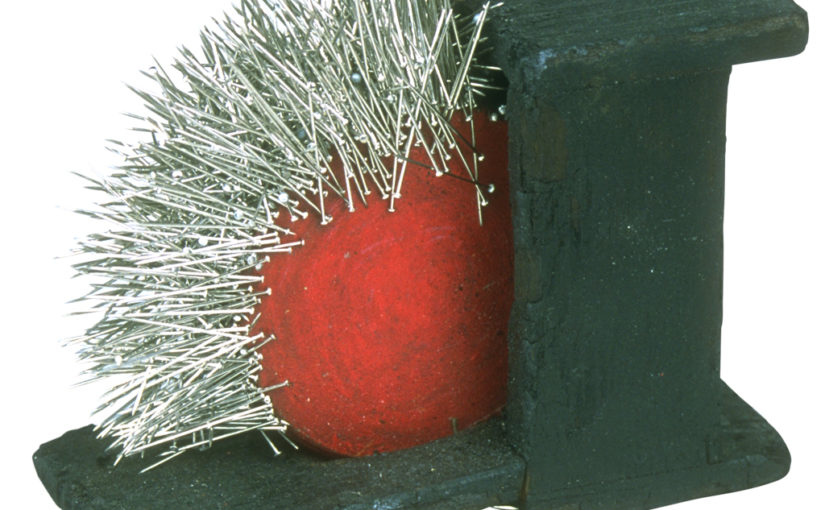
Box Camera

Box Camera reflects our life-long commitment to the photographic arts from traditional to digital. It is an homage to earlier technical forms of imaging.

The tintype of the woman with books hints at Penny’s profession as a librarian and bookseller and incorporates the idea of educating women to expand their boundaries. Photography is a universal language crossing all borders.

Apricot Box

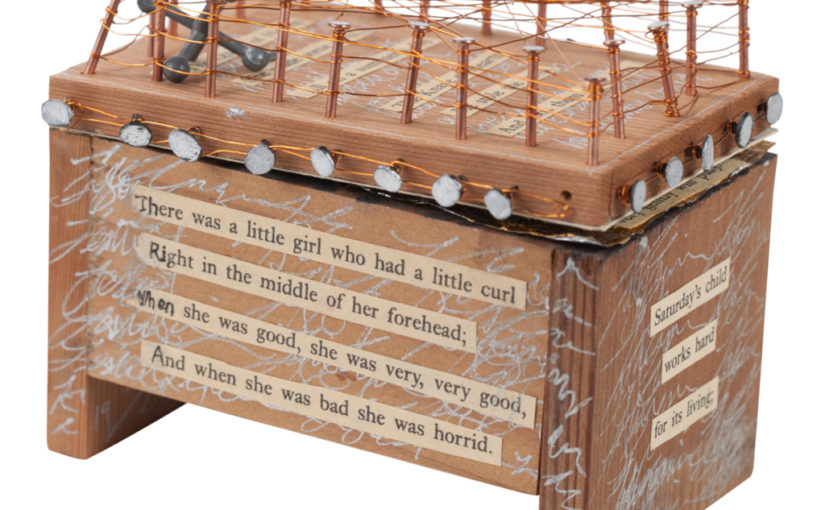
From childhood through adulthood- fairy tales, myths, and even nursery rhymes follow us about, shaping us, forming us.  At an early age, we learn that beauty equals good, and ugliness equals bad.  We also learn something about the narrow range that is supposed to define a woman’s safety zone.

Miss Muffet sits and minds her manners, and even then, is frightened away by a spider, while Little Jack Horner gets to stick his thumb in the middle of a pie, pull out a plum, and thinks to call himself a good boy for having done so.

Apricot Box is about women reclaiming for themselves, the ripe, fruity, fragrant, luscious parts of ourselves, and about little girls, never losing it.


Justica

Tajima Box Project. An artist and an extraordinary woman collaborate to create a box.

Julie Su, Esq., LITIGATION DIRECTOR, ASIAN PACIFIC AMERICAN LEGAL CENTER, RECIPIENT OF THE MACARTHUR GENIUS GRANT and Nancy White, ARTIST

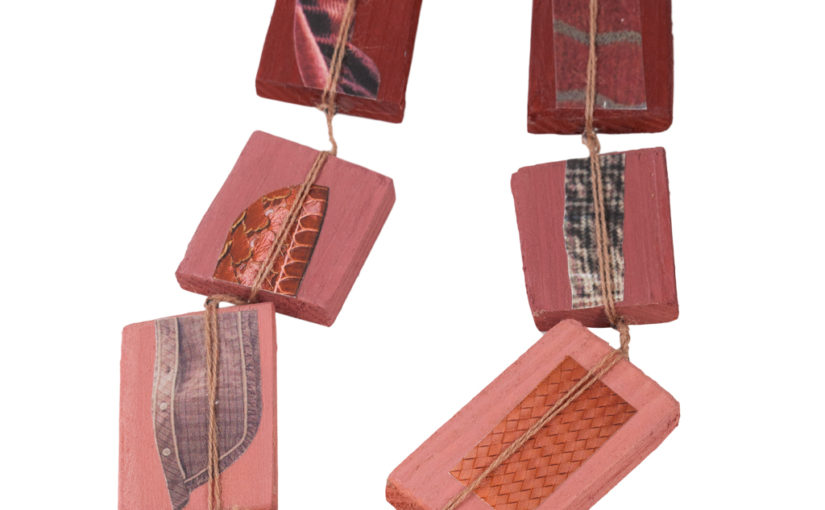
Too often, we fail to think about where the clothes we wear actually come from. Clothes, like this necklace, are worn, but they are also made—made of fabric sewn together by human beings. Women workers are the faces behind the garments we wear, hidden as in this locket, invisible, yet upon closer examination, resilient, strong, able to rise up against exploitation and sweatshop conditions to raise one voice, in many languages, for justice.


Surely Goodness…

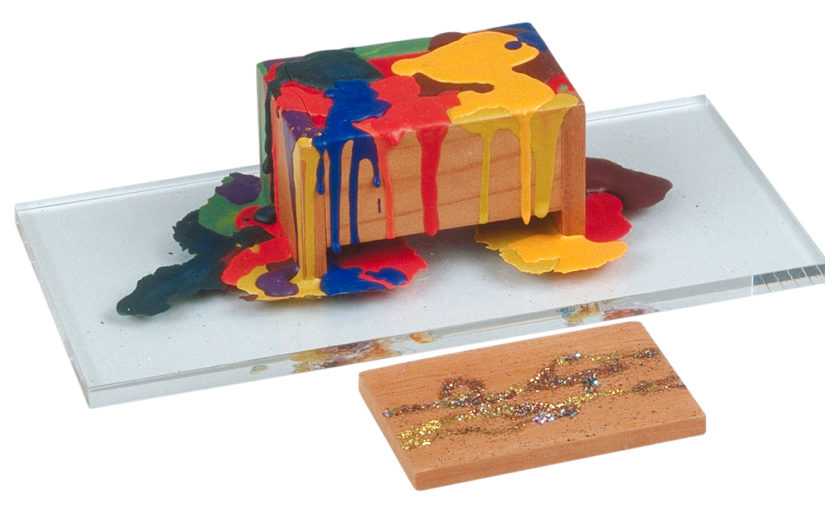
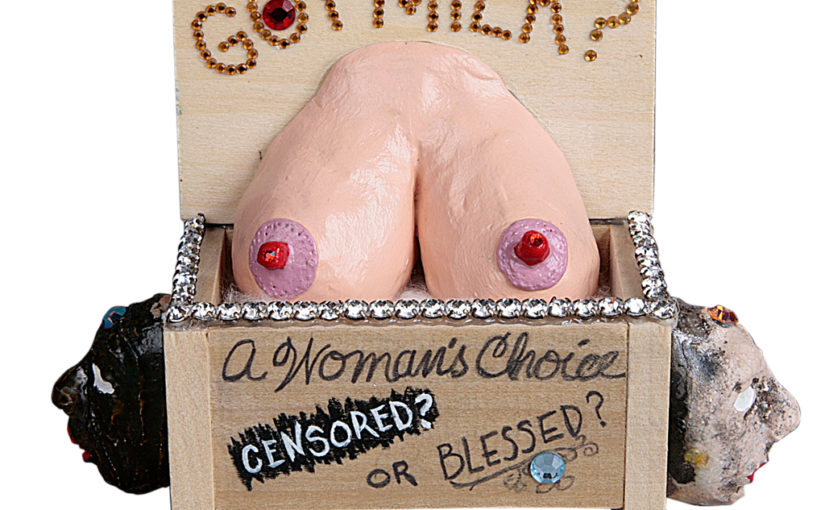
This box has many references. One is biblical. “My cup runneth over” directly precedes my title from the 23rd Psalm, a thought that came to mind as I made it. It is also something like Pandora’s Box.

The surely goodness part is the outcome of both references that I mean and want for women. It is who we are and how we create and effect culture. This box stands over and beyond patriarchy.

It is also part of an ongoing project of mine to recycle into art all the many art materials I have been carrying with me for nearly 35 years with the fantasy: Someday I will make some crayon drawings again, or use this glitter in a piece! Now I am doing it as pure art materials, recycling as all things do back into life.

Untitled

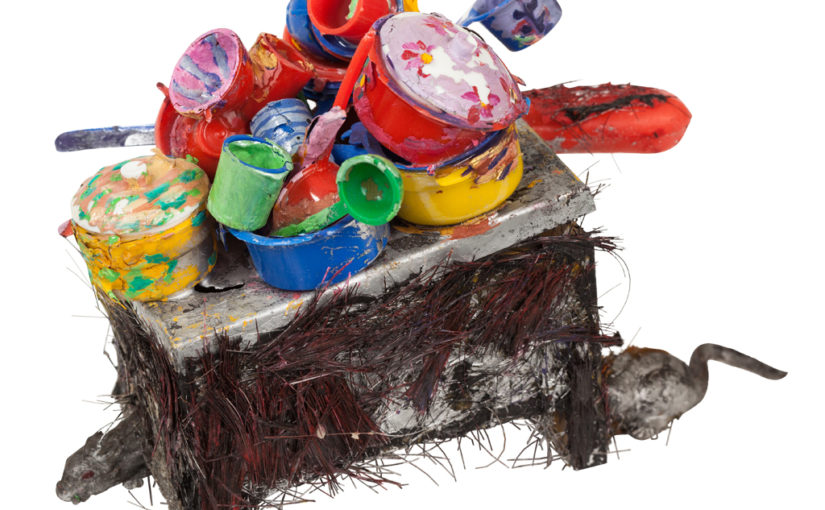
Irony rescues the idea from remaining in an abstract area so it can transform itself into fact, mobility, into continuous experience.  This is the basic idea behind my work.

Taking apart the governmental apparatus in which the situation of the woman is always in the background; the critical observation of the external is accompanied by the capacity of my own recognition.  Then the work surges from a free montage of connections of images and thoughts.

Bacalah!

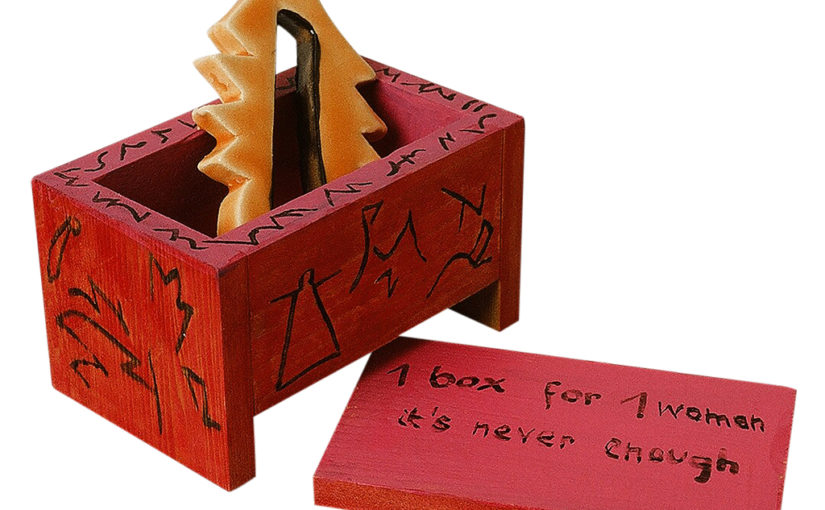
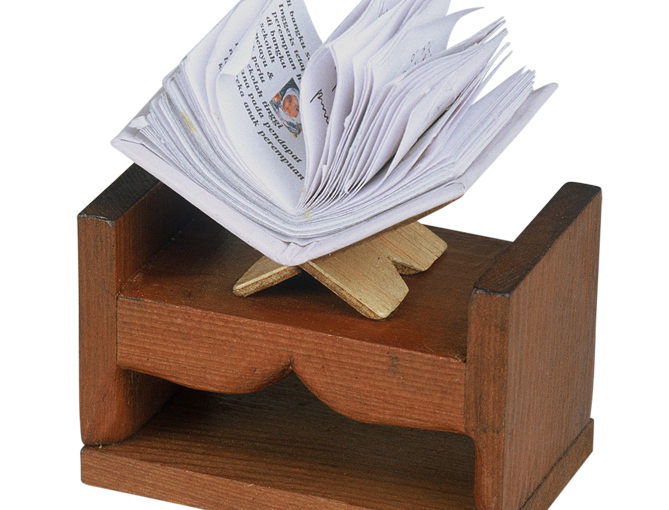
The contemporary Malay woman has been able to breakthrough poverty and tradition, from being illiterate to literate. Through the education system, the contemporary Malay woman has contributed to the community through her professional practice/skill. By using a box as a boundary confined to a space, I have inverted the box and carved into it ‘half ‘ patterns to imply the act of being out of the boundary. Entitled Bacalah! which means read, the journal resting on the box represents the spread of knowledge to the masses through a learning process. The inversion of the box with the journal alludes to the breakthrough that the contemporary Malay woman has made and that she is no longer being confined. As learning should start at a tender age where ‘the children of today shape the community of tomorrow’, an image of a child appears on the open page of the journal. The documentation for this project reflected in the journal was carried out in the form of a survey among Malays and non-Malays on their perceptions of the contemporary Malay woman.


Amazons of the Next Millennium

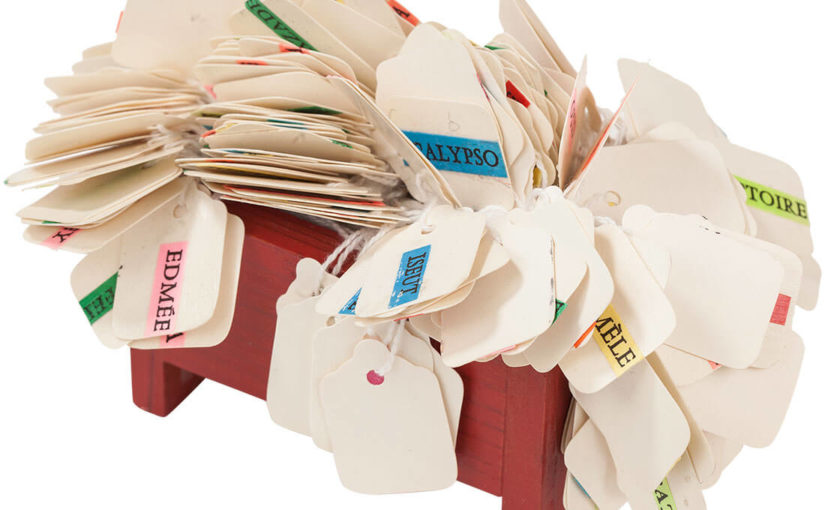
As the title suggests, my box is a symbol of the Amazons, female warriors, who lived and fought together in a migratory way of life during the golden age. My box is filled with a series of women’s names (two hundred) of all nationalities from antiquity to the present, printed in capital letters, in different colors on white paper tags. Each of the names brings into mind images of a woman we know, we read, we are, or we want to be.

This open box filled with names, which come out from all four sides, becomes almost invisible and signifies the power, the strength, the importance, the influence and the voice we women could achieve working together, for our rights against violence and discrimination at the beginning of the next millennium.